

The first time a cyclist tries an FTP test, the result can be unexpectedly personal. A number appears on the screen and suddenly defines every workout that follows. Too high, and the next month of training becomes a struggle. Too low, and sessions that should be demanding never quite reach their intended intensity.
A useful FTP test is not about proving that you can suffer. It is about obtaining a repeatable estimate of Functional Threshold Power that helps set cycling training targets. The most common approaches are a 20-minute effort, a progressively harder ramp test and estimates based on recent ride data. Each has advantages and limitations, and the best method is the one you can perform consistently under comparable conditions.
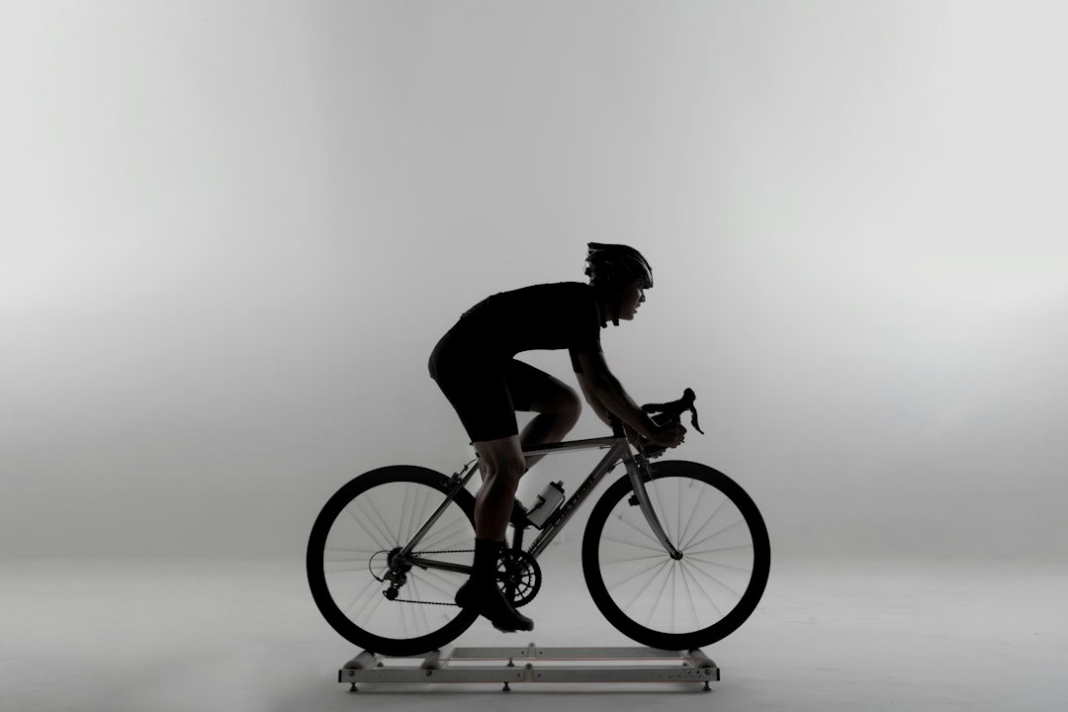 Photo Credit: Aditya Wardhana / Unsplash
What is FTP in cycling?
Functional Threshold Power is a practical estimate of a rider’s ability to produce sustained high power. It is often discussed in relation to roughly hour-long performance, although the duration a rider can sustain their own measured FTP varies. It is not identical to a directly measured laboratory lactate threshold, and a single test does not reveal every aspect of endurance fitness.
Its main value is calibration. Indoor training platforms use the estimate to set interval intensities; riders use it to compare training blocks and understand sustained power. A 250-watt FTP does not establish whether someone is a stronger all-round cyclist than a rider with a lower figure, because body mass, aerodynamics, fatigue resistance and the course all matter.
The ProCyclingUK guide to professional cyclists’ FTP explores those comparisons. For everyday training, the question is whether your own estimate produces useful sessions rather than how closely it resembles a WorldTour number.
How to do a 20-minute FTP test
The traditional field method begins with a thorough warm-up and then a carefully paced 20-minute maximal sustainable effort. You record the average power from that segment, not from the whole ride. A common estimate, used by TrainingPeaks and TrainerRoad, is 95 per cent of the average 20-minute power.
For example, if you average 260 watts for the entire 20-minute effort, multiply by 0.95 to obtain an estimated FTP of 247 watts. The mathematics is straightforward. The difficult part is producing an effort that is hard enough to be representative without blowing up in the opening minutes.
Choose a suitable uninterrupted road, controlled indoor setting or safe climb. Warm up progressively, including some shorter harder efforts appropriate to your fitness, then recover briefly before starting the timed segment. Start at a demanding but controlled intensity, settle into a sustainable rhythm and judge whether you can maintain it for the full twenty minutes. A huge late surge can suggest that you were overly cautious; collapsing after five minutes usually indicates an overly ambitious start.
A strong cooling fan matters indoors. Rising body temperature can reduce performance enough to distort comparisons between test days. Outdoors, wind, gradient changes and traffic can make pacing difficult and safety must take priority over preserving a perfectly smooth power trace.
Ramp test versus 20-minute test
A ramp test gradually increases power in steps until the rider cannot continue at the required intensity. It is usually shorter and avoids the pacing challenge of holding a maximal twenty-minute effort. Many smart trainer platforms automate the progression and calculate a result after the final completed step.
TrainerRoad, for example, describes its ramp estimate as approximately 75 per cent of the best one-minute power during the test, with additional calculation adjustments possible. That does not mean every ramp test on every platform uses exactly the same formula. The step lengths, starting workload and estimation rules vary.
| Method | How it works | Useful strength | Important limitation |
|---|---|---|---|
| 20-minute test | Very hard, paced 20-minute effort; often 95% of average power | Direct measure of sustained work over a meaningful duration | Pacing and fatigue strongly affect the result |
| Ramp test | Power increases stepwise until failure; platform estimates FTP | Shorter, convenient and easy to repeat indoors | Short-power strengths can influence the estimate |
| Recent power data | Training software analyses hard efforts already recorded | May avoid a dedicated test day | Depends on the available efforts and algorithm |
A rider with particularly strong short efforts may receive a ramp estimate that is optimistic for sustained riding. Someone who excels at long steady power but struggles with a ramp protocol may get the opposite impression. Treat the test as an estimate to validate during subsequent workouts.
Should you turn ERG mode on during an FTP test?
It depends on the test. For a progressive ramp test on a compatible smart trainer, ERG mode can be appropriate because the workout needs to increase target resistance in controlled steps. TrainerRoad recommends ERG mode for its ramp test.
For a 20-minute maximal test, the rider should be able to choose their own power through pacing. Leaving a smart trainer locked to one ERG target can prevent you from riding the effort that would actually produce your best representative average. TrainerRoad therefore switches its traditional 20- and 8-minute tests to slope or resistance mode during the assessment interval.
This distinction matters more than the brand of trainer. Check which test protocol your application is using and follow its on-screen instructions. If you are still setting up the equipment, our indoor cycling compatibility guide explains connections, resistance control and calibration.
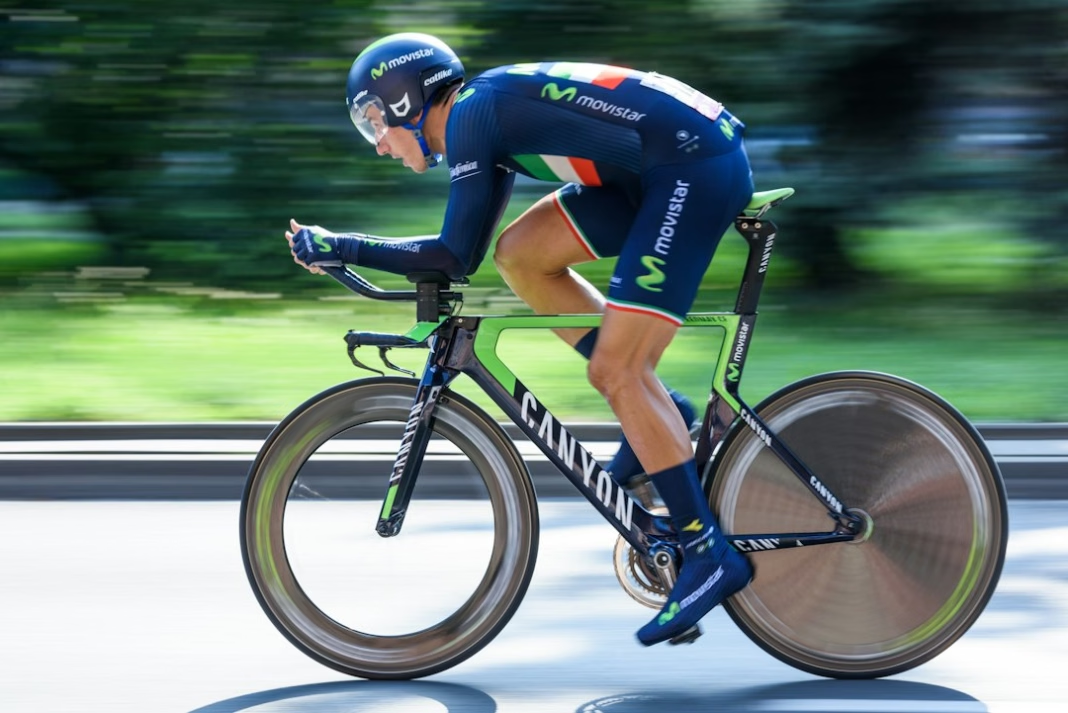 Photo Credit: Jacek Dylag / Unsplash
How to prepare for a reliable test
Choose a day when you are reasonably recovered, not immediately after a long ride or a demanding football match. Eat normally for the session’s duration and intensity, hydrate, and avoid making the test dependent on an unfamiliar supplement. For indoor testing, use the same trainer or power meter, similar temperature, fan arrangement and calibration process as previous assessments wherever possible.
Make sure the power source is known. Some applications can receive power from an external meter while using the trainer to control resistance. If the source silently changes between tests, apparent improvements may reflect differences between devices rather than changes in fitness. Firmware, zero-offset and calibration procedures vary, so use the current instructions for your equipment.
Warm up enough to reach the hard work prepared, and include a cool-down afterwards. Someone returning after illness, injury or prolonged inactivity should prioritise safe, gradual training and appropriate professional medical advice before attempting a maximal effort.
What if your FTP result looks wrong?
The first check is whether the workload matches how training feels. If tempo sessions are unexpectedly brutal or threshold intervals become impossible within a few minutes, the estimate may be too high, the rider may be under-recovered or the workout may be poorly calibrated. If prescribed threshold intervals feel unusually easy, the estimate could be low.
Before changing the number, inspect the test recording. Was there a power dropout? Did resistance stop changing? Was the correct meter paired? Did the 20-minute average accidentally include recovery time? Was the rider much more fatigued than during the previous test?
FTP varies alongside training and recovery, so some change is expected. But a surprising jump on one afternoon is less convincing than a rise supported by recent hard rides and repeatable workouts. Avoid constantly testing to chase a personal best when the training itself would be more valuable.
How often should cyclists retest FTP?
TrainerRoad commonly places its ramp test at the start of a new training block, often around four to six weeks apart. That is a useful reference, not an obligation. If your training has been stable for a few weeks, nothing requires a maximal assessment every time you open Zwift.
Retesting can be worthwhile after a meaningful training block, a long interruption or when workouts clearly no longer suit the current setting. A consistent protocol is more useful for tracking progress than switching between several methods and assuming their estimates are directly comparable.
Record the test type, power source, conditions and how the result felt. A simple note such as ’20-minute indoor test, same smart trainer, strong fan, 247-watt estimate’ makes later comparisons considerably more informative than a bare number in an app.
What should you do with the number afterwards?
Use the result to set cycling training zones or structured workout targets, then check them against reality. If an FTP estimate of 247 watts is credible, an endurance target can be calculated from the chosen training-zone framework rather than from a professional rider’s wattages. The separate winter base-fitness guide explains why easy riding still deserves a place alongside harder efforts.
It is also sensible to avoid treating FTP as the only score that matters. A cyclist can improve repeatability, sprinting, endurance after four hours, handling and tactical judgement without producing a dramatic increase in threshold power. Training for a sportive and preparing for a six-minute hill-climb are related but different performance problems.
On your next structured session, look for the simplest test of whether the new value is useful: can you complete the workout at the prescribed intensity, with an effort and recovery demand consistent with its purpose? If yes, the estimate is doing its job. The number does not need to be flattering to be valuable.

