
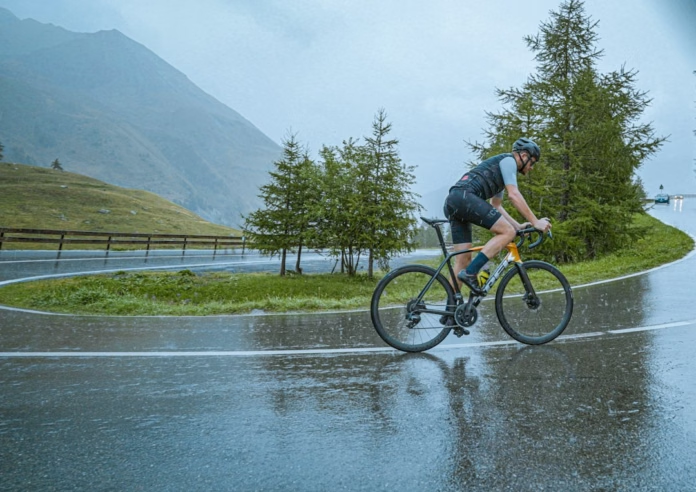
A first cycle ride does not need to be 20 miles to count as exercise. For somebody returning to cycling after several years, a manageable 15-minute journey to a local park may provide a better starting point than an ambitious weekend loop that leaves them exhausted and reluctant to go again.
The difficult part is that ‘How far should I cycle?’ is not really a question about distance. Five kilometres over a flat, traffic-free route can feel very different from five kilometres into a headwind or up a steep hill. If the goal is fitness, the better measure at first is how long you ride, how hard it feels and whether you can repeat the effort comfortably during the week.
 Photo Credit: Jacek Dylag / Unsplash
How far should a beginner cycle on the first ride?
If you can already balance, steer and brake confidently, 10–20 minutes on an easy route is a reasonable first session to try. Depending on speed and terrain, it might amount to only a few kilometres. That is fine. For somebody learning to ride or returning after a long break, even a shorter practice session in a quiet park can be enough.
The objective is to finish knowing that you could have continued a little longer. An exhausting first ride can make saddle discomfort, stiff hands and minor traffic nerves feel bigger than they need to. A modest outing also leaves time to check whether the bike fits and works as it should.
Cycling UK advises new riders to practise in a quiet environment before building up to longer routes and busier roads. That matters because confidence and handling are part of the workload. Someone who is anxious about junctions may have plenty of physical fitness but still benefit from a short, familiar loop.
Why time matters more than kilometres when you are starting
Distance is useful for route planning, but it is an unreliable measure of effort across different terrain. A rider who travels 8km on a flat railway path could spend less time working than somebody covering 5km through stop-start streets and several climbs. An e-bike adds another variable, because assistance changes the pedalling effort required.
Begin with a duration you can repeat, perhaps 15 minutes, and use the talk test to keep the pace manageable. At a moderate intensity you should be breathing more quickly but still able to hold a conversation. If talking in full sentences is difficult, ease back, particularly during early sessions.
UK Chief Medical Officers’ guidance recommends adults build towards at least 150 minutes of moderate activity a week, with additional strengthening work. It also makes clear that some activity is better than none. The NHS similarly encourages starting gradually. You do not need to reach the weekly target in your first seven days of cycling.
There is no universally correct beginner speed. Gradients, junctions, weather, fitness and bike type all make comparisons difficult. That is why a 20-minute riding target is often a more useful promise to yourself than maintaining a specified average speed.
An example six-week plan for building cycling distance
Rather than jump immediately to a 30-mile ride, build a habit first. The plan below is illustrative, not a medical prescription or a compulsory progression. Repeat a week whenever the next step feels too demanding, and adapt the days around work, family and other exercise.
| Week | Ride pattern | Main objective |
|---|---|---|
| 1 | Two easy rides of 10–15 minutes | Get comfortable with the bicycle and route |
| 2 | Two or three rides of 15–20 minutes | Repeat the habit without chasing speed |
| 3 | Two shorter rides and one of 25–30 minutes | Try a slightly longer familiar loop |
| 4 | Two 20–30-minute rides, with an optional third | Make the weekly routine reliable |
| 5 | Two 25–35-minute rides and an optional 40-minute ride | Extend endurance at an easy pace |
| 6 | Two comfortable shorter rides and one of 40–60 minutes | Learn to pace a longer, steady outing |
You may progress more quickly if you already walk, run, swim or exercise regularly. Equally, somebody starting from very little activity could need longer at each stage. What matters is whether the work is sustainable and the next ride remains inviting.
If the time increases but the riding becomes harder every week, reconsider the plan. Poor sleep, an unfamiliar saddle, a steeper route and an overly ambitious pace can all explain why a longer session feels disproportionately difficult. A rest day or an easier route is often more useful than forcing the target.
How far is a 30-minute cycle in practice?
A rider averaging 10km/h while moving would cover approximately 5km in half an hour. At 15km/h it would be about 7.5km. Those are arithmetic examples, not benchmarks for what a beginner should achieve. Hills, traffic lights and stops can make the actual distance much shorter.
Think about the difference between moving time and total time as well. If you want a 30-minute exercise session but spend 10 minutes stopped at junctions, you have not necessarily accumulated 30 minutes of continuous moderate riding. That does not make the journey worthless, but it explains why two routes of the same length can feel different.
If you use a cycling computer or phone app, avoid judging every ride by its average speed. Time spent moving, the route’s elevation and your perceived exertion are more useful early indicators of progress. A familiar hill becoming manageable in a slightly easier gear may be as meaningful as adding another kilometre.
How often should beginners cycle to get fitter?
Consistency usually matters more than a single very long outing. Two or three manageable rides a week provide more opportunities to practise bike handling, pacing and route choice than one exhausting ride followed by a week of recovery. Some new riders will prefer shorter daily trips, particularly if cycling replaces a car or bus journey.
Try to leave room for recovery, especially when the duration begins to increase. Muscle soreness can occur when starting an unfamiliar activity, but sharp pain or persistent discomfort deserves attention. Knee pain, numb hands and saddle pain are not things to ignore indefinitely in the hope that your fitness will solve them.
Once you can ride for 30 minutes at a conversational pace, you can decide whether you want more days on the bike, a longer weekend ride or slightly higher intensity. You do not need all three changes at once. Our eight-week cycling fitness guide offers a broader training progression once the initial habit is established.
Choosing a first route is more important than choosing a distance
A good beginner route is predictable. Look for a traffic-free path or quiet road with relatively little climbing, safe junctions, a sensible turning point and an easy way to shorten the ride if necessary. If you plan an out-and-back route, remember that turning round at the halfway mark means you still need to ride home.
For UK riders, check shared-path rules and be considerate of people walking or riding more slowly. A towpath may look attractive on a map but become slippery and crowded in winter. Railway paths and local cycleways can provide excellent starting options, although surfaces and crossings vary.
Choose a time of day when you are comfortable and visible. On short autumn and winter days, lights and reflective detail can be useful even if you intend to finish before dusk. If weather is poor, riding indoors or choosing another day is a reasonable adjustment rather than a failure.
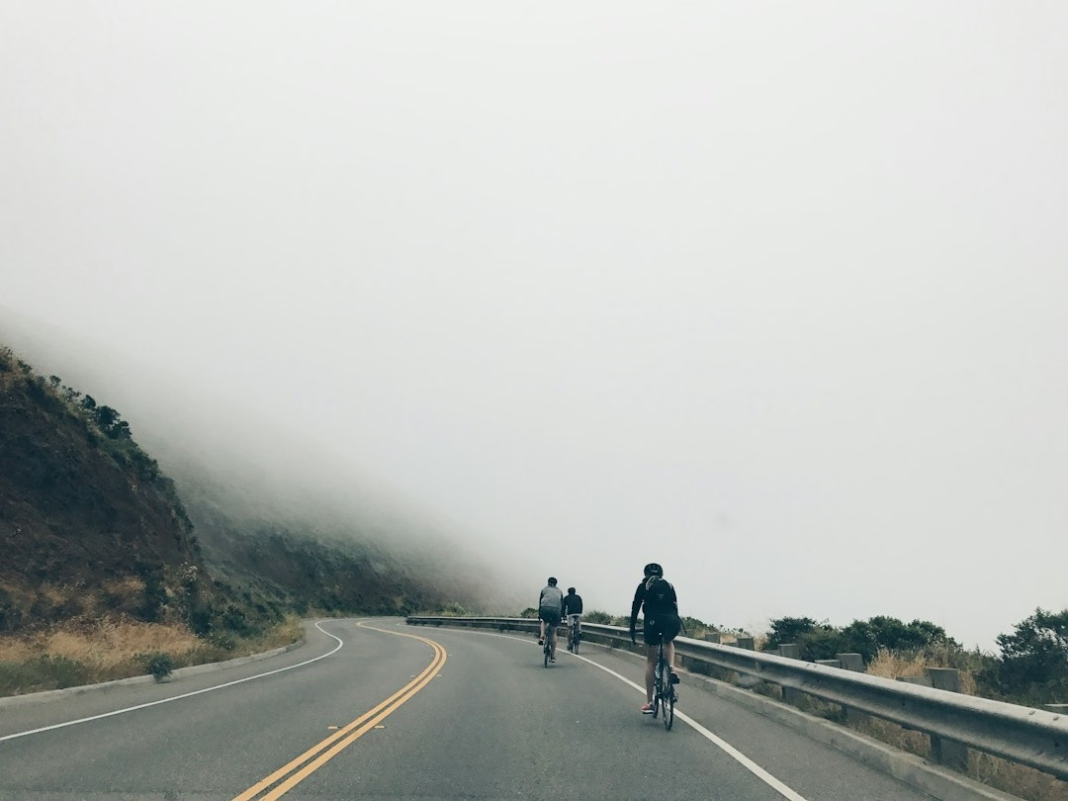 Photo Credit: Tessa Rampersad / Unsplash
What you need before making the rides longer
Start with a safe, functioning bike. Check brakes, tyre condition and pressure, the chain and whether both wheels are secure. British cycling organisations often refer to a simple M-check for these routine pre-ride inspections. Make sure the saddle is at a sensible height, with enough control to stop and put a foot down comfortably when needed.
Carry a phone, a way to get home if something goes wrong and sufficient drink for the conditions. You do not need expensive race nutrition for a gentle 15-minute ride. As sessions become longer, consider whether and when to take a snack. Our beginner fuelling guide covers the basics, while our carbohydrate-per-hour guide becomes more relevant as rides get longer and harder.
A helmet may provide protection in a fall, and comfortable clothing makes regular riding easier. The most significant improvement for a new cyclist often comes from learning to steer, brake, signal and anticipate road conditions confidently. The right equipment supports those skills; it does not replace them.
When is it time to aim for 10km, 20km or a first sportive?
A first 10km loop can be a useful milestone once you have comfortably repeated shorter rides. For some cyclists it comes within a fortnight; for others it takes longer. A 20km ride adds more time in the saddle and makes route planning, pacing and equipment reliability increasingly relevant.
There is no need to register for a sportive before you are ready. If an organised event appeals, look at the route’s elevation as well as the kilometres, and allow time to practise riding and drinking while moving. Our cycling for beginners guide covers the wider equipment and skills needed to progress.
Fitness is not the distance of your longest ride on one unusually good day. It is the growing ability to ride comfortably, recover and do it again. Once a modest local loop becomes easy and familiar, extending it by a few minutes is a perfectly worthwhile next step.

