
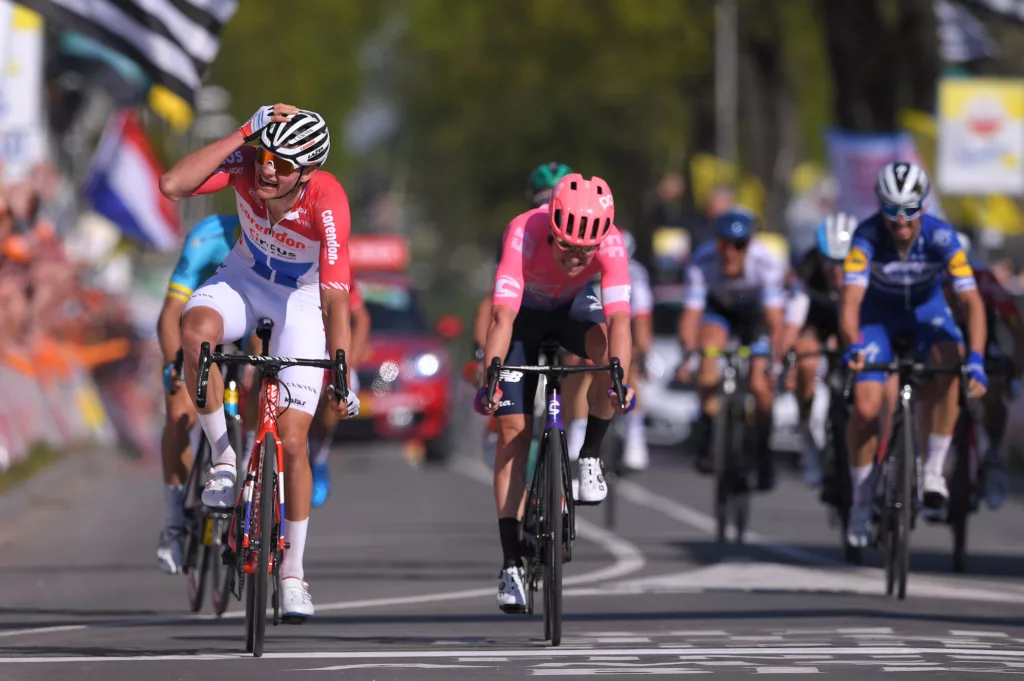
Men’s Amstel Gold Race 2026 is one of the most distinctive one-day races in the spring calendar and one of the best for new fans trying to understand how the season shifts away from cobbles and into a more climbing-focused phase. The 2026 men’s race takes place on Sunday the 19th April, starts in Maastricht, finishes in Berg en Terblijt, and covers just over 257km.
What makes Amstel different is that it is not built around one giant mountain or one famous cobbled sector. Instead, it is shaped by constant twisting roads, short sharp climbs, frequent changes of rhythm, and a finale where riders are forced to keep making hard efforts long after they would normally want the race to settle down. That is why it often feels so busy and so attritional from well before the decisive moments.
 Photo Credit: Getty
What is the Men’s Amstel Gold Race?
Amstel Gold Race is the Netherlands’ biggest men’s one-day Classic and the opening race of the Ardennes week on the men’s WorldTour calendar. In seasonal terms, it acts as the bridge between the Flemish cobbled block and the hillier races that follow, especially La Flèche Wallonne and Liège-Bastogne-Liège.
For beginners, that is the first useful thing to understand. This is not quite a cobbled Classic and not quite a pure climber’s race either. It tends to favour riders who can handle repeated short climbs, race well on narrow technical roads, and still have the punch or tactical sharpness to finish the job late on.
If you are working through the bigger shape of the spring, Milano-Sanremo and Tour of Flanders ask very different questions, which is exactly why Amstel Gold Race feels like such a clear turning point.
When is the 2026 race?
The 2026 men’s Amstel Gold Race is on Sunday the 19th April. It sits in its familiar slot as the first of the Ardennes-style spring Classics, coming after the biggest cobbled Monuments and before the remaining hilly one-day races later that same week.
That timing matters because this race often changes the feel of the spring. Riders who looked dominant on the cobbles do not always carry that same edge onto the Limburg climbs, while punchier all-rounders and Classics climbers often come more clearly into view here.
What does the 2026 route look like?
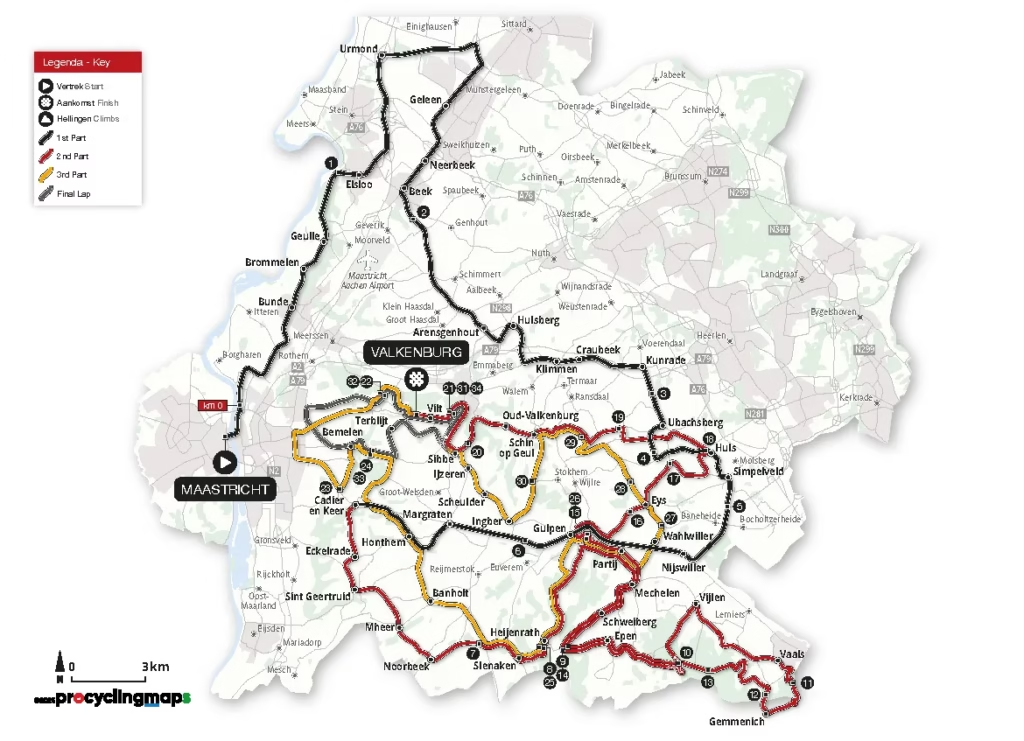
The men’s race covers a little over 257km and includes 33 climbs. The broad shape is clear enough even before you get into the finer details: the peloton heads through Limburg’s hill roads before moving towards a far more concentrated finale.
The key structure is that the riders reach the Cauberg for the first time with roughly 80km remaining, which effectively marks the beginning of the race’s decisive phase. From there, the steep climbs come in quicker succession, including roads such as Eyserbosweg, Fromberg and Keutenberg, before the race works its way towards the closing circuits and the finish in Berg en Terblijt.
That is one of the main reasons Amstel Gold Race feels so draining. The finale does not begin with one last climb and one last answer. It begins relatively early, then keeps asking the same question again and again until only a small number of riders still have anything left to give.
Why is the Cauberg so important?
If you are new to the race, the Cauberg is the best-known name to remember. It is the climb most closely linked to Amstel Gold Race and still acts as one of the central reference points in the route.
But the important thing is that the Cauberg does not act alone. It matters because it arrives inside a bigger pattern of repeated efforts. Riders hit it already carrying fatigue, and then they have to keep going through more steep climbs afterwards. So while the Cauberg is iconic, Amstel Gold Race is really won by how riders handle the whole rhythm of the final hour rather than one slope in isolation.
That is also why the race has often rewarded intelligent aggression rather than just simple strength. Riders need to know when to commit, when to wait, and when a move is actually worth the cost.
Is this a climber’s race or a puncheur’s race?
It is much closer to a puncheur’s race than a pure climber’s race. The climbs are short, sharp and frequent rather than long mountain ascents. What matters most is the ability to repeat hard efforts, recover just enough, and then attack or respond again a few minutes later.
That is why the winner here can come in different forms. Sometimes it is a rider who attacks from distance and survives. Sometimes it is a small elite group arriving together. Sometimes a rider with a strong finish hangs on through the climbs and still has enough speed left at the end. That tactical openness is one reason the race is so watchable.
If you want a useful contrast, Paris-Roubaix is far more about endurance, cobble handling and resilience over sectors, while Amstel is more restless and more rhythm-based from one climb to the next.

How much history does the men’s race have?
The 2026 edition is the 60th running of the race. That long history matters because Amstel Gold Race has developed its own identity within the spring. Belgium dominates the cobbled calendar, but Amstel gives the Netherlands its own major one-day showcase, built around Limburg’s narrow roads and repeated climbs rather than Flanders’ pavé sectors or Wallonia’s steeper uphill finishes.
It has never been just a scenic Dutch race tucked between bigger events. Over time it has become one of the key reference points of the entire Classics season, precisely because it asks for a slightly different type of excellence.
What happened in the last edition?
The 2025 edition was won by Mattias Skjelmose after he outsprinted Tadej Pogačar and Remco Evenepoel from a three-rider group at the finish. That race was a good example of how Amstel often works. It can reward aggression from distance, but it does not always let the strongest early attacker win cleanly.
The route leaves enough time and enough complexity for chasers to reorganise, for favourites to come back together, and for the finale to stay uncertain longer than expected. That is part of what makes Amstel Gold Race so compelling. It can look decisive, then become tactical again very quickly.

What should beginners watch for during the race?
The easiest way to follow the men’s Amstel Gold Race is to watch for three things.
First, watch team depth entering the final 80km. Teams that still have multiple riders at that point usually hold a major advantage. They can attack in waves, force others to chase, or protect a leader until the sharper climbs arrive.
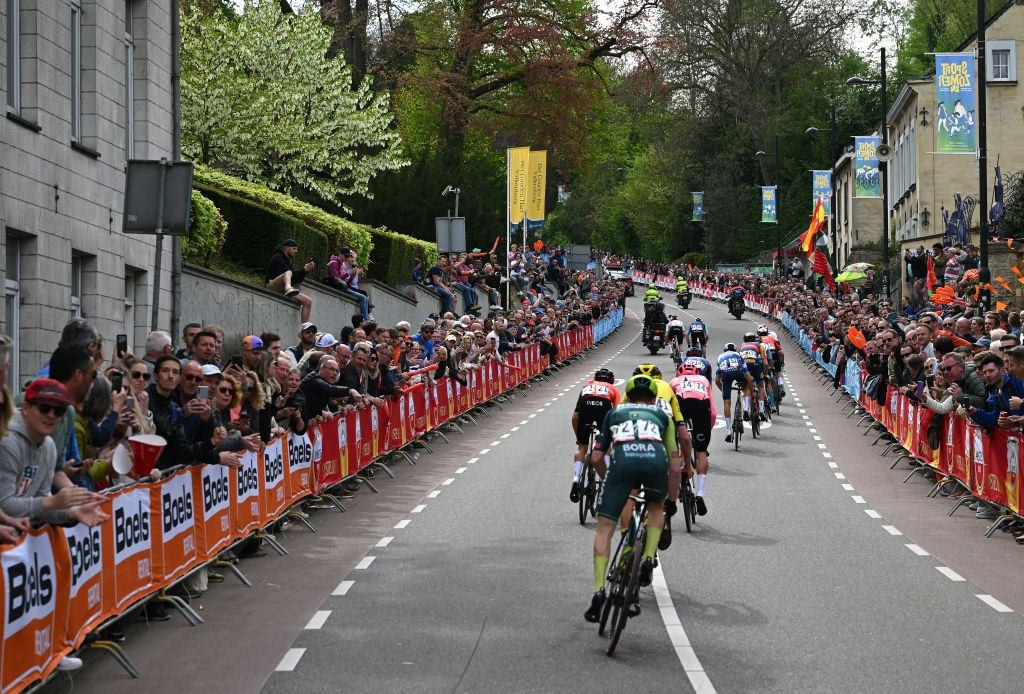
Second, pay attention to positioning before the short climbs. Limburg’s roads are narrow and twisting, and riders can lose the race simply by entering a key climb too far back. Amstel often looks chaotic on television for exactly that reason: everyone is fighting for the same stretch of road before each steep ramp.
Third, do not assume the race is over after one decisive move. The Amstel Gold Race often keeps changing shape deep into the closing kilometres. That uncertainty is one of the reasons it works so well for newer fans. You can usually see the race evolving rather than simply waiting for one final, obvious attack.
What kind of rider usually wins?
The ideal Amstel Gold Race rider is usually a punchy all-rounder, someone strong enough to survive repeated climbs, skilled enough to stay well-positioned on narrow roads, and tactically calm enough to judge the finale correctly. Pure sprinters usually find the route too selective, while pure climbers do not always get a hard enough, sustained ascent to make their advantage decisive.
That makes the race especially useful for newer fans, because it shows how much one-day racing is about balance. It is not simply a test of one best skill. The winner normally needs climbing punch, resilience, bike handling, timing and a very good understanding of when the race is actually there to be won.
Why does men’s Amstel Gold Race matter in the season?
Amstel matters because it opens a new phase of the spring. It is often the first clear test of who has made the shift successfully from cobbles and brute force into a more explosive, hilly form of one-day racing.
It also matters because the race does not simply preview the rest of Ardennes week, it helps define it. Riders who look sharp here immediately become serious names for the races that follow, while those who struggle may already look slightly out of step with the shape of the next few days.
That is why it makes sense to read it alongside the rest of the spring narrative, whether that is what men’s Milano-Sanremo 2026 means for the season or how the cobbled campaign has developed before the calendar turns hillier.
Why is this a good race for beginners?
For a new fan, men’s Amstel Gold Race 2026 is one of the best races to learn from because it makes so many parts of one-day cycling visible at once. You can see positioning battles, team tactics, repeated attacks, route knowledge and late-race decision-making all in the same event.
It also has a clear identity. The Cauberg gives the race a recognisable anchor, but the broader route is open enough that the finale does not feel pre-written. That balance is why Amstel Gold Race works so well for beginners. It gives you structure without making the outcome too easy to predict.
If you are trying to understand the spring Classics as a whole, this is one of the most useful races on the calendar. It sits between the brute force of the cobbled Monuments and the sharper uphill finishes still to come, which makes it a very good guide to how versatile the best one-day riders really need to be.

