
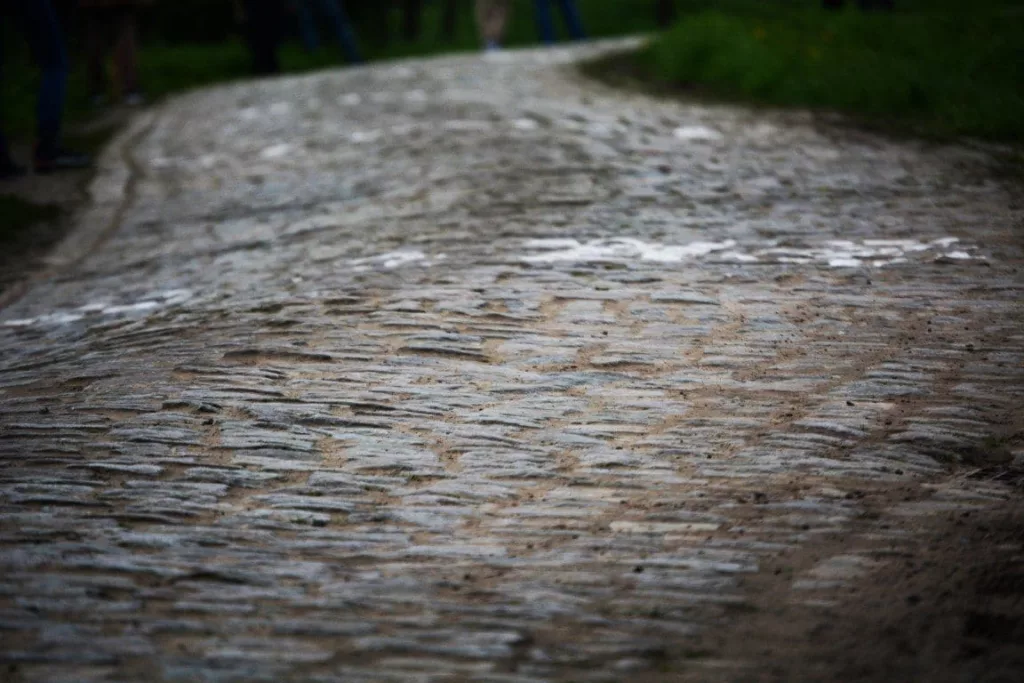
Paris-Roubaix has always stood apart. Even in a sport built on hardship, it developed into something more severe, more elemental and more mythic than almost any other race on the calendar. The men’s race is now one of cycling’s five Monuments, but that status was not handed to it because of age alone. It earned that place through the scale of its suffering, the character of its roads, and the way victory there has so often come to define a rider’s career.
From its beginnings in the 19th century to the modern era of speed, power and tyre pressure calculations, Paris-Roubaix has remained rooted in the same essential idea. It is a race where the road itself is the main opponent.
How Paris-Roubaix began
The first edition of Paris-Roubaix was held in 1896. It was created to bring attention to Roubaix and its velodrome, and that opening race was won by Josef Fischer, who became the first name on one of cycling’s most famous roll of honours.
Even in those earliest years, Paris-Roubaix was different from many of the other big races emerging around Europe. It was long, rough and often grim, passing through the industrial north on roads that were poor even by the standards of the time.
In its original form, the difficulty did not come from carefully selected cobbled sectors in the modern sense. Much of the road network was simply harsh, broken and inconsistent. Riders were dealing with an unforgiving landscape before the race had even fully become what we would now recognise as Paris-Roubaix.
Why it became known as the Hell of the North
The nickname “Hell of the North” is now inseparable from Paris-Roubaix, but its meaning goes beyond sporting difficulty. Over time it came to suit both the landscape of northern France and the experience of riding the race itself. Mud, dust, crashes, punctures and exhaustion turned it into the hardest of hard days.
That dual identity still matters. Paris-Roubaix has always been about more than cobbles. It is also a race shaped by the history of northern France, by industry, by labour, and by roads that feel as though they belong to a harder age.
The early champions and the race’s first identity
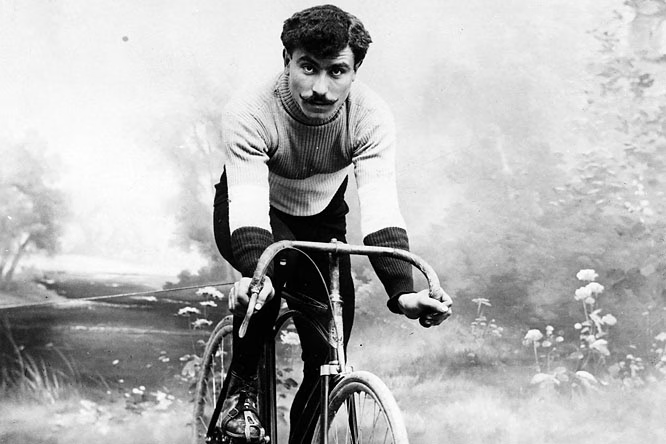
In the first decades of the 20th century, Paris-Roubaix quickly established itself as one of the great prizes in cycling. Riders such as Octave Lapize, Charles Crupelandt and Henri Pélissier helped build its prestige. These were not simply winners of another big race. They became part of a specific kind of sporting folklore, one tied to endurance and resilience rather than elegance alone.
Octave Lapize, who won three straight editions from 1909 to 1911, was especially important in shaping the image of the race. He was already a major name, but winning Paris-Roubaix reinforced the sense that the event belonged to the toughest classics specialists rather than only the strongest all-round road racers.
By the interwar years, the race had become one of the most respected one-day events in Europe. Its winners list was beginning to feel like a record of the strongest men of each era, but with one important twist. Paris-Roubaix did not always reward the most glamorous rider. It often rewarded the rider who could remain calm and mechanically sound while everything around him was falling apart.
The cobbles became the race’s defining feature
As French roads improved through the 20th century, Paris-Roubaix faced an unusual problem. The race’s brutality had once come naturally from the poor condition of the route, but modernisation threatened to smooth away its identity. If the roads were all paved cleanly, what would make Paris-Roubaix Paris-Roubaix?
That question shaped the race profoundly. Paris-Roubaix stopped merely inheriting roughness from the world around it and started actively curating it. The cobbles were no longer an incidental feature of northern France. They became the central grammar of the race. Every sector now had meaning. Every section of pavé could reshape the outcome.
Notable former winners of Paris-Roubaix
The winners list is one of the main reasons Paris-Roubaix carries so much weight. The race has been won by riders from very different eras, but the roll of honour consistently points towards the toughest and most complete one-day specialists of their generation. The official race history lists Josef Fischer as the first winner in 1896, Tom Boonen and Roger De Vlaeminck as the record holders on four victories, and Mathieu van der Poel as the winner in 2023, 2024 and 2025.
Some of the most notable former winners include:
- Josef Fischer – 1896
- Octave Lapize – 1909, 1910, 1911
- Charles Crupelandt – 1912, 1914
- Henri Pélissier – 1919, 1921
- Rik Van Looy – 1961, 1962, 1965
- Eddy Merckx – 1968, 1970, 1973
- Roger De Vlaeminck – 1972, 1974, 1975, 1977
- Francesco Moser – 1978, 1979, 1980
- Sean Kelly – 1984, 1986
- Marc Madiot – 1985, 1991
- Gilbert Duclos-Lassalle – 1992, 1993
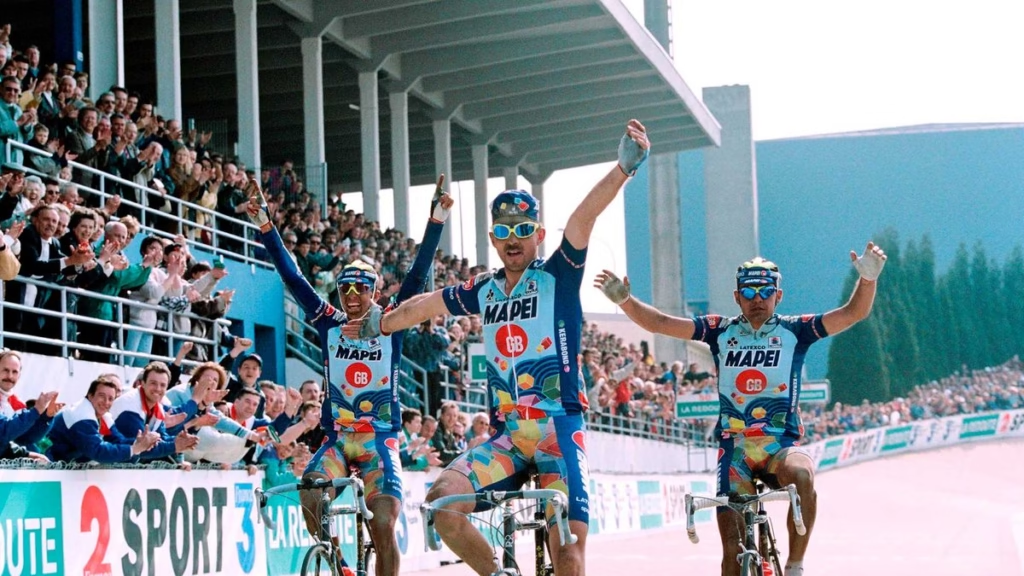
- Johan Museeuw – 1996, 2000, 2002
- Tom Boonen – 2005, 2008, 2009, 2012
- Fabian Cancellara – 2006, 2010, 2013
- Greg Van Avermaet – 2017
- Philippe Gilbert – 2019
- Sonny Colbrelli – 2021
- Dylan van Baarle – 2022
- Mathieu van der Poel – 2023, 2024, 2025
That list also shows how difficult Paris-Roubaix is to win repeatedly. Plenty of great riders have won it once. Very few have been able to make the race their own across multiple years.
The postwar era and the rise of the great specialists
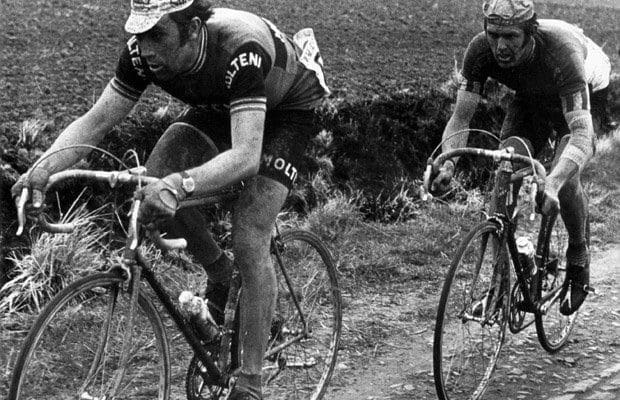
After the Second World War, Paris-Roubaix became even more clearly the domain of the classics specialist. Rik Van Steenbergen, Rik Van Looy and Pino Cerami helped define the race in the 1950s and 1960s, but it was in the decades that followed that the event fully acquired the towering mythology it carries now.
Eddy Merckx won Paris-Roubaix three times, in 1968, 1970 and 1973. That matters not only because Merckx won almost everything, but because Paris-Roubaix still demanded something separate from his usual dominance. A Merckx win there felt like proof that even the sport’s greatest rider could master the ugliest terrain.
Roger De Vlaeminck then became one of the race’s ultimate figures. His four victories, between 1972 and 1977, tied the record and gave him a lasting claim as one of the greatest cobbled riders the sport has ever seen. De Vlaeminck seemed almost built for Paris-Roubaix. He had the technique, the confidence and the refusal to panic that the race demands.
Francesco Moser matched the intensity of that era with three straight victories from 1978 to 1980. His success confirmed something important about Paris-Roubaix. It was not just a Belgian race held in France, even if Belgian riders often dominated it. It was a truly international Monument, and one that could elevate riders from outside the race’s natural geographic heartland if they had the right qualities.

The Arenberg era and the modern route mythology
One of the most important turning points in the race’s history came with the increasing significance of the Trouée d’Arenberg. The Forest of Arenberg later became one of the symbolic centres of Paris-Roubaix.
It is not usually where the race is won in a simple sense, but it is often where illusions disappear. The sector is long, straight, violent and psychologically oppressive. Riders enter it at high speed, but what matters most is what happens when the race comes out the other side. Gaps appear, mechanics are tested, and some contenders simply cease to exist in the race from that point onward.
In time, Arenberg joined Mons-en-Pévèle and Carrefour de l’Arbre as the three sectors most associated with the race’s defining selection. Together they gave Paris-Roubaix a route identity far stronger than many other Classics. Fans did not just know the general direction of the race. They knew the decisive sectors almost by name and feeling.
The television age and Paris-Roubaix as spectacle
As television coverage improved, Paris-Roubaix became one of the sport’s most visually distinctive races. Other Classics might offer more scenic beauty, but Roubaix offered something harder to look away from. Dust hanging above a sector, riders skipping across ancient stones, the chaos of punctures and the terrible stillness of a lone rider committed to the final kilometres, all of it translated powerfully to screen.
That mattered because it helped turn Paris-Roubaix into a race that reached beyond traditional cycling audiences. Even casual viewers could understand its tension. You did not need to know every tactical nuance to grasp that the riders were surviving something unusual.
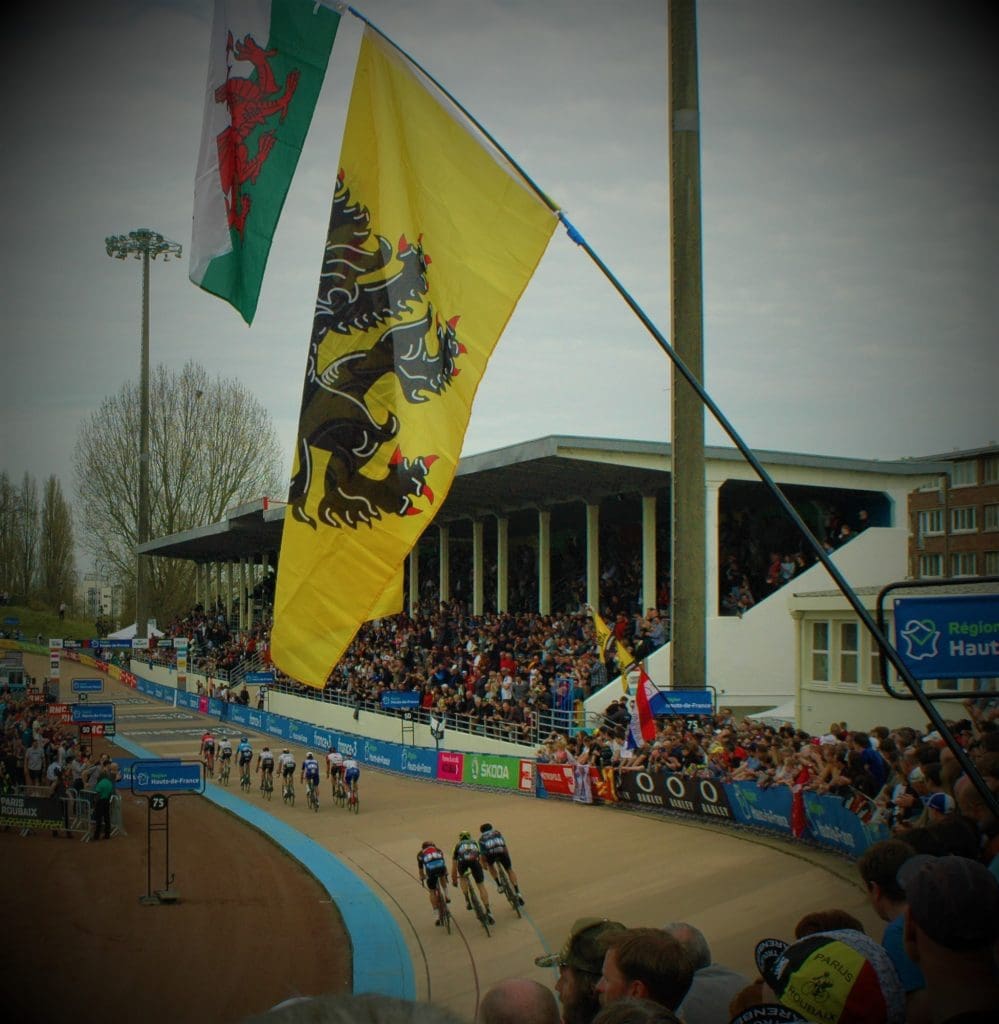
The finish in the Roubaix Velodrome added to that theatre. Few finishing arenas in cycling are more recognisable. The sight of a rider entering the track alone, filthy and exhausted after a day over the pavé, became one of the defining images of the sport.
The modern legends of Roubaix
The modern era has produced its own line of giants. Johan Museeuw won three times and became one of the clearest symbols of late-1990s and early-2000s cobbled dominance. His victories carried enormous weight because they came in an era when Paris-Roubaix was already fully global as a television and sporting event.
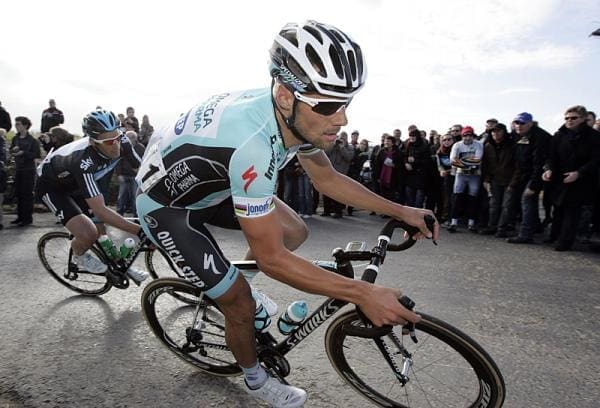
Tom Boonen and Fabian Cancellara then gave the race one of its great modern rivalries. Boonen won Paris-Roubaix four times, equalling the record, while Cancellara won three times and brought a different style of authority to the race. Boonen often seemed to blend power with instinctive fluency over the cobbles. Cancellara looked more like a machine overpowering the route itself.
Their era helped define Paris-Roubaix for a generation of newer fans. It was a period when the race remained chaotic but was also shaped by huge, recognisable champions who could impose themselves even in the most unstable conditions.
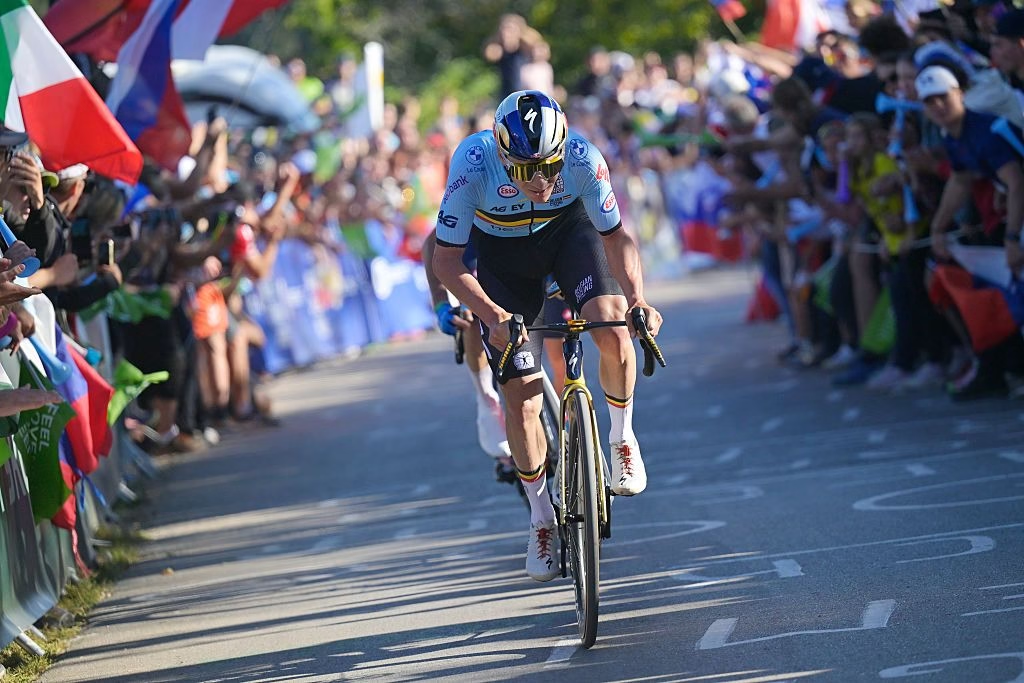
More recently, riders such as Greg Van Avermaet, Philippe Gilbert, Sonny Colbrelli, Dylan van Baarle and Mathieu van der Poel have kept the race central to the sport’s spring narrative. Van der Poel’s run of victories in 2023, 2024 and 2025 has reinforced how Paris-Roubaix remains one of the clearest places for a generational talent to prove his authority.
For newer readers, that more recent stretch of history also connects well with a broader understanding of how Paris-Roubaix still shapes the modern spring, even if the men’s race carries a much longer lineage.
How the race has changed, and how it has not
In obvious ways, Paris-Roubaix is very different from the race of 1896. Bikes are lighter and stronger. Tyres are wider. Teams arrive with recon plans, pressure data and detailed knowledge of every sector. Riders are more aerodynamic, nutrition is more precise, and support structures are far more sophisticated.
Yet the race still resists total control. That is part of its appeal. Modern training can prepare a rider, but it cannot eliminate the randomness of a puncture at the wrong moment or a crash in the wrong place. Team strength matters, but the road still has veto power. Paris-Roubaix remains one of the few races where dominance can be undone in a few seconds by something as simple as bad luck.
That balance between preparation and disorder is probably why the race still feels so authentic. Many modern races can seem increasingly optimised. Paris-Roubaix still looks as though it might fall apart at any moment.
-
 Photo Credit: Flavia Ossola
Why Paris-Roubaix still matters so much
Paris-Roubaix matters because it asks a question almost no other race can ask in the same way. Not just who is strongest, but who can stay functional when cycling stops looking smooth or rational. It tests equipment, nerve, positioning, technique and stubbornness all at once.
It also matters because of its continuity. The race has changed route details, sectors and sporting context, but its emotional core has remained constant. The riders still emerge coated in dust or mud. The cobbles still decide who is really in contention. The velodrome still turns suffering into ceremony.
That is why the history of Paris-Roubaix feels unusually alive. It is not simply a list of winners stretching back to the 19th century. It is a race where the past still feels present in the road surface, the setting and the style of victory.
Paris-Roubaix from then to now
From Josef Fischer in 1896 to the champions of the modern era, men’s Paris-Roubaix has stayed true to itself in a way very few sporting events manage. It began as a hard road race to Roubaix and evolved into something much larger, a Monument shaped by war, industry, road surfaces and mythology.
Its early years gave it endurance. The rise of the pavé gave it identity. The great champions gave it status. Modern television and global audiences gave it reach. But the essential truth has never really changed. Paris-Roubaix is still the race where riders go looking for greatness on the worst road they can find.

