
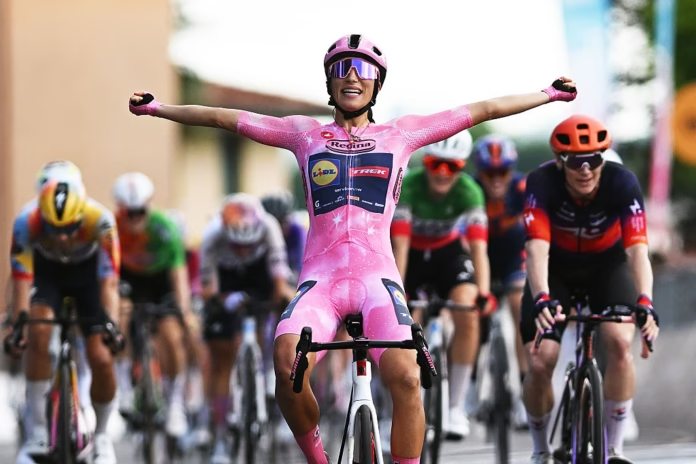
The Giro d’Italia Women 2026 changes rhythm again on stage 6, moving from the Dolomite climbing of Santo Stefano di Cadore to a flatter 159km route from Ala to Brescello. After the Nevegal uphill time trial and the first major mountain road stage, this is the clearest opportunity for the sprinters to return to the centre of the race.
The profile is not complicated in pure climbing terms. There are no categorised ascents, the elevation gain is modest, and the route gradually moves away from the mountains towards the Po plain. For the GC riders, that should make stage 6 a day to stay alert rather than a day to attack. For the fast finishers, it may be the last realistic chance to win a bunch sprint before the race turns towards Salice Terme, Sestriere and the final stage around Saluzzo.
That does not make it simple. Long flat stages late in a race can be more stressful than they look on paper, especially after two demanding GC days. Tired teams, crosswinds, road furniture, tunnels, town entries and a twisting finale can all make the closing kilometres awkward. The sprinters should get their chance, but the route still has enough detail to punish poor organisation.
For the wider race picture, our Giro d’Italia Women 2026 full route guide explains how this stage fits into the nine-day structure, while our Giro d’Italia Women 2026 stage 5 preview covers the Dolomite stage that leads into this flatter transition day.
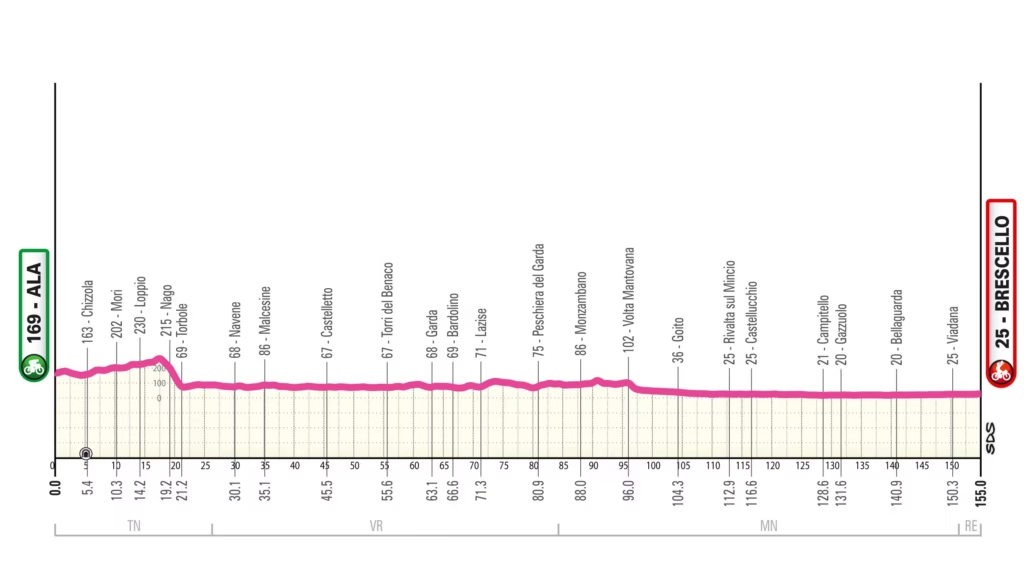
What is the route for Giro d’Italia Women 2026 stage 6?
Stage 6 runs from Ala to Brescello over 159km on Thursday, 4th June. The race starts in Trentino, close to the Adige valley, then heads south towards Lake Garda and the flatter roads of northern Italy before finishing in Brescello.
The first part of the stage should feel very different from the previous day’s mountain racing. The riders leave the higher ground behind, pass through a more rolling and transitional section, then settle into terrain that favours the sprint teams. Once the route reaches the plains, the stage becomes about control, positioning and energy management rather than climbing legs.
There is no categorised climb on the day, which gives the sprinters a clear target. The stage is long enough at 159km to carry fatigue, but not selective enough on profile alone to remove the fastest riders if their teams manage the race properly.
The finish in Brescello is the main complication. A flat run-in does not automatically mean a straightforward sprint, and this finale is likely to reward teams that are organised early. On a day where the peloton should be travelling quickly, a late loss of position could be difficult to repair.
Why stage 6 should suit the sprinters
This is the first clear sprint opportunity since the opening block of the race. Elisa Balsamo dominated the early part of the Giro d’Italia Women 2026, taking the first three stages after Lorena Wiebes was disqualified from the race following stage 1. Since then, the race has moved into GC terrain, with the Nevegal uphill time trial and the Dolomite stage changing the focus.
Stage 6 brings the points classification back into view. Balsamo should again be one of the key names, especially after proving that she can sprint from different race situations. Her opening wins were not all identical, and that is part of why she is so difficult to contain. She can finish off a more controlled bunch sprint, but she can also survive harder finales and still produce a sharp finish.
Chiara Consonni, Lara Gillespie and Charlotte Kool should also see this as a major opportunity. With Wiebes out of the race, the sprint field is still strong but more open than it looked before the Giro began. That creates both opportunity and pressure. Every sprinter left in the race knows this may be the final pure sprint chance of the week.
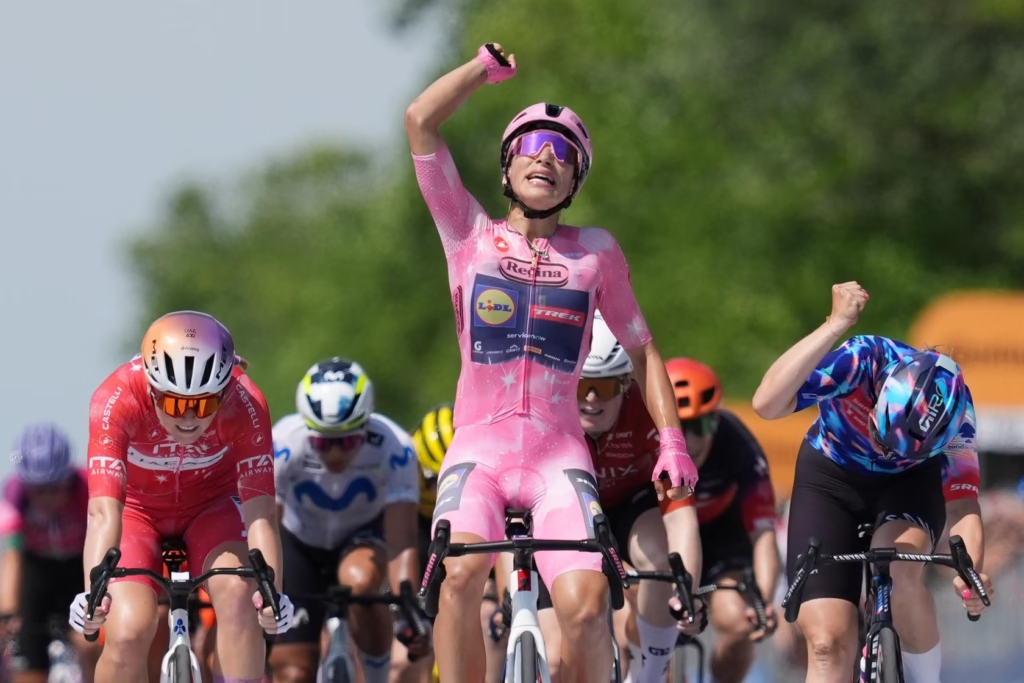 Photo Credit: RCS
The GC teams still need to stay awake
Stage 6 is unlikely to be won by a GC rider, but that does not mean the GC teams can switch off. Flat stages after mountain days are often nervous because everyone is tired, everyone wants to recover, and yet the speed can still be high for long periods.
The main responsibility for the GC teams will be positioning. They do not need to chase the break all day, but they do need to keep their leaders away from crashes and splits. The roads towards Brescello should favour a bunch sprint, but flat terrain can still become dangerous if the wind rises or if the peloton becomes strung out on exposed sections.
Anna van der Breggen, Demi Vollering, Marlen Reusser, Elisa Longo Borghini, Antonia Niedermaier, Monica Trinca Colonel, Urška Žigart and Isabella Holmgren should not need to show themselves at the front late in the stage. Their teams, however, will want them safely positioned before the sprint trains take over.
That is often where the tension comes from. Sprinters’ teams want the same road space as GC teams. Lead-outs need the front. GC leaders need safety. On a flat stage late in a Grand Tour, those two priorities can collide.
Could Elisa Balsamo win again in Brescello?
For Balsamo, stage 6 is a chance to restart the sprint phase of her Giro. The first half of the race already gave her three wins and control of the points classification, but the mountains have shifted the race away from her terrain.
This stage is different. If Lidl-Trek can keep the race together and deliver her cleanly into the final kilometre, Balsamo has every reason to be considered the rider to beat. She has already shown the speed, confidence and repeatability needed to win more than once in the same stage race.
The question is how much the previous two days have cost. The uphill time trial and the Dolomite stage were not designed for her, and the priority there was survival rather than aggression. If she has come through that block without spending too much energy, stage 6 is a golden chance to extend her grip on the points jersey.
There is also a tactical question for Lidl-Trek. The team has GC and young rider interests as well as Balsamo’s sprint ambitions. On this particular stage, though, the route strongly points back towards the Italian fast finisher.
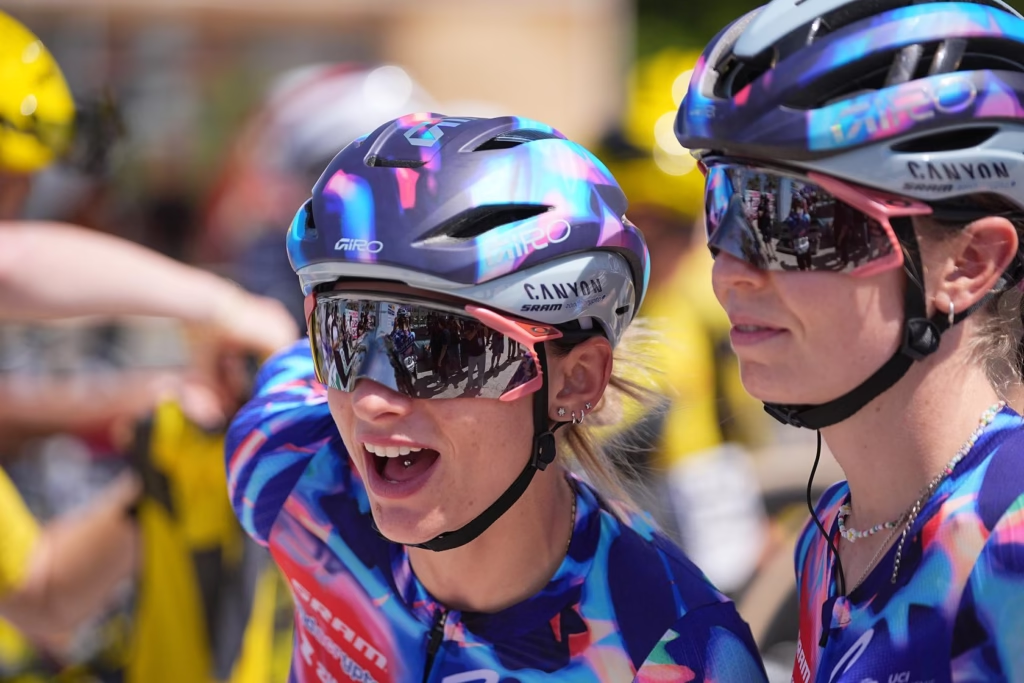 Photo Credit: RCS
Could Chiara Consonni take her chance?
Consonni has been close enough in the sprint stages to know this is a real opportunity. Her finishing speed is strong, and she is particularly dangerous when the final kilometres become messy rather than perfectly controlled. If the lead-outs are disrupted by the twisting finale, she has the timing and track-influenced sharpness to profit.
That may be important in Brescello. A clean, full-speed drag race probably favours Balsamo if Lidl-Trek execute well. A more broken sprint, where riders have to surf wheels and improvise late, could bring Consonni further into the picture.
Her best chance may be to avoid being forced into the wind too early. If she can follow the right wheels through the final kilometre and launch from behind rather than from the front, she has the speed to win.
Lara Gillespie and Charlotte Kool add depth to the sprint field
Gillespie has been one of the most interesting fast finishers in this Giro. She has the speed to contest a sprint, but also enough endurance to remain relevant after harder days. That makes her a strong candidate for a stage like this, especially if the finale is not fully controlled by one dominant lead-out.
Kool is more of a pure sprint reference point. If she reaches the final 200 metres in the right position, she has the top-end speed to win. Her challenge is likely to be the approach rather than the final kick. She needs a clean run-in, strong positioning and enough team presence to avoid being pushed backwards when the GC teams and sprint trains begin fighting for space.
Georgia Baker, Lily Williams, Martina Fidanza, Anniina Ahtosalo, Daria Pikulik, Maggie Coles-Lyster and Megan Jastrab also have reasons to believe they can be involved if the sprint opens up. The absence of Wiebes removes the most dominant pre-race sprint favourite, but it does not make the finish weak. It makes it less predictable.
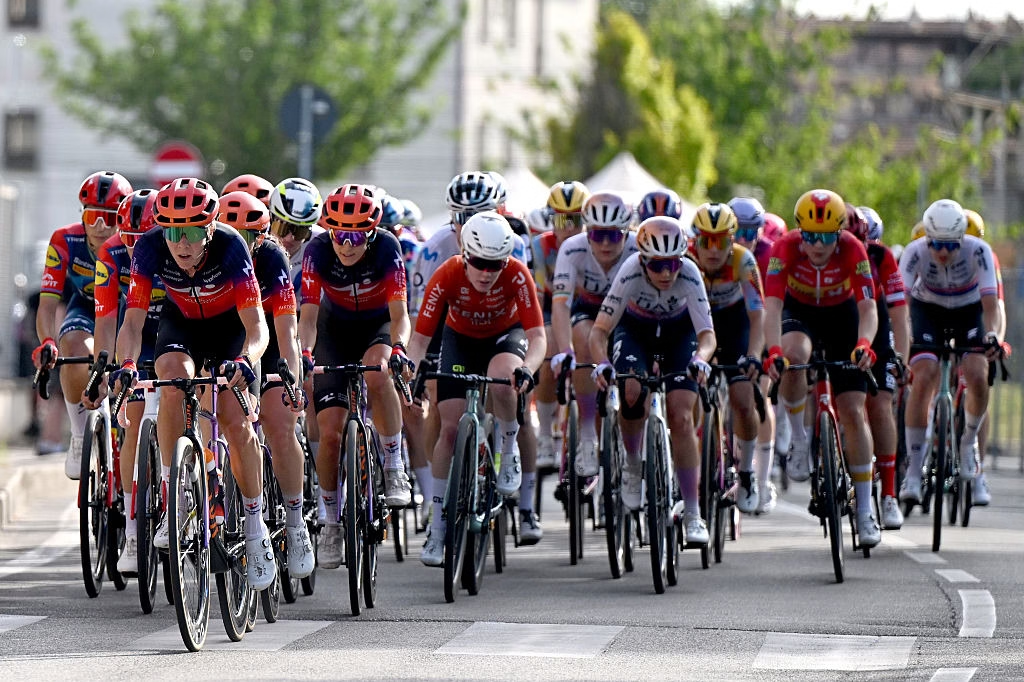 Photo Credit: Getty
Could the breakaway survive?
A breakaway win is possible, but it would be a surprise. Stage 6 is too obvious a sprint chance for the fast teams to ignore, and there are not many opportunities left for sprinters later in the race. That should create enough collective interest to control the gap.
The break’s best hope is fatigue. After two hard days, some teams may be reluctant to spend domestiques early. If the move is small and non-threatening, it could be allowed to build a useful gap. If the sprint teams hesitate or if the wind and road furniture make the chase awkward, the stage could become less predictable than the profile suggests.
Even so, the most likely scenario is a controlled chase. The sprinters know this is their day. If the peloton gives the break too much space, it risks throwing away one of the few remaining chances for a fast finish.
The final kilometres will decide more than the profile
The profile says sprint, but the final kilometres will decide who actually gets to sprint properly. After 159km, positioning will be essential. A rider who enters the last bends too far back may never find clean air. A team that starts its lead-out too early may run out of riders. A sprinter who waits too long could be boxed in.
That is why stage 6 may be less about raw speed than execution. Balsamo, Consonni, Gillespie and Kool all have the finishing ability to win, but the rider who gets the cleanest delivery may have the real advantage.
The safest teams will aim to be near the front before the finale becomes technical. The danger is going too early and becoming exposed. The best sprint trains will need to judge the balance carefully: close enough to control the finish, but patient enough not to leave their sprinter stranded.


What comes next after stage 6?
Stage 7 from Sorbolo Mezzani to Salice Terme should move the race back into more awkward terrain. It is not the full mountain test of stage 8 to Sestriere, but it is much less likely to produce a straightforward bunch sprint than Brescello. That makes stage 6 especially important for the fast riders.
After stage 7, the Giro heads towards its decisive final weekend. Stage 8 brings the Sestriere finish and the Colle delle Finestre, while stage 9 around Saluzzo gives the race one last difficult day. For the GC riders, stage 6 is a chance to conserve before that sequence. For the sprinters, it may be the last proper opportunity before the road turns against them.
That contrast should shape the stage. Some teams will want calm. Others will need control. The sprint teams cannot afford to miss their chance, while the GC teams cannot afford to be caught in someone else’s chaos.
Giro d’Italia Women 2026 stage 6 prediction
The most likely outcome is a bunch sprint in Brescello. The route is flat enough, the stage is important enough for the points classification, and the remaining sprint teams should have a shared interest in bringing the breakaway back.
Balsamo is the obvious favourite. She has already been the dominant fast finisher of the race, and stage 6 gives her the clearest chance to add another win after the mountains briefly took the race away from the sprinters. Consonni looks like one of the biggest threats if the finale becomes less controlled, while Gillespie and Kool both have the speed to win if they are positioned well.
The key variable is fatigue. If the Dolomite stage has left the sprint teams short of control, the finale could become more chaotic than expected. But on paper, this is Balsamo’s stage to lose.
Prediction: Elisa Balsamo to win a fast sprint in Brescello.

