
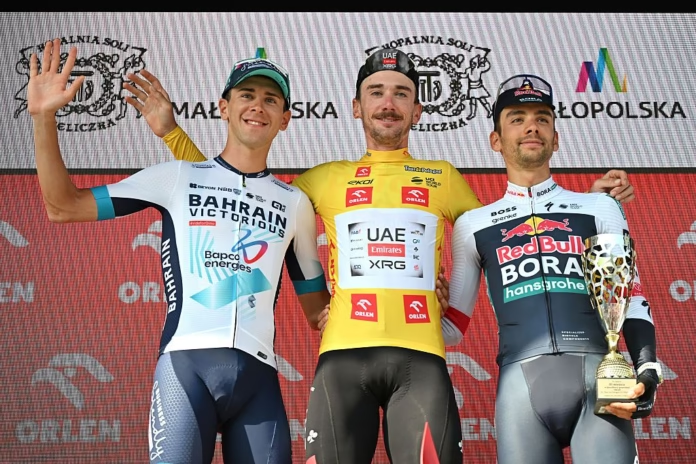
The Men’s Tour de Pologne 2026 takes place from 3 to 9 August, with seven stages taking the peloton from Gdynia on Poland’s Baltic coast to the final individual time trial at the Wieliczka Salt Mine.
The 83rd edition of the Polish WorldTour race brings together the leading men’s teams for a route that begins with three opportunities for the faster riders before moving into the decisive climbing block around Karpacz, Kocierz Resort and Bukowina Tatrzańska. A short individual time trial then decides the final general classification on Sunday 9 August.
The complete route and what each stage means for the race is covered in our Men’s Tour de Pologne 2026 full route guide.
The live start list is embedded below through FirstCycling and will update as teams complete their selections, bib numbers are issued and any late replacements are made before Stage 1.
Tour de Pologne 2026 full start list
Data powered by FirstCycling.com
Who is racing the Tour de Pologne 2026?
As one of the major one-week races on the men’s WorldTour calendar, the Tour de Pologne brings a deep international field to Poland each August.
The WorldTour squads are joined by invited teams and the Polish national selection, creating a field that mixes Grand Tour riders with sprinters, young prospects, stage hunters and riders beginning a new block of racing after the Tour de France.
That variety is one of the features explained in our beginner’s guide to the Men’s Tour de Pologne 2026, which covers how the race works, its classifications and why the overall battle is often decided by relatively small gaps.
The complete list of teams and riders is available in the live FirstCycling embed above, which should remain the most useful version of the start list as final selections change.
The Tour de Pologne start list has to cover several types of racing
The 2026 route gives teams a difficult selection problem because there is no single rider type who suits every stage.
The opening three days should give sprinters and powerful Classics riders their best opportunities. Stage 4 at Karpacz then introduces the first serious GC test, followed by another demanding finish at Kocierz Resort and the short, aggressive Bukowina Tatrzańska mountain stage.
The race then finishes with an individual time trial at Wieliczka.
That means GC teams need climbers, rouleurs and riders capable of protecting a leader across potentially nervous opening stages, while sprint teams still need enough support to control the early breakaways.
It is the balance between those demands that makes the final seven-rider selections interesting.
The opening three stages favour faster riders
The 2026 Tour begins with three days travelling south from northern Poland.
Stage 1 covers 234km from Gdynia to Koszalin, making it the longest stage of the race. It is not necessarily a completely straightforward sprint day either, with more than 2,000 metres of elevation gain and the final classified climb on Góra Chełmska only a few kilometres from the finish.
Stage 2 from Międzyzdroje to Szczecin is the clearest opportunity for the pure sprinters, while Stage 3 from Gorzów Wielkopolski to Zielona Góra again gives the faster riders a chance but contains enough late climbing to leave open the possibility of a reduced finish.
The full Tour de Pologne 2026 route guide goes through each of those stages in more detail.
For GC riders, the objective is simpler: arrive at Karpacz without having lost unnecessary time through crashes, crosswinds or positioning mistakes.
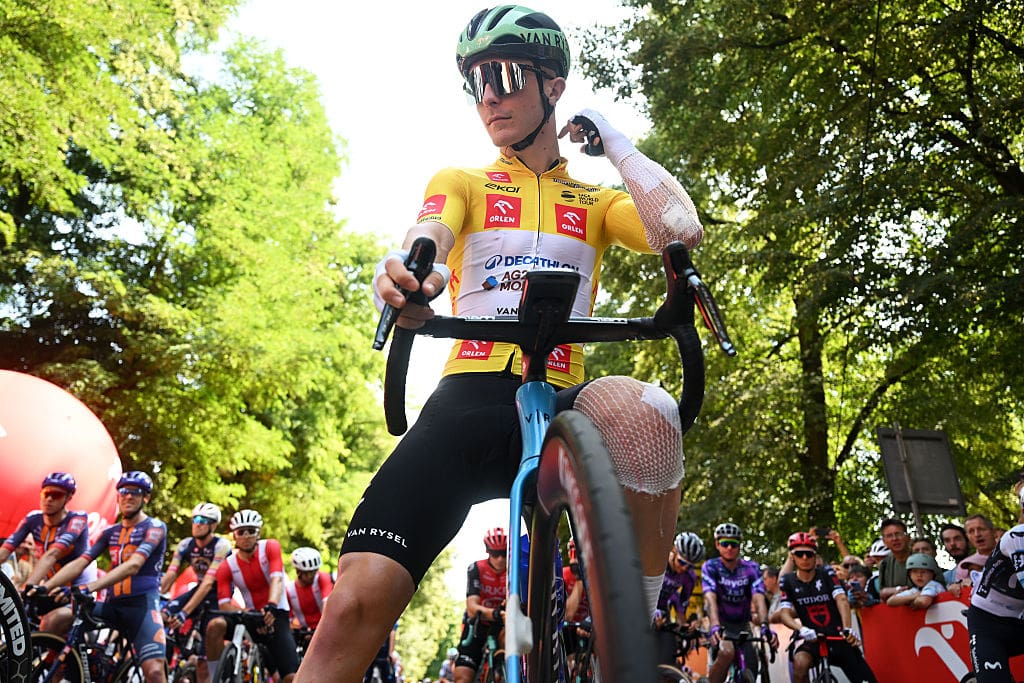
Stage 4 to Karpacz begins the GC battle
The race changes character on Stage 4 from Żagań to Karpacz.
The 175.5km stage is the first day built primarily around the general classification, finishing at Orlinek after the race has moved into the harder terrain of Lower Silesia.
Karpacz has become one of the Tour de Pologne’s familiar GC locations because its climbing rewards powerful stage racers and punchy climbers rather than riders who need a long Alpine ascent to make a difference.
The gaps may still be measured in seconds rather than minutes.
With a short time trial waiting on the final day, those seconds can decide the race.
Kocierz Resort gives the climbers another chance
Stage 5 from Opole to Kocierz Resort comes immediately after Karpacz and stretches to 218.5km, making it one of the longest days of the week.
That sequencing should begin to expose the riders who arrived in Poland genuinely capable of challenging for the overall classification.
A contender who loses time at Karpacz cannot simply wait for the final time trial and hope everything comes back together. The harder finish at Kocierz provides another chance to attack, while teams with multiple GC options can begin using them tactically.
This is where start-list depth becomes particularly important.
One strong leader is useful.
Having several riders capable of surviving with the front group gives a team considerably more control over how the final three days are raced.
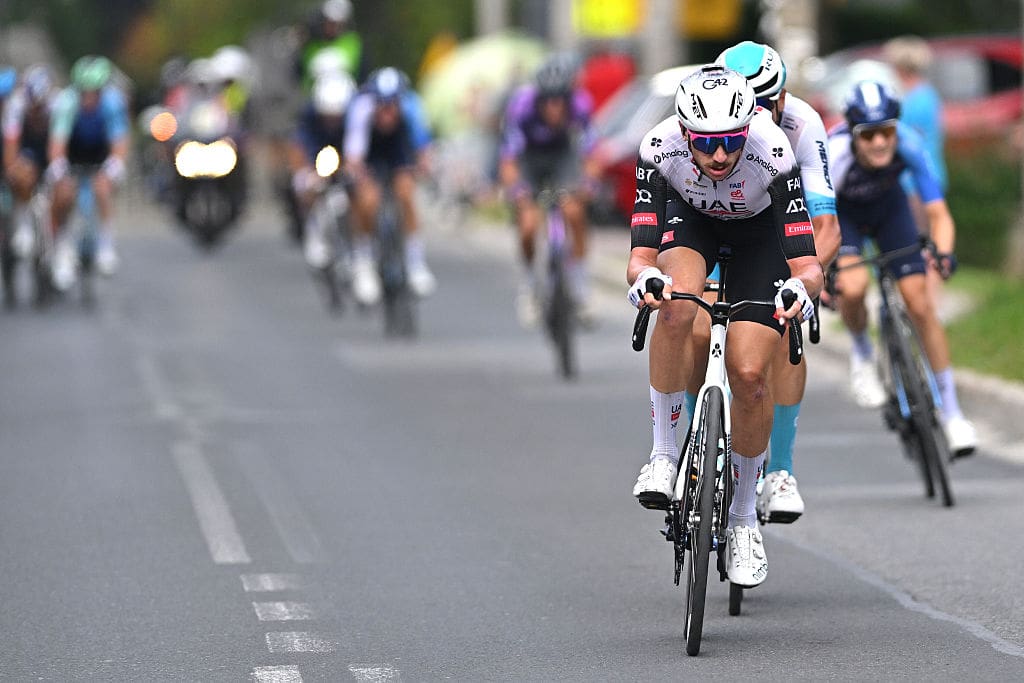
Bukowina Tatrzańska is the main climbing stage
Stage 6 from Bukovina Resort to Bukowina Tatrzańska is the final road stage and the clearest opportunity for the climbers to reshape the general classification.
At only 126km, it should be raced much more aggressively than a long mountain stage where teams can spend hours controlling a breakaway.
The repeated climbing around Bukowina, including the BUKOVINA Wall in Gliczarów, gives riders several opportunities to increase the pressure before the final uphill run.
Anyone who expects to lose time in the Wieliczka individual time trial has a simple problem.
This is the last chance to build enough of an advantage to survive it.
That makes Stage 6 the most important road stage for assessing the GC riders on the start list.
The Tour ends against the clock at Wieliczka
The Tour de Pologne finishes at the Wieliczka Salt Mine on Sunday 9 August with a short individual time trial.
At around 12.5km, it is not long enough for the strongest time triallists to erase enormous mountain deficits, but it is more than enough to overturn a general classification separated by only a handful of seconds.
That changes the calculation throughout the week.
A strong climber needs to attack Karpacz, Kocierz and Bukowina if they expect to lose time against the clock.
A GC rider with good time trial ability can afford to race more defensively in the mountains if they remain close enough.
The final stage therefore makes the 2026 Tour de Pologne a race for complete stage racers rather than pure climbers.
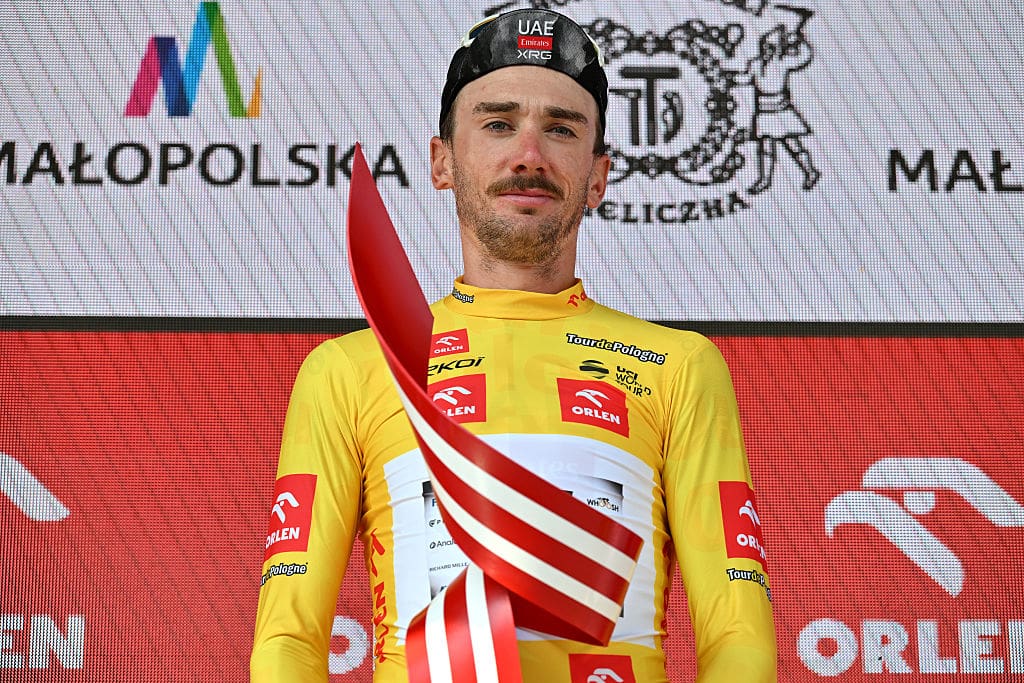
Tour de Pologne 2026 route at a glance
| Stage | Route | Distance | Likely race type |
|---|---|---|---|
| 1 | Gdynia to Koszalin | 234km | Strong sprinter / Classics rider |
| 2 | Międzyzdroje to Szczecin | 151km | Sprinter |
| 3 | Gorzów Wielkopolski to Zielona Góra | 193.5km | Sprint or reduced sprint |
| 4 | Żagań to Karpacz | 175.5km | GC / punchy climbers |
| 5 | Opole to Kocierz Resort | 218.5km | Climbers / GC |
| 6 | Bukovina Resort to Bukowina Tatrzańska | 126km | Main mountain stage |
| 7 | Wieliczka Salt Mine ITT | Around 12.5km | Time trial / GC |
The race has three clear phases.
The faster riders get the opening three stages.
The climbers and GC contenders take over from Karpacz through Bukowina.
The time triallists get the final opportunity to overturn the race at Wieliczka.
That balance is why the Tour de Pologne start list usually contains a much wider range of rider types than a race built entirely around mountain finishes.
Which riders should you look for on the start list?
The most important names are not necessarily those with the biggest reputations.
The route rewards riders capable of combining climbing with a good short time trial, particularly if they also have enough punch to handle the Karpacz finish.
There should also be a substantial group of sprint contenders because the first half of the race offers several opportunities before the terrain becomes considerably more difficult.
Young riders are worth watching too.
The Tour de Pologne regularly sits in a useful part of the calendar for teams wanting to give developing riders WorldTour responsibility without immediately placing them into the pressure of a Grand Tour.
The final start list can therefore reveal a lot about each team’s objectives. Some will clearly arrive with a GC leader. Others will be built around sprints or stage hunting, while several will use a mixed squad capable of changing priorities as the race develops.
When will the Tour de Pologne 2026 start list be final?
The field will continue to change during the final days before Stage 1.
Teams can announce an intended seven-rider squad and still make late substitutions because of illness, injury or changes to riders’ programmes after July racing.
That is why the FirstCycling embed at the top of this page is more useful than reproducing a static 147-rider list manually. It can update as selections and bib numbers are finalised.
Anyone looking for the latest riders should therefore use the live list above, particularly during the final 48 hours before the race.
How to watch the Tour de Pologne 2026 in the UK
All seven stages are scheduled to be available live to British viewers through Warner Bros. Discovery’s cycling coverage.
TNT Sports is the UK television home for the race, while HBO Max is the main streaming option following the move of Warner Bros. Discovery’s premium sports streaming coverage away from Discovery+.
There is no free-to-air UK broadcast currently confirmed.
Daily channel allocations and broadcast start times can vary depending on other live sport, so the electronic programme guide becomes increasingly important once race week begins.
Our full guide to watching the Men’s Tour de Pologne 2026 in the UK covers the channels, streaming options, stage schedule and the days most worth prioritising.
For the wider race picture, including the format, jerseys and why the Tour de Pologne matters on the WorldTour calendar, see the beginner’s guide to the Men’s Tour de Pologne 2026.
The live start list above will continue to update as the final field for Gdynia takes shape.

