
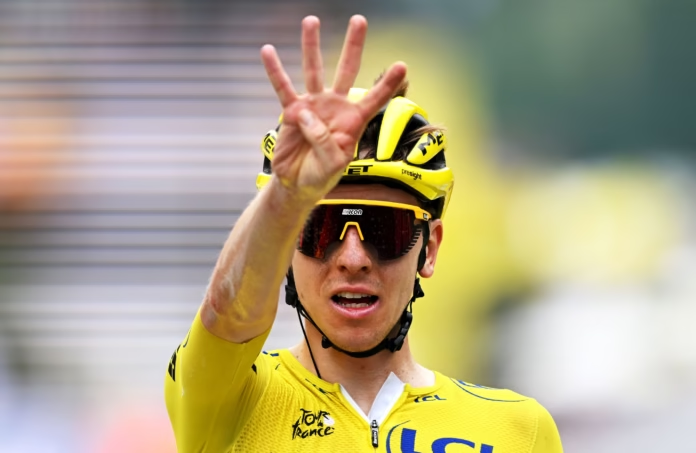
The Tour de France general classification is the competition to decide the overall winner of the race. It is usually called the GC, short for general classification, and it is based on time rather than points. The rider with the lowest total time after all 21 stages wins the Tour de France and wears the yellow jersey.
That sounds simple, but the GC is the most important and most complex part of the Tour. Every climb, time trial, crash, split, bonus second and team tactic can change the standings. A rider does not need to win the most stages to win the Tour. They need to complete the whole race in less accumulated time than everyone else.
At the 2026 Tour de France, that will mean surviving a route that starts with a team time-trial in Barcelona, climbs early in the Pyrenees, crosses the Massif Central, heads through the Vosges and Jura, then finishes with a brutal Alpine block including back-to-back Alpe d’Huez stages. The GC riders will have to be consistent from the opening weekend to Paris.
For the broader race picture, see our Tour de France 2026 full route guide, Tour de France 2026 route analysis and Tour de France 2026 GC favourites ranked.
 Photo Credit: A.S.O./Billy Ceusters
What is the general classification?
The general classification is the overall standings in the Tour de France. After every stage, each rider’s time is added to their total. The rider with the lowest total time leads the race.
That leader wears the yellow jersey. If the race ended that day, they would be the Tour winner. Because the Tour lasts three weeks, the yellow jersey can change hands several times before the final result is decided.
A rider can lead the GC without winning a stage. They can also win multiple stages and still not be close to the overall lead. Sprinters may win flat stages, climbers may win mountain stages and breakaway riders may take spectacular victories, but the GC is about the full race.
The Tour de France winner is therefore not necessarily the rider who looks best on one day. It is the rider who loses the least time across every stage.
How is GC time calculated?
At the end of each stage, every rider receives a finishing time. That time is added to their previous total.
For example, if a rider takes 4 hours on stage 1, 5 hours on stage 2 and 3 hours 30 minutes on stage 3, their total time is 12 hours 30 minutes. The same calculation is made for every rider across the race.
The GC standings are then ordered by total time. The smallest number leads.
| Rider | Stage 1 | Stage 2 | Stage 3 | Total time |
|---|---|---|---|---|
| Rider A | 4:00:00 | 5:00:00 | 3:30:00 | 12:30:00 |
| Rider B | 4:00:10 | 4:59:50 | 3:30:20 | 12:30:20 |
| Rider C | 4:01:00 | 5:00:30 | 3:29:00 | 12:30:30 |
In that example, Rider A leads the general classification by 20 seconds over Rider B and 30 seconds over Rider C.
This is why small time gaps matter. A few seconds lost in a time trial or on a climb can still be important two weeks later.
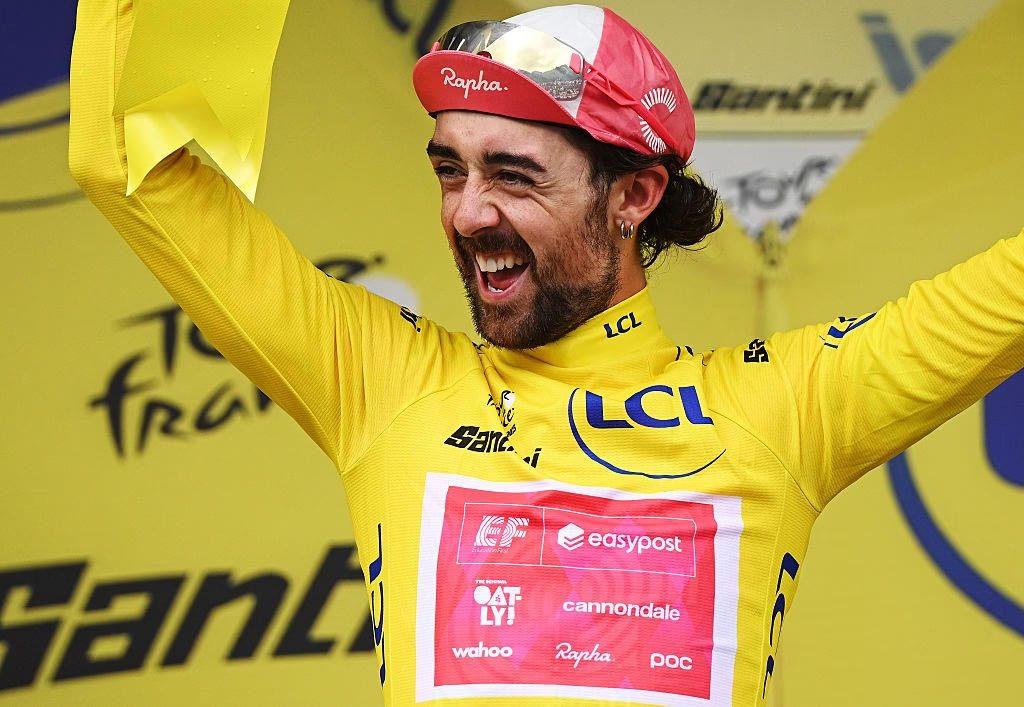 Photo Credit: Getty
Why is the yellow jersey so important?
The yellow jersey is the symbol of the Tour de France leader. It is worn by the rider leading the general classification after each stage.
The jersey carries sporting, historical and psychological weight. It tells the peloton who is currently winning the race. It also changes how that rider’s team has to race. A team defending yellow may need to control breakaways, position their leader, chase dangerous moves and protect them from crashes or crosswinds.
Wearing yellow can be motivating, but it can also be costly. The leader’s team has more responsibility, more media attention and less tactical freedom. Sometimes a team may even prefer not to take the yellow jersey too early if it means burning energy for several weeks.
By Paris, though, the aim is simple. The rider in yellow after the final stage wins the Tour de France.
For the jersey hierarchy, see our Tour de France 2026 jerseys explained.
How do riders gain time in the Tour de France?
GC riders gain time by finishing ahead of their rivals. That usually happens in four main ways:
| Situation | How time is gained |
|---|---|
| Mountain stages | A rider attacks or drops rivals on a climb |
| Time trials | A rider completes the course faster than rivals |
| Team time-trials | A rider benefits from a faster team performance |
| Splits, crashes or crosswinds | Rivals lose contact before the finish |
The biggest gaps usually come in the mountains and time trials. A rider can lose minutes on a bad climbing day, while a strong time-triallist can take time on flatter solo efforts.
Smaller gaps can come from stage finishes, late attacks, bonus seconds or bunch splits. These may look minor, but the Tour can be decided by less than a minute.
The best GC riders therefore have to be alert every day. They cannot only focus on the famous climbs. Flat stages, windy roads, technical finishes and team time-trials can all change the general classification.
What are time gaps?
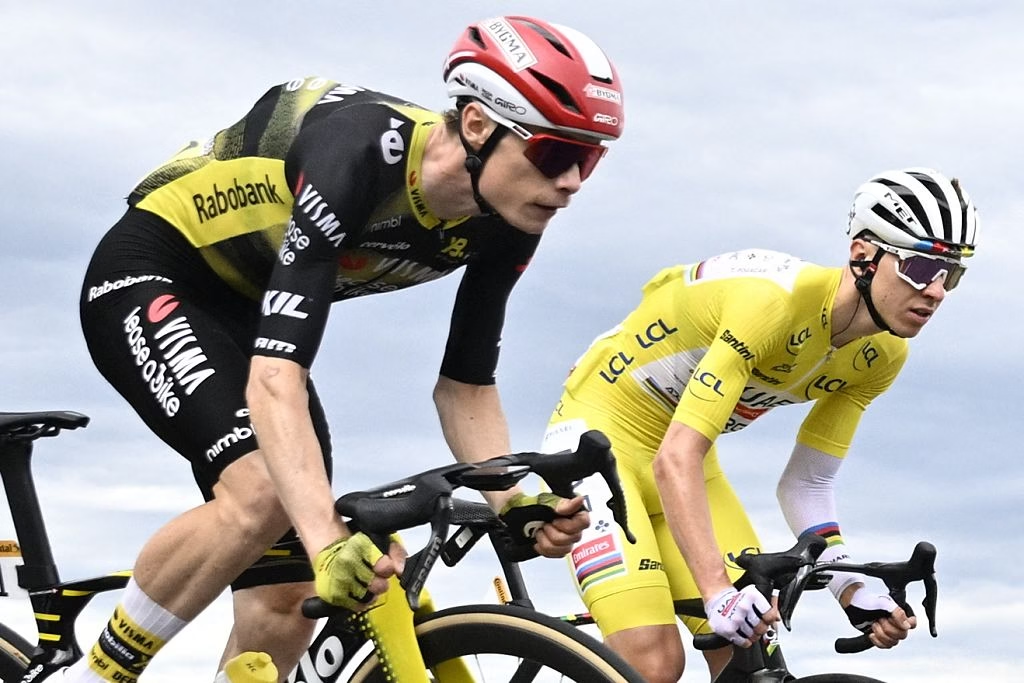
A time gap is the difference between riders at the finish. If one rider finishes 20 seconds ahead of another, that 20 seconds is added to the second rider’s GC deficit.
Time gaps can be created naturally, as riders finish apart on climbs or after attacks. They can also appear when the peloton splits into different groups.
On flat stages, large groups often receive the same time if they finish together. That is why a sprinter can win a stage while the GC riders behind them all keep the same general classification time. But if a split opens in the final kilometres and the officials record a gap, riders behind that split can lose time.
This is why GC teams fight for position even on sprint stages. They may not care about the stage win, but they care deeply about avoiding the wrong side of a split.
For the stages where that could matter in 2026, see our Tour de France 2026 route: best days for GC attacks.
What are bonus seconds?
Bonus seconds are time rewards taken off a rider’s GC total. At the Tour de France, stage-finish bonuses are usually awarded to the first three riders on most road stages. In 2026, the official route states that the first three finishers will receive 10, 6 and 4 seconds respectively.
That means a rider who wins a stage does not only gain any time gap they create on the road. They can also gain 10 bonus seconds. Second place receives 6 seconds, third place receives 4 seconds.
For example, if two GC riders finish together but one wins the stage and the other finishes fourth, the winner can still gain 10 seconds overall through bonuses.
Bonus seconds are especially important on punchy stages and summit finishes. Riders who are explosive enough to win stages can slowly build an advantage even without creating big gaps. That is one reason riders like Tadej Pogačar are so dangerous in the Tour. They can gain time through attacks, stage wins and bonuses.
How do time trials affect the GC?
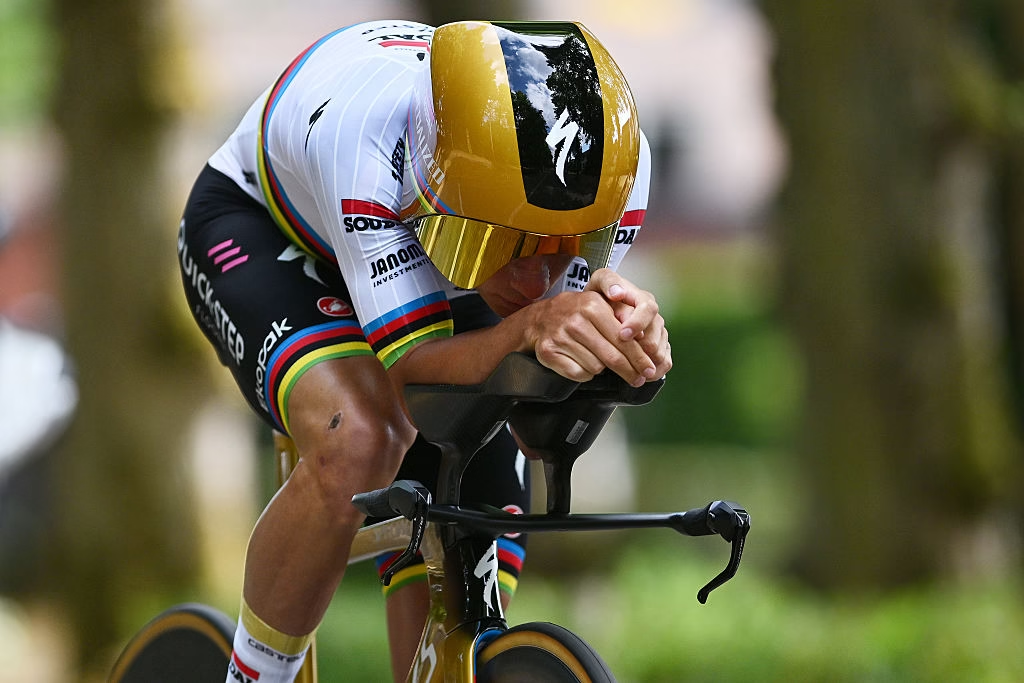
Time trials are one of the clearest GC tests because riders cannot hide behind teammates for most of the effort. In an individual time trial, each rider races alone against the clock. The faster rider gains the exact time difference over slower rivals.
A strong time-triallist can gain a lot of time even if they are not the best climber. A weaker time-triallist can ride well in the mountains but still lose serious ground against more complete GC contenders.
The 2026 Tour includes time-trial pressure from the start because stage 1 is a team time-trial in Barcelona. There is also an individual time-trial later in the race. That means the GC will not be decided only by climbing.
The best Tour contenders now need to limit losses or gain time against the clock. A pure climber who cannot time-trial well starts with a major disadvantage.
For more on that opening test, see our Tour de France 2026 team time-trial explained and best time-triallists at the Tour de France 2026.
How does the team time-trial affect the GC?
A team time-trial is different from an individual time trial because riders race together in their trade teams. They take turns on the front, shelter each other from the wind and try to keep the group moving as fast as possible.
In the 2026 Tour, the opening stage in Barcelona gives the team time-trial extra importance. It can put time between GC contenders before the race has even reached the mountains.
A strong team can protect its leader and start the Tour with an advantage. A weaker team can leave its leader chasing from day one. That can change tactics immediately. A rider who loses time in Barcelona may have to attack earlier in the race, while a rider who gains time can ride more defensively.
Team time-trials also test organisation. It is not enough to have one strong leader. The whole squad needs power, timing and discipline. If riders are dropped too early or the formation breaks down, the leader can lose time before the decisive climbs arrive.
For the race-specific implications, see our how the stage 1 team time-trial could change the Tour de France 2026.
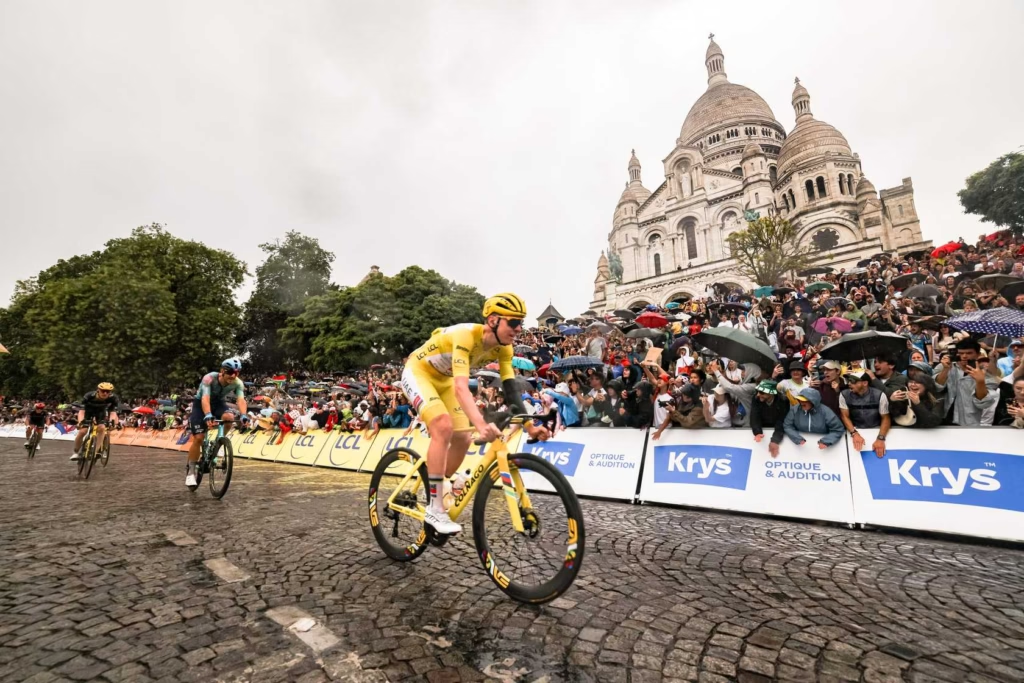
Why do mountains matter so much for GC?
Mountains are where the Tour de France usually creates its biggest GC gaps. Climbs expose differences in power, weight, endurance, recovery and team support. A rider who looks comfortable on flat roads can lose minutes on a long Alpine climb.
Mountain stages matter because drafting helps less when the gradient is steep. On flat roads, a rider can save energy by sitting behind teammates. On climbs, the speed is lower and the strongest riders are harder to hide from. If a leader cannot follow the pace, they lose contact.
The 2026 Tour has several major mountain tests. The early Pyrenees will test riders quickly, the Massif Central adds mid-race difficulty, and the final Alpine block includes Orcières-Merlette and two stages finishing on Alpe d’Huez.
That final week could decide the race. A rider may survive the opening two weeks in contention, then lose everything if they crack in the Alps.
For the key climbing days, see our Tour de France 2026 mountain stages ranked by difficulty, Tour de France 2026 summit finishes guide and Tour de France 2026 queen stage guide.
What is a GC contender?
A GC contender is a rider who can realistically compete for the overall victory, podium or high overall placing. They are usually strong climbers, good time-triallists or all-rounders who can survive every type of stage.
A GC contender needs more than one standout ability. They must climb well, avoid crashes, recover every day, handle pressure, time-trial strongly, follow attacks, descend safely and rely on a strong team.
Modern Tour contenders are especially complete. Riders like Tadej Pogačar, Jonas Vingegaard and Remco Evenepoel can shape the race in different ways. Pogačar can attack explosively and take bonus seconds. Vingegaard is one of the best pure mountain GC riders. Evenepoel brings major time-trial strength and long-range power.
Other riders may aim for the podium, top five, top 10, white jersey or stage wins if GC slips away. Not every protected rider is racing to win the Tour. Some are trying to build a strong general classification position over three weeks.
For more on the main names, see our Tour de France 2026 GC favourites ranked, Tadej Pogačar at the Tour de France 2026 and Jonas Vingegaard at the Tour de France 2026.
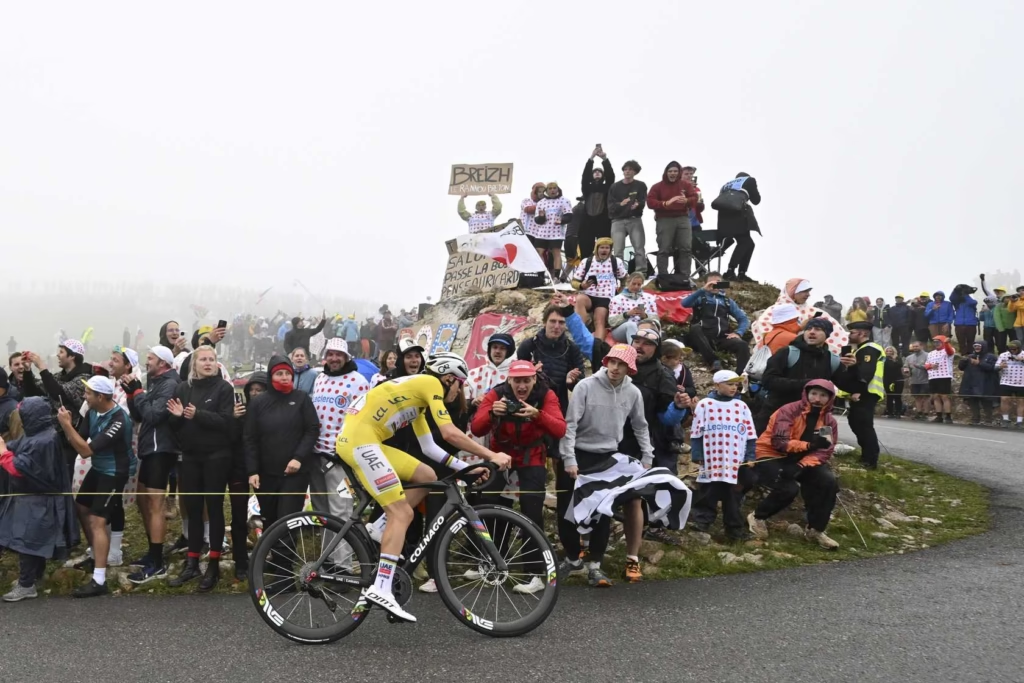 Photo Credit: A.S.O./Billy Ceusters
What does a GC team do?
A GC team exists to protect its leader. That means more than riding near the front on mountain stages.
On flat stages, teammates keep the leader safe from crashes, wind and splits. In crosswinds, they help position them before the race breaks apart. In the mountains, climbing domestiques set the pace, chase attacks or stay with the leader until the final kilometres. In time trials, staff and equipment choices become part of the GC plan.
A good GC team can make the race feel controlled. It can discourage attacks, bring back dangerous moves and keep its leader calm. A weak team forces the leader to spend more energy solving problems alone.
That is why the Tour is often described as an individual race won by a team. Only one rider wins the yellow jersey, but they rarely do it without a full squad built around them.
For more on team roles, see our Tour de France 2026 team-by-team guide, Tour de France 2026 domestiques who could decide the race and what is a domestique at the Tour de France?.
Why do GC riders stay near the front?
GC riders stay near the front because danger usually starts before the television pictures make it obvious. Crashes, road furniture, narrow roads, roundabouts, wind, corners and technical finishes can all split the peloton.
Being near the front reduces the risk of being caught behind a crash or split. It also means a team can react quickly if another GC squad accelerates.
This is why flat stages are often more stressful than they look. A casual viewer might see a sprint day and assume the GC riders are relaxing. In reality, their teams may spend hours fighting for position to avoid losing time.
A Tour contender can lose the race without being dropped by another climber. They can lose it by being badly positioned when the peloton splits, by crashing in the wrong place or by wasting energy all day trying to move back up.
What is the 3km or 5km rule?
The Tour uses specific rules to protect riders from losing GC time because of crashes or mechanical problems near the finish on certain stages. Traditionally, many flat stages have used a 3km rule, where riders caught by a crash or mechanical issue inside the final 3km can be given the same time as the group they were in.
In recent Tours, that protection has been extended to 5km on selected stages. The exact application depends on the stage and the race regulations. It is not a blanket rule for every finish, and it does not usually apply in the same way on summit finishes or stages where the final climb is part of the selection.
The principle is important: the Tour tries to stop GC riders losing time purely because of unavoidable chaos in sprint finales. That does not remove the need for positioning, but it can reduce the damage from late crashes.
For fans, the key point is to wait for official results. A rider may cross the line behind after a crash, but the jury may still award them the same time as their previous group if the rule applies.
What is the time cut?
The time cut is the maximum time a rider is allowed to lose on a stage and still remain in the race. It is mainly relevant to sprinters, domestiques and injured riders on very hard mountain days.
The time cut is calculated as a percentage of the stage winner’s time. The exact percentage depends on the type and difficulty of the stage and the speed at which it is raced. Harder stages usually allow a bigger percentage than easier stages.
A rider who finishes outside the time cut can be eliminated. In rare cases, the race jury can reinstate riders if a large group misses the cut because of exceptional circumstances, but riders cannot rely on that.
The time cut affects GC indirectly. A leader will not usually be close to missing it, but their teammates might be. If key domestiques are eliminated, the leader’s support weakens for the rest of the race.
It also shapes how sprinters ride mountain stages. They may form a gruppetto, a group of riders working together to reach the finish inside the limit while saving as much energy as possible.
 Photo Credit: Getty
How do rest days affect the GC?
Rest days do not count directly towards the general classification because there is no stage time to add. But they can still affect the race.
Some riders recover well and feel better after a rest day. Others struggle when the rhythm changes. The stage after a rest day can sometimes produce surprises because not every body responds the same way.
Rest days also give teams time to reassess tactics. A rider who was defending might decide to attack. A rider who looked strong might be hiding fatigue. A team may change priorities if a leader has lost too much time.
In the 2026 Tour, the rest days come before important blocks of racing. The way riders recover before the Massif Central, Vosges, Jura and Alps could shape the final GC.
For more on recovery between stages, see our how Tour de France riders recover between stages.
Can a rider lose the Tour on a flat stage?
Yes. Flat stages may not usually create huge gaps between the main GC riders, but they can still be dangerous.
A crash can injure a contender. Crosswinds can split the peloton. Poor positioning can leave a rider trapped behind a gap. A mechanical problem at the wrong moment can cost time. Even if no time is lost, the stress and effort of a chaotic flat stage can affect recovery for the next day.
This is why GC teams work hard on stages that look simple on paper. They know the Tour can be lost anywhere.
Flat stages are also important because they are often the days when GC riders want to save energy. If they are forced to chase, reposition or close gaps repeatedly, that hidden effort can add up before the mountains.
For the sprint days where GC riders will still need to stay alert, see our Tour de France 2026 sprint stages ranked and Tour de France 2026 route: best days for sprinters.
Why does the final stage usually not change GC?
The final stage of the Tour traditionally ends in Paris and is often treated as a celebration for the overall winner, unless the time gaps are extremely small or the route has an unusual competitive structure.
That does not mean the stage does not count. It does. But in normal circumstances, the yellow jersey is effectively settled before the final day because attacking the overall leader on the Paris circuits has traditionally been considered against race custom.
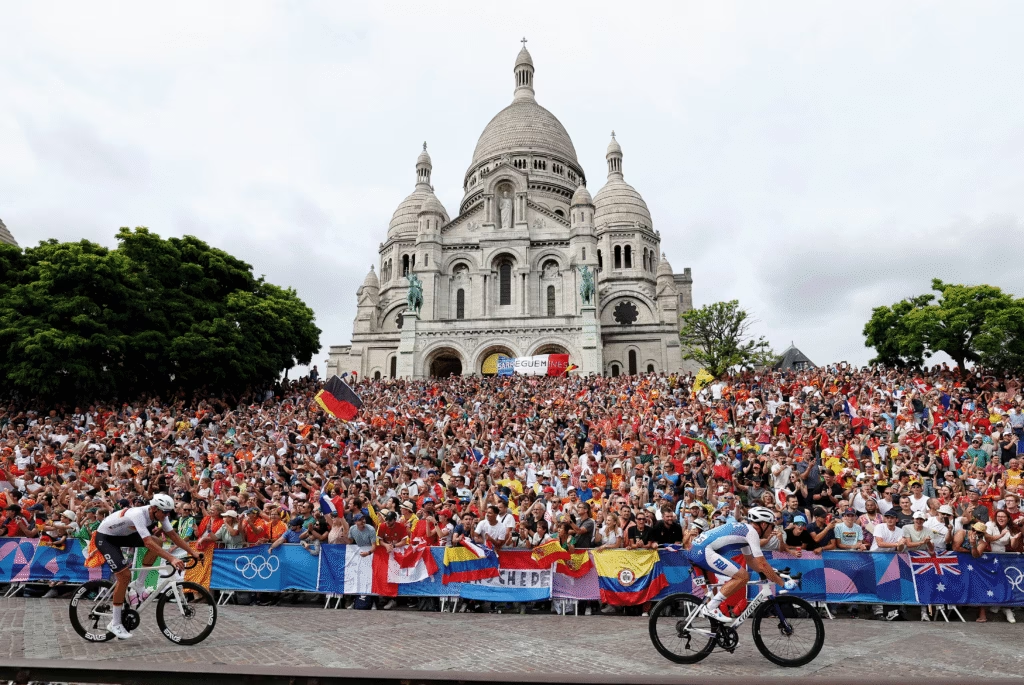
However, the final stage can still matter for the points classification, stage victory and prestige. In recent editions, the Paris finale has also become more tactically interesting because of the use of the Montmartre climb.
For GC, the decisive action usually happens before Paris: in the mountains, time trials and any stages where the race splits.
How can a rider win the Tour without winning a stage?
A rider can win the Tour without winning a stage because the GC is based on total time, not stage victories.
If a rider consistently finishes near the front, avoids bad days and gains time in key moments, they can beat riders who won individual stages but lost more time elsewhere.
For example, a rider might finish second or third on several mountain stages, ride a strong time trial and never lose significant time. Another rider might win two stages but lose five minutes on a bad day in the Alps. The more consistent rider would lead the GC.
This is one of the most important things for new fans to understand. Stage wins are valuable, but the Tour winner is the rider with the lowest total time across the whole race.
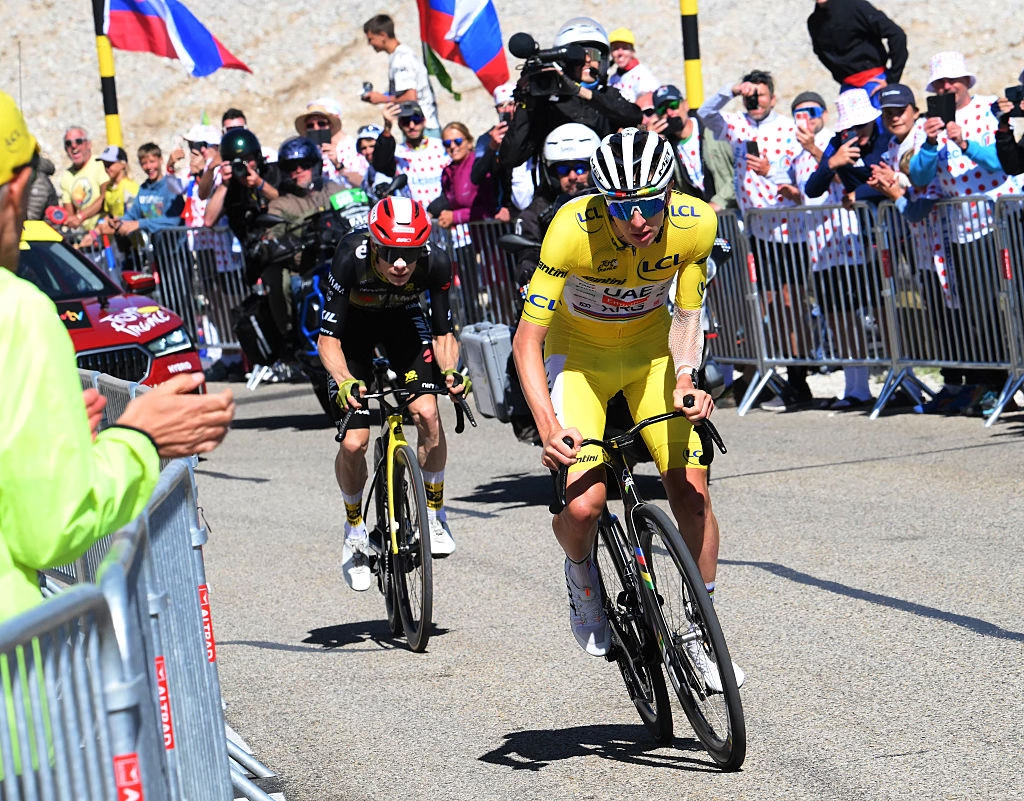 Photo Credit: Getty
How do breakaways affect the GC?
Breakaways are groups of riders who attack ahead of the peloton. Many breakaways are made up of riders who are not dangerous in the GC because they are already far behind overall.
GC teams often allow those riders to go clear, especially on stages where the breakaway does not threaten the yellow jersey. That lets the peloton save energy while the breakaway fights for the stage win.
But a breakaway can become a GC issue if it contains a rider close enough overall to threaten the lead. In that case, the yellow jersey team or other GC teams may chase.
Breakaways can also affect bonus seconds, stage wins and team tactics. If the breakaway takes the stage, the main GC riders may lose a chance to gain bonus seconds at the finish. If the break is caught late, the GC riders may fight for the stage and bonuses themselves.
For more on likely breakaway terrain, see our Tour de France 2026 route: best days for breakaways and Tour de France 2026 breakaway stages ranked.
What happens if riders have the same time?
If riders are tied on total time, the Tour has tie-break rules. These can include fractions of seconds from time trials, stage placings and overall placing calculations across the race.
In practice, ties at the very top of the Tour are rare by the final week because the mountains and time trials usually create separation. Early in the race, though, many riders can be on the same time, especially after sprint stages where the peloton finishes together.
This is one reason bonus seconds and time trials are so important in the opening days. They help create an early order in the GC when many riders might otherwise be level.
What is the difference between GC and other classifications?
The general classification is the race for the yellow jersey and the overall Tour win. It is based on time.
Other classifications work differently:
| Classification | Jersey | How it works |
|---|---|---|
| General classification | Yellow | Lowest total time |
| Points classification | Green | Points from finishes and intermediate sprints |
| Mountains classification | Polka-dot | Points from categorised climbs |
| Young rider classification | White | Best GC rider under the age limit |
| Team classification | No leader’s jersey | Combined times of selected riders from each team |
A rider can be important in one classification and irrelevant in another. A sprinter may be fighting for green while sitting hours down on GC. A climber may chase the polka-dot jersey without trying to win the Tour. A young GC rider may target the white jersey while also aiming for the top 10 overall.
The yellow jersey remains the main prize because it decides the Tour de France winner.
For a full classification explainer, see our Tour de France 2026 jerseys explained.
-
 Photo Credit: Getty

How the 2026 route could shape the GC
The 2026 route creates several different GC tests.
The opening team time-trial in Barcelona can immediately create gaps between contenders. The early Pyrenean stages mean riders cannot wait until the second week to find form. The Massif Central and Vosges-Jura sections add fatigue and tactical danger before the Alps. The final mountain block then gives the strongest climbers one last chance to decide the race.
That structure means GC riders need to be ready from day one. A slow start could be costly. A bad day in the Alps could still undo everything. The route rewards complete riders rather than specialists.
The 2026 Tour should suit riders who can climb repeatedly, time-trial well, handle pressure and recover across three weeks. It is not enough to be brilliant once. The winner will need to be consistently strong across the entire route.
For the key terrain, see our Tour de France 2026 Pyrenees guide, Tour de France 2026 Massif Central guide, Tour de France 2026 Vosges and Jura guide and Tour de France 2026 Alps guide.
Tour de France GC explained in simple terms
The easiest way to understand the general classification is this:
Every rider’s time is added up every day. The rider with the lowest total time leads. The rider with the lowest total time in Paris wins.
Everything else is about how riders gain, lose or protect that time. Mountains create gaps. Time trials measure individual strength. Teams protect leaders. Bonus seconds reward stage results. Crashes, splits and bad days can ruin a race. Recovery decides whether a rider can repeat their best efforts across three weeks.
The yellow jersey is therefore not just about being the fastest rider on one stage. It is about being the best rider over the whole Tour de France.
For more Tour de France 2026 coverage, visit our Tour de France hub, beginner’s guide to Men’s Tour de France 2026 and how to watch Tour de France 2026 in the UK.

