

The Tour de France 2026 will start in Barcelona and finish on the Champs-Élysées in Paris, but the race between those two points looks anything but straightforward. Across 3,333km, the 113th edition takes in a Spanish Grand Départ, the Pyrenees, the Massif Central, the Vosges, the Jura and the Alps, with five summit finishes and a final mountain weekend built around back-to-back stages to Alpe d’Huez.
This is a route designed to build pressure in layers. The opening team time trial in Barcelona immediately puts teams under scrutiny. The Pyrenees arrive before the end of the first week. The Massif Central and Vosges keep the race difficult through the middle phase, before the final week moves through an individual time trial, Orcières-Merlette, and two consecutive finishes at Alpe d’Huez.
For a wider introduction to the race itself, the beginner’s guide to Men’s Tour de France 2026 explains the structure, jerseys and basic rhythm of the race, while the brief history of the Men’s Tour de France gives the longer context behind why the Tour remains cycling’s defining stage race.
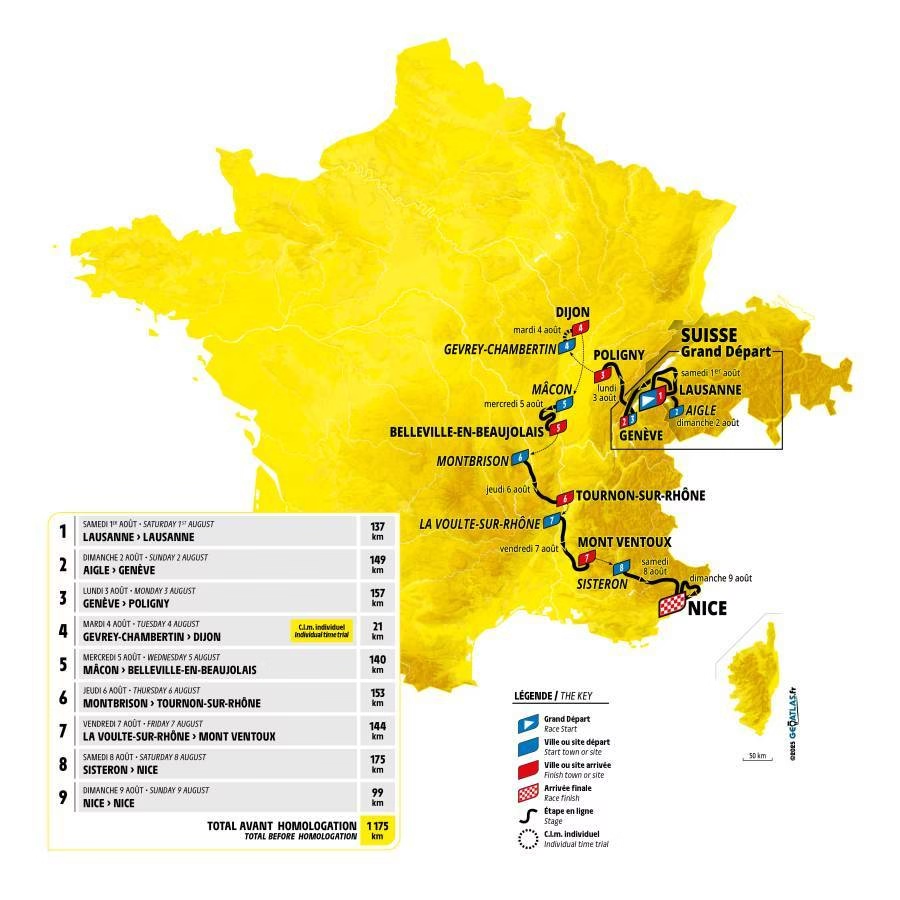
Tour de France 2026 route overview
The 2026 Tour de France begins on Saturday, 4th July with a 19.6km team time trial in Barcelona. It is a rare opening test against the clock and an immediate signal that the race will reward organised teams as much as individual strength.
The race then stays in Spain for two more days, with a hilly stage from Tarragona to Barcelona and a mountain stage from Granollers to Les Angles. That third stage brings the race into the Pyrenees early, meaning GC contenders will have no gentle opening week to hide behind. By the time the Tour reaches France properly, the overall classification should already have some shape.
The opening French phase mixes hilly terrain, sprint opportunities and the first major summit finish at Gavarnie-Gèdre. After that, the race moves through Bordeaux, Bergerac and Ussel before the first rest day in Cantal. The second week then starts in the Massif Central, passes through Nevers and Chalon-sur-Saône, and heads towards the Vosges and Jura.
The final week is the hardest part of the race. After the second rest day in Haute-Savoie, stage 16 brings a 26.1km individual time trial from Évian-les-Bains to Thonon-les-Bains. From there, the route moves towards the Alps, with Orcières-Merlette on stage 18 and two consecutive finishes at Alpe d’Huez on stages 19 and 20.
The final stage starts in Thoiry and finishes in Paris on the Champs-Élysées. By then, the yellow jersey should already be decided, but the route before Paris gives the climbers and GC riders a huge amount to settle.
Tour de France 2026 stage list
| Stage | Date | Route | Distance | Type |
|---|---|---|---|---|
| Stage 1 | Saturday, 4th July | Barcelona to Barcelona | 19.6km | Team time trial |
| Stage 2 | Sunday, 5th July | Tarragona to Barcelona | 168.5km | Hilly |
| Stage 3 | Monday, 6th July | Granollers to Les Angles | 195.9km | Mountain |
| Stage 4 | Tuesday, 7th July | Carcassonne to Foix | 181.9km | Hilly |
| Stage 5 | Wednesday, 8th July | Lannemezan to Pau | 158.3km | Flat |
| Stage 6 | Thursday, 9th July | Pau to Gavarnie-Gèdre | 186.2km | Mountain |
| Stage 7 | Friday, 10th July | Hagetmau to Bordeaux | 175.1km | Flat |
| Stage 8 | Saturday, 11th July | Périgueux to Bergerac | 180.4km | Flat |
| Stage 9 | Sunday, 12th July | Malemort to Ussel | 185.5km | Hilly |
| Rest day | Monday, 13th July | Cantal | ||
| Stage 10 | Tuesday, 14th July | Aurillac to Le Lioran | 166.6km | Mountain |
| Stage 11 | Wednesday, 15th July | Vichy to Nevers | 161.3km | Flat |
| Stage 12 | Thursday, 16th July | Circuit Nevers Magny-Cours to Chalon-sur-Saône | 179.1km | Flat |
| Stage 13 | Friday, 17th July | Dole to Belfort | 205.8km | Hilly |
| Stage 14 | Saturday, 18th July | Mulhouse to Le Markstein Fellering | 155.3km | Mountain |
| Stage 15 | Sunday, 19th July | Champagnole to Plateau de Solaison | 183.9km | Mountain |
| Rest day | Monday, 20th July | Haute-Savoie | ||
| Stage 16 | Tuesday, 21st July | Évian-les-Bains to Thonon-les-Bains | 26.1km | Individual time trial |
| Stage 17 | Wednesday, 22nd July | Chambéry to Voiron | 174.7km | Flat |
| Stage 18 | Thursday, 23rd July | Voiron to Orcières-Merlette | 185.2km | Mountain |
| Stage 19 | Friday, 24th July | Gap to Alpe d’Huez | 127.9km | Mountain |
| Stage 20 | Saturday, 25th July | Le Bourg-d’Oisans to Alpe d’Huez | 170.9km | Mountain |
| Stage 21 | Sunday, 26th July | Thoiry to Paris Champs-Élysées | 133km | Flat |
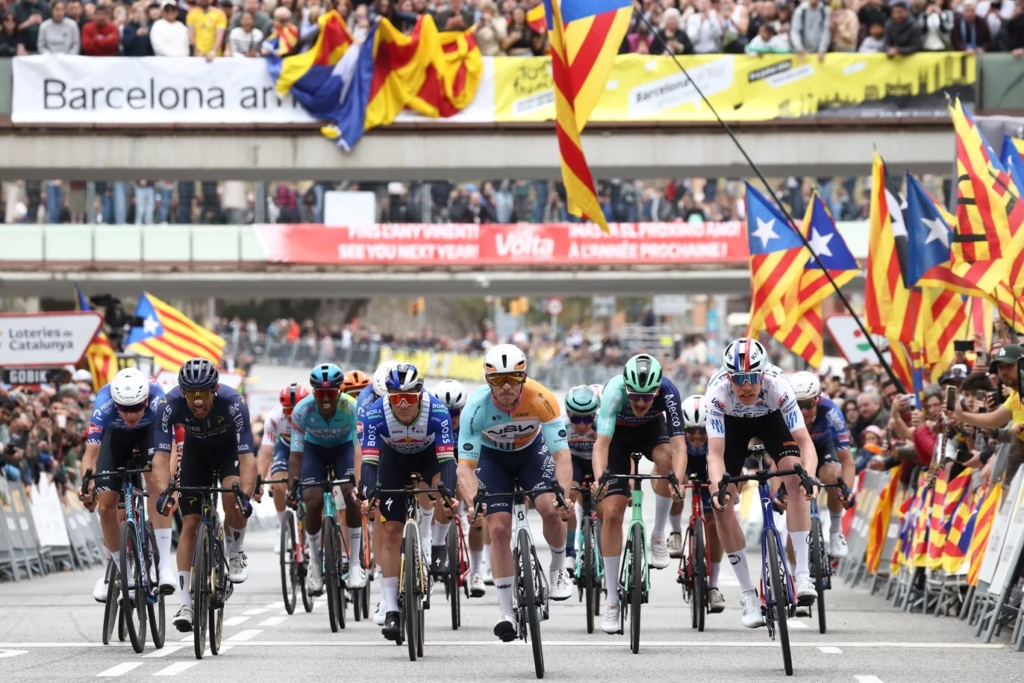
Stage 1: Barcelona to Barcelona team time trial
The Tour begins with a 19.6km team time trial in Barcelona, immediately making collective strength part of the yellow jersey equation. That matters because the opening stage will not simply produce a symbolic first leader. It can create genuine gaps between GC contenders before the race has even reached the open road stages.
A team time trial also changes the psychology of the Grand Départ. Riders cannot ease into the race. Teams need to be technically sharp, organised and committed from the first afternoon. A dropped rider, a mistimed rotation or a poorly judged turn through the final kilometres can have immediate consequences.
Barcelona gives the stage a spectacular backdrop, but this is not only a city showcase. It is a technical, high-pressure opening test that should favour squads with strong engines and disciplined time-trial structure. For GC leaders, it is less about winning the Tour and more about avoiding early damage.
Stages 2 and 3: Barcelona gives way to the Pyrenees
Stage 2 takes the race from Tarragona back to Barcelona over 168.5km of hilly terrain. It should be more open than a flat sprint stage and could suit punchy riders, reduced sprint contenders or teams looking to disrupt the race before the first mountains. It is exactly the kind of day where positioning and control matter because the Tour will still be nervous, and the route is not simple enough for the peloton to relax.
Stage 3 is where the race changes properly. The 195.9km route from Granollers to Les Angles is classified as a mountain stage and brings the Tour into serious climbing terrain almost immediately. That is an important design choice. The 2026 race does not wait until the end of the first week before asking GC riders to show their condition.
Les Angles gives the first real mountain checkpoint. It may not decide the Tour, but it can expose riders who have arrived short of form or who lost team support early. With the opening team time trial already on the board, stage 3 has the potential to widen the first meaningful gaps.
Stages 4 to 6: Foix, Pau and Gavarnie-Gèdre
Stage 4 from Carcassonne to Foix is another hilly stage, and the location matters. Foix has often been associated with aggressive Pyrenean racing, and although this is not listed as a full mountain stage, it should still invite attacks. After the early mountain test at Les Angles, the GC teams may not want chaos, but the terrain could tempt breakaway riders and opportunists.
Stage 5 from Lannemezan to Pau gives the sprinters a clearer chance. Pau is one of the Tour’s familiar host cities, often acting as a gateway between Pyrenean difficulty and flatter transition days. For the fast men, this stage should be one of the more obvious targets of the first week.
Stage 6 is the first major summit finish. The 186.2km route from Pau to Gavarnie-Gèdre takes the race back into the mountains and gives the climbers a proper platform. Gavarnie-Gèdre is one of the new summit finishes in the 2026 Tour, and its position before the end of the first week is significant.
This is where the yellow jersey battle should become more serious. A rider who has lost time in Barcelona or Les Angles may already need to respond. A team with a strong climber may decide this is the first opportunity to test everyone else rather than wait for the Alps.
Stages 7 to 9: Bordeaux, Bergerac and Ussel
After the first Pyrenean block, the race gives the sprinters and breakaway riders more room. Stage 7 from Hagetmau to Bordeaux is a flat 175.1km day and should be one of the clearest bunch sprint opportunities of the race. Bordeaux has a deep Tour history and usually suits fast finishes, so the sprint teams should mark this stage heavily.
Stage 8 from Périgueux to Bergerac is another flat stage, this time over 180.4km. On paper, that gives the sprinters back-to-back chances. In practice, the Tour rarely allows repeated sprint days to feel identical. Wind, fatigue, crashes, road furniture and breakaway resistance can still shape the day, especially after a demanding opening week.
Stage 9 from Malemort to Ussel changes the tone again. At 185.5km and classified as hilly, it is a good day for a breakaway. Coming one day before the first rest day, it may also be difficult for teams to control if the peloton is tired and the GC battle has already taken a physical toll.
This first block of the Tour ends with a useful balance. The GC riders will have faced a team time trial, early mountains and a summit finish, while the sprinters will still have had genuine chances. That should keep several classifications alive before the race reaches Cantal.
 Photo Credit: A.S.O./Charly Lopez
Stage 10: Aurillac to Le Lioran
The Tour resumes after the first rest day with a mountain stage from Aurillac to Le Lioran. At 166.6km, stage 10 brings the Massif Central into the race and should immediately punish any rider who struggles to restart after the rest day.
Le Lioran has become a familiar modern Tour battleground because it is not only about one final climb. The terrain around it is rolling, repeated and difficult to control. The climbs may not have the altitude of the Alps or Pyrenees, but they can create a very different kind of pressure: constant changes of rhythm, narrow roads, and little time for teams to reorganise.
This is a stage where the yellow jersey group could be reduced by attrition rather than one huge attack. It also looks like a strong opportunity for breakaway riders if the GC teams decide to manage effort before the harder mountain blocks still to come.
The Tour Auvergne – Rhône-Alpes 2026 full route guide gives useful wider context here, because that race also leans heavily into central and eastern French climbing terrain as a Tour de France preparation marker.
Stages 11 and 12: Nevers and Chalon-sur-Saône
Stage 11 from Vichy to Nevers is a flat 161.3km day and should bring the sprinters back into focus. After the Massif Central stage, this is the kind of route that fast men and their teams will not want to waste.
Stage 12 starts at Circuit Nevers Magny-Cours and heads to Chalon-sur-Saône over 179.1km. It is also classified as flat, and the motor-racing setting of the start gives the day a different visual identity. For the overall contenders, these stages are about staying safe, conserving energy and avoiding crashes before the race shifts towards the Vosges and Jura.
For the points classification, stages 11 and 12 could be important. The green jersey battle often depends on consistency rather than only outright wins, and these mid-race sprint stages can be decisive if the fastest riders survive the harder days around them.
Stages 13 to 15: the Vosges and Jura bring the race back to the climbers
Stage 13 from Dole to Belfort is the longest stage of the 2026 Tour at 205.8km. It is classified as hilly, but its position before two mountain stages makes it more important than that label suggests. Long stages late in the second week can drain teams, and Belfort places the race on the edge of the Vosges.
Stage 14 from Mulhouse to Le Markstein Fellering is a 155.3km mountain stage and one of the most important days before the final week. The Vosges can be brutal when raced hard because the climbs come with repeated steep sections rather than the long, steady rhythm of some Alpine roads. Le Markstein gives the stage a serious finish and should test riders who prefer more predictable gradients.
Stage 15 from Champagnole to Plateau de Solaison is another mountain stage, and the second major summit finish of the race after Gavarnie-Gèdre. Plateau de Solaison is a new Tour finish and gives the Jura/Haute-Savoie transition a sharp GC focus before the second rest day.
This three-day block could be one of the race’s most important stretches. It arrives after the sprinter-friendly middle stages, but before the final Alpine showdown. A rider who loses time here will enter the second rest day under pressure, knowing the only individual time trial and the Alps are still ahead.
Stage 16: Évian-les-Bains to Thonon-les-Bains time trial
Stage 16 is the only individual time trial of the 2026 Tour de France. It runs 26.1km from Évian-les-Bains to Thonon-les-Bains, and its placement after the second rest day makes it a major GC checkpoint.
This is not a token time trial. At 26.1km, it is long enough to create meaningful gaps, especially between riders who can combine climbing strength, aerodynamics and technical confidence. The route beside Lake Geneva gives the stage a distinctive setting, but the sporting importance is obvious: the climbers cannot simply wait for the mountains, and the stronger time triallists have a clear chance to move the race.
The stage also changes how the previous mountain block may be raced. Riders who expect to gain time in the time trial may ride more defensively through the Vosges and Jura. Pure climbers may need to attack before stage 16 rather than risk losing control against the clock.
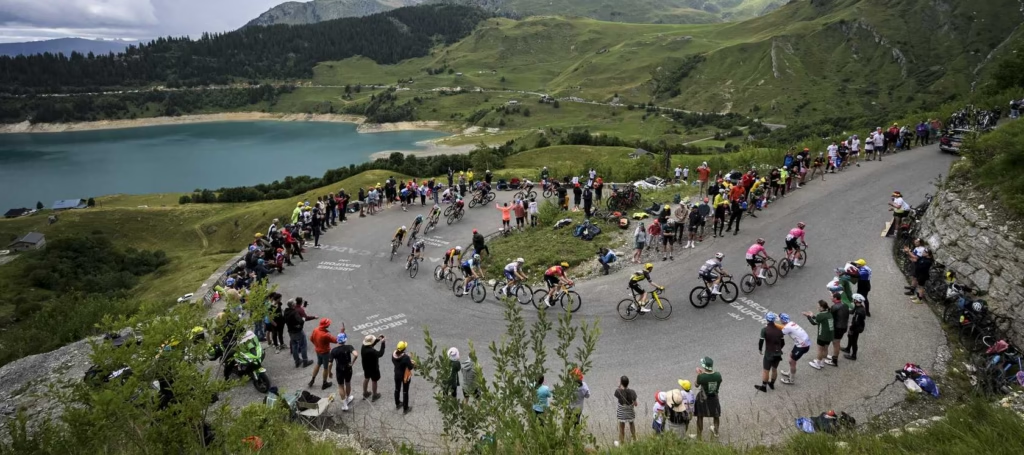 Photo Credit: A.S.O./Charly Lopez
Stage 17: Chambéry to Voiron
Stage 17 from Chambéry to Voiron is listed as flat, but by this point of the Tour, no day is completely straightforward. It comes between the time trial and the final Alpine block, so the GC teams will want calm. The sprint teams, meanwhile, will see one of their last opportunities before Paris.
That tension can create an unusual stage. Breakaway riders may look at the peloton and wonder whether enough teams still have energy to chase. Sprinters may see the route as essential. GC teams will want position without spending too much. The result could depend as much on motivation as terrain.
For the yellow jersey contenders, this is a day to avoid trouble. The race will be about to enter its hardest mountain sequence, and nobody will want to lose the Tour on a supposedly manageable stage.
Stage 18: Voiron to Orcières-Merlette
Stage 18 begins the final Alpine phase with a 185.2km mountain route from Voiron to Orcières-Merlette. This is the third summit finish of the Tour and a major opportunity for the climbers after the time trial.
Orcières-Merlette has Tour history and offers a climb capable of creating gaps without needing to be the final word of the race. Its position is crucial. After the stage 16 time trial and stage 17 transition, stage 18 is where riders who lost time against the clock may need to attack.
This is also the first part of a brutal three-day mountain ending. With Alpe d’Huez still to come twice, teams will need to decide whether to spend heavily here or hold riders back for the final two mountain stages. That calculation could shape the day. A hard race from distance would make Orcières-Merlette dangerous. A more controlled approach would push the major reckoning towards stages 19 and 20.

Stage 19: Gap to Alpe d’Huez
Stage 19 is short, mountainous and finishes at Alpe d’Huez. At 127.9km, it has the structure of a stage that could be raced explosively from the start, especially if the GC is still close.
Alpe d’Huez needs little introduction. It is one of the Tour’s defining climbs, famous for its hairpins, crowds, heat and history. The first of two consecutive finishes there gives the 2026 route a striking final-week identity. Riders will not only have to climb Alpe d’Huez. They will have to do it knowing they must return the next day.
That creates a fascinating tactical question. Does a contender attack fully on stage 19, or does the scale of stage 20 encourage caution? The short distance could encourage aggression, especially from teams that still have multiple riders close on GC. If the race is tight, stage 19 may be less about waiting for the final climb and more about forcing weakness before it.
Stage 20: Le Bourg-d’Oisans to Alpe d’Huez
Stage 20 is the queen stage of the 2026 Tour de France. The 170.9km route starts in Le Bourg-d’Oisans and finishes again at Alpe d’Huez, but this is not a repeat of the previous day. It is a huge Alpine stage, featuring the Col de la Croix de Fer, the Télégraphe-Galibier combination, the Col de Sarenne and the final climb to Alpe d’Huez.
The Col du Galibier is the highest point of the 2026 Tour at 2,642m and will award the Souvenir Henri Desgrange. Its place on the penultimate day gives the stage enormous weight. Riders who are close on GC will have to decide whether to attack before Alpe d’Huez, because the route offers several places to break the race open.
The Col de Sarenne adds another layer. It is less familiar than the classic Alpe d’Huez approach and changes the feel of the finale. The riders then finish at Alpe d’Huez for the second day in a row, turning the most famous climb of the race into both a spectacle and a final examination.
This is the stage most likely to decide the Tour if the race remains close. It is long enough to reward endurance, mountainous enough to expose weakness, and placed late enough that recovery becomes as important as raw strength.
Stage 21: Thoiry to Paris Champs-Élysées
The final stage runs 133km from Thoiry to the Champs-Élysées in Paris. After the Alpine intensity of stages 18, 19 and 20, the last day should return the race to its traditional ceremonial shape before the final sprint.
The Champs-Élysées remains the symbolic finish of the Tour. The yellow jersey is usually secure by then, but the stage still matters for sprinters, teams chasing one final result, and riders completing the race after three difficult weeks.
Starting in Thoiry, one of the new stage towns of the 2026 edition, also gives the final day a slightly different opening before the race reaches Paris. Once on the circuit, though, the pattern should be familiar: celebration for the overall winner, tension for the sprinters, and one last high-speed finish before the Tour ends.
Where will the Tour de France 2026 be won?
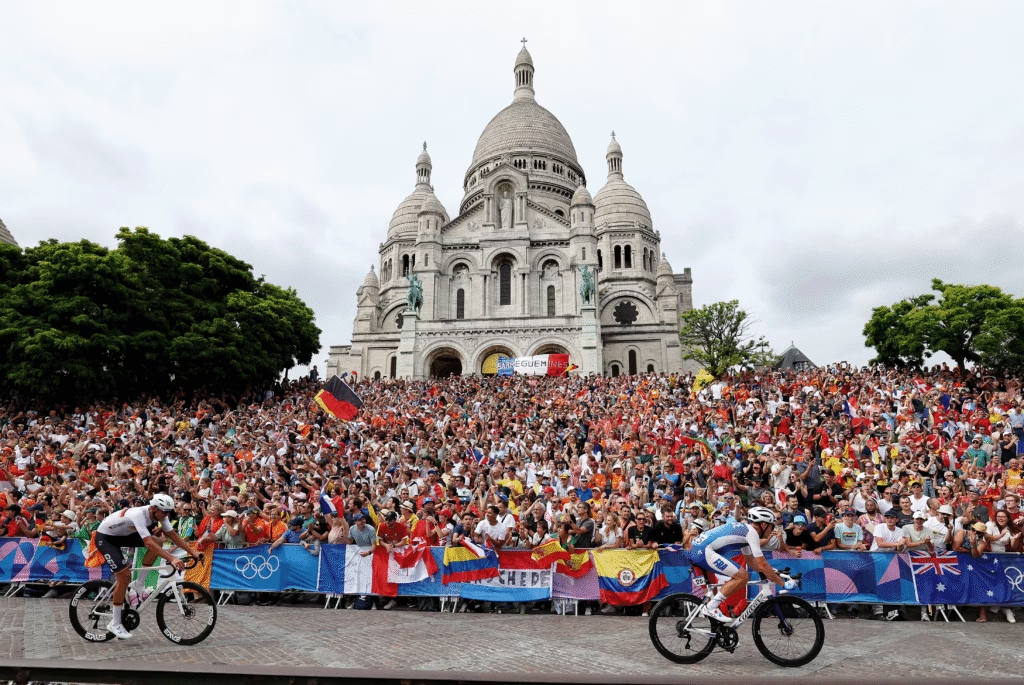
The 2026 Tour de France has several possible turning points, but the route points clearly towards five decisive zones.
The Barcelona team time trial will establish the first hierarchy. It may not create race-winning gaps, but it can immediately put some GC riders on the defensive. In a Tour with so much climbing later, an early loss of 30 or 40 seconds could shape tactics for the whole first week.
The first mountain stage to Les Angles and the summit finish at Gavarnie-Gèdre will show who has arrived ready. A rider who is struggling in the Pyrenees will have a long race ahead. A team that controls those stages cleanly can shape the opening narrative.
The Vosges and Jura block from stages 13 to 15 may be the quiet key to the race. Dole to Belfort, Le Markstein and Plateau de Solaison come before the second rest day, and that sequence can expose fatigue before the final week has even begun.
The stage 16 individual time trial is the one discipline-specific GC test. Climbers who are weaker against the clock may need to attack before it. Strong time triallists will see it as a chance to move up or consolidate.
The final Alpine trilogy is the obvious race-decider. Orcières-Merlette, back-to-back Alpe d’Huez stages, the Galibier and the Col de Sarenne give the 2026 Tour a huge final mountain identity. If the race is still close by stage 20, the yellow jersey battle could remain alive until the penultimate day.
The Tour de France winners list is a useful reminder of how different eras have rewarded different rider types, from time-trial specialists and dominant climbers to all-rounders supported by exceptional teams.
-
 Photo Credit: Getty

What kind of rider does the Tour de France 2026 route suit?
The 2026 route suits a complete GC rider with a strong team, climbing depth and a reliable time trial. It is not a route for a pure climber who can only wait for the final mountains. The Barcelona team time trial and the stage 16 individual time trial mean riders need to be efficient against the clock. The hilly stages and repeated mountain blocks mean they also need strong positioning and recovery.
A rider who can climb explosively, handle long mountain stages, limit losses in a technical time trial and stay protected through nervous transition days will be difficult to beat. The route asks for range rather than one standout skill.
It also suits teams with depth. The team time trial gives the collective an immediate role, while the repeated mountain stages mean leaders will need support in several different regions. The Pyrenees, Massif Central, Vosges, Jura and Alps all ask slightly different questions. A squad built only for one type of terrain may struggle to control the full race.
That is why the June preparation races matter so much. The Men’s Tour de Suisse 2026 full route guide and the brief history of Men’s Tour de Suisse show why Switzerland remains such an important reference point before July, while the brief history of Tour Auvergne – Rhône-Alpes explains why that French stage race has so often acted as a Tour de France springboard.
For sprinters, there are chances, but the route is demanding. Seven flat stages are listed, yet the overall profile of the race is heavy with climbing. Fast riders who survive deep into the Tour could still target Bordeaux, Bergerac, Nevers, Chalon-sur-Saône, Voiron and Paris, but the mountain load will make green jersey consistency difficult.
Tour de France 2026 route verdict
The Tour de France 2026 route has a clear identity: early pressure, a layered middle phase and a brutal Alpine finale. It does not save all of its difficulty for one final climb, but it does build towards one of the most striking final weekends in recent Tour history.
Barcelona gives the race a modern and technical opening. The Pyrenees arrive early enough to expose weak preparation. The Massif Central, Vosges and Jura stop the middle of the race from becoming passive. The time trial creates a controlled GC test before the Alps. Then Alpe d’Huez returns not once but twice, with stage 20 adding the Croix de Fer, Galibier and Sarenne before the final summit finish.
It is a route that should reward the best all-round rider rather than the most patient one. The yellow jersey contenders will need to be ready from day one, but they will also need enough left for the hardest stage on the penultimate day. That balance is what gives the 2026 Tour its appeal. It starts with precision in Barcelona and ends with survival in the Alps, before the race finally reaches Paris.
More Tour coverage, race previews, history pieces and viewing guides will sit in the Tour de France archive as the 2026 race approaches.

