

The Men’s Tour de France began as a newspaper stunt and became the most famous bike race in the world. It has survived scandal, war, commercial reinvention, national obsession, doping crises, television transformation and the rise of a truly global peloton. Across more than a century, it has also remained surprisingly faithful to its original purpose: to send riders through France, test them across impossible distances, and turn a sporting contest into a national story.
The first edition in 1903 was created to help sell copies of L’Auto, the French sports newspaper edited by Henri Desgrange. The idea came from journalist Géo Lefèvre, who proposed something more extreme than the one-day races already popular in France: a multi-stage race around the country. Desgrange was not immediately convinced, reportedly considering it close to madness, but the plan went ahead.
On the 1st July 1903, 60 riders started outside the Café Le Réveil-Matin in Montgeron, south-east of Paris. The first stage alone ran 467km to Lyon. This was not modern stage racing with team buses, radios, soigneurs and sports science. Riders faced enormous distances, rough roads, primitive bicycles, long nights, limited support and an event that was as much an endurance trial as a race. Maurice Garin won that first Tour, completing six stages and establishing a template that would change professional cycling.
For readers coming to the modern race for the first time, the beginner’s guide to Men’s Tour de France 2026 gives a more current overview of how the race works today. Its roots, though, are far rougher, stranger and more chaotic than the polished version now seen every July.
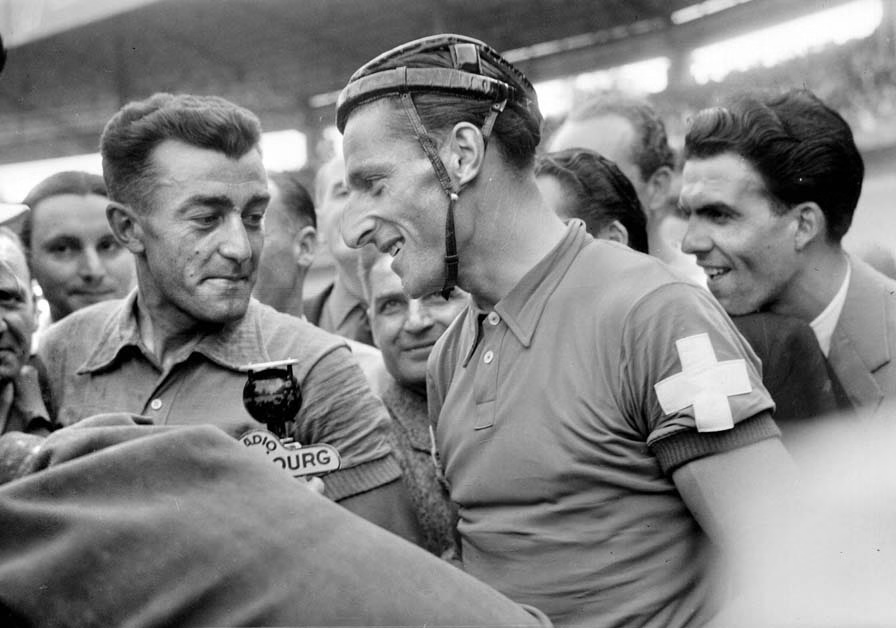 Photo Credit: Roger Viollet/Getty
The wild early years
The early Tours were chaotic, brutal and often barely controlled. The 1904 edition almost destroyed the race before it had properly begun. Riders were accused of taking trains, accepting outside assistance, being paced illegally and benefiting from supporters who attacked rivals on the road. The first four finishers were eventually disqualified, including Garin, which gives a sense of how quickly the Tour learned that spectacle needed rules as well as suffering.
Yet the race survived because it caught the public imagination. It turned France into a sporting map. Villages, mountains, valleys and industrial towns became part of the national conversation. The Tour also understood drama better than almost any other sporting event of its time. Riders did not just win or lose, they disappeared into the night, emerged covered in dust, repaired bikes with their own hands and carried on through exhaustion.
In the earliest years, the route was shaped around enormous loops and punishing road stages. The Tour was already more than a race between riders. It was a race between the body and geography. That became even clearer when the organisers began adding the mountains.
The mountains change everything
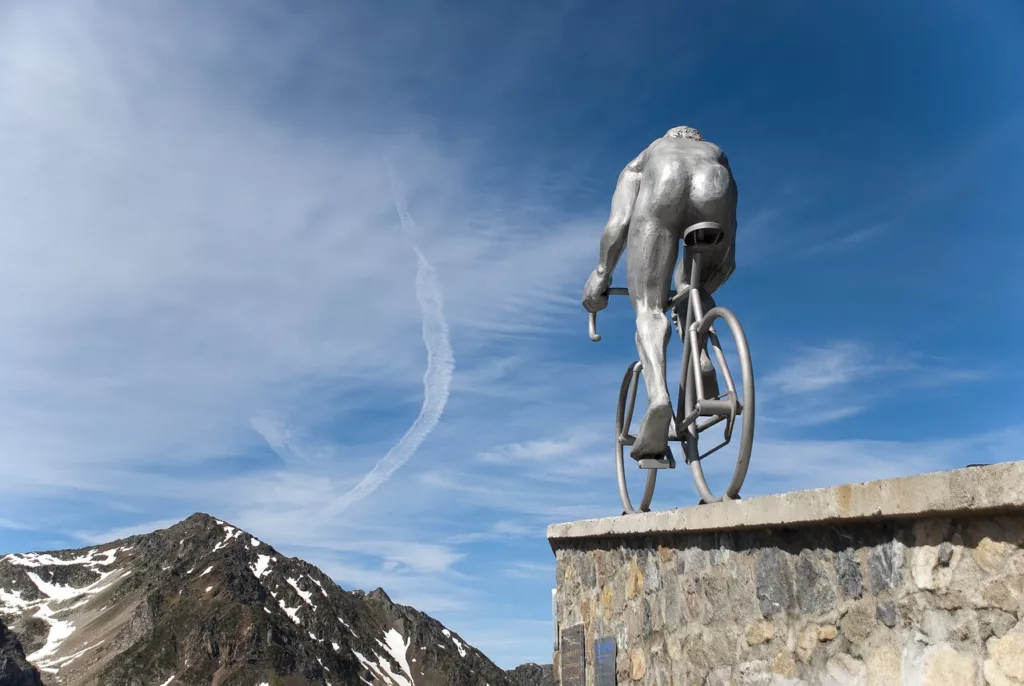
The Pyrenees entered the Tour in 1910, bringing climbs such as the Col du Tourmalet into cycling history. The Alps followed in 1911. These changes transformed the race from an endurance marathon into something more strategically complex. Flat speed and toughness were no longer enough. Riders now had to climb, descend, recover and survive day after day across terrain that exposed every weakness.
The mountain stages also gave the Tour its mythology. The Tourmalet, Galibier, Izoard, Aubisque, Alpe d’Huez, Mont Ventoux and later climbs such as Hautacam and the Col de la Loze became more than roads. They became tests with memory attached to them. A rider who cracked on one of those climbs did not simply lose time; they became part of the story of the mountain.
The first Tours had been fought over time and distance, but the mountains added a new emotional rhythm. A rider could defend for two weeks and lose everything in one bad hour. The Tour became a race of accumulation, but also one of sudden collapse.
That relationship between the Tour and the mountains is why so many other races are judged by how well they prepare riders for July. The brief history of Men’s Tour de Suisse and the brief history of Tour Auvergne – Rhône-Alpes both show how important those pre-Tour stage races became as testing grounds for riders with bigger summer ambitions.
The yellow jersey and the making of an icon
The yellow jersey was introduced in 1919, after the First World War had interrupted the race. Its colour reflected L’Auto’s yellow newspaper pages, but it quickly became something much larger. The maillot jaune gave the Tour a daily symbol. It turned the race leader into a visible figure, instantly recognisable in the bunch and on the front pages.
Eugène Christophe was the first rider to wear it, though he is also remembered for a very different reason. In 1913, before the jersey existed, he broke his fork on the Tourmalet and had to walk down the mountain to a forge, where he repaired it himself. Because rules demanded riders complete repairs alone, he was penalised when a young boy helped work the bellows. It is one of those early Tour stories that feels almost exaggerated, but it captures the tone of the race at the time: strict, unforgiving, theatrical and physically unreasonable.
By the interwar years, the Tour was no longer just an experiment. It had become a fixture of French sporting life. The race used national teams for long periods, partly to reduce the control of commercial trade teams and partly to frame the event as a contest between countries. French, Belgian, Italian, Spanish, Swiss, Dutch and Luxembourg riders all helped shape the race’s early international identity.
Between wars, champions and national pride
The Tour did not run during the First World War or the Second World War. Those interruptions gave the race a different kind of historical weight. It was not separate from Europe’s upheavals, it was part of the same landscape. When the race returned after each war, it carried a sense of recovery as well as competition.
Between the wars, riders such as Ottavio Bottecchia, Nicolas Frantz, André Leducq, Antonin Magne, Gino Bartali and Sylvère Maes helped build the race’s competitive identity. Bottecchia became the first Italian winner in 1924, while Bartali’s 1938 victory gave Italy one of its great champions before the Second World War. Bartali would win again in 1948, ten years after his first triumph, an extraordinary gap that reflected both his longevity and the interruption of his career by war.
The post-war Tour carried enormous public importance. In France, it offered a rolling picture of a country rebuilding itself. In Italy, Bartali’s 1948 victory became part of a wider national mood at a moment of political tension. The Tour had already become one of the few sporting events capable of feeling larger than sport.
The age of great champions
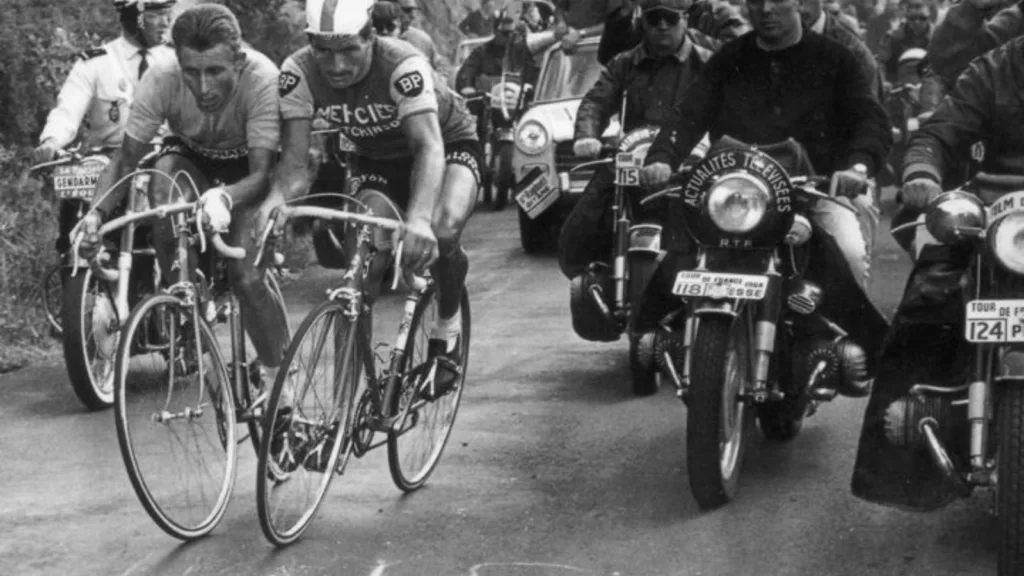
The 1950s and 1960s brought a more recognisable modern race. Louison Bobet became the first rider to win three Tours in a row, taking victory in 1953, 1954 and 1955. He was elegant, controlled and deeply associated with post-war French cycling. Jacques Anquetil then changed the meaning of Tour dominance.
Anquetil was the first five-time winner, taking the race in 1957 and then four years in a row from 1961 to 1964. He was not loved in the same instinctive way as some more romantic champions, but he was clinical, calculating and superb against the clock. In many ways, Anquetil made the Tour feel more tactical. He showed that winning could be built on precision, control and time trial superiority rather than constant visible aggression.
The 1960s also gave the Tour one of its darkest days. Tom Simpson died on Mont Ventoux during the 1967 race, a tragedy shaped by heat, exhaustion and amphetamine use. His death forced cycling to confront doping more directly, even if the sport’s relationship with performance-enhancing substances would remain troubled for decades.
The Tour’s great champions have always given the race its broader shape. A wider overview of that lineage is covered in ProCyclingUK’s Tour de France winners list and the feature on ten of the best Tour de France past winners, both of which trace how different eras of dominance have defined the race.
Merckx, the rider who swallowed the race
Eddy Merckx arrived like a force of nature. His 1969 Tour victory remains one of the most complete performances in race history. He won the general classification, points classification, mountains classification, combination classification and combativity award. It was not just victory, it was domination of almost every part of the race.
Merckx won five Tours between 1969 and 1974. His style was different from Anquetil’s cool calculation. Merckx raced as if every stage, sprint, climb and intermediate moment mattered. He attacked when he did not need to attack. He chased when others might have saved energy. That appetite gave him the nickname “The Cannibal,” and it also gave the Tour one of its defining champions.
After Merckx came Bernard Thévenet, who defeated him in 1975, the same year the Tour finished on the Champs-Élysées for the first time. That Paris finish became one of the race’s most recognisable traditions: a ceremonial procession turning into a final sprint beneath the plane trees and monuments of the French capital.
Hinault, LeMond and a changing race
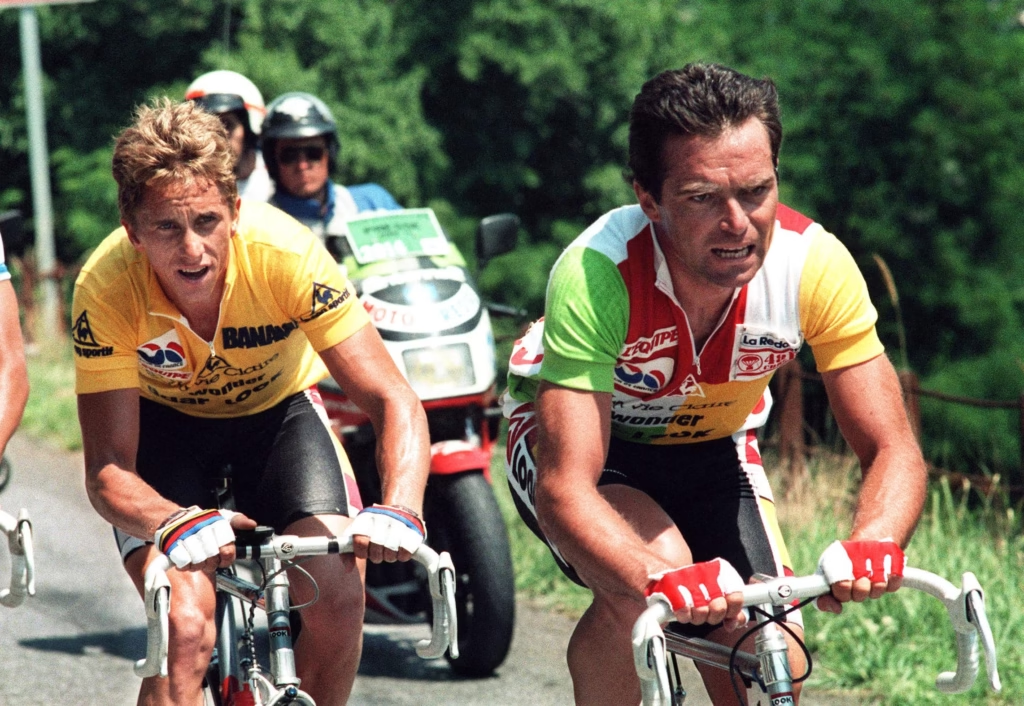
Bernard Hinault became the next great French champion, winning five Tours between 1978 and 1985. He was fierce, blunt, physically imposing and tactically ruthless. Hinault was not merely a rider who won the Tour; he seemed to impose himself on it. He remains the last Frenchman to win the race, which has only made his place in French cycling history more significant with each passing decade.
The 1980s also brought Greg LeMond, the first American winner and one of the most important figures in the Tour’s global expansion. His rivalry with Hinault inside La Vie Claire in 1986 remains one of the race’s most fascinating internal power struggles. LeMond won that year, was badly injured in a hunting accident in 1987, then returned to win again in 1989 and 1990.
The 1989 Tour is still the closest in history. LeMond began the final-day time trial 50 seconds behind Laurent Fignon and won the race by eight seconds. His use of aerodynamic handlebars and helmet helped signal a new technological era, but the drama was beautifully simple: two riders, one final time trial, and the Tour decided by less time than it takes to cross a busy road.
Indurain and the age of control
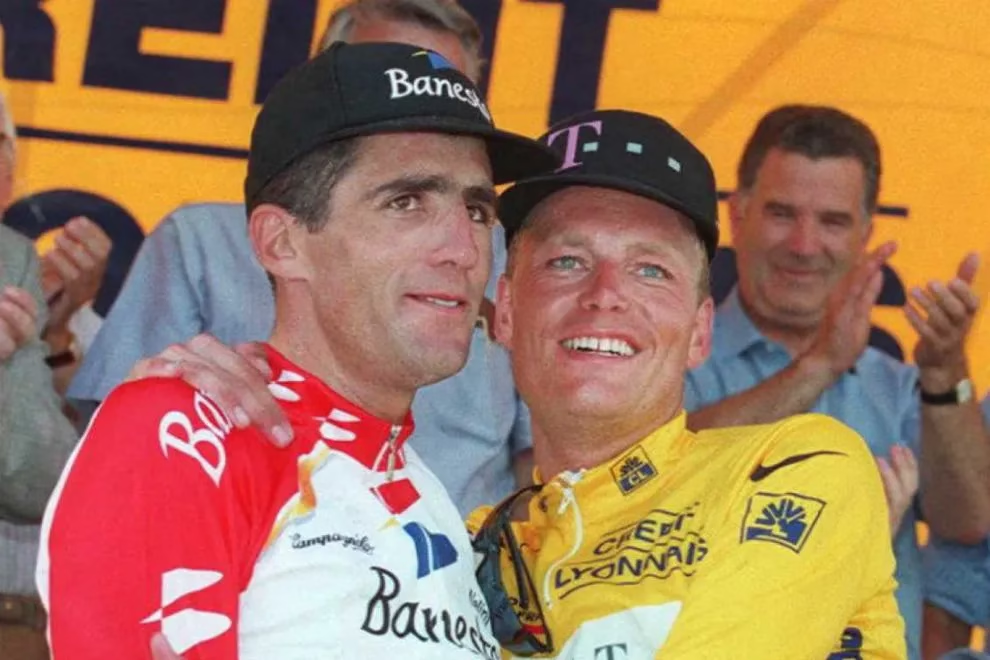
Miguel Indurain brought the Tour into the 1990s with a very different kind of authority. He won five consecutive editions from 1991 to 1995, becoming the first rider to do so. Tall, calm and devastating against the clock, Indurain rarely looked frantic. He often won the Tour by creating huge gaps in time trials, then managing the mountains with measured strength.
His dominance fitted the race’s changing tactical environment. Teams were becoming more structured, preparation more scientific, and television coverage more sophisticated. The Tour was still capable of chaos, but the strongest squads increasingly tried to control it.
By the late 1990s, however, the Tour was entering its most damaging period.
The doping era and the damage it left behind
The 1998 Festina scandal exposed systematic doping at the heart of the sport. Police raids, team expulsions, rider protests and public disillusionment turned that Tour into a crisis point. Cycling had always had doping problems, but 1998 made them impossible to minimise.
The Lance Armstrong era then brought both enormous global attention and lasting reputational harm. Armstrong won seven consecutive Tours from 1999 to 2005, but all were later stripped after the United States Anti-Doping Agency investigation and his eventual admission of doping. The official record now has no winner for those editions.
The damage was not only statistical. It reshaped how fans watched the race. Great performances were increasingly viewed through suspicion. The Tour remained compelling, but trust had been broken. For many, the post-Armstrong years were about trying to rebuild the credibility of the race as much as crowning new champions.
A new generation and the British era
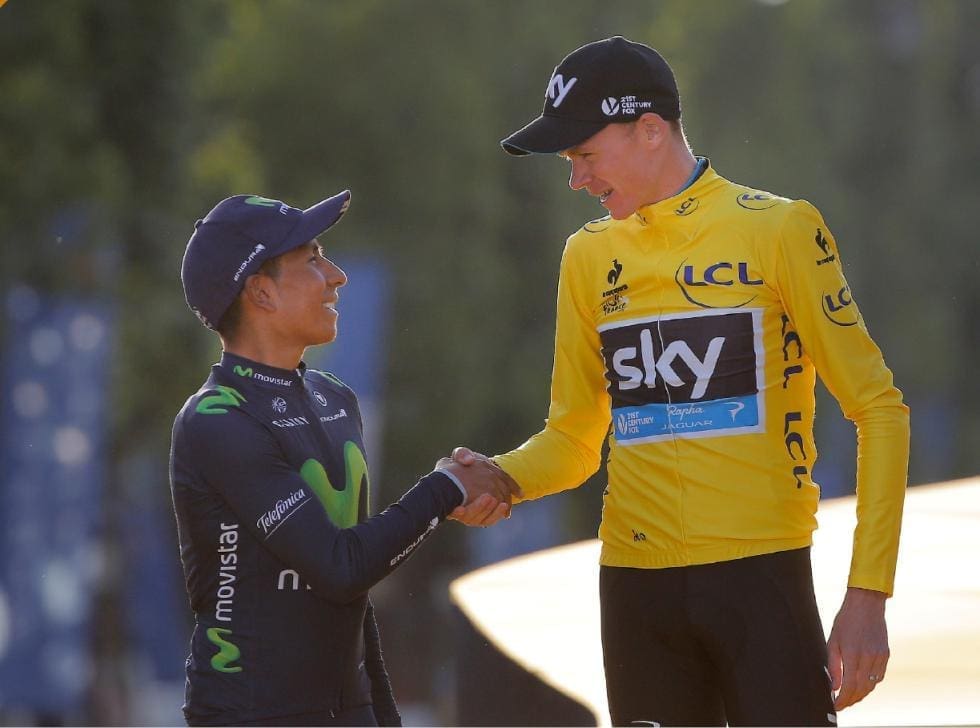
The late 2000s and early 2010s brought new winners and shifting power. Alberto Contador, Cadel Evans, Bradley Wiggins, Chris Froome, Geraint Thomas and Egan Bernal all shaped the next phase of the Tour. Evans became the first Australian winner in 2011. Wiggins became the first British winner in 2012. Froome then won four Tours between 2013 and 2017, while Thomas won in 2018.
Team Sky, later Ineos, defined much of that period. Their mountain trains, strict pacing, detailed preparation and time trial strength produced an era of control that could be tactically impressive, even if it was not always universally loved. The race was often decided by pressure rather than repeated long-range attacks. Rivals were slowly squeezed until gaps appeared.
That British rise changed how the Tour was understood in the UK. Riders who once went to the race as stage hunters, domestiques or rare outsiders suddenly became central to the yellow jersey conversation. ProCyclingUK’s feature on British riders in the Tour de France gives useful context for how deep that history now runs, from early participants to the generation shaped by Wiggins, Froome, Thomas and those who followed.
Bernal’s 2019 victory briefly suggested the start of a new Ineos cycle. Instead, the Tour changed again.
Pogačar, Vingegaard and the return of volatility
Tadej Pogačar’s 2020 victory changed the mood of the modern Tour. His final time trial on La Planche des Belles Filles, where he overturned Primož Roglič’s race lead, was one of the great late reversals in Tour history. Pogačar then won again in 2021, racing with a freedom that felt very different from the controlled Team Sky years.
Jonas Vingegaard responded by winning in 2022 and 2023 for Team Visma | Lease a Bike, turning the Tour into a modern rivalry built around climbing, team strategy, heat, altitude and recovery. Pogačar returned to win in 2024 and 2025, restoring his place at the centre of the race and continuing a period in which the Tour’s biggest names are willing to attack from distance far more often than many expected in the previous era.
The 2025 race added another chapter to that rivalry. Pogačar’s ride to Hautacam, covered in ProCyclingUK’s report on Tadej Pogačar taking yellow on stage 12 of the 2025 Tour de France, showed how quickly the modern Tour can tilt when one rider finds an opening in the high mountains. Team Visma | Lease a Bike’s response, covered in the piece on Vingegaard and Jorgenson looking ahead to the final week, underlined that this era is as much about team pressure as individual brilliance.
This modern phase has made the race feel less predictable. Teams still rely on data, nutrition plans, altitude camps, aerodynamics and meticulous preparation, but the racing has often been open and aggressive. Long-range attacks are back. Gravel, punchy finishes, high mountains, technical descents and explosive time trials all sit inside the same three-week structure.
-
 Photo Credit: Getty

The jerseys and the race within the race
The yellow jersey remains the Tour’s central symbol, awarded to the rider with the lowest cumulative time. Yet part of the race’s appeal is that it contains several competitions at once.
The green jersey, introduced in 1953, rewards consistency in the points classification and has often been associated with sprinters, though all-round riders can win it when the route and points scale suit them. The mountains classification began in 1933, with the polka-dot jersey introduced in 1975. It celebrates the riders who collect points over categorised climbs, from smaller early-stage hills to the great Alpine and Pyrenean passes. The white jersey, also introduced in the modern era, recognises the best young rider and has often acted as a preview of future GC power.
These classifications matter because the Tour is too big to be reduced only to first place overall. A sprinter chasing green, a climber hunting polka dots, a young rider defending white, or a breakaway specialist trying to win a stage can all turn a transitional day into something meaningful. The Tour’s genius is that it allows several stories to run at once.
The modern Tour
Today’s Men’s Tour de France is a global event, but it still depends on the same basic ingredients that made it work in 1903: distance, uncertainty, geography and narrative. The bikes are lighter, the coverage is live from start to finish, the nutrition is measured, the teams are multinational and the riders are surrounded by support systems that early pioneers could never have imagined. Yet the race still comes down to whether a rider can keep performing when the road rises, the weather turns, the body empties and rivals sense weakness.
The 2026 edition continues that pattern, with a Grand Départ in Barcelona, a route through the Pyrenees, Massif Central, Vosges, Jura and Alps, and the traditional Paris finish. The beginner’s guide to Men’s Tour de France 2026 sets out the modern race structure, but the broader appeal remains tied to the same old tension: who can survive the longest, recover the best and still attack when everyone else is close to empty.
The Tour has also become more international in its winners and its audience. French identity remains central to the race, but the list of champions now stretches across Europe, the Americas, Australia and beyond. It is a French race with global consequences.
Its history is not clean or simple. The Tour has been heroic, exploitative, beautiful, dangerous, commercial, conservative, innovative, scandal-hit and culturally powerful, sometimes all at once. That complexity is part of why it endures. It is not just a bike race that happens every July. It is a moving archive of cycling’s best and worst instincts.
From Garin riding through the dust in 1903 to the modern battles between Pogačar, Vingegaard and the next generation of contenders, the Men’s Tour de France has constantly reinvented itself without losing its central appeal. It remains the race every Grand Tour contender is measured against, the race that can define a career, and the race that still turns roads, mountains and weather into sporting history.

