
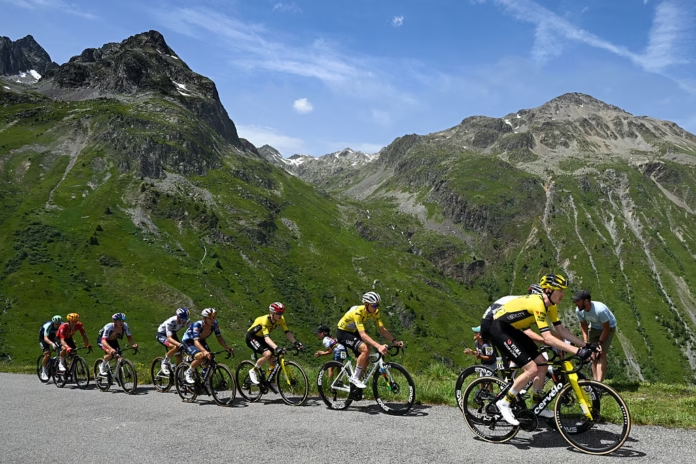
Tour Auvergne – Rhône-Alpes is a new name for one of cycling’s oldest and most revealing stage races. Before its 2026 rebrand, the race was known as the Critérium du Dauphiné, and before that, the Critérium du Dauphiné Libéré. The title may have changed, but the sporting identity is very familiar: a hard early-June test through south-eastern France, close enough to the Tour de France to feel like a rehearsal, but demanding enough to stand on its own.
The race’s history began in 1947, when the Grenoble-based newspaper Le Dauphiné Libéré created a new stage race in the Dauphiné region. France was still emerging from the disruption of the Second World War, and cycling was rebuilding its calendar, its audience and its sense of rhythm. The new race gave the newspaper a promotional vehicle, but it also gave riders a demanding pre-Tour test in the mountains and valleys of south-eastern France. Polish rider Edward Klabiński won the first edition.
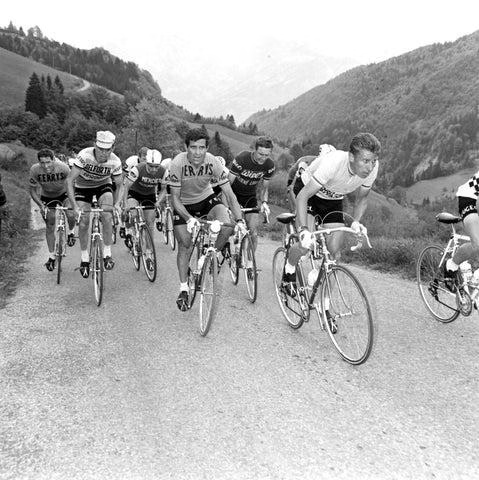
From newspaper race to Tour de France rehearsal
The old Dauphiné grew quickly because it occupied a useful place in the season. Held in June, it became a final serious stage-race examination before the Tour de France. It was close enough to July to test form, but far enough away to allow riders to recover, adjust and build again.
That timing shaped its reputation. A rider did not need to win the Dauphiné to win the Tour, but a strong ride there often told the rest of the peloton something important. The race tested climbing condition, time trial strength, recovery over consecutive stages, team depth and the ability to handle changing terrain. It was not a Grand Tour, but it often revealed Grand Tour readiness.
That is why the race became more than a warm-up. It was a public stress test. Riders could hide some details of their preparation, but they could not hide entirely on the Dauphiné’s climbs.
The race of Tour winners
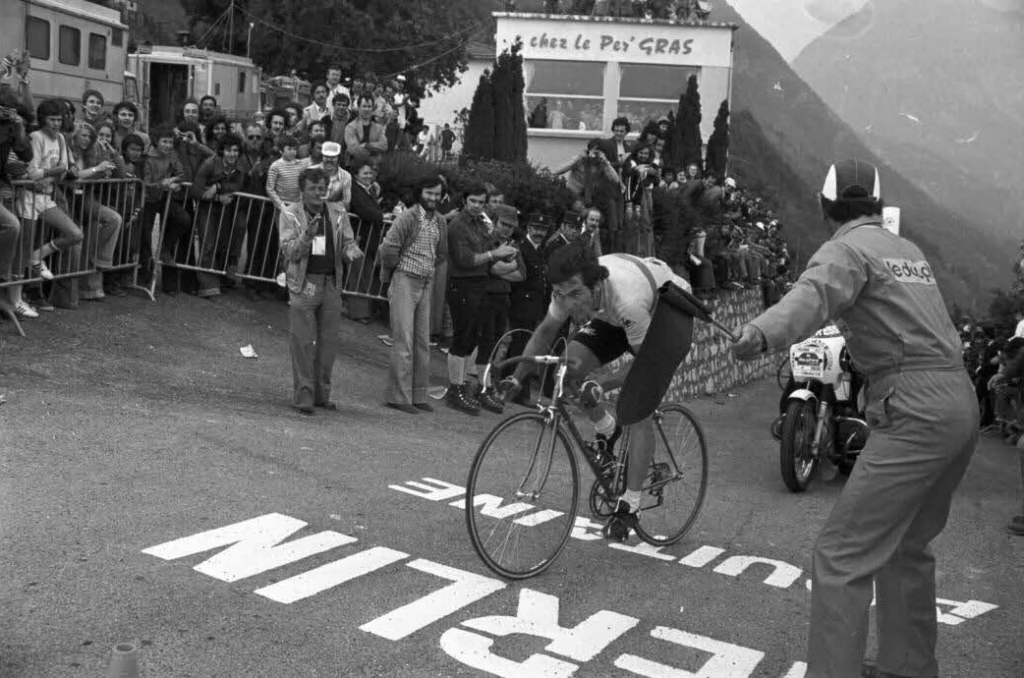
Few one-week races have been as closely tied to Tour de France history. Jacques Anquetil, Eddy Merckx, Bernard Hinault and Miguel Induráin all won the old Dauphiné, giving the race a direct line through several generations of Tour greatness. It has also been won by riders who used it as a springboard into July, including Bradley Wiggins, Chris Froome, Geraint Thomas, Jonas Vingegaard and Tadej Pogačar.
The double has always carried weight. Louison Bobet won the race and the Tour in 1955. Anquetil did it in 1963, Merckx in 1971, Luis Ocaña in 1973, Bernard Thévenet in 1975, Hinault in 1979 and 1981, and Induráin in 1995. In the modern era, Wiggins, Froome, Thomas, Vingegaard and Pogačar all turned Dauphiné success into Tour de France victory in the same summer.
That list explains the race’s status better than any label. The old Dauphiné did not simply reward good June form. It often identifies riders capable of carrying that form into the most important month of the season.
A race shaped by mountains
The race’s geography gave it its character. The Dauphiné region and the wider Alpine corridor offered natural stage-race terrain: valley roads, technical descents, medium mountains, long passes and summit finishes that could mirror the demands of the Tour de France.
Unlike some one-week races that lean heavily on one format, the Dauphiné usually asks for versatility. Some editions leaned on time trials. Others were defined by climbing. Many mixed rolling stages, transition days, and high-mountain finishes into a compact eight-day test. That made it attractive to Tour contenders because it rarely gave them only one type of problem to solve.
The mountains also gave the race a sharper edge than a simple preparation event. Riders could arrive wanting form, but the terrain forced choices. Defend or attack. Show strength or save it. Chase a stage, test a rival, or stay hidden. Those small June decisions often fed the wider Tour narrative.
 Photo Credit: Graham Watson
The ASO era and WorldTour status
The race’s modern structure was shaped by organisational change. For decades, the Dauphiné was closely associated with the newspaper that created it. In 2010, ASO took over full organisation, and the race became known simply as the Critérium du Dauphiné. It had already become part of the top tier of the sport, joining the UCI ProTour in 2005 and later the UCI WorldTour.
That ASO link reinforced the race’s role as a Tour de France reference point. The organisers could use similar terrain, test possible Tour-style stages, and give teams a serious logistical and sporting rehearsal. The result was a race that retained its own history while becoming even more closely tied to the Tour ecosystem.
The Dauphiné also carried the contradictions of modern cycling history. Some results from the early 2000s were later voided following doping sanctions, including the editions originally won by Lance Armstrong in 2002 and 2003. That leaves gaps in the official record, but it also reflects the wider story of the era the race passed through.
Why the name changed in 2026
The 2026 rebrand from Critérium du Dauphiné to Tour Auvergne – Rhône-Alpes marked a major symbolic shift. ASO announced the change after the 2025 edition, which was won by Tadej Pogačar, making him the final winner under the old Critérium du Dauphiné name. The new title reflects the race’s strengthened partnership with the Auvergne – Rhône-Alpes region and its wider regional footprint.
The change is more than cosmetic. The old Dauphiné name was rooted in a historic region and in the newspaper that created the race. Tour Auvergne – Rhône-Alpes is broader, more administrative and more explicitly tied to the modern host region. It gives the event a clearer territorial identity for a race that now reaches across the region’s departments, from the Massif Central towards the Alps.
For long-time followers, the Dauphiné name will not disappear from memory quickly. It carried nearly eight decades of history. But the rebrand also tells a familiar story in modern cycling: races survive by adapting, by strengthening regional partnerships, and by making their identity clearer to hosts, sponsors, broadcasters and fans.
The first Tour Auvergne – Rhône-Alpes
The first edition under the Tour Auvergne – Rhône-Alpes name is scheduled from Sunday, 7th June to Sunday, 14th June 2026. The route begins in Vizille and finishes at the Plateau de Solaison after eight stages, with varied terrain, a team time trial, hilly days and a mountain-heavy final weekend. In that sense, the old Dauphiné spirit remains intact under the new title.
That continuity is important. The race may have a new name, but it has not become a different type of event. It remains a hard one-week stage race in early June, designed for riders who want a serious test before the Tour de France. The climbs are still central. Recovery still matters. Team strength still matters. Form still gets exposed.
The first winner of Tour Auvergne – Rhône-Alpes will therefore inherit a strange place in cycling history. They will be the first name on a new honours list, but also part of a line that stretches back to Klabiński, Bobet, Anquetil, Merckx, Hinault, Induráin, Wiggins, Froome, Vingegaard and Pogačar.
-
 Photo Credit: Getty

Why the race still matters
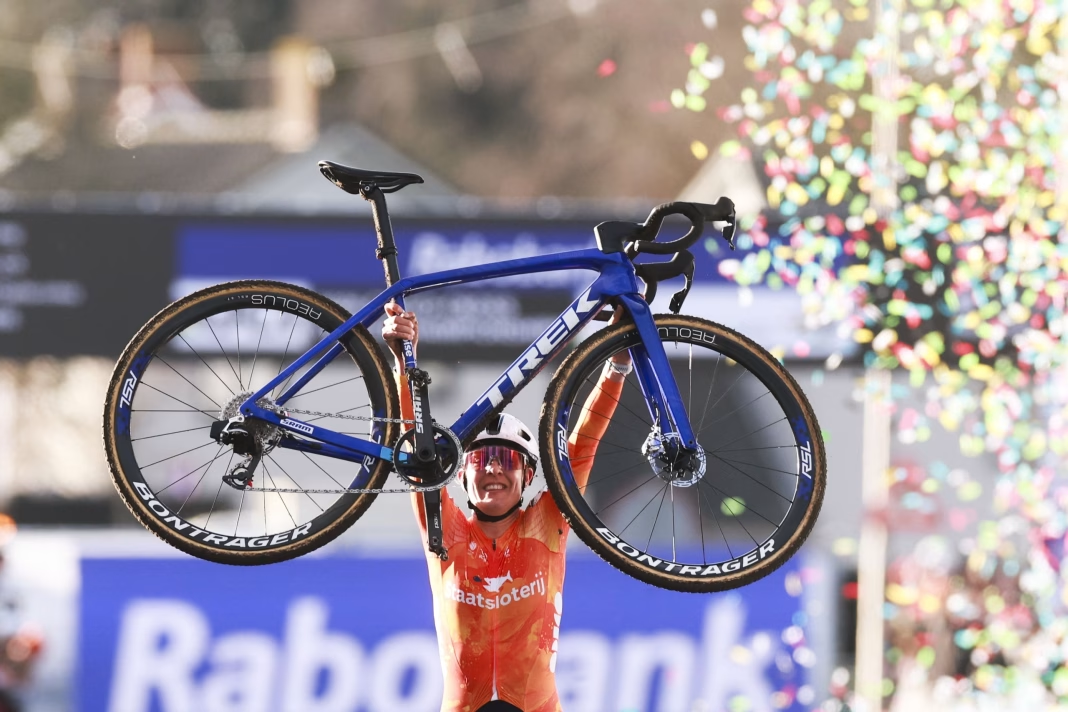
Tour Auvergne – Rhône-Alpes matters because the old Dauphiné mattered. It sits at the point where preparation becomes evidence. Riders can talk about training camps, altitude work and long-term plans, but this race puts those claims into competition.
It also suits the modern sport. Tour contenders need controlled but demanding racing before July. Teams need to test climbing support, time trial structure and leadership hierarchy. Younger riders need to prove they can handle consecutive days against the best. Opportunists need stages where the favourites are watching each other. The race provides all of that in one compact week.
The name has changed, but the role has not. Tour Auvergne – Rhône-Alpes remains the June race where Tour de France form starts to look real, where mountain legs are measured in public, and where a rider can move from contender to favourite before the Tour has even begun.

