

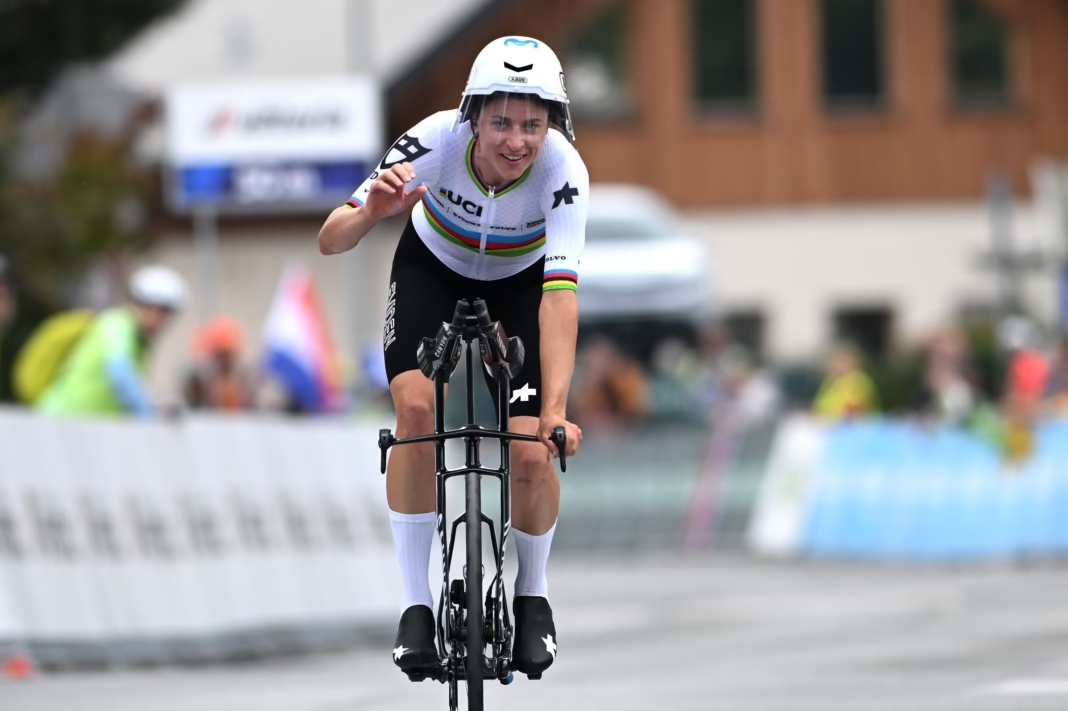
Marlen Reusser has taken control of the 2026 Tour de France Femmes after winning the Stage 4 individual time trial from Gevrey-Chambertin to Dijon and moving into the yellow jersey.
The Movistar leader completed the rolling 21km course in 27 minutes 30 seconds, beating Lieke Nooijen by four seconds and Demi Vollering by 18. Zoe Bäckstedt finished fourth at 20 seconds, with Mischa Bredewold completing the top five at 45 seconds.
Reusser now leads Vollering by 14 seconds in the general classification. Cédrine Kerbaol moves into third at 54 seconds, while former yellow jersey Sigrid Ytterhus Haugset drops to fourth at 56 seconds after finishing 3 minutes 6 seconds behind Reusser on the stage.
Elisa Longo Borghini, Kasia Niewiadoma-Phinney and Paula Blasi all remain within 1 minute 12 seconds of yellow. Pauline Ferrand-Prévot has fallen to 14th overall after conceding 2 minutes 13 seconds in Dijon, while Kim Le Court-Pienaar drops from second to 15th.
Lorena Wiebes remains in the green jersey, Puck Pieterse continues to lead the mountains classification and Blasi strengthens her hold on white.
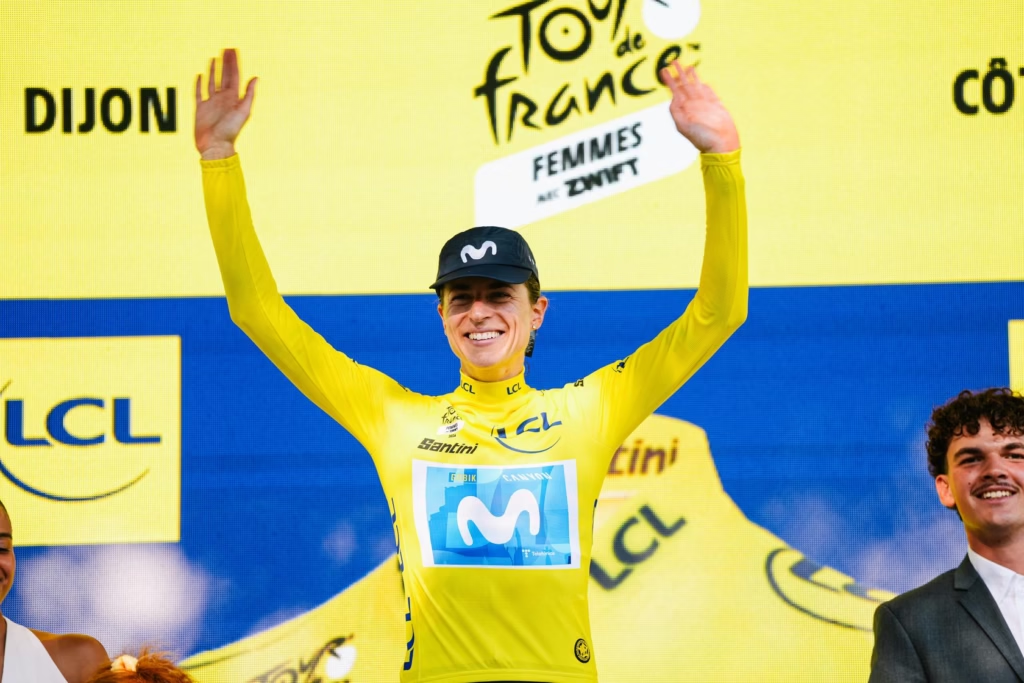 Photo Credit: A.S.O./Gaëtan Flamme
Tour de France Femmes 2026 general classification after Stage 4
- Marlen Reusser, Movistar in 11:47:36
- Demi Vollering, FDJ United-Suez at 14 seconds
- Cédrine Kerbaol, EF Education-Oatly at 54 seconds
- Sigrid Ytterhus Haugset, Uno-X Mobility at 56 seconds
- Elisa Longo Borghini, UAE Team L’IMAD at 1:03
- Kasia Niewiadoma-Phinney, Canyon SRAM at 1:09
- Paula Blasi, UAE Team L’IMAD at 1:12
- Anna van der Breggen, SD Worx-Protime at 1:17
- Antonia Niedermaier, Canyon SRAM at 1:43
- Femke de Vries, Team Visma | Lease a Bike at 1:47
The time trial has replaced the artificial compression created by the opening road stages with the first meaningful hierarchy of the Tour.
Only 14 seconds separate Reusser and Vollering, but there is then a 40-second gap to Kerbaol in third. Longo Borghini, Niewiadoma-Phinney, Blasi and Van der Breggen remain close enough to influence the race before Mont Ventoux, while Ferrand-Prévot and Le Court-Pienaar now need to recover more than two minutes.
The full story of the stage is covered in our report on Marlen Reusser winning the Dijon time trial and taking yellow.
Reusser converts the time trial into yellow
Reusser began Stage 4 as the favourite and produced the ride required of the reigning world time trial champion.
Her winning margin was not overwhelming. Nooijen came within four seconds after setting an exceptional early benchmark, while Vollering limited her loss to 18 seconds by finishing the course strongly.
The significance lies in what Reusser achieved in the general classification.
She turned a four-second deficit to Vollering into a 14-second advantage. She also gained more than a minute on Longo Borghini and Niewiadoma-Phinney, while Ferrand-Prévot conceded more than two minutes.
Movistar now possess the yellow jersey, the stage victory and the responsibility that comes with defending the race lead across the remaining five days.
That task will be more complicated than riding against the clock. Reusser must now respond to attacks, manage bonus seconds and rely on her team to control breakaways across terrain far less predictable than the Dijon course.
Her margin over Vollering is small enough that every second matters.
Vollering emerges as the closest challenger
Vollering produced one of the most important performances of the day.
Finishing only 18 seconds behind Reusser was a strong result against the leading specialist. More importantly, it placed her substantially ahead of most of the riders expected to challenge for the final yellow jersey.
She now leads Kerbaol by 40 seconds, Longo Borghini by 49, Niewiadoma-Phinney by 55 and Ferrand-Prévot by two minutes.
Vollering also finished more strongly than her intermediate split initially suggested. Reusser had established a larger advantage through the first 9.7km, but Vollering recovered part of that loss during the faster second half.
FDJ United-Suez now have a simple strategic position. Vollering is close enough to target bonus seconds and small gaps on the hilly stages, while the longer mountain finishes should favour her climbing more than Reusser’s time-trial power.
She did not need to win in Dijon. She needed to prevent Reusser from building a decisive lead.
A gap of 14 seconds leaves the Tour completely open.
Kerbaol moves onto the provisional podium
Kerbaol was one of the quieter winners of Stage 4.
The EF Education-Oatly rider finished seventh on the stage, 54 seconds behind Reusser, and moved into third overall at the same deficit.
Kerbaol has become an increasingly strong time triallist and used the varied Dijon course to convert a position within the tightly packed group of contenders into a place on the provisional podium.
Her challenge is now defending it through the mountains.
Haugset is only two seconds behind, while Longo Borghini, Niewiadoma-Phinney, Blasi and Van der Breggen all sit within 23 seconds of the French rider.
Kerbaol can climb and has produced major results on difficult terrain, but almost every rider immediately behind her will expect to attack once the Tour reaches Mont Ventoux and the final weekend around Nice.
Her performance nevertheless gives EF Education-Oatly a clear GC position around which to organise the team.
Haugset loses yellow but remains fourth
Haugset could not defend the advantage created through her extraordinary Stage 3 breakaway.
The Norwegian finished 3 minutes 6 seconds behind Reusser in Dijon and drops from first to fourth overall at 56 seconds.
That loss was considerably larger than expected for a rider whose victory in Poligny had been built through 88.5km alone. The physical cost of that effort, completed in extreme heat, appeared to catch up with her less than 24 hours later.
Most of the principal favourites completed the final part of Stage 3 within groups. Haugset had no shelter and no opportunity to reduce the effort while defending her advantage.
Her Tour has not collapsed.
Fourth place leaves her only two seconds behind Kerbaol and seven seconds ahead of Longo Borghini. She remains firmly involved in the GC battle and should be better suited to the hilly road stages than the time trial.
Uno-X Mobility also lose the responsibility of defending yellow. That may allow Haugset and her teammates to return to the aggressive style that delivered their biggest result of the race.
The background to her unexpected spell in yellow is covered in the GC and jersey standings after Stage 3.
Longo Borghini remains within striking distance
Longo Borghini begins Stage 5 fifth overall at 1 minute 3 seconds.
She finished tenth in the time trial and conceded 1 minute 3 seconds to Reusser. That leaves her further behind yellow than UAE Team L’IMAD would have wanted, but still close enough to remain a central Tour contender.
Her position must also be viewed alongside Blasi in seventh.
Only nine seconds separate the two UAE riders. Blasi was one of the strongest young riders in Dijon, finishing 11th on the stage and only one second behind Longo Borghini.
That gives UAE significant tactical depth.
Longo Borghini remains the more experienced Grand Tour leader, but Blasi has developed into a genuine overall option rather than simply a rider protecting the white jersey.
For now, the team can use both riders. The repeated climbs of Stage 5 also give UAE opportunities to place riders such as Silvia Persico or Dominika Włodarczyk in the break while preserving Longo Borghini and Blasi for the final selection.
Niewiadoma-Phinney limits the damage
Niewiadoma-Phinney delivered a competitive ride to finish 13th on the stage, 1 minute 9 seconds behind Reusser.
That moves her into sixth overall at the same deficit.
The gap remains meaningful, but Canyon SRAM can be satisfied with the level of damage limitation. A flatter course could have created a considerably larger loss, while Niewiadoma-Phinney finished level with Van der Breggen and ahead of several riders considered naturally stronger against the clock.
Her Tour now moves onto terrain where repeated accelerations, recovery and tactical pressure matter more than maintaining one aerodynamic effort.
Stage 5 provides an early opportunity. Mont Brouilly is too short to recover a minute by itself, but the eight-climb route gives Canyon SRAM several places to make Movistar work.
Niedermaier’s move into ninth overall also gives the team a second rider close enough to become tactically useful. She can follow moves or place pressure on teams unwilling to give her freedom.
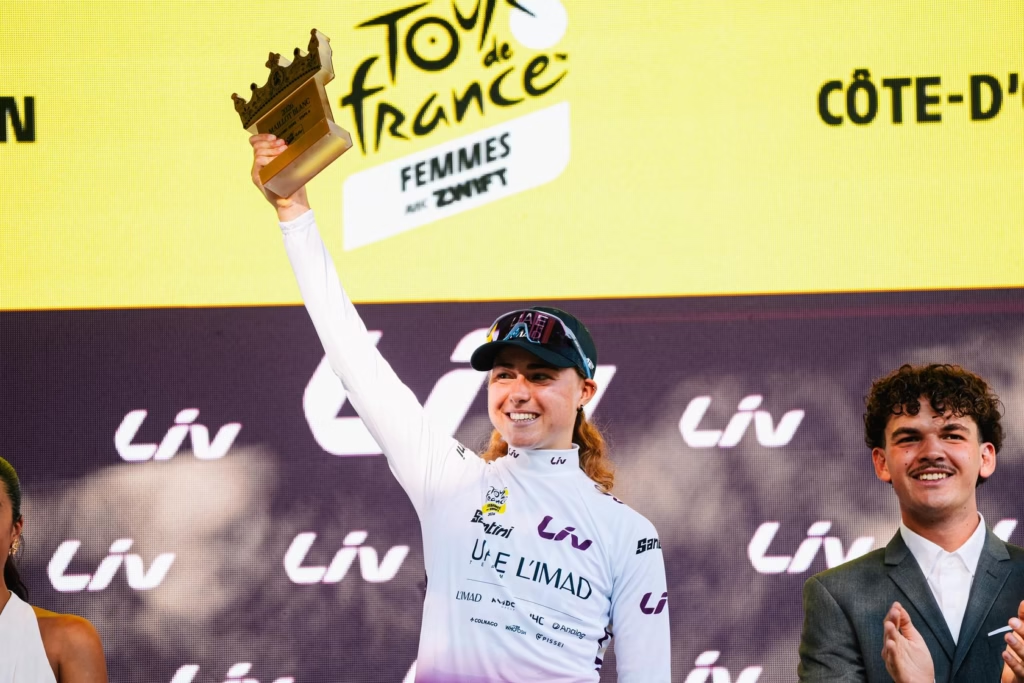 Photo Credit: A.S.O./Gaëtan Flamme
Blasi strengthens her grip on white
Blasi remains the leading young rider and rises to seventh overall at 1 minute 12 seconds.
Young rider classification after Stage 4
- Paula Blasi, UAE Team L’IMAD
- Antonia Niedermaier, Canyon SRAM at 31 seconds
- Isabella Holmgren, Lidl-Trek at 56 seconds
The time trial created the first meaningful gaps in the white jersey competition.
Blasi, Niedermaier and Holmgren had entered the stage level on time. Blasi then finished 11th in Dijon, beating Niedermaier by 31 seconds and Holmgren by 56.
That was particularly impressive because Niedermaier began as the most established time trial specialist of the three.
Blasi has built her reputation through climbing and attacking performances, but Dijon demonstrated that she is developing into a more complete stage racer. Sitting only nine seconds behind Longo Borghini also strengthens her place within UAE’s wider GC plans.
Niedermaier remains a serious challenger. She is ninth overall and should be well suited to the longer mountain stages. Holmgren is further back but remains close enough to recover time if the white jersey contest becomes more aggressive.
Van der Breggen moves into the top ten
Van der Breggen climbs to eighth overall at 1 minute 17 seconds.
Her time trial was not strong enough to challenge Reusser for the stage, but finishing level with Niewiadoma-Phinney moved her ahead of several riders who had begun the day closer to yellow.
The position gives SD Worx-Protime another tactical option beyond Kopecky and Wiebes.
Van der Breggen is unlikely to accept a purely defensive role while sitting close enough to challenge the riders currently on the podium. The hilly stages and Mont Ventoux offer opportunities to improve that position, particularly if rival teams focus primarily on Reusser and Vollering.
The remaining question is whether she has the climbing level required to remain near the front once the race reaches its longest ascents.
Her comeback has already produced strong results. The final five stages will provide the clearest measure yet of whether she can translate them into a major Tour GC finish.
Ferrand-Prévot falls to 14th
Ferrand-Prévot was the most significant loser among the main pre-race favourites.
The defending champion finished 34th in Dijon, 2 minutes 13 seconds behind Reusser, and drops to 14th overall at 2 minutes 14 seconds.
That deficit does not make a successful title defence impossible. The race still contains Mont Ventoux and two difficult stages around Nice, where larger gaps can be created.
It does remove the option of waiting.
Ferrand-Prévot now needs an aggressive race rather than one controlled attack on the final mountain. Team Visma | Lease a Bike must use its depth to place pressure on Movistar and FDJ United-Suez before the decisive summit finishes.
Femke de Vries moving into tenth overall gives the team another rider close enough to matter. She can enter moves, force other teams to chase or become a bridge for Ferrand-Prévot later in a stage.
Nooijen’s second place in Dijon was another major positive. Her four-second loss to Reusser confirmed that the early benchmark was not simply a provisional result produced before the favourites arrived.
Our profile of Lieke Nooijen and the ride that placed her in the hot seat explains why her performance was consistent with a wider rise as a time triallist and rouleur.
Le Court-Pienaar drops from second to 15th
Le Court-Pienaar began Stage 4 second overall and four seconds ahead of Vollering.
She finished 39th in the time trial, conceding 2 minutes 23 seconds to Reusser, and drops to 15th overall at 2 minutes 15 seconds.
The result confirmed that Dijon represented the greatest vulnerability in her GC campaign.
Le Court-Pienaar had built her position through bonus seconds, climbing consistency and a fast finish during the opening stages. She could not limit the losses once the leading specialists had an opportunity to create larger gaps.
Her objectives now become broader.
A strong overall result remains possible, particularly with several riders between the lower top ten and 20th place separated by relatively small margins. She is also well suited to the hilly stages and can target victories from reduced groups.
What has changed is the expectation. Le Court-Pienaar is no longer protecting a provisional podium and may receive greater freedom to race aggressively.
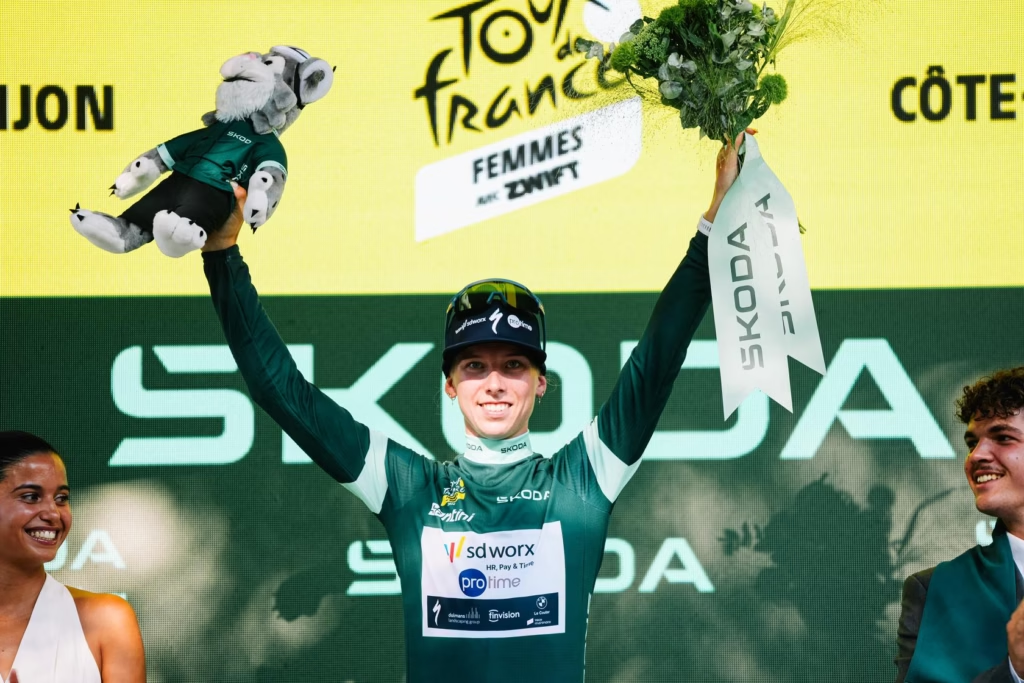 Photo Credit: A.S.O./Gaëtan Flamme
Wiebes remains in green
Lorena Wiebes continues to lead the points classification.
Points classification leader after Stage 4
Lorena Wiebes, SD Worx-Protime
The time trial did not threaten the advantage she established through victories in Lausanne and Geneva.
Reusser scored through the stage win, while Vollering and Nooijen also collected points, but none began close enough to overturn Wiebes’ lead.
The green jersey contest becomes more relevant again on Stage 5.
Eight categorised climbs should remove Wiebes from contention for the stage victory, while riders such as Kopecky, Pieterse, Marianne Vos and Noemi Rüegg can score heavily if they remain near the front.
Wiebes may attempt to contest the intermediate sprint, although it arrives after several early climbs. SD Worx-Protime must decide whether those points justify the effort or whether preserving her for later stages offers greater value.
Her existing advantage means she does not need to contest every sprint.
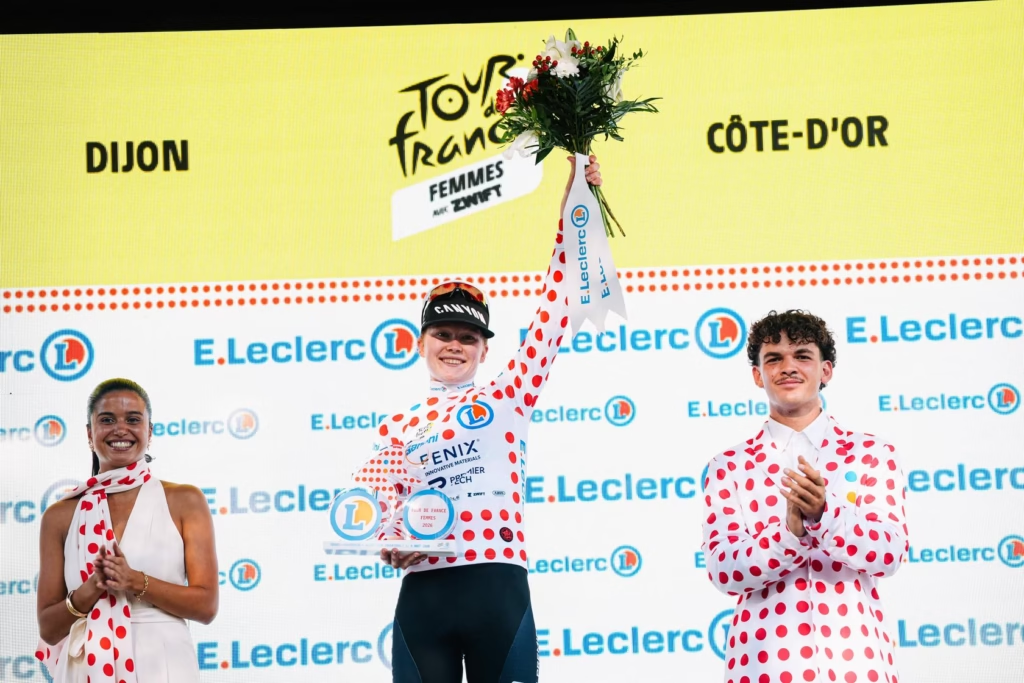 Photo Credit: A.S.O./Gaëtan Flamme
Pieterse keeps the polka dots
Pieterse remains in the mountains jersey after a time trial containing no categorised climbs.
Mountains classification leader after Stage 4
Puck Pieterse, Fenix-Premier Tech, 18 points
Nikola Nosková remains her closest challenger on 14 points, with Haugset third on 11.
Stage 5 could completely reshape the classification. The route contains eight categorised climbs and enough points for a rider in the breakaway to move ahead of Pieterse.
That creates a difficult choice for Fenix-Premier Tech.
Following every early move would require Pieterse to spend heavily before Mont Brouilly, compromising her chance of winning the stage. Allowing a strong climber to collect the points uncontested may cost her the jersey.
The team can reduce that pressure by placing another rider in the breakaway and forcing Pieterse’s rivals to work.
The Stage 5 preview examines how the mountains competition could help create the decisive move.
-
 Photo Credit: Getty
 -
 Photo Credit: A.S.O./Billy Ceusters

The jerseys after Stage 4
Yellow jersey: Marlen Reusser
Green jersey: Lorena Wiebes
Polka-dot jersey: Puck Pieterse
White jersey: Paula Blasi
Stage 4 changed only the race’s most important jersey, but it strengthened the position of the other classification leaders.
Reusser replaces Haugset in yellow after delivering the expected time trial victory. Wiebes retains green through the substantial advantage created by her two opening wins, while Pieterse’s mountains lead remains unchanged.
Blasi stays in white and now holds a genuine advantage over Niedermaier and Holmgren rather than leading through accumulated stage placings.
The rules and priorities behind each classification are explained in the Tour de France Femmes 2026 jerseys guide.
What the standings mean before Stage 5
The Tour now has a clear leading pair.
Only 14 seconds separate Reusser and Vollering, while every other rider begins at least 54 seconds behind. Their contest will shape the general classification, but the race remains too open to reduce entirely to two names.
Kerbaol, Haugset, Longo Borghini, Niewiadoma-Phinney, Blasi and Van der Breggen are all within 1 minute 17 seconds of yellow. One successful attack, difficult day or tactically dangerous breakaway can change the structure again.
Stage 5 is unlikely to produce the minute-scale gaps seen in Dijon. Its importance lies in how Movistar handle their first day defending yellow.
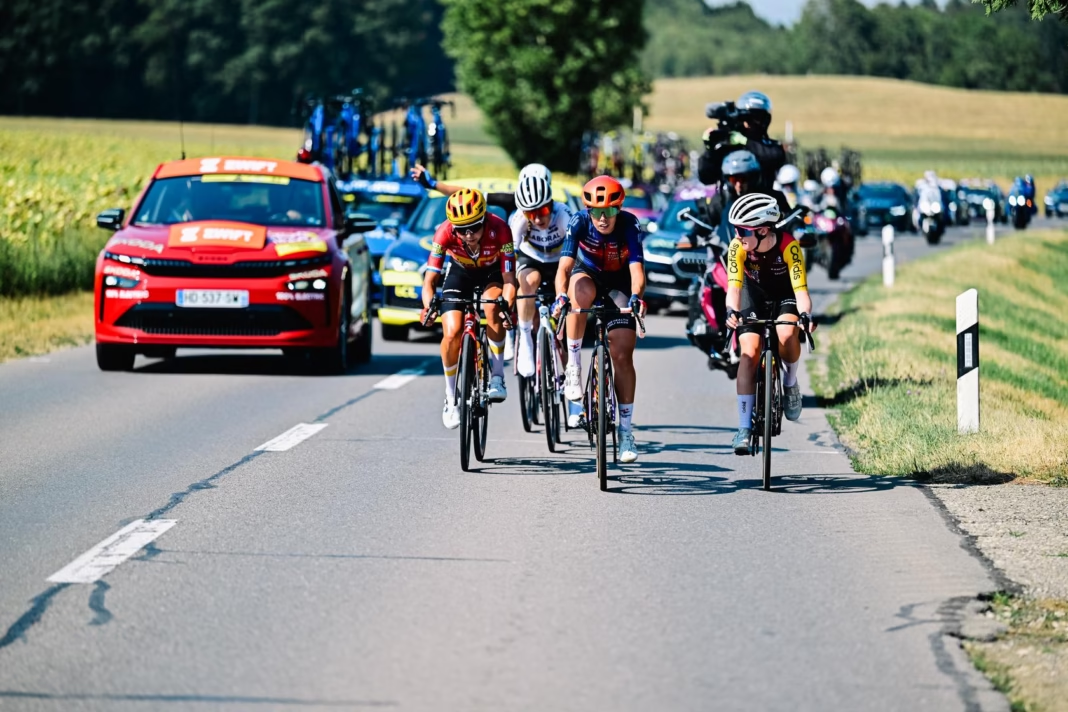
The eight-climb route should encourage a strong breakaway, which may suit Reusser by removing the stage bonuses from her closest rivals. Vollering can still target a small separation on Mont Brouilly, while the riders further behind have every incentive to make the race difficult.
Ferrand-Prévot and Le Court-Pienaar have lost the most ground, but those deficits may also give them greater tactical freedom.
The time trial established Reusser as the rider everyone else must now dislodge. It did not give Movistar enough of an advantage to make the remaining five stages comfortable.

