
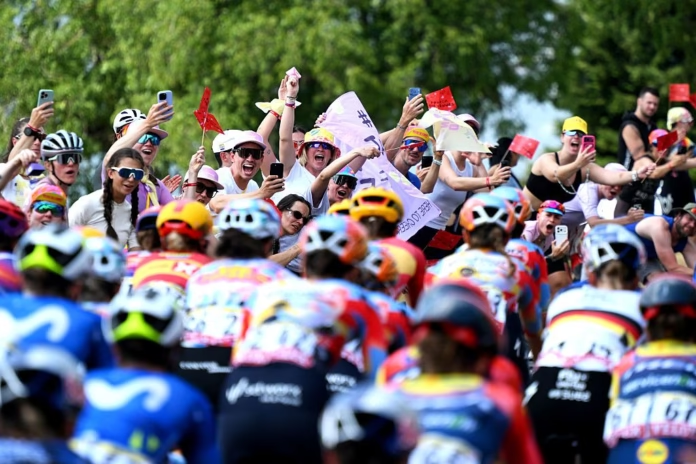
Stage 5 of the 2026 Tour de France Femmes takes the race from Mâcon to Belleville-en-Beaujolais on Wednesday 5 August, with 140km, eight categorised climbs and approximately 2,900 metres of elevation gain creating one of the best breakaway opportunities of the race.
The stage begins climbing almost immediately and rarely settles afterwards. None of the individual ascents is long enough to define the general classification, but their cumulative effect should remove the pure sprinters and make controlling the race expensive.
Mont Brouilly provides the final selection, with 3km at 7.7% and its summit only 10.6km from the finish. It is steep enough for the strongest riders in the break to separate themselves, but leaves enough road afterwards for a small group to reorganise or a lone attacker to defend a narrow advantage into Belleville-en-Beaujolais.
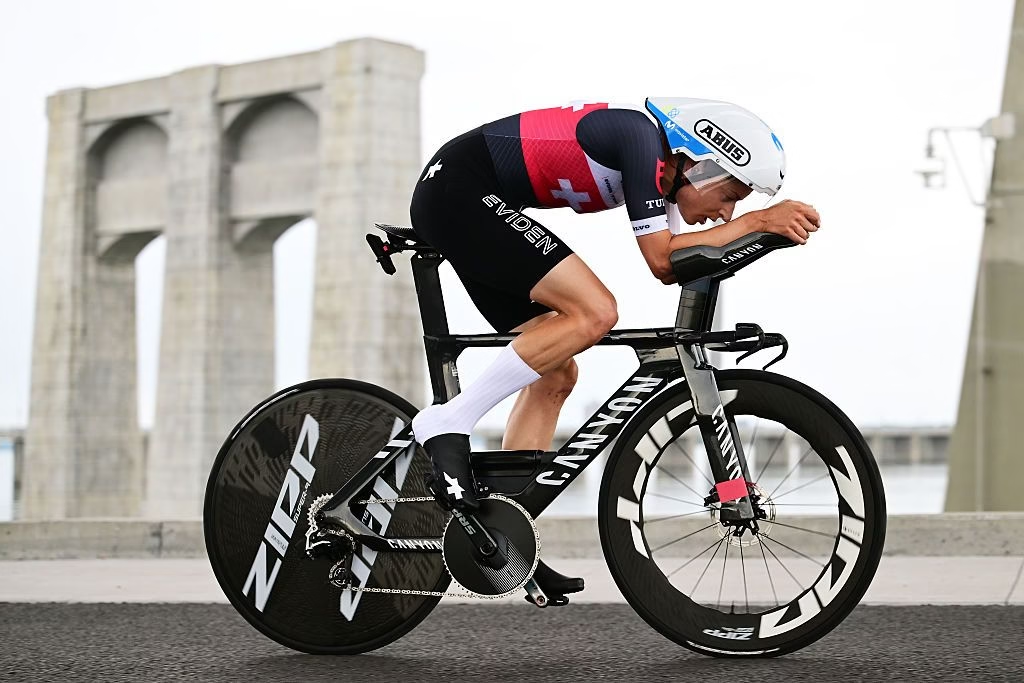
Marlen Reusser begins the day in yellow after winning the Dijon time trial by four seconds from Lieke Nooijen, with Demi Vollering third on the stage. Movistar now have the jersey but little obvious reason to control eight climbs for the stage victory.
That tactical position should encourage the attackers. Riders who lost time in Dijon are no longer significant threats to yellow, while many teams have reached the point where a stage win offers more value than protecting a distant overall position.
The route, the timing and the composition of the race all point towards the breakaway.
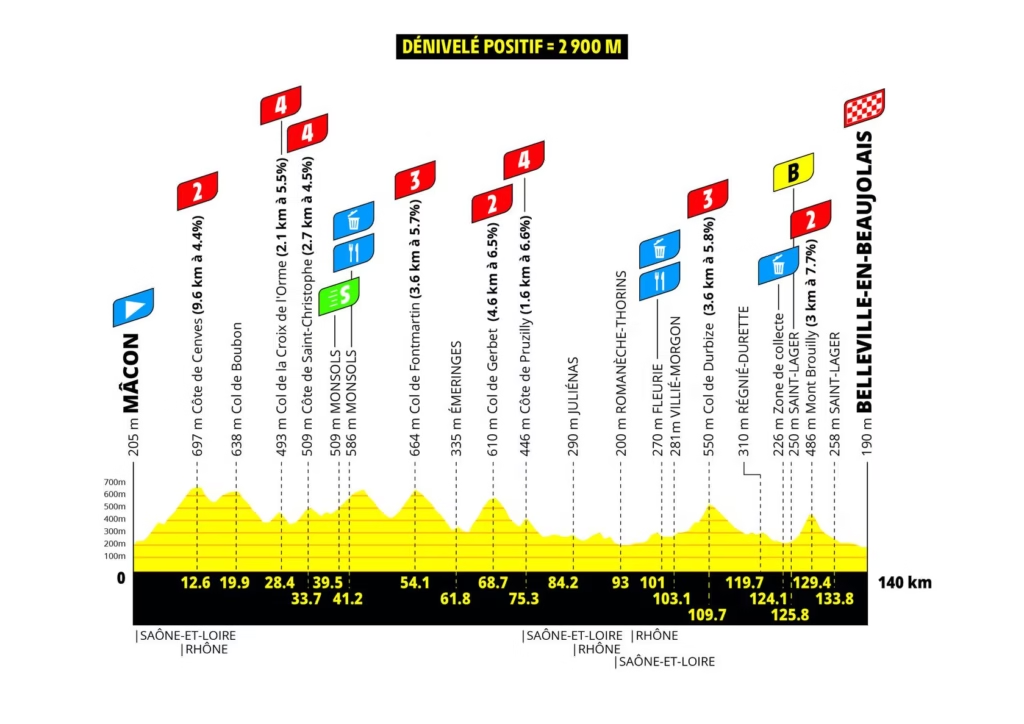
Tour de France Femmes 2026 Stage 5 route
Date: Wednesday 5 August 2026
Start: Mâcon
Finish: Belleville-en-Beaujolais
Distance: 140km
Stage type: Hilly
Categorised climbs: Eight
Estimated climbing: Approximately 2,900 metres
Race start: 13:45 CEST, 12:45 BST
Expected finish: 17:41 CEST, 16:41 BST
Stage 5 travels through the Beaujolais vineyards, but the profile is considerably harder than the picturesque setting may suggest.
The road rises almost immediately onto the Côte de Cenves, a 9.6km climb averaging 4.4%. It is not steep enough for a major GC attack, but its position at the beginning of the stage means the breakaway battle starts on climbing terrain rather than a flat road dominated by rouleurs.
Five more categorised climbs arrive before the race has completed 76km. That concentrated opening should produce a long, selective contest to reach the break rather than one clean attack followed by a controlled peloton.
The Col de Durbize begins the final phase before Mont Brouilly provides the obvious launch point. By then, the front group may already have been reduced several times.
Stage 5 ranks as the fourth-hardest day in our guide to the 2026 Tour de France Femmes stages ranked by difficulty, but much of that difficulty comes from its relentless structure rather than one defining mountain.
Eight climbs with almost no chance to settle
The official categorised climbs are:
Côte de Cenves: 9.6km at 4.4%
Col de la Croix de l’Orme: 2.1km at 5.5%
Côte de Saint-Christophe: 2.7km at 4.5%
Col de Fontmartin: approximately 3.8km at 5.6%
Col de Gerbet: 4.6km at approximately 6.4%
Côte de Pruzilly: 1.6km at 6.6%
Col de Durbize: 3.6km at 5.8%
Mont Brouilly: 3km at 7.7%
No climb alone should be decisive. The problem is the lack of recovery between them.
The Côte de Cenves gives climbers and strong puncheurs the first opportunity to move. The Col de la Croix de l’Orme and Côte de Saint-Christophe then arrive in quick succession, making it difficult for a group formed on the opening climb to establish a stable rhythm.
The Col de Fontmartin, Col de Gerbet and Côte de Pruzilly should separate the genuine stage contenders from riders who entered the move simply to provide team representation.
By the time the race reaches its quieter middle section, the break may already consist largely of riders capable of winning.
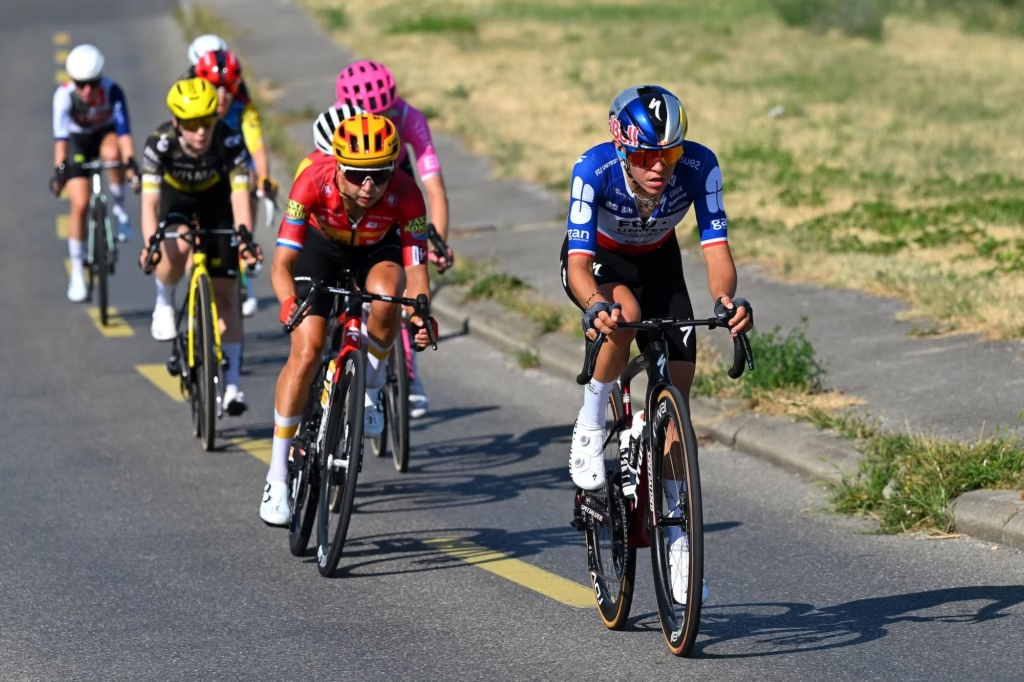
Why the breakaway should be difficult to control
The most important factor is Movistar’s incentive.
Reusser has already secured the Stage 4 victory and yellow jersey. Movistar’s priority is now defending her position until the race reaches the mountains, not spending an entire day chasing riders who are several minutes behind overall.
A safe breakaway can help them.
If the front group contains no meaningful GC threat, it removes the stage win and its bonus seconds from Vollering, Elisa Longo Borghini, Kasia Niewiadoma-Phinney and the other riders close to Reusser. Movistar can then regulate the gap without needing to bring the race back together.
The problem is deciding which riders are safe.
The time trial created larger gaps, but several strong stage hunters remain close enough to force Movistar to monitor the composition carefully. A group containing one rider two or three minutes behind is very different from a move filled entirely with riders already outside the wider GC contest.
Once an acceptable group is established, however, there may be no team willing to take complete responsibility for the chase.
SD Worx-Protime have Lotte Kopecky, Fenix-Premier Tech have Puck Pieterse and EF Education-Oatly have Noemi Rüegg. All three could win from a reduced peloton, but none of their teams will want to ride for hours while their rivals conserve energy.
That absence of one obvious controlling squad is the breakaway’s strongest advantage.
The riders most suited to these opportunities are covered more widely in our Tour de France Femmes 2026 breakaway specialists guide.
The Côte de Cenves may take an hour to solve the breakaway
The first climb begins almost immediately after the start in Mâcon.
At 9.6km and 4.4%, the Côte de Cenves is long enough to create a genuinely selective opening but not hard enough to produce one obvious front group. Riders can attack, be caught and attack again without the strongest climbers necessarily committing.
That should create several waves.
The first moves may contain riders seeking mountains points or simply trying to place a teammate ahead. More dangerous combinations are likely to form as the climb continues and the weaker rouleurs begin losing contact.
Movistar cannot control every attempt. Doing so would require Reusser’s teammates to spend heavily before the stage reaches its most difficult half.
The likely solution is allowing a larger group to form, checking its best-placed rider and then deciding whether the composition is acceptable.
If several teams miss the move, the fight may continue across the Col de la Croix de l’Orme and Côte de Saint-Christophe. That could leave the race without a settled break until more than 30km have been completed.
The riders who eventually escape will have earned their advantage before the chase even begins.
Mont Brouilly is made for a breakaway shootout
Mont Brouilly is the defining climb, but it should decide the stage within the breakaway rather than automatically bring the GC favourites into contention.
The climb averages 7.7% over 3km and contains steeper sections capable of splitting a group that has already crossed seven categorised ascents.
Positioning at the bottom will matter. The road is narrow enough for a rider caught behind a weakening rival to lose contact before finding space to respond.
The strongest climbers may attack from the lower slopes, particularly if the break still contains riders with a fast finish. Waiting until the summit would risk carrying someone such as Silvia Persico, Liane Lippert or Lucinda Brand into the final kilometres.
The 10.6km between the summit and finish create another tactical decision.
A lone rider with 15 or 20 seconds can survive if the chasers hesitate. A group of three or four may be stronger on the flatter run-in, but cooperation becomes difficult when everyone knows the others are preparing for the sprint.
The descent also gives technically confident riders another chance to create separation after the climbing has ended.
Stage 5 may therefore be won through the final kilometre of Mont Brouilly, the descent immediately afterwards or one attack during the regrouping towards Belleville-en-Beaujolais.
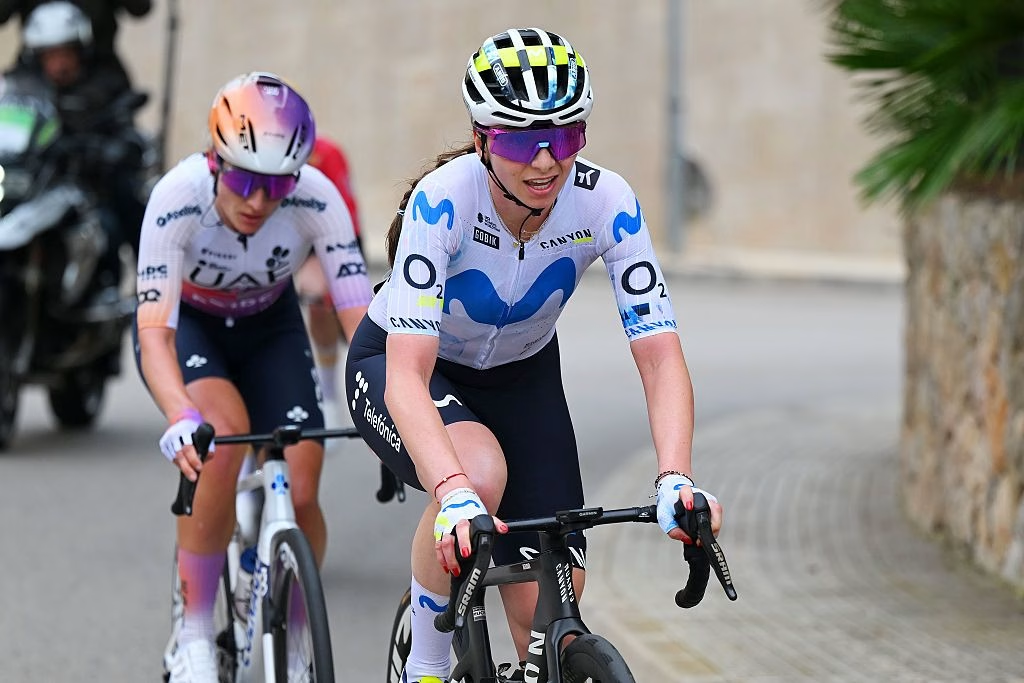 Photo Credit: Getty
Liane Lippert has the freedom and the route
Lippert is one of the strongest candidates to win from the break.
She has the climbing ability to survive all eight ascents, the acceleration to attack on Mont Brouilly and enough finishing speed to win from a small group.
Her role within Movistar creates an interesting question. Reusser needs support around the yellow jersey, but sending Lippert ahead could reduce the team’s responsibility and give them a second route towards success.
If Lippert reaches the break, rival teams may be reluctant to help chase because Movistar would have both the stage option ahead and Reusser protected behind.
Her best route is not waiting for a large sprint. Lippert should use the Col de Durbize or the lower slopes of Mont Brouilly to reduce the group before relying on her speed among a smaller selection.
Silvia Persico gives UAE an ideal attacking option
Persico is another rider who fits almost every demand of Stage 5.
She can climb strongly across repeated short ascents, handle technical roads and finish quickly after a difficult day. Her GC position may also give her more freedom than Longo Borghini or Paula Blasi.
UAE Team L’IMAD have enough depth to place Persico or Dominika Włodarczyk in the break without weakening their wider race around Longo Borghini.
Persico is particularly dangerous because she does not need one exact race shape. She can win from the break, follow an attack on Mont Brouilly or sprint from a reduced group if the front and peloton come together.
Teams may hesitate to allow her into the move for precisely that reason.

Lucinda Brand has the experience to manage the finale
Brand is one of the most tactically complete riders available for a breakaway stage.
She can contribute on the flatter roads, survive repeated climbs and read the point at which cooperation within the group begins to fail. Stage 5 should reward that experience.
Lidl-Trek also have Riejanne Markus and Niamh Fisher-Black, giving them several ways to enter the move. Markus has already demonstrated her willingness to attack during this Tour, while Fisher-Black offers greater climbing strength if the break becomes highly selective.
Brand’s challenge is Mont Brouilly. She may not possess the sharpest acceleration against Lippert, Persico or Pieterse, so her best opportunity could come through anticipating the final climb or attacking immediately after the summit.
A rider of Brand’s experience rarely waits for the finale everyone else expects.
Justine Ghekiere can combine the stage with mountains points
Ghekiere is one of the clearest climbing specialists likely to receive breakaway freedom.
The opening six climbs offer a substantial collection of mountains points, while Mont Brouilly provides terrain on which she can attempt to finish the job.
She is unlikely to want a sprint against the quicker all-rounders. Her race must become selective before the final descent.
The Col de Gerbet and Côte de Pruzilly provide an opportunity to reduce the front group during the first half. If Ghekiere reaches Mont Brouilly with only the strongest climbers, she can attack without needing to preserve anything for the finish.
The same logic applies to Yara Kastelijn, Mavi García and Usoa Ostolaza. All can win from a hard break, but none wants to carry the fastest riders into Belleville-en-Beaujolais.
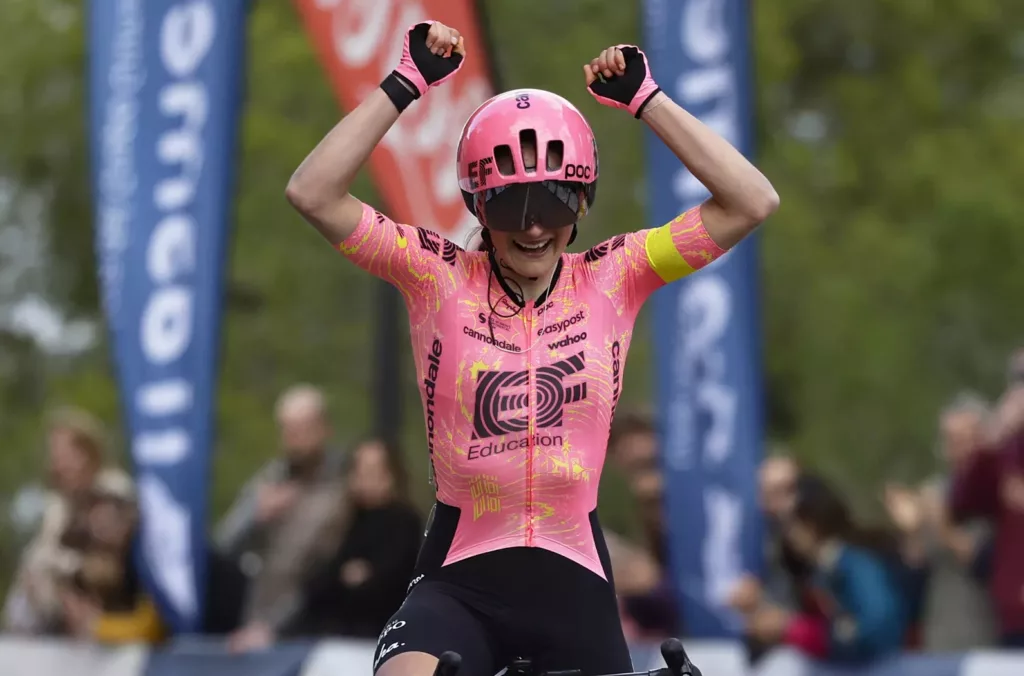
Magdeleine Vallières can turn World Championship strength into a stage bid
Vallières is another rider well suited to an attritional breakaway.
Her strength lies in repeated hard efforts rather than one overwhelming acceleration. That makes the sequence of eight climbs more useful than a stage built around one long final ascent.
EF Education-Oatly can send Vallières or Kristen Faulkner ahead while preserving Rüegg for a possible reduced-group finish behind.
Faulkner would be particularly dangerous if the break retains a larger group after Mont Brouilly. Her sustained power makes any attack over the summit or during the run-in difficult to close.
Vallières offers the stronger climbing option. If she reaches the final ascent within the front group, she can increase the tempo gradually and turn Mont Brouilly into an endurance test rather than an explosive contest.
Riejanne Markus has already shown her intent
Markus came within the final kilometre of winning Stage 2 after spending around 39km alone at the front.
Stage 5 gives her another opportunity, this time on terrain better suited to staying away.
She can contribute to the formation of the move, maintain speed between climbs and continue working when a less durable break begins fragmenting. Her weakness is the steepest section of Mont Brouilly, where the more explosive climbers may create separation.
That makes an earlier attack attractive.
Markus could move on the Col de Durbize or use the roads before Mont Brouilly to force stronger climbers into a chase. If she begins the final ascent with an advantage, she has the power required to limit her losses and continue towards the finish.
Her willingness to commit fully means the break cannot allow her even a modest head start.

Anouska Koster and the Uno-X route to another stage win
Uno-X Mobility have already transformed their Tour through Haugset’s victory on Stage 3.
Stage 5 gives the team another realistic breakaway opportunity through Anouska Koster, Marte Berg Edseth or Katrine Aalerud.
Koster is especially suited to an unsettled stage. She can enter moves, contribute across rolling roads and survive enough climbing to remain relevant deep into the race.
Aalerud offers a more climbing-focused option, while Edseth has the strength to attack before the final ascent.
Haugset’s time loss in Dijon may also change Uno-X’s approach. Rather than dedicating the entire team to protecting a temporary high GC position, they can return to the aggressive racing that delivered their biggest result of the week.
The polka-dot jersey may shape the opening kilometres
Eight categorised climbs mean the mountains classification cannot be ignored.
Pieterse begins the stage in polka dots, but several riders can use a breakaway to collect enough points to challenge her lead. That adds another reason for teams to attack from the Côte de Cenves.
Pieterse must decide how heavily to defend.
Following every early move would be expensive and could compromise her chances on Mont Brouilly. Allowing a rival to collect maximum points across six or seven climbs may cost her the jersey entirely.
Fenix-Premier Tech can reduce that burden by placing a teammate such as Kastelijn or Lotte Claes in the break. That gives the team representation without forcing Pieterse to spend the opening half chasing every move herself.
The mountains competition could therefore help create the successful breakaway even if Pieterse never joins it.
 Photo Credit: Getty
Kopecky, Pieterse and Rüegg wait behind
A breakaway victory is the most likely outcome, but the reduced peloton still contains several riders capable of winning if the gap is controlled.
Kopecky is the obvious favourite from a small group. The route is too difficult for the pure sprinters but closely matched to her combination of power, climbing and speed.
Pieterse has the explosiveness to attack on Mont Brouilly and the descending ability to preserve a small gap. Rüegg offers similar climbing strength with one of the fastest finishes among the likely survivors.
Marianne Vos remains dangerous if the pace on Mont Brouilly is controlled rather than aggressive. Carrying her over the summit would create a major tactical problem for every other fast finisher.
The existence of those riders may actually help the break.
No team wants to spend the day chasing only to deliver Kopecky or Vos to the finish. Unless SD Worx-Protime or Visma | Lease a Bike accept responsibility, the front group can maintain enough of an advantage to decide the stage itself.
What Movistar need from the breakaway
Movistar’s preferred break is strong enough to survive but harmless enough overall to ignore.
That may sound straightforward, but the first hour should make it difficult to manage. Several riders with stage-winning ability remain close enough to force the team to calculate whether their presence matters.
Once an acceptable move has formed, Movistar should avoid the temptation to keep it too close.
A gap of two minutes invites attacks from the peloton and gives teams behind a reason to chase. Allowing the break four or five minutes removes the stage from the GC riders and encourages the front group to work.
Reusser then needs only to remain well positioned before the Col de Durbize and respond if Vollering or another close rival attacks on Mont Brouilly.
The yellow jersey contest may create a few seconds, but it does not need to dominate the stage.
For Movistar, a breakaway taking the stage and all available bonuses would represent an excellent outcome.
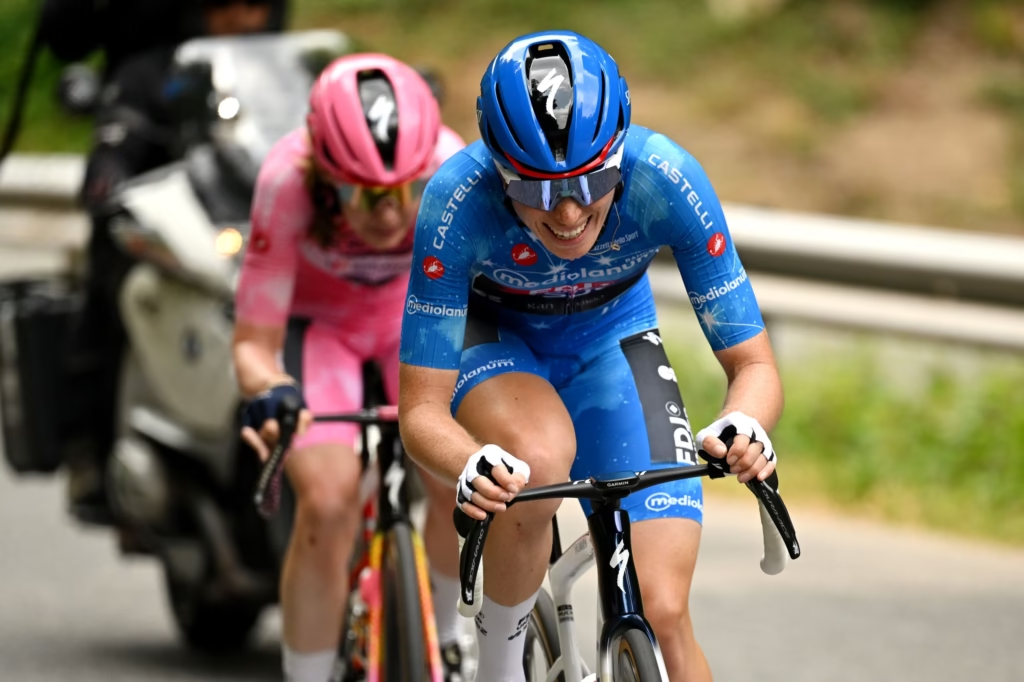 Photo Credit: Getty
How Stage 5 is likely to unfold
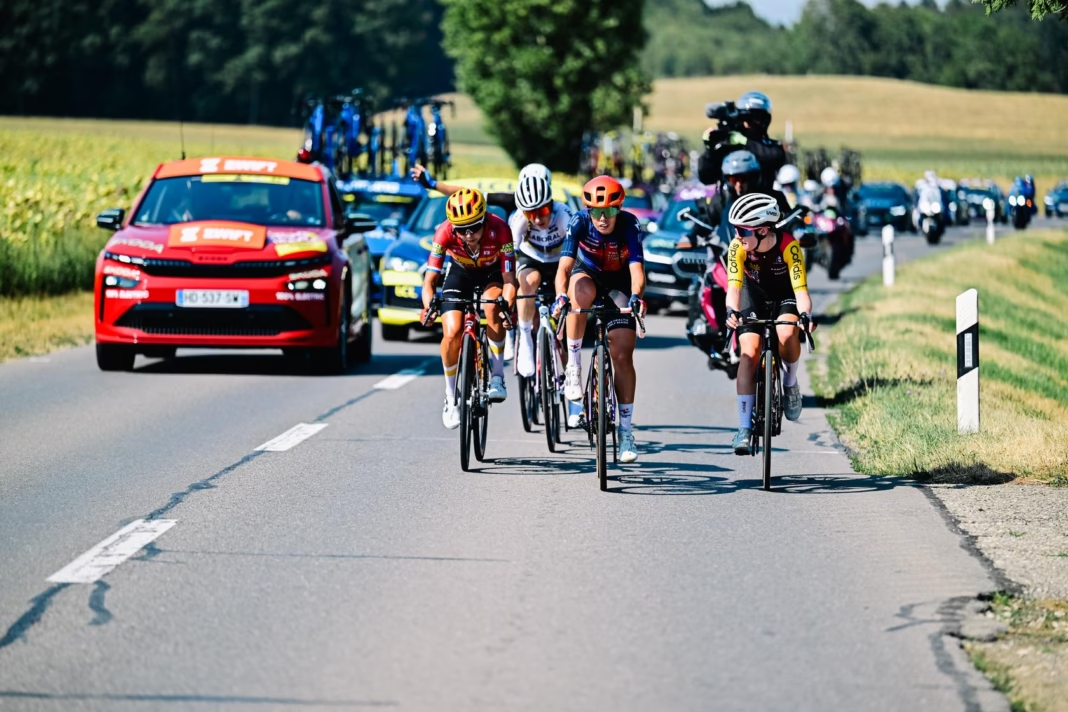
The opening hour should be one of the most aggressive passages of the Tour.
Attacks will begin on the Côte de Cenves and may continue across the next two climbs. The final group is unlikely to form cleanly because so many teams have a reason to be represented.
Once the break settles, the Col de Fontmartin and Col de Gerbet should begin removing riders who spent too much energy earning their place in it.
The Côte de Pruzilly may provide the first serious attack among the stage contenders, especially if riders chasing mountains points have already disrupted the cooperation.
A quieter section should then allow the remaining attackers to rebuild their advantage before the Col de Durbize begins the final contest.
By Mont Brouilly, the break may be reduced to fewer than ten riders. The pure climbers need to attack, while the quicker finishers will attempt to survive without taking responsibility for the chase.
The peloton should reach the climb later, with Movistar controlling Reusser’s position but little need to close the final gap.
That creates two simultaneous races, but the stage win should remain at the front.
-
 Photo Credit: A.S.O./Billy Ceusters

Riders to watch for the breakaway
Liane Lippert
Has the climbing strength, tactical freedom and finishing speed required to win from several different race situations.
Silvia Persico
One of the most complete candidates. She can attack, follow the best on Mont Brouilly and win from a small group.
Lucinda Brand
Experienced enough to anticipate the obvious finale and strong enough to make a move survive across the rolling roads.
Justine Ghekiere
Needs a hard race and a reduced group. The mountains points provide an additional reason to attack early.
Magdeleine Vallières
Well suited to repeated climbing and a long attritional effort. EF Education-Oatly have enough depth to support an aggressive approach.
Riejanne Markus
Her Stage 2 attack showed her form and intent. An earlier move before Mont Brouilly may be more effective than waiting for the steepest gradients.
Yara Kastelijn
Can combine mountains points with a stage challenge and gives Fenix-Premier Tech a way to protect Pieterse behind.
Mavi García
A strong climber who needs to remove the quicker riders before the finish. The repeated climbs create opportunities to do so.
Usoa Ostolaza
Capable of surviving a highly selective break and attacking on Mont Brouilly. Her best chance comes if the race becomes too hard for the faster puncheurs.
Anouska Koster
A durable and tactically intelligent option for Uno-X on terrain where team confidence should already be high.
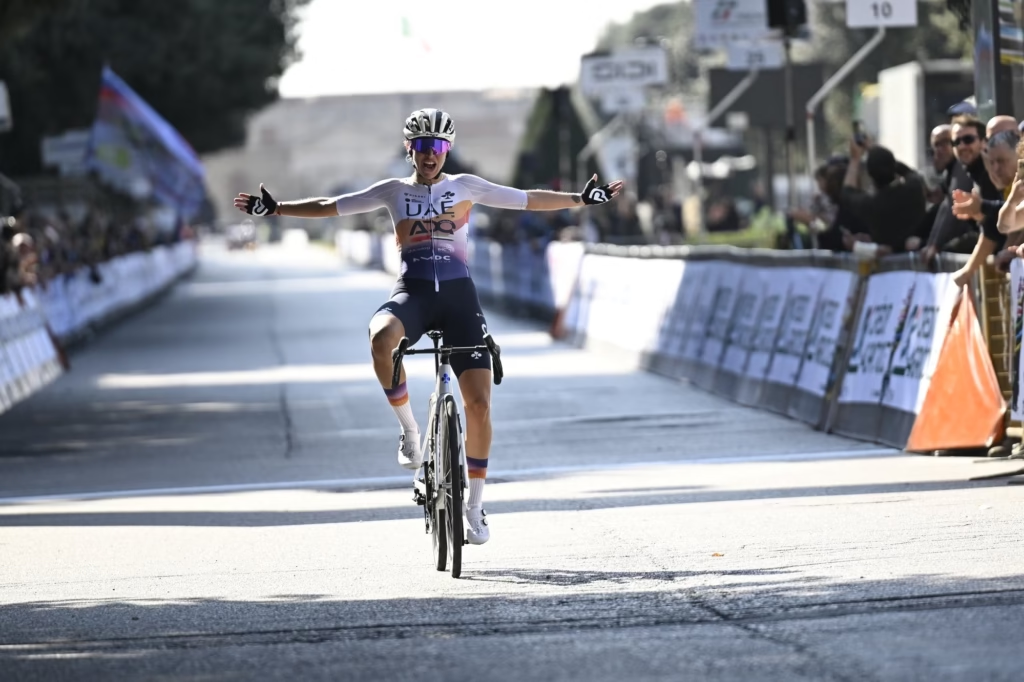 Photo Credit: Sprint Cycling Agency
Stage 5 prediction
Stage 5 should belong to the breakaway.
The climbing begins too early for the race to settle easily, while the eight categorised ascents make a full-day chase expensive. Movistar have no reason to control for the stage, and the teams with the best reduced-group finishers will be reluctant to work for rivals such as Kopecky, Pieterse, Rüegg or Vos.
The successful move may take more than 30km to form, but once it does, the right combination can build a decisive advantage.
Lippert and Persico offer the most complete routes to victory. Ghekiere, García and Ostolaza need to make Mont Brouilly as hard as possible, while Brand, Markus and Faulkner may try to anticipate it.
The final climb should reduce the break to its strongest riders, but the stage may not be won until the descent or the tactical run towards Belleville-en-Beaujolais.
The GC favourites will still test one another on Mont Brouilly, particularly after the differences created in Dijon. Their contest should take place behind the riders fighting for the stage.
Stage 4 belonged to the stopwatch. Stage 5 should reward the rider prepared to attack early, survive repeated climbs and still make the correct decision after more than three hours at the front.

