
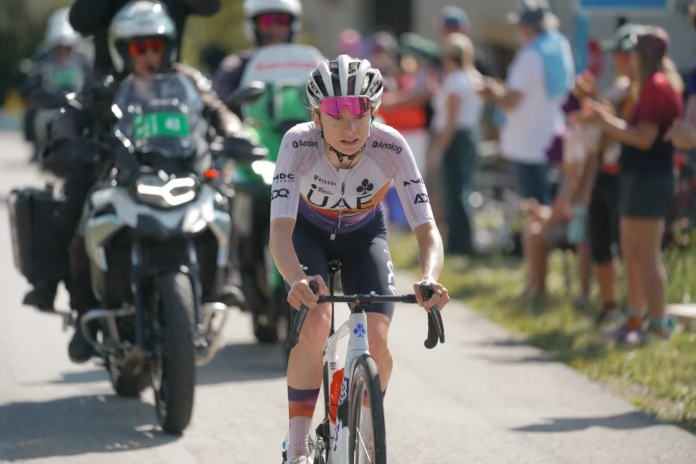
The Tour de France Femmes will ultimately be decided by the riders competing for yellow, but they will not control every stage.
Behind the general classification battle sits a different group of riders. They will deliberately surrender time, enter large breakaways and build their race around one or two carefully selected opportunities rather than their position in Nice.
Some are powerful rouleurs capable of spending all day at the front. Others are punchy climbers who need an early advantage before the main favourites begin attacking. A few are versatile Classics riders who can win alone, from a reduced group or through a late counterattack.
The Tour de France Femmes 2026 route gives those riders several opportunities. Stage 3 crosses the Jura, stages 5 and 6 contain repeated climbing through Beaujolais and towards the Rhône, while the long road from Sisteron to Nice on stage 8 looks particularly difficult for one team to control.
This guide is not concerned with Demi Vollering, Pauline Ferrand-Prévot, Anna van der Breggen or the other riders expected to finish near the top of the general classification. It focuses on riders likely to lose time, gain tactical freedom and chase individual stages.
The line-ups can still change before the race begins in Lausanne on 1 August, with 21 teams due to start seven riders each.
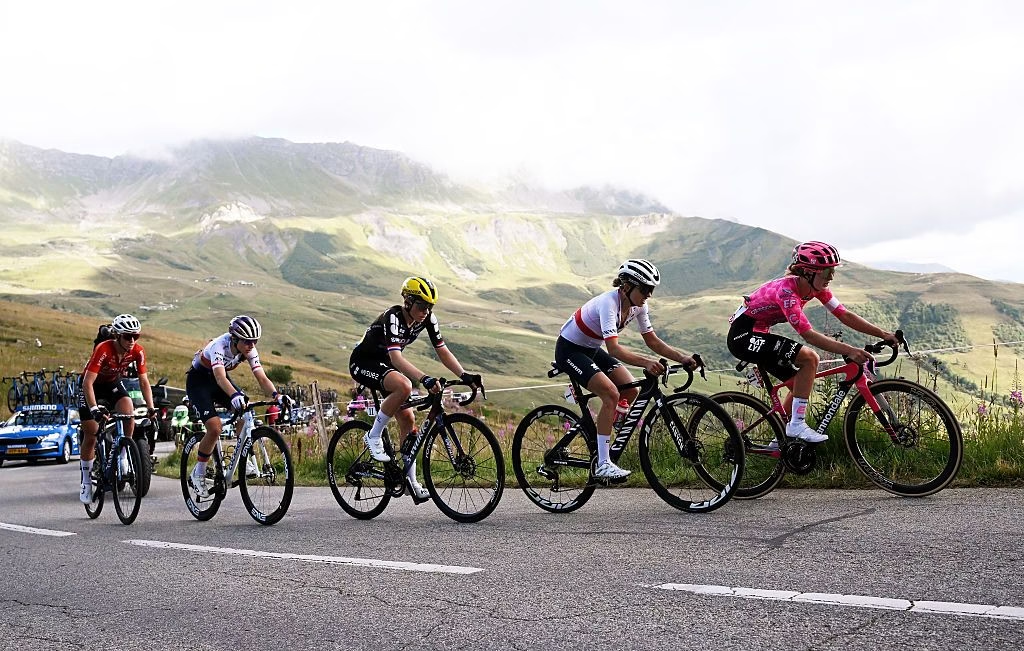
What makes a Tour de France Femmes stage hunter?
A stage hunter needs freedom.
That normally means being far enough behind in the general classification that the yellow jersey team does not immediately chase. A rider sitting two minutes from the race lead remains dangerous. Someone already 15 minutes down can often enter a breakaway without causing concern.
The strongest stage hunters also need versatility. A breakaway can spend several hours on flat or rolling roads before reaching the decisive climbs, so a lightweight mountain specialist may waste too much energy establishing the move. A pure rouleur can reach the final hour at the front but may struggle when the gradient rises.
The ideal rider can join the escape, contribute without doing too much work and still attack after several hours of racing.
Team circumstances are just as important. Some riders will have complete freedom because their squad has no realistic GC contender. Others must spend the opening stages supporting a leader before their own opportunities appear.
The race should begin opening after the stage 4 time trial. Once riders have lost several minutes, the peloton becomes more willing to let them attack through the Beaujolais and Ardèche stages.
For newer viewers, the beginner’s guide to the Tour de France Femmes 2026 explains how breakaways work and why teams without a yellow jersey contender depend so heavily on them.
Which stages are best for the breakaway?
The 2026 Tour contains three flat stages, three hilly stages, two mountain stages and a 21km individual time trial. Across nine consecutive days, the riders cover 1,175km with no rest day.
Not every difficult stage automatically favours the breakaway. Mont Ventoux on stage 7 is likely to be controlled by the teams contesting yellow, while the opening Swiss stages may remain too close on GC for strong riders to receive much freedom.
The best opportunities should arrive once the time trial has separated the race.
| Stage | Route | Why it could suit the breakaway |
|---|---|---|
| Stage 3 | Geneva to Poligny, 156.5km | A difficult opening over the Col de la Faucille and Col de la Savine before a long tactical run towards Poligny |
| Stage 5 | Mâcon to Belleville-en-Beaujolais, 140km | Constant rolling terrain with little opportunity for a sprint team to settle into control |
| Stage 6 | Montbrison to Tournon-sur-Rhône, 153.4km | Six categorised climbs, including the Col de Lalouvesc and a late ascent of the Côte de Boucieu-le-Roi |
| Stage 8 | Sisteron to Nice, around 175km | The longest stage of the race, placed immediately after Mont Ventoux and containing two short climbs near Nice |
| Stage 9 | Nice to Nice, 99.2km | Four climbs towards the Col d’Èze provide repeated attacking opportunities, although the GC battle may absorb the stage |
The full Tour de France Femmes 2026 calendar sets out how the route develops from the Swiss Grand Départ through Dijon, Mont Ventoux and the final weekend in Nice.
 Photo Credit: Getty
Célia Géry
Célia Géry may be the clearest stage hunter on the confirmed selections so far.
The French rider has developed quickly from a cyclocross and under-23 prospect into one of the strongest punchy racers in the peloton. Her 2026 season has included victories at Brabantse Pijl, the Grand Prix Féminin de Chambéry, the French road championships and stage 7 of the Giro d’Italia Women.
Her Giro stage victory in Salice Terme was particularly relevant. Géry reached the decisive late move and still had enough acceleration to beat Lucinda Brand on the uphill finish.
The result came after her breakthrough victory at Brabantse Pijl Women, where she timed her effort perfectly from a reduced group.
FDJ-SUEZ will build its general classification plan around Vollering. Géry should therefore spend parts of the race working for the team leader, but her recent form is too strong to restrict her entirely to domestique duties.
Stage 5 looks particularly suitable. The repeated Beaujolais hills reward acceleration and recovery, while Géry has enough finishing speed to win if a small group reaches Belleville-en-Beaujolais together.
Stage 6 is another obvious target. A move on or after the Côte de Boucieu-le-Roi would play directly to her strengths.
 Photo Credit: Getty
Kristen Faulkner
Kristen Faulkner is one of the most dangerous riders to allow into a breakaway.
Her defining strength is the ability to turn a small tactical gap into a large physical one. Once Faulkner reaches an open road alone, she can sustain a pace that forces several teams to cooperate behind.
Her Olympic road race victory in Paris showed the full version of that threat. Faulkner bridged to the leading group, recognised the moment of hesitation and attacked before her rivals had agreed who should chase.
EF Education-Oatly has enough strength to race aggressively rather than commit everything to one objective. The team’s wider range is explored in the EF Education-Oatly 2026 team guide.
Faulkner is unlikely to build her Tour around surviving Mont Ventoux close enough to protect a high GC position. That makes her more dangerous on the open stages before and after the summit finish.
Stage 8 should be her best opportunity. Its length, valleys and relatively modest late climbs suit a rider capable of attacking before the punchier specialists begin saving themselves for the finale.
She will be particularly difficult to control if she enters a strong group containing several climbers. Breakaway companions cannot afford to give her a free ride across the flatter roads, but working with her could leave them exposed once she attacks.
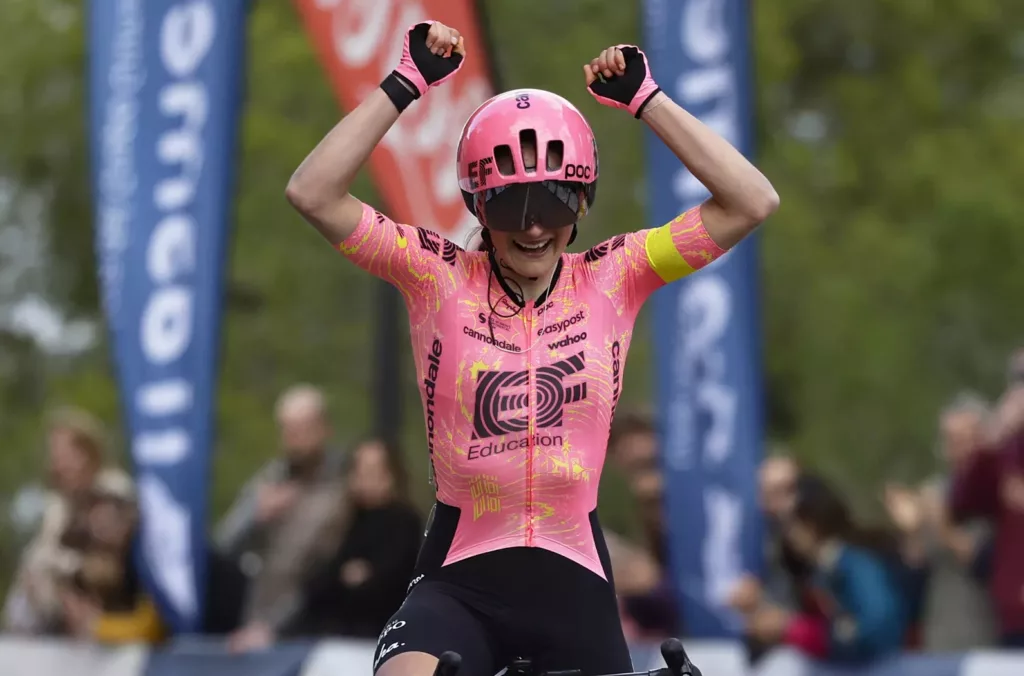
Magdeleine Vallières
Magdeleine Vallières will wear the rainbow jersey as the reigning world road race champion.
That makes it almost impossible for her to disappear unnoticed into a breakaway, but her racing style remains suited to aggressive stages. Vallières can handle repeated climbing, race efficiently over long distances and finish quickly from a reduced group.
Her rise from Canadian prospect to world champion is covered in our profile of Magdeleine Vallières.
Her greatest difficulty may be tactical rather than physical. Everyone recognises the rainbow jersey, and few riders will willingly carry Vallières towards a finish where her acceleration becomes decisive.
She may need to attack earlier than expected or use Faulkner as a tactical partner. One rider can force the chase while the other waits for the counterattack.
Stages 5 and 6 are the clearest opportunities. The Beaujolais roads suit her punch, while the longer stage towards Tournon-sur-Rhône gives EF enough terrain to use its strength in numbers.
 Photo Credit: Getty
Lotte Kopecky
Lotte Kopecky is not a conventional breakaway specialist, but she could become one of the most important stage hunters in the race.
SD Worx-Protime has several possible leaders and will not need Kopecky to ride conservatively for the final general classification. Mont Ventoux also makes it unlikely that her entire Tour will be built around preserving every second.
Kopecky can win from almost any tactical situation. She can sprint from a reduced peloton, attack on a short climb, follow moves on rolling roads or spend a long period ahead of the race.
Her range and 2026 form are examined in the Lotte Kopecky 2026 season guide.
The problem is freedom. Rival teams will recognise her as a potential stage winner and may refuse to allow any move containing her to gain time.
Kopecky may therefore be more dangerous through a late attack than in the original breakaway. Stage 5 could finish with a reduced group, while stage 8 offers enough distance for SD Worx-Protime to use her aggressively after Mont Ventoux.
She does not need the peloton to make an obvious mistake. Kopecky is strong enough to force one.
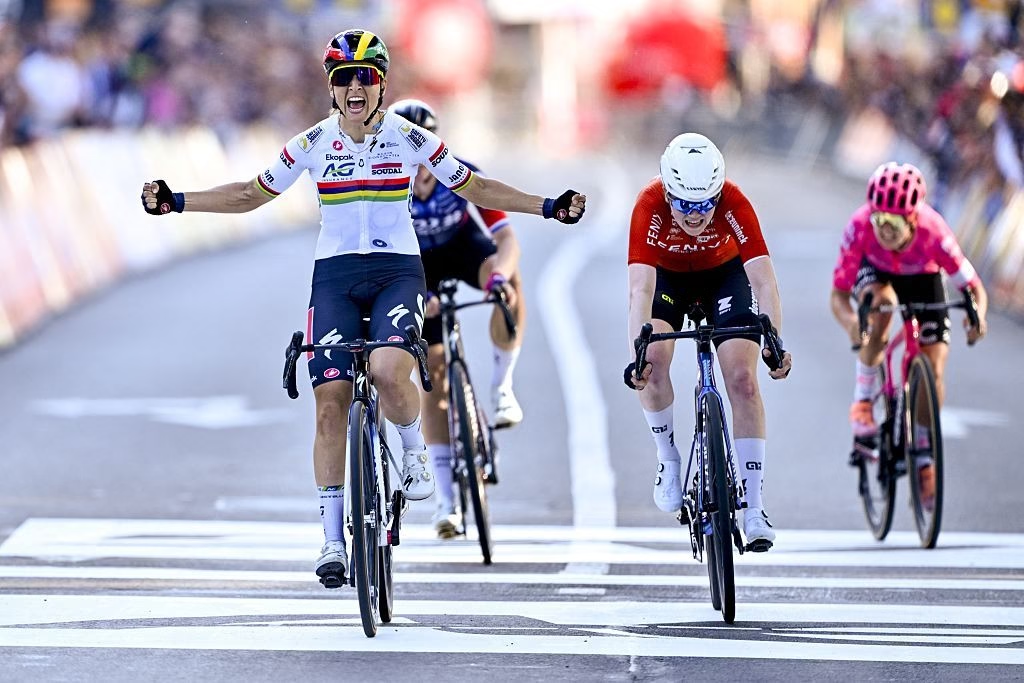
Kimberley Le Court
Kimberley Le Court combines Classics strength with a willingness to race aggressively.
She has developed into far more than a fast finisher. Le Court can climb with elite puncheurs, handle a long attritional race and attack when the leading group begins hesitating.
Her victory at Liège-Bastogne-Liège Femmes confirmed that she can win one of the hardest hilly races on the calendar. She also has previous Tour de France Femmes stage-winning experience.
The AG Insurance-Soudal 2026 team guide shows why the team can approach selective stages with several different cards rather than depending on one leader.
Stage 5 appears almost designed for Le Court’s strengths. The repeated short climbs should remove many sprinters without turning the stage into a pure mountain contest.
She could wait for a reduced sprint or attack when the stronger teams begin watching one another. Her speed also means breakaway companions will try to distance her before the finish, potentially forcing her to race earlier than she would in a normal Classics finale.
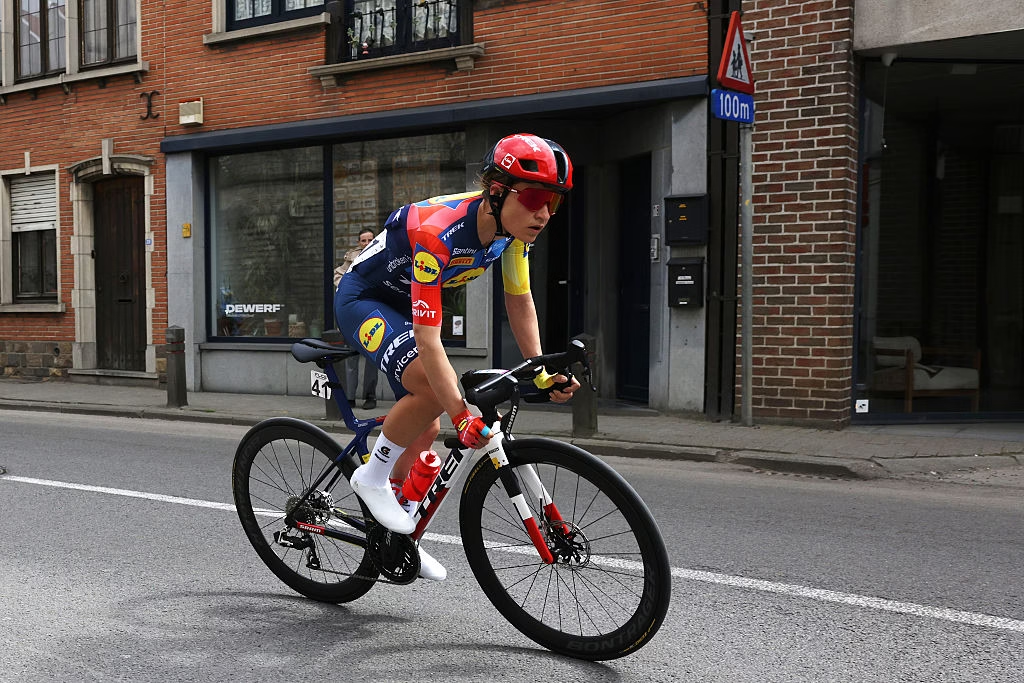 Photo Credit: Getty
Loes Adegeest
Loes Adegeest rarely waits for a race to be delivered to her.
The Lidl-Trek rider is comfortable launching repeated moves, joining early breakaways and attacking again when the first group is caught. That persistence is particularly useful on stages where no single climb is hard enough to create the entire selection.
Adegeest demonstrated that approach during Brabantse Pijl. She spent long periods ahead and remained part of a dangerous late move before the race came back together.
Her move to Lidl-Trek was one of the more interesting changes covered in our 2026 Women’s WorldTour transfers guide, giving her a different role after leaving FDJ-SUEZ.
Lidl-Trek’s main priorities will include sprint stages and the wider GC contest, so Adegeest will not receive freedom every day. Her opportunity should come when the team wants representation ahead without sacrificing its protected riders.
Stage 3 is an obvious target because its difficult opening can create a strong group before the race settles. Stage 6 also suits her endurance, particularly if she can begin the Col de Lalouvesc with a meaningful advantage.
Justine Ghekiere
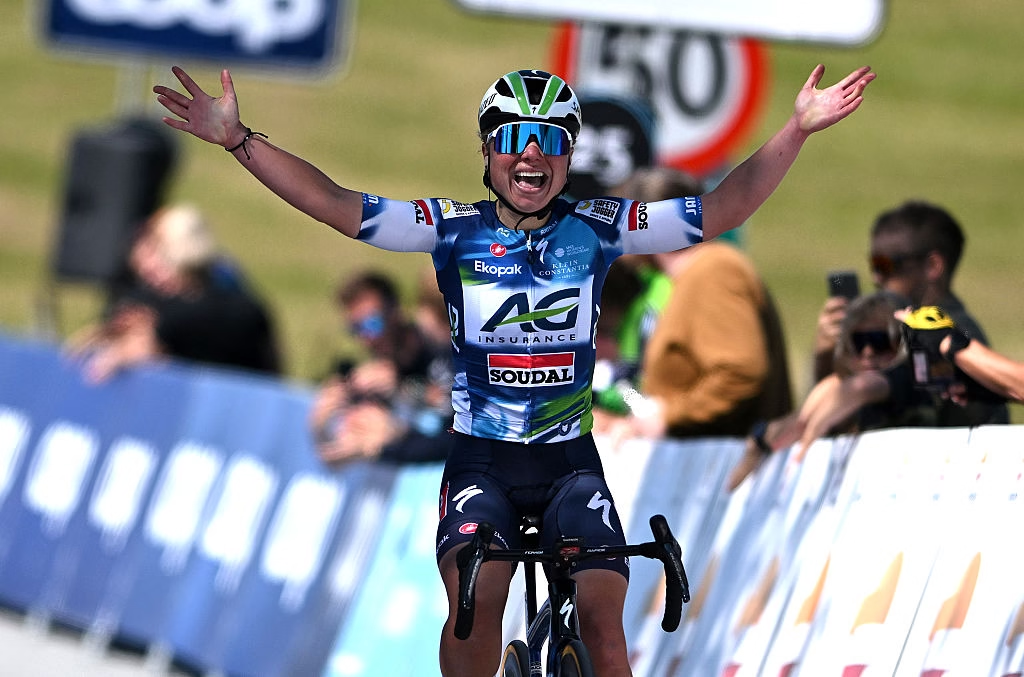
Justine Ghekiere is the clearest mountain breakaway specialist in this group.
She has already proved that the Tour de France Femmes can be won from an escape. Ghekiere took stage 7 of the 2024 Tour de France Femmes at Le Grand-Bornand and completed the race as the winner of the mountains classification.
Her ability to target categorised climbs gives her two objectives at once: the stage victory and the polka-dot jersey.
Ghekiere does not need to remain close enough to challenge for yellow. Losing time during the Dijon time trial or on Mont Ventoux may actually increase the freedom she receives later in the race.
Stage 6 is the immediate target. It contains six categorised climbs and enough descending between them for a strong breakaway to retain its advantage.
Mont Ventoux is more complicated. An escape may begin the final climb several minutes ahead, but the GC favourites can close enormous gaps once they begin racing.
Stage 8 may offer a better balance. It follows Ventoux, meaning many domestiques will be fatigued, while the profile is not difficult enough for the yellow jersey team to guarantee control.

Victoire Berteau
Victoire Berteau can turn an apparently routine transition stage into something much more awkward.
She is strong on rolling roads, technically assured and fast enough to win from a small group. Berteau does not need a major mountain to create separation. A crosswind, short climb or moment of hesitation can be enough.
Cofidis has no obvious reason to control the race for a general classification challenge. The team should instead use riders such as Berteau, Julie Bego and Mijntje Geurts to follow and create breakaways.
Stage 3 may be slightly too mountainous in its opening half, but the long run towards Poligny could allow riders to return or a second tactical move to form.
Stage 8 looks more suitable. The longest day of the race should reward experience and endurance, while the late climbs are manageable enough for Berteau to remain competitive.
She also possesses the sprint required to punish a breakaway containing stronger climbers but slower finishers.
Julie Bego
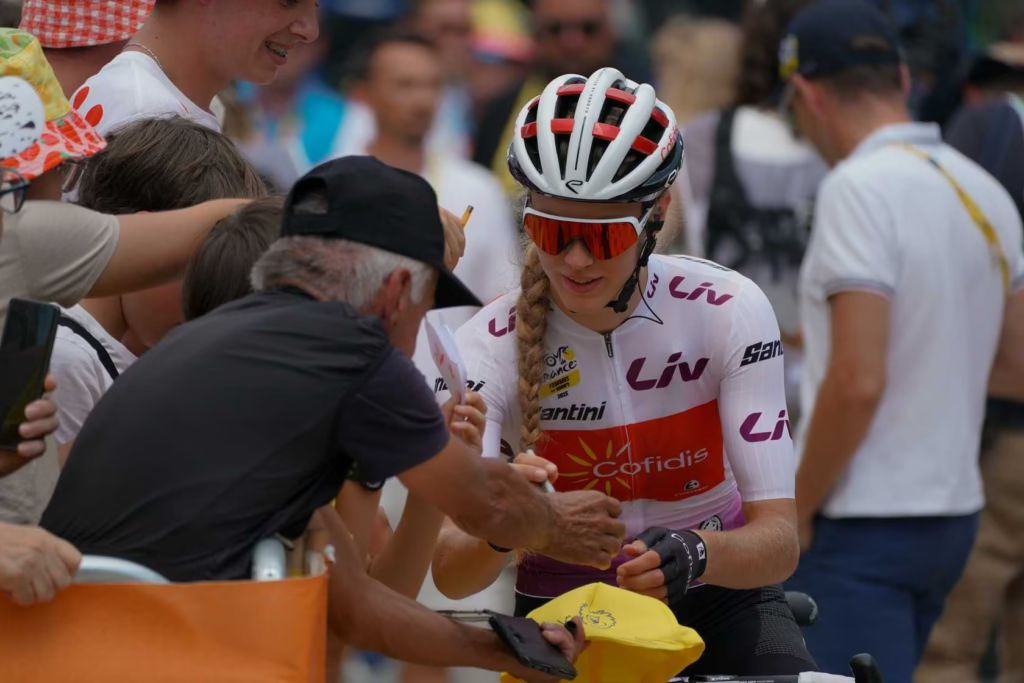
Julie Bego gives Cofidis a younger and more explosive stage-hunting option.
Her ideal terrain is harder than Berteau’s but less severe than that required by a pure mountain specialist. Short climbs, repeated changes in pace and a reduced group suit her better than a conventional sprint.
Bego’s potential has been clear since she won the junior world road race with a long solo attack in Glasgow.
She may initially be used to follow dangerous moves rather than create them. Once the front group is established, however, she has the acceleration to attack on the final climb.
Stage 5 should be her best opportunity. The Beaujolais profile contains enough elevation to create fatigue but no sustained climb where the GC favourites are certain to dominate.
The Tour will provide a different tactical test from smaller races. Bego cannot respond to every acceleration, and joining the wrong breakaway could leave her without energy when the decisive group finally forms.
Her strongest chance may come if Cofidis places more than one rider ahead. Berteau or Geurts can cover the flatter attacks while Bego waits for the climbs.
Mijntje Geurts
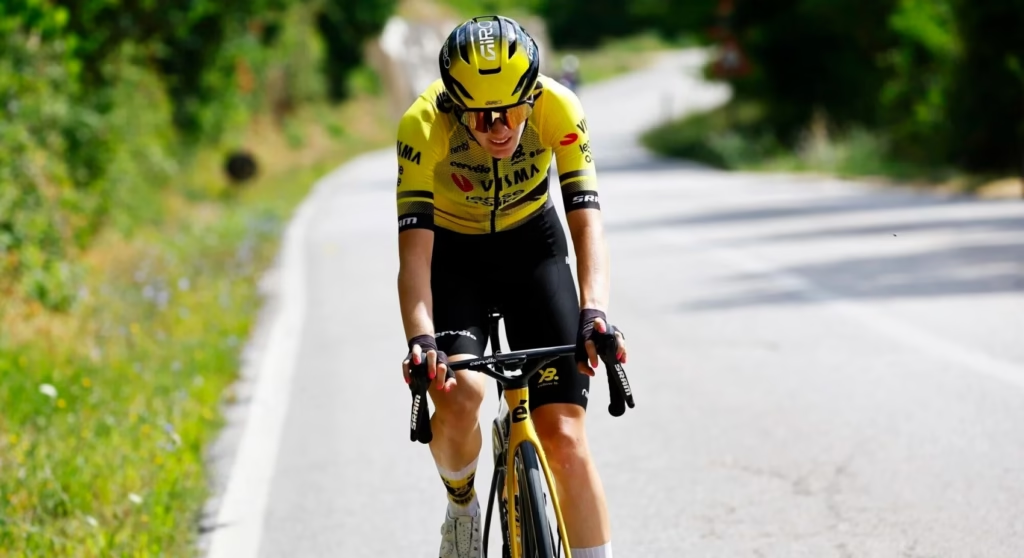
Mijntje Geurts is another Cofidis rider likely to be seen in long breakaways.
She has the endurance for attritional stages and does not require a summit finish to make an impact. Her value comes from remaining useful across several types of terrain rather than depending on one explosive strength.
Geurts can help create a move on flatter roads, survive medium climbs and continue working when less versatile riders begin protecting themselves for the finish.
Her move to Cofidis for 2026 was intended to give the developing Dutch rider greater opportunities across Classics and stage races.
She can be tactically important even when she is not the designated finisher. If Cofidis places Bego or Berteau in the same group, Geurts can force rivals to contribute or launch an attack that changes the balance.
Stage 6 offers the most obvious opportunity, particularly if a large break forms before the Col de Lalouvesc. Geurts may not be the strongest climber there, but she can reach it with enough advantage to remain involved.
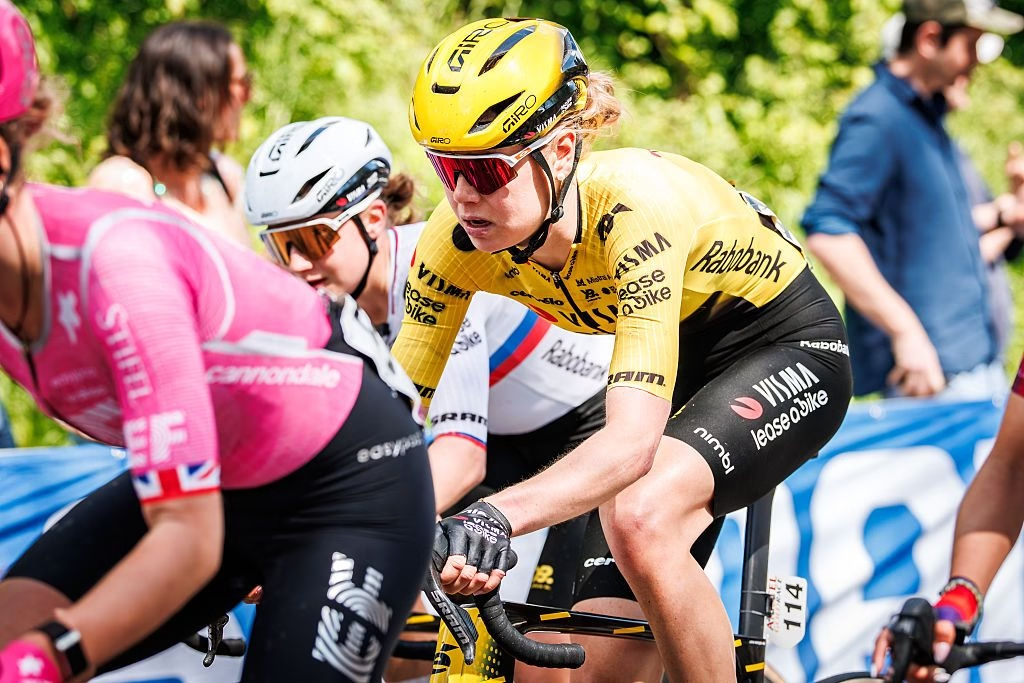
Lieke Nooijen
Lieke Nooijen is best suited to a stage where sustained power matters more than a steep finishing climb.
Visma-Lease a Bike will be built around Ferrand-Prévot’s yellow jersey ambitions. That creates a controlled role for much of Nooijen’s race, particularly when the team must manage the breakaway.
Freedom may arrive when Visma wants a rider ahead as a bridge for Ferrand-Prévot or when the overall race situation allows the team to chase a stage.
Nooijen’s time-trial ability makes her dangerous once she gains separation. Her victory at the Chrono de Gatineau underlined the sustained power she can bring to a long-range move.
Stage 8 is the strongest fit. The journey from Sisteron to Nice contains extended sections where a powerful rider can make a breakaway function, followed by manageable climbs late in the day.
She would be less favoured if the stage becomes a direct contest between puncheurs on the Côte de la Ginestière. Her route to victory involves attacking earlier and forcing the quicker finishers to organise a chase.
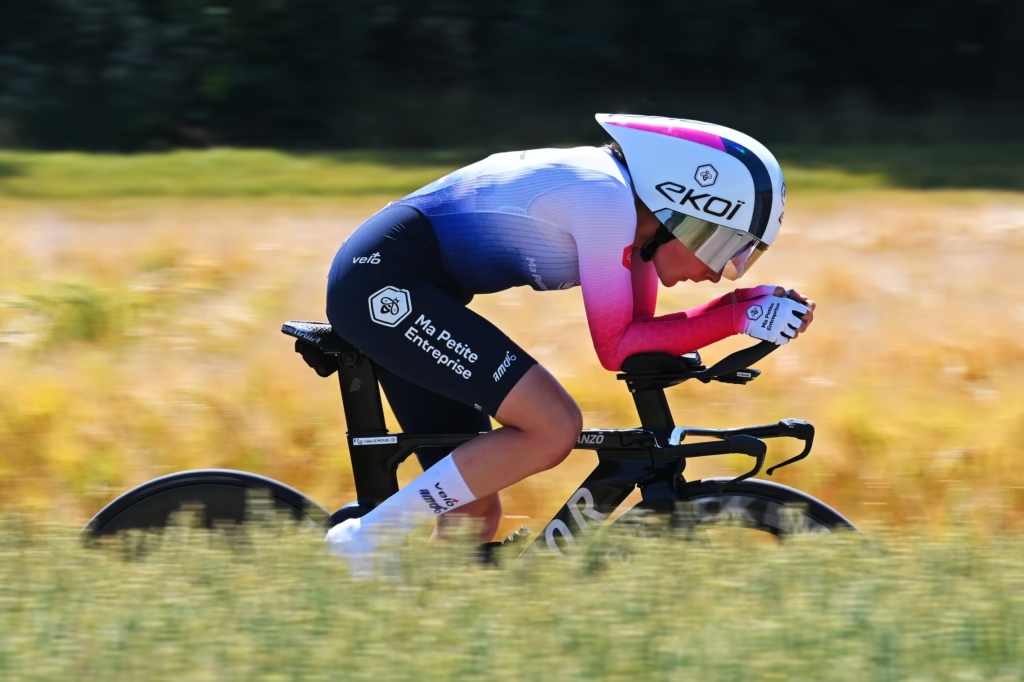
Célia Le Mouël
Célia Le Mouël has already shown that she can convert sustained power into a strong Tour breakaway performance.
She was part of the escape on stage 4 of the 2023 Tour de France Femmes and remained close enough to finish eighth after being caught near the line. That experience matters because she understands the difference between gaining visibility and still having enough energy to contest the finish.
A strong time trial background gives Le Mouël another important weapon. She does not require perfect cooperation once a breakaway begins to fracture.
Her team will not be expected to control stages or protect a high general classification position. Its value will come through visibility, breakaway representation and attempts to challenge the larger WorldTour squads.
Stage 8 gives Le Mouël the distance and flatter roads needed to turn strength against the clock into a stage-hunting strategy.
She may also attack on stage 3, although the Col de la Faucille arrives early enough to make entering the correct group particularly difficult.

Francesca Hall
Francesca Hall has taken an unusual route to the Tour, earning her first professional contract after a series of results in Central America at the start of 2026.
She won the Grand Prix San Salvador before taking second places at the Grand Prix Longitudinal del Norte and Grand Prix El Salvador. Those performances earned her an immediate move to Mayenne Monbana My Pie.
Her mid-season signing by the French ProTeam reflected a rider forcing her way into higher-level racing through results rather than reputation.
Hall is unlikely to arrive with the same support as the leading WorldTour stage hunters. She may instead benefit from being underestimated.
Her team needs to animate the race rather than wait for a sprint or GC result it is unlikely to control. Hall should therefore receive permission to attack repeatedly.
Stage 5 may suit her ability to handle rolling terrain, while stage 6 offers a more demanding test if she can enter the break before the climbing intensifies.
The Tour represents a major increase in level, but Hall has already built her season around taking opportunities rather than waiting for ideal circumstances.
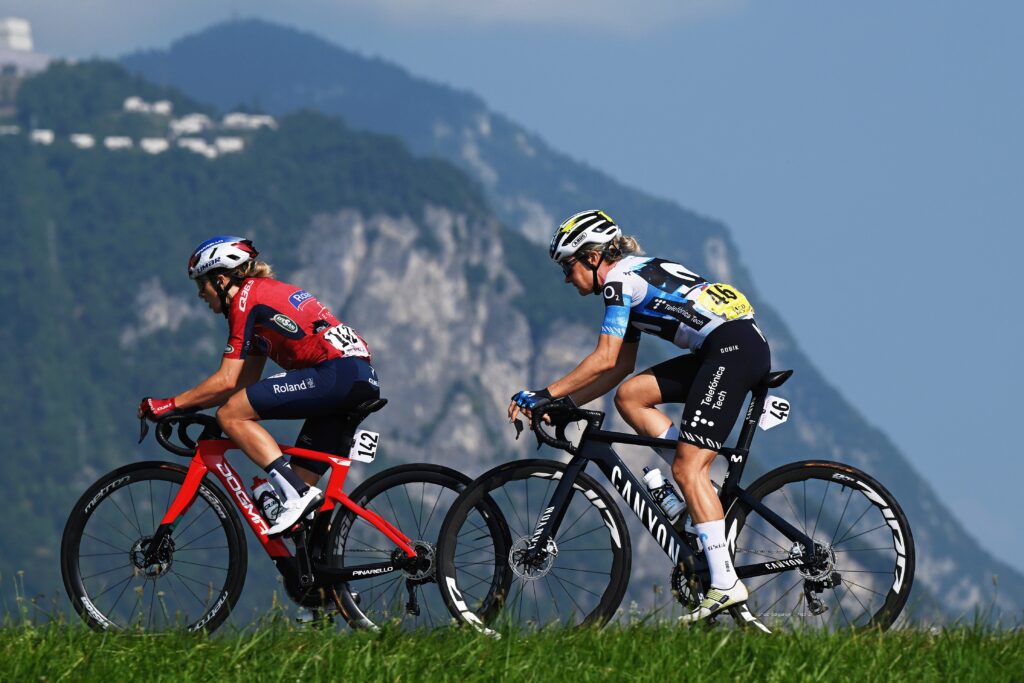 Photo Credit: Getty
Morgane Coston
Morgane Coston brings experience and climbing strength to the smaller-team breakaway battle.
At 35, she understands how to judge a move and conserve energy during a long day at the front. That matters in a race where younger riders can waste too much effort simply establishing the escape.
Coston is better suited to the hilly stages than the pure sprint days. Stage 6 provides the terrain on which experience can compensate for a lack of WorldTour support.
Her challenge will be finishing the job. Entering the breakaway is valuable for the team, but the strongest WorldTour riders will expect to distance her once the final attacks begin.
Coston may therefore need to anticipate. Attacking before the Col de Lalouvesc or using the descent could prove more effective than waiting to compete directly against the punchier climbers.
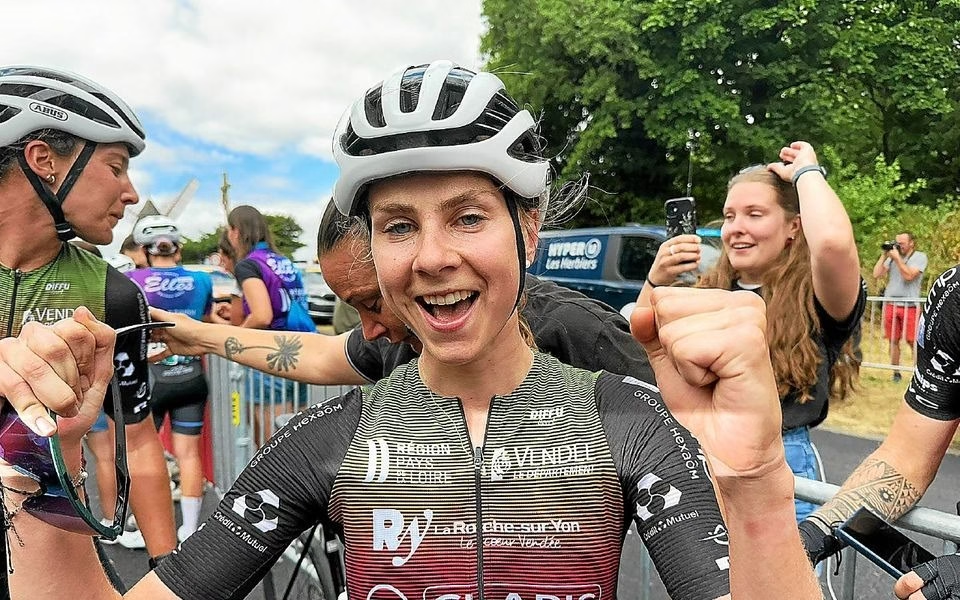
Noémie Abgrall
Noémie Abgrall should be another regular presence in the early moves.
Her team has little reason to spend the opening hours sitting anonymously in the peloton. Abgrall can provide the aggressive representation expected from one of the smaller invited squads.
Her best opportunities may not always be the stages most likely to produce a successful breakaway. On a flat day, the escape can earn television time before being caught. On a hilly stage, the team has a more realistic chance of reaching the finish.
Abgrall needs to choose between those objectives.
Stage 2 to Geneva may offer visibility but little hope of defeating the sprint teams. Stages 5 and 6 provide a much harder route into the breakaway but a greater chance of survival if the correct group forms.
The most valuable performance would be one that moves beyond symbolic representation and places her in contention during the final hour.
The smaller teams cannot afford to wait
The invited ProTeams change the breakaway contest because many have no reason to protect a rider for the top ten.
Their selections must cover nine consecutive stages with only seven riders, making it difficult to attack every day. The Tour de France Femmes team and rider guide explains why those limited squad places force teams to balance sprinting, climbing, support and breakaway roles carefully.
The strongest approach may be to rotate attackers rather than exhausting the same rider during the opening weekend.
Stages 5 and 6 should be prioritised over hopeless moves on the flat Swiss roads. Those are the days when breakaway representation can become an actual stage result rather than a few hours of television exposure.
The smaller teams still face a large gap in depth and experience compared with the WorldTour squads. Their way around that disadvantage is to race before those teams establish control.
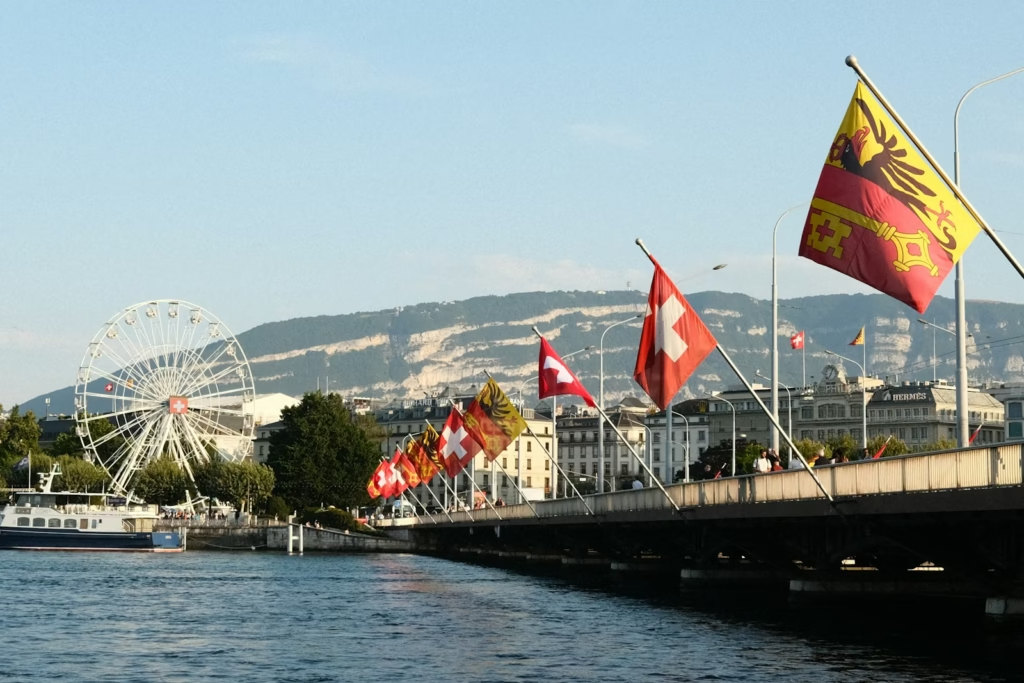
Why the breakaway may struggle in Switzerland
Stages 1 and 2 are unlikely to provide much freedom.
The opening circuit around Lausanne should be controlled by teams chasing the first yellow jersey. With no existing time gaps, almost every strong rider in the breakaway remains a potential race leader.
The Tour de France Femmes Grand Départ guide shows how the opening weekend combines a technical Lausanne circuit with a flatter second stage towards Geneva.
A small escape may form on stage 2, but its role will probably be visibility rather than victory. Sprint teams have too few straightforward opportunities to allow the Geneva finish to disappear.
Stage 3 is more promising because the Col de la Faucille arrives near the beginning. An aggressive start can create a strong group before the race settles, although riders still close on GC may be chased.
The 21km time trial on stage 4 should create the first significant gaps. Riders who lose several minutes in Dijon become much easier for the yellow jersey team to release during the Beaujolais and Ardèche stages.
That is when the race should begin opening properly for the stage hunters.
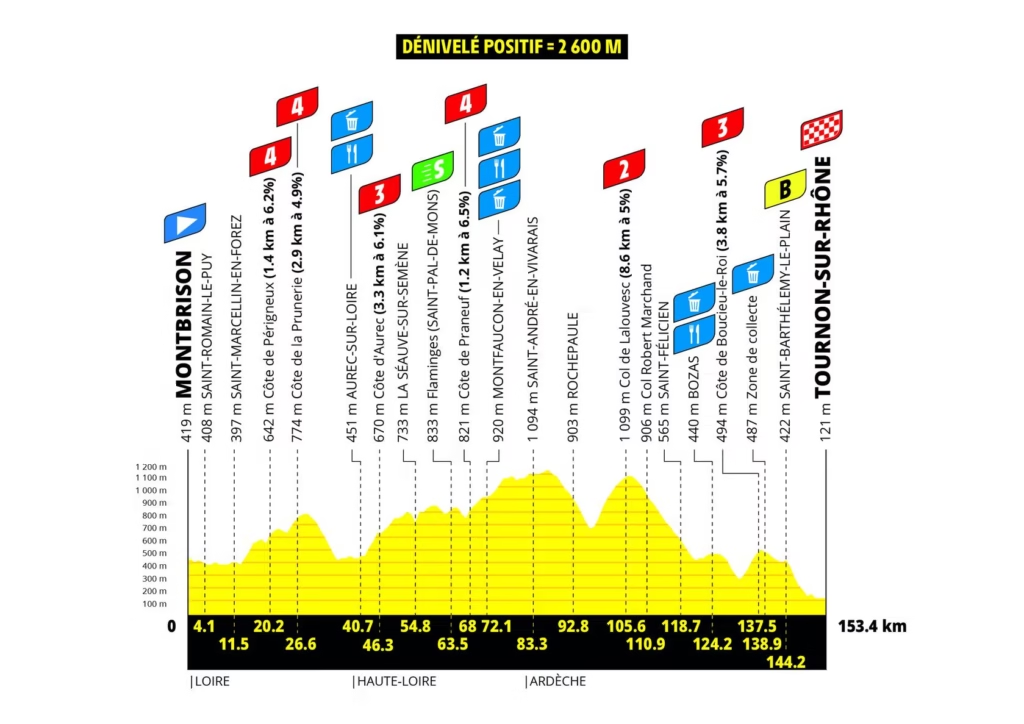
Stage 6 is the central breakaway target
Stage 6 from Montbrison to Tournon-sur-Rhône offers the best combination of terrain and race position.
The stage contains six categorised climbs and gradually becomes harder rather than relying on one summit finish. That makes it difficult for a single team to control while allowing versatile riders to remain involved.
The Col de Lalouvesc should divide the breakaway, but its summit comes far enough from the finish for the race to regroup or change again.
The Côte de Boucieu-le-Roi is crested with around 16km remaining. It is steep enough to produce attacks without being long enough to guarantee victory for a pure climber.
Géry, Vallières, Ghekiere, Adegeest and Le Court all have credible routes towards victory.
Faulkner may prefer to attack before the final climb. Kopecky could wait for a reduced group, while riders such as Berteau and Geurts need the strongest climbers to hesitate.
This should be the stage where the breakaway specialists become central to the race rather than a secondary contest ahead of the GC favourites.
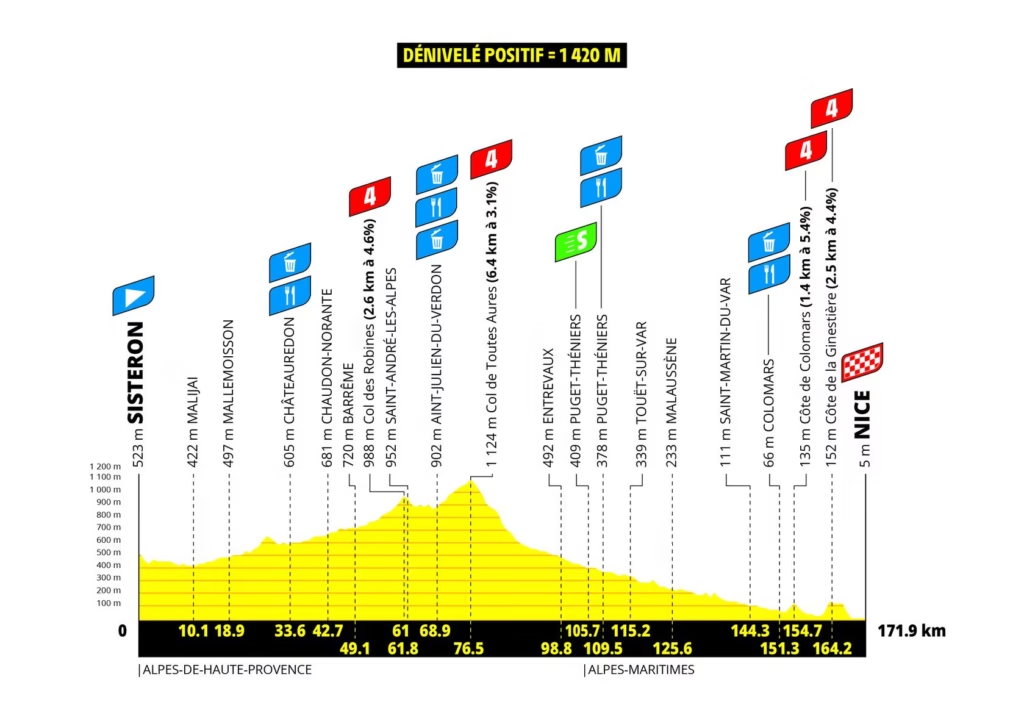
Stage 8 could reward the strongest long-range attacker
The road from Sisteron to Nice comes immediately after the Mont Ventoux summit finish.
That timing matters. GC teams will have spent heavily on stage 7, while many domestiques will begin the longest stage of the race carrying significant fatigue.
The route is not mountainous enough to require complete yellow jersey control. Its main tactical points arrive through the short climbs inside the final 20km.
This is where Faulkner becomes especially dangerous. A powerful rider can exploit the long distance before the punchier climbers take control near Nice.
Nooijen and Le Mouël also have credible opportunities, while Berteau could survive the late hills and win from a small group.
The risk is that teams with fast Classics riders see the same opportunity. If Kopecky, Le Court or another quick finisher remains in contention, their squads may help control the gap.
The breakaway will need either a large advantage or enough strength in numbers to prevent a unified chase.
Could the break survive on the final stage?
Stage 9 covers only 99.2km but climbs towards the Col d’Èze four times.
That looks suitable for attackers, but the general classification battle may make survival almost impossible.
The stage is short enough to be raced at high intensity from the start. Teams trying to move onto the podium can attack early, while the yellow jersey squad may chase every dangerous combination.
A stage hunter could still win by entering a tactical move containing riders useful to several GC teams. The escape then becomes more than a conventional breakaway because leaders can bridge across or use team-mates positioned ahead.
Ghekiere and Géry could survive the repeated climbs. Faulkner may attack between them, while Kopecky and Le Court possess the speed required if a reduced group reaches Nice.
The strongest rider on the day may still be one of the yellow jersey favourites. For the breakaway specialists, stage 9 is an opportunity but not a stage around which they can build their entire Tour.
-
 Photo Credit: Telenet Superprestige
 -
 Photo Credit: Nieuwsblad
 -
Photo Credit: Wahoo
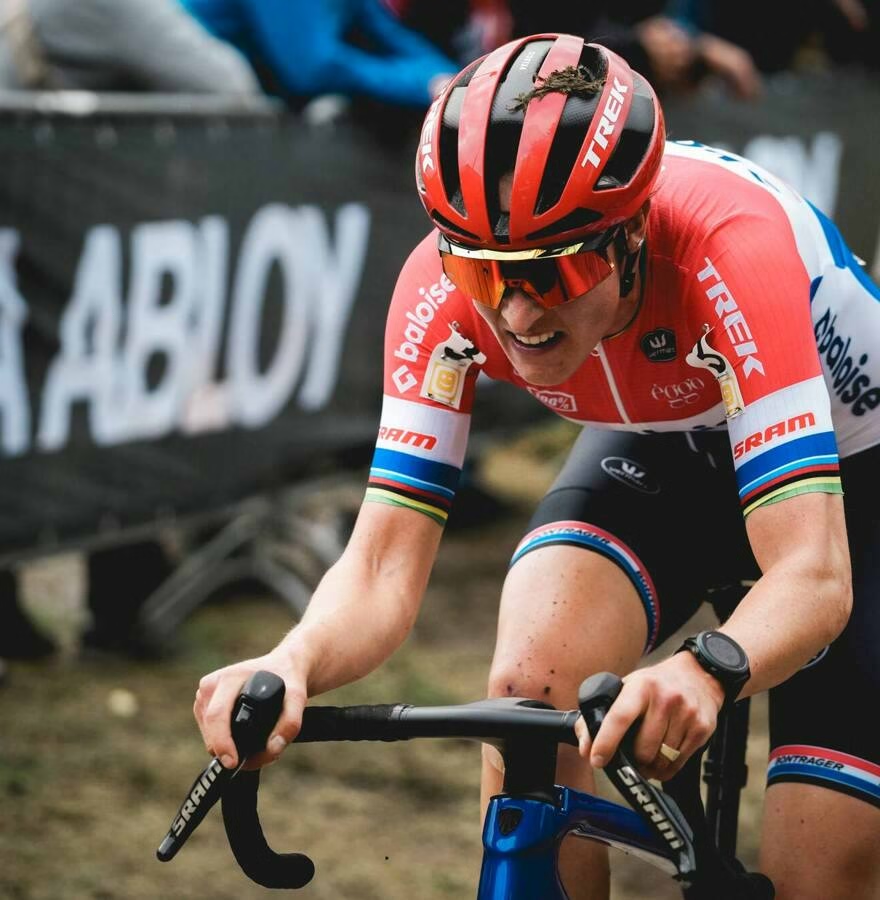

Who are the leading breakaway specialists?
Géry has the strongest recent results and the widest range of possible finishes. She can win alone or from a small sprint and has already converted aggressive racing into major victories during 2026.
Faulkner is the most dangerous rider to give a gap on open roads. Stage 8 offers her the clearest route towards a long-range victory.
Vallières and Le Court are among the strongest punchy options, while Ghekiere remains the specialist for a mountain breakaway.
Kopecky may be the most powerful stage hunter in the race, although she will find it difficult to enter a move without provoking an immediate reaction.
The smaller-team riders face longer odds but should receive greater freedom. Le Mouël’s sustained power makes her particularly interesting, while Hall has spent the season repeatedly exceeding expectations.
The stage hunters can define the middle of the Tour
The GC favourites will dominate Mont Ventoux and the final circuit around Nice, but the Tour should not be reduced to one yellow jersey contest.
Breakaway riders create the stages where team strength matters less and tactical judgement becomes more important. They force the peloton to decide whether to chase, make rival teams accept responsibility and create opportunities that do not exist when everyone waits for the same finish.
The 2026 route gives them an important block between the Dijon time trial and Mont Ventoux. Riders who abandon their overall ambitions early can attack through Beaujolais and towards Tournon-sur-Rhône, then try again on the long road to Nice.
Géry, Faulkner and Vallières have the strength to win from elite groups. Ghekiere can build her race around the climbs, while Adegeest, Berteau and Geurts will look for the day when the peloton misjudges the chase.
For the smaller teams, the breakaway is not a consolation prize. It is the most realistic route towards changing their entire Tour.
The yellow jersey will decide who wins the race.
The breakaway specialists may decide which stages everyone remembers.

