
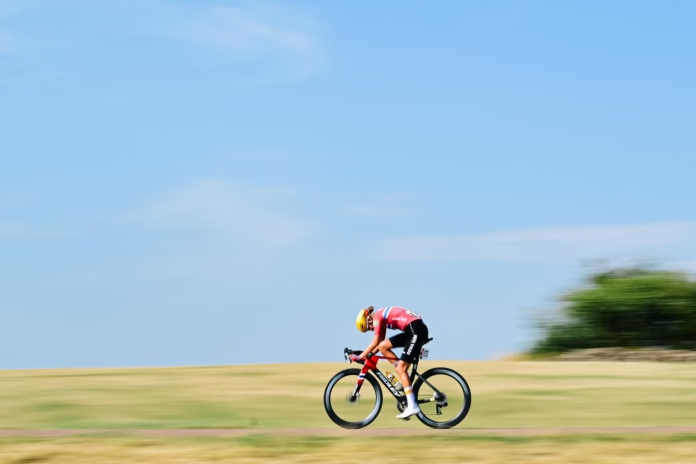
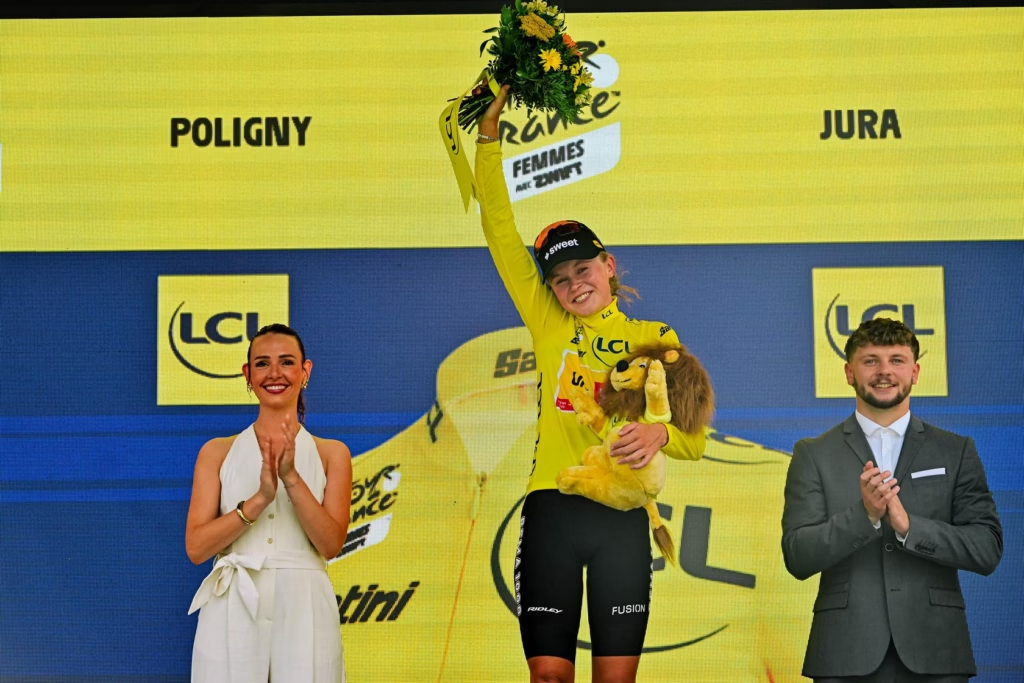
Sigrid Ytterhus Haugset transformed the 2026 Tour de France Femmes with an extraordinary 88.5km solo victory on Stage 3, taking both the stage and the yellow jersey after exploiting the hesitation behind on the road to Poligny.
The Norwegian champion finished 1 minute 24 seconds ahead of Lotte Kopecky, with Marianne Vos winning the sprint from the main group at 2 minutes 48 seconds. Once bonuses and Haugset’s position before the stage were applied, she moved into the race lead by 2 minutes 22 seconds over Kim Le Court-Pienaar.
Demi Vollering and Vos sit another four seconds behind, while the majority of the principal general classification contenders remain grouped at 2 minutes 30 seconds. That underlying battle is still extremely tight, even if Haugset’s long-range attack has placed an unexpected rider more than two minutes ahead of it.
Lorena Wiebes lost yellow after being distanced on the Col de la Faucille, but retains the green jersey with the 111 points collected across the opening two stages. Puck Pieterse takes over the mountains classification, while Paula Blasi continues in white as the leading young rider.
Tour de France Femmes 2026 general classification after Stage 3
- Sigrid Ytterhus Haugset, Uno-X Mobility in 11:17:56
- Kim Le Court-Pienaar, AG Insurance-Soudal at 2:22
- Demi Vollering, FDJ United-Suez at 2:26
- Marianne Vos, Visma | Lease a Bike at 2:26
- Noemi Rüegg, EF Education-Oatly at 2:30
- Cédrine Kerbaol, EF Education-Oatly at 2:30
- Elisa Longo Borghini, UAE Team L’IMAD at 2:30
- Kasia Niewiadoma-Phinney, Canyon SRAM at 2:30
- Puck Pieterse, Fenix-Premier Tech at 2:30
- Pauline Ferrand-Prévot, Visma | Lease a Bike at 2:30
Marlen Reusser also sits at 2 minutes 30 seconds, immediately outside the top ten on accumulated stage placings.
The standings now contain two different races. Haugset holds a substantial yellow jersey advantage after the longest successful solo attack of the modern Tour de France Femmes, while the established GC favourites remain separated by only eight seconds.
That compression should disappear during Tuesday’s 21km individual time trial from Gevrey-Chambertin to Dijon.
Haugset turns stage freedom into yellow
Haugset began Stage 3 far enough behind Wiebes to be allowed tactical freedom, but close enough for the yellow jersey to become a possibility once her advantage began moving into minutes.
Her decisive attack came on the Col de la Savine, after Lucinda Brand had helped create a strong and aggressive phase of racing behind the early climbs. Haugset continued alone when the rest of the move was caught, then committed fully across the remaining 88.5km.
The teams behind never established a consistent pursuit.
SD Worx-Protime had already shifted away from defending Wiebes and towards Kopecky as a stage option. The GC teams were reluctant to spend heavily one day before the Dijon time trial, while the extreme heat increased the cost of every chase.
Haugset read that uncertainty better than anyone. Her profile as a strong rouleur and durable climber allowed her to preserve speed across the flatter roads while limiting her losses on the remaining climbs.
The full background to the new race leader is covered in our profile of Sigrid Ytterhus Haugset and her rise to the WorldTour.
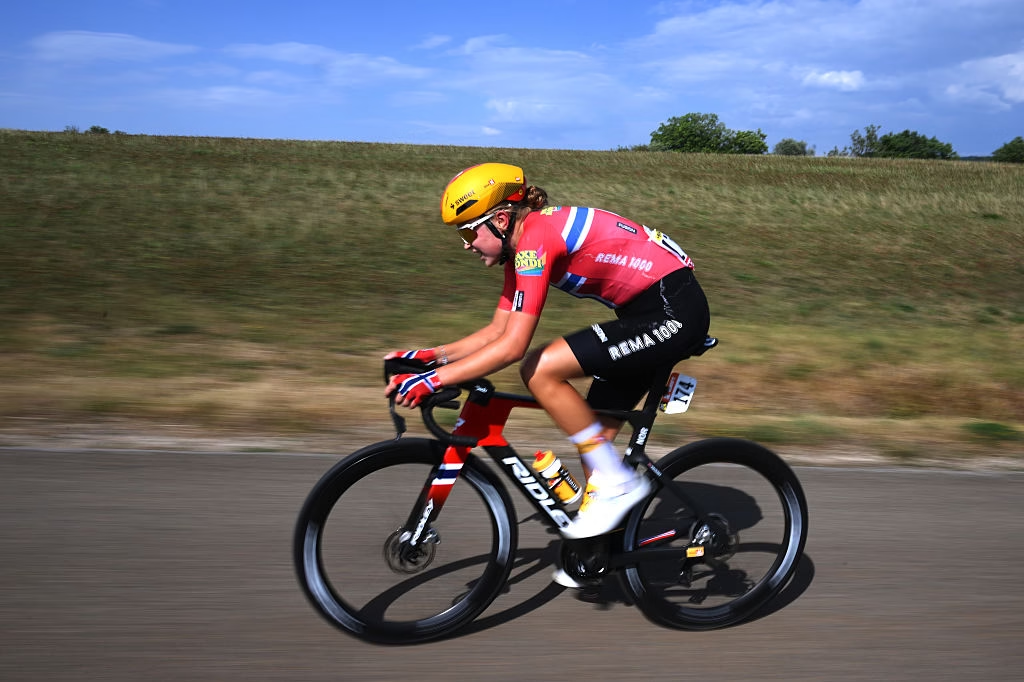 Photo Credit: Getty
Can Haugset keep yellow in Dijon?
A lead of 2 minutes 22 seconds gives Haugset a genuine chance of remaining in yellow after Stage 4.
She is not a specialist at the level of Reusser, Vollering or Kopecky, but nor is she a pure climber expected to lose enormous amounts of time on a rolling course. Haugset has repeatedly performed well against the clock and built her Stage 3 victory through the ability to sustain a long individual effort.
The largest concern is recovery.
Most of the GC favourites spent the final half of Stage 3 inside groups, while Haugset rode alone in temperatures approaching 37°C. She must now refuel, rehydrate and reproduce another maximal effort less than 24 hours later.
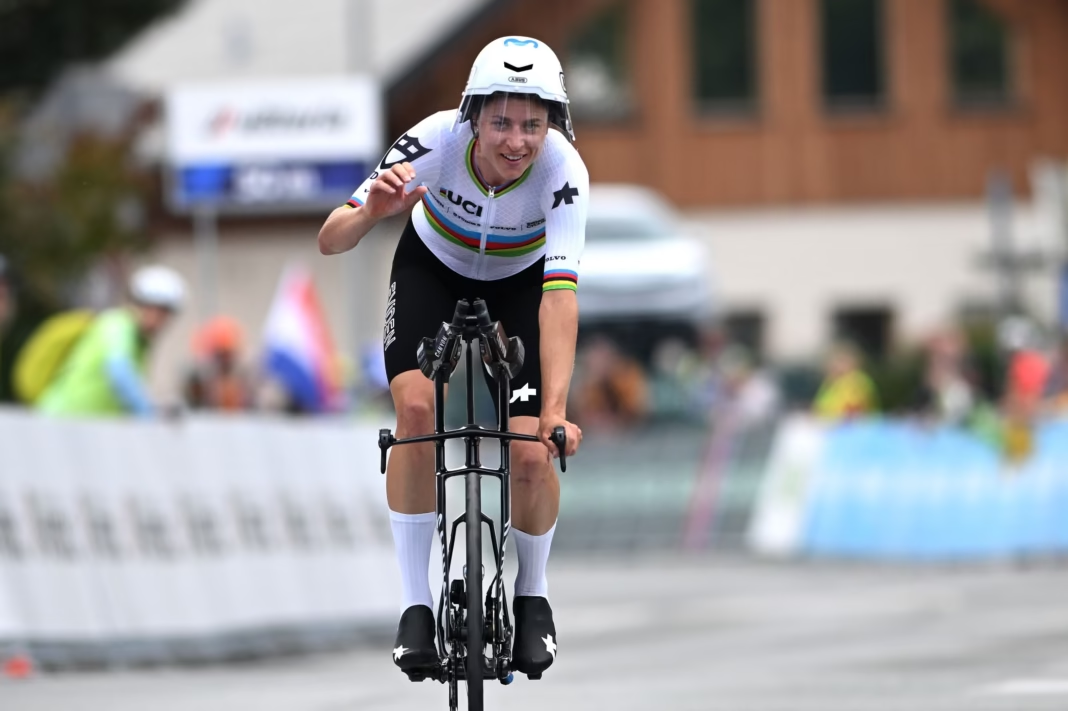
Reusser would need to gain more than six seconds per kilometre to take yellow directly. That is possible if Haugset has a difficult day, but it is not the expected outcome from a competent time trial.
The more realistic scenario is that Haugset retains yellow with a reduced advantage while the established contenders reorder themselves behind her.
The course, likely time gaps and leading riders are covered in the Tour de France Femmes 2026 Stage 4 preview.
Le Court-Pienaar remains second
Le Court-Pienaar stays second overall after finishing safely within the main group and collecting two bonus seconds at the late bonus point.
Those seconds helped preserve her advantage over Vollering, although the gap between them remains only four seconds.
AG Insurance-Soudal had little reason to take complete responsibility for chasing Haugset. Le Court-Pienaar was close enough to benefit if the Norwegian was caught, but controlling the entire final half of the stage would have required an enormous amount of team energy.
Her position remains based partly on the six seconds gained by finishing second in Lausanne and the additional two seconds collected on Stage 3.
Dijon now provides the clearest test of whether her early GC position can survive once the race reaches terrain favouring the established time triallists. A strong ride would further support her status as a genuine podium contender rather than simply a rider benefiting from bonuses.
Vollering remains the best-placed central favourite
Vollering begins Stage 4 third overall and remains the highest-ranked rider among the primary pre-race favourites.
Her Stage 3 included an early crash before the Col de la Faucille, but she returned quickly and completed the stage without losing time to Ferrand-Prévot, Niewiadoma-Phinney, Longo Borghini or Reusser.
FDJ United-Suez contributed to the pursuit at different points, but Vollering avoided the kind of long personal effort that might compromise her time trial.
She starts Dijon four seconds behind Le Court-Pienaar and four seconds ahead of the main group of recognised contenders. That is a useful position without being strategically important enough to dictate her pacing.
Vollering should expect to move above Le Court-Pienaar and gain on several of the lighter climbers. The more significant contest is with Reusser, who begins only four seconds behind her and is the leading specialist for Stage 4.
Reusser has the clearest opportunity to move up
Reusser enters the stage most suited to her strengths only four seconds behind Vollering and eight behind Le Court-Pienaar.
Movistar have managed the opening three days successfully despite her crash in Lausanne. Reusser completed Stages 2 and 3 without an obvious physical problem and avoided unnecessary work during the tactical race to Poligny.
The 2 minute 30 second gap to Haugset is significant, but the direct comparison with the other favourites matters more.
A strong ride should move Reusser ahead of Le Court-Pienaar, Ferrand-Prévot, Niewiadoma-Phinney and Longo Borghini. Beating Vollering by more than four seconds would also make her the best-placed established contender.
Movistar do not need to take yellow for Stage 4 to be a major success. Placing Reusser ahead of the other likely Tour winners would fundamentally change the tactical balance before Mont Ventoux.
Ferrand-Prévot and Niewiadoma-Phinney face their first defensive test
Ferrand-Prévot and Niewiadoma-Phinney both reached Poligny without conceding time, but Dijon is less naturally favourable to them than it is to Reusser and Vollering.
Ferrand-Prévot has the technical skill and sustained power to produce a strong ride. Her objective is to remain close enough that the later mountain stages can still be raced from a position of control rather than desperation.
Niewiadoma-Phinney is likely to concede more on the faster sections. Canyon SRAM will look for her to use the climb around Marsannay to reduce the damage and avoid losing the kind of margin that would force a long-range attack before Ventoux.
Neither needs to match Reusser. Both need to prevent one difficult afternoon turning into a deficit that dictates the rest of the Tour.
The full race structure explains why Dijon matters without deciding everything. The Tour de France Femmes 2026 route still contains Mont Ventoux and the mountainous final weekend around Nice.
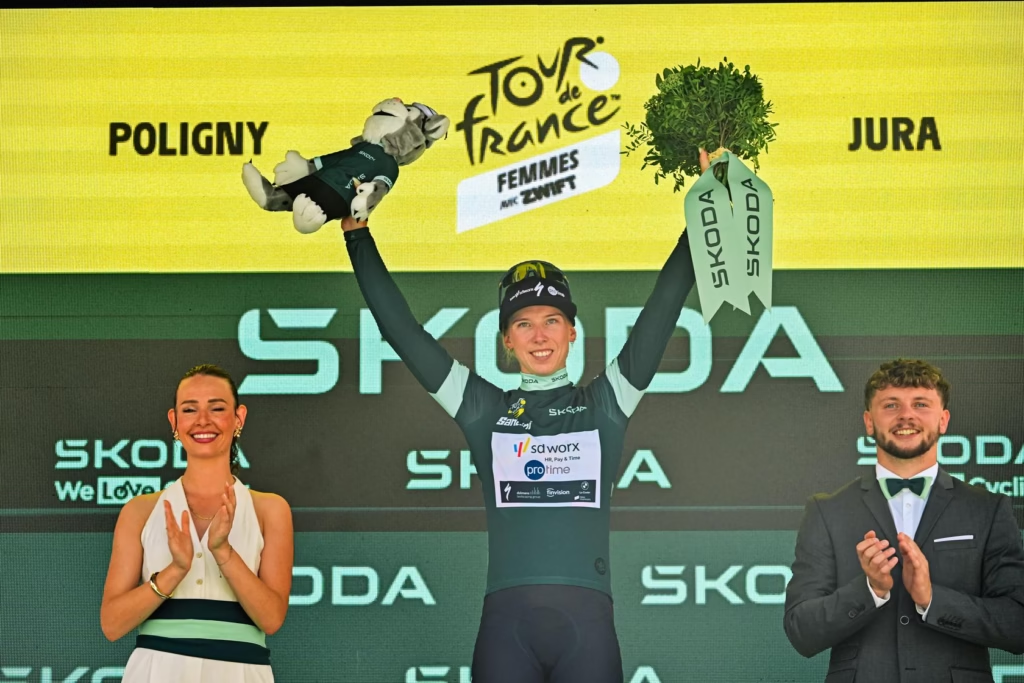 Photo Credit: A.S.O./Billy Ceusters
Wiebes loses yellow but keeps green
Wiebes was dropped on the Col de la Faucille and never returned to the front of the race.
That ended her two-day spell in yellow after victories in Lausanne and Geneva, but it did not overturn her lead in the points classification.
Points classification after Stage 3
- Lorena Wiebes, SD Worx-Protime with 111 points
- Sigrid Ytterhus Haugset, Uno-X Mobility
- Kim Le Court-Pienaar, AG Insurance-Soudal
- Elisa Balsamo, Lidl-Trek
- Marianne Vos, Visma | Lease a Bike
Haugset scored heavily through the Stage 3 intermediate sprint and victory, but Wiebes’ maximum totals from the opening two days remain enough to keep green.
Losing yellow means Wiebes can now wear the points jersey directly rather than having another rider carry it on her behalf.
The time trial offers limited points compared with the road stages, so the immediate competition should remain stable. Wiebes’ larger concern is how many future stages provide realistic opportunities for another sprint.
Her 111-point total gives her substantial protection, but Vos, Haugset and Kopecky can continue scoring on days when Wiebes is removed by the terrain.
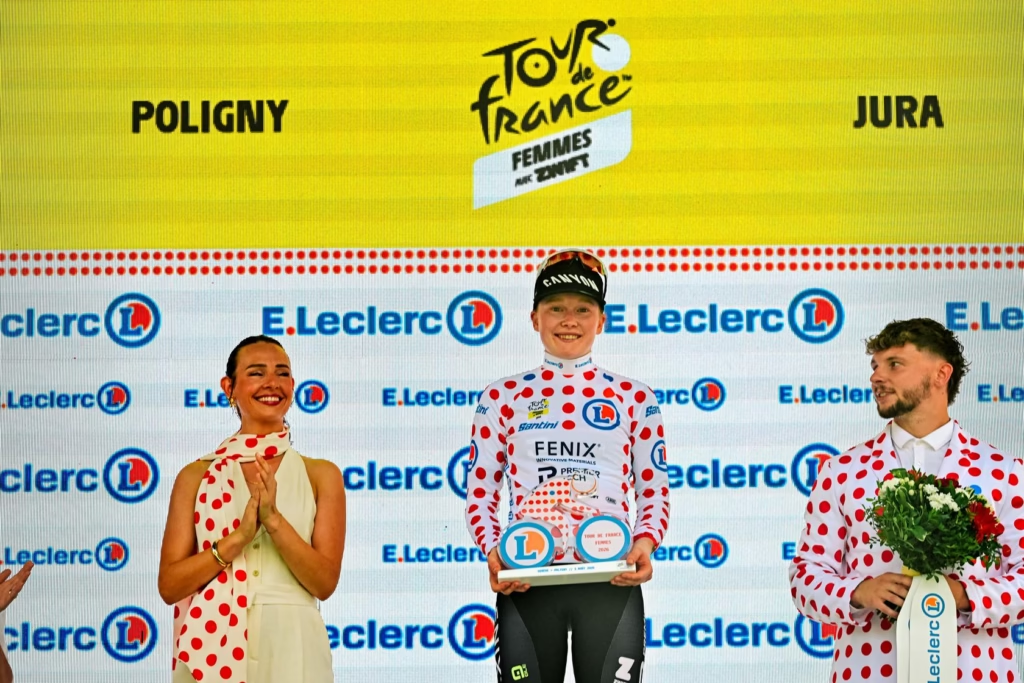 Photo Credit: A.S.O./Billy Ceusters
Pieterse takes the polka-dot jersey
Pieterse targeted the mountains classification from the opening category-one climb and finished Stage 3 with 18 points.
Mountains classification after Stage 3
- Puck Pieterse, Fenix-Premier Tech with 18 points
- Nikola Nosková, Cofidis with 14 points
- Sigrid Ytterhus Haugset, Uno-X Mobility with 11 points
- Océane Mahé, Ma Petite Entreprise with 8 points
- Anouska Koster, Uno-X Mobility with 7 points
Pieterse took maximum points on the Col de la Faucille before adding enough across the remaining climbs to move clear of Nosková and Mahé.
It was an efficient way to take the jersey. She collected the largest available score without committing to Haugset’s long solo attack, then completed the stage with the main GC group.
Whether Pieterse intends to defend the competition throughout the Tour remains unclear. The points available on Mont Ventoux and during the final mountain stages will eventually outweigh everything collected during the opening three days.
For now, she has converted one targeted climbing performance into the polka dots.
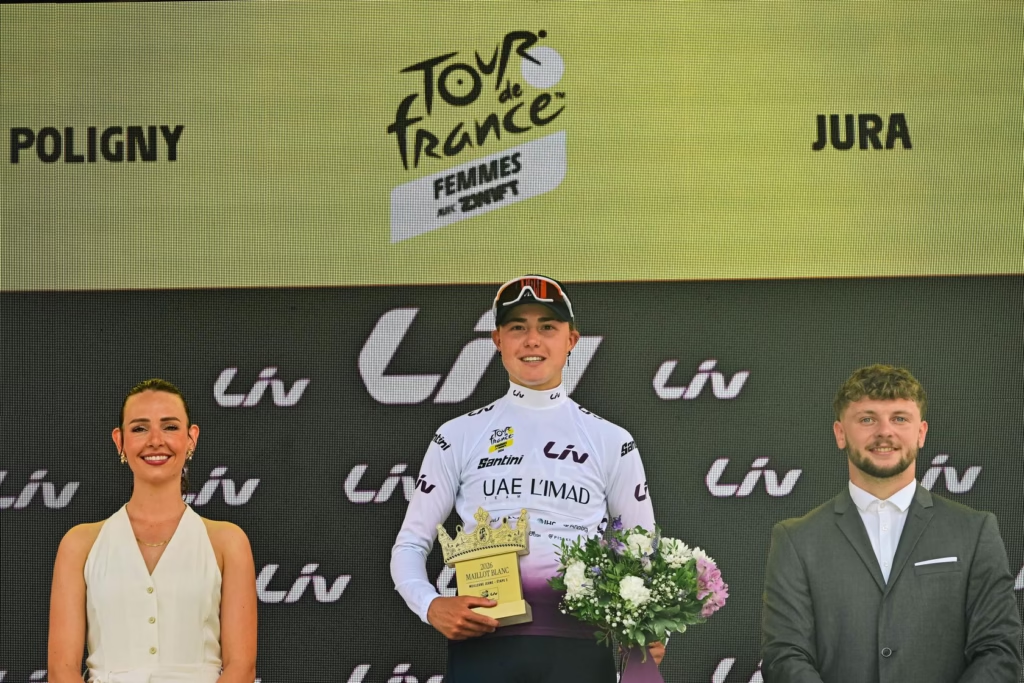 Photo Credit: A.S.O./Billy Ceusters
Blasi remains in white
Paula Blasi retains the young rider jersey after finishing Stage 3 with the principal contenders.
Young rider classification after Stage 3
- Paula Blasi, UAE Team L’IMAD
- Isabella Holmgren, Lidl-Trek at the same time
- Antonia Niedermaier, Canyon SRAM at the same time
- Malwina Mul, Cofidis at 11 seconds
- Célia Gery, FDJ United-Suez at 14 seconds
Blasi, Holmgren and Niedermaier remain level before a time trial expected to create the first clear hierarchy between them.
Niedermaier begins as the strongest established specialist and has a realistic chance of moving into white. Holmgren also possesses the power and technical skill required for a competitive ride.
Blasi’s Tour is built more around the mountains. Her objective in Dijon is to remain close enough for her climbing strength to become decisive on Ventoux and around Nice.
UAE Team L’IMAD continue to hold two valuable GC positions through Blasi and Longo Borghini, giving them greater tactical depth than many rival teams.
-
 Photo Credit: Getty
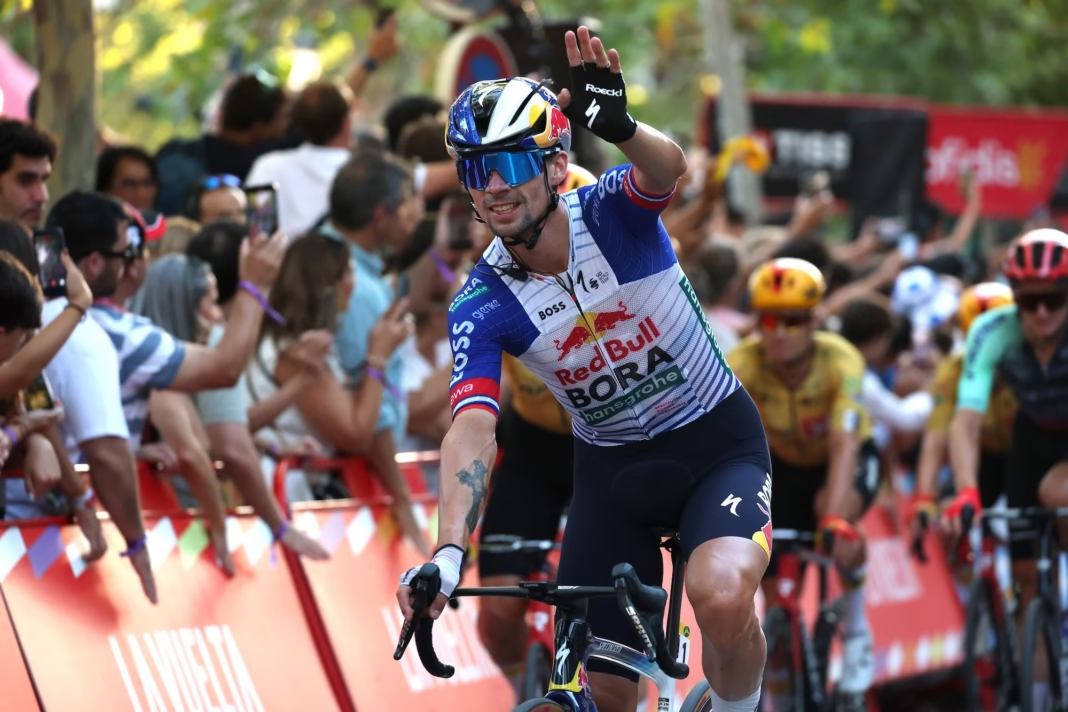

The jerseys after Stage 3
Yellow jersey: Sigrid Ytterhus Haugset
Green jersey: Lorena Wiebes
Polka-dot jersey: Puck Pieterse
White jersey: Paula Blasi
Stage 3 changed two of the four classification leaders.
Haugset replaces Wiebes in yellow after one of the most ambitious successful attacks in the race’s history. Pieterse takes the mountains jersey from Mahé after targeting the Col de la Faucille and the following climbs.
Wiebes remains in control of green despite losing more than ten minutes on the road, while Blasi continues to lead a white jersey contest that remains level between its three strongest riders.
The different jersey competitions and their priority rules are explained in the Tour de France Femmes 2026 jerseys guide.
What the standings mean before Stage 4
Haugset has changed the identity of the race leader without resolving the contest between the favourites.
Her 2 minute 22 second advantage is large enough to survive a competent time trial. She does not need to match Reusser or Vollering. She needs to avoid one disastrous ride after the physical cost of her solo victory.
Behind her, only eight seconds separate Le Court-Pienaar from Reusser and the group at 2 minutes 30 seconds.
That is where the largest reshaping should occur.
Reusser and Vollering can move ahead of the lighter climbers. Ferrand-Prévot, Niewiadoma-Phinney and Blasi must limit their losses. Longo Borghini needs to remain close enough to preserve UAE’s dual leadership, while Le Court-Pienaar faces the clearest test yet of whether she can remain near the top beyond the bonus-second stages.
Stage 3 gave the Tour an unexpected leader. Dijon will show whether Haugset is simply borrowing yellow or has built enough of an advantage to remain central to the race beyond the time trial.

