
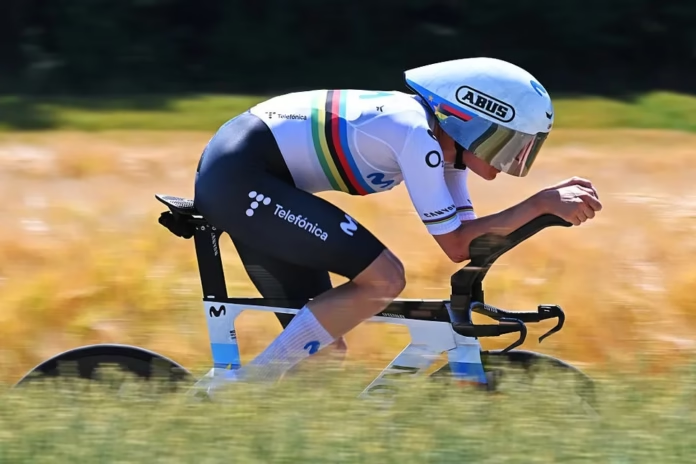
The 2026 Tour de France Femmes reaches its first major general classification test on Tuesday with a 21km individual time trial from Gevrey-Chambertin to Dijon.
Sigrid Ytterhus Haugset will start last in the yellow jersey after completing an extraordinary 85km solo victory on Stage 3. The Norwegian champion held off Lotte Kopecky by 1 minute 24 seconds to turn a breakaway opportunity into the defining result of the opening three days.
The underlying contest between the pre-race favourites remains much closer. Marlen Reusser, Demi Vollering, Pauline Ferrand-Prévot, Elisa Longo Borghini and Kasia Niewiadoma-Phinney all begin Stage 4 knowing that Dijon should create the first meaningful differences between them.
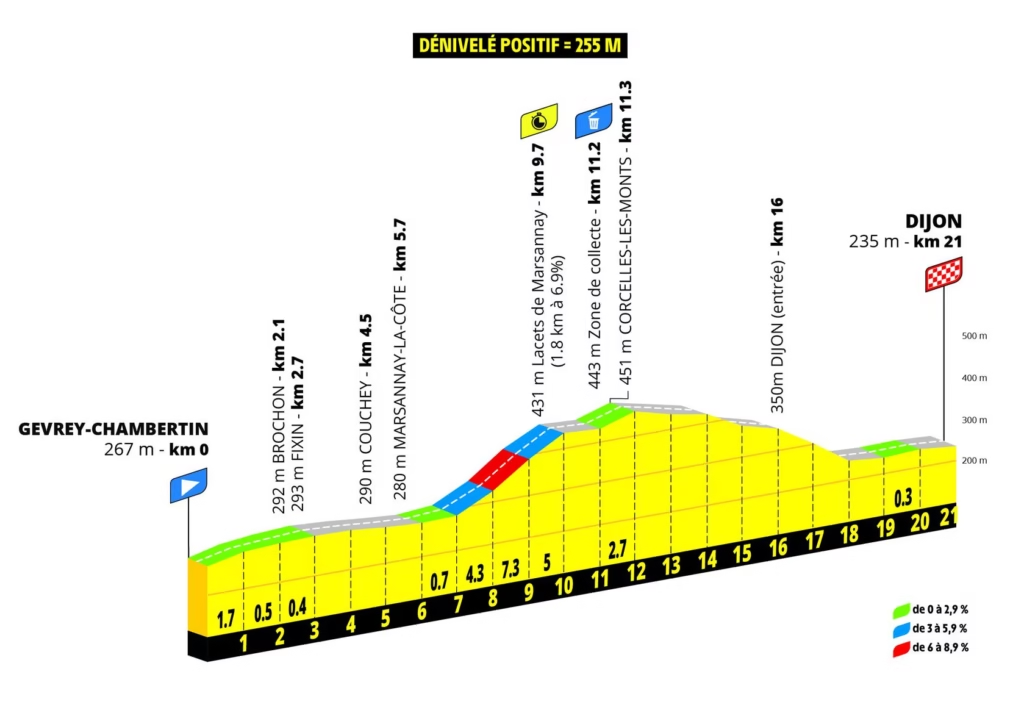
The course is long enough to expose weaker time triallists but varied enough to prevent the pure power riders simply riding away with it. The opening kilometres favour speed and aerodynamics before the Lacets de Marsannay interrupt the rhythm around the halfway point. A rolling and increasingly fast second half then carries the riders towards the finish in Dijon.
Reusser remains the rider to beat, but Vollering, Zoe Bäckstedt, Kopecky and Anna van der Breggen all have convincing routes towards the stage podium. Haugset faces a different contest. The yellow jersey has already demonstrated her ability to ride alone, but defending her lead against the strongest specialists in the world will require another exceptional performance.
Tour de France Femmes 2026 Stage 4 route
Date: Tuesday 4 August 2026
Start: Gevrey-Chambertin
Finish: Dijon
Distance: 21km
Stage type: Individual time trial
First rider starts: 14:34 CEST, 13:34 BST
Expected final rider finish: 17:55 CEST, 16:55 BST
Intermediate checkpoint: 9.7km at the Lacets de Marsannay
The riders begin in Gevrey-Chambertin before travelling through Brochon, Fixin, Couchey and Marsannay-la-Côte. The first starter is scheduled to leave at 14:34 local time, with the yellow jersey expected to finish at approximately 17:55.
The opening section should allow the strongest specialists to establish a fast aerodynamic rhythm. There are no prolonged climbs, but the course is not flat enough for riders to hold one constant power output from the start.
The road becomes more demanding around Marsannay-la-Côte. The route rises through the Lacets de Marsannay before reaching the official checkpoint after 9.7km. It continues towards Corcelles-les-Monts and then turns onto a quicker final section into Dijon.
The broader significance of the stage is covered in the Tour de France Femmes 2026 time trial guide, which examines the course, pacing demands and leading specialists in greater detail.
The climb stops this being a pure power test
A completely flat 21km course would make Reusser an overwhelming favourite. The rise through Marsannay gives the lighter all-rounders a better chance of limiting their losses.
The climb is not long enough to justify changing bikes, but it is substantial enough to interrupt the rhythm of anyone who rides the opening section too aggressively. Riders must balance the aerodynamic value of the time-trial bike against the additional weight carried uphill.
The most successful performances should come from those capable of holding speed on the opening roads, climbing without a major collapse in momentum and accelerating quickly again after the summit.
That profile still suits Reusser. It also keeps Vollering, Van der Breggen and Longo Borghini closer to the conversation than they would be on a completely flat course.
The official checkpoint may also produce a misleading provisional order. A lighter rider could look highly competitive after 9.7km before conceding time to the bigger specialists during the faster second half.
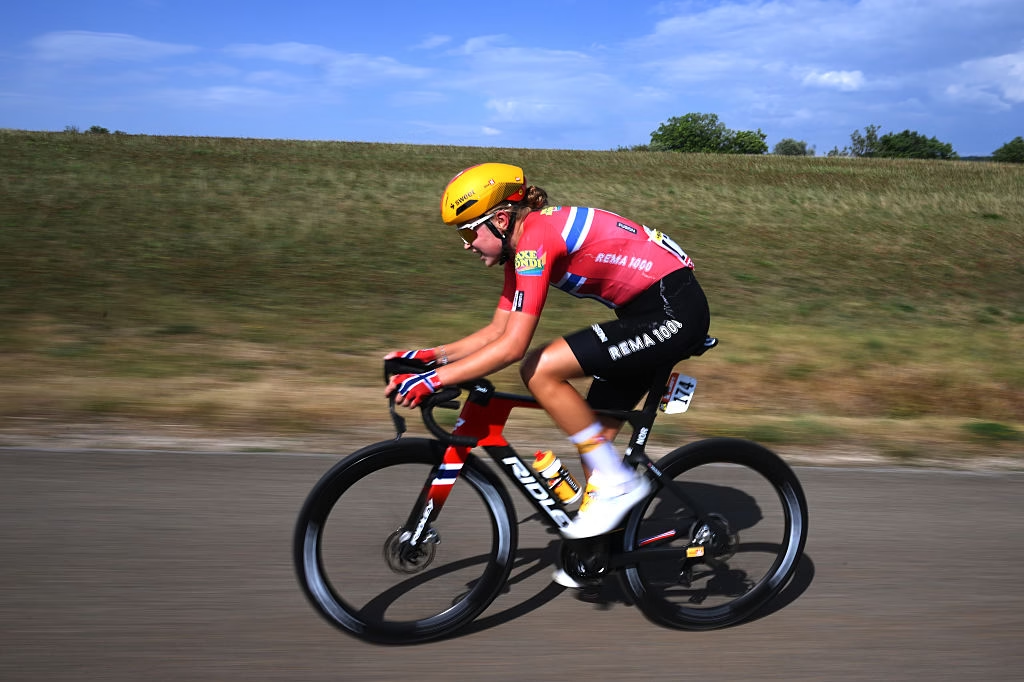 Photo Credit: Getty
Sigrid Ytterhus Haugset faces a compelling yellow jersey defence
Haugset arrives in Dijon after producing the longest and most demanding effort of any rider on Stage 3.
She went clear on the Col de la Savine and completed the final 85km alone, maintaining enough of her advantage to hold off Kopecky and move into yellow. The victory drew on the same qualities that earned her the Norwegian road title: sustained power, measured pacing and a willingness to commit fully once the road opened ahead.
Those strengths should translate reasonably well to an individual time trial. Haugset is comfortable riding alone and has developed into a capable performer against the clock.
The difficulty is the level of the riders chasing her.
Reusser, Vollering, Kopecky and Bäckstedt are not simply strong road riders. They are among the most accomplished time triallists in the peloton. Haugset must also recover from a maximal solo effort completed in extreme heat, while most of her GC rivals spent much of Stage 3 inside larger groups.
Her yellow jersey defence will depend as much on recovery as ability. Uno-X Mobility can optimise her warm-up, equipment and pacing plan, but there is no tactical protection once she leaves the start ramp.
The background to her breakthrough and WorldTour rise is covered in our profile of Sigrid Ytterhus Haugset.
 Photo Credit: Getty
Marlen Reusser is still the benchmark
Reusser has spent the opening three stages waiting for this opportunity.
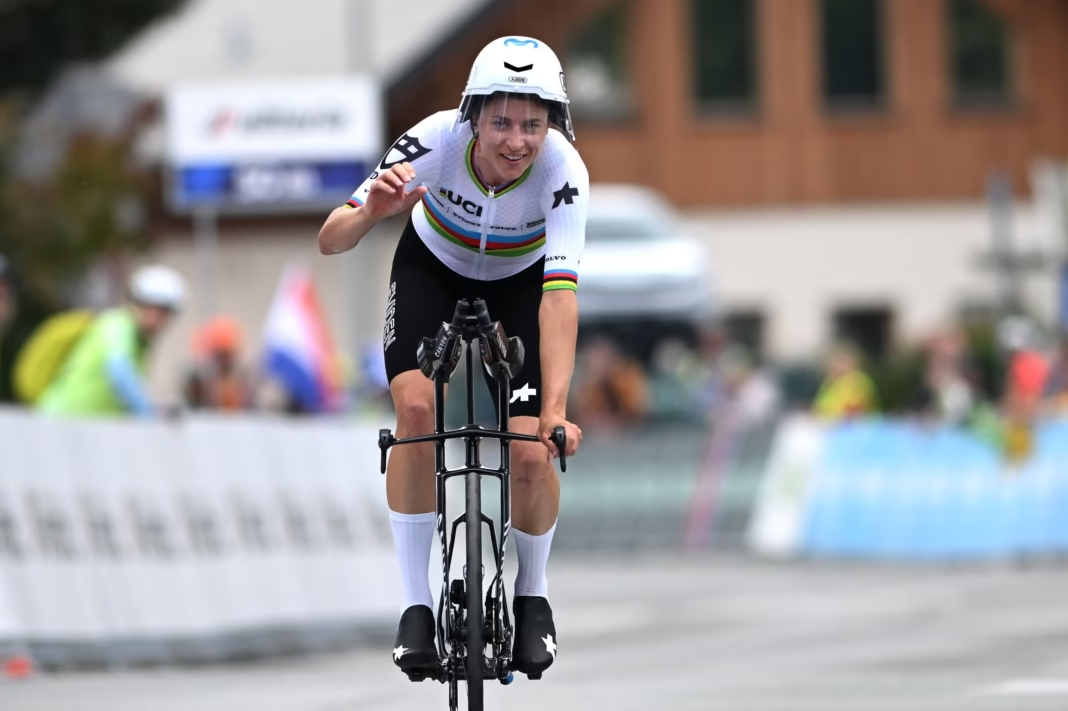
The Movistar rider is the reigning world time trial champion and won the previous long individual time trial held at the Tour de France Femmes. She combines the sustained aerodynamic power of a specialist with enough climbing ability to handle the rise around Marsannay.
Her Stage 1 crash created an early concern, but she completed the following road stages without losing meaningful time to the other central contenders. Reaching Dijon still in contention gives her the opportunity to place the race on her preferred terrain.
The course demands restraint as well as power. Reusser can gain heavily during the fast opening kilometres, but reaching the climb already above her sustainable effort would reduce that advantage.
Her ideal ride involves controlling the first section, maintaining momentum through the climb and then exploiting the faster run into Dijon. That final portion may be where the largest differences appear.
A stage victory is a realistic expectation. The more important question is whether Reusser can build enough of an overall advantage to change how Movistar approach the road towards Mont Ventoux.
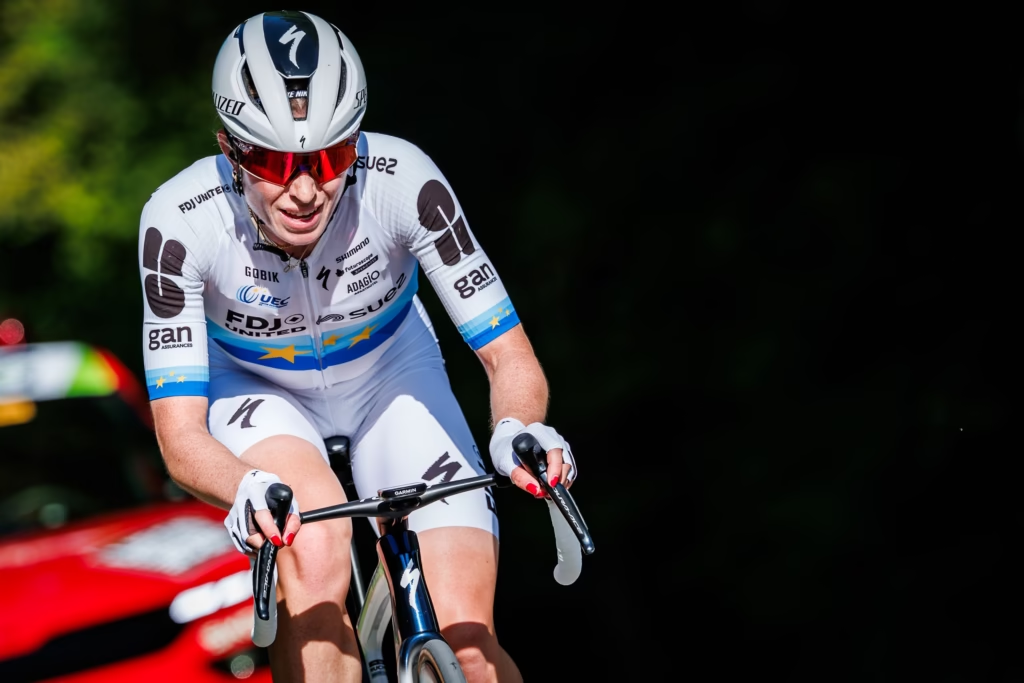
Demi Vollering can become the leading Tour favourite
Vollering begins Stage 4 with the opportunity to establish herself as the best-placed rider among the principal pre-race favourites.
She is not the same type of specialist as Reusser, but her time trialling has developed into a major strength. Vollering won the short Rotterdam time trial at the 2024 Tour and has repeatedly produced elite championship performances against the clock.
The Marsannay climb improves her prospects. Vollering can maintain high power on the flat without carrying the same climbing penalty as some of the heavier specialists.
Her main task is to limit the time lost during the fastest sections. A ride close to Reusser would give her an advantage over Ferrand-Prévot, Niewiadoma-Phinney and several of the lighter climbers before the race reaches Mont Ventoux.
Vollering does not necessarily need to win. Finishing within a manageable distance of Reusser while gaining on most of the other GC riders would place FDJ United-Suez in an excellent tactical position.
The riders most likely to gain in Dijon are assessed in our Tour de France Femmes 2026 time trial contenders guide.
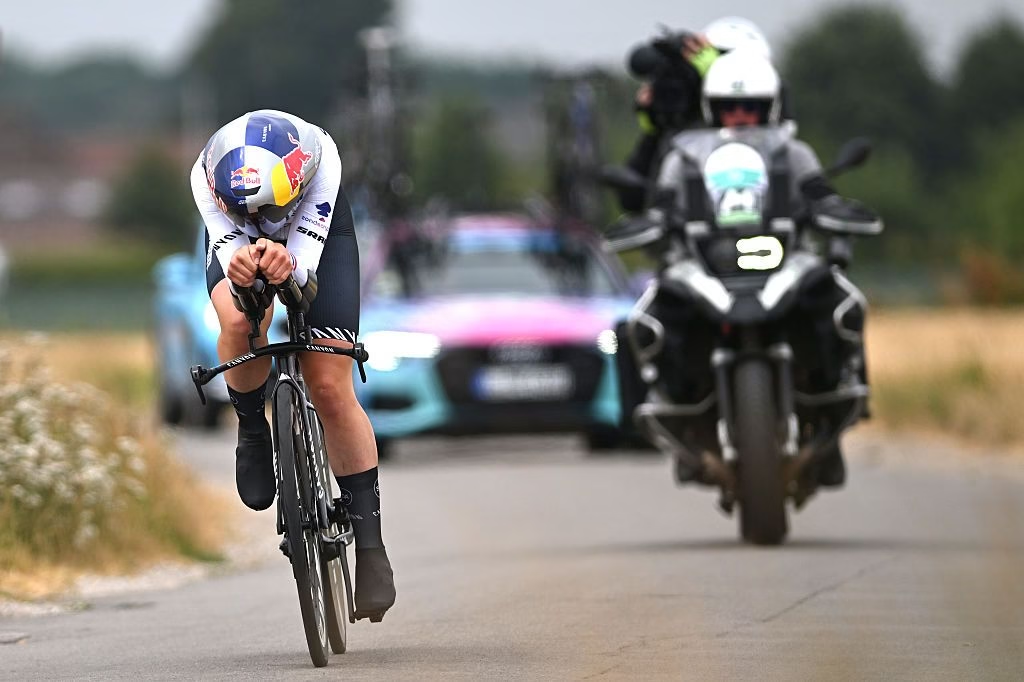
Zoe Bäckstedt can race entirely for the stage
Bäckstedt may be the strongest challenger to Reusser for the stage victory.
The British rider has the raw power, aerodynamic ability and improving road endurance required for a 21km test. Unlike the central GC contenders, she does not need to balance her effort against the mountains later in the Tour.
That freedom matters.
Bäckstedt can prepare entirely around producing the fastest time in Dijon, without worrying about whether a maximal effort compromises a yellow jersey challenge. The flatter opening and closing roads suit her particularly well.
The climb represents the main uncertainty. She must avoid conceding too much to Vollering, Reusser and the stronger climbers while preserving enough energy to exploit the final section.
A stage podium would not be surprising. A victory would confirm that Bäckstedt has developed from a powerful young specialist into one of the most complete time trial riders in the WorldTour peloton.
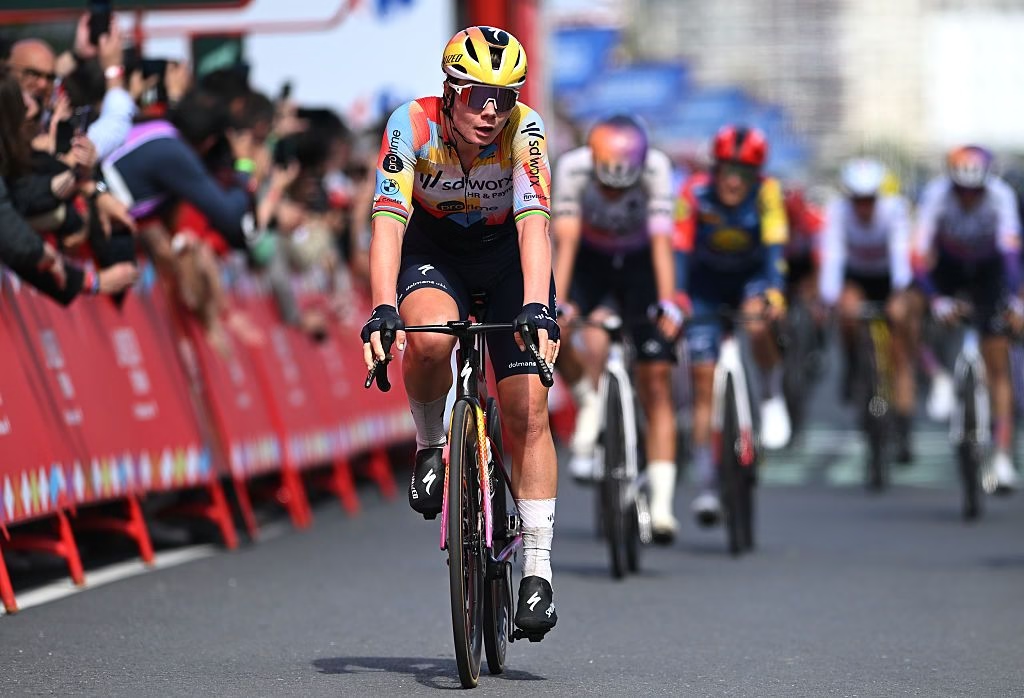
Lotte Kopecky must recover from her Stage 3 chase
Kopecky would normally be one of the clearest podium contenders on this course.
Her track background and ability to produce sustained power make the fast sections ideal, while her climbing has improved enough to limit losses around Marsannay.
The uncertainty is recovery.
Kopecky spent much of the second half of Stage 3 pursuing Haugset alone. She reduced a substantial gap and finished second, but the effort required a long period at high intensity in temperatures approaching 37°C.
That may affect the quality of her warm-up and the power she can sustain on Tuesday. A time trial offers no opportunity to hide a poor recovery day inside the peloton.
Kopecky remains capable of winning. The question is whether she begins Stage 4 with the same freshness as the riders who spent less time exposed on the road to Poligny.
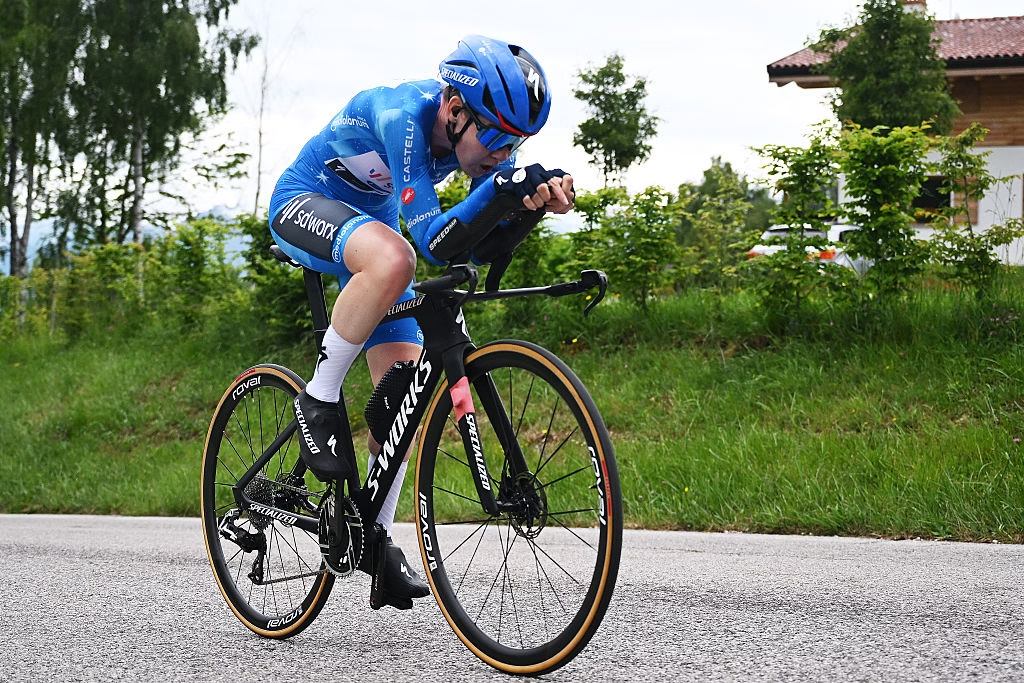 Photo Credit: Getty
Anna van der Breggen can restore her GC position
Van der Breggen enters Dijon with the opportunity to recover some of the ground lost during the opening road stages.
The former world time trial champion remains an exceptional all-rounder and recently demonstrated that her ability against the clock has survived her return to professional racing.
The climb should suit her more than a completely flat route. Van der Breggen can sustain a high aerodynamic output without needing to reduce her power dramatically when the gradient rises.
Her result also matters tactically for SD Worx-Protime. Wiebes controlled the first two stages and Kopecky took second on Stage 3, but Van der Breggen remains the team’s clearest route towards a high final general classification.
A performance close to Reusser and Vollering would restore some of the flexibility lost when she conceded time before Dijon.
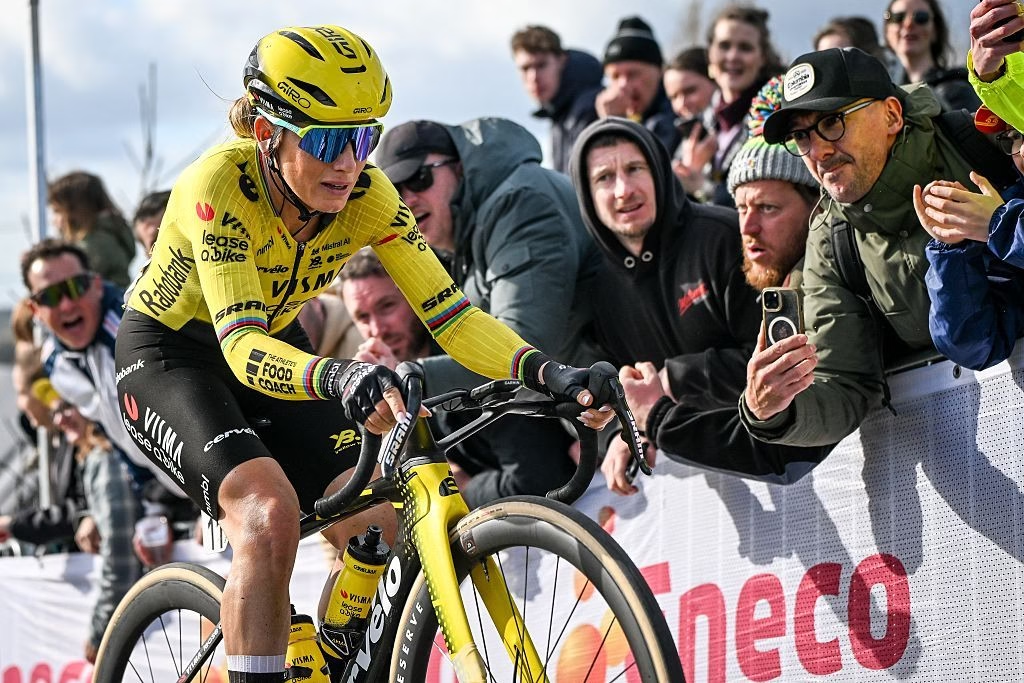
Pauline Ferrand-Prévot faces the first major test of her title defence
Ferrand-Prévot’s time trial is one of the most difficult performances to predict.
The defending champion has the technical ability, climbing strength and experience needed to produce a competitive ride. Her mountain-bike background should also help with changes of rhythm and maintaining speed through corners.
The question is how she compares with Reusser and Vollering across a sustained 21km effort.
Ferrand-Prévot does not need to win, but she cannot afford a major loss. Mont Ventoux and the final mountain stages provide opportunities to recover time, yet conceding more than a minute would significantly narrow her tactical options.
The Marsannay section should help her limit the damage. The flatter roads before and after it will provide the clearer measurement of whether she can defend her Tour title through a balanced all-round performance rather than relying primarily on the mountains.
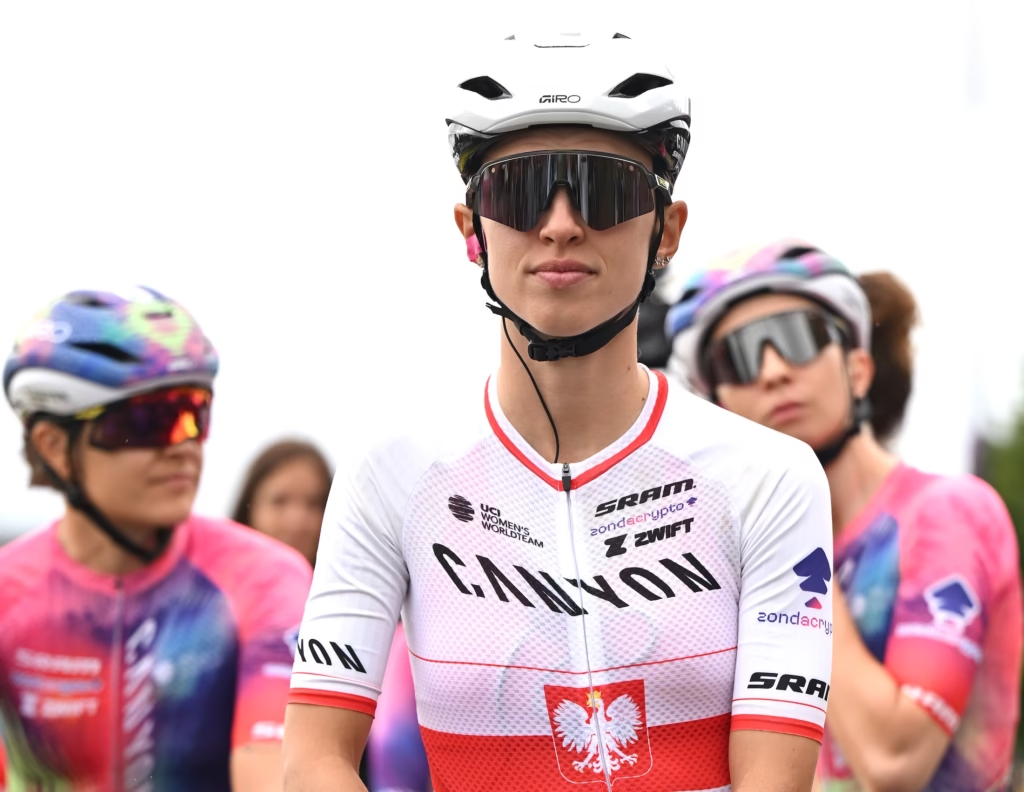 Photo Credit: Getty
Kasia Niewiadoma-Phinney needs controlled damage limitation
Niewiadoma-Phinney is unlikely to view Stage 4 as an opportunity to gain on the strongest specialists.
Her objective is to remain close enough for her climbing, aggression and tactical range to become decisive later in the race.
Canyon SRAM can expect her to perform strongly on the climb. The greater danger comes on the high-speed opening and closing sections, where Reusser, Vollering and Kopecky can hold a more aerodynamic position at greater speed.
Pacing is central. Niewiadoma-Phinney cannot afford to chase the early time gaps emotionally and arrive at the climb already above her sustainable effort.
A manageable loss leaves her Tour completely open. A larger deficit would force Canyon SRAM to race more aggressively across Stages 5 and 6 before the Mont Ventoux summit finish.
The Tour de France Femmes 2026 route guide shows why Dijon matters without being decisive. The race still contains two mountain stages and several hilly days capable of overturning the time-trial hierarchy.
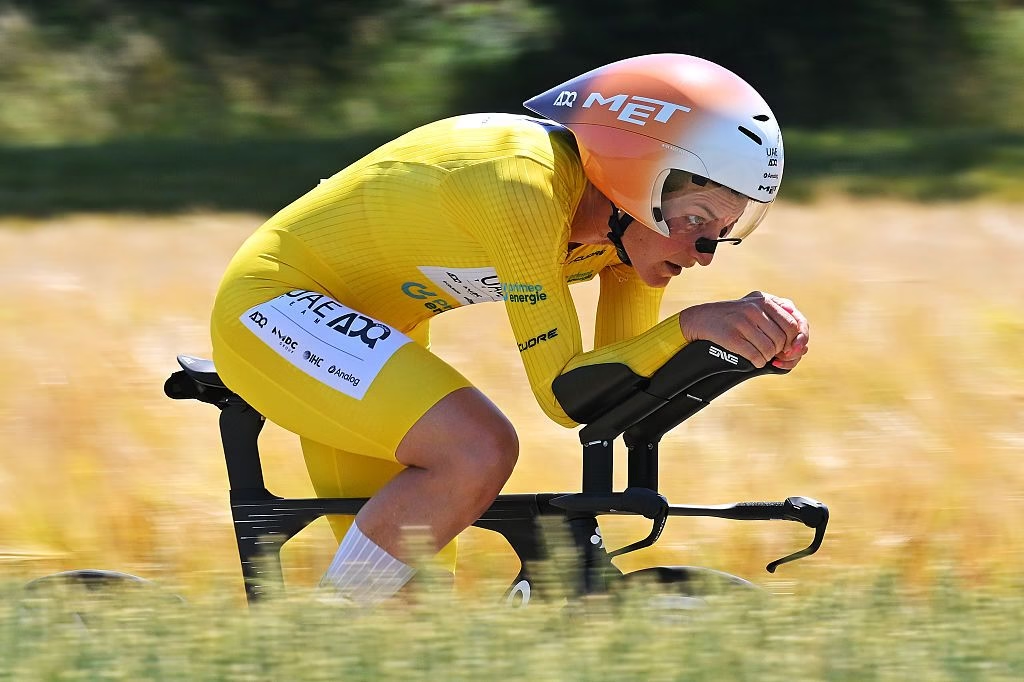
Elisa Longo Borghini fits the varied course
Longo Borghini is one of the riders best suited to the complete shape of Stage 4.
She has enough power to remain competitive on the flat, the climbing strength to handle the Marsannay rise and the experience to pace the full course without overreacting to the first split.
UAE Team L’IMAD also have several riders capable of producing strong rides. Paula Blasi remains an important GC and white jersey option, while Maëva Squiban and Silvia Persico should both handle the mixed terrain well.
Longo Borghini’s objective is to stay close to Reusser and Vollering rather than trying to match every second. The later mountains should give her better opportunities than they offer the pure time trial specialists.
A strong result would preserve UAE’s tactical depth and ensure that rival teams must continue watching both Longo Borghini and Blasi.
The white jersey contest should spread out
The young rider classification enters its first direct test in Dijon.
Blasi, Antonia Niedermaier and Isabella Holmgren have different reasons for optimism.
Niedermaier is the most established time triallist of the three. Her balance of sustained power and climbing ability makes the course exceptionally well suited to her, and she could challenge for the overall stage podium rather than merely the white jersey.
Holmgren brings strong technical ability and the power required to maintain speed through the rolling sections. The 21km distance provides a useful test of whether she can translate those qualities into a longer WorldTour effort.
Blasi is likely to be strongest on the climb but may lose ground during the fastest kilometres. Her task is to remain close enough for her superior mountain results to matter when the race reaches Ventoux.
The white jersey will not be decided in Dijon, but the rider who leaves with the advantage can approach the later climbs from a position of control.
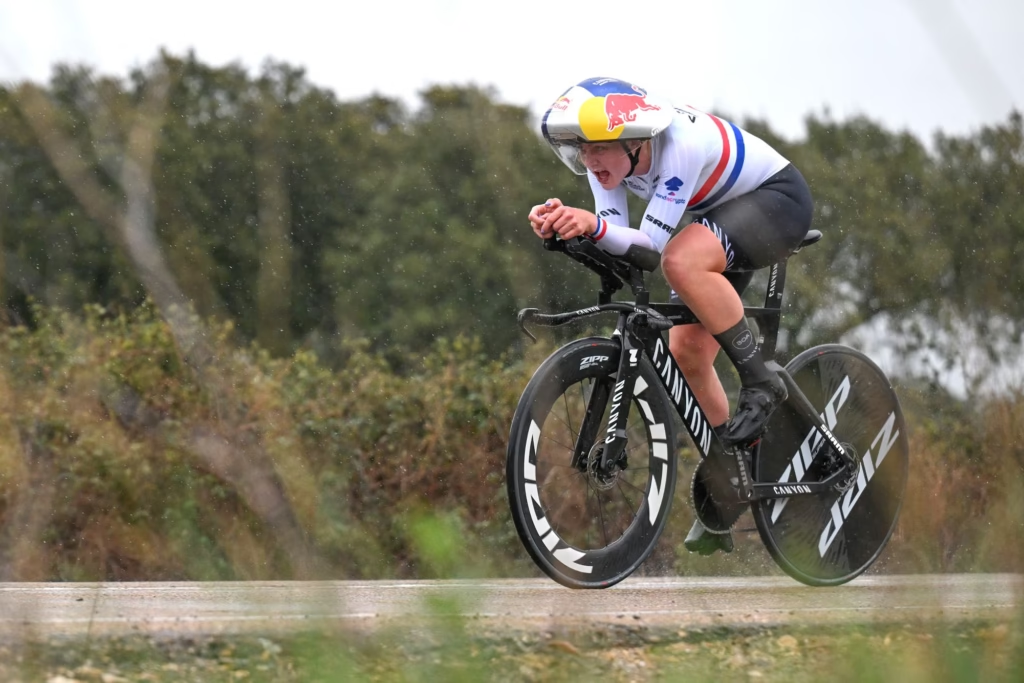 Photo Credit: Getty
The checkpoint will tell only half the story
The only official intermediate split comes after 9.7km, around the most climbing-focused part of the course.
That makes it informative but potentially misleading.
Riders who excel uphill may appear to be challenging for the stage victory before losing time on the quicker final section. Reusser, Kopecky and Bäckstedt can potentially recover substantial ground after the checkpoint.
Teams will use additional internal timing points to help riders understand whether they should increase their effort or remain controlled. Viewers should also resist treating the first split as the likely finishing order.
The strongest rider at the checkpoint may not be the fastest rider in Dijon.
How to pace the Dijon time trial
The most common mistake would be treating the opening flat, the climb and the final run as three separate maximal efforts.
The early roads encourage riders to begin too hard. The gradient then exposes anyone already above her limit, while the remaining kilometres demand enough energy to return to full aerodynamic speed.
The best approach should involve a powerful but controlled start, a deliberate increase on the climb and another acceleration once the road begins descending towards Dijon.
The transition after the summit is especially important. A rider who needs too long to recover from the climb will lose the aerodynamic value of the faster roads that follow.
The winning performance may not come from the rider producing the highest absolute power. It may belong to the one who distributes that power most intelligently across all 21km.
-
 Photo Credit: Getty

Tour de France Femmes Stage 4 contenders
Marlen Reusser
The favourite. Reusser has the aerodynamic power, championship pedigree and climbing ability needed for every section of the course.
Zoe Bäckstedt
The strongest stage-focused challenger. Bäckstedt can target the time trial without considering the wider GC and should be especially fast before and after the climb.
Demi Vollering
The Marsannay rise gives Vollering a realistic route towards victory. A podium and significant gains over the lighter climbers would represent an excellent result.
Lotte Kopecky
A natural contender whose chances depend on her recovery from the long Stage 3 pursuit. Few riders can match her on the faster sections.
Anna van der Breggen
A former world champion capable of using the time trial to move back towards the central GC contest.
Elisa Longo Borghini
A complete rider who should perform consistently across every part of the route without relying on one dominant section.
Pauline Ferrand-Prévot
Technically strong and well suited to the climb. Limiting losses on the fast roads is the priority for the defending champion.
Antonia Niedermaier
A serious podium outsider rather than merely a white jersey contender. The mixed profile matches her strengths extremely well.
Sigrid Ytterhus Haugset
The yellow jersey has already proven her ability to sustain a long individual effort. Defending the race lead after Stage 3’s exertion presents a far greater challenge.
Stage 4 verdict
Stage 4 should establish the first clear hierarchy of the 2026 Tour de France Femmes.
Reusser remains the most likely winner because no other rider combines the same aerodynamic power with sufficient climbing strength. Bäckstedt represents the strongest pure stage challenge, while Vollering can use the mixed profile to become the best-placed rider among the main Tour favourites.
Ferrand-Prévot, Longo Borghini and Niewiadoma-Phinney must prevent the leading time triallists creating a gap that dictates the remainder of the race. Niedermaier can transform the white jersey contest, while Haugset faces a difficult but compelling defence of yellow.
The first three stages produced two Wiebes sprints and an extraordinary Haugset solo victory. Dijon removes teammates, breakaway hesitation and peloton politics from the equation.
For 21km, every rider is alone with the road, the clock and the first genuine indication of who is best placed to win the 2026 Tour de France Femmes.

