
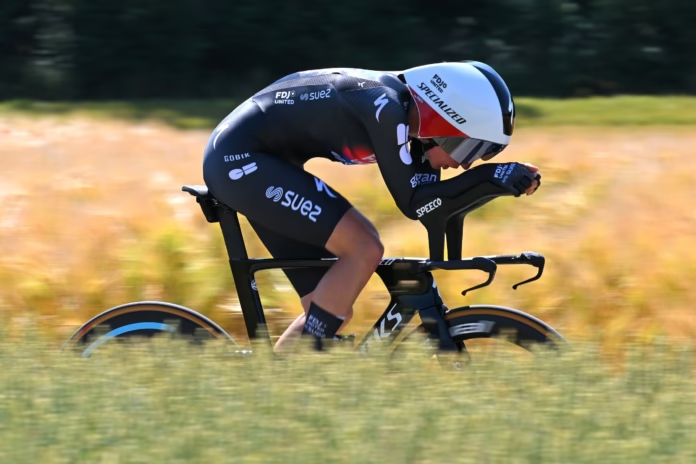
A cycling time trial is a race in which riders start separately and compete to complete the same course in the fastest possible time.
Unlike a normal road stage, there is no peloton to provide shelter and no teammate riding alongside the leader. Each rider must manage their own effort, choose the fastest lines and overcome almost all the aerodynamic resistance alone.
This is why time trials are often described as the “race of truth”. Tactics still matter, but there is nowhere to hide once the clock starts.
A rider who finishes a 30km course in 35 minutes and 20 seconds beats someone recording 35:21 by one second. In a stage race such as the Tour de France, that second is also added directly to the general classification difference between them.
Cycling time trials at a glance
- Riders start individually rather than together
- Starting intervals are normally one or two minutes
- The fastest elapsed time wins
- Drafting behind another rider is not allowed
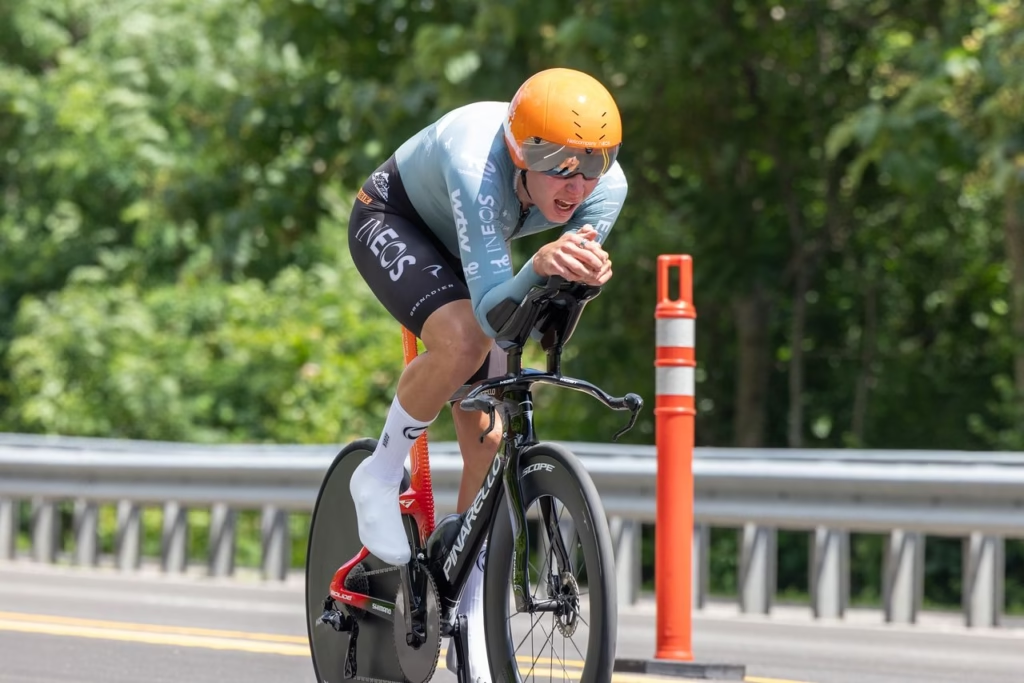
- Riders usually use specialised aerodynamic bicycles and helmets
- Intermediate timing points show how performances compare
- Stage-race time gaps count towards the general classification
- Pacing is crucial because starting too hard can ruin the final kilometres
At major championships, individual time trials are commonly between approximately 20km and 50km, although distances vary according to the event, category and course.
What is an individual time trial?
An individual time trial, often shortened to ITT, is a race against the clock.
Every rider completes the same route, but they do so separately. The winner is not necessarily the first person to cross the finish line. It is the rider whose elapsed time between the start ramp and finish line is shortest.
For example:
| Rider | Start time | Finish time | Elapsed time |
|---|---|---|---|
| Rider A | 14:00:00 | 14:36:12 | 36m 12s |
| Rider B | 14:02:00 | 14:37:58 | 35m 58s |
| Rider C | 14:04:00 | 14:40:03 | 36m 03s |
Rider B wins despite crossing the finish line between the other two riders.
The clock is what matters, not the order in which riders physically arrive.
How does the start work?
Riders normally begin from a raised start ramp.
An official holds the bicycle upright while a countdown is given. The rider remains clipped into the pedals and begins accelerating when the clock reaches zero.
Starting intervals vary. One-minute gaps are common for early starters, while important riders may leave two or three minutes apart later in the event.
The wider intervals reduce the chance of one leading rider catching another too quickly and make it easier for television coverage to follow the main contenders.
In a stage race, the starting order is generally based on the general classification.
The rider at the bottom of the standings starts first. The race leader normally starts last, allowing the overall favourites to know many of the times already recorded by their rivals.
Organisers may make adjustments to prevent teammates starting consecutively or to accommodate particular competition rules.
What happens if a rider misses their start time?
The clock normally begins at the rider’s scheduled start time, whether they are ready or not.
A rider who arrives five seconds late does not receive a new countdown. They begin the course already five seconds behind the official clock.
Mechanical problems on the start ramp can be handled differently depending on when and why they occur, but riders and teams work carefully to prevent these situations.
Bikes are checked, tyres are prepared and riders complete their warm-ups according to tightly controlled schedules.
A late arrival can destroy a time trial before the rider has completed a single metre.
Why can riders not draft?
Drafting means riding in the reduced air resistance behind another cyclist.
In a normal road race, sitting behind another rider can save a significant amount of energy. Allowing that advantage in an individual time trial would undermine the basic format because riders fortunate enough to catch someone would receive help unavailable to others.
When one rider catches another, the slower rider must not deliberately follow closely behind.
The overtaking rider must pass cleanly, while both riders are expected to maintain sufficient separation once the move is complete.
A rider cannot catch a rival, sit on their wheel to recover and then attack again near the finish.
Officials monitor the gaps between riders, often from motorbikes or race vehicles. Deliberate drafting can lead to time penalties, fines or other sanctions.
What happens when one rider catches another?
Catching another rider means overcoming the original starting interval.
If riders started two minutes apart, the faster rider has already gained two minutes by the moment they draw level.
This can be psychologically important.
The catching rider receives visible confirmation that they are performing strongly. The caught rider knows immediately that they are losing substantial time.
The faster rider must still complete the overtake without gaining a prolonged drafting advantage. The slower rider is not allowed to accelerate onto the wheel and use it for shelter.
Occasionally two riders of similar speed repeatedly pass each other. Officials will watch carefully to ensure neither rider is receiving unfair assistance.
How is a time trial timed?
The official time runs from the rider’s scheduled start until they cross the finish line.
Electronic timing systems normally use transponders attached to the bicycle, backed up by finish-line cameras and manual systems.
Timing points may be placed at several positions around the course.
These intermediate checks show whether a rider is ahead or behind the current fastest time. They also help teams understand where time is being gained or lost.
A 30km course might have checks at:
- 8km
- 17km
- 24km
- The finish
A rider could be five seconds ahead at the first check, ten seconds behind at the second and then recover to win by two seconds.
Time trials are rarely decided at one point alone. The fastest overall combination of climbing, cornering, descending and flat-road speed wins.
What does a time trial result mean in a stage race?
In a stage race, each rider’s time is added to their accumulated general classification time.
Suppose two riders begin the day level overall:
- Rider A records 35 minutes
- Rider B records 36 minutes and 10 seconds
Rider A gains 1 minute and 10 seconds in the general classification.
There is no need for a physical gap between them on the road. The difference produced by the clock becomes their new GC separation.
This makes time trials especially important in races decided by small margins.
A climber may gain 30 seconds through an attack on a summit finish, only to lose more than a minute to a stronger time triallist two days later.
Our guide to how the Tour de France general classification works explains how stage times, penalties and bonus seconds combine to decide the yellow jersey.
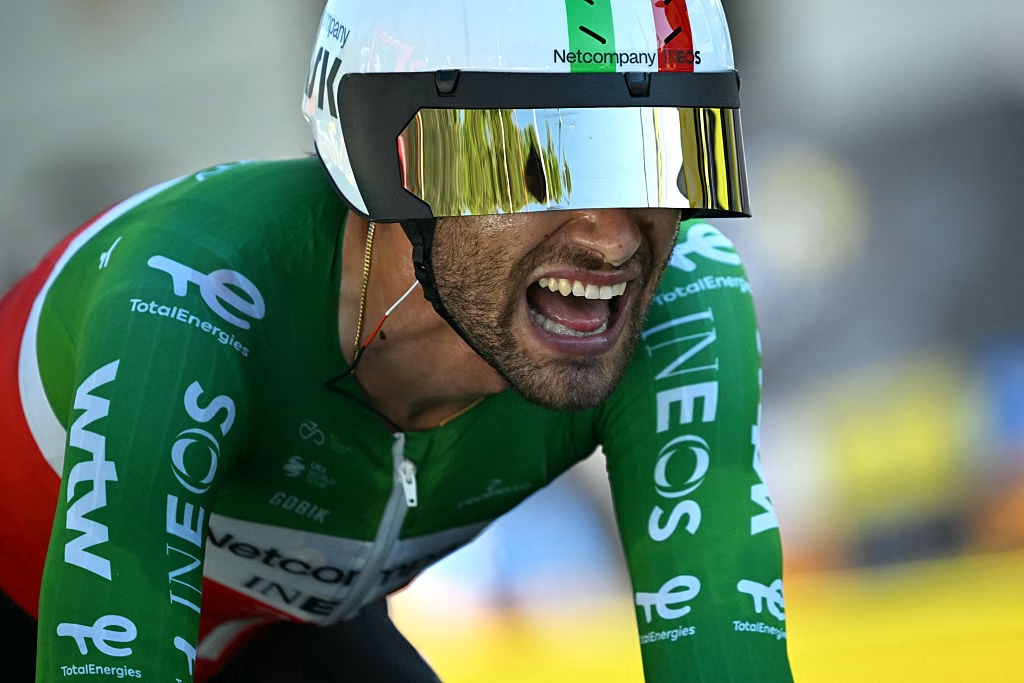 Photo Credit: Getty
Why do individual seconds matter?
Cycling results are measured with enough precision that one second can decide a stage, a medal or an entire race.
Time gaps that look small during a mountain stage can become decisive once added together.
A rider losing:
- 12 seconds on one time trial
- 8 seconds through a late split
- 6 seconds in another short test
has conceded 26 seconds without suffering one dramatic defeat.
Time trials also produce no tactical neutralisation of gaps. If one rider is 47 seconds faster, they gain 47 seconds.
A Grand Tour can therefore be won through a collection of apparently minor advantages.
Every corner, gear change and moment out of the aerodynamic position matters because each can cost fractions of a second that accumulate across the course.
How do riders pace a time trial?
Pacing means controlling effort so the rider reaches the finish having used their available energy as efficiently as possible.
The aim is not simply to ride as hard as possible from the start.
A rider who begins above a sustainable level may produce a spectacular first intermediate time before slowing dramatically during the final kilometres.
The ideal pacing strategy depends on the course.
Flat course
A rider will usually try to maintain a relatively consistent power output while adjusting slightly for wind, corners and changes in road surface.
Hilly course
More energy may be spent on climbs because additional power creates a greater time benefit at lower speeds.
The rider may ease slightly on descents, where gravity and aerodynamics make extra effort less valuable.
Technical course
Repeated corners make rhythm difficult. Riders must accelerate after each bend without repeatedly pushing themselves beyond a sustainable level.
Headwind and tailwind sections
Riders often work harder into a headwind because every additional second spent on the slower section is expensive.
They may produce slightly less power with a tailwind, where the same increase in effort offers a smaller time saving.
The rolling Stage 16 course at the 2026 Tour de France provides a clear example. Our Stage 16 preview explains why riders must balance the opening climb, technical descent and faster lakeside finish rather than maintaining one constant effort.
Why is starting too hard such a problem?
The opening kilometres feel deceptively manageable.
A rider is fresh, adrenaline is high and the finish is still distant. Riding above the planned effort can feel easy for several minutes.
The consequences arrive later.
Excessive early effort increases fatigue and can make it impossible to maintain the aerodynamic position comfortably.
The rider may then lose more time in the final third than they gained at the beginning.
A well-paced time trial often looks controlled rather than spectacular. The rider should reach the finish close to complete exhaustion, but not several kilometres before it.
What information does the rider receive?
Riders normally have access to a bike computer showing information such as:
- Power output
- Speed
- Heart rate
- Distance
- Elapsed time
- Cadence
Their team may also communicate through a radio earpiece.
A sporting director following in the team car can provide:
- Time gaps at intermediate checks
- Warnings about corners
- Information about wind
- Pacing reminders
- Encouragement
- Updates on rival performances
The quality of these instructions matters.
Simply shouting that a rider must go faster may be less useful than telling them they are five seconds down, the next climb lasts three minutes and the final section has a tailwind.
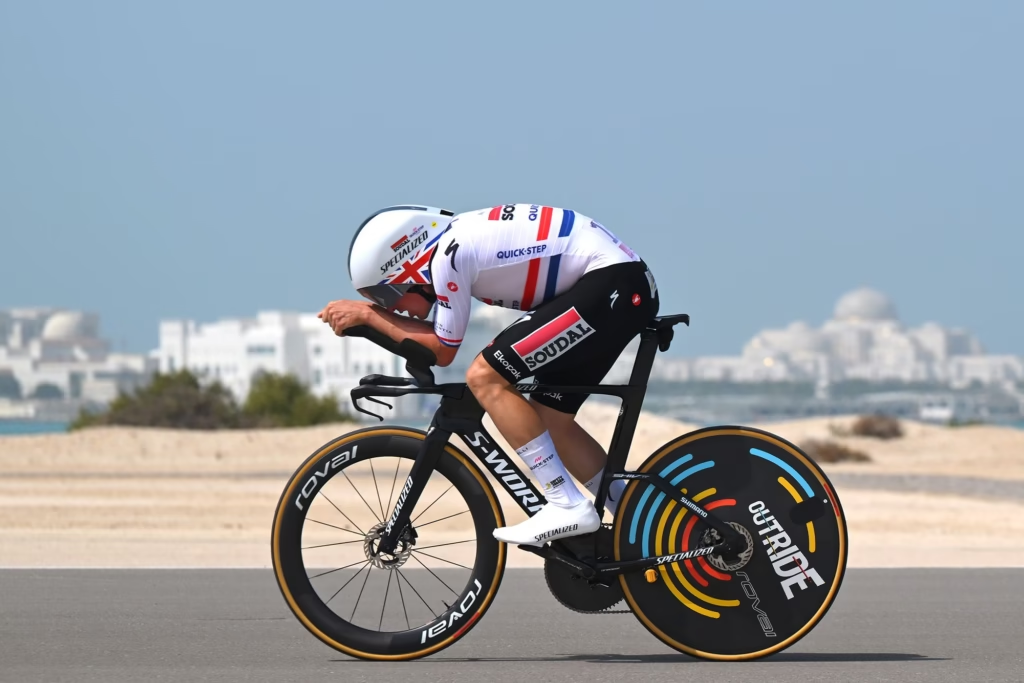 Photo Credit: Getty
Why does power matter more than average speed?
Average speed is influenced by the course, weather and road surface.
A rider may average 55km/h on a flat course with a tailwind but perform more impressively at 44km/h on a steep and technical route.
Power measures how much work the rider is producing.
Teams use expected power output to create pacing plans, but the highest average power does not automatically win.
A heavier rider may generate more watts while moving uphill more slowly than a lighter rival. Another rider may produce less power but benefit from a more aerodynamic position.
The goal is not to create the biggest number on the computer. It is to convert power into the fastest possible time.
Professional time-trial specialists can average more than 50km/h on suitable courses, although the speed depends heavily on the profile and conditions. The differences between time trials and other race situations are covered in our guide to how fast Tour de France riders go.
Why is aerodynamics so important?
At time-trial speeds, overcoming air resistance accounts for most of the rider’s effort on flat roads.
Reducing aerodynamic drag allows a rider to travel faster while producing the same power.
This is why time-trial positions appear so different from normal road-racing positions.
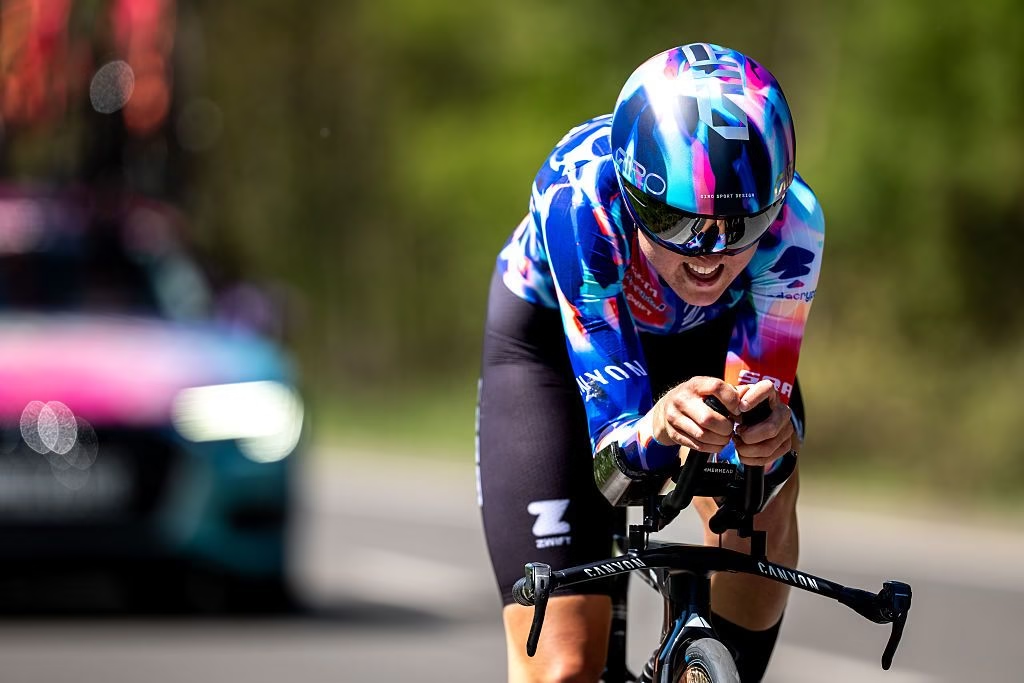
The rider rests their forearms on extensions and brings their hands forward. Their torso becomes lower and narrower, reducing the area presented to the air.
Time-trial specialists spend hours testing small changes to:
- Arm position
- Hand height
- Helmet angle
- Shoulder width
- Saddle position
- Clothing
- Shoe covers
- Wheel choice
A position must be aerodynamic without reducing power so severely that the rider cannot maintain it.
The fastest wind-tunnel setup is useless if it causes pain or prevents the rider from breathing effectively after ten minutes.
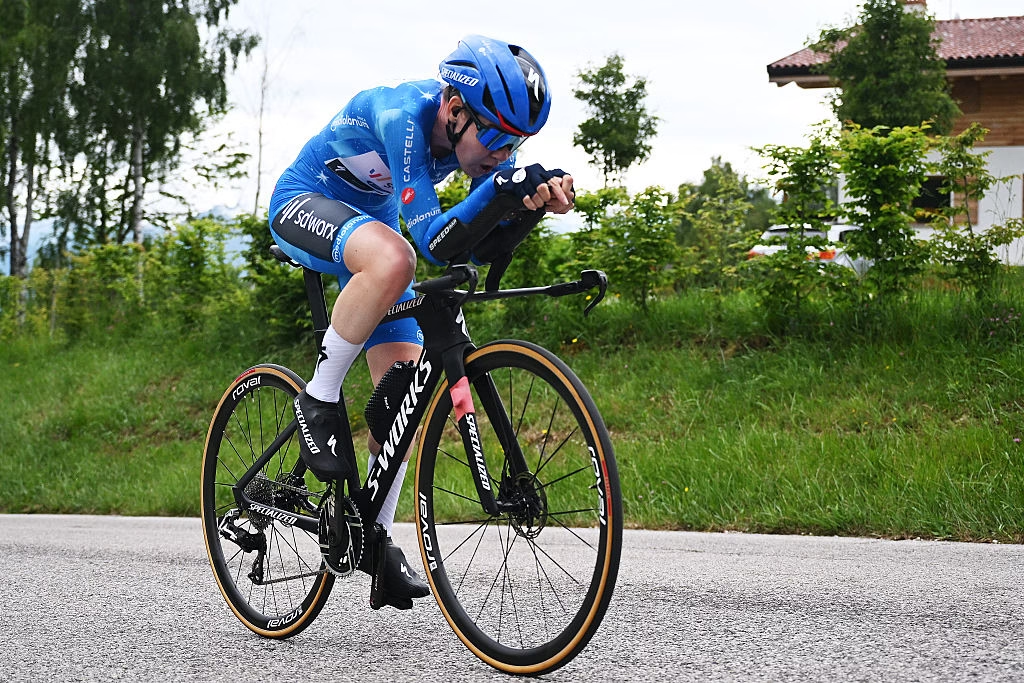 Photo Credit: Getty
What is different about a time-trial bike?
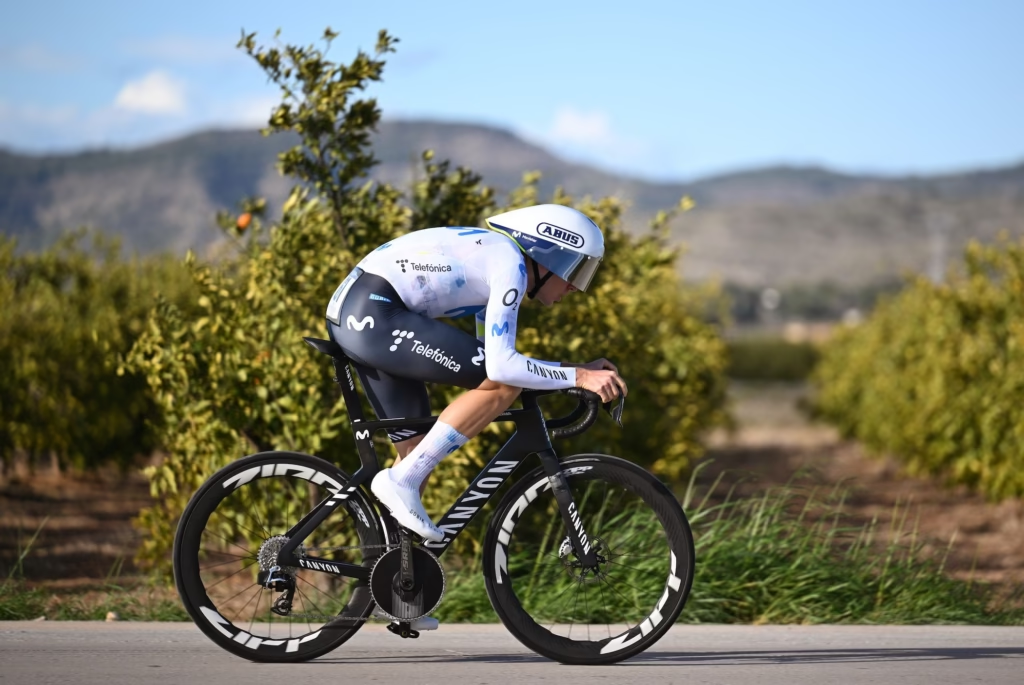
A time-trial bicycle is designed to reduce aerodynamic resistance.
Common features include:
- Aerobar extensions
- A low, narrow riding position
- Deep-section front wheels
- A disc or deep rear wheel
- Aerodynamic tube shapes
- Integrated cables
- Specialised gearing
- A more forward saddle position
The extensions support the rider’s forearms and allow a streamlined posture.
Time-trial bikes are usually faster on open roads but can be heavier and more difficult to handle than conventional road bikes.
On a steep or highly technical course, some riders may choose a road bike instead.
Why do riders wear unusual helmets?
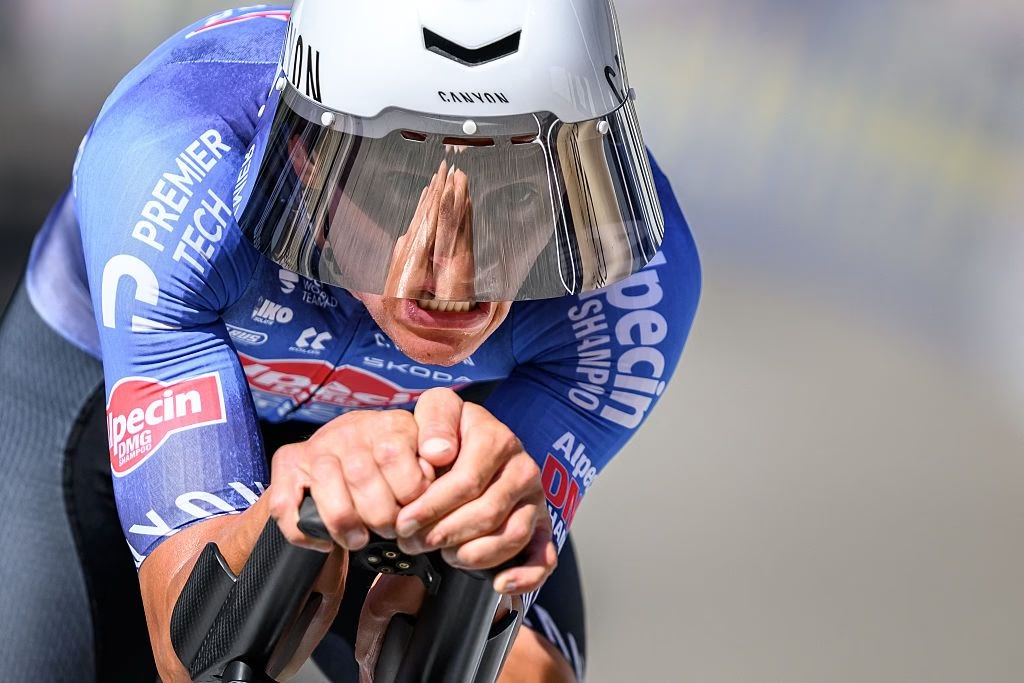
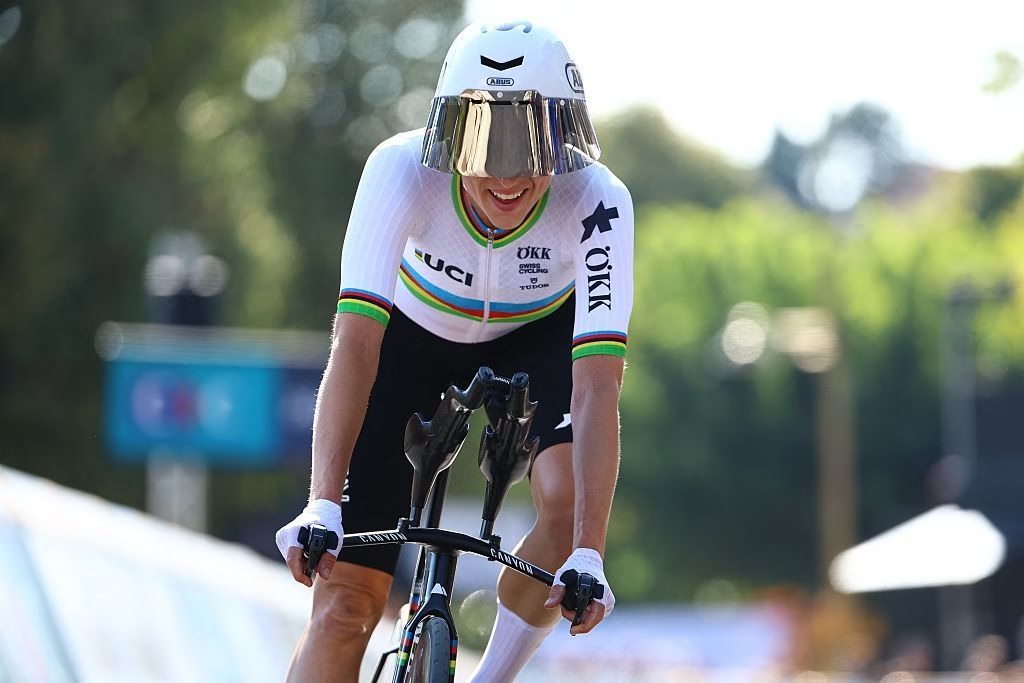
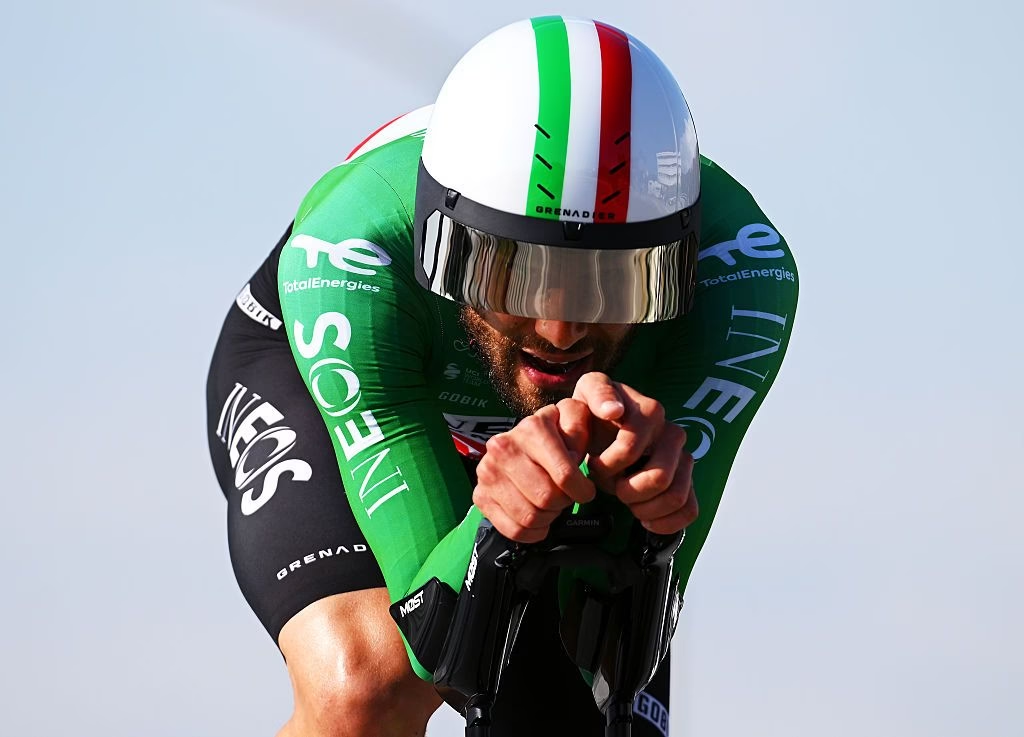
Time-trial helmets are designed to manage airflow around the rider’s head, shoulders and back.
Some have long tails. Others use rounded or wide shapes intended to work with a specific riding position.
The best helmet is not necessarily the one that appears most streamlined when viewed alone. It must interact effectively with the individual rider’s body and posture.
A helmet designed for someone who keeps their head perfectly still may perform poorly for a rider who frequently looks down or turns to check corners.
Teams therefore test helmets as part of the rider’s complete aerodynamic system rather than treating them as an isolated item.
Are team cars allowed to follow riders?
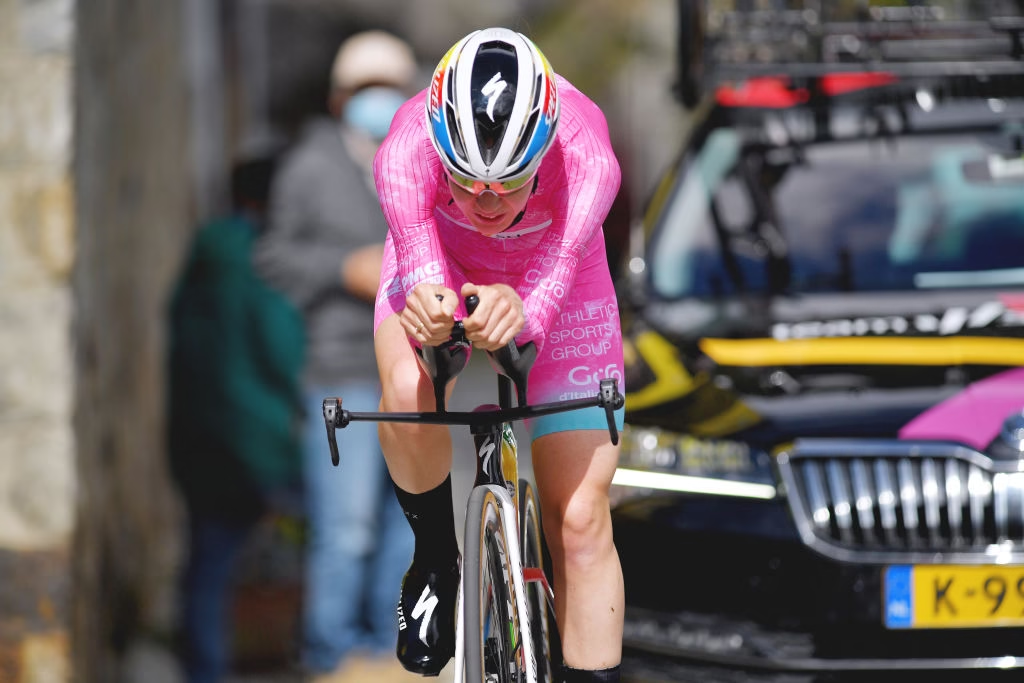
In major road time trials, a team vehicle normally follows each rider.
The car carries spare equipment and staff who can give instructions over the radio.
It must remain far enough behind to avoid giving the rider an aerodynamic advantage.
The car can stop to provide assistance after a mechanical problem, but the rider cannot receive a prolonged push or be paced back up to speed illegally.
Following vehicles also give teams a direct view of the rider’s body language. Staff can see whether the rider is maintaining their position, struggling with the conditions or beginning to fade.
What happens after a puncture or mechanical problem?
A puncture can cost a stage victory.
The rider must slow down and either receive a replacement wheel or change bicycles.
A well-executed bike change may take only several seconds, but the total loss includes:
- Deceleration
- Waiting for assistance
- Completing the change
- Accelerating again
- Re-establishing rhythm
The psychological disruption can be equally damaging.
A rider may panic and ride too hard immediately afterwards, creating a second loss later in the course.
Mechanical incidents are generally treated as part of racing. The clock does not stop.
Can a rider change bikes during a time trial?
Yes, provided the change follows the rules.
Some routes contain a steep climb where a lighter road bike may be faster than a time-trial bicycle.
Teams calculate whether the climbing advantage outweighs the cost of stopping.
A bike change might cost 15 to 25 seconds. The road bike must therefore save more than that across the climb before the strategy becomes worthwhile.
Factors include:
- Length of the climb
- Average gradient
- Rider weight
- Difference between the bicycles
- Road conditions
- Location of the finish
- Efficiency of the change
On most flat or rolling courses, riders stay on one time-trial bike throughout.
The calculations behind that decision are particularly relevant on the 2026 Tour’s individual test. The Tour de France Stage 16 route climbs for much of its opening section, but not steeply enough for a bike change to appear worthwhile.
Why do riders inspect the course beforehand?
Course knowledge can save time without requiring additional physical effort.
Riders and teams study:
- Corner radiuses
- Road surfaces
- Roundabouts
- Climbs
- Descents
- Wind exposure
- Potholes
- Changes in gradient
- Possible braking points
They may ride the course in training, inspect it from a car or use video footage and mapping software.
A rider who knows a corner opens on exit can carry more speed than someone braking cautiously because they cannot see what comes next.
Course reconnaissance also allows the team to create a precise pacing plan.
What are intermediate time checks?
Intermediate checks compare riders before they reach the finish.
Television graphics may show a rider as:
- 12 seconds ahead
- 5 seconds behind
- Fastest at check one
- Third fastest at check two
These comparisons are usually made against the current stage leader or another important rider.
They are provisional.
Being fastest halfway through the course does not mean the rider is certain to win. They may have started too hard, face a weaker final section or encounter worsening weather.
Intermediate times help explain the race, but only the finish line determines the result.
How does the start order affect the race?
Starting later usually gives a rider more information.
The final starters know the times already recorded and can receive precise updates about rivals.
They may also benefit from greater television and roadside attention.
However, later is not always better.
Weather can change during a time trial. Early starters may enjoy dry roads and calm wind before rain or stronger gusts arrive.
This can allow a rider near the bottom of the general classification to set a time that remains unexpectedly difficult to beat.
Teams study detailed forecasts when deciding equipment and warm-up strategies.
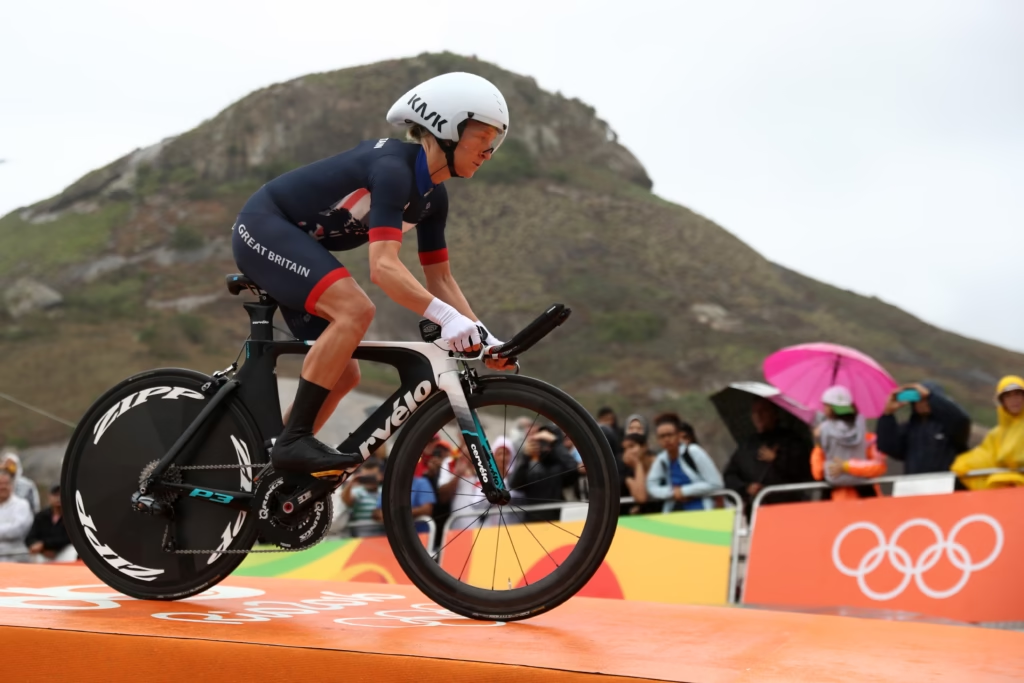 Photo Credit: Getty
Why are time trials called the race of truth?
The phrase reflects the absence of many normal road-racing advantages.
There is no peloton to provide shelter. Teammates cannot lead a rider through the wind. A rival cannot be marked simply by following their wheel.
Every rider faces the same route and is measured by the same clock.
The phrase does not mean tactics disappear.
Pacing, aerodynamics, equipment, course knowledge, weather and team support all affect the result.
It means performance is exposed more directly than in most other forms of road racing.
What is the difference between an individual and team time trial?
In an individual time trial, each rider competes alone.
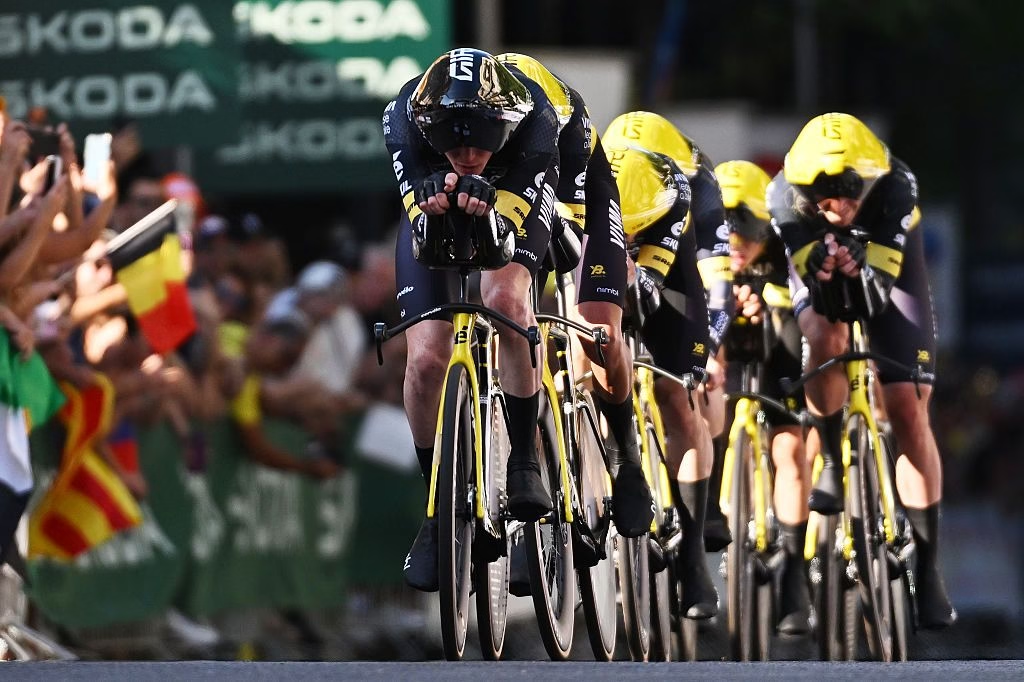
In a team time trial, several teammates start together and share the work.
Riders rotate at the front, allowing those behind to draft and conserve energy. The team’s result is normally based on a specified rider crossing the finish line, although the exact rules can vary.
Team time trials require coordination as well as speed. A team can be weakened if its strongest rider sets a pace the others cannot follow.
The individual version is simpler: one rider, one clock and one finishing time.
The unusual format used at the beginning of the 2026 Tour is covered in our guide to the Tour de France 2026 team time trial, where riders received individual times despite racing with their teams.
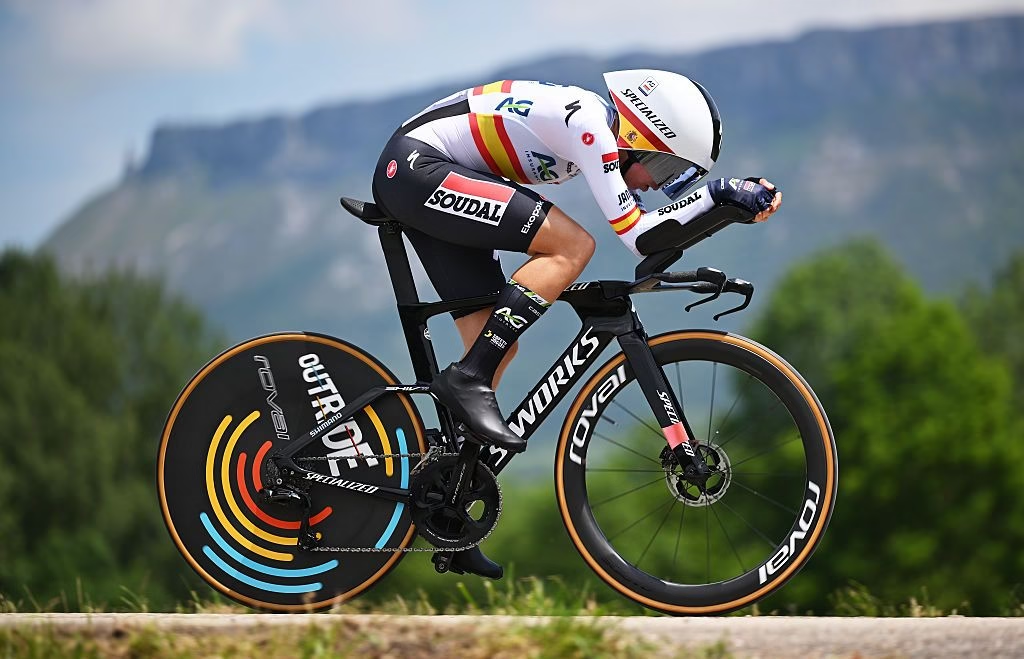 Photo Credit: Getty
What is a prologue?
A prologue is a short time trial held at the beginning of a stage race.
It is usually only a few kilometres long and often takes place on technical urban roads.
The result establishes the first general classification and decides who wears the leader’s jersey on the next stage.
Because the distance is short, tiny mistakes become especially costly.
A poor corner or slow gear change can decide the result when the entire effort lasts only five or ten minutes.
Longer opening time trials are normally described as Stage 1 rather than a prologue.
Why are some climbers vulnerable in time trials?
Lightweight climbers are optimised for moving uphill.
On flat roads, they may produce less absolute power than larger riders and receive less benefit from their low body weight.
They can also struggle to maintain an extreme aerodynamic position.
A climber may gain time during the uphill section of a rolling time trial before losing considerably more on the flat roads that follow.
This creates one of the central tensions of stage racing.
The best overall riders must climb well enough to survive the mountains and time trial well enough to avoid surrendering those gains against the clock.
Why can a time-trial specialist struggle on a climb?
Large specialists often produce exceptional absolute power, but they must carry more body mass uphill.
On a steep climb, power relative to weight becomes more important than raw wattage.
A 75kg rider producing 450 watts may travel more slowly uphill than a 60kg rider producing 390 watts, even though the larger rider’s power number is higher.
The situation reverses on flat roads, where weight matters less and the larger rider can use their higher power to maintain greater speed.
Rolling time trials reward competitors who can balance both abilities.
That balance explains why riders such as Remco Evenepoel, Tadej Pogačar and Filippo Ganna can be favoured by very different courses. Our guide to the best time triallists at the 2026 Tour de France examines how their strengths compare.
How do time trials change race tactics?
A future time trial influences the way teams race the preceding stages.
A climber who expects to lose two minutes against the clock must attack in the mountains and build an advantage beforehand.
A strong time triallist can sometimes ride more conservatively, knowing the course will later favour them.
Once the time trial is complete, those roles may reverse.
A rider who gains a large advantage can defend it. Rivals who lose time must attack, making the remaining mountain stages more aggressive.
The importance of a time trial therefore extends far beyond the day itself.
Remco Evenepoel’s approach to the 2026 Tour is a clear example. His ability against the clock gave rivals an additional reason to gain time in the mountains before the Stage 16 individual test, as examined in our feature on Evenepoel’s time-trial hopes and GC challenge.
-
 Photo Credit: David Magalhães / Unsplash
Why are time trials difficult to watch but tactically important?
There is less direct head-to-head racing because riders are separated across the course.
The most important comparison may involve two riders who start 20 minutes apart and never see each other.
Timing graphics provide the tension.
Viewers should watch:
- The fastest time at each checkpoint
- Whether a rider is gaining or fading
- Differences between GC rivals
- Equipment choices
- Weather changes
- Riders being caught
- Technical mistakes
- Pacing during the final kilometres
A time trial becomes easier to follow once the clock is treated as the opponent.
For amateur riders interested in trying the discipline themselves, our guide to riding a first club ten-mile time trial explains how British events work and what newcomers should expect.
How does a cycling time trial work?
A cycling time trial sends riders onto the same course at separate intervals.
Each rider’s elapsed time is measured from their scheduled start until they cross the finish line. The fastest rider wins, while the differences between competitors count directly towards the general classification in a stage race.
Riders cannot deliberately draft behind each other. They normally use specialised aerodynamic bikes, helmets and clothing, supported by a team car following at a regulated distance.
Success depends on far more than riding at maximum effort.
The rider must pace the course, remain aerodynamic, choose the correct equipment, corner efficiently and reach the finish just as their sustainable energy is exhausted.
That is why seconds matter.
A small hesitation, poorly judged opening effort or unnecessary movement into the wind may appear insignificant. Across an entire time trial, those moments can decide the stage, the yellow jersey or the race itself.

