

The final week of the 2026 Tour de France begins with a 26.1km individual time trial from Évian-les-Bains to Thonon-les-Bains on Tuesday 21 July.
It is the only individual time trial of this year’s Tour and gives Remco Evenepoel his clearest opportunity to strengthen his position behind Tadej Pogačar before the race moves into its decisive Alpine block.
The course beside Lake Geneva is not a straightforward test for the biggest power specialists. It contains approximately 500 metres of climbing, including a long opening rise towards Larringes, before a technical descent and faster closing section into Thonon-les-Bains.
Jonas Vingegaard’s withdrawal following his Stage 15 crash has changed the meaning of the day. Pogačar no longer faces the same direct threat to yellow, while Evenepoel now has a chance to consolidate second overall and create daylight over the riders fighting for the final podium place.
Filippo Ganna and Joshua Tarling should provide the main challenge for the stage victory. Pogačar must decide how aggressively to pursue another win when his most important objective is reaching the final mountain stages safely.
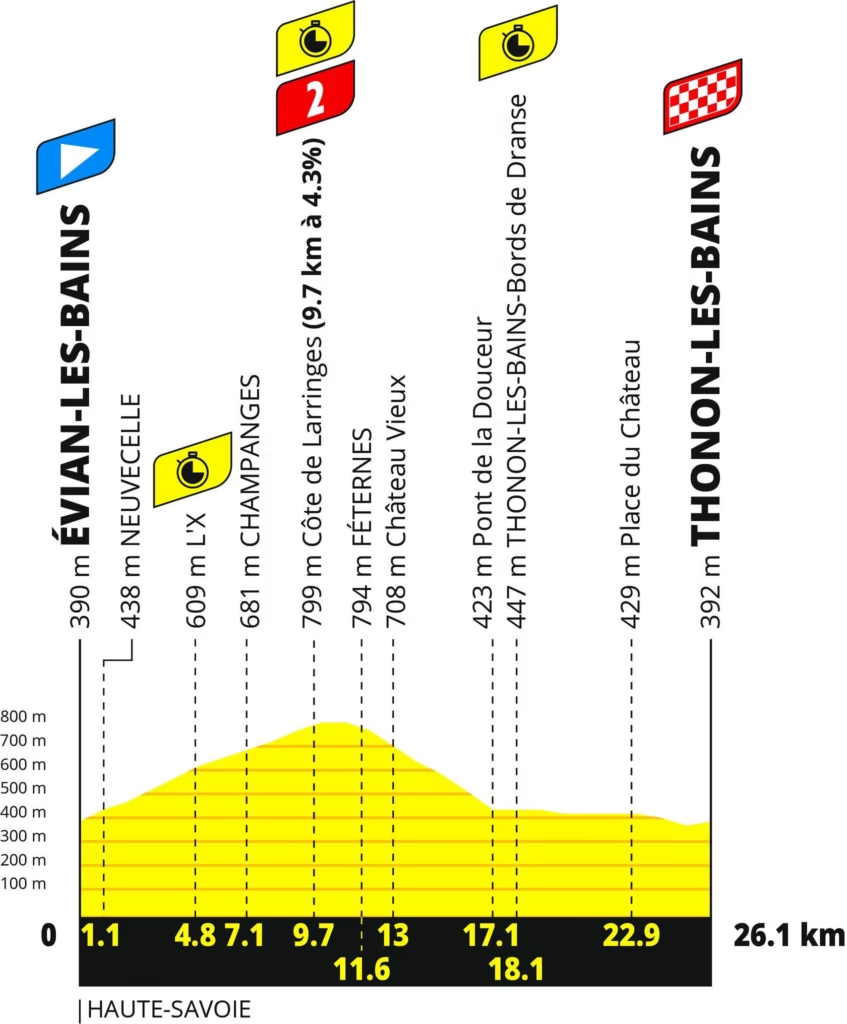
Tour de France 2026 Stage 16 route
- Date: Tuesday 21 July 2026
- Start: Évian-les-Bains
- Finish: Thonon-les-Bains
- Distance: 26.1km
- Stage type: Individual time trial
- Total climbing: Approximately 500 metres
- First rider starts: 1:00pm local time
- Expected final rider arrival: Approximately 5:50pm local time
Each rider starts separately, normally at intervals of one or two minutes.
The riders at the bottom of the Tour de France general classification leave first. The highest-ranked riders start last, meaning Pogačar should be the final competitor to roll down the start ramp in Évian-les-Bains.
The route begins on the shore of Lake Geneva before turning inland and climbing through the hills above Évian.
That opening section accounts for much of the course’s elevation gain and prevents the pure power specialists from simply settling into one aerodynamic rhythm from start to finish.
After reaching the highest part of the route, the riders face a long descent and a faster closing section towards Thonon-les-Bains.
The course therefore requires three different strengths:
- Controlled climbing during the opening half
- Confidence and precision on the descent
- Sustained aerodynamic power along the faster final roads
It is a time trial for complete riders rather than one-dimensional specialists.
The stage has always stood out as one of the most important checkpoints in the Tour de France 2026 full route.
The opening climb should separate the contenders early
The first important section rises for approximately 9.7km towards the Côte de Larringes at an average gradient close to 4.3%.
That is not steep enough to require a road bike for most riders, but it is long enough to disrupt their aerodynamic rhythm.
A heavier specialist such as Ganna must decide how aggressively to ride the climb. Pushing too hard could produce an excellent intermediate time before leaving him exposed on the descent and final section.
Lighter general classification riders may lose less time than expected during these opening kilometres.
Pogačar, Evenepoel and several of the young podium contenders can all produce high power while climbing without carrying the same weight as the largest time trial specialists.
The gradient should also influence equipment choices.
Most riders are expected to use conventional time trial bikes throughout. The climb is not steep enough to justify the time lost by changing bicycles, although teams may adjust gearing, wheel selection and tyre pressure around the demands of the ascent and descent.
The descent creates a different type of danger
The route becomes faster after the Côte de Larringes.
Riders descend back towards Lake Geneva on roads where confidence, braking and line choice will matter almost as much as raw power.
A technical descent can create larger gaps than expected because mistakes are costly. Braking too early through several corners may lose only a second or two at each turn, but those losses accumulate across a 26.1km course.
The general classification riders face a different risk calculation from the stage specialists.
Ganna and Tarling can commit fully in pursuit of the stage victory. Pogačar and Evenepoel must consider the consequences of crashing before the final mountain stages.
Pogačar now has enough of an advantage to avoid taking extreme risks.
Evenepoel is chasing a stage win and attempting to establish himself securely in second overall, giving him a greater incentive to ride closer to his limit.
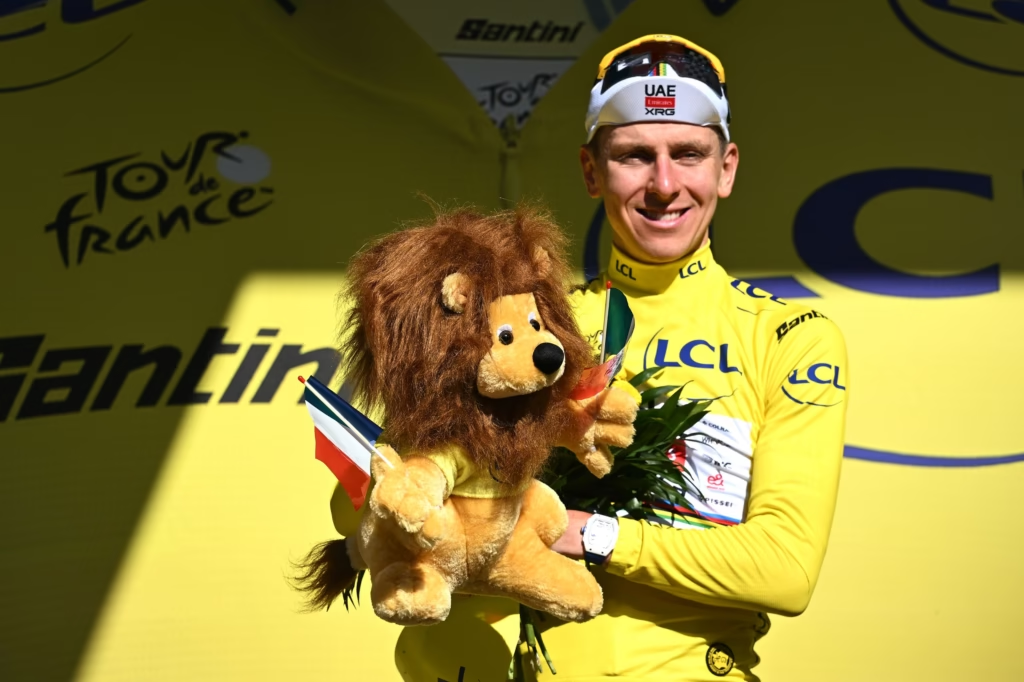 Photo Credit: Getty
The lakeside finale should favour the specialists
The final section towards Thonon-les-Bains is faster and more suitable for riders capable of holding a powerful aerodynamic position.
This is where Ganna, Tarling and Stefan Küng may regain time lost on the climb.
The challenge is producing that power after the effort towards Larringes and the concentration required on the descent.
Riders cannot treat the opening climb as a separate event. Every effort must be managed across the full course.
A strong time trial will probably involve controlled pacing on the early slopes, a committed but clean descent and a final section ridden close to maximum sustainable power.
The stage provides the clearest opportunity for the riders ranked in our guide to the best time triallists at the Tour de France 2026.
Vingegaard’s withdrawal changes the yellow jersey contest
The Tour changed dramatically on Stage 15 when Vingegaard crashed with approximately 20km remaining and was taken away by ambulance.
The Visma-Lease a Bike leader had started the day second overall, 4:30 behind Pogačar. His withdrawal removed the rider who had been consistently closest to the yellow jersey.
Pogačar now begins the time trial with a substantial advantage over Evenepoel.
The Slovenian no longer needs to beat his main rival or take major risks through the descent. A controlled ride should be sufficient to preserve yellow before the Tour reaches Orcières-Merlette and the two Alpe d’Huez stages.
That does not make Stage 16 irrelevant.
Evenepoel, Isaac del Toro, Paul Seixas, Florian Lipowitz and Juan Ayuso are fighting for podium positions, while several riders further down the top 10 can still gain or lose substantial time.
The time trial may not decide first place, but it can establish the hierarchy behind Pogačar before the Tour enters its hardest mountain block.
The wider pre-race hierarchy is covered in our Tour de France 2026 GC favourites ranking, although two weeks of racing have now changed that picture considerably.
 Photo Credit: Getty
Remco Evenepoel is the stage favourite
Evenepoel begins Stage 16 as the rider to beat.
The Belgian possesses the combination of aerodynamic efficiency, climbing ability and technical confidence required by this course.
His victory on Plateau de Solaison also demonstrated that his form has survived the mountains.
Evenepoel followed Pogačar and Del Toro on the final climb before beating both in the uphill sprint. It was an important result after several stages spent defending his podium position rather than appearing capable of challenging for victories.
The time trial offers a much more natural opportunity.
The rolling profile should suit Evenepoel better than a flat 50km course because the opening climb rewards his lighter build. He should also be able to accelerate quickly after corners and maintain speed through the undulating middle section.
His objectives are clear:
- Win the stage
- Consolidate second place overall
- Create a larger buffer over the younger podium contenders
- Enter the Alps with greater tactical freedom
Evenepoel does not need to take time from Pogačar to consider the day successful. A stage victory and a stronger hold on second place would represent an excellent outcome.
His route fit and the importance of this stage were central to our pre-race feature on Remco Evenepoel’s Tour de France 2026 time-trial hopes.
Filippo Ganna remains the pure specialist to beat
Ganna is the most obvious threat to Evenepoel.
The Italian is one of the strongest time trial riders of his generation and can produce enormous power across a course of this length.
The flatter final section should suit him particularly well.
The question is how much time he loses on the opening climb. Approximately 10km of rising road is a significant obstacle for a rider with Ganna’s size, even if the gradients remain moderate.
He must also arrive with enough energy after more than two weeks of racing.
Ganna has spent parts of the Tour supporting his team and may not possess the same freshness as he would at a one-day championship. He nevertheless remains capable of winning whenever a race includes an individual test against the clock.
The course may be slightly better for Evenepoel, but Ganna’s raw speed means he cannot be discounted.
 Photo Credit: Getty
Joshua Tarling has another major opportunity
Tarling is among the leading candidates for the stage victory.
The British rider combines the power of a traditional specialist with a build and riding style that should cope reasonably well with the climb.
His ability to maintain speed on rolling terrain could make him particularly dangerous.
Tarling also has fewer general classification responsibilities than Evenepoel or Pogačar. He can approach every corner and descent with the single objective of winning the stage.
His challenge is pacing.
The opening climb invites riders to start too quickly, particularly when adrenaline is high. Tarling must avoid producing an exceptional first intermediate split at the cost of fading during the final 10km.
A place on the stage podium would be a strong result. Victory would underline his position among the leading time trial riders in the world.
Pogačar can extend his yellow jersey lead
Pogačar may not be the outright favourite for Stage 16, but he remains capable of winning.
He has developed into one of the strongest time trial riders in the peloton, especially on rolling or climbing courses where his power-to-weight becomes more valuable.
The opening ascent suits him.
Pogačar could gain time on Ganna and other heavier specialists before attempting to limit his losses during the faster final section.
The larger question is how aggressively he chooses to race.
His advantage means there is little reason to take major risks on the descent. The most important objective is reaching the finish safely and preserving his energy for the Alps.
However, Pogačar rarely approaches a stage entirely defensively.
He may still target the fastest time if his intermediate splits show that victory is possible. Even a controlled ride should allow him to gain time on several of the lighter podium contenders.
His strength across the route was examined before the race in our guide to Tadej Pogačar at the Tour de France 2026.
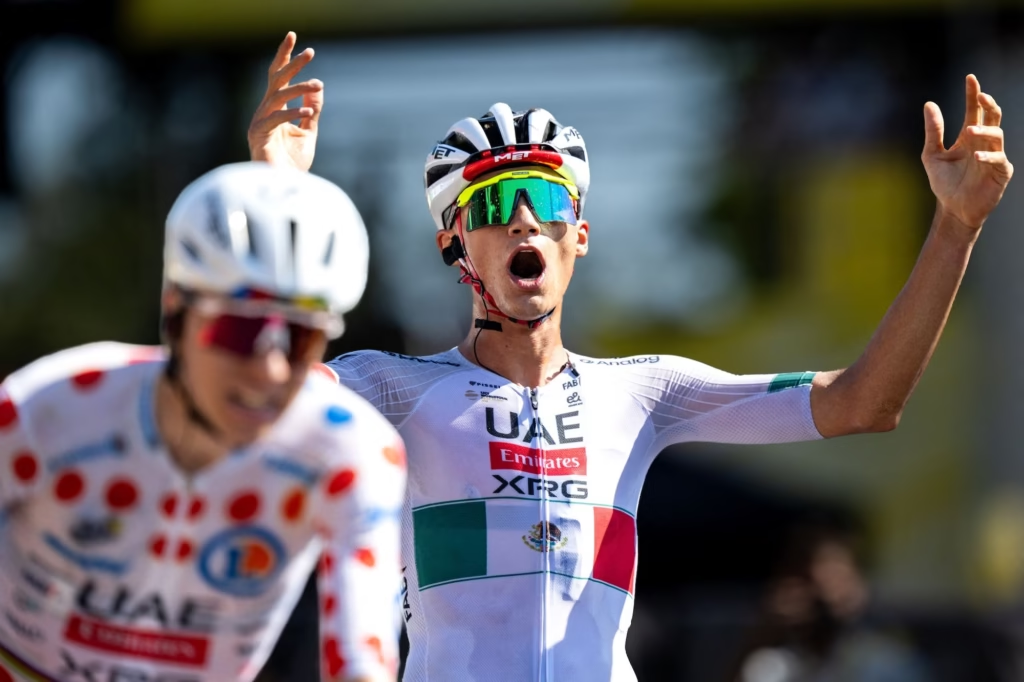 Photo Credit: Getty
Isaac del Toro faces a major podium test
Del Toro produced another impressive performance on Stage 15.
He was involved in the same crash that ended Vingegaard’s Tour but returned to the leading group and finished third on Plateau de Solaison.
That ride moved him firmly into the podium contest.
The time trial is now his next examination.
Del Toro is a strong all-round rider but does not possess the same proven elite time trial record as Evenepoel. He must manage the opening climb efficiently and avoid losing too much ground during the fast final section.
His position within UAE also creates an unusual dynamic.
Pogačar is secure in yellow, allowing the team to focus more attention on helping Del Toro defend or improve his podium position. Equipment preparation, course reconnaissance and pacing information can all be tailored around that objective.
A loss of less than a minute to Evenepoel would be respectable. A stronger result could establish Del Toro as the favourite for the final podium place.
Paul Seixas must limit the damage
Seixas has been one of the stories of the Tour.
The 19-year-old climbed with the leading contenders at Le Markstein and again performed strongly on Plateau de Solaison, confirming that his rise into the upper general classification was not based on one exceptional day.
Stage 16 presents a different challenge.
Seixas has less experience of major championship-style time trials than Evenepoel, Ganna or Pogačar. He must control his effort without the direct reference of rivals riding beside him.
The route is not completely unsuitable.
The opening climb should help reduce his losses, while his relatively light build is less of a disadvantage than it would be on a completely flat course.
The final lakeside section remains dangerous. More powerful riders could take considerable time once speeds increase.
Seixas does not need to win the stage. Keeping himself within reach of the podium before the Alps would be a successful ride.
His climbing strength was anticipated in our ranking of the best climbers at the Tour de France 2026, but his ability to defend a high GC position against the clock remains less certain.
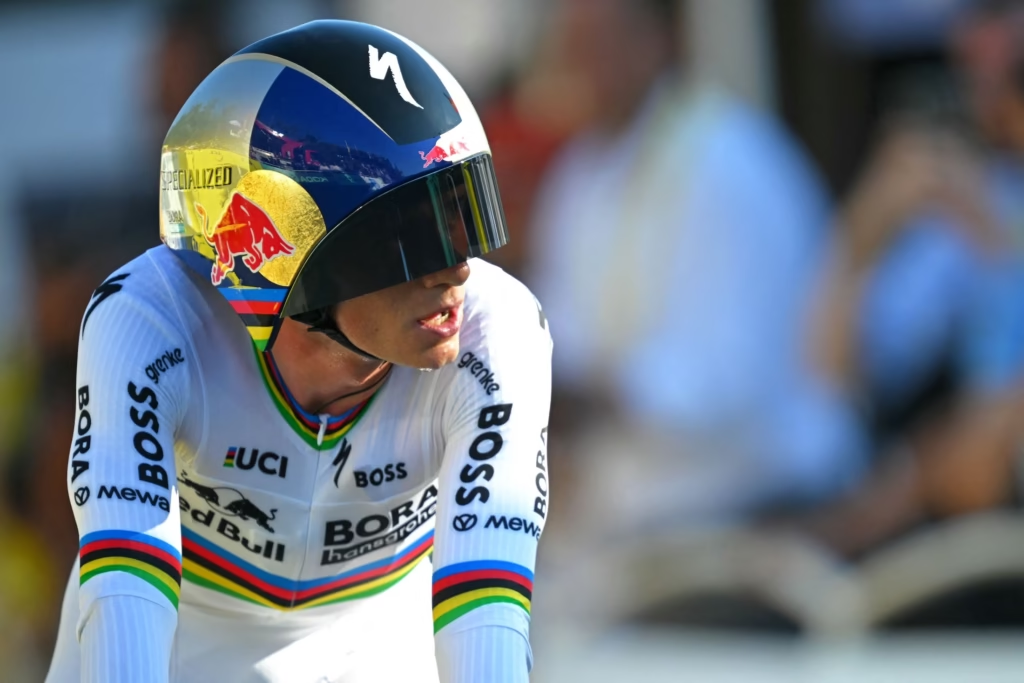
Florian Lipowitz can move up the classification
Lipowitz is another rider who could benefit from the time trial.
The German has shown strong ability against the clock and should be more comfortable than several pure climbers on the faster sections.
His performance may also influence Red Bull-Bora-hansgrohe’s strategy for the remainder of the Tour.
Evenepoel is now the clear team leader and the strongest candidate for second overall. Lipowitz can either remain a protected second option or become an important climbing support rider during the Alpine stages.
A strong Stage 16 could keep both possibilities open.
If Lipowitz moves closer to the podium, rival teams may need to respond to his attacks as well as Evenepoel’s position. If he loses significant time, Red Bull can commit more clearly to defending second place.
The team’s broader range of options is covered in our Tour de France 2026 team-by-team guide.
Juan Ayuso needs to protect his podium hopes
Ayuso should also perform well on a rolling time trial.
He has produced strong results against the clock throughout his career and is generally more aerodynamic than many riders with a similar climbing profile.
The course’s opening climb should suit him, while the distance is long enough to reward careful pacing.
Ayuso’s main concern is fatigue.
He has ridden consistently through the mountains but has rarely looked capable of matching Pogačar, Evenepoel or Del Toro when the race becomes most selective.
The rest day should help, but a time trial immediately afterwards can reveal whether a rider has truly recovered.
Ayuso needs a strong ride to remain within realistic range of the podium before the Alpine summit finishes.
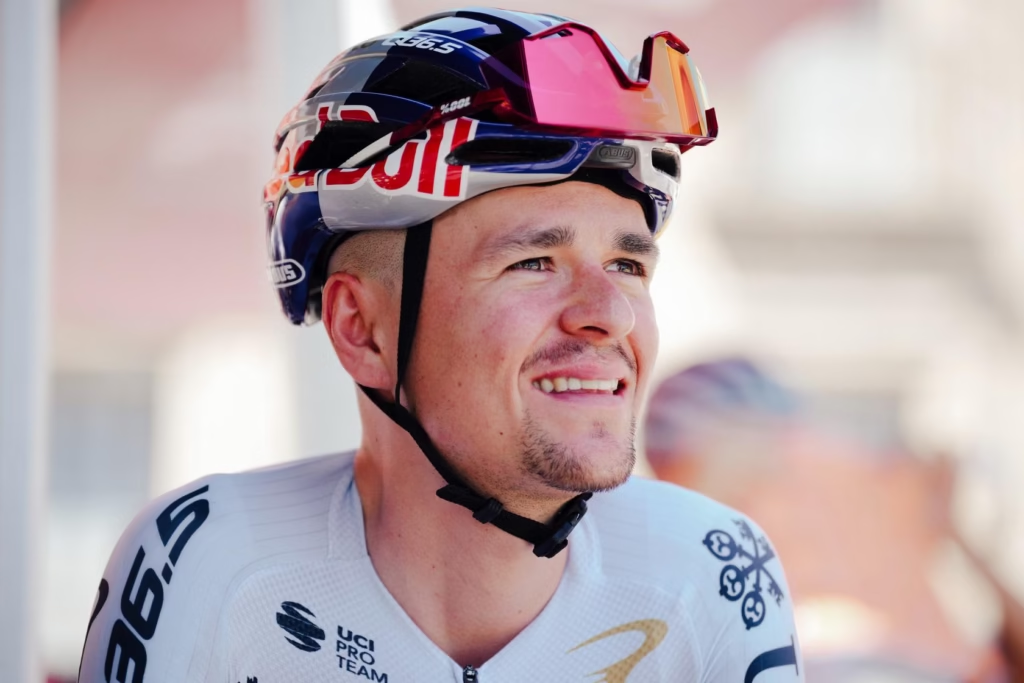 Photo Credit: A.S.O./Thomas Maheux
Can Tom Pidcock limit his losses?
Pidcock enters Stage 16 needing to stabilise his general classification position.
He gained more than seven minutes from the Stage 13 breakaway before losing much of that advantage across the two following mountain stages.
The time trial is another difficult day for him.
Pidcock is not a poor rider against the clock, but he is unlikely to match the larger specialists or the leading GC contenders on the faster sections.
The opening climb gives him an opportunity to limit the damage. His handling ability should also help on the descent if he is prepared to take risks.
His likely loss could still be substantial.
A deficit of one to two minutes to Evenepoel may push him further down the top 10, depending on how riders such as Mattias Skjelmose and Lenny Martinez perform.
Pidcock’s challenge is no longer reaching the podium. It is preserving a strong overall finish while deciding whether he can pursue another stage from the breakaway later in the week.
His changing position in the race is explored in our analysis of whether Tom Pidcock can make the Tour de France podium.
Stage 16 contenders
Remco Evenepoel
The clear favourite. The rolling course rewards his combination of climbing strength, aerodynamics and technical ability. His Stage 15 victory also suggests his form is improving at the right moment.
Filippo Ganna
The most powerful pure specialist in the field. Ganna should be extremely fast during the final half but must limit his losses on the long opening climb.
Joshua Tarling
An obvious contender for victory. Tarling has the power for the lakeside finale and enough climbing ability to remain competitive through the first section.
Tadej Pogačar
The route suits him better than a completely flat time trial. Pogačar may prioritise safety, but he is still capable of winning if he commits fully.
Stefan Küng
Küng is well suited to the distance and rolling profile. He should be among the fastest riders outside the leading trio of specialists.
Edoardo Affini
A powerful rider who can challenge for the top five. The climbing may prevent him from winning, but the final section should suit him.
Isaac del Toro
The leading podium contender behind Evenepoel. Del Toro’s time will be measured more against Seixas, Lipowitz and Ayuso than the stage specialists.
Juan Ayuso
A strong time trial rider with an opportunity to recover ground in the podium fight after a difficult mountain weekend.
Florian Lipowitz
The German can gain time on several climbers and may emerge as one of the strongest GC performers of the day.
Mattias Skjelmose
Skjelmose should produce a solid ride across a course combining climbing and fast rolling roads. He could move closer to the riders ahead if fatigue has not accumulated too heavily.
Who will gain and lose time?
Evenepoel should be the largest beneficiary among the general classification riders.
He can realistically gain time on Del Toro, Seixas, Lipowitz and Ayuso while creating a clearer gap between second place and the rest of the podium battle.
Pogačar may also extend his yellow jersey advantage, although that is now less important than reaching the finish safely.
The riders most exposed are lightweight climbers without proven time trial ability. Seixas, Lenny Martinez and some of the breakaway-oriented riders inside the top 10 could lose significant ground during the final flat section.
The route should not create the enormous differences associated with a flat 50km time trial, but gaps of one to two minutes are possible between riders who currently sit close together.
That is why Stage 16 remains one of the final places the Tour can be reshaped before the mountains take over completely, as explored in our analysis of where the Tour de France 2026 can be won before the Alps.
Will riders change bikes?
A bike change is unlikely to be worthwhile.
The opening climb is long but not steep enough to justify stopping and switching from a time trial bike to a conventional road bike.
A change normally costs at least 15 to 25 seconds once deceleration, the swap and acceleration are included. The aerodynamic losses during the descent and final section would then outweigh most of the advantage gained while climbing.
Teams are more likely to adapt the time trial bike itself.
Possible changes include:
- Lower gearing for the climb
- Lighter wheel choices
- Adjustments to tyre pressure
- Modified cooling strategies
- Careful selection between disc and deep-section rear wheels depending on the wind
The fastest riders will need one setup capable of handling the whole course.
-
 Photo Credit: Getty
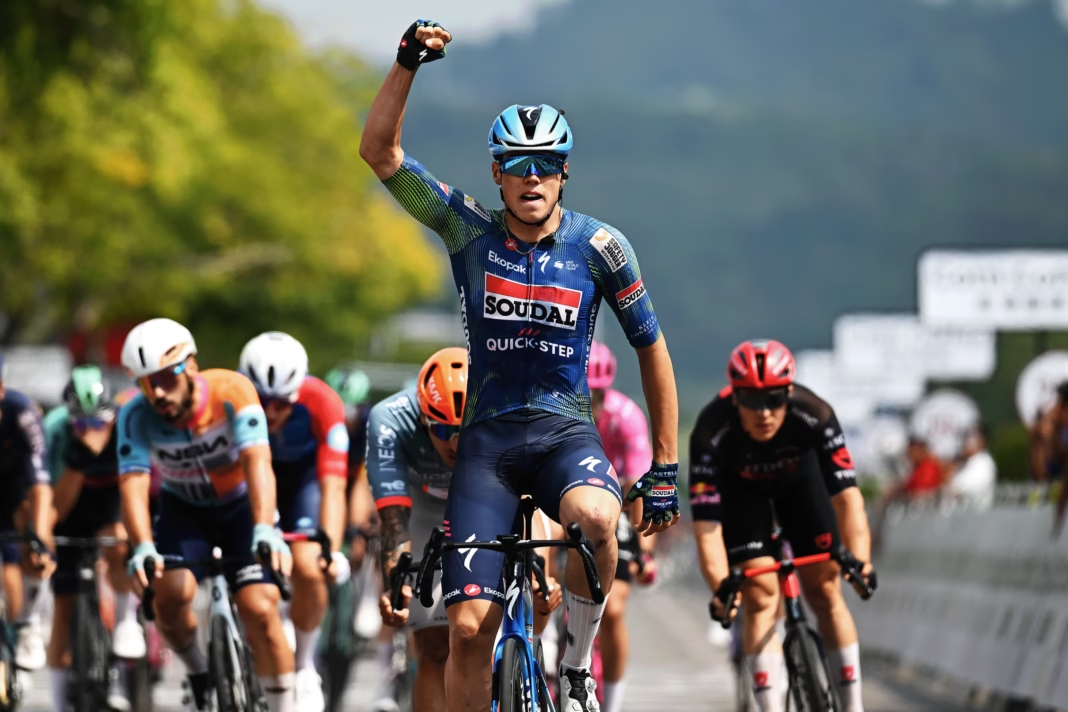
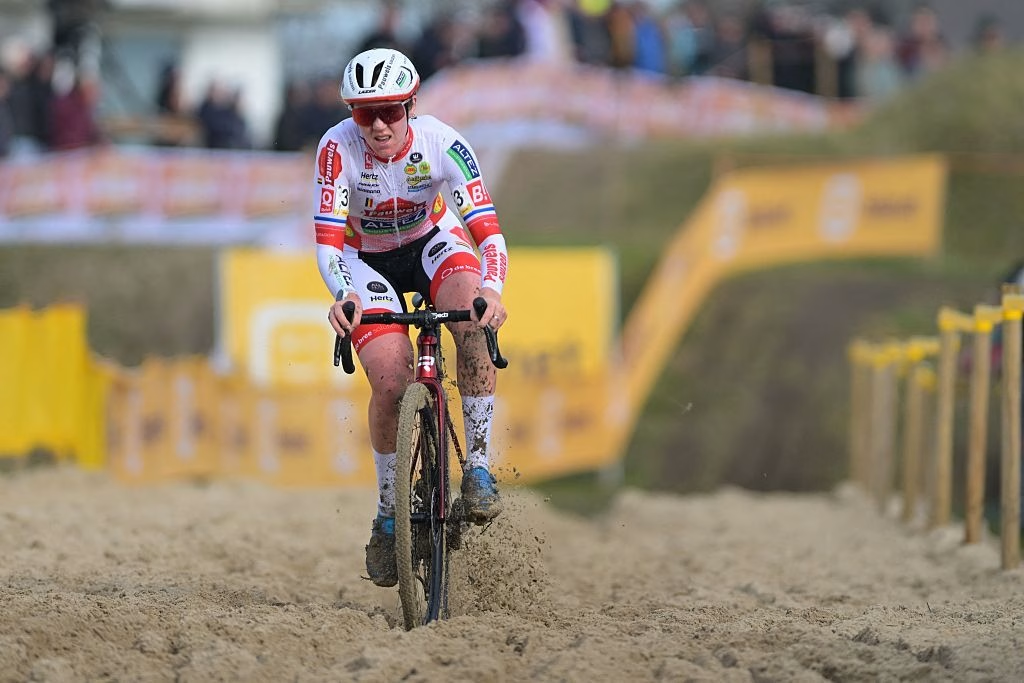
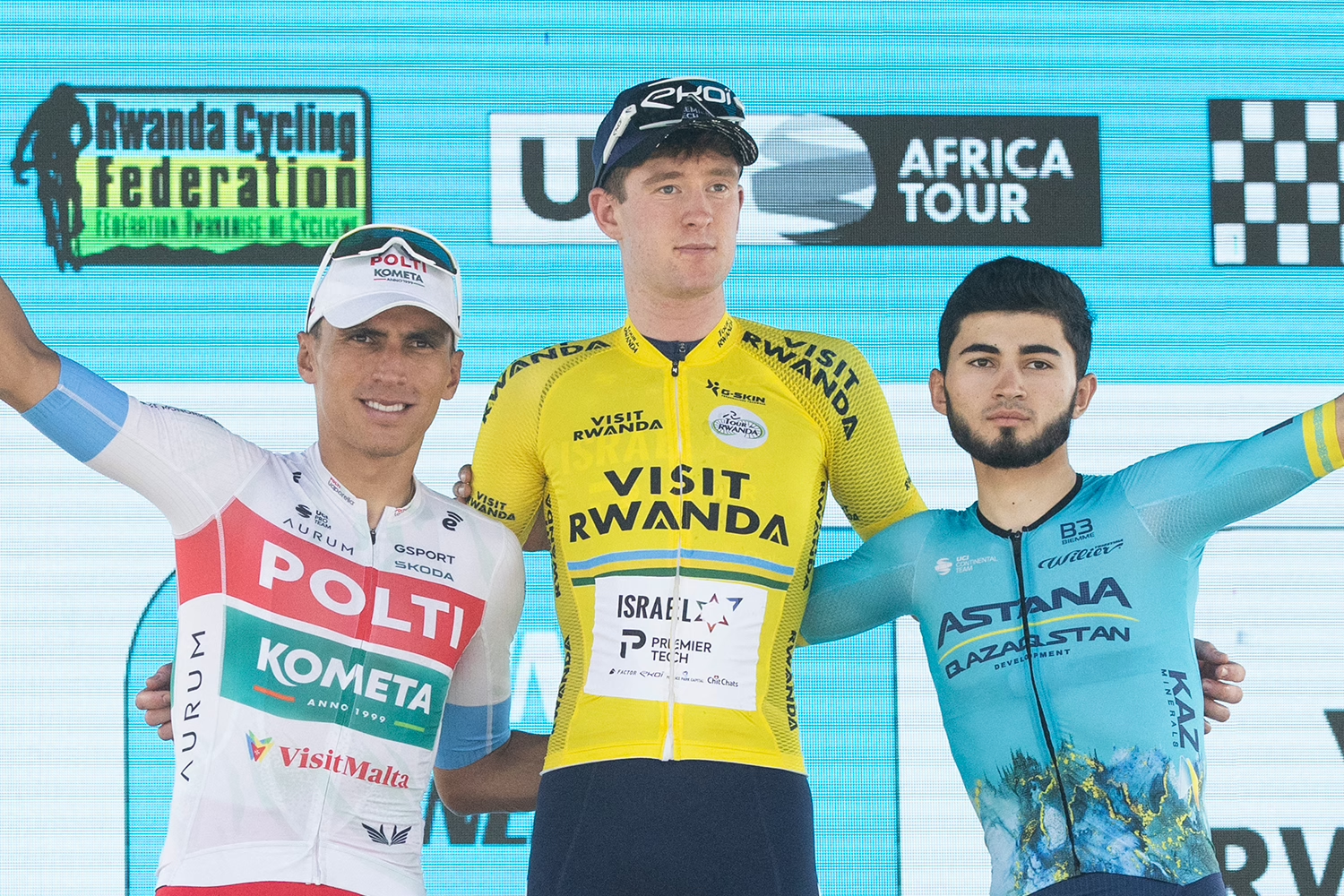
The weather could influence the result
Wind conditions around Lake Geneva can affect a time trial significantly.
A headwind or tailwind may develop along the lakeside roads, while exposed sections can create gusts that make a disc wheel more difficult to control.
The start order also matters if the weather changes during the afternoon.
The early riders could benefit from calmer conditions, while the favourites starting later may face stronger wind or rain. Alternatively, the roads could dry and become faster as the afternoon progresses.
Teams will monitor the forecast closely before confirming wheel and tyre choices.
Any rain would increase the risk on the descent and encourage Pogačar to ride more conservatively.
Tour de France 2026 Stage 16 prediction
Stage 16 should become a contest between Evenepoel, Ganna and Tarling.
Ganna may be the fastest rider on the closing roads, while Tarling has the power and freedom to commit fully.
Evenepoel appears to have the best overall package.
He should lose less time on the climb, is technically strong enough to handle the descent and can still maintain an elite aerodynamic position during the final section.
His victory on Plateau de Solaison also suggests that he enters the rest day with confidence rather than merely surviving the Tour.
Pogačar should finish close enough to the leading specialists to extend his overall advantage. The more important general classification result will be the distance Evenepoel creates over Del Toro, Seixas, Lipowitz and Ayuso.
The yellow jersey contest may now be close to settled, but Stage 16 can give the podium battle a completely new shape.

