
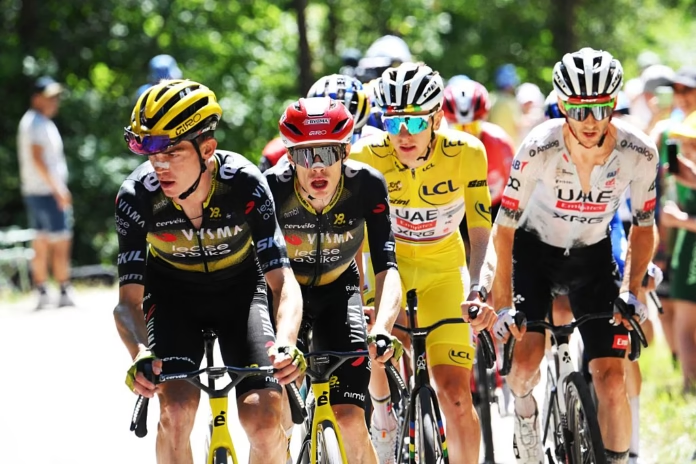
The Tour de France 2026 is built for climbers, but not all climbers will be chasing the same prize. Some arrive with yellow jersey ambitions, some will be targeting the polka-dot jersey, some will hunt mountain stages, and some will be asked to burn themselves for a leader long before the television cameras start focusing on the final climb.
That distinction matters. The best climber in the race is not always the rider who wins the mountains classification. The polka-dot jersey often rewards aggression, breakaway timing and route knowledge, while the strongest pure climbers are usually trapped inside the general classification fight. Tadej Pogačar and Jonas Vingegaard may be the two best climbers in the race, but they may not have the freedom to chase mountain points in the same way as a Giulio Ciccone, Lenny Martinez or Felix Gall.
The 2026 route gives the climbers everything they need. The race heads into the Pyrenees early, crosses the Massif Central, then builds through the Vosges, Jura and Alps before the final week reaches Orcières-Merlette and two consecutive finishes on Alpe d’Huez. Stage 20, with the Croix de Fer, Télégraphe, Galibier, Sarenne and Alpe d’Huez, is one of the hardest climbing days the Tour has designed in recent years.
This guide ranks the best climbers expected at the 2026 Tour de France by climbing level, route fit, three-week reliability and likely role. It is not simply a yellow jersey ranking. It is about who should be strongest when the road rises, who can shape the mountains, and who has the best chance of turning the high climbs into a decisive race.
For the wider race picture, see our Tour de France 2026 full route guide, Tour de France 2026 GC favourites ranked and Tour de France 2026 climbers guide.
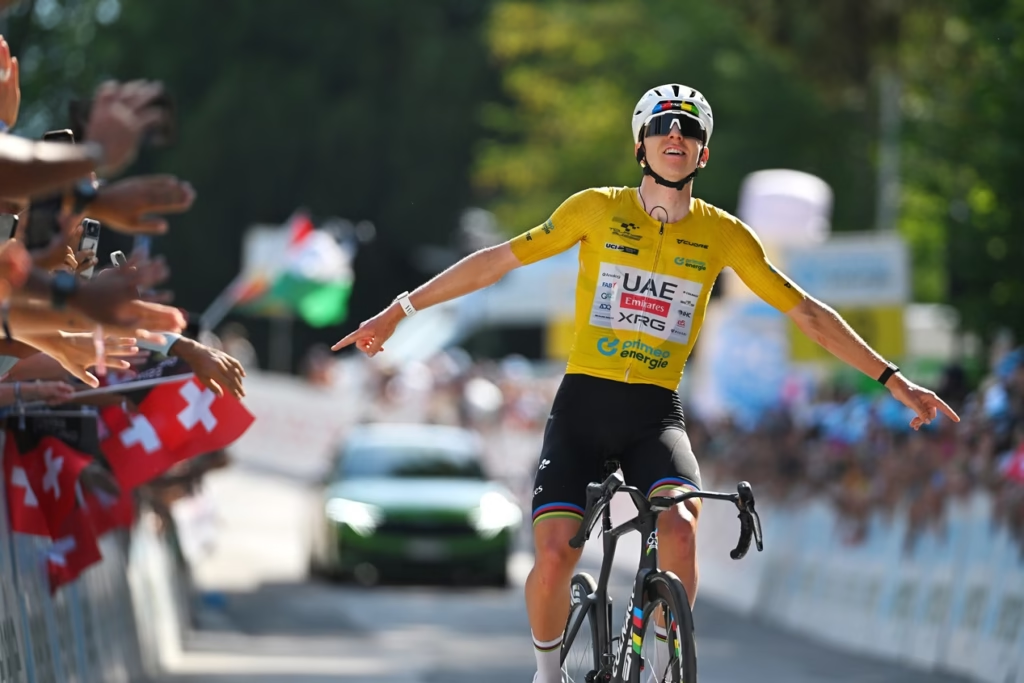 Photo Credit: Getty
Best climbers at the Tour de France 2026 at a glance
| Rank | Rider | Team | Climbing profile |
|---|---|---|---|
| 1 | Tadej Pogačar | UAE Team Emirates-XRG | Explosive, complete, devastating on repeated climbs |
| 2 | Jonas Vingegaard | Team Visma | Lease a Bike | Best long-climb specialist and high-mountain diesel |
| 3 | Remco Evenepoel | Red Bull-Bora-Hansgrohe | Powerful climber with time-trial advantage |
| 4 | Isaac del Toro | UAE Team Emirates-XRG | Rising climbing force with huge upside |
| 5 | Juan Ayuso | UAE Team Emirates-XRG | Punchy climber with GC-winning ceiling |
| 6 | Florian Lipowitz | Red Bull-Bora-Hansgrohe | Improving high-mountain GC climber |
| 7 | Paul Seixas | Decathlon CMA CGM | Young French climber with top-five potential |
| 8 | Carlos Rodríguez | Netcompany INEOS | Consistent mountain rider and proven Tour top-five finisher |
| 9 | Felix Gall | Decathlon CMA CGM | Pure mountain engine, dangerous on hard days |
| 10 | Kévin Vauquelin | Netcompany INEOS | Aggressive hilly climber and flexible GC option |
| 11 | Jai Hindley | Red Bull-Bora-Hansgrohe | Former Giro winner and high-quality mountain support |
| 12 | Lenny Martinez | Bahrain Victorious | Lightweight climber and polka-dot threat |
| 13 | Matteo Jorgenson | Team Visma | Lease a Bike | High-level support climber and possible GC outsider |
| 14 | Sepp Kuss | Team Visma | Lease a Bike | Elite mountain domestique and breakaway threat |
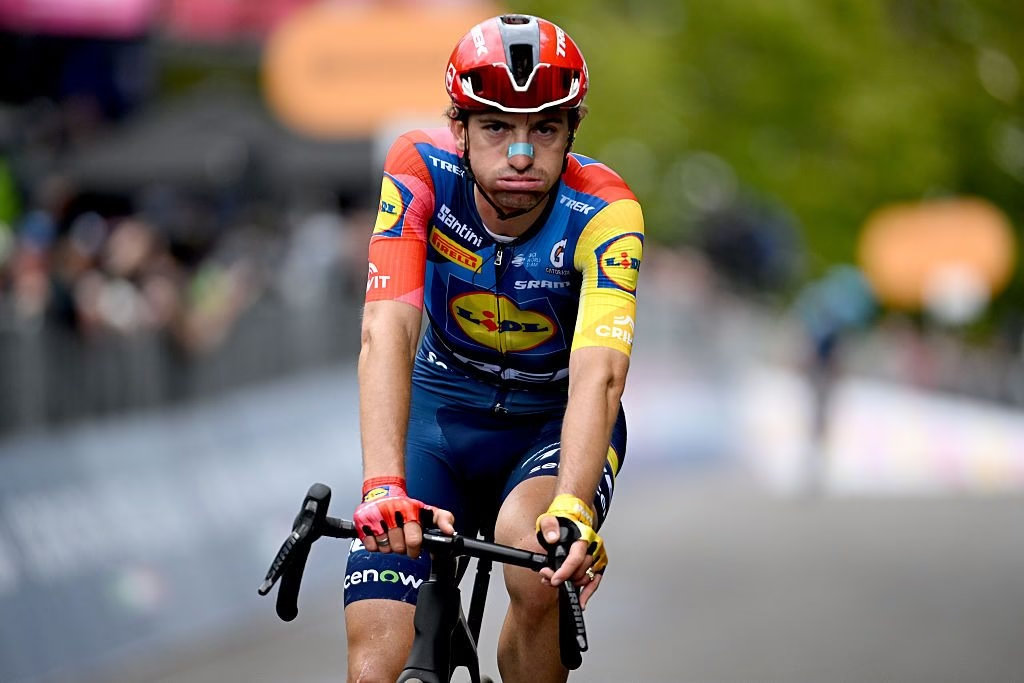
| 15 | Giulio Ciccone | Lidl-Trek | Polka-dot specialist and mountain-stage hunter |
How we ranked the climbers
This ranking is based on more than one climb or one past result. The 2026 Tour asks for different climbing qualities across three weeks.
The early Pyrenees will test sharpness. The Massif Central will test positioning, rhythm and recovery after the first rest day. The Vosges and Jura will expose riders who struggle on repeated shorter climbs. The Alps will decide who has the deepest climbing base. Stage 20 is the hardest final exam, with 5,600m of climbing and major altitude before the last Alpe d’Huez finish.
The key factors are:
| Factor | Why it matters |
| Sustained climbing | Long Alpine climbs still decide the Tour |
| Explosiveness | Short attacks can break groups before summit finishes |
| Repeated-climb resistance | The 2026 route stacks difficult climbs across several days |
| Recovery | The final week comes after repeated mountain blocks |
| Team role | Some elite climbers will work for leaders rather than race for themselves |
| Time-trial balance | Stage 16 affects which climbers can stay in GC contention |
| Freedom | Polka-dot contenders need space to join breakaways |
The strongest climber may not win the polka-dot jersey. The best GC climbers may spend the race marking each other, while stage hunters collect points from breakaways. That is why this list separates climbing ability from mountains classification strategy.
For a stage-by-stage breakdown of where the climbing difficulty is concentrated, see our Tour de France 2026 mountain stages ranked by difficulty and Tour de France 2026 summit finishes guide.
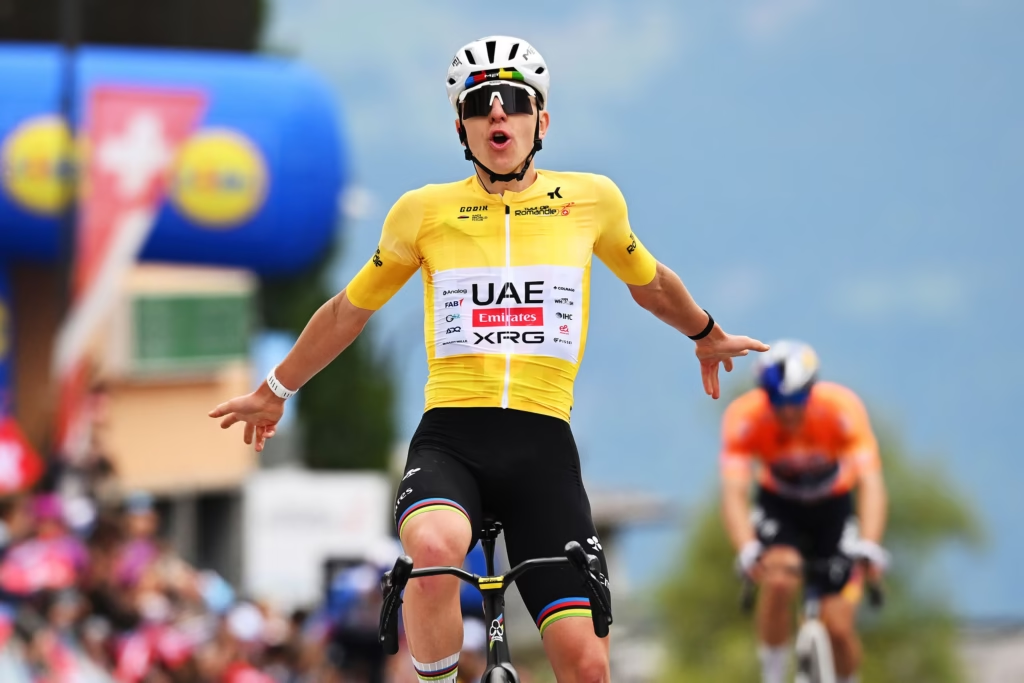
1. Tadej Pogačar
Pogačar remains the most dangerous climber at the 2026 Tour because he can win in almost every mountain scenario. He is explosive enough to attack on shorter climbs, strong enough to dominate long summit finishes and tactically confident enough to use terrain before the final climb.
The key difference between Pogačar and most other climbers is variety. He does not need a single ideal gradient. He can win on steep ramps, longer Alpine climbs, high-speed mountain stages, rolling transition days and punchy uphill finales. That makes him hard to isolate. If he is in top condition, almost every climbing stage contains a possible Pogačar move.
The 2026 route gives him multiple ways to apply pressure. The early Pyrenees allow him to test rivals immediately. Le Lioran and the Vosges suit his punch and race craft. The Alpine block gives him enough altitude and repeated climbing to make a more traditional GC difference. Stage 20, even with its huge climbing load, still suits him because he can attack when others are already under stress.
The only reason he is not an automatic polka-dot favourite is role. If he is racing for yellow, UAE may not want him wasting energy chasing every mountain point. But if he wins multiple mountain stages, he could still end up in the mountains classification fight almost by accident.
For more on his Tour chances, see our Tadej Pogačar at the Tour de France 2026.
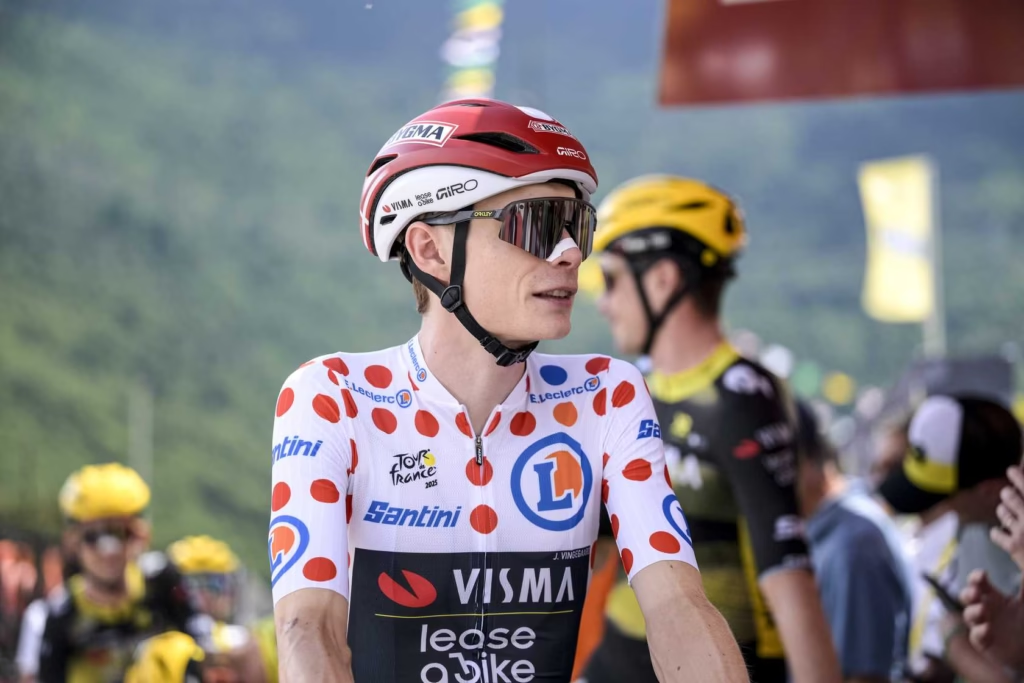 Photo Credit: A.S.O./Charly López
2. Jonas Vingegaard
If the question is pure high-mountain climbing, Vingegaard is the rider most likely to challenge Pogačar. He is at his best when the climbs are long, the day is hard and the race becomes a test of oxygen, pacing and recovery rather than one short acceleration.
The final week is the obvious reason to rate him so highly. Orcières-Merlette, Alpe d’Huez and the stage 20 route through Croix de Fer, Télégraphe, Galibier, Sarenne and Alpe d’Huez give Vingegaard the terrain he needs. If he is going to win the Tour, it probably comes through the hardest mountain days rather than through small gaps on punchier terrain.
Vingegaard’s climbing is less showy than Pogačar’s, but when he is at his best it can be more suffocating. He can hold an extreme pace for long periods and force rivals to crack without the attack looking dramatic at first. That is especially dangerous on climbs where the group is already reduced and teammates have been used up.
The question is whether he can consistently match Pogačar across every type of climb. The 2026 Tour is not only about the Alps. It also includes hilly and medium-mountain days where Pogačar’s explosiveness could be harder to answer.
Still, if stage 20 becomes a pure climbing war, Vingegaard may be the one rider Pogačar cannot simply ride away from.
For a deeper look, see our Jonas Vingegaard at the Tour de France 2026.
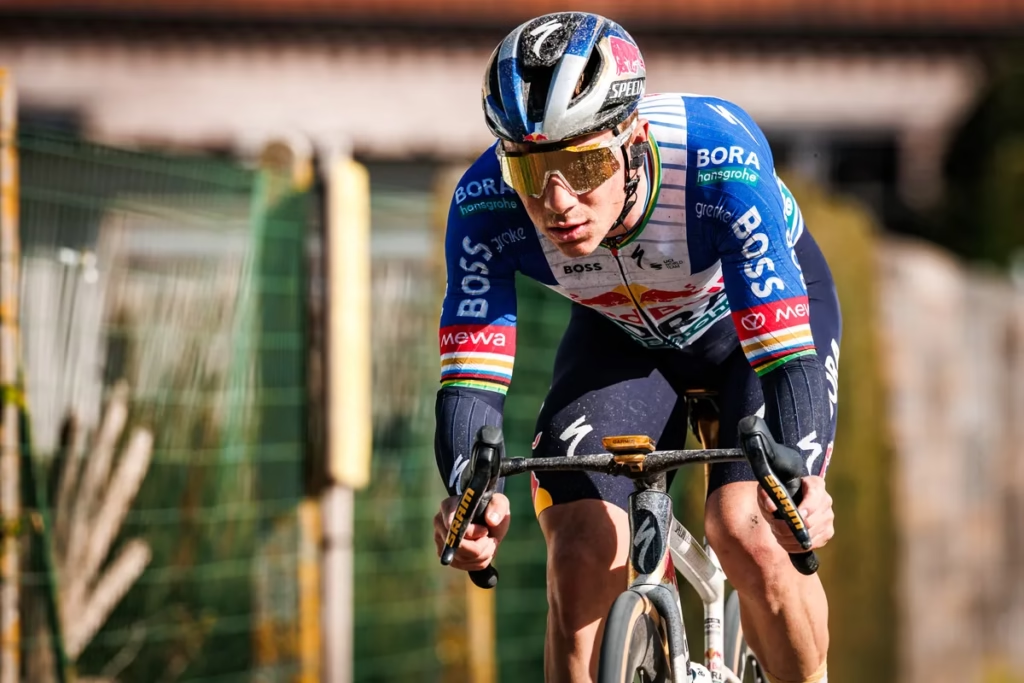
3. Remco Evenepoel
Evenepoel is not always described first as a climber because his time-trialling is so central to his identity, but he belongs near the top of this list. If he is climbing at his best, he is one of the few riders who can stay close enough in the mountains and then reshape the race against the clock.
His climbing style is different from Pogačar and Vingegaard. Evenepoel is often at his best when he can hold a high, steady pace and avoid repeated stop-start accelerations. Long efforts suit him. Chaotic mountain stages with constant surges can be more difficult.
That makes route management important. If Red Bull-Bora-Hansgrohe can protect him, keep him calm in the early mountains and use the stage 16 individual time-trial, he can stay close enough to make the final week extremely tense. If he is isolated on repeated steep climbs, the risk rises.
The question is not whether Evenepoel can climb. He can. The question is whether he can climb well enough, often enough, against Pogačar and Vingegaard across the full Tour. He may not be the best pure climber in the race, but he could still be one of the most dangerous GC riders because his time-trial weapon changes how others have to race against him.
For more on that balance, see our Remco Evenepoel at the Tour de France 2026 and best time-triallists at the Tour de France 2026.
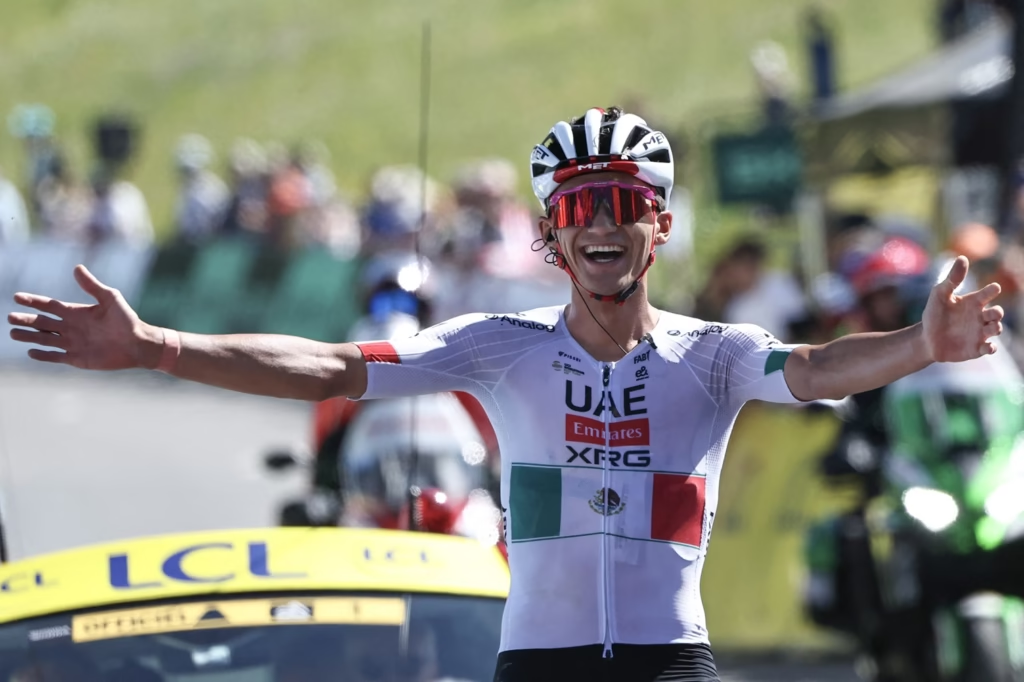
4. Isaac del Toro
Isaac del Toro is one of the most intriguing climbers in the 2026 Tour field. His ceiling is very high, and his route fit is obvious. He can climb, recover and race aggressively enough to become more than just another UAE option.
The complication is team hierarchy. UAE Team Emirates-XRG have Pogačar, Almeida, Ayuso and Del Toro all capable of shaping the mountains. That gives the team enormous strength, but it also raises questions about freedom. Del Toro may be good enough to ride for himself on most teams, but at UAE his role depends on the race situation.
If he is protected, he can be a genuine top-five climber in the race. If he is asked to work, he could become one of the most valuable mountain domestiques in the Tour. Either way, his climbing quality matters.
The 2026 route should suit him because it rewards riders who can handle repeated climbing and still make sharp efforts late in stages. The Massif Central, Vosges and Jura could be particularly useful if UAE want to attack with numbers rather than wait for the final climb.
Del Toro may not yet have the Tour status of Pogačar or Vingegaard, but in pure climbing terms he is already close enough to the top group to affect how the race is ridden.
For more on the younger GC group around Del Toro, see our Tour de France 2026 young riders to watch.
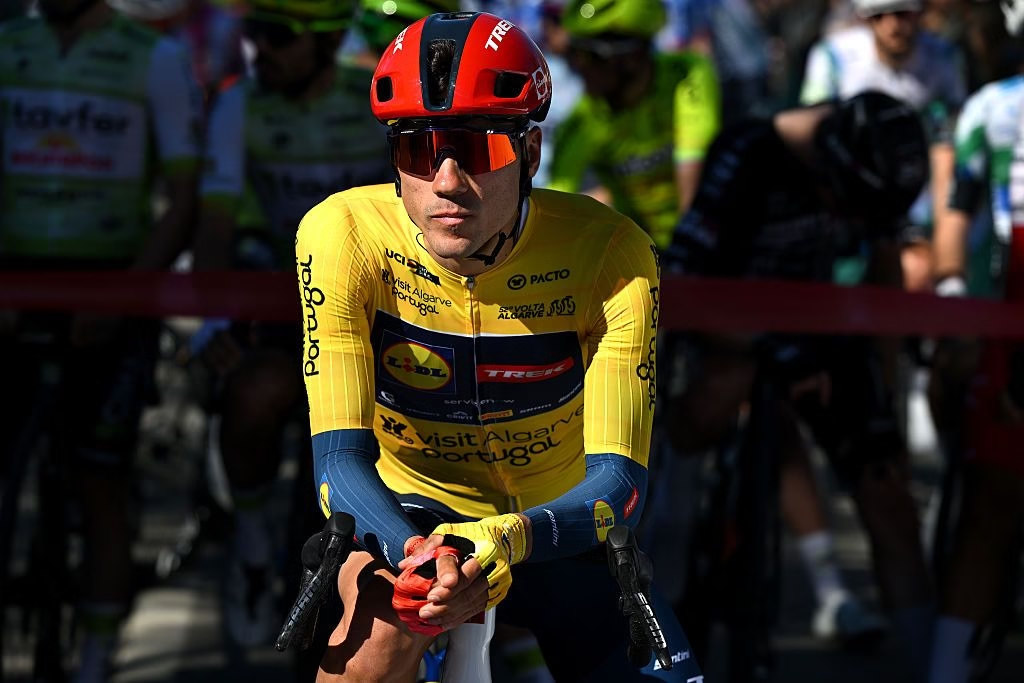
5. Juan Ayuso
Ayuso is a different kind of climbing threat from Del Toro. He has acceleration, aggression and a high one-day ceiling. That makes him dangerous on stages where the race opens early or where repeated attacks matter.
His best climbing days are good enough to put him close to the very top of this list. The question is consistency across three weeks. The Tour is less forgiving than almost any other race. One bad day, one positioning error or one spell of team uncertainty can turn a podium challenge into a lower top-10 finish.
The 2026 route gives Ayuso chances. The early Pyrenees may suit his attacking instincts. Le Lioran and the Vosges could reward sharp climbing rather than only long high-altitude pacing. The Alps will test whether he can stay strong deep into the race.
Like Del Toro, Ayuso’s biggest issue may be UAE’s internal structure. Pogačar is the clear reference point, but the team’s other climbers are strong enough to complicate the race for everyone else. If Ayuso is used as an attacking option, he could become one of the most important riders in the mountains even if he is not the final leader.
For more detail, see our Juan Ayuso at the Tour de France 2026.
 Photo Credit: Getty
6. Florian Lipowitz
Florian Lipowitz has become one of the most credible climbing names in the second tier of Tour contenders. He does not yet carry the same aura as the established Grand Tour winners, but his trajectory makes him one of the riders who could turn the 2026 route into a major step.
His climbing is well suited to hard stage races. He can survive long climbs, recover well and ride with the calmness needed for GC. That matters because the 2026 Tour is unlikely to be decided by one isolated mountain day. It will reward riders who keep producing after fatigue builds.
At Red Bull-Bora-Hansgrohe, his relationship with Evenepoel is a key tactical question. Evenepoel brings the bigger name and time-trial advantage, but Lipowitz may be more naturally suited to some of the hardest mountain sequences. If he is protected, he could ride himself into the top five. If he works for Evenepoel, he could still be one of the most important mountain helpers in the race.
The final week is where Lipowitz’s value should be clearest. Stage 20 is the kind of day where a rider with his profile can climb into a higher GC position simply by not cracking.
For the broader group of less obvious GC names, see our Tour de France 2026 dark horses for the general classification.
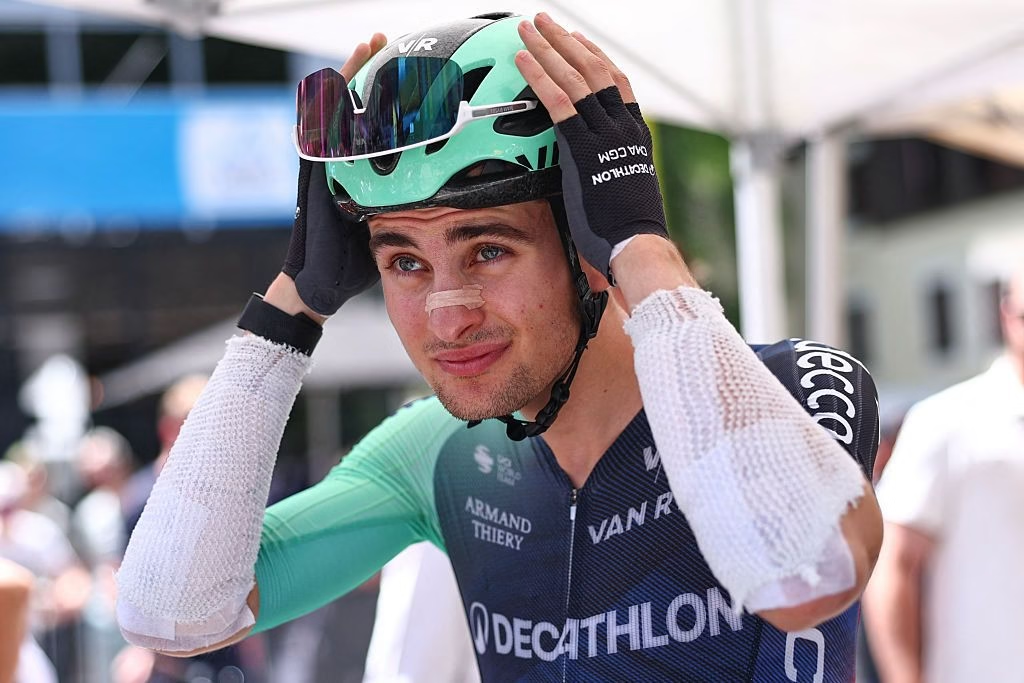
7. Paul Seixas
Paul Seixas brings French expectation into the climbing conversation. That can be a heavy thing at the Tour, but his talent is obvious and the route gives him enough terrain to show why he is being treated as more than a future prospect.
Seixas is not yet as proven across three Tour weeks as the riders above him. That is the main reason he does not rank higher. But in terms of climbing potential, he is one of the most exciting names in the race. He has the kind of profile that can make French fans believe early, especially if he survives the Pyrenees near the front.
The challenge will be managing the whole race. Young climbers can look brilliant for one week and then suffer when the Tour reaches the final mountains. The 2026 route does not allow an easy build. The race starts hard, climbs early and keeps returning to difficult terrain.
If Seixas reaches the Alps still fresh enough, he could be one of the stories of the Tour. A stage win, a white jersey challenge or a top-five GC push are all within the wider range of possibility. But he also has less margin for error than the established names.
For more French context, see our best French riders to watch at the Tour de France 2026.
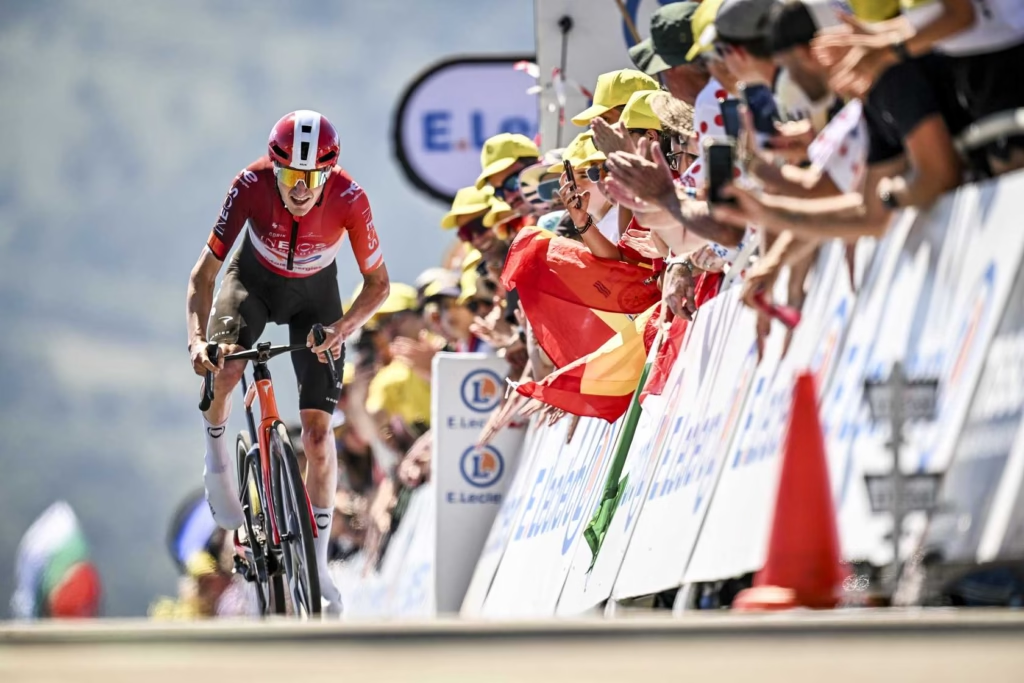 Photo Credit: A.S.O./Billy Ceusters
8. Carlos Rodríguez
Carlos Rodríguez is one of the safest climbing names in the race. He has already finished 5th and 7th at the Tour and has won a mountain stage, which gives him a proven base that many more hyped riders still lack.
His climbing is built on consistency. He is unlikely to be the most explosive rider in the front group, but he can stay close, recover well and avoid the kind of collapse that destroys a GC race. That matters on this route because the final week will punish riders who have been riding above themselves.
The 2025 crash and fractured pelvis changed his storyline, but it did not erase the earlier evidence. If he is back near his best, Rodríguez can climb with the top-10 group and possibly push towards the top five if others fade.
Netcompany INEOS will need clarity around him and Kévin Vauquelin. Rodríguez is the more proven Tour GC climber, but Vauquelin gives the team a punchier option. If Rodríguez gets full support, his climbing consistency could become a major asset.
For more, see our Carlos Rodríguez at the Tour de France 2026.
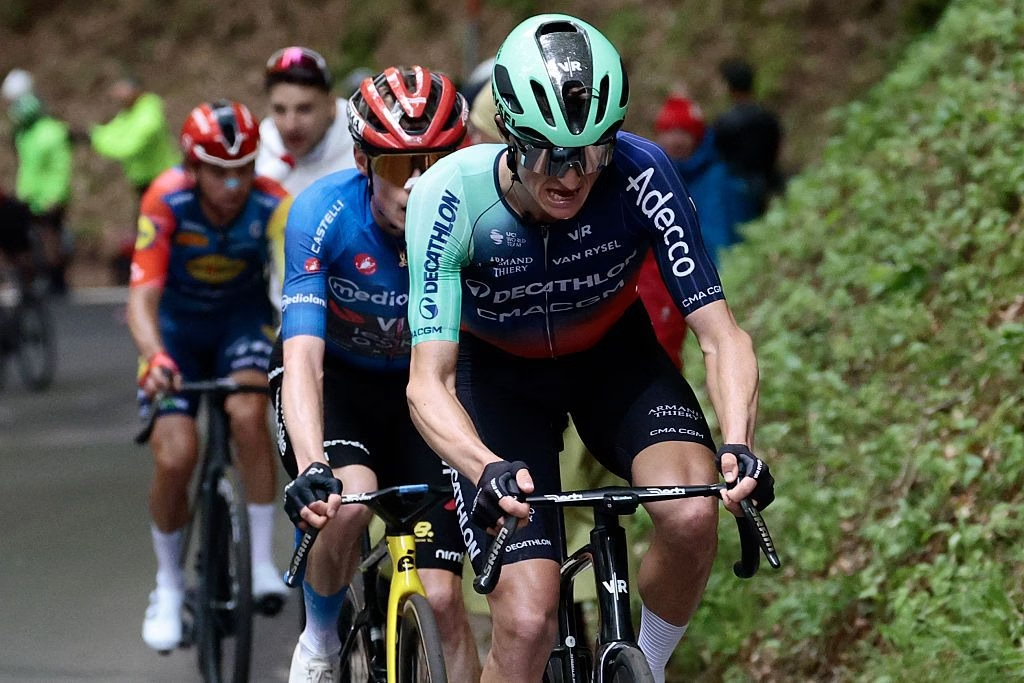 Photo Credit: Getty
9. Felix Gall
Felix Gall is one of the riders who should always be taken seriously when the Tour reaches hard mountains. His 2023 stage win at Courchevel showed what he can do when the race becomes a true climbing contest, and his best days are good enough to challenge almost anyone outside the absolute elite.
Gall’s appeal is purity. He is at his best when the road is hard and the race is selective. He does not need a sprint finish or a tactical stalemate. He needs climbs that make the group smaller and smaller until only the strongest remain.
The issue is consistency and team role. If Decathlon CMA CGM are fully committed to Seixas, Gall may not get complete freedom unless the race situation allows it. But that could also make him dangerous. A rider of Gall’s climbing quality who loses time or shifts into a stage-hunting role can become a major mountain-stage threat.
The Plateau de Solaison, Orcières-Merlette and Alpe d’Huez stages all suit him if he is allowed to race for himself. He is also a realistic polka-dot contender if he targets breakaways rather than GC.
For the wider mountain-stage picture, see our Tour de France 2026 stage hunters to watch.
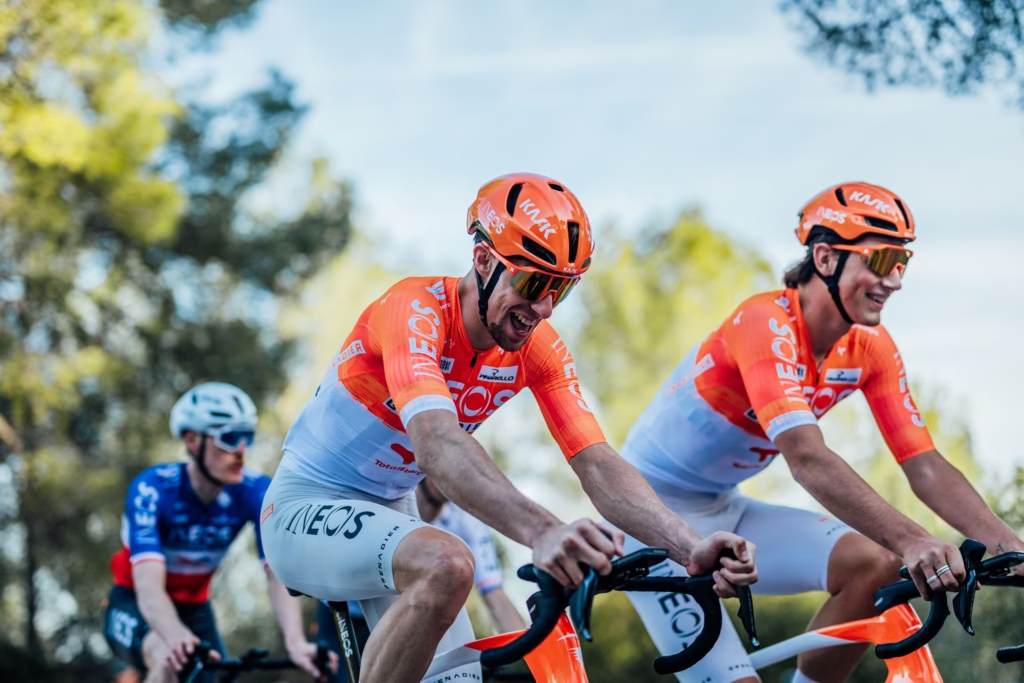 Photo Credit: Getty
10. Kévin Vauquelin
Vauquelin is one of the most tactically interesting climbers at the race. He is not a pure high-mountain diesel in the Vingegaard mould, but he is punchy, aggressive and versatile enough to be dangerous on several types of climbing stage.
His move to INEOS gives him a different platform. He can be used as a co-leader, stage hunter or tactical threat, depending on how Rodríguez is going. That flexibility makes him important, especially on hilly and medium-mountain days where a more explosive climber can make the race difficult before the pure GC men fully commit.
Vauquelin’s best Tour route may be through opportunity rather than hierarchy. If he is allowed to attack, he can target stages where the GC teams hesitate. If he stays high on GC, he becomes a different kind of problem for INEOS and for rival teams.
He is not yet the safest top-five climbing pick, but he is one of the riders most likely to animate the race outside the main Pogačar-Vingegaard-Evenepoel storyline.
For team context, see our report on Kévin Vauquelin signing with INEOS Grenadiers.
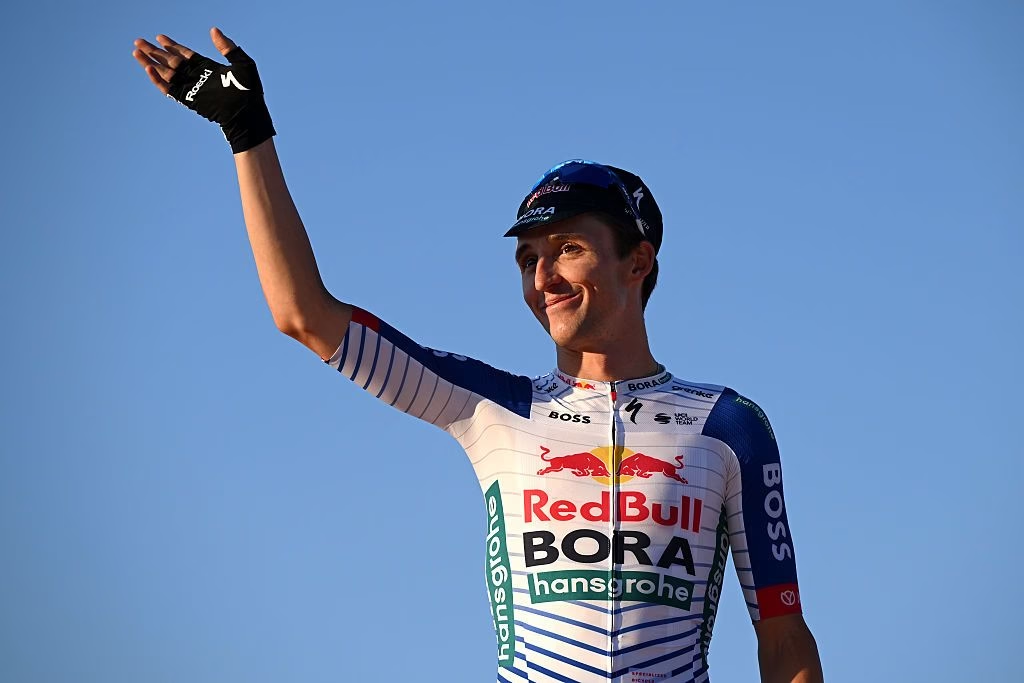
11. Jai Hindley
Jai Hindley becomes much more important in this ranking without Roglič on the Tour start line. Red Bull-Bora-Hansgrohe still have Evenepoel and Lipowitz as the headline climbing cards, but Hindley gives them a proven Grand Tour winner who can support, cover moves or become a protected option if the race opens.
His climbing style is well suited to hard, sustained mountain stages. Hindley is not the sharpest one-kilometre uphill finisher in the race, but on long climbs and repeated mountain days he can be very valuable. He knows how to ride three-week races, how to manage bad moments and how to stay effective deep into the final week.
The question is freedom. If Evenepoel and Lipowitz are both high on GC, Hindley may spend much of the race working. That would reduce his individual ranking in the mountains, but it could increase his tactical value. If Red Bull-Bora-Hansgrohe use him aggressively, he can force rival teams into decisions before Evenepoel or Lipowitz make their own moves.
Hindley is not a top-five favourite here, but he is exactly the sort of rider who can make a mountain stage harder long before the final climb.
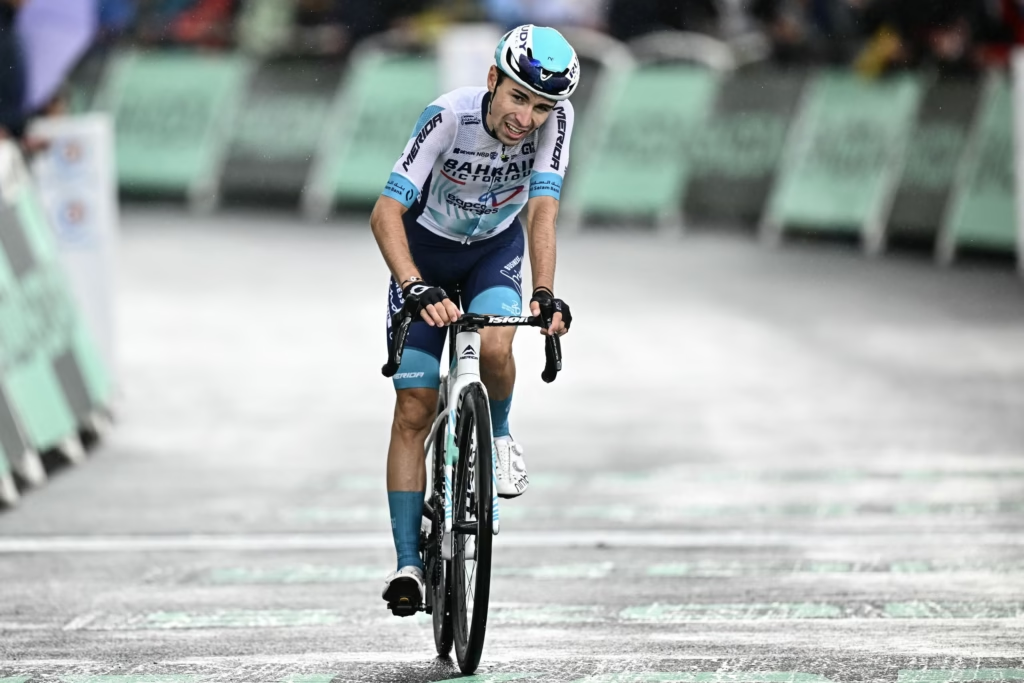
12. Lenny Martinez
Lenny Martinez is one of the most interesting climbers for the polka-dot jersey and mountain breakaways. He is light, sharp and naturally suited to steep climbs, especially on days where the GC favourites allow the breakaway space.
He is not as proven in a full Tour GC fight as the riders above him, but that may work in his favour. If he is not locked into a general classification role, he can race more freely. That is often the difference between being a good climber and being a real mountains classification contender.
The 2026 route has several days that suit Martinez. Stage 10 to Le Lioran, stage 14 to Le Markstein, stage 15 to Plateau de Solaison and stage 18 to Orcières-Merlette all offer climbing points and stage-win possibilities. If he is allowed into repeated breakaways, he could become one of the main mountain-stage stories of the race.
His risk is durability. The Tour is a long race, and smaller climbers can pay heavily if they spend too many days chasing points early. The balance between aggression and survival will decide whether Martinez becomes a serious polka-dot contender or simply a dangerous stage hunter.
For more on the mountains classification, see our Tour de France 2026 climbers guide.
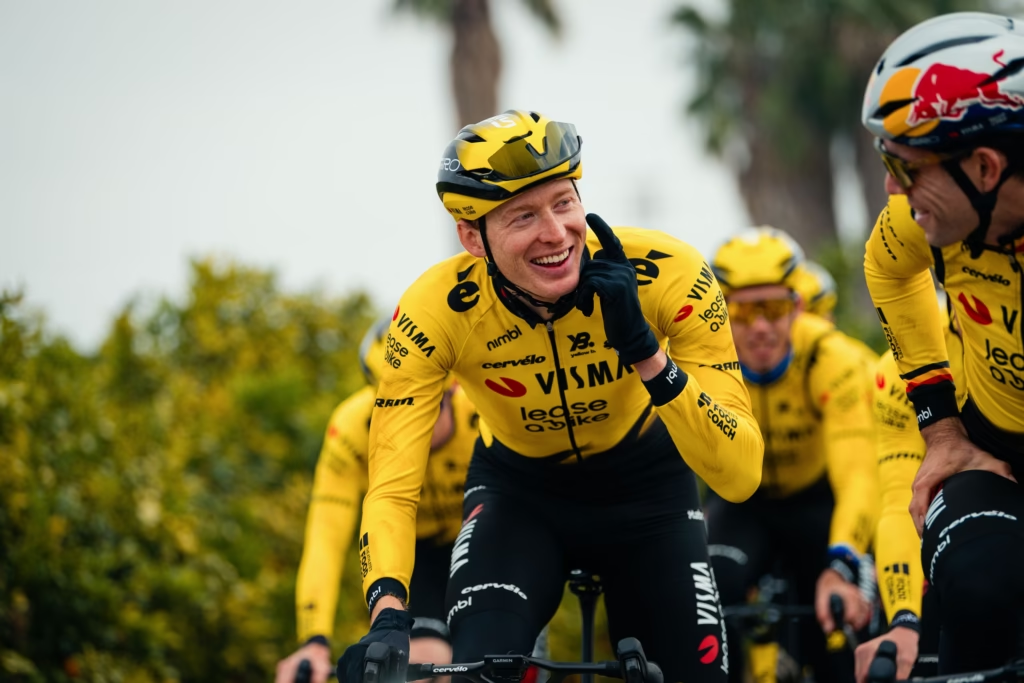
13. Matteo Jorgenson
Jorgenson is not usually framed as a pure climber, but his climbing level has become strong enough that he belongs in this discussion. He can handle long climbs, support Vingegaard deep into mountain stages and still carry his own GC or stage ambitions if the race opens.
His value to Team Visma | Lease a Bike is tactical. If Vingegaard is the leader, Jorgenson can be used to set pace, follow dangerous moves or attack in a way that forces UAE to respond. He is not just a helper who disappears before the final climb. He can still be present when the race is serious.
That makes him one of the most important support climbers in the Tour. In another team, he might be a protected GC leader. At Visma, his role depends on Vingegaard’s needs. But that does not reduce his climbing quality.
Jorgenson’s route fit is strongest on stages where positioning, endurance and repeated climbs matter. He may not be the most explosive rider on Alpe d’Huez, but he could be crucial before the final selection happens.
For more on the support riders who could shape the GC race, see our Tour de France 2026 domestiques who could decide the race.
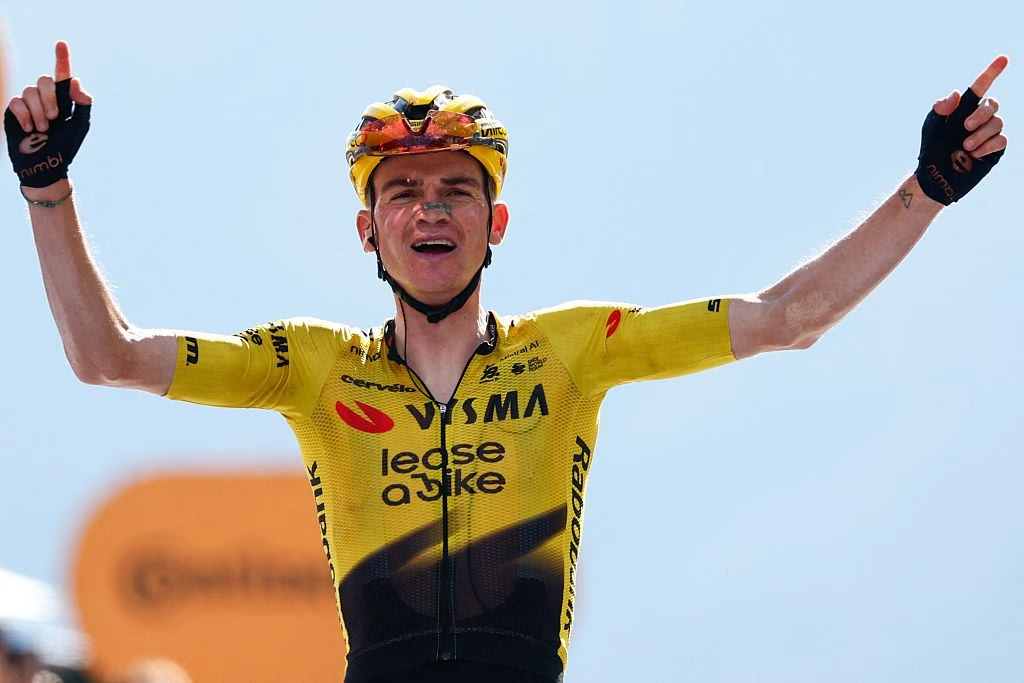
14. Sepp Kuss
Kuss remains one of the best mountain domestiques in the world when he is in top condition. His climbing quality is not in doubt. The question is always role, freedom and form.
For Vingegaard, Kuss can be invaluable. Long Alpine climbs, high altitude and repeated mountain days are exactly where a rider like Kuss matters. If he is there late on stage 20, Visma can shape the race rather than simply react to UAE.
As an individual contender, Kuss is harder to project. He has Grand Tour-winning quality in the right circumstances, but at the Tour his first job is almost always team service. That means he may ride below his own ceiling, spend energy early and sacrifice results for Vingegaard.
If he loses time and gains breakaway freedom, Kuss could win a mountain stage. If he stays close to GC, he becomes more valuable as a final mountain helper. Either way, he is one of the most naturally gifted climbers expected at the race.
For a simple explainer on why riders like Kuss matter so much, see our guide to what a domestique is at the Tour de France.
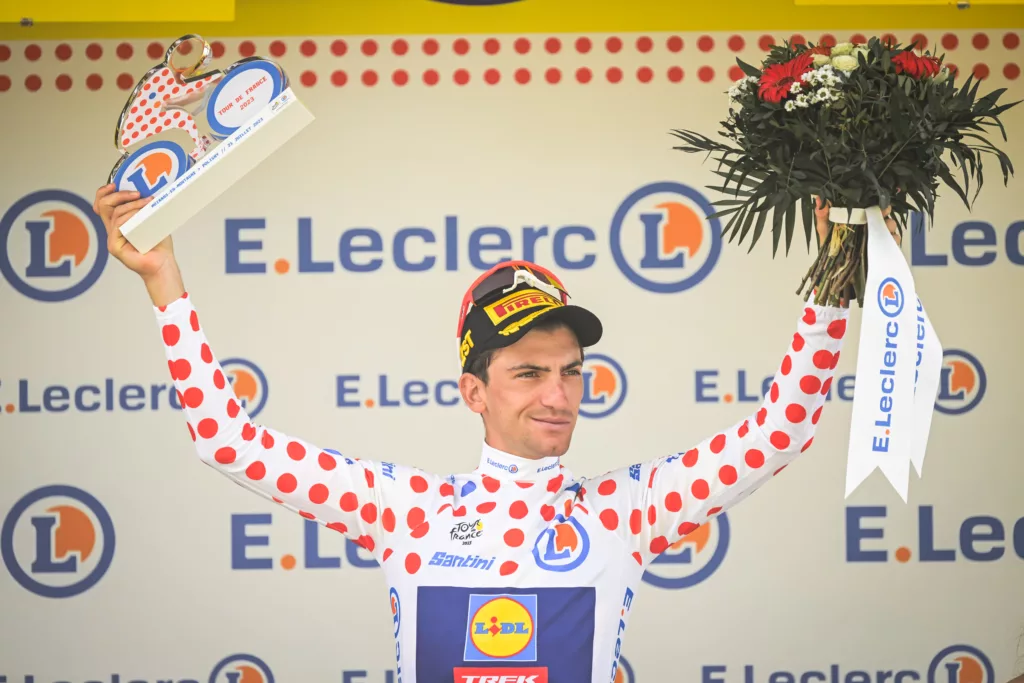 Photo Credit: ASO-Pauline Ballet
15. Giulio Ciccone
Ciccone may not be one of the five strongest GC climbers in the race, but he is one of the most important riders in the mountains classification conversation. He understands the polka-dot jersey, knows how to target climbs and can win from breakaways on hard mountain days.
That is a different skill from trying to follow Pogačar and Vingegaard for three weeks. Ciccone does not need to beat the best GC riders head-to-head every day. He needs to choose the right stages, score heavily before the favourites become involved and survive long enough to protect the jersey.
The 2026 route gives him chances. Stage 10 to Le Lioran, stage 14 to Le Markstein, stage 15 to Plateau de Solaison and stage 18 to Orcières-Merlette could all suit him if he has freedom. If he is already out of GC contention, that freedom becomes even more valuable.
Ciccone’s climbing is sharp, aggressive and suited to the emotional rhythm of the Tour. He can attack early, chase points and still fight for stage wins. If the GC leaders do not sweep up too many summit points, he may be one of the best specialist polka-dot picks.
For more on the mountains classification, see our Tour de France 2026 jerseys explained and Tour de France 2026 climbers guide.
Best pure climber at the Tour de France 2026
If we strip away team roles, time-trialling and tactics, the best pure climbing argument is between Pogačar and Vingegaard.
Pogačar is the more versatile climber. He can win on almost any kind of uphill finish and can attack from more situations. Vingegaard may have the edge on the longest, hardest, highest mountain days when the race becomes a pure endurance test.
The 2026 route includes both types of climbing. That makes the comparison difficult. The Pyrenees, Massif Central and Vosges may lean towards Pogačar’s punch and adaptability. The final Alpine stages, especially stage 20, bring Vingegaard closer to his ideal terrain.
The answer is probably this: Pogačar is the best overall climber for the route, while Vingegaard is the best specialist for the longest high-mountain days.
For more detail on where that battle could tilt, see our Tour de France 2026 Alps guide and Tour de France 2026 queen stage guide.
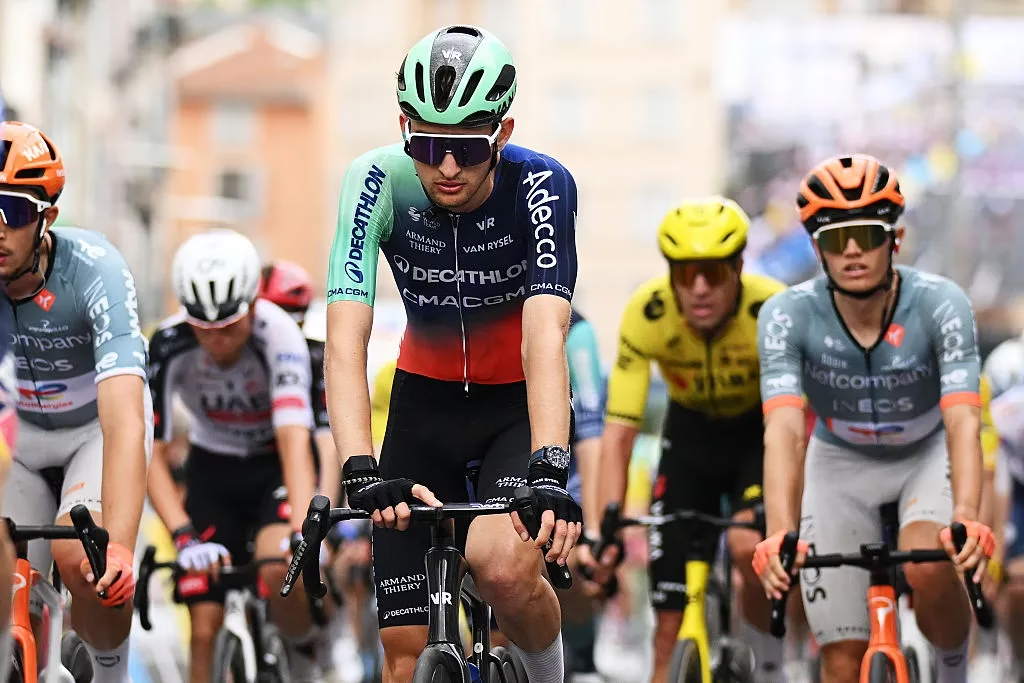
Best young climber at the Tour de France 2026
The best young climber conversation is excellent in 2026. Isaac del Toro, Juan Ayuso and Paul Seixas all bring different strengths.
Del Toro has the all-round climbing profile and the momentum to become a major force. Ayuso has the punch and ambition to change races quickly. Seixas carries French interest and could become one of the home stories of the Tour if he survives the early mountain pressure.
The key difference is team role. Del Toro and Ayuso must share space inside a loaded UAE team, while Seixas may have a clearer leadership route at Decathlon CMA CGM. That could matter as much as climbing strength. A rider with full team support can sometimes outperform a stronger climber who spends half the race working inside a team plan.
In pure ceiling terms, Del Toro may be the most exciting. In terms of French Tour narrative, Seixas is the obvious focus. In terms of immediate stage-winning punch, Ayuso may be the most dangerous.
For the wider white jersey picture, see our Tour de France 2026 young riders to watch.
Best climbing domestiques at the Tour de France 2026
The strongest mountain support riders could decide the race long before the leaders attack. UAE and Visma are likely to have the deepest climbing structures, with Red Bull-Bora-Hansgrohe and INEOS also capable of bringing strong mountain support.
The best climbing domestiques and support options should include:
| Rider | Team | Likely role |
| Isaac del Toro | UAE Team Emirates-XRG | Co-leader, tactical card or mountain support |
| Juan Ayuso | UAE Team Emirates-XRG | Co-leader or attacking card |
| Jai Hindley | Red Bull-Bora-Hansgrohe | Evenepoel and Lipowitz support, possible tactical card |
| Matteo Jorgenson | Team Visma | Lease a Bike | Vingegaard support and tactical option |
| Sepp Kuss | Team Visma | Lease a Bike | High-mountain support |
| Florian Lipowitz | Red Bull-Bora-Hansgrohe | Co-leader or Evenepoel mountain support |
| Thymen Arensman | Netcompany INEOS | Rodríguez and Vauquelin support, possible GC depth |
| Felix Gall | Decathlon CMA CGM | Seixas support or free climbing role |
The strongest team may not be the one with the single best climber. It may be the one with the most riders left when the final climb begins. UAE still have major depth through Pogačar, Del Toro and Ayuso, but Red Bull-Bora-Hansgrohe look stronger in this updated picture because Evenepoel, Lipowitz and Hindley give them several climbing routes without needing Roglič.
Team Visma | Lease a Bike have the clearest rival structure if Vingegaard is backed by Jorgenson and Kuss. That may be less numerically overwhelming than UAE, but it is more focused. A fully firing Vingegaard with Jorgenson and Kuss late in the mountains is still one of the strongest Tour structures possible.
INEOS, through Rodríguez, Vauquelin and Arensman, also have enough climbing depth to influence the race. Decathlon CMA CGM have an interesting balance with Seixas and Gall, especially if one rider is allowed to attack while the other holds position.
For more on support riders, see our Tour de France 2026 domestiques who could decide the race and Tour de France 2026 team-by-team guide.
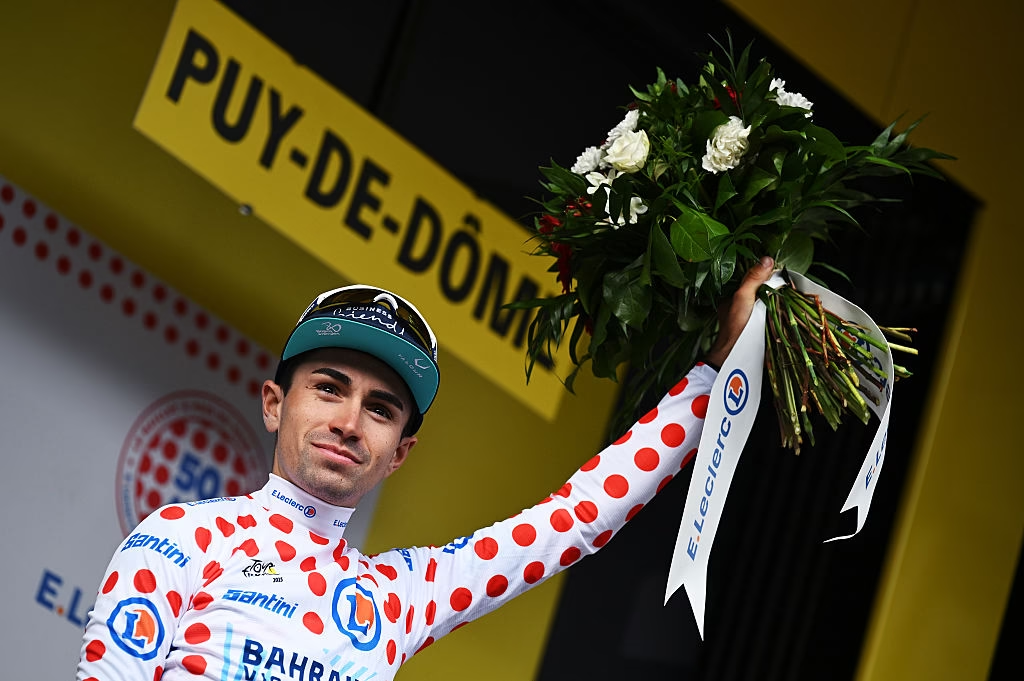
Best climbers for the polka-dot jersey
The polka-dot jersey is not always won by the best GC climber. It is often won by the rider who combines climbing strength with freedom, aggression and a willingness to go in repeated breakaways.
That makes the favourites different from a straight climbing ranking.
| Rider | Polka-dot profile |
| Giulio Ciccone | Best specialist pick if he targets the jersey |
| Lenny Martinez | Strong breakaway climber with a natural mountains profile |
| Felix Gall | Dangerous if he loses GC time and gets freedom |
| Kévin Vauquelin | Dangerous if INEOS shift him into stage-hunting mode |
| Sepp Kuss | Threat if freed from pure domestique duty |
| Tadej Pogačar | Could win it through mountain-stage victories |
| Jonas Vingegaard | Could win it if the GC fight goes through summit points |
Ciccone is the cleanest specialist pick because he can make the jersey a clear objective. Martinez is now one of the more important names in the conversation because he has the climbing style and likely freedom to chase points. Pogačar and Vingegaard may score heavily, but their priority is yellow. If they dominate summit finishes, the jersey could still fall to one of them. If breakaways take the biggest points, a specialist climber becomes more likely.
For a full breakdown, see our Tour de France 2026 climbers guide.
Best mountain stages for the climbers
The 2026 route has several stages where the climbers should take centre stage, but the most important are not all the same type.
| Stage | Finish | Why it matters |
| Stage 6 | Gavarnie-Gèdre | First major Pyrenean summit finish |
| Stage 10 | Le Lioran | Massif Central ambush day after the rest day |
| Stage 14 | Le Markstein Fellering | Vosges stage with repeated climbing |
| Stage 15 | Plateau de Solaison | Hard summit finish before the second rest day |
| Stage 18 | Orcières-Merlette | First Alpine summit finish of the final week |
| Stage 19 | Alpe d’Huez | First of two consecutive Alpe d’Huez finishes |
| Stage 20 | Alpe d’Huez | Queen stage with Galibier, Sarenne and 5,600m of climbing |
Stage 20 is the biggest climbing test. It is not just because of Alpe d’Huez. It is because the climb comes after a huge day with major altitude and repeated effort. A rider who cracks there could lose the Tour completely.
For route detail, see our Tour de France 2026 mountain stages ranked by difficulty, Tour de France 2026 summit finishes guide and Tour de France 2026 queen stage guide.
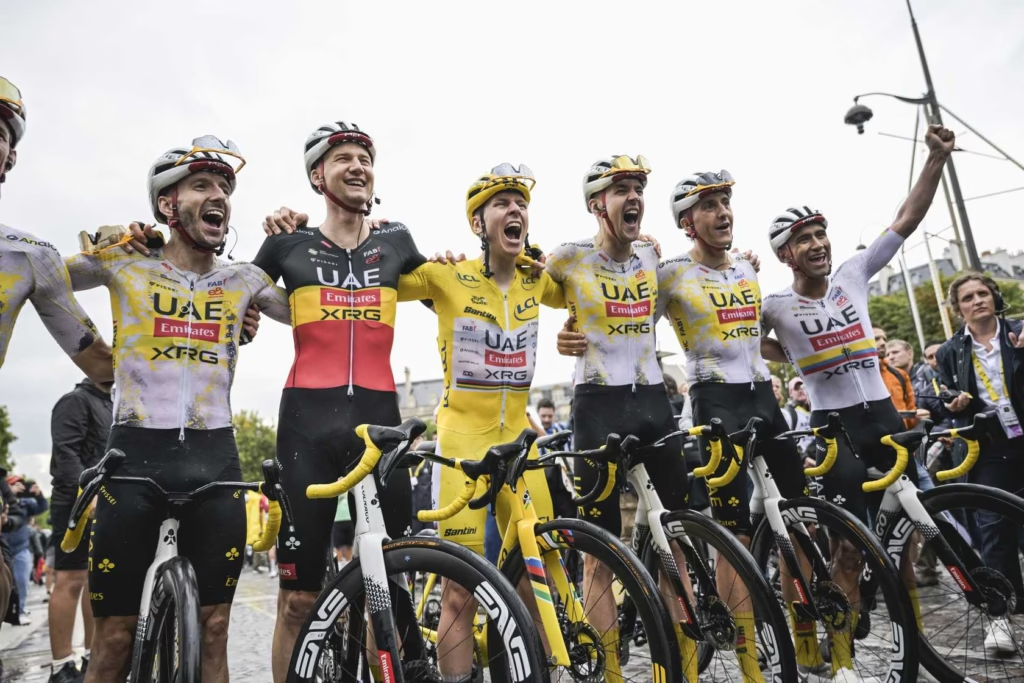
Which team has the strongest climbing squad?
UAE Team Emirates-XRG still have the strongest single climbing reference because Pogačar is the best overall climber in the race. Del Toro and Ayuso give them extra attacking power, and that could be enough to put several rivals under pressure before Pogačar even moves.
Red Bull-Bora-Hansgrohe are arguably the most interesting climbing unit in the updated field. Evenepoel gives them the GC and time-trial balance, Lipowitz gives them a genuine mountain co-leader, and Hindley gives them a Grand Tour-winning climber who can work, attack or cover moves.
Team Visma | Lease a Bike have the clearest structure around one leader. Vingegaard is the main card, with Jorgenson and Kuss giving him the mountain support he needs for the hardest Alpine days. If the race becomes a UAE versus Visma climbing battle, those support riders will matter.
INEOS and Decathlon CMA CGM are not as deep as UAE or Red Bull-Bora-Hansgrohe, but they have useful cards. Rodríguez and Vauquelin give INEOS two different climbing profiles, while Seixas and Gall could give Decathlon a mix of GC hope and mountain-stage threat.
For the full squad context, see our full start list for Tour de France 2026 and Tour de France 2026 team-by-team guide.
Riders just outside the top 15
Several riders sit just outside the main ranking but could still shape the mountains depending on role and form.
| Rider | Why they matter |
| Adam Yates | Elite climbing support or dangerous UAE tactical card |
| Thymen Arensman | Strong mountain support for INEOS |
| Daniel Felipe Martínez | Red Bull-Bora-Hansgrohe climbing depth |
| Antonio Tiberi | Strong stage-race climber with top-10 upside |
| David Gaudu | French climber with stage-hunting potential |
| Cian Uijtdebroeks | Possible GC or support option depending on role |
| Santiago Buitrago | Strong mountain-stage profile |
| Warren Barguil | Experienced breakaway climber |
| Tobias Halland Johannessen | GC leader for Uno-X and strong on hard terrain |
| Ben O’Connor | GC climber if fully backed |
| Aurélien Paret-Peintre | Breakaway climber and stage option |
| Davide Piganzoli | Young climbing support for Vingegaard |
Some of these riders may end up more important than their ranking suggests because of freedom. A rider outside the top 10 in pure climbing level can win mountain stages if the GC favourites mark each other and the break goes clear.
For likely attacking stages, see our Tour de France 2026 route: best days for breakaways and Tour de France 2026 stage hunters to watch.
-
 Photo Credit: Getty

Final ranking: best climbers at the Tour de France 2026
| Rank | Rider | Verdict |
| 1 | Tadej Pogačar | Best overall climber for the full route |
| 2 | Jonas Vingegaard | Best long high-mountain specialist |
| 3 | Remco Evenepoel | Climbing plus time-trial balance makes him a GC threat |
| 4 | Isaac del Toro | Huge climbing upside and tactical value |
| 5 | Juan Ayuso | Punchy, aggressive and dangerous if consistent |
| 6 | Florian Lipowitz | Strong high-mountain GC profile |
| 7 | Paul Seixas | Best French young climber and a major home hope |
| 8 | Carlos Rodríguez | Proven Tour climber with top-five history |
| 9 | Felix Gall | Pure mountain-stage threat |
| 10 | Kévin Vauquelin | Aggressive and flexible climbing card |
| 11 | Jai Hindley | Former Giro winner and valuable mountain engine |
| 12 | Lenny Martinez | Polka-dot and breakaway climbing threat |
| 13 | Matteo Jorgenson | One of the strongest climbing support riders |
| 14 | Sepp Kuss | Elite high-mountain helper if in form |
| 15 | Giulio Ciccone | Best specialist polka-dot option |
Final verdict: who is the best climber at the Tour de France 2026?
Tadej Pogačar is the best climber at the Tour de France 2026 because the route rewards the full range of his strengths. He can attack early, win uphill finishes, handle repeated climbing blocks and take time on stages that are not obvious high-mountain set pieces. That makes him the most complete climbing threat in the race.
Jonas Vingegaard is the closest challenger and may still be the best rider on the very hardest high-mountain stages. If stage 20 becomes a pure endurance contest after the Galibier and Sarenne, Vingegaard could be the rider best equipped to challenge Pogačar directly.
Behind them, the battle is much more open. Evenepoel’s climbing plus time-trialling makes him a major GC threat. UAE’s depth through Del Toro and Ayuso could shape the whole race, while Red Bull-Bora-Hansgrohe now look especially important through Lipowitz and Hindley. Seixas, Rodríguez, Gall and Vauquelin give the second tier real quality. Ciccone, Martinez and Kuss could make the mountains classification and stage-hunting battle just as interesting as the yellow jersey fight.
The 2026 Tour is not short of climbers. The bigger question is which type of climber the route rewards most: the explosive all-rounder, the high-mountain specialist, the time-trial-backed GC rider or the breakaway climber with the freedom to chase points. Across three weeks, Pogačar starts as the strongest answer.
For more Tour de France 2026 coverage, visit our Tour de France hub, Tour de France 2026 full route guide and how to watch Tour de France 2026 in the UK.

