

The Tour de France 2026 has an obvious top line. Tadej Pogačar, Jonas Vingegaard and Remco Evenepoel shape the yellow jersey conversation before the race has even started. They are the riders everyone else has to measure themselves against, and the route gives each of them a clear path to influence the race.
But the Tour rarely belongs only to the favourites. Behind the main contenders sits a second group of riders who can change the race, finish high on GC or turn one unexpected week into a podium challenge. Some are young climbers still learning what three weeks at the Tour really means. Some are proven stage-race riders trying to convert consistency into a career-best result. Others are team second cards who may become leaders if the race opens in their favour.
The 2026 route makes that group especially interesting. The opening team time-trial in Barcelona can immediately create small gaps. The Pyrenees arrive early, with Les Angles and Gavarnie-Gèdre forcing the GC riders into mountain mode before the race has settled. The middle of the Tour includes Le Lioran, Le Markstein Fellering and Plateau de Solaison. Then stage 16 brings an individual time-trial before the final Alpine block to Orcières-Merlette and back-to-back Alpe d’Huez finishes.
That is a route with room for surprises. A rider does not need to beat Pogačar or Vingegaard to be a successful dark horse. A top 5, podium challenge, white jersey fight or aggressive GC role would be enough to reshape the race.
For broader context, see our Tour de France 2026 full route guide, Tour de France 2026 route analysis and Tour de France 2026 GC favourites ranked.
What counts as a Tour de France dark horse?
A dark horse is not simply a rider who is good. It is a rider whose ceiling is higher than the public conversation around them.
That rules out the obvious names. Pogačar is not a dark horse. Vingegaard is not a dark horse. Evenepoel is not a dark horse. Primož Roglič, if he were fully committed as a Tour leader, would not really fit either, because his Grand Tour record makes him too established for the category.
For the 2026 Tour, the more interesting dark horses are riders who sit just below that level. They are not expected to win yellow, but they have enough route fit, form, team role or upside to threaten the podium or top 5 if the race breaks in their favour.
The best dark horses need three things. They need a clear route to time gains, a team structure that gives them space, and enough durability to survive the final week. A strong one-week stage-race result is useful, but the 2026 Tour is a different test. It asks riders to handle a Barcelona team time-trial, early mountains, a late individual time-trial and then the hardest Alpine finish of the race.
That makes this less about hype and more about who can still be strong on stage 20.
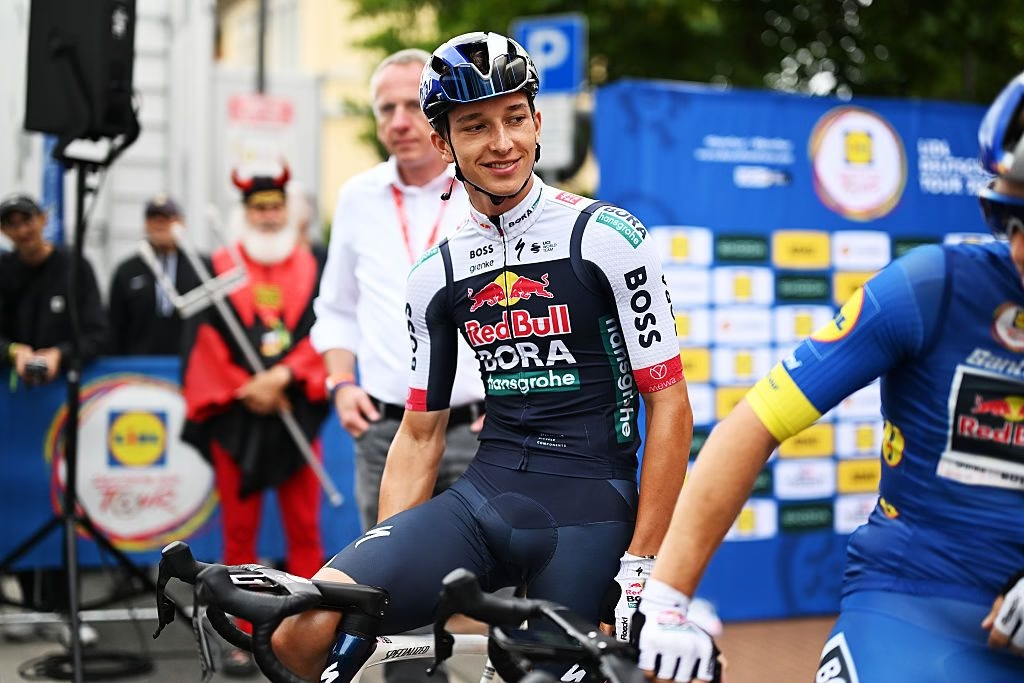
Florian Lipowitz
Florian Lipowitz is one of the most obvious dark horses because the route suits his strengths and Red Bull-BORA-hansgrohe may have a more layered GC approach than just Remco Evenepoel.
Lipowitz already showed in 2025 that he can handle the Tour at a serious level, and his climbing profile fits the repeated mountain tests in 2026. The early Pyrenees should not scare him, the Plateau de Solaison stage looks well suited to his style, and the final Alpine block gives him the terrain to move up rather than simply defend.
The question is his role. If Evenepoel is the clear leader, Lipowitz may start as a support rider or protected second option. That can still make him dangerous. A strong second card can sit high on GC, force rival teams to chase and become a podium contender if the race opens up. If Evenepoel struggles in the high mountains or loses time before stage 16, Lipowitz could suddenly become Red Bull-BORA-hansgrohe’s most secure climbing option.
His time-trialling is good enough not to be a liability, and that matters on a route with Barcelona and Évian-les-Bains to Thonon-les-Bains against the clock. He is unlikely to beat Evenepoel in the time-trial, but he does not need to. He needs to avoid losing too much before the mountains return.
If the race becomes brutally selective in the final week, Lipowitz has a genuine top 5 path.
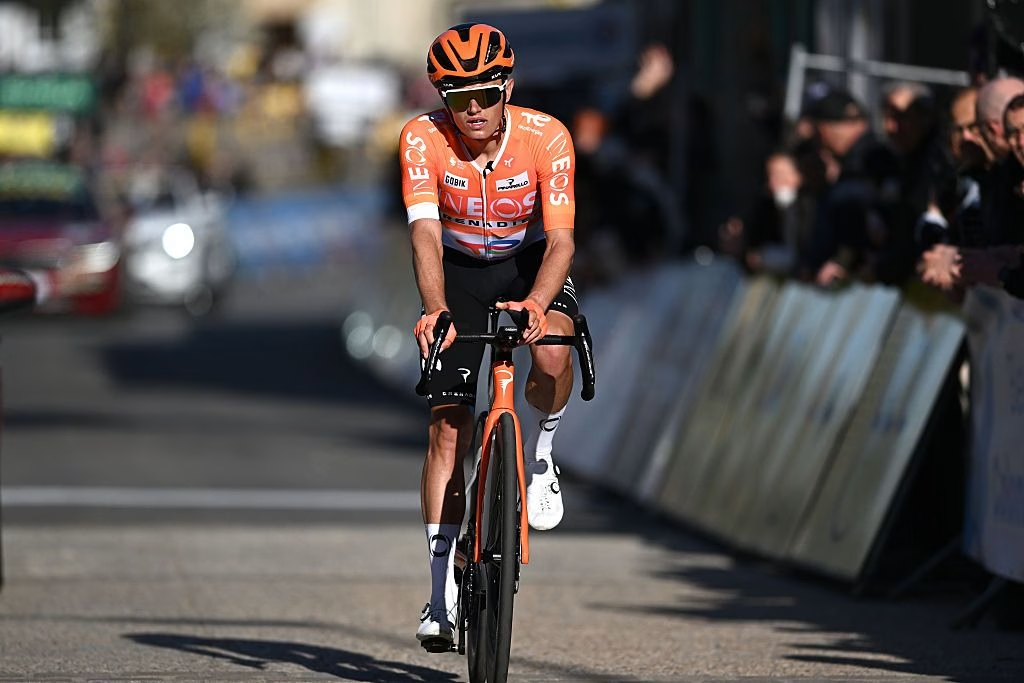
Oscar Onley
Oscar Onley’s case is built around upside, but it comes with uncertainty. He has the climbing quality to be more than a British hopeful, yet his build-up has been disrupted by injury and illness at awkward moments.
That makes him a classic dark horse rather than a safe pick. A fully fit Onley can climb with the best young GC riders in the race and should suit a route with repeated mountain stages rather than one isolated summit finish. The question is whether he arrives at the Tour with enough racing rhythm and confidence after setbacks in the run-in.
Netcompany Ineos have several possible GC cards, which could help or complicate things. Carlos Rodríguez brings experience, Thymen Arensman brings Grand Tour climbing depth and Kévin Vauquelin adds another route into the race. Onley may not have to carry the whole team’s GC ambition from day one, which can be useful if the team wants to let the road decide its leader.
The opening team time-trial should also help if Ineos ride to their level. Filippo Ganna gives them a major engine for Barcelona, and that could put Onley in a useful position before the mountains.
The risk is that his Tour becomes another development step rather than a breakthrough. But if he reaches the Alps healthy and within range, he has the climbing ceiling to finish far higher than his outside status suggests.
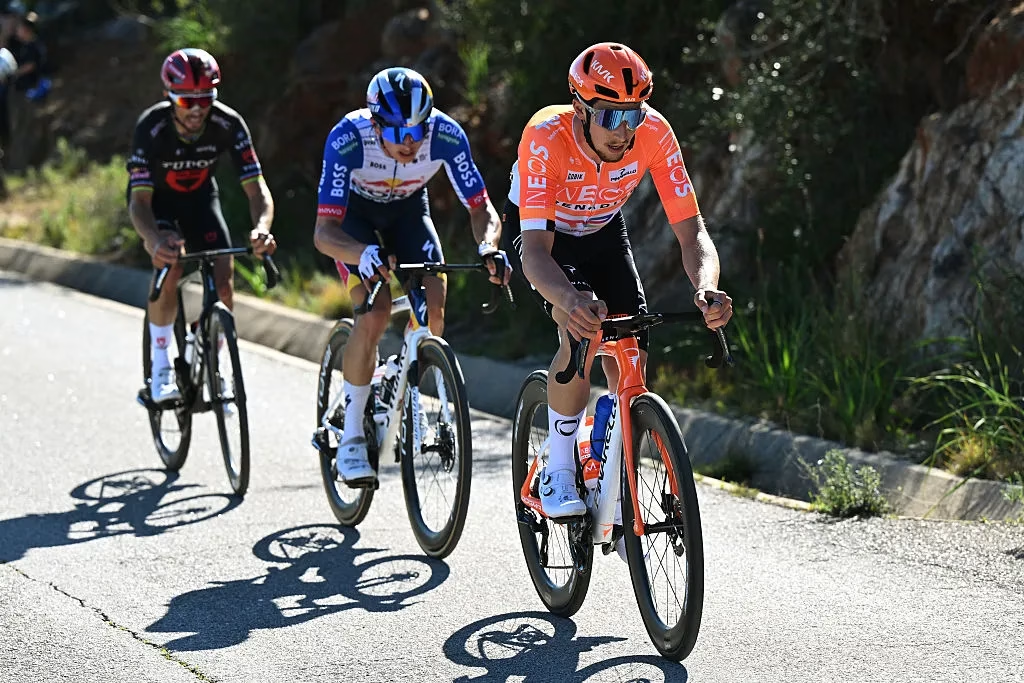 Photo Credit: Getty
Kévin Vauquelin
Kévin Vauquelin is one of the more interesting names because he combines time-trial ability, climbing resistance and the confidence of a rider who has already proved he can handle big-race pressure.
The 2026 route gives him several chances to stay involved. The Barcelona team time-trial should suit an Ineos squad with serious horsepower. The stage 16 individual time-trial is another place where Vauquelin can limit losses or even gain on riders around him. In between, he needs to survive the harder mountain days without trying to race like Pogačar or Vingegaard.
That is the key. Vauquelin’s best GC route is consistency rather than domination. He does not need to attack on every climb. He needs to avoid bad days, use the time-trials well and stay close enough that others have to take risks in the final week.
His challenge is the final Alpine block. Back-to-back Alpe d’Huez finishes are a different scale from most of the races where he has excelled. If he can handle that, he could become one of the strongest top-10 candidates in the race.
Ineos having multiple options may help him. If Rodríguez, Onley and Arensman also start strongly, rival teams may not know immediately which rider to treat as the main GC threat. Vauquelin can use that uncertainty.
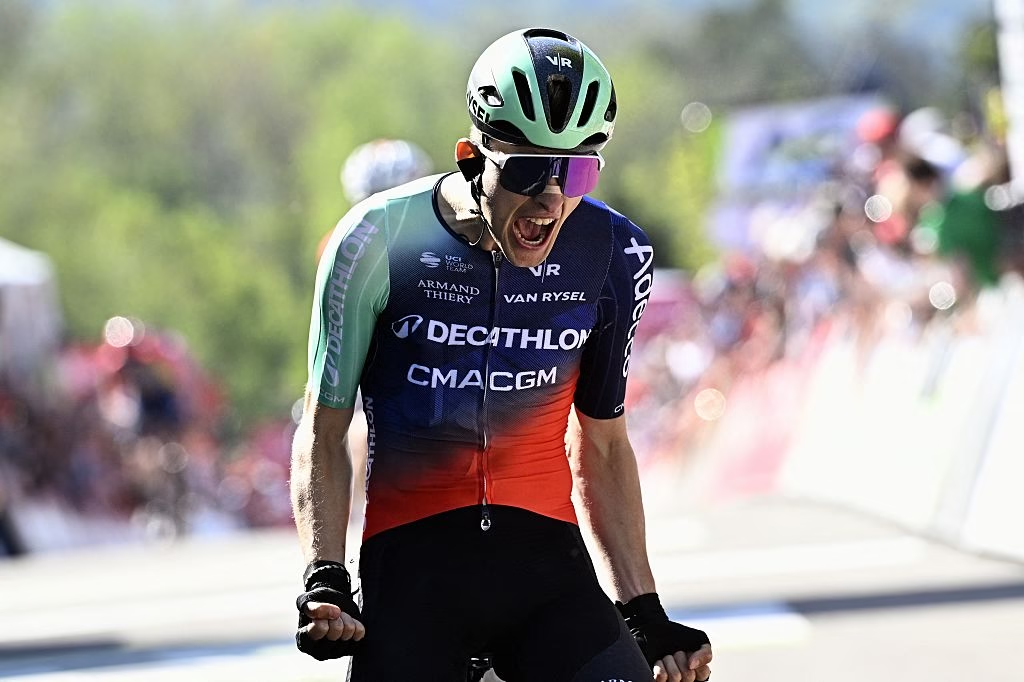 Photo Credit: Getty
Paul Seixas
Paul Seixas is not a normal dark horse. He is still young enough that expecting a Tour podium would be unfair, but he is also too talented to be treated as just another debutant.
His 2026 season has already pushed him into a different category. Wins at Itzulia Basque Country and La Flèche Wallonne, plus the level he showed before his Tour Auvergne crash, mean he arrives as one of the most exciting French GC prospects in years. The question is not whether the talent is real. It is how much the Tour should ask of him this soon.
The route is both tempting and dangerous. The early Pyrenees could suit him if he is fresh and recovered, but they also remove any chance of easing into the race. Stage 6 to Gavarnie-Gèdre will quickly reveal whether he is ready to stay with the established Grand Tour riders. The final Alpine block is even more demanding.
Decathlon CMA CGM will need to manage expectations carefully. Seixas can ride for GC without being treated as a yellow jersey contender. A top 10 would be a major result. A stage win and white jersey challenge would also be a serious step. A podium bid would require a near-perfect first Tour and a lack of bad days.
The injury from Tour Auvergne is the caveat. If he starts fully recovered, he is one of the most important young riders to watch. If not, the Tour could become more about learning than results.
For more on the emerging names around him, see our Tour de France 2026 young riders to watch guide.
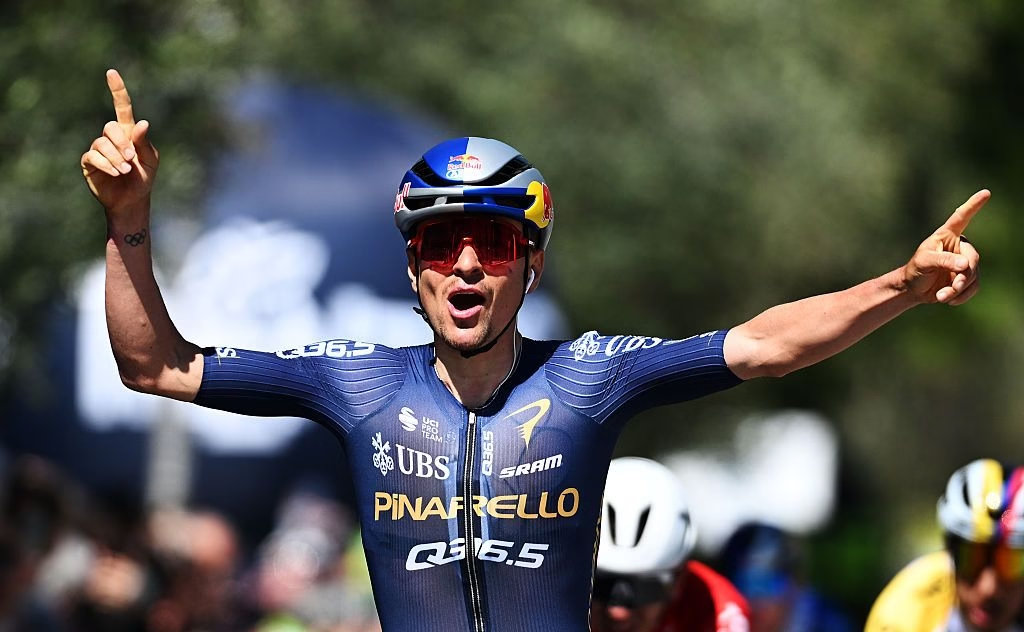 Photo Credit: Getty
Tom Pidcock
Tom Pidcock is a difficult rider to place because he has the talent to do almost anything but has not always been easy to define as a three-week GC rider. That uncertainty is exactly why he belongs in the dark horse conversation.
His 2026 Tour plan has already been disrupted by illness, with his Tour de Suisse warm-up dropped, but the plan to race the Tour remains. He has also suggested he does not want to lock himself into a conventional GC burden. That can make him more dangerous, not less.
Pidcock’s best route to a high overall placing is not through a perfectly controlled Grand Tour campaign. It is through chaos, opportunism and climbing days where others hesitate. He can descend, handle technical roads, accelerate on steep sections and win from situations that do not suit more mechanical GC riders.
The 2026 route gives him options. The early hilly and mountain stages could let him move without being immediately treated like a top-three favourite. Le Lioran and the Vosges suit riders who can handle irregular terrain. The Alps are a bigger test, and that is where his GC case becomes harder to sustain.
If Pidcock rides purely for stages, he may abandon the GC picture early. If he stays close by accident through the first half, he could become one of the more unpredictable riders in the race. That makes him a proper wild card.
Isaac del Toro
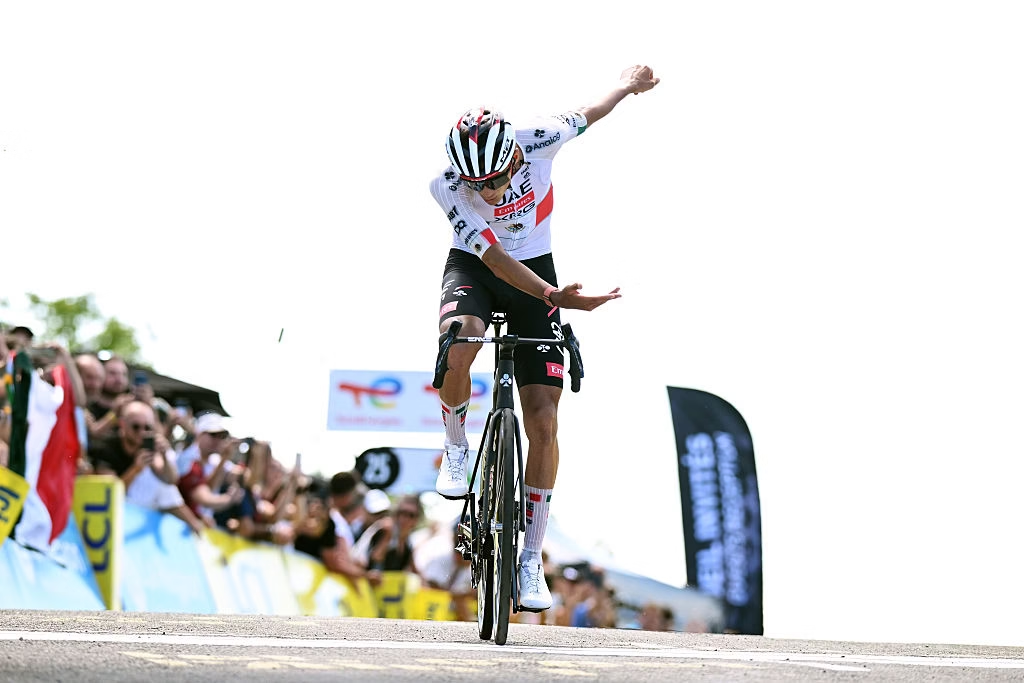
Isaac del Toro is almost too good to be called a dark horse now, but his likely team role keeps him in this category rather than among the outright favourites.
His 2026 season has been exceptional, and his Tour Auvergne – Rhône-Alpes victory, sealed with back-to-back summit wins including Plateau de Solaison, confirmed that he is already a WorldTour stage-race force. On raw climbing form and development curve, he is one of the most dangerous riders outside the obvious yellow jersey group.
The issue is UAE Team Emirates-XRG. Pogačar is the clear leader, and Del Toro may start as a support rider, tactical satellite or protected secondary option rather than a full GC captain. That makes his race fascinating. If he is allowed to stay high on GC, he gives UAE another weapon. If rivals ignore him, he can become a problem. If Pogačar is in full control, Del Toro may spend most of the race working rather than chasing his own result.
The route suits him well. The final week is hard enough for a pure climbing talent to move up, and Plateau de Solaison already has recent meaning after his Tour Auvergne performance. But a top 5 at the Tour requires freedom, consistency and team permission.
If UAE decide to keep him protected, Del Toro could be the rider who turns the race from a Pogačar defence into a UAE tactical squeeze.
Antonio Tiberi
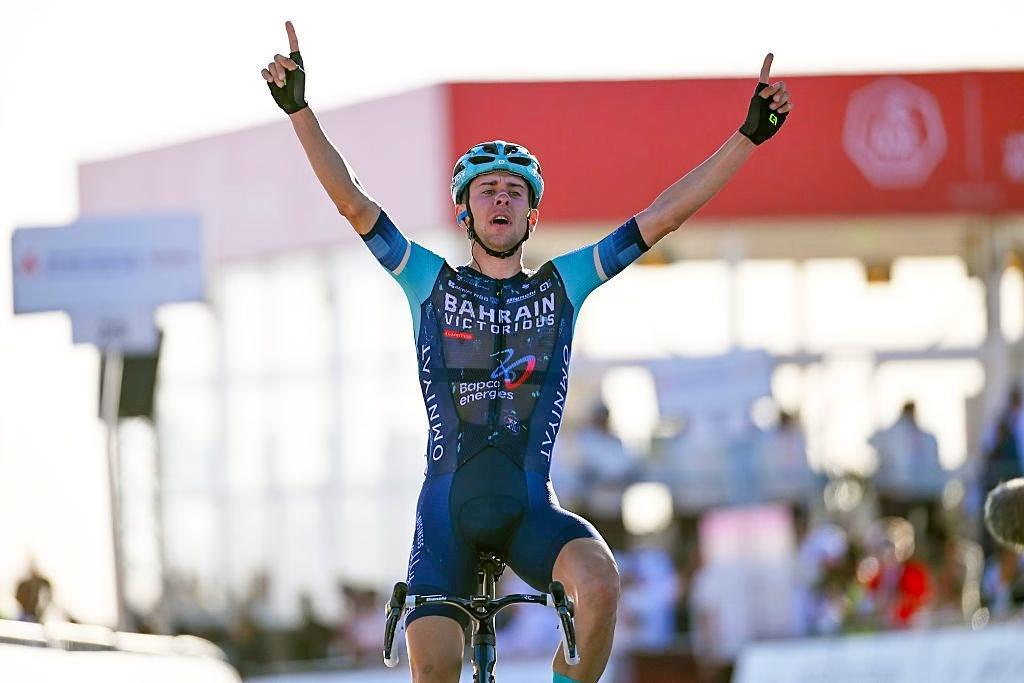
Antonio Tiberi has become one of those riders who is always close enough to be taken seriously but still needs a defining Tour result to move into the next category.
The 2026 route should suit him better than some of the more explosive contenders. Tiberi is a steady stage-race rider, capable against the clock and strong enough in the mountains to survive repeated GC days. He is not the rider most likely to blow the race apart, but he is exactly the type who can finish high if others crack.
The individual time-trial is important for him. He needs to use it as a strength rather than merely limit losses. If he can take time on some of the pure climbers, he gives himself more room before the final Alpine block. The Barcelona team time-trial will also matter, because Bahrain Victorious cannot afford to leave him chasing from day one.
The concern is whether he has enough climbing ceiling for the hardest days. Stage 20 via the Sarenne route to Alpe d’Huez is the kind of day where top-10 riders can suddenly become top-5 riders, or fall out of contention completely.
Tiberi’s best case is a quiet, consistent Tour where he is still there when louder names have already had one bad day. That is not spectacular, but it is a credible route to a career-best GC.
Richard Carapaz
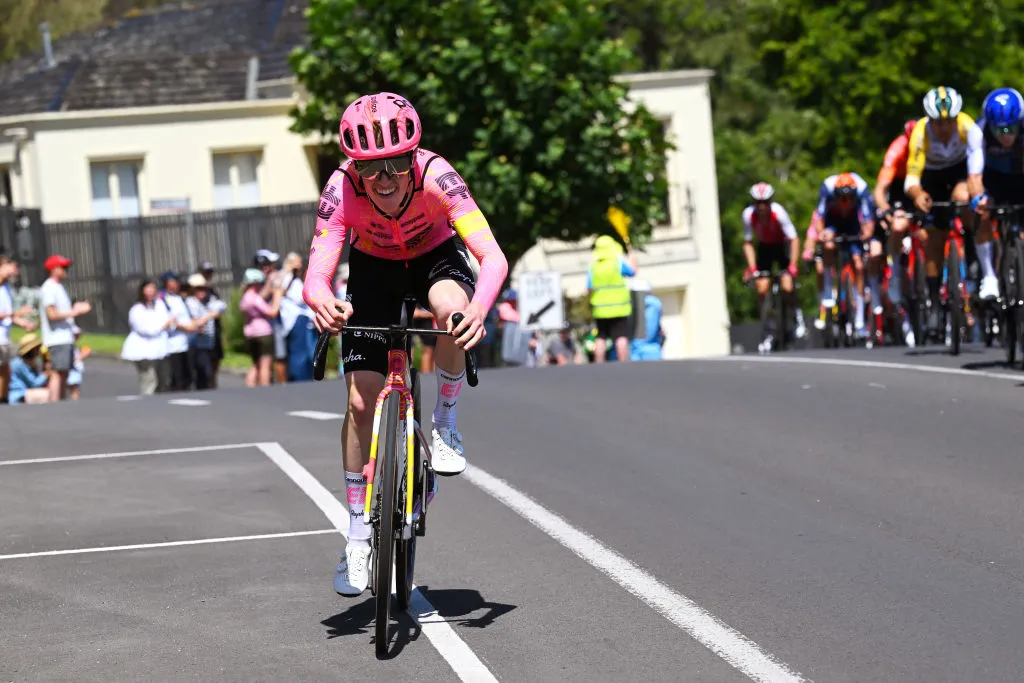
Richard Carapaz is a strange dark horse because his career record is far too strong for the label in normal circumstances. He is a Grand Tour winner, Olympic champion and one of the most aggressive climbers of his generation. But in the 2026 Tour hierarchy, he starts outside the main favourite group.
That makes him dangerous. Carapaz is not going to win the Tour by riding conservatively for three weeks. He needs disorder, and the 2026 route provides enough places to create it. The Pyrenees, Le Lioran, Plateau de Solaison and the final Alpine weekend all give him terrain to attack before the most predictable riders want to move.
The issue is time-trialling. Carapaz will need to avoid losing too much in Barcelona and stage 16. If he is already behind the strongest all-rounders before the Alps, he may be forced into a stage-hunting role. If he keeps the gap manageable, he can still make the race uncomfortable.
EF Education-EasyPost will also need to decide how much they commit to GC. Carapaz can win stages from the breakaway, chase the mountains jersey or fight for the overall. Trying to do all three can blur the plan.
As a dark horse, he has one major advantage: nobody will be shocked if he attacks from distance. The challenge is making one of those attacks count for GC rather than just stage drama.
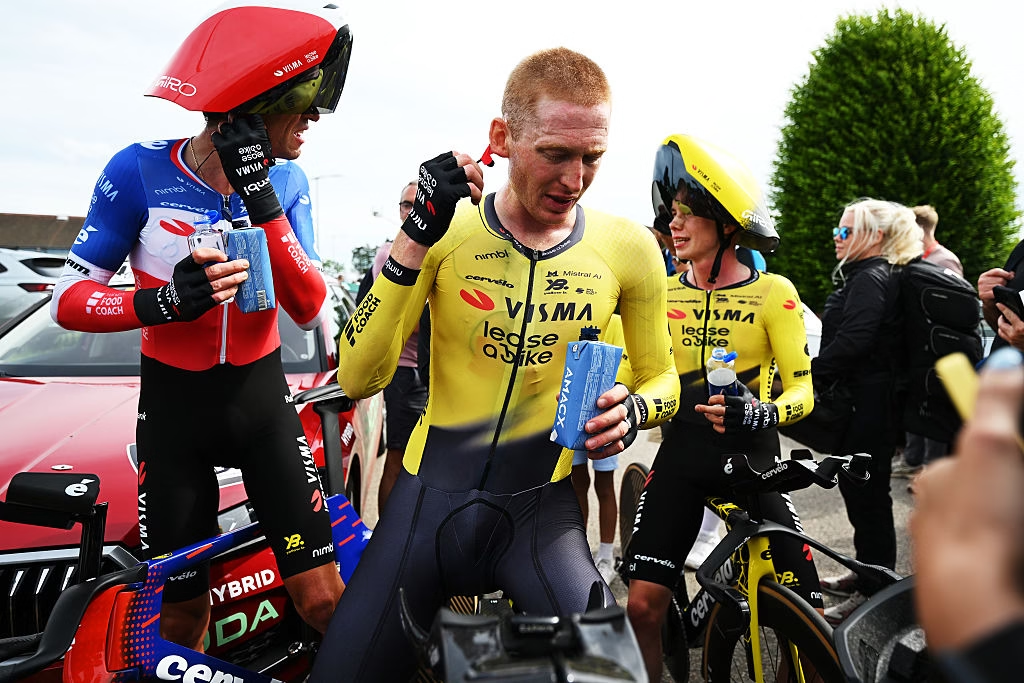 Photo Credit: Getty
Matteo Jorgenson
Matteo Jorgenson starts with a clear job if Team Visma | Lease a Bike are fully committed to Jonas Vingegaard: help Vingegaard win the Tour. That does not remove him from the dark horse conversation. It makes his case conditional.
Jorgenson has become one of the most complete support riders in the peloton, but he is also a serious GC rider in his own right. He can climb, time-trial, descend, handle tactical races and survive deep into stage races. If Vingegaard is strong, Jorgenson is likely to spend the race as one of the most important domestiques in the Tour. If Vingegaard has trouble, the hierarchy could change quickly.
The route is well suited to him. The Barcelona team time-trial should be a target for Visma. The stage 16 time-trial gives Jorgenson a place to defend or gain GC position. The middle mountain stages are exactly the kind of terrain where he can read a race and follow dangerous moves.
His problem is opportunity. A rider can be good enough for the top 10 and still never get the freedom to pursue it. That may be Jorgenson’s situation if Vingegaard is in the yellow jersey battle.
But if the Tour becomes chaotic, Jorgenson is the kind of rider who can move from helper to protected asset almost without warning. For more on the team structure around Vingegaard, see our analysis of Jonas Vingegaard at the Tour de France 2026.
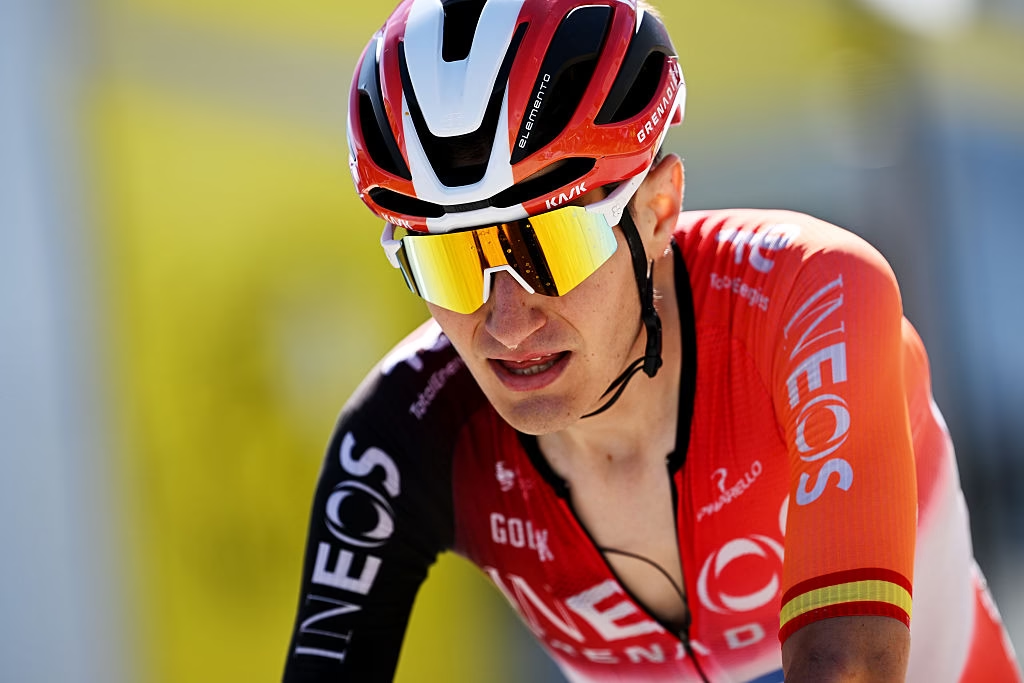
Carlos Rodríguez
Carlos Rodríguez may feel like a familiar name rather than a dark horse, but he still sits in that difficult space between proven GC rider and genuine Tour podium candidate.
The route is mixed for him. The climbs suit him, especially the final Alpine block, but the time-trials and the possible internal Ineos competition make the race more complicated. He needs a clean Barcelona team time-trial, a solid stage 16 effort and no early mountain slip in the Pyrenees.
His best asset is consistency. Rodríguez rarely needs a race to be chaotic to be useful. He can stay close, avoid drama and move up when others struggle. That is valuable in a Tour with this much climbing packed into the final week.
The issue is whether he can produce the one truly decisive performance that changes his ceiling. A top 10 is very realistic if he starts healthy. A top 5 is possible. A podium needs either a major step forward or problems for several riders above him.
The presence of Onley, Vauquelin and Arensman means Ineos may not be locked into one GC plan. That can help early, but by the Alps the team will need clarity. Rodríguez has the experience to become that leader if the race demands it.
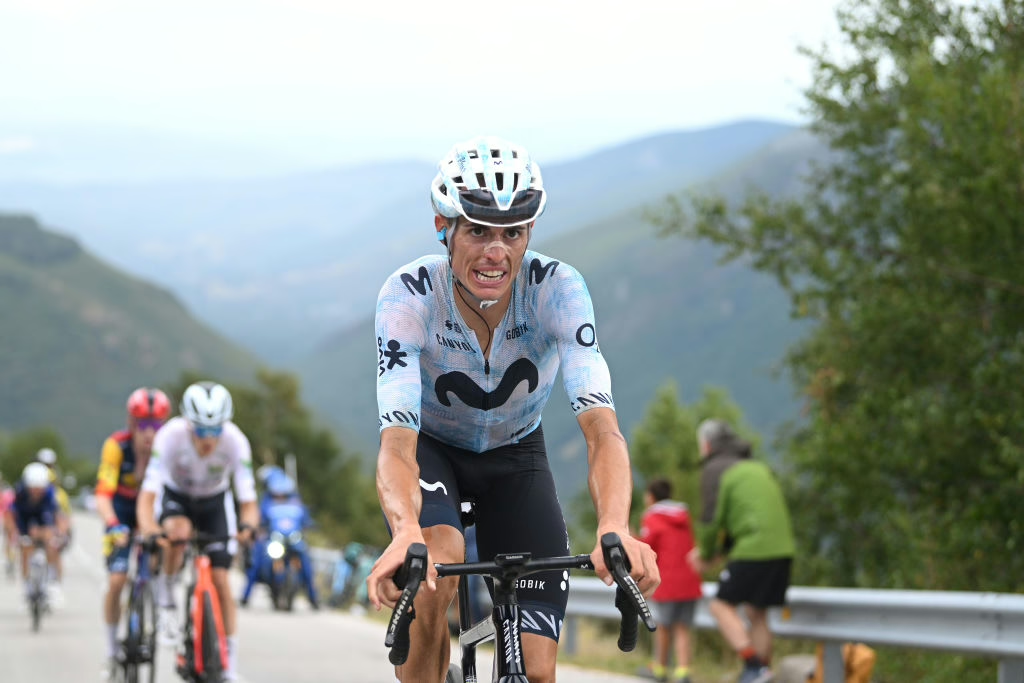 Photo Credit: Getty
Enric Mas
Enric Mas is easy to overlook because he has spent years sitting close to the top of Grand Tours without quite changing the shape of them. That is also why he can still be dangerous.
The 2026 route has enough climbing for Mas to matter. The Pyrenees should suit him, Plateau de Solaison is a proper GC test, and the final Alpe d’Huez weekend gives him the terrain to move up. If he arrives in form, he is one of the riders who can still be there when the Tour becomes a pure climbing contest.
The question is whether he can gain time, not just limit losses. Mas has often been strong enough to stay close but not always aggressive enough to transform a race. Against Pogačar, Vingegaard and Evenepoel, that is not enough. To be more than a top-10 candidate, he needs to attack before the obvious moment or use Movistar’s team structure to make the race less predictable.
The time-trial is another concern. Stage 16 could cost him time against riders like Evenepoel, Vauquelin, Jorgenson and Tiberi. That makes the mountain stages even more important.
Mas remains a dark horse for the podium because the climbing route is there. He just needs to race as though a podium is not enough.
 Photo Credit: Getty
Max Poole
Max Poole belongs in this group because his trajectory still points upwards, even if the Tour may arrive slightly early for a full GC breakthrough.
He has the climbing engine to be interesting on the hardest stages, and a route with repeated mountain tests suits a young rider who can recover well. The final Alpine block is the kind of terrain where Poole could either lose time heavily or announce himself as a more serious Grand Tour rider.
The key question is consistency. At the Tour, one bad day is enough to turn a top-10 challenge into a stage-hunting race. Poole does not need to match the best riders on every climb, but he needs to avoid the kind of collapse that often catches young GC riders in week three.
His team role will also matter. If he starts as a protected rider, he has a clear pathway. If he is asked to chase stages or support others, his GC ambition may remain secondary.
Poole is more of a top-10 dark horse than a podium threat, but if the race becomes a war of attrition, that can still be a valuable place to be.
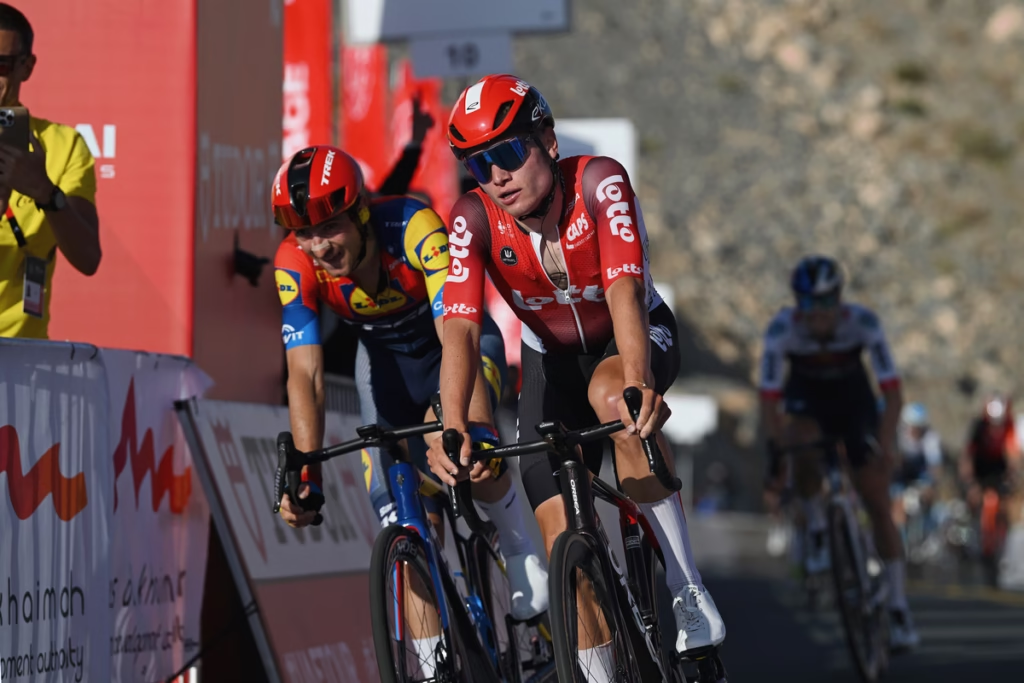
Lennert Van Eetvelt
Lennert Van Eetvelt is one of the more interesting outside names because he has the punch and climbing ability to make individual stages dangerous. The question is whether he can stitch three weeks together.
The 2026 Tour offers him both opportunity and risk. The hilly and medium mountain stages suit his aggressive style, and he can gain time if the favourites hesitate. But the final week is a much bigger test. Alpe d’Huez on consecutive days is not friendly to riders still learning the limits of Grand Tour recovery.
Van Eetvelt’s best chance may be to ride a flexible race: stay close early, see how the body responds, then decide whether GC or stages make more sense. If he is still within range after stage 16, he can target the top 10. If not, he becomes a strong stage threat.
That uncertainty is exactly what makes him a dark horse rather than a safe GC pick. His ceiling is high, but the route will test every weakness.
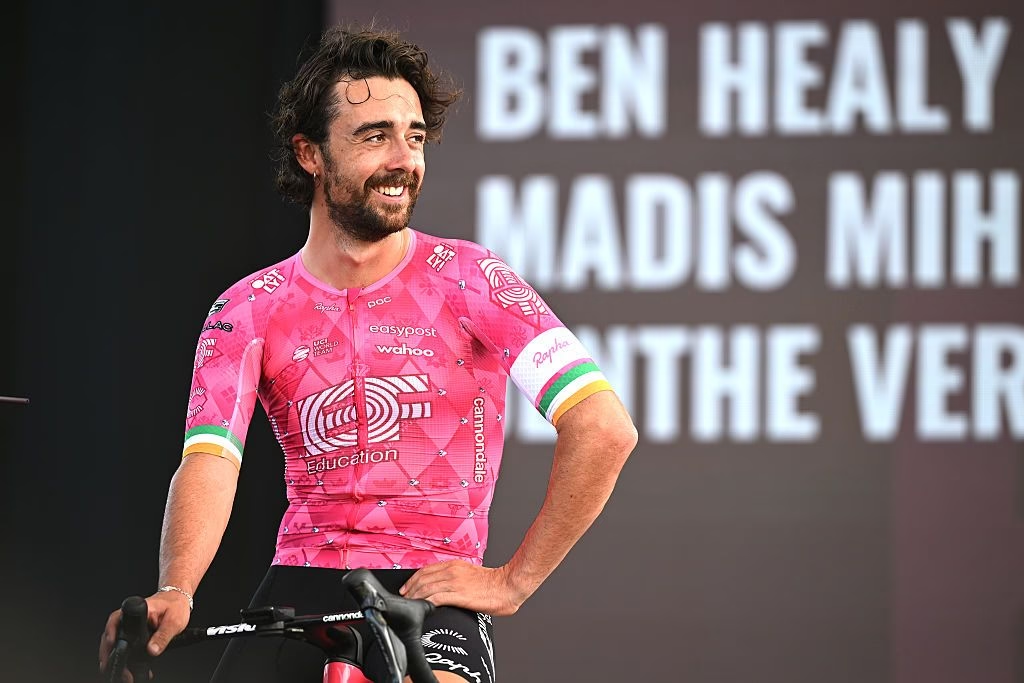
Ben Healy
Ben Healy is not a traditional GC dark horse, but he is a rider who can change a Grand Tour if he is allowed room.
His strengths are obvious: aggression, endurance, tactical instinct and the ability to turn a stage into something much harder than the peloton expected. The 2026 Tour has several stages where that can matter. Le Lioran, the Vosges, the transition into the Alps and even some of the hilly stages before the time-trial could suit a rider willing to attack early.
The problem is the pure GC structure. Healy is unlikely to beat the best climbers over the final Alpine block if the race becomes a controlled summit-finish contest. But if he gains time in a breakaway and suddenly sits high overall, he becomes a tactical problem.
That is the kind of dark horse he is. Not a conventional podium pick, but a rider who can force others to respond. If he gets five or six minutes back through a breakaway, EF Education-EasyPost could suddenly have more than one GC card to play.
Healy may be more likely to win a stage than finish top 5, but his presence can still shape the general classification.
Who has the best dark horse route?
Lipowitz has the most obvious GC profile. He can climb, time-trial well enough and benefit from Red Bull-BORA-hansgrohe’s strength.
Onley has one of the highest climbing ceilings if his body holds up after a disrupted build-up.
Vauquelin has the best balance of time-trial ability and GC stealth, especially if Ineos ride a strong Barcelona team time-trial.
Seixas has the biggest long-term upside, but his age and recent crash make his first Tour difficult to predict.
Pidcock is the most unpredictable, especially if he rides without full GC pressure.
Del Toro has the strongest recent form, but his UAE role may decide whether he is a GC rider or a tactical weapon.
Tiberi and Rodríguez are the safest top-10 style picks. Carapaz and Mas are the proven climbers who can still turn a mountain stage into a GC move.
The rider with the best podium dark-horse profile may be Lipowitz. The rider most likely to explode the race unexpectedly may be Del Toro or Pidcock. The rider with the best French storyline is Seixas. The rider most likely to quietly move into the top 5 may be Vauquelin.
For the route detail behind those assessments, see our Tour de France 2026 Pyrenees guide, Tour de France 2026 mountain stages ranked by difficulty, Tour de France 2026 summit finishes guide and Tour de France 2026 queen stage guide.
-
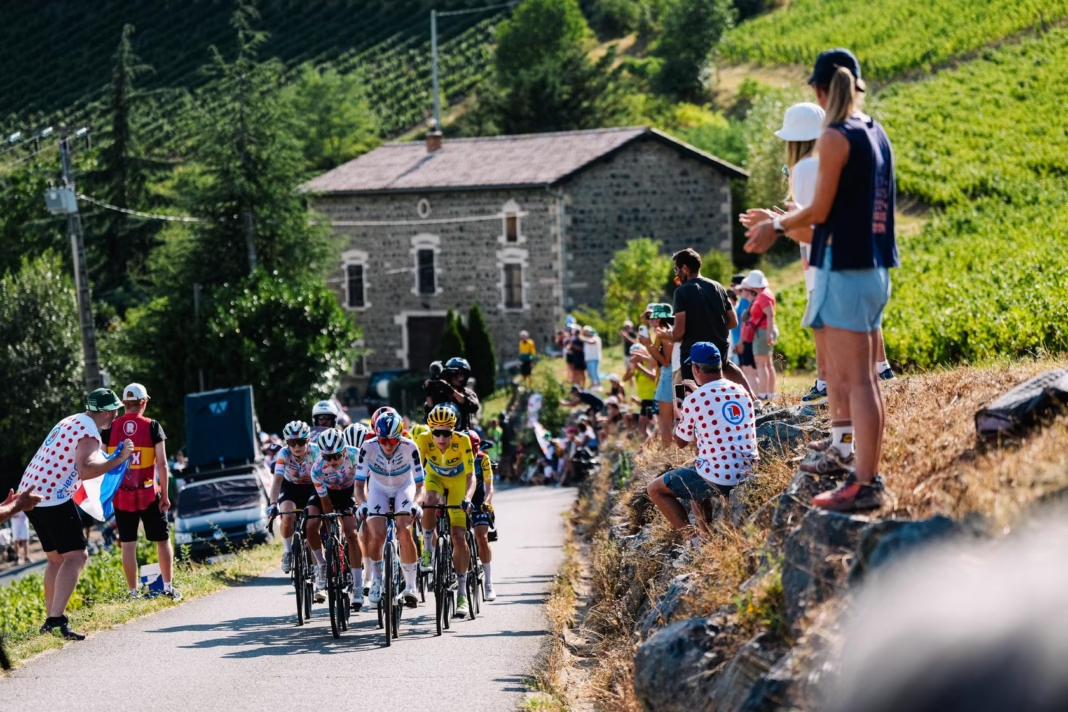
 Photo Credit: A.S.O./Billy Ceusters
Prediction
The 2026 Tour is still likely to be shaped by the big three: Pogačar, Vingegaard and Evenepoel. That is the reality. The route is too hard, too varied and too loaded with decisive stages for a true outsider to win unless something dramatic happens.
But the race behind them should be much more open. The Barcelona team time-trial, the stage 16 individual time-trial and the final Alpine block create multiple ways for dark horses to rise or fall. Some riders will lose time before the race has properly settled. Others will use the final week to climb past more famous names.
Lipowitz, Vauquelin, Onley, Del Toro and Seixas are the names that best capture the shape of the 2026 race: young or developing GC riders, all with different routes into the top 5, all still carrying enough uncertainty to be interesting.
The Tour de France rarely produces a completely random GC surprise. It does, however, regularly reveal which riders are ready to move from promise into proof. In 2026, that battle behind the favourites may be one of the best reasons to watch the race every day.
For viewing details, see our how to watch Tour de France 2026 in the UK guide.
Tour de France 2026 GC dark horse ranking
⦿ Florian Lipowitz
⦿ Kévin Vauquelin
⦿ Oscar Onley
⦿ Isaac del Toro
⦿ Paul Seixas
⦿ Antonio Tiberi
⦿ Tom Pidcock
⦿ Carlos Rodríguez
⦿ Richard Carapaz
⦿ Matteo Jorgenson

