
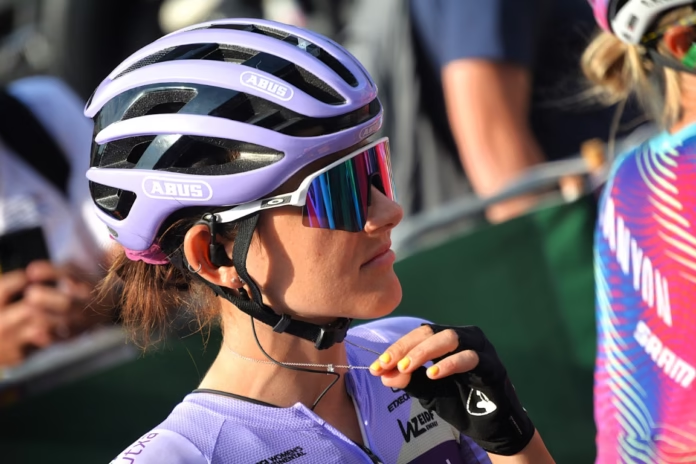
Laura Tomasi has abandoned the 2026 Tour de France Femmes after suffering a right elbow injury and possible concussion during the opening stage in Lausanne.
The official race medical communiqué said the Uno-X Mobility rider initially completed the concussion protocol with a normal result. However, some symptoms persisted after that first assessment, leading medical staff to transfer her to hospital for further checks. Her abandonment was confirmed in the same report, meaning she will not start Stage 2 from Aigle to Geneva.
Tomasi’s early exit is a significant disappointment after returning to Women’s WorldTour level with Uno-X for 2026. The 26-year-old Italian had been expected to offer the Norwegian team another option for selective finishes, hard stage races and breakaways during the nine-stage Tour. Our earlier report on Laura Tomasi’s move to Uno-X Mobility looked at how her performances with Laboral Kutxa had earned that return to the top division.
Tomasi transferred to hospital after symptoms persisted
Tomasi was involved in the second of three crashes recorded by the race medical service during Stage 1. The communiqué listed trauma to her right elbow and queried a possible concussion.
The initial concussion protocol did not identify an immediate abnormality, but the persistence of several signs meant she was transferred to hospital rather than simply cleared after the roadside assessment. That caution is important because concussion symptoms can develop or become more apparent after the first examination.
Uno-X began the Tour without one overriding GC contender, instead bringing a squad designed to pursue stage opportunities through riders including Katrine Aalerud, Alessia Vigilia, Anouska Koster and Tomasi. Her departure reduces the team’s flexibility before the race has left Switzerland. The Tour de France Femmes 2026 teams guide explains how Tomasi had fitted into the wider Uno-X plan.

Christina Schweinberger requires an X-ray on her left wrist
Christina Schweinberger was the most notable rider injured in the first recorded crash.
The Fenix-Premier Tech rider suffered trauma to her left wrist and was referred for an X-ray, with the team doctor notified. The race communiqué did not confirm a fracture or announce her withdrawal, so her availability for Stage 2 depends on the results of those checks and any subsequent team update.
Schweinberger is an important part of the Fenix-Premier Tech structure rather than simply another rider completing the squad. The Austrian is a strong time triallist and experienced one-day racer who can guide Charlotte Kool through fast finishes while also supporting Puck Pieterse on more selective terrain.
Her loss would leave the team with fewer riders capable of controlling positioning during the difficult middle section of Stage 2 and organising Kool before the expected sprint in Geneva. The Fenix-Premier Tech Tour de France Femmes squad guide covers Schweinberger’s role alongside Kool, Pieterse, Yara Kastelijn, Millie Couzens, Sara Casasola and Lotte Claes.
Lotte Claes and Henrietta Christie treated after the same crash
Lotte Claes and Henrietta Christie were also treated after the crash involving Tomasi.
Claes suffered abrasions but no more serious injury was detailed in the medical communiqué. She is another important supporting rider for Fenix-Premier Tech, particularly on days where the team need to protect Kool or place riders into breakaways before the race becomes selective.
Christie was treated for bruising and abrasions. The New Zealander finished the stage for EF Education-Oatly, and the report did not list an abandonment or further hospital assessment.
Christie brings climbing ability, endurance and tactical reliability to an EF squad with several possible stage winners. She can support Noemi Rüegg, Kristen Faulkner and Cédrine Kerbaol, but also has enough strength to pursue opportunities from breakaways if the team gives her freedom. More background on her career and role is available in our Henrietta Christie rider profile.
 Photo Credit: Getty
Mackenzie Coupland suffered an abrasion to her left thigh
Mackenzie Coupland was involved in a separate third crash and sustained an abrasion to her left thigh.
No more serious diagnosis was listed, and the Liv AlUla Jayco rider was not recorded as abandoning. She should therefore remain part of the Stage 2 field unless the team announces otherwise.
Coupland is one of the younger riders in Liv AlUla Jayco’s Tour squad and entered the race primarily as a supporting and developmental selection. Her immediate priority will be recovering sufficiently to contribute during the remaining Swiss stages without the injury affecting her movement or comfort on the bike.
Pauline Ferrand-Prévot and Lieke Nooijen warned for using the pavement
Defending champion Pauline Ferrand-Prévot and Visma | Lease a Bike teammate Lieke Nooijen were among four riders given formal warnings for using pavements that were not part of the designated race route.
Lily Williams of Human Powered Health and Picnic PostNL’s Josie Nelson received the same warning under Article 2.12.007-7.6.
The warnings did not carry time penalties or affect the general classification. Ferrand-Prévot therefore continues without any sporting loss from the incident, while Nooijen remains available to support her during the coming stages and target the Dijon time trial later in the race.
The incident nevertheless shows how closely riders are being monitored around traffic furniture and roadside shortcuts. Riders sometimes move onto pavements instinctively to avoid a crash, congestion or an obstacle, but doing so outside the marked route creates a separate safety risk involving spectators and street furniture.
For Ferrand-Prévot, the most important outcome from Stage 1 was avoiding injury and finishing safely with the other GC contenders. Her title defence will be shaped much more significantly by the Dijon time trial and Mont Ventoux, as explored in our Pauline Ferrand-Prévot Tour de France Femmes 2026 profile.
Alison Jackson warned for a non-compliant riding position
Alison Jackson received a warning for using a non-compliant position on the bicycle.
The communiqué did not specify the exact posture, but UCI regulations prohibit positions judged unsafe or outside the permitted points of contact with the bike. That includes some aerodynamic descending or seated positions that riders have previously used to reduce drag.
No fine, time penalty or UCI points deduction accompanied Jackson’s warning.
The Canadian is one of the most experienced riders in the St Michel-Preference Home-Auber93 squad and is known for aggressive racing, breakaway strength and the ability to finish quickly from a reduced group. Her experience should make her a useful road captain throughout the Tour, especially for a team unlikely to control stages through a conventional sprint train.
Jackson remains in the race and can continue looking for opportunities from breakaways or selective finishes. ProCyclingUK’s Alison Jackson rider page brings together more of her racing background and recent coverage.

Alice Towers fined and loses 15 UCI points
Alice Towers received one of the more substantial rider penalties from Stage 1.
The EF Education-Oatly rider was fined 250 Swiss francs and deducted 15 UCI points for disposing of a bottle outside an official litter zone, failing to return it to team or race staff or throwing it towards a spectator.
The penalty does not alter her time in the Tour de France Femmes general classification, but the loss of UCI points is still meaningful to both rider and team. Towers has developed into a valuable attacking option for EF and has produced several strong results on selective terrain during 2026.
Her role during the Tour is likely to involve supporting the team’s leading riders while remaining available for breakaways on the hilly days. The Alice Towers rider profile provides more background on the former British champion and her development into an established WorldTour rider.
EF sports director Huub Duijn was separately fined 500 Swiss francs for breaching regulations or guidelines governing vehicle movements during the race.
Three sports directors and a press driver receive yellow cards
Four vehicle occupants were fined 500 Swiss francs and issued yellow cards for breaches of the rules governing vehicle movement during Stage 1.
The penalties were given to:
Stéphane Chanal, driver of press vehicle 1001
Christian Kos, sports director of SD Worx-Protime
Ion Lazkano, sports director of Laboral Kutxa-Fundación Euskadi
Chérie Pridham, sports director of UAE Team L’IMAD
The communiqué does not provide a detailed description of each incident, only the regulation covering vehicle movements during the race.
Yellow cards form part of the UCI’s safety system and can lead to stronger sanctions if repeated over the relevant period. Team cars and media vehicles operate in a confined race convoy where sudden movements, overtaking or failure to follow instructions can create serious risks for riders.
Pridham’s penalty is particularly notable because UAE Team L’IMAD begin the Tour with major GC ambitions through Paula Blasi and Elisa Longo Borghini. Kos is similarly part of the operation protecting yellow jersey Lorena Wiebes and the wider SD Worx-Protime leadership group.
The sanctions do not affect any rider’s time or the team classifications.

Alison Avoine eliminated outside the time limit
Alison Avoine was the only rider eliminated for finishing outside the Stage 1 time limit.
Lorena Wiebes completed the stage in 3:29:11, with the 12 per cent allowance producing a maximum permitted time of 3:54:18. Avoine finished beyond that cut and was removed from the race.
Her elimination leaves Ma Petite Entreprise with one fewer rider before Stage 2. As part of one of the smaller invited teams, Avoine had entered the Tour with opportunities likely to come through breakaways, supporting teammates and gaining experience at the highest level rather than challenging for a major classification.
Missing the time limit on the opening stage underlines how demanding Lausanne became despite its official flat classification. The climbs, heat and fast finale made it difficult for riders dropped earlier in the day to recover enough time.
Time cuts are calculated differently depending on the stage type and winning speed. Our Tour de France Femmes 2026 time-cut guide explains how riders can be eliminated even after reaching the finish.
Two riders leave the Tour before Stage 2
Tomasi’s abandonment and Avoine’s elimination mean at least two riders will not continue from Aigle to Geneva.
The situation around Schweinberger remains the main medical uncertainty. An X-ray was required after her wrist injury, but the Stage 1 communiqué did not confirm whether she would be cleared to start.
Claes, Christie and Coupland were all treated for more superficial injuries and were not listed as abandoning. Their teams will still need to assess how well they have recovered overnight, particularly with Stage 2 expected to be raced in very high temperatures.
The injuries also affect more than the riders directly involved. Fenix-Premier Tech could begin Stage 2 with both Schweinberger and Claes carrying crash injuries, while EF Education-Oatly have Christie recovering from bruising and Towers dealing with a points penalty rather than a physical problem.
-
 Photo Credit: quentinphotographiebe
 -
 Photo Credit: Getty

All 33 bicycles pass technological checks
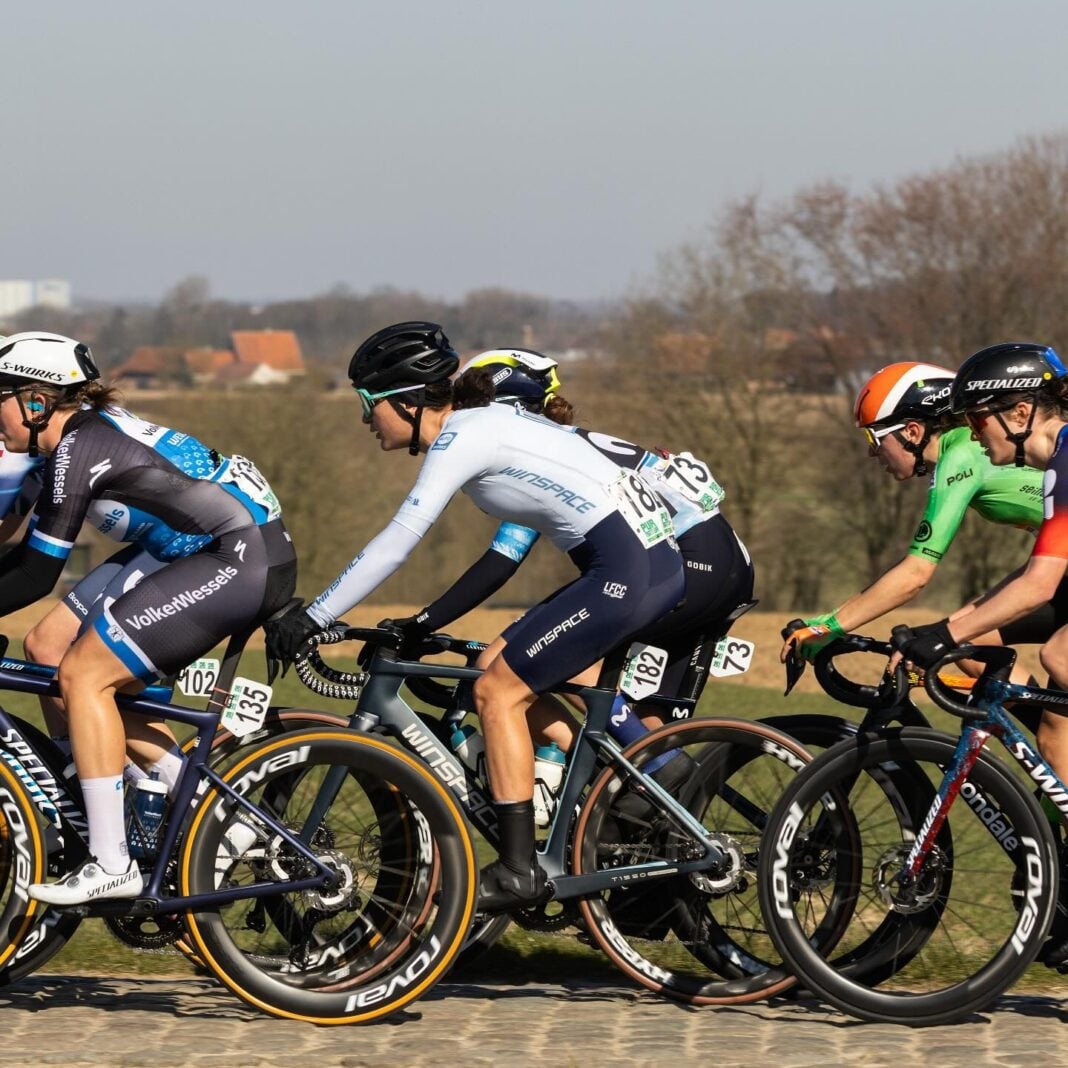
Race officials inspected 33 bicycles as part of the fight against technological fraud.
Six of those bikes were examined using X-rays, and all 33 were found to comply with UCI regulations. No hidden motors or other prohibited technology were detected.
The commissaires also reminded teams that modifying or cutting the official frame plates is forbidden under Article 1.3.076.
These checks are now a routine part of major races, but publishing the numbers provides a clear record of the controls carried out. The 2026 Tour began with no technological irregularities identified.
Feeding rules extended for Stage 2 heat
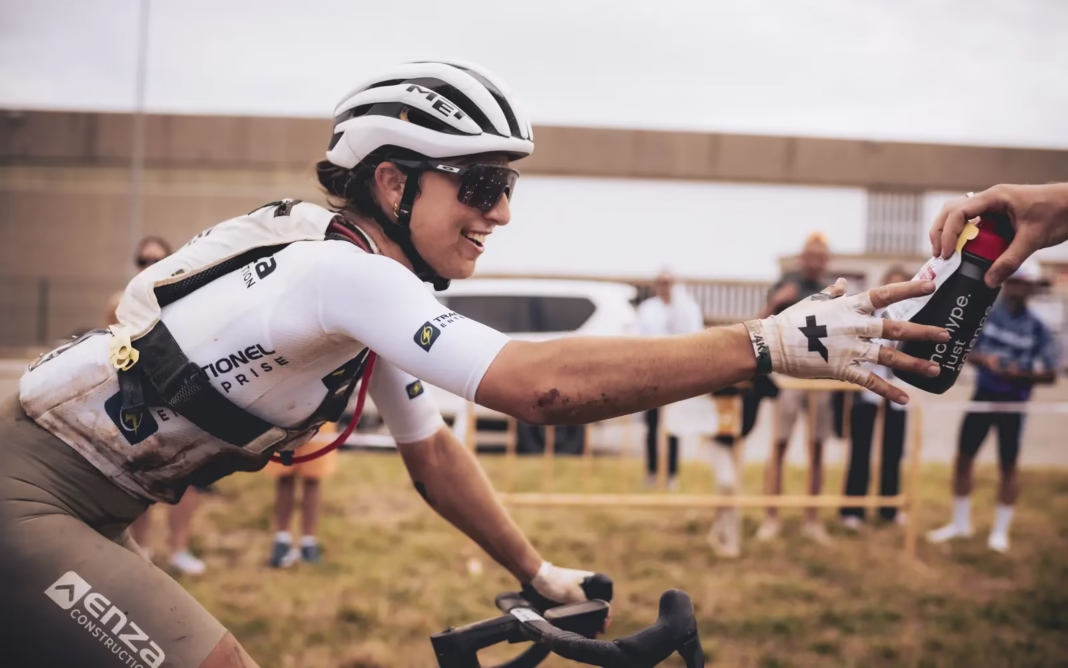
The race communiqué also confirmed that feeding on Stage 2 will be permitted from kilometre 10 until 10km from the finish.
Opening that window for almost the entire stage is especially important given the forecast heat between Aigle and Geneva. Riders will need regular bottles, ice and food as temperatures rise, while teams must balance those additional feeds with the need to stay positioned around the five categorised climbs.
The broader Tour de France Femmes 2026 Stage 2 preview looks at how the climbing, heat and long flat run towards Geneva could shape Sunday’s race.
Stage 1 produced no major GC losses, but its medical and disciplinary reports were far from empty. Tomasi’s suspected concussion was the most serious incident, Schweinberger’s wrist remains a concern and Avoine’s time-cut elimination has already reduced the field.
For the riders who continue, Stage 2 offers another difficult test. The roads towards Geneva may favour a sprint, but several teams begin the day managing injuries, warnings and a reminder that the Tour can narrow a squad’s options long before the decisive mountains arrive.

