
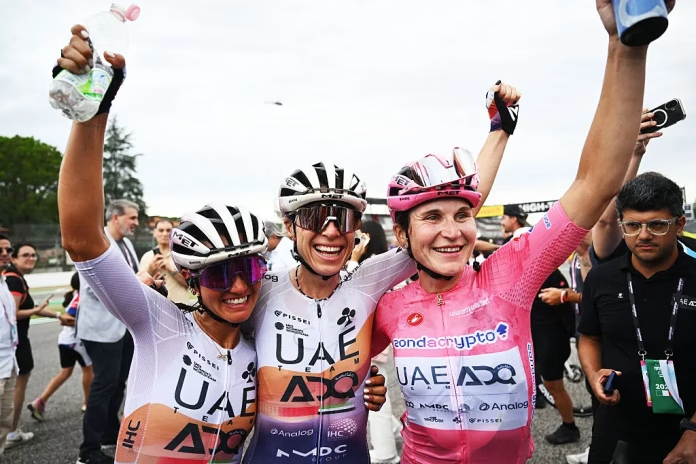
If you are new to women’s cycling, the Women’s WorldTour is the most useful place to begin. It is the top tier of professional women’s road racing, the level where the best riders, the biggest races and the strongest teams most regularly come together across the season.
That is the simple definition. The more helpful one is this: the Women’s WorldTour is the backbone of the sport. It is the structure that holds the season together. If you want to understand where the most important one-day races sit, where the biggest stage races sit, and where the main storylines of the year tend to develop, this is where you start.
For newer fans, that matters because cycling can seem sprawling at first. There are different race categories, different teams, and a calendar that runs for most of the year. The Women’s WorldTour gives that calendar a clear top level. It tells you, in effect, these are the races that matter most often, these are the teams you will see most often, and this is where the sport’s central narrative usually lives.
If you want to explore that calendar in more detail, the women’s cycling race hub is the best internal starting point. If you are more interested in the one-day side of the sport first, Best women’s cycling races for beginners in 2026: the one-day Classics to watch first shows why the WorldTour spring is such a strong entry point.
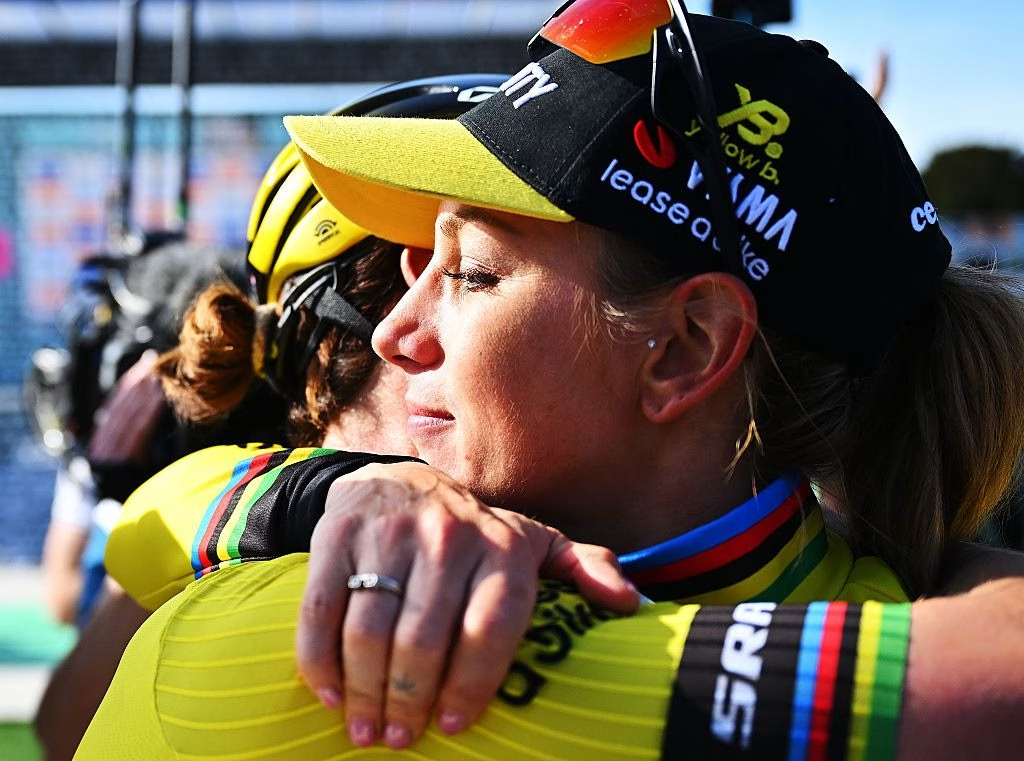
The Women’s WorldTour is the sport’s top division
The Women’s WorldTour is the highest level of the UCI women’s road calendar. That means it sits above the lower tiers of professional racing and includes the most prestigious races of the season.
It has been in place since 2016, when the UCI introduced it as a broader replacement for the older Women’s World Cup structure. That change mattered because the older World Cup had been built around one-day races only. The Women’s WorldTour created something fuller and more modern, a top-level series that includes both one-day races and stage races.
That shift was important because it made the women’s season easier to follow as a connected whole. Instead of seeing the top level only through isolated Classics, fans could follow a proper elite calendar across the season. It gave the women’s side of the sport a clearer spine, and over time that has made the racing feel more joined-up, more visible and more coherent.
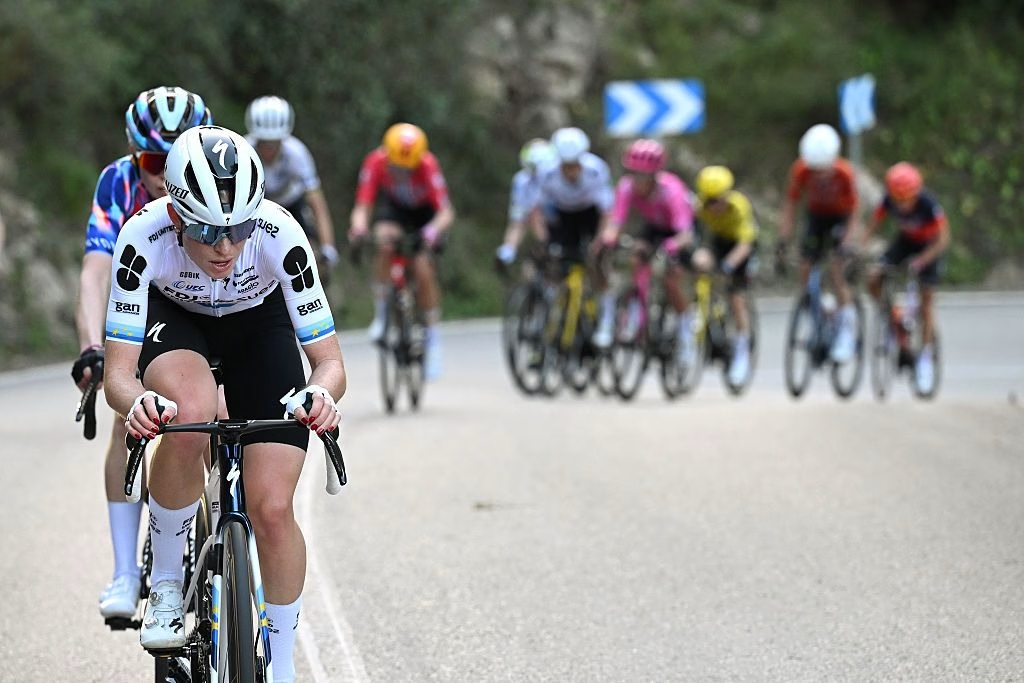 Photo Credit: Getty
What races are in the Women’s WorldTour?
The Women’s WorldTour includes the biggest races in women’s professional road cycling. In practice, that means a calendar built around the major one-day Classics, the biggest stage races, and the sport’s most important Grand Tour-style events.
That includes early-season races such as the Santos Tour Down Under and UAE Tour Women, major spring one-day races such as Strade Bianche Donne, Milano-Sanremo Donne, Ronde van Vlaanderen, Paris-Roubaix Femmes avec Zwift and Liège-Bastogne-Liège Femmes, as well as the Tour de France Femmes avec Zwift and the other major stage races that shape the year.
That breadth is one of the best things about the Women’s WorldTour. It is not built around one type of rider or one type of race. A sprinter can shine in one part of the season. A Classics specialist can dominate another. A climber or GC rider can take over when the longer stage races arrive. If you follow the WorldTour, you are not just following one style of cycling. You are following the full range of the sport.
The Women’s WorldTour is not one race, it is the season’s main framework
This is one of the points that often confuses newer fans at first.
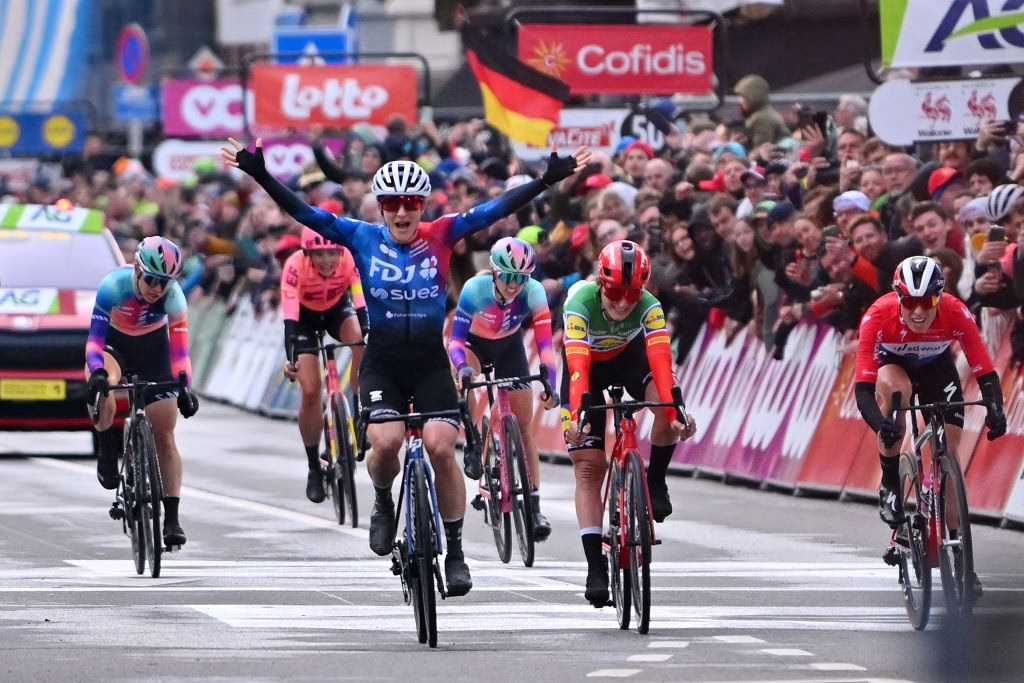
The Women’s WorldTour is not a single race, and it is not just another name for the Tour de France Femmes. The Tour is one race inside the Women’s WorldTour. The WorldTour itself is the whole top-level series.
That distinction matters because cycling does not build everything around one single championship event. Instead, the season is made up of many important races, each asking different questions. Some reward sprinting, some reward climbing, some reward repeated short efforts on cobbles, and some reward endurance over a week.
The Women’s WorldTour is the umbrella that holds those races together.
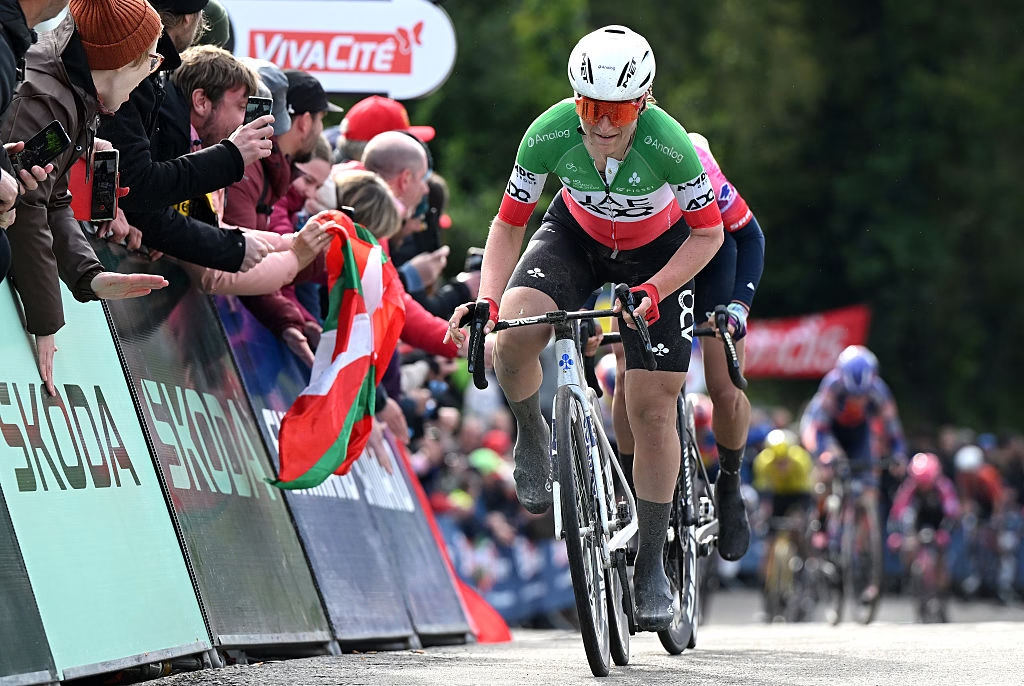
Who races in the Women’s WorldTour?
The main teams in the series are the UCI Women’s WorldTeams, the top-level professional squads licensed by the UCI. These are the teams most people mean when they talk about the top level of women’s cycling. They are the teams built to race the elite calendar, and they carry most of the sport’s best-known riders.
That includes squads such as SD Worx-Protime, FDJ United-Suez, Lidl-Trek, Movistar Team, UAE Team ADQ, Team Visma | Lease a Bike, Canyon SRAM zondacrypto and AG Insurance-Soudal. Those teams shape most of the major races across the year, even if organisers can still invite teams from below the top tier depending on the event.
If you want the clearest team-focused route into the sport, Women’s WorldTour teams 2026: a complete guide to the top 14 teams in women’s cycling is the natural next read.
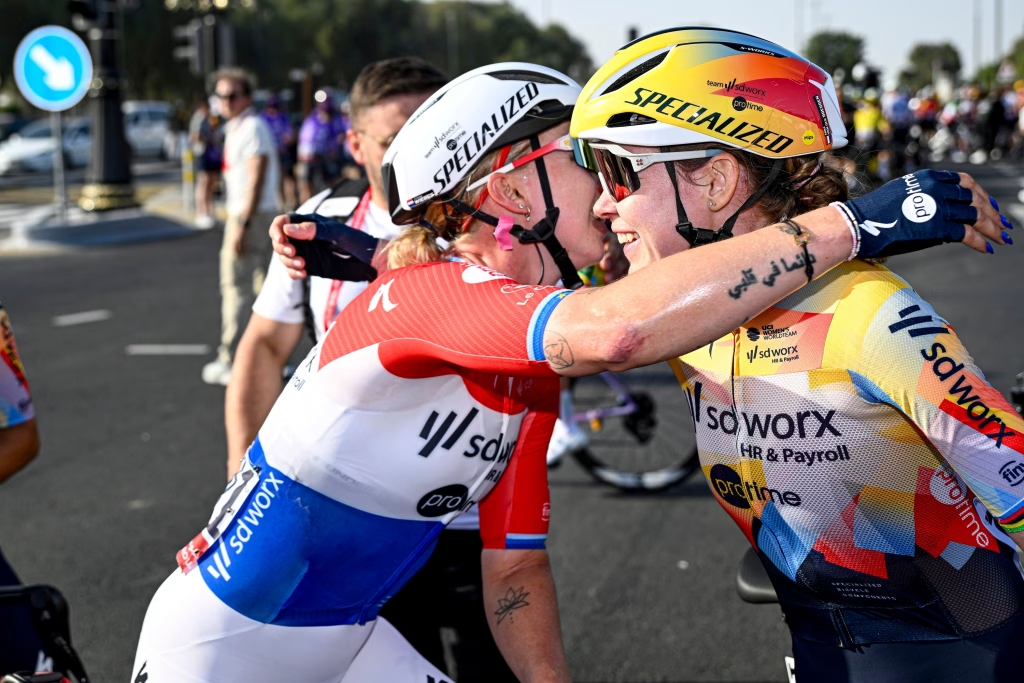 Photo Credit: LaPresse
Why the Women’s WorldTour matters so much
The Women’s WorldTour matters because it gives the sport a clear centre of gravity.
Without it, women’s road cycling would still be worth following, but it would be much harder for new fans to know which races sit at the top of the structure, which teams define the elite level, and which results carry the most weight across the full season.
It also matters because it has become one of the clearest signs of the growth of women’s cycling. The fact that there is now a recognisable top tier with a global calendar, major teams, a stronger race spread, and clearer season-long narratives says a lot about how far the sport has come.
That growth is not only visible in the biggest races themselves. It is visible in how the calendar now fits together, how teams are built, and how riders can specialise while still operating within one coherent elite structure.
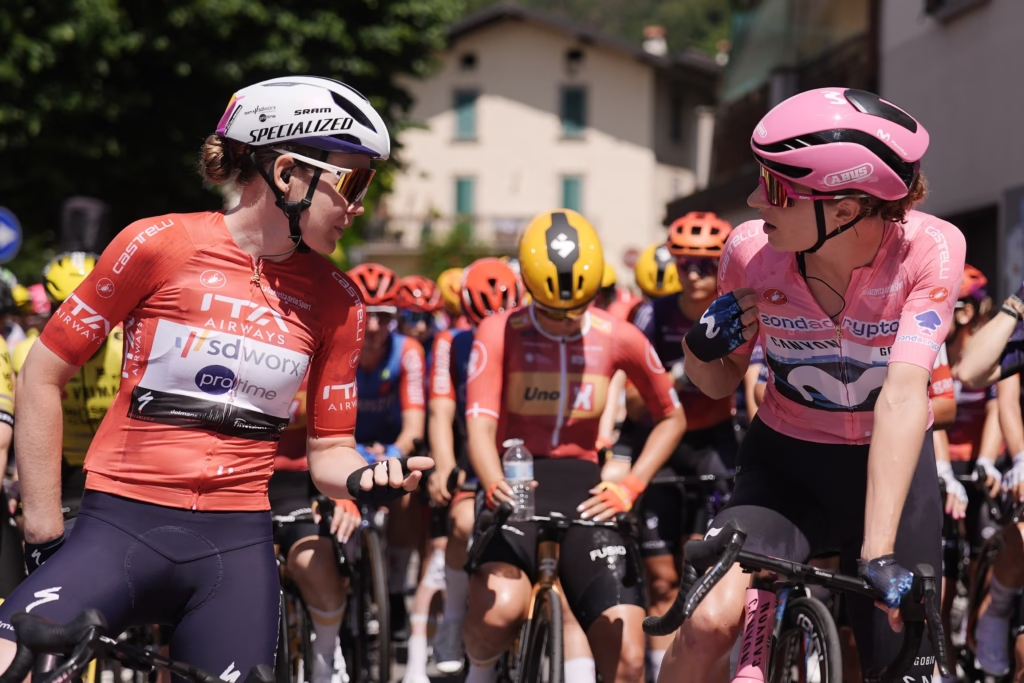 Photo Credit: LaPresse
One-day races and stage races both matter here
One of the most useful things about the Women’s WorldTour is that it is not limited to one format.
It includes one-day races and stage races, and that makes it a much better reflection of the sport than a single-format series would be. One-day races often provide the clearest drama for new fans, because everything happens in one afternoon. Stage races test different qualities, consistency, recovery, team depth and long-term tactical control.
That balance is part of what makes the WorldTour interesting. It does not just tell you who the best rider is in one narrow sense. It shows you which riders can dominate a sprint, which can survive a cobbled Monument, which can win from a reduced group on hilly terrain, and which can hold their level over several days in the mountains.
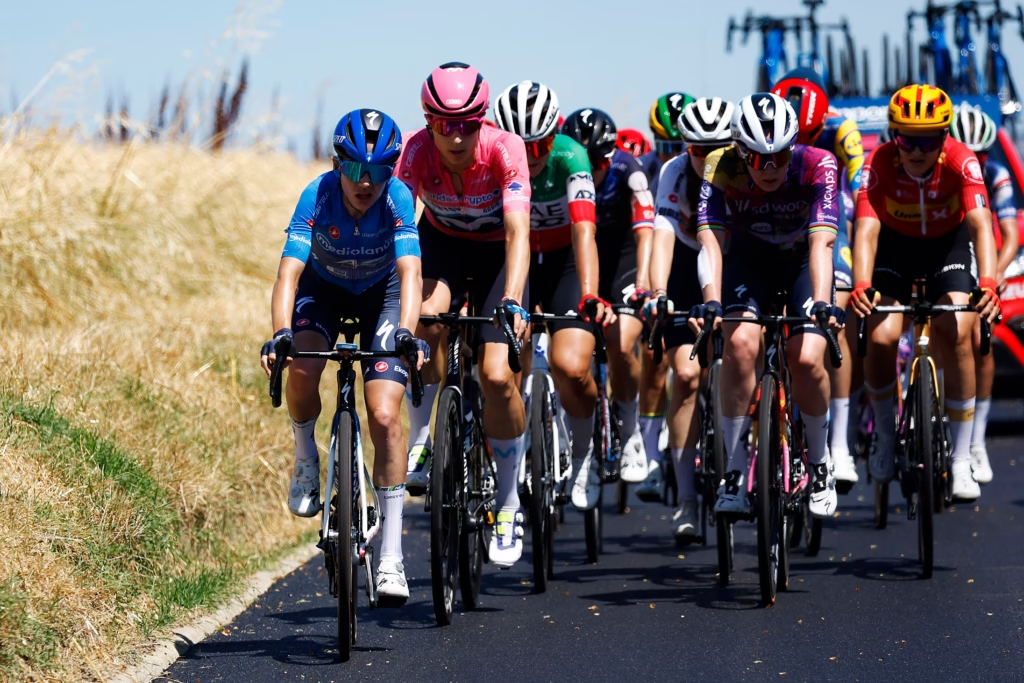 Photo Credit: LaPresse
How is the Women’s WorldTour different from lower levels?
The simplest answer is status.
Below the Women’s WorldTour are other levels of professional racing, including ProTeams and lower-ranked races on the wider UCI calendar. Many of those races are good, some are excellent, and some are important stepping stones for riders and teams. But the Women’s WorldTour is the recognised top division.
In practical terms, that usually means stronger startlists, more visibility, bigger race prestige and greater importance in the overall story of the season.
A rider can absolutely build a strong career without racing only WorldTour events, and a lower-tier race can still produce brilliant racing. But if you are asking where the sport’s highest concentration of quality and significance usually sits, the answer is the Women’s WorldTour.

Why it is the best place for new fans to start
For a new fan, the Women’s WorldTour is useful because it simplifies the sport without flattening it.
You do not need to learn every race on the calendar at once. You can start with the top tier, follow the main teams, recognise the biggest races, and gradually branch out from there.
It also helps that the WorldTour calendar teaches the sport naturally. Spring teaches the Classics. Summer brings the biggest stage races and the Tour de France Femmes. Later in the year, the calendar shows how riders manage fatigue, form and opportunity across a full season. In that sense, the Women’s WorldTour is not just the top level of the sport. It is also the clearest map of the sport.
For example, if you start with the spring one-day races, pieces like A complete history of Paris-Roubaix Femmes and Why Paris-Roubaix Femmes is raced differently from the men’s race help explain how one of the biggest WorldTour events works and why it matters.
Final verdict
The Women’s WorldTour is the top-level series in women’s professional road cycling. It is the elite calendar that brings together the best teams, the biggest races and the main storylines of the season.
For new fans, that makes it the cleanest place to begin. If you want to understand women’s cycling properly, not just one race but the structure of the sport, the Women’s WorldTour is the best entry point.
From there, everything else becomes easier to follow.

