
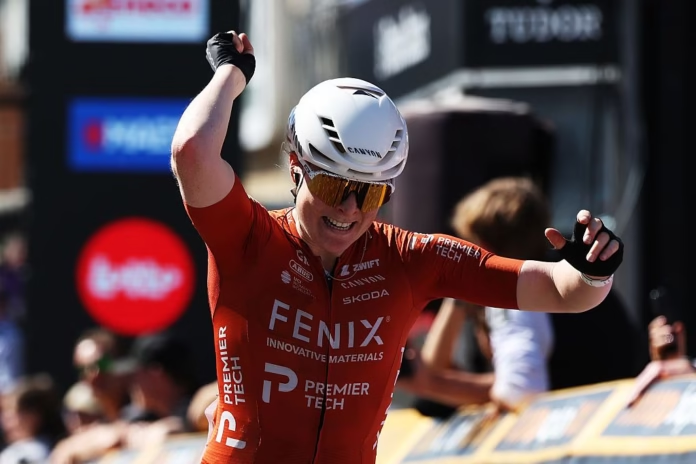
Fenix-Premier Tech have confirmed their seven-rider squad for the Tour de France Femmes 2026, with Puck Pieterse and Charlotte Kool giving the team two very different routes towards stage wins.
They will be joined by Yara Kastelijn, Christina Schweinberger, Millie Couzens, Sara Casasola and Lotte Claes for the nine-stage race from Lausanne to Nice.
The selection is built around versatility rather than one GC leader. Kool gives Fenix-Premier Tech a genuine contender for the flatter finishes, Pieterse can target punchy and hilly stages, while Kastelijn and Casasola strengthen the team once the race moves into more selective terrain.
The approach fits the wider shape of the Fenix-Premier Tech 2026 Women’s WorldTour team, which has built much of its season around Pieterse’s versatility and Kool’s sprint speed.
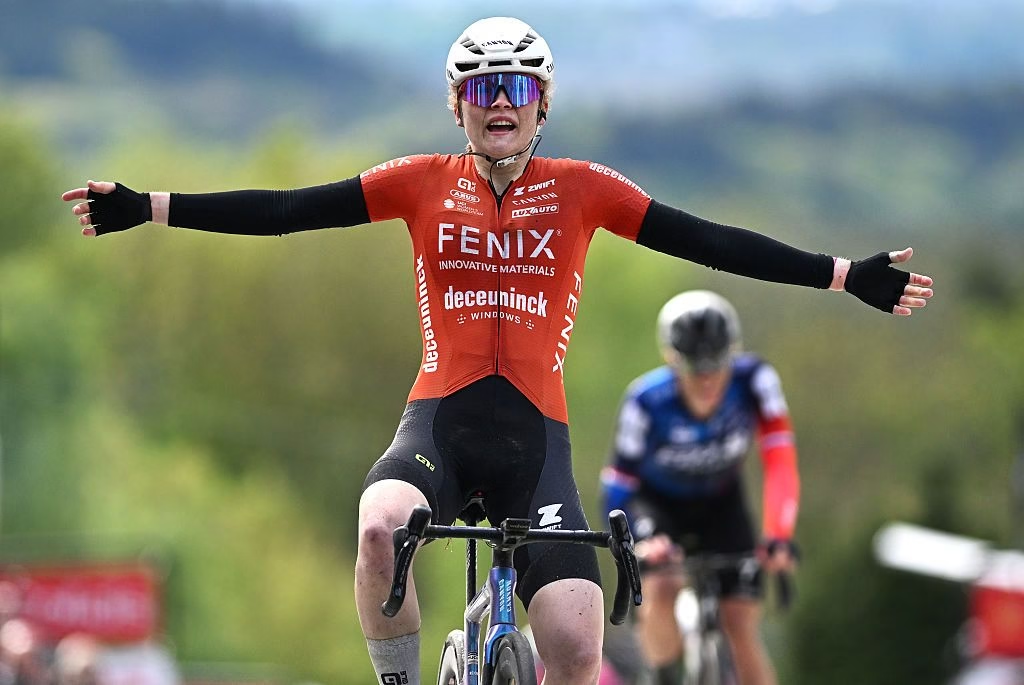
Pieterse gives Fenix-Premier Tech their biggest all-round threat
Pieterse is the rider with the widest range of opportunities across the Tour.
She is not tied to one type of stage and does not need the race to end in a conventional sprint. That makes the opening stage in Lausanne, the hilly road to Poligny and the more selective middle stages especially interesting.
Her ability to handle short climbs, repeated accelerations and technical racing gives Fenix-Premier Tech an option on days where the pure sprinters begin to struggle.
Pieterse also gives the team tactical freedom. She can follow aggressive moves, attack from a reduced group or wait for a sprint if the race comes back together.
That makes her one of the riders most likely to deliver a stage result even if the Tour never develops in one predictable way. Her strongest opportunities across the nine stages are explored in our Puck Pieterse at the Tour de France Femmes 2026 guide.
Kool remains one of the fastest sprinters in the race
Charlotte Kool gives the team a much more straightforward objective on the flatter stages.
When the race finishes with a conventional bunch sprint, she is one of the few riders capable of challenging Lorena Wiebes directly.
Stage 2 into Geneva is the clearest opportunity, while the later run towards Nice could also suit her if she survives the accumulated climbing and reaches the finale with enough support.
Kool’s sprint pedigree is already well established. She won the opening two stages of the 2024 Tour de France Femmes and wore yellow, while her 2026 season has included further victories at Omloop van het Hageland, Scheldeprijs and Veenendaal-Veenendaal.
The challenge is getting to the right finishes in position.
The 2026 route is not especially generous to pure sprinters, and even some of the officially flat stages contain enough climbing to complicate the picture.
That makes Kool’s support network important. Fenix-Premier Tech do not have the deepest sprint train in the race, so positioning and timing may matter as much as raw speed.
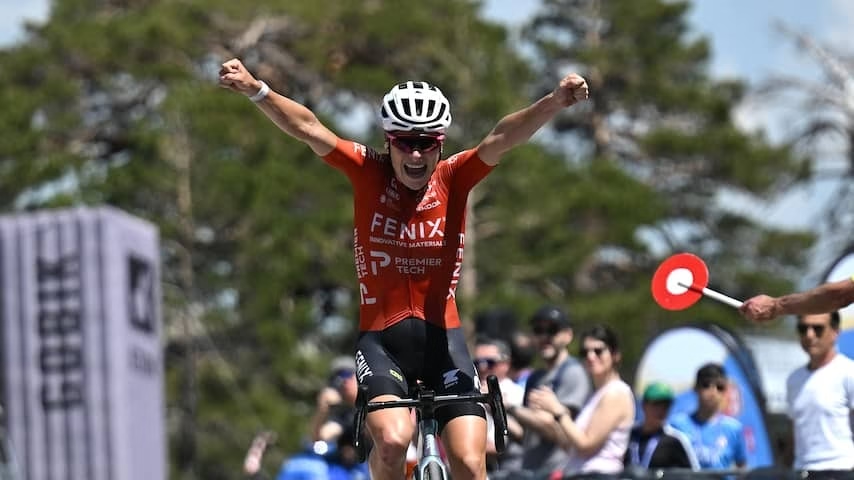 Photo Credit: Getty
Kastelijn adds another strong option for hilly stages
Yara Kastelijn gives Fenix-Premier Tech another rider who can be dangerous when the race becomes selective.
Her best opportunities are likely to come on the hilly stages rather than the pure sprint days.
A breakaway on Stage 5 or 6 would suit her particularly well, especially if the major GC teams are more interested in protecting resources before Mont Ventoux.
Kastelijn can also work around Pieterse if the team decide to race more aggressively.
That combination is useful because neither rider needs a full team controlling the stage from start to finish. Fenix-Premier Tech can instead place pressure on other squads by putting one rider ahead while keeping another in the favourites’ group.
Casasola strengthens the climbing side of the squad
Sara Casasola gives the team another rider capable of contributing once the road points upwards.
She is not the obvious GC leader, but her climbing ability adds depth for the harder stages and gives Fenix-Premier Tech another option for breakaways.
That should become increasingly important after the Dijon time trial.
The race becomes more selective from Stage 5 onwards, and teams without a major yellow jersey contender can often gain more by attacking than by waiting.
Casasola fits that kind of role well.
If she loses enough time early to become harmless in the overall classification, she could receive substantial freedom on the days where the breakaway has a realistic chance of staying clear.
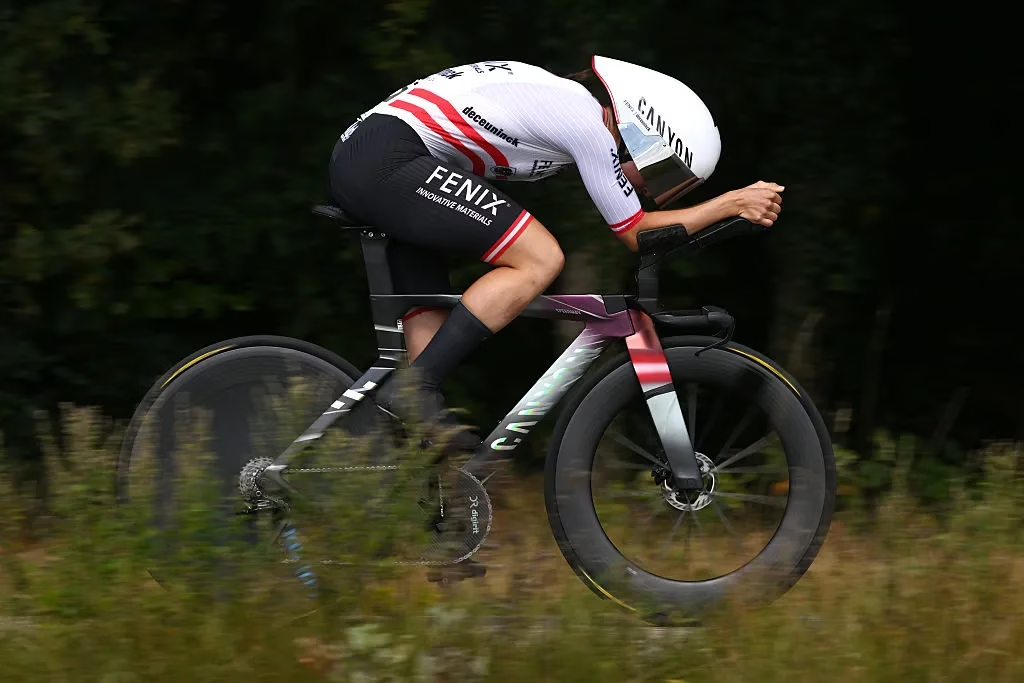
Schweinberger brings speed and tactical depth
Christina Schweinberger adds another fast and experienced option.
She can contribute around Kool on the sprint stages but is also useful on harder days where a reduced finish remains possible.
That versatility means Fenix-Premier Tech do not need to dedicate every flatter stage entirely to Kool.
If the race becomes too selective for a pure bunch sprint, Schweinberger can still remain relevant. She also gives the team another rider capable of positioning Pieterse or Kool before the decisive kilometres.
That flexibility matters over nine stages, especially in a Tour where several days sit between clear sprint and mountain categories.
Couzens and Claes complete an aggressive seven-rider selection
Millie Couzens and Lotte Claes complete the squad and reinforce the team’s ability to race actively rather than defensively.
Couzens adds another young rider capable of contributing across mixed terrain, while Claes gives Fenix-Premier Tech further depth for breakaways and support work.
Neither needs to carry major result expectations.
That can make them useful.
A team with Pieterse and Kool already has clear headline options. Couzens and Claes can therefore be used to follow early moves, protect leaders or force rival teams to react without sacrificing the team’s main cards.
-
 Photo Credit: Getty
Fenix-Premier Tech can target almost every type of stage
The main strength of the squad is that it is not dependent on one scenario.
Kool gives them a route to victory in the bunch sprints.
Pieterse can win from selective groups or on punchy terrain.
Kastelijn and Casasola can attack on the harder stages.
Schweinberger adds another faster option, while Couzens and Claes provide support and breakaway flexibility.
That should be particularly useful across the middle of the race, where the Tour de France Femmes 2026 breakaway specialists are likely to have their best opportunities.
The absence of a major GC leader may even help. While other teams spend energy protecting yellow jersey contenders, Fenix-Premier Tech can keep racing for the stage in front of them.
Fenix-Premier Tech Tour de France Femmes 2026 squad
- Puck Pieterse
- Charlotte Kool
- Yara Kastelijn
- Christina Schweinberger
- Millie Couzens
- Sara Casasola
- Lotte Claes
Fenix-Premier Tech arrive with one of the more adaptable stage-hunting squads in the race. Kool gives them elite sprint speed, while Pieterse offers a completely different route to victory on the days when the Tour becomes harder and less predictable.
If the race opens up through the middle of the week, Kastelijn and Casasola give them further options. The team may not be built around the yellow jersey, but it should have a reason to race aggressively on almost every stage.

