
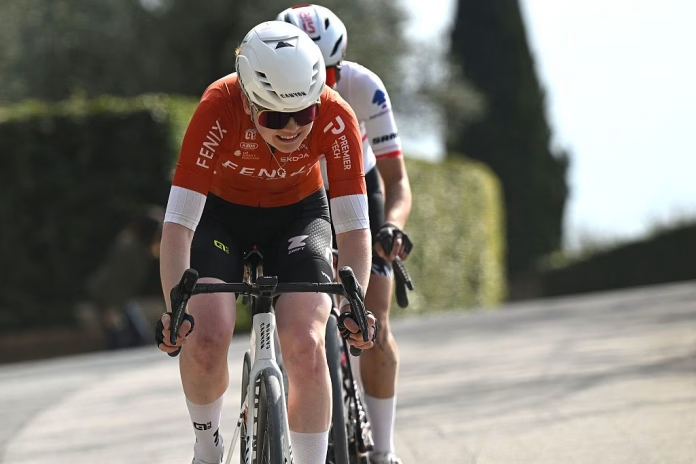
Puck Pieterse arrives at the Tour de France Femmes 2026 as one of the hardest riders in the race to categorise, which is exactly why she is so dangerous. She is not a pure sprinter, not a conventional GC climber and not simply a breakaway specialist. Instead, Pieterse sits somewhere between all three, with the acceleration to win on short climbs, enough climbing strength to survive selective terrain and the bike-handling ability to turn descents and technical finales into attacking opportunities.
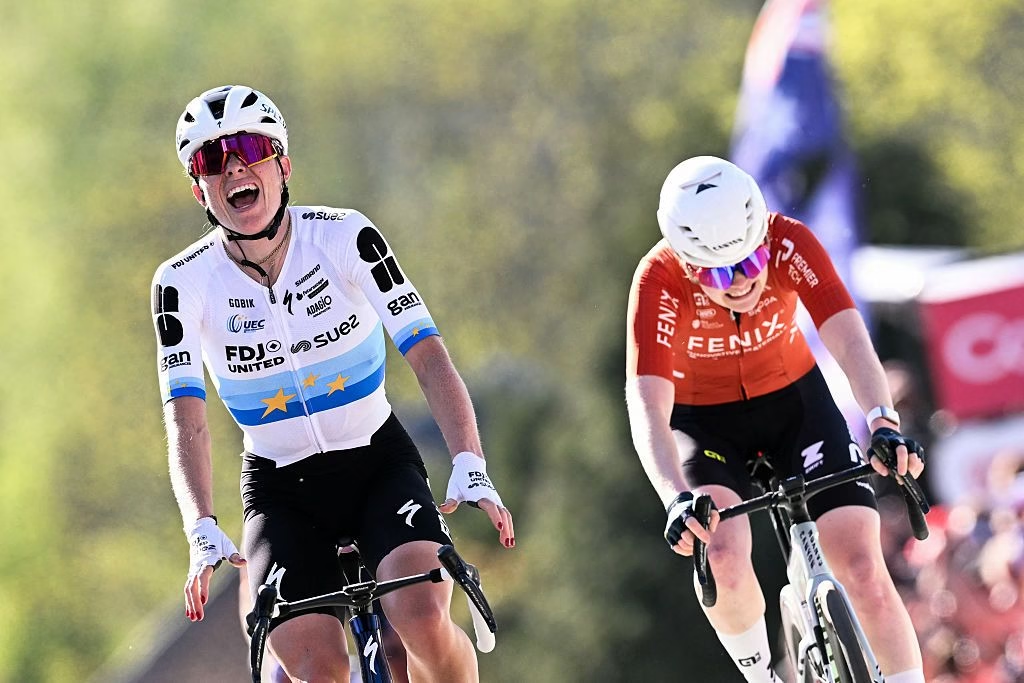
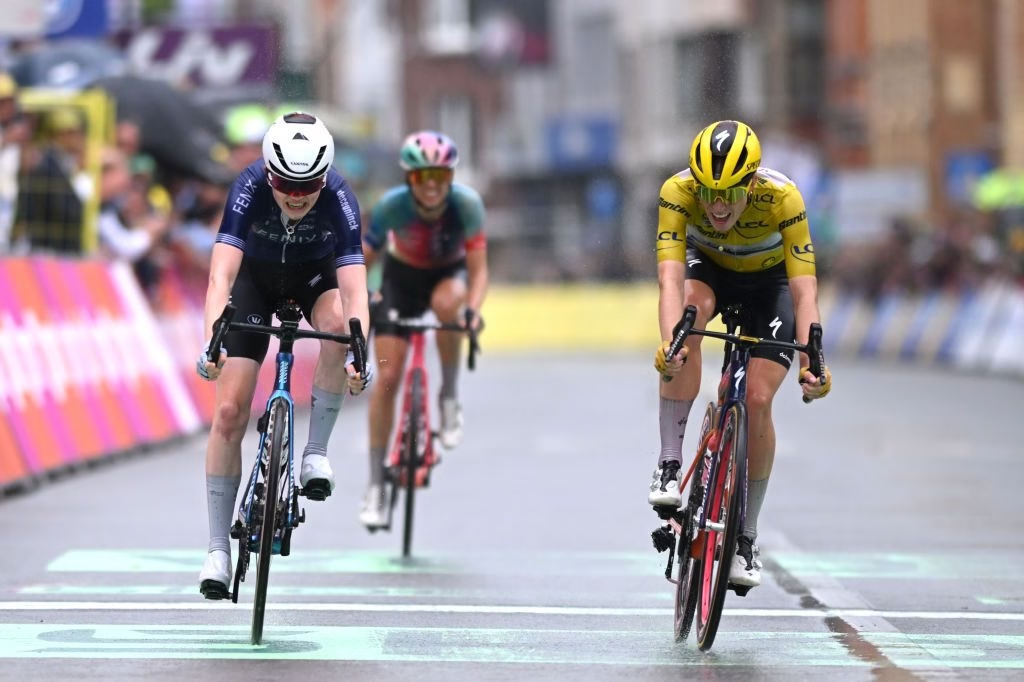
That versatility has already produced major Tour success. Pieterse won Stage 4 of the 2024 Tour de France Femmes from Valkenburg to Liège, beating Demi Vollering and Kasia Niewiadoma in a reduced sprint after a Classics-style day. It immediately proved that her cyclocross and mountain-bike background could translate into one of the biggest races on the road.
The Tour de France Femmes 2026 route may suit her even better as a stage hunter. There are three hilly stages before Mont Ventoux, several finales where explosive climbing matters more than sustained high-mountain pacing and enough tactical uncertainty for Pieterse to create opportunities rather than wait for them.
 Photo Credit: Getty
Pieterse is at her best when the race becomes difficult but not mountainous
The easiest way to understand Pieterse’s Tour chances is to look at the terrain she does not necessarily need. She does not require a summit finish and, in fact, a long climb such as Mont Ventoux is much less naturally suited to her than a stage containing repeated shorter ascents, fast descents and a selective finish.
That is where her punch matters most. Pieterse can follow sharp accelerations, produce her own attack over a few minutes and still retain enough speed to win from a small group. Her background across cyclocross and mountain biking also makes technically awkward racing less intimidating than it is for many road specialists.
That range is why our Tour de France Femmes 2026 riders to watch identifies several stages where she could become a factor. Stage 5 is the clearest, while Stages 3 and 6 offer additional strong opportunities. Even the opening day in Lausanne becomes interesting if the final kilometres are selective enough to remove some sprinters without turning into a pure GC test.
Lausanne should already put Pieterse in the conversation
The opening Lausanne stage is officially flat, but the Swiss Grand Départ makes that classification slightly misleading. The 138km circuit contains repeated short climbs before the final rise towards Côte Saint-François, 2.5km at 4.6%.
That is much more interesting for Pieterse than a completely flat opening stage. She does not want a full sprint train delivering Lorena Wiebes towards the final 200 metres. Her opportunity appears if the accumulated climbing reduces the group and turns the finish into a contest between fast puncheurs and all-rounders.
The difficulty is that everyone starts the Tour fresh. GC teams still have complete squads, sprint teams retain their lead-outs and riders who may be vulnerable to the same terrain later in the race have not yet accumulated fatigue. Victory is possible, but the later hilly stages offer Pieterse a more obvious route to the front.
Stage 3 is her first obvious stage-hunting opportunity
Geneva to Poligny is where Pieterse’s Tour begins to offer several routes to victory. The 156.5km stage includes the Col de la Faucille early, followed by more climbing before a less severe final section. Because the hardest terrain comes far enough from the finish, the race could develop in several different ways.
A strong breakaway could survive, dropped sprinters could return or a reduced peloton could reach Poligny together. Pieterse fits all three scenarios. She has enough climbing strength to join a serious escape on the Faucille if Fenix-Premier Tech decides the composition is favourable, while she also has enough speed to contest a selective finish if the race comes back together.
That dual threat makes her particularly awkward to manage. Allow Pieterse into a strong break and she is difficult to beat from a small group. Spend resources chasing her back and she may still become one of the fastest riders remaining when the race reaches Poligny.
Pieterse should not be treated as a conventional breakaway specialist
There is a temptation to place every versatile rider without obvious GC ambitions into the same stage-hunter category, but Pieterse is more dangerous than that. Her 2024 Tour stage victory in Liège showed that she does not need several minutes of freedom to win. She can survive a hard day alongside elite riders and then beat them directly at the finish.
That should influence how Fenix-Premier Tech use her in 2026. There is little value in sending Pieterse into every early move simply because she is capable of winning from a break. Joining a weak escape can reduce her chances if she spends several hours working while the riders she eventually needs to beat remain protected in the peloton.
The ideal attacks need to be selective. Stage 3 could justify an early move because the Faucille can produce a powerful group rather than a routine breakaway. Stage 5 offers a completely different strategy, because there Pieterse has every reason to stay protected and wait for the race to come towards her.

Stage 5 looks almost designed for Pieterse
Mâcon to Belleville-en-Beaujolais may be the clearest Pieterse stage of the entire Tour. The 140km route contains close to 2,900 metres of climbing and a succession of short ascents without the prolonged mountain effort that would naturally favour the pure GC riders.
The decisive climb is Mont Brouilly, around 3km at 7.7%, cresting little more than 10km from the finish. That combination gives Pieterse almost every scenario she could want. The climbing is hard enough to remove many pure sprinters, Mont Brouilly is steep enough for an explosive attack and the short distance from the summit gives a lone rider or small group a realistic chance of staying away.
If nobody escapes, Pieterse still has the sprint to win from a reduced group. The broader tactical possibilities of the day are covered in our guide to the Tour de France Femmes 2026 hilly stages, with Stage 5 standing out as the clearest puncheur battleground of the race.
Mont Brouilly gives her the right kind of climb
Pieterse does not necessarily want the race driven flat-out from the bottom of Mont Brouilly. Three kilometres at close to 8% is long enough for the strongest climbers to use sustained power, but short enough that an explosive attack near the summit can still decide the stage.
That is probably the better route for her. Pieterse can absorb the initial hard tempo, wait until the group has already been reduced and then use the acceleration that makes her so effective across disciplines. If she gets over the top with even a small advantage, her descending ability becomes part of the attack rather than simply a way of staying in the group.
A rider who crests with five seconds can turn that into 10 if she commits immediately downhill while the chase hesitates. With the finish coming soon afterwards, that can be enough. Pieterse does not need to be the strongest climber on Mont Brouilly, she needs to be the rider who uses the climb and descent most effectively.

A reduced sprint might be an even better outcome
Pieterse’s attacking reputation can obscure how useful her sprint is. If Mont Brouilly reduces the race to 15 or 20 riders and nobody escapes, she could become one of the fastest women remaining.
Pure sprinters may already have been dropped, while GC riders may be reluctant to take risks in a sprint and some of the climbers capable of surviving the ascent will not have Pieterse’s acceleration on flatter roads. It leaves her in exactly the sort of reduced group where her versatility becomes a finishing advantage.
That creates a tactical problem for rivals. Close every Pieterse attack and they may simply deliver her to a sprint she can win anyway. Allow her several seconds and she has the power and descending skill to make that gap difficult to close. Very few riders in the Tour have both options available from the same position.
Stage 6 gives her another strong route towards a win
The following stage from Montbrison to Tournon-sur-Rhône is another hilly day, but the tactical context changes completely because Mont Ventoux follows immediately afterwards.
GC teams may be reluctant to spend domestiques chasing a harmless breakaway for several hours when those same riders will be needed on the race’s biggest mountain. Stage hunters also know their opportunities are disappearing, which should produce an aggressive opening and increase the chances of a high-quality escape eventually receiving substantial freedom.
Pieterse fits that scenario extremely well. She can climb strongly enough to stay in a serious move, descend confidently and still sprint if several riders arrive together. The question is less whether she can win Stage 6 and more whether Fenix-Premier Tech can identify the right move to commit to.

Stage 6 rewards judgement as much as aggression
Pieterse’s natural instinct is to race, and that is one of her greatest strengths, but a Grand Tour rewards knowing which attacks actually matter. Cover too many moves in the opening hour and the decisive break can form after she has already spent unnecessary energy.
The ideal Stage 6 escape contains enough major teams that responsibility for chasing disappears behind. A move containing three riders while every strong squad remains represented in the peloton is unlikely to survive, whereas a larger group containing riders from several teams can quickly become tactically difficult to retrieve.
The Tour de France Femmes 2026 breakaway specialists include riders such as Célia Géry, Kristen Faulkner, Magdeleine Vallières and Loes Adegeest, all capable of helping create exactly the sort of high-quality move Pieterse wants to join. Her physical range gives her the opportunity, but reading the race decides whether it becomes a victory.
Mont Ventoux should not define Pieterse’s Tour
Stage 7 is the headline mountain test, but it is not the stage by which Pieterse’s race should be judged. The Mont Ventoux summit finish ends with 15.7km at an average of 8.8%, sustained climbing for long enough to heavily favour specialist stage racers.
Pieterse can climb very well, but there is no obvious reason for her to compromise stage-winning freedom elsewhere simply to protect a respectable position on GC. Her Tour is better measured through victories and involvement in the stages that suit her particular strengths.
If she reaches Stage 7 already outside the overall fight, that may actually help. Losing further time without completely emptying herself can create greater freedom for breakaways during the final weekend, rather than leaving her in the awkward position of being too close on GC to receive any space.
Losing GC time can become tactically useful
A rider close to yellow cannot simply disappear into a breakaway, particularly one with Pieterse’s ability. If she remains high on GC after the opening stages, the leading teams have to monitor her attacks because nobody wants to give a rider of her quality several minutes and unexpectedly bring her into the overall battle.
Once that threat disappears, the situation changes. Fenix-Premier Tech can use Pieterse purely as a stage hunter and the yellow jersey team has much less reason to chase her.
That freedom is valuable enough that protecting eighth or ninth overall may actually reduce her chances of achieving something bigger. A top-10 GC would demonstrate her range, but another Tour stage victory would better suit both her strengths and the opportunities this route provides.
Stage 8 may become an opportunity after Ventoux
Sisteron to Nice is officially one of the flatter days, although the late terrain complicates any straightforward sprint scenario. For Pieterse, the stage depends heavily on what Ventoux has done to the race.
If Wiebes and the sprint teams still have enough strength and motivation to control the breakaway, Pieterse may find her attacking options restricted. If fatigue has reduced those teams, the balance moves towards stage hunters, particularly riders strong enough to survive the late climbs.
Pieterse can also handle terrain that may remove more conventional sprinters. That creates another version of the Stage 5 problem for rivals: make the stage hard enough to drop the quickest riders and Pieterse may still be there, but leave the race easier and the sprint teams retain control.
Stage 8 is not her strongest chance, but it is another day where the shape of the race can bring her into contention.
The Nice finale is short enough to encourage chaos
The final stage around Nice is only 99.2km but is mountainous, with repeated climbing on the roads around the Col d’Èze. That should make the GC race central, but the short distance creates an unusual tactical environment because there is little time for the race to settle.
If Pieterse starts well down overall, an early attack may receive some freedom while the yellow jersey contenders concentrate on one another. Her bike-handling ability also becomes particularly useful on a stage built around repeated climbing and descending rather than one long summit finish.
The limitation is obvious. If the GC favourites race aggressively from early in the stage, Pieterse may simply encounter riders climbing at Tour-winning pace. Nice is therefore a possible opportunity rather than one Fenix-Premier Tech should build the whole Tour around. Mont Brouilly remains much better.
Her off-road background gives her real road-racing advantages
The connection between cyclocross, mountain biking and road racing should not be overstated. Pieterse does not win Tour stages merely because she can handle mud, barriers or technical trails, but the transferable skills are obvious when the road race becomes chaotic.
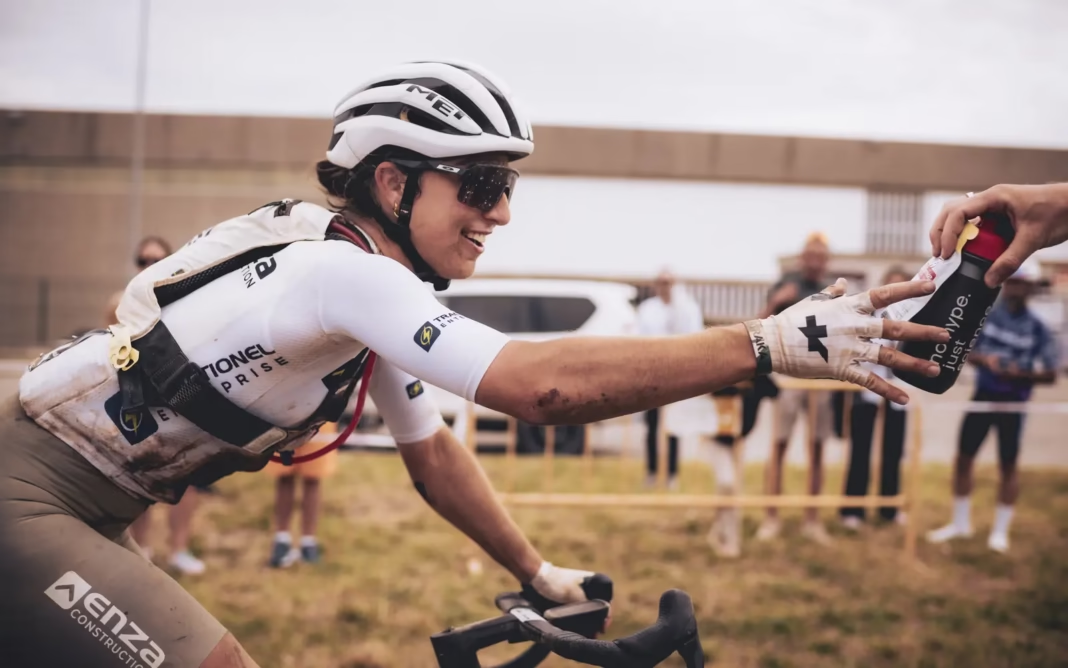
She accelerates repeatedly, handles crowded racing well, remains comfortable when rhythm constantly changes and descends confidently. She also has years of experience in events where the decisive effort may last only a few minutes rather than the duration of a major Alpine climb.
Those characteristics translate particularly well to the hilly stages of this Tour. Mont Brouilly is not simply a watts-per-kilo test. Position into the climb, response to accelerations, descending and timing the final move all matter, and Pieterse is unusually strong across that whole sequence rather than just one part of it.
The 2024 Tour victory removed the question of whether she belongs
Before the 2024 Tour de France Femmes, Pieterse’s road potential was already obvious. Her victory on the road to Liège converted that potential into proof.
The stage used terrain associated with the Amstel Gold Race and Liège-Bastogne-Liège, including La Redoute and Roche-aux-Faucons, before Pieterse beat Vollering in the finish. It was not a lucky breakaway victory or a stage where the major contenders decided not to race.
She beat some of the strongest stage racers in the peloton directly, and our report from Pieterse’s 2024 Tour stage victory remains the clearest precedent for what she can do again in 2026.
A second Tour stage win would no longer be surprising. The question now is how often she can put herself into a position to chase one.
A GC project would limit what makes Pieterse dangerous
Any young rider who climbs well eventually attracts questions about the general classification, but Pieterse does not need that to become the central objective in 2026. A serious GC campaign requires conservatism on exactly the stages where she is most dangerous.
She would need to avoid unnecessary attacks, protect energy before Ventoux and give up much of the breakaway freedom that can make her a stage-winning threat. The Tour route gives her far more tactical value as a flexible stage hunter who can choose her moments.
That could change in future years as her road programme and climbing develop further. For now, there is little reason to trade the possibility of winning major stages for the discipline required to protect a lower top-10 position throughout the race.
-
 Photo Credit: quentinphotographiebe
 -
 Photo Credit: Getty

Fenix-Premier Tech can build around her unpredictability
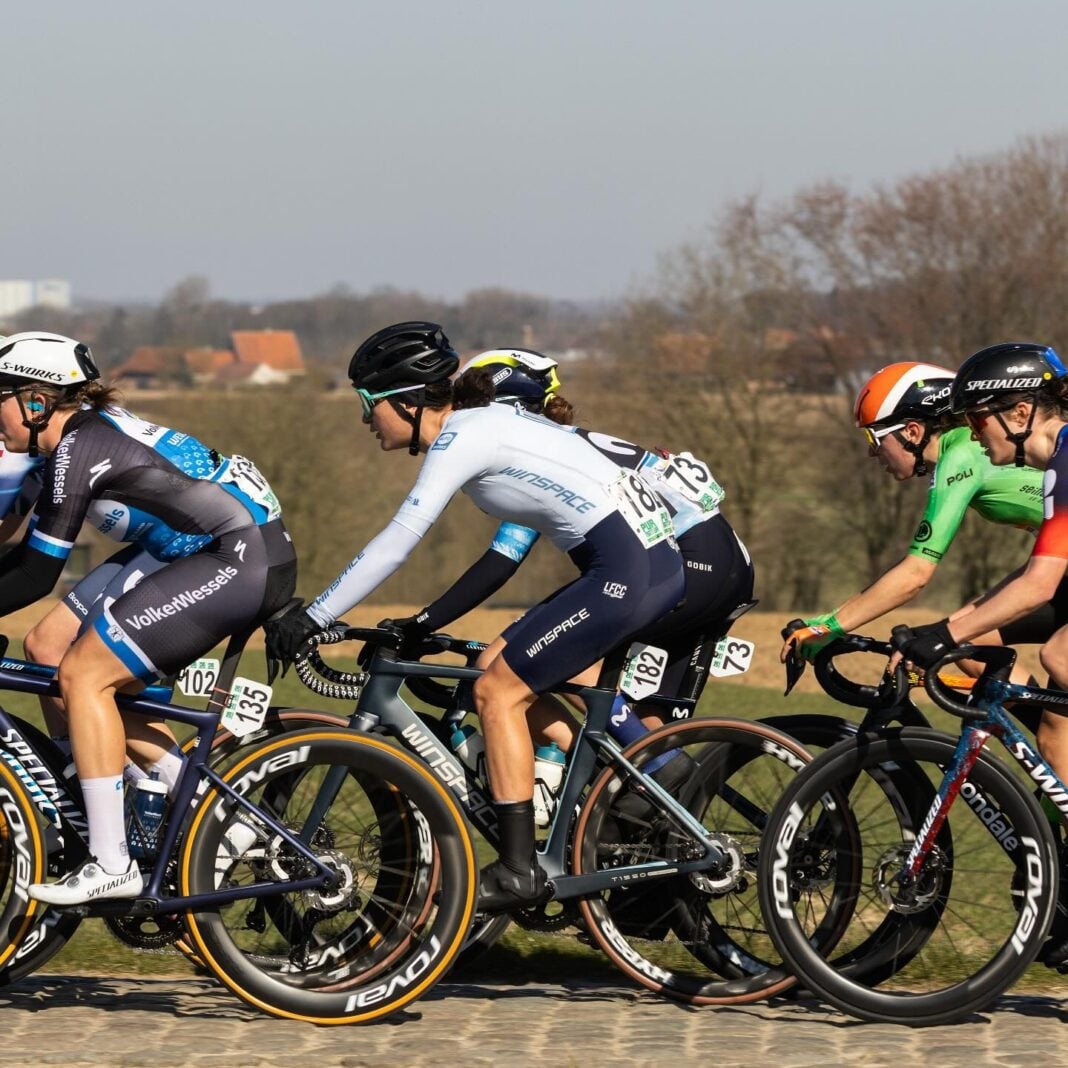
Pieterse is difficult for other teams because there is no single way to neutralise her. If she attacks, somebody has to chase, but bringing her back can simply deliver her to a reduced sprint. Making the hills harder may remove faster rivals without necessarily removing Pieterse, while riding conservatively allows her to wait for one sharp late move.
That means Fenix-Premier Tech does not need to control races from start to finish. The team needs to keep Pieterse protected until the terrain becomes selective, then give her freedom to read the situation.
Stage 5 is the clearest example. Let the GC teams manage the earlier climbing, keep Pieterse out of trouble and begin racing aggressively as Mont Brouilly approaches. Her range means the team does not have to decide several hours in advance whether the winning move will be an attack or a sprint.
What would make Pieterse’s Tour a success?
One stage win would make the Tour a success, while two would make it exceptional. She has enough possible opportunities that leaving the race without ever genuinely contesting a stage would be disappointing, but nothing on this route guarantees a result.
Stage 3 gives her several tactical routes. Stage 6 should favour strong breakaways if the GC teams conserve energy before Ventoux, while the final weekend may create further opportunities once the overall classification has begun to settle.
Stage 5 remains the one to circle. Repeated climbing, a short decisive ascent and little road between Mont Brouilly and the finish create exactly the sort of stage where Pieterse can attack, descend or sprint without needing to be either the strongest pure climber or the fastest pure sprinter in the Tour.
That is what makes Puck Pieterse one of the most dangerous stage hunters of the 2026 Tour de France Femmes. Most riders need the race to develop in a particular way, but Pieterse has more options. If the break survives, she can win from it. If the hills reduce the group, she can attack, and if that attack is brought back, she can still sprint.
The route does not need to be perfect for her. It only needs to become difficult enough that being good at almost everything starts to matter.

