

The 2026 Tour de France Femmes brings together the defending champion, the winner of each of the season’s first two Grand Tours and the strongest sprinter in women’s cycling.
Demi Vollering begins as the narrow favourite after winning the Giro d’Italia Women, but Pauline Ferrand-Prévot has already shown that she can build an entire season around reaching the Tour in peak condition.
Paula Blasi can no longer be treated as an outsider. The 23-year-old has won the Amstel Gold Race, La Vuelta Femenina and the Tour Féminin International des Pyrénées during a breakthrough season that has carried her into the front rank of women’s stage racers.
Marlen Reusser, Anna van der Breggen, Kasia Niewiadoma-Phinney, Elisa Longo Borghini, Antonia Niedermaier and Niamh Fisher-Black complete a deep general classification field.
The sprint competition is led by Lorena Wiebes. Elisa Balsamo, Marianne Vos, Lotte Kopecky and Kim Le Court-Pienaar should provide the strongest opposition across a route containing only a limited number of obvious bunch finishes.
This guide is based on the riders currently expected to compete. Sarah Gigante and Elise Chabbey are not included because they are known to be unavailable, while riders such as Urška Žigart remain under consideration as they continue recovering from injury.
The complete terrain is covered in our Tour de France Femmes 2026 route guide.
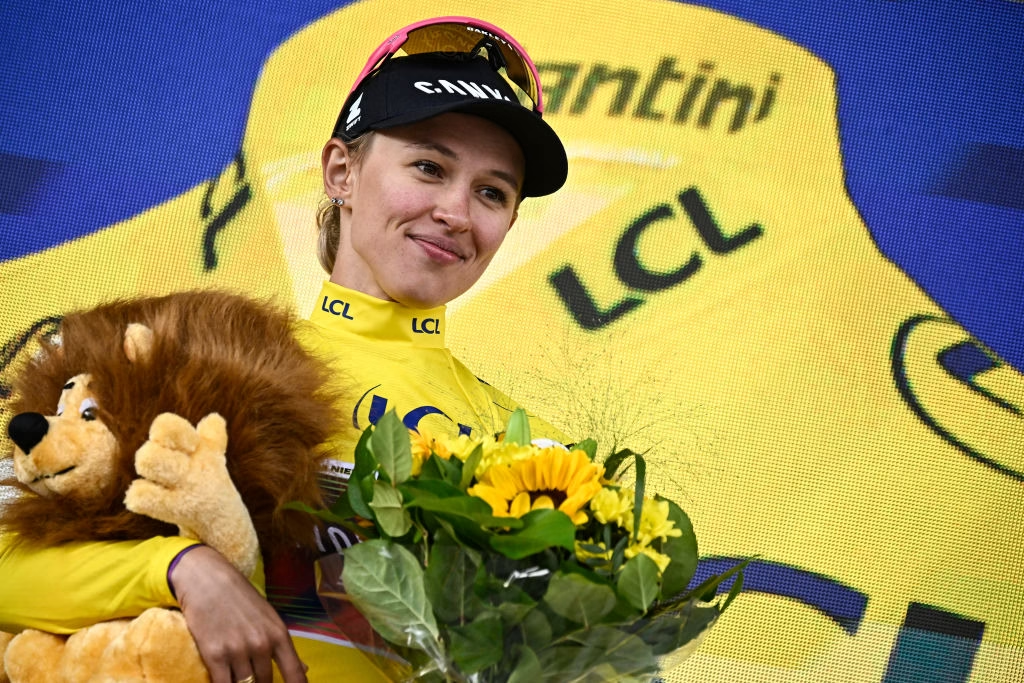
Tour de France Femmes 2026 riders to watch at a glance
| Rider | Team | Main objective | Best terrain |
|---|---|---|---|
| Demi Vollering | FDJ United-SUEZ | Yellow jersey | Time trial, medium mountains and Mont Ventoux |
| Pauline Ferrand-Prévot | Team Visma-Lease a Bike | Yellow jersey | High mountains and difficult road stages |
| Paula Blasi | UAE Team ADQ | Yellow jersey and white jersey | Steep and sustained climbing |
| Marlen Reusser | Movistar Team | Yellow jersey and time trial | Time trial and controlled climbing |
| Anna van der Breggen | Team SD Worx-Protime | Yellow jersey | Time trial and long climbs |
| Kasia Niewiadoma-Phinney | Canyon-SRAM zondacrypto | Yellow jersey and podium | Repeated climbs and aggressive racing |
| Elisa Longo Borghini | UAE Team ADQ | GC and stage wins | Long stages, climbs and tactical racing |
| Antonia Niedermaier | Canyon-SRAM zondacrypto | GC and white jersey | Time trial and sustained climbing |
| Niamh Fisher-Black | Lidl-Trek | GC | High mountains |
| Kim Le Court-Pienaar | AG Insurance-Soudal | GC and stage wins | Rolling terrain and reduced groups |
| Cédrine Kerbaol | EF Education-Oatly | GC and stage wins | Time trial, descents and medium mountains |
| Lorena Wiebes | Team SD Worx-Protime | Sprint wins and green jersey | Flat and reduced bunch sprints |
| Elisa Balsamo | Lidl-Trek | Sprint wins | Flat and rolling finishes |
| Marianne Vos | Team Visma-Lease a Bike | Stages and green jersey | Selective sprints and rolling stages |
| Lotte Kopecky | Team SD Worx-Protime | Stages and green jersey | Punchy finishes, time trial and reduced sprints |
| Puck Pieterse | Fenix-Premier Tech | Stage wins | Short climbs, technical roads and descents |
| Liane Lippert | Movistar Team | Stage wins | Punchy and hilly terrain |
| Kristen Faulkner | EF Education-Oatly | Stage wins | Breakaways, time trial and rolling roads |
The Tour will be decided by more than Mont Ventoux
The race runs from 1 to 9 August and contains nine stages between Lausanne and Nice.
The most obvious general classification tests are the 21km individual time trial into Dijon and the summit finish on Mont Ventoux.
Those stages favour different riders.
Reusser, Vollering and Van der Breggen should gain time in Dijon. Ferrand-Prévot, Blasi and Fisher-Black may be more dangerous when the race reaches the sustained gradients of Ventoux.
The eventual winner must also survive the stages between those two tests.
The opening weekend in Switzerland creates risks from short climbs, bonus seconds and positioning. The roads through the Beaujolais and Ardèche suit attacking riders, while the final two stages towards and around Nice arrive after Ventoux has already exposed fatigue.
A rider cannot simply wait for one mountain.
The winner needs to time trial, climb, recover and remain out of trouble across nine contrasting days.
Our analysis of how race routes are shaping women’s cycling in 2026 explains why this Tour rewards complete stage racers rather than one-dimensional specialists.
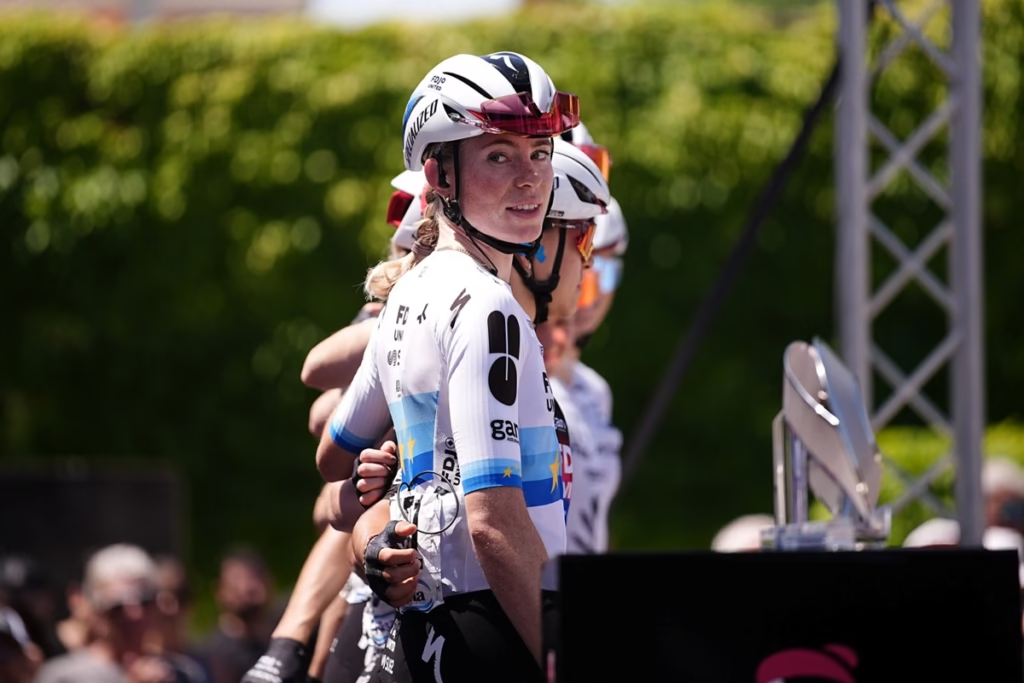 Photo Credit: RCS
GC favourites for the 2026 Tour de France Femmes
Demi Vollering
Vollering remains the most complete rider in the race.
She has now won all three women’s Grand Tours and enters the Tour after overturning Van der Breggen’s lead to win the 2026 Giro d’Italia Women.
The route contains few obvious weaknesses for her.
Vollering should gain time on Ferrand-Prévot, Blasi and Fisher-Black in Dijon. She can collect bonus seconds on uphill finishes and is strong enough to follow the leading climbers on Ventoux.
Her defeat in the 2024 Tour also remains relevant. A crash and the lack of immediate team support cost her more time than she eventually lost the race by.
That experience reinforces the importance of positioning and avoiding incidents rather than concentrating only on the decisive climbs.
FDJ United-SUEZ is now built clearly around her. Juliette Berthet provides elite mountain support, while the team no longer contains the leadership uncertainty that affected Vollering during parts of her SD Worx career.
The absence of Elise Chabbey changes part of that support structure, with Célia Gery expected to make her Tour de France Femmes debut.
Vollering does not need to be the strongest rider on every stage.
She starts with the fewest obvious ways to lose.
Pauline Ferrand-Prévot
Ferrand-Prévot is the defending champion and the rider most capable of producing one overwhelming mountain performance.
Her career includes world titles on the road, in cyclo-cross, gravel and cross-country mountain biking, an Olympic mountain-bike title, Paris-Roubaix and the Tour de France Femmes.
Her 2025 road return was extraordinary because she built her programme around two major targets and won both.
The question is whether that process can be repeated.
Ferrand-Prévot has reached podiums in the cobbled Classics during 2026 but has not yet displayed the same dominant form that she carried into the previous Tour.
That does not necessarily weaken her chances.
Her entire preparation is intended to deliver peak condition in August rather than produce consistent results throughout the spring.
Mont Ventoux should be her most important stage. She may need to attack there after losing time to Vollering, Reusser and Van der Breggen in Dijon.
If she arrives with her 2025 climbing form, that deficit may not matter.
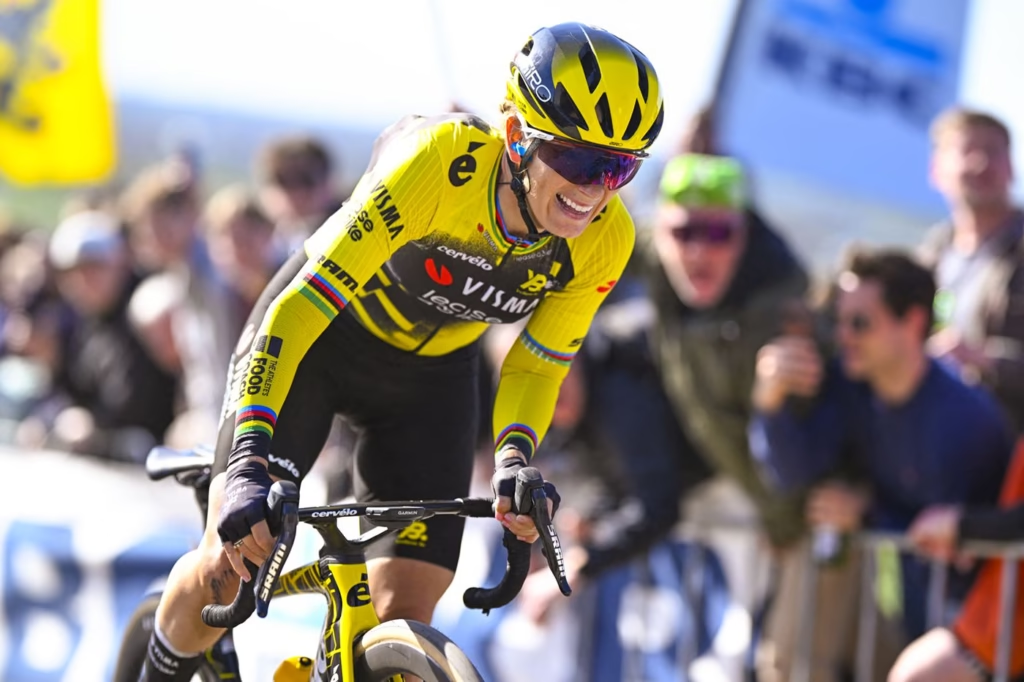
 Photo Credit: Naike Erenozaga
Paula Blasi
Blasi deserves to begin in the first group of yellow jersey contenders.
Her Amstel Gold Race victory initially appeared to be the result of the favourites giving a dangerous young rider too much freedom. Third at Flèche Wallonne and fifth at Liège-Bastogne-Liège immediately showed that it was not an isolated result.
She then won La Vuelta Femenina on the Angliru.
Blasi did not gain the red jersey through a breakaway or time bonus. She outclimbed Van der Breggen on one of the hardest ascents in professional cycling and won her first Grand Tour.
Victory at the Tour Féminin International des Pyrénées provided further confirmation.
Her Vuelta breakthrough is explored in our analysis of what La Vuelta Femenina 2026 means for the season.
The concerns are legitimate. She is entering her first Tour, suffered a high-speed crash in June and may lose time in the Dijon time trial.
UAE Team ADQ also contains Longo Borghini, creating questions over leadership.
Those factors prevent Blasi from starting as the outright favourite. They should not place her below riders she has already beaten decisively in the mountains.
Ventoux gives her a realistic path to yellow.
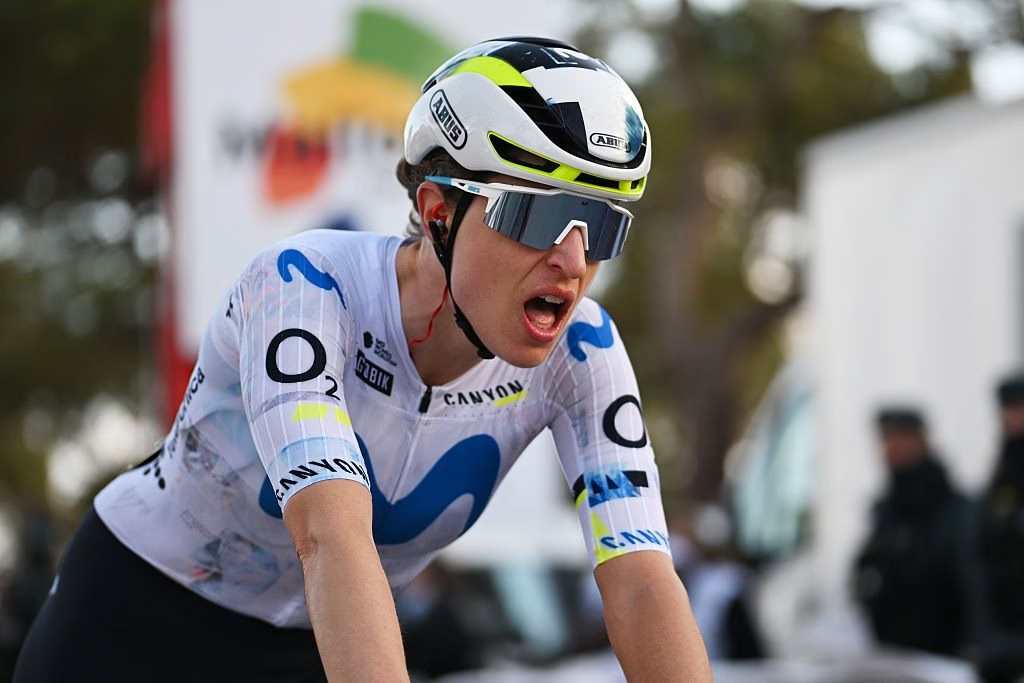 Photo Credit: Getty
Marlen Reusser
Reusser has the clearest opportunity to take control of the Tour in Dijon.
The Swiss rider began her career as an outstanding time-trial specialist but has developed into a genuine stage-race leader. She has won tours in Valencia, Switzerland, Romandie and the Basque Country, while also finishing second at both the Giro and Vuelta.
Her 2026 Tour de Suisse victory confirmed that she can now combine time-trial power with high-level climbing.
Reusser underlined that strength by winning the Tour de Suisse Women time trial in Aarburg.
The remaining uncertainty is Ventoux.
Reusser can control medium mountain stages through sustained power, but a long summit finish exposes her to repeated attacks from lighter climbers.
Her route to victory is clear.
She needs to win or dominate the time trial, begin the final mountain stages with an advantage and climb defensively rather than trying to follow every acceleration.
Liane Lippert gives Movistar an important second option. Lippert can attack on the rolling stages and force rival GC teams to chase rather than allowing them to concentrate entirely on Reusser.
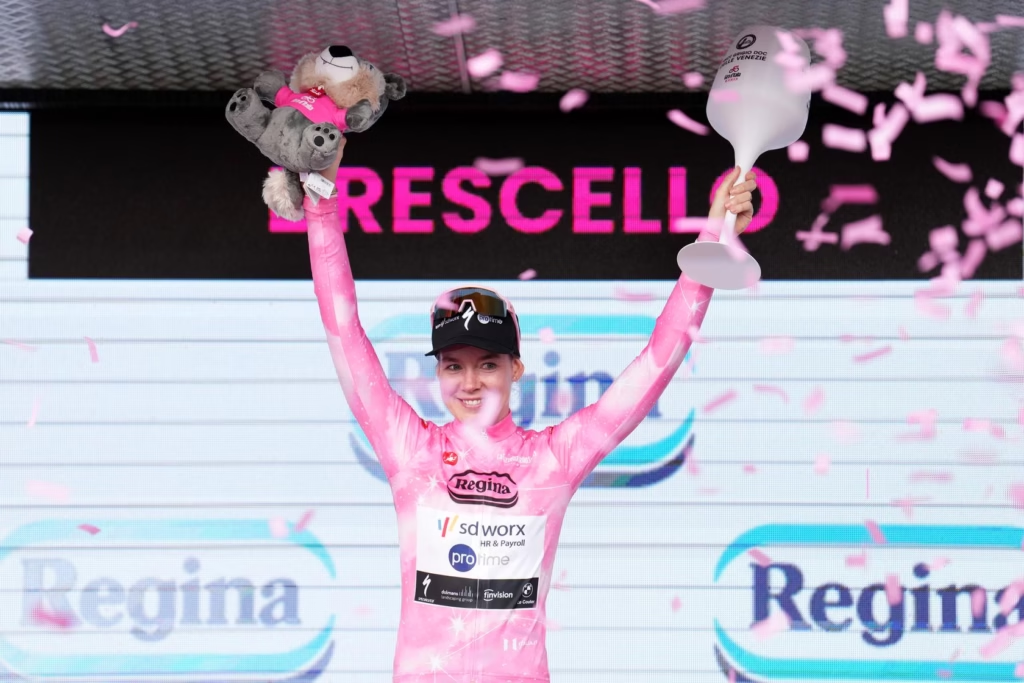 Photo Credit: RCS
Anna van der Breggen
Anna van der Breggen has become a Tour contender again after returning from retirement in 2025.
She won four editions of the Giro, two road world titles and the Olympic road race before initially ending her career in 2021.
Her comeback season contained promising results without immediately restoring her to the top of the sport. That has changed in 2026.
Second at the Vuelta and third at the Giro demonstrate a clear upward trend. She also took the Giro lead after winning the uphill time trial before Vollering reversed the result during the final weekend.
The Tour route suits her experience and measured riding style.
Van der Breggen can gain time in Dijon and should limit her losses on Ventoux. Her challenge is whether she can respond when Vollering, Ferrand-Prévot or Blasi accelerates sharply.
SD Worx-Protime should provide clear GC support now that Kopecky is expected to target stages rather than the overall classification.
The team must still balance that objective with Wiebes’s sprint ambitions.
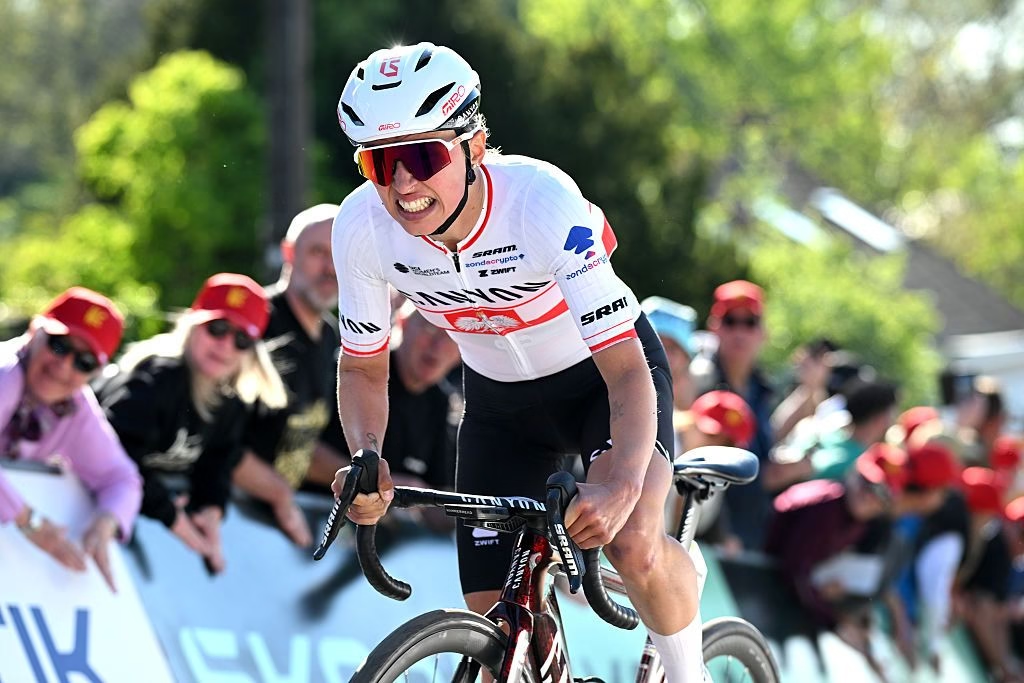 Photo Credit: Getty
Kasia Niewiadoma-Phinney
Niewiadoma-Phinney is one of only two riders to have finished on the podium at every edition of the modern Tour de France Femmes.
She won the 2024 race by finding seconds across several stages and then defending desperately in the mountains.
That remains the model for her 2026 challenge.
She is not the strongest time-triallist, the fastest sprinter or the most dominant pure climber. Her advantage is her ability to identify tactical openings that more predictable riders miss.
Her 2026 season has again contained repeated podiums rather than victories.
Niewiadoma-Phinney finished second at Omloop Het Nieuwsblad, Strade Bianche and the Amstel Gold Race, as well as third at Liège-Bastogne-Liège and the Tour de Suisse.
Dijon could leave her chasing time.
The rolling stages then give her opportunities to attack, collect bonuses or place rivals under pressure before the race reaches Ventoux.
She rarely wins through control. She wins by making the race uncomfortable.
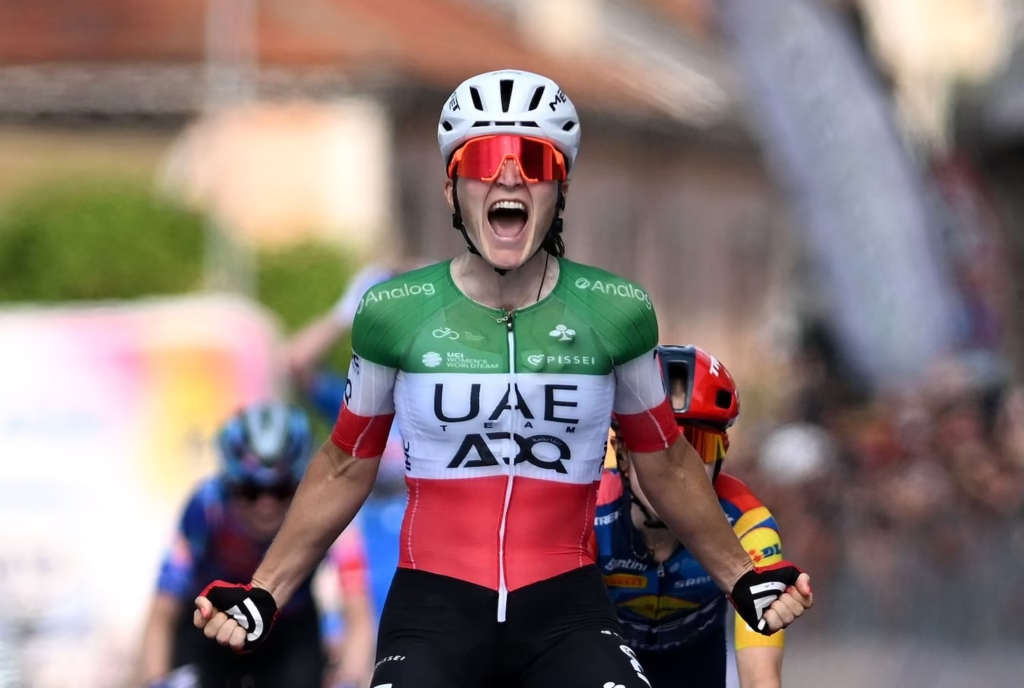
Elisa Longo Borghini
Elisa Longo Borghini is one of the most tactically intelligent and durable riders in the peloton.
She has won the Giro twice and can compete across cobbles, steep climbs, long mountain stages and time trials.
Her Tour record is less convincing. Sixth in 2022 remains her best result, while she has failed to finish her other appearances.
The altered calendar gives her a better chance in 2026.
Longo Borghini has more time to recover from the Giro, where she improved through the race after illness disrupted her preparation and finished by winning the final stage.
UAE’s challenge is deciding how to use her alongside Blasi.
Longo Borghini is the proven Grand Tour leader and stronger all-round rider. Blasi has produced the more convincing climbing performance this season.
The team should preserve both options through Dijon and allow Ventoux to establish its strongest contender.
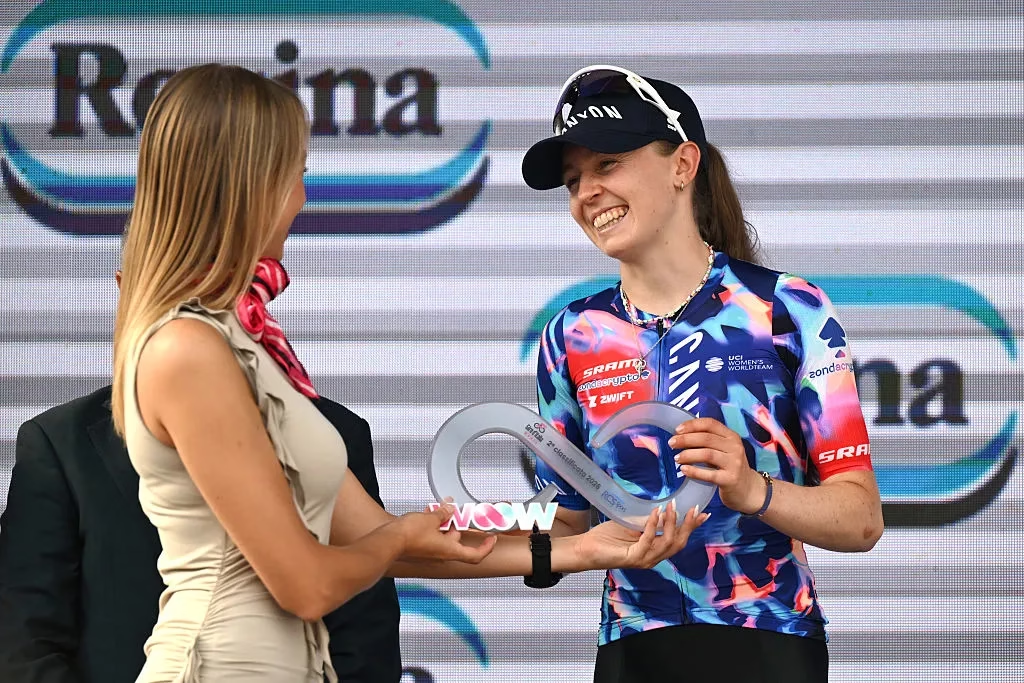
Antonia Niedermaier
Antonia Niedermaier moved from promising young rider to genuine Tour podium contender by finishing second at the Giro.
She stayed with Vollering and Van der Breggen in the mountains and used an intelligent final-stage attack to secure second overall.
Her combination of time trialling and climbing is particularly valuable on this route.
Niedermaier should lose less in Dijon than many of the pure climbers and has already shown that she can recover across a full Grand Tour.
Her time-trial pedigree has been visible since she won the inaugural Tour de l’Avenir Femmes time trial.
The main question is how Canyon-SRAM divides responsibility between her and Niewiadoma-Phinney.
Niewiadoma-Phinney brings a proven Tour record and greater tactical experience. Niedermaier may be better suited to the two stages most likely to produce the largest gaps.
She is one of the strongest candidates for both the white jersey and the overall podium.
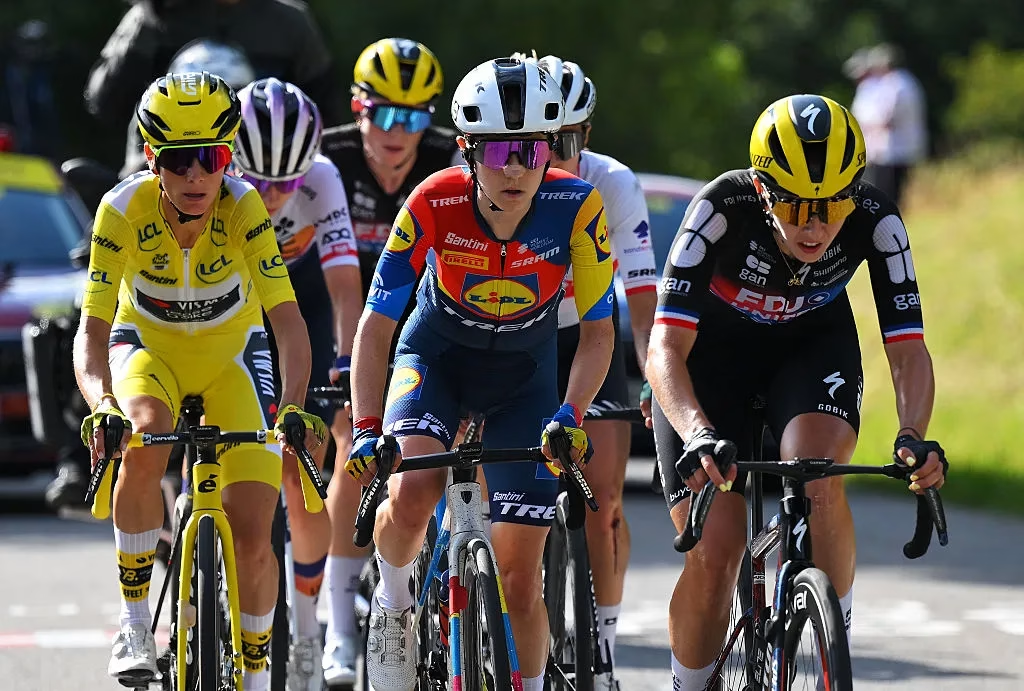 Photo Credit: Getty
Niamh Fisher-Black
Fisher-Black finished fifth at the 2025 Tour and repeated that position at the 2026 Giro.
She is one of the most reliable high-mountain riders in the field and should be particularly strong on Ventoux.
Her weakness is the time trial.
Fisher-Black lost more than two minutes to Van der Breggen in the Giro’s uphill test, a deficit that prevented her from turning fifth place into a podium challenge.
The flatter and faster Dijon course could expose that weakness further.
Lidl-Trek can support her with another emerging climber in Isabella Holmgren, but the team must also allocate riders to Balsamo’s sprint ambitions.
A top-five finish is realistic. Reaching the podium probably requires the time trial of Fisher-Black’s career.
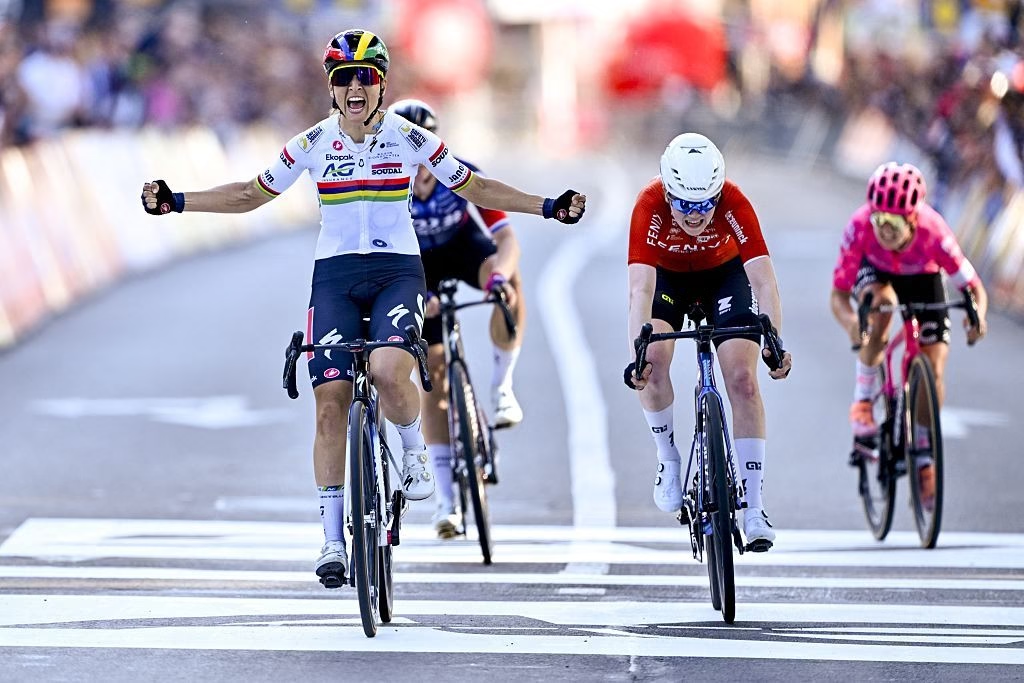
Kim Le Court-Pienaar
Le Court-Pienaar should be considered an AG Insurance-Soudal GC option rather than merely a reduced-sprint rider.
She wore yellow during the 2025 Tour, won Liège-Bastogne-Liège and has continued developing on longer climbs.
Her ceiling remains difficult to define.
Le Court-Pienaar can follow the leading contenders across hilly stages and possesses a faster finish than almost every pure GC rider. That creates opportunities for bonus seconds and stage victories during the first half of the race.
Ventoux is the decisive question.
If she limits her losses there, a high overall finish is possible. If the pure climbers expose her, the team can switch towards stage wins and the points classification.
The absence of Gigante removes AG Insurance-Soudal’s strongest specialist climber and gives Le Court-Pienaar greater freedom to pursue her own result.
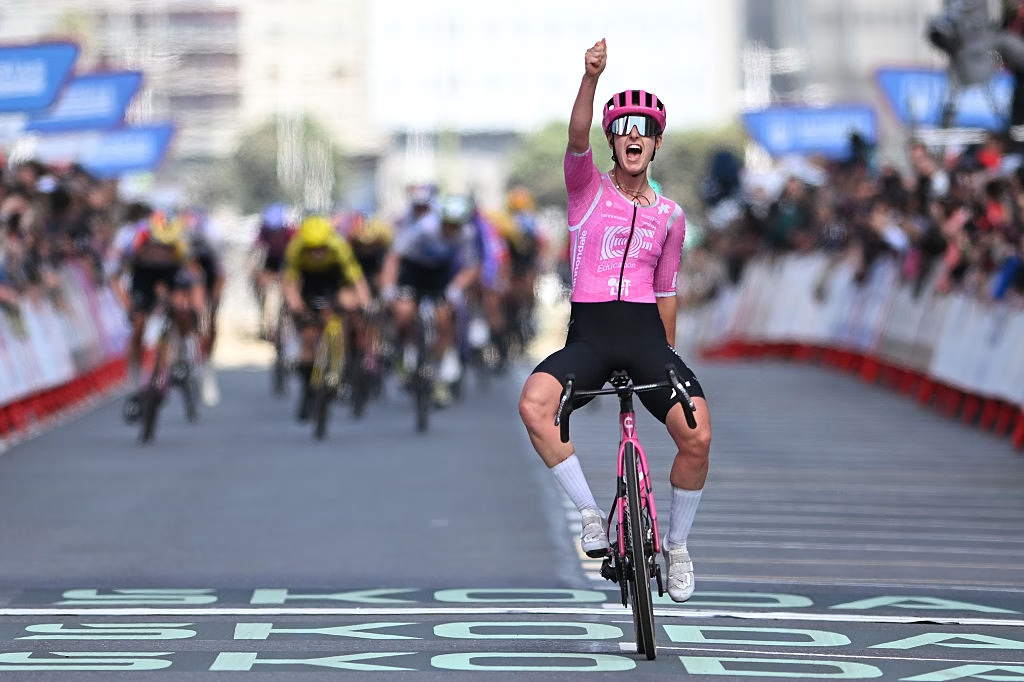
Cédrine Kerbaol
Cédrine Kerbaol has finished inside the Tour’s top ten in each of the last two editions after winning the white jersey in 2023.
She can time trial, climb and descend, while her instinct for attacking makes her dangerous on days when the leading teams hesitate.
Her Tour de Suisse performance provided another positive sign. Kerbaol finished second on the mountain stage behind Reusser and ahead of Niewiadoma-Phinney.
Ventoux may prevent her from joining the leading yellow jersey group.
Dijon and the rolling stages should allow her to build enough of a buffer to challenge for another top ten and possibly more.
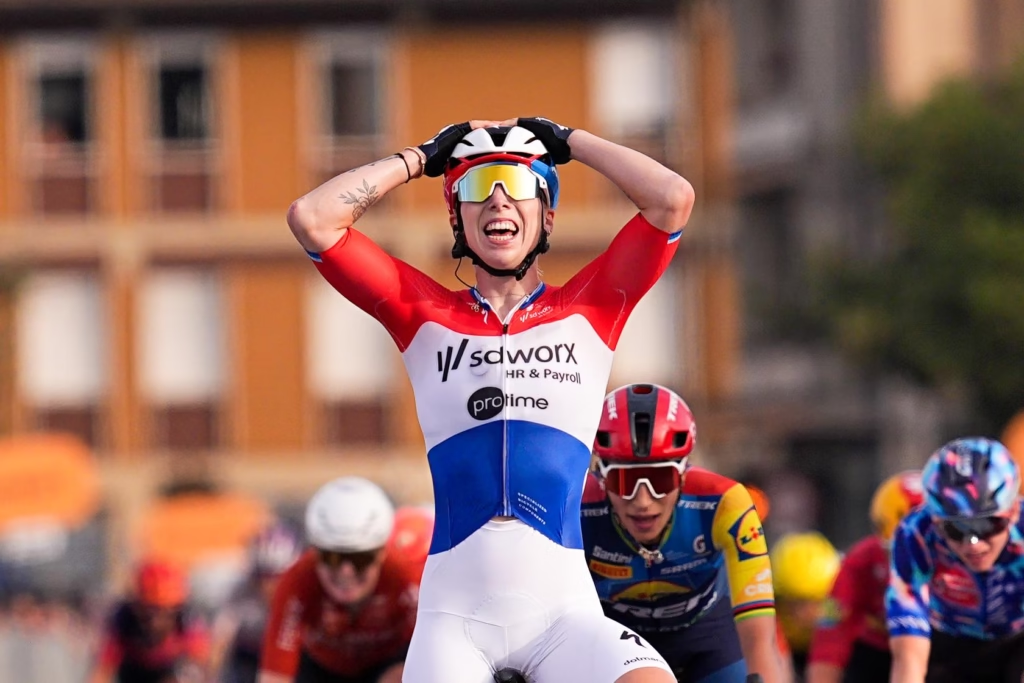
Sprinters to watch at the Tour de France Femmes 2026
Lorena Wiebes
Wiebes is the clear benchmark among the expected sprinters.
She combines exceptional top speed with enough climbing ability to survive stages that eliminate more conventional fast finishers. That makes her relevant beyond the obvious Geneva finish.
Stages 1, 2, 3 and 5 could all provide opportunities depending on how aggressively the climbs are raced.
She is also the leading points classification favourite.
The question is not whether Wiebes has the speed to win. It is how SD Worx-Protime divides its seven places and workload between her sprints, Van der Breggen’s GC campaign and Kopecky’s stage ambitions.
Even without a full dedicated train, Wiebes is capable of winning from another rider’s wheel.
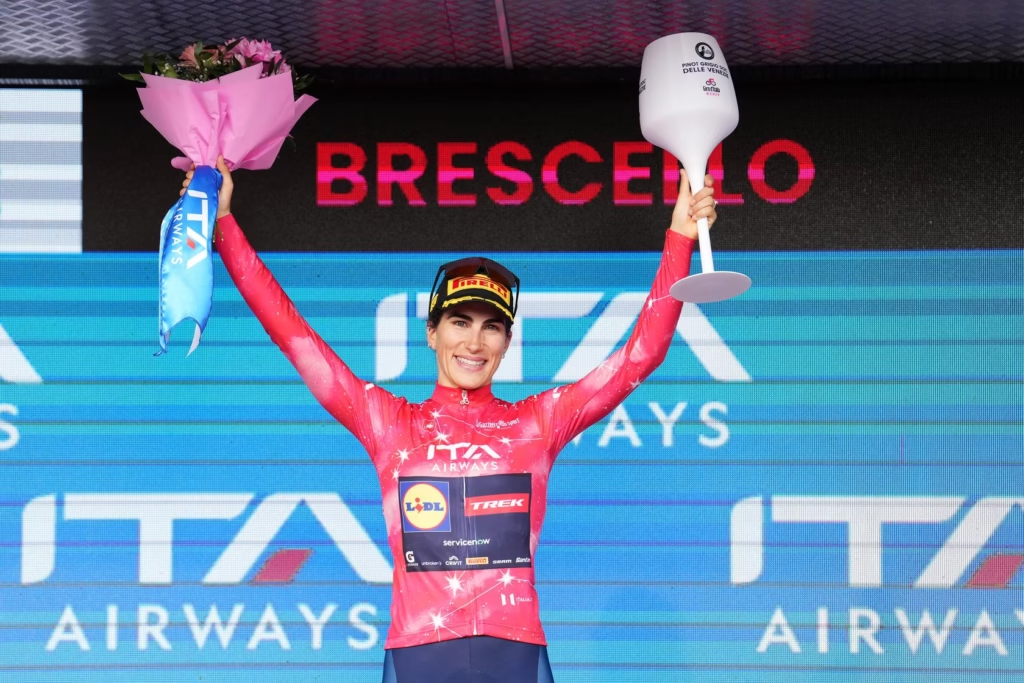 Photo Credit: RCS
Elisa Balsamo
Balsamo is the rider most likely to challenge Wiebes in a conventional bunch sprint.
The former world champion is particularly well suited to Geneva but can also survive enough climbing to contest selected reduced finishes.
Lidl-Trek must balance her lead-out with Fisher-Black’s general classification support.
That may leave Balsamo with fewer dedicated riders than Wiebes, although she is experienced enough to follow rival trains during the final kilometres.
Her ability to remain close through the rolling stages gives her a realistic green jersey challenge if Wiebes misses points or becomes tied to team duties.
The final approach to the clearest sprint opportunity is covered in our Tour de France Femmes Geneva guide.
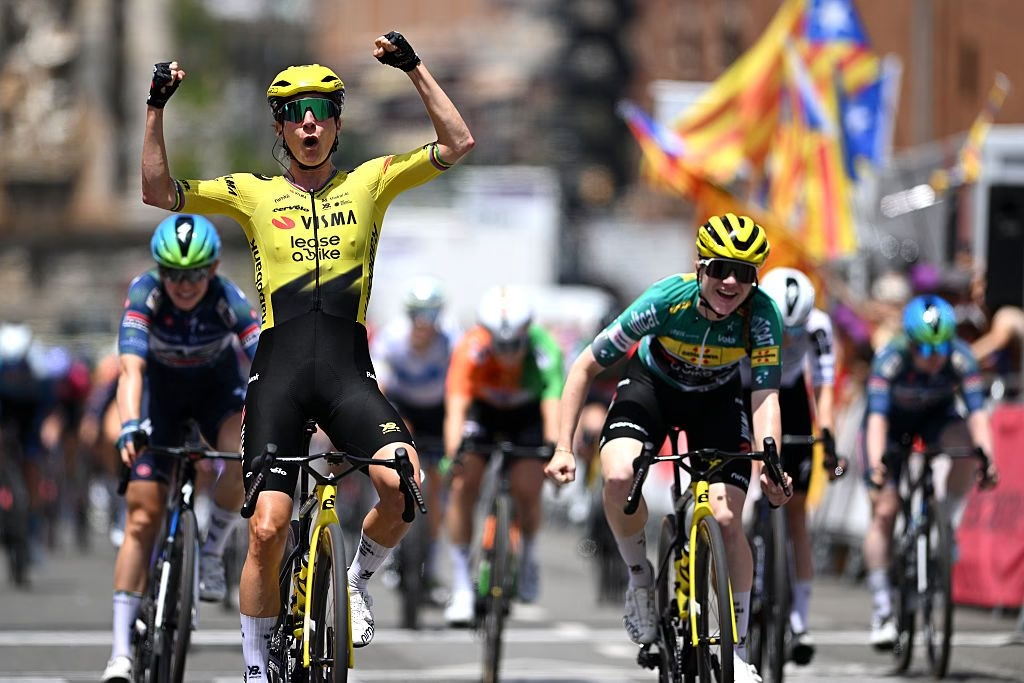 Photo Credit: Getty
Marianne Vos
Vos becomes more dangerous as the stage grows harder.
She may no longer match Wiebes’s maximum speed in a completely flat finish, but few riders can equal her positioning, tactical awareness and ability to survive repeated climbs.
The Lausanne opener, Poligny and the Beaujolais stage may suit her better than Geneva.
Our Tour de France Femmes Lausanne guide explains why the opening finish is more selective than a conventional sprint stage.
Vos also gives Visma an objective away from Ferrand-Prévot’s yellow jersey campaign. She can contest stages with limited support and does not require the team to build a conventional lead-out around her.
Consistency across several types of finish makes her a serious points classification contender.
 Photo Credit: Toni Baixauli
Lotte Kopecky
Kopecky is not a pure sprinter, but she may be Wiebes’s strongest teammate and most dangerous tactical rival.
She can win from a bunch, a reduced group, a late attack or the time trial.
Her expected decision not to pursue GC gives SD Worx freedom to use her aggressively before the mountain stages.
The presence of Wiebes changes Kopecky’s role in flatter finishes. SD Worx should sprint for the faster Dutch rider when the full peloton remains together.
Kopecky becomes the preferred option when climbs, wind or attacks reduce the group.
Her wider objectives are covered in our Lotte Kopecky 2026 season guide.

Rachele Barbieri and Amalie Dideriksen
Barbieri should focus heavily on the Geneva finish, where Picnic PostNL has its clearest opportunity to win from a full peloton.
Dideriksen provides Cofidis with a more durable option for stages containing short climbs before the sprint.
Both need strong positioning because neither team possesses the depth of the SD Worx, Lidl-Trek or Visma sprint structures.
Stage hunters and breakaway riders to watch
The 2026 route contains enough rolling terrain for breakaways to become a major part of the race.
Stages 5, 6, 8 and 9 should offer the strongest opportunities, although the tactical picture will depend on how large the GC gaps become after Dijon and Mont Ventoux.
Our guide to the Tour de France Femmes 2026 breakaway specialists examines the strongest attacking riders and the stages most likely to escape GC control.
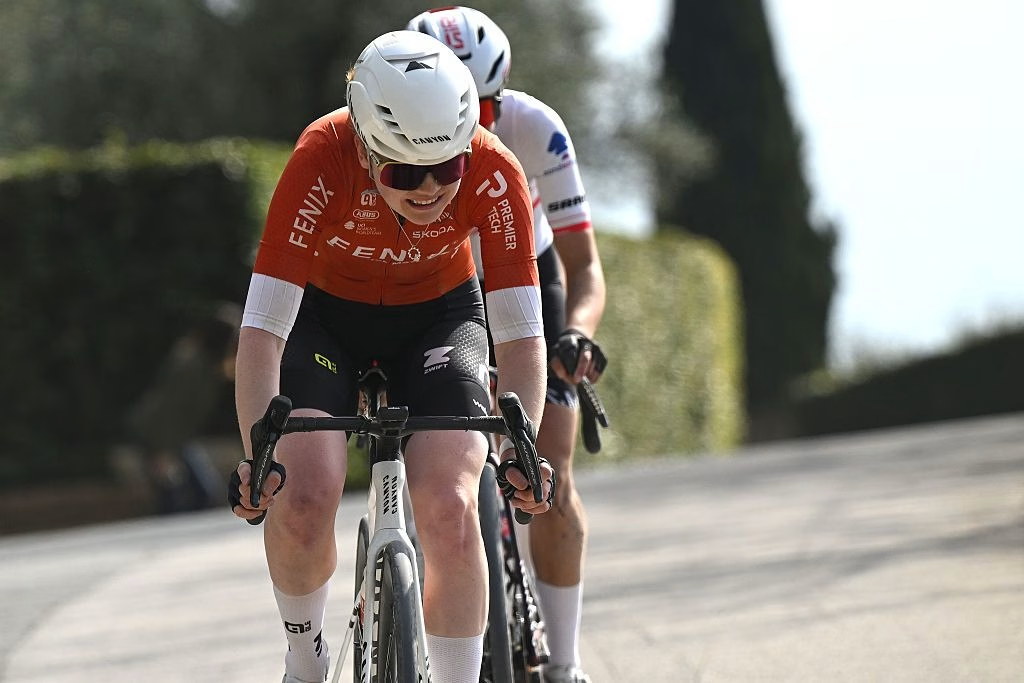 Photo Credit: Getty
Puck Pieterse
Pieterse may have the broadest range of possible stage victories.
She can attack on short climbs, descend quickly, handle technical roads and sprint from a selective group.
Stages 1, 3, 5, 6 and 9 all offer plausible opportunities.
Pieterse may initially protect a GC position before switching towards stage hunting if Dijon or Ventoux creates a large deficit.
The short final stage around Nice may suit her particularly well because it is difficult enough to prevent control but not long enough for the race to settle.
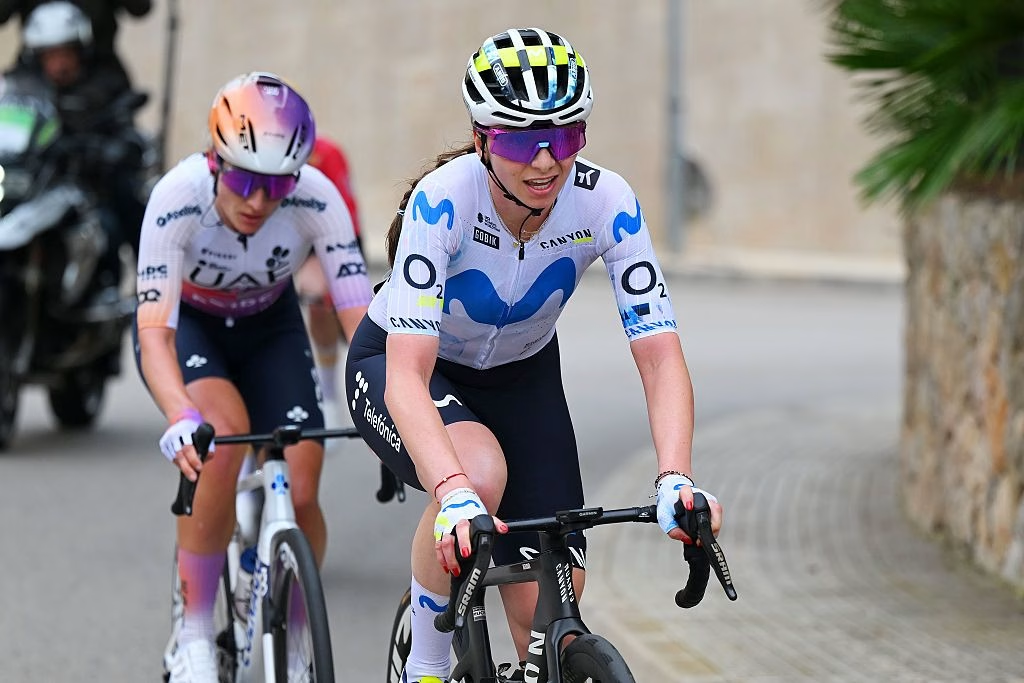 Photo Credit: Getty
Liane Lippert
Lippert is Movistar’s ideal tactical alternative to Reusser.
She can attack on punchy climbs, sprint from small groups and force other teams to chase while Reusser remains protected.
Stages 1, 5 and 6 provide her clearest opportunities.
Her presence means Movistar does not need to use its GC leader to answer every dangerous move.
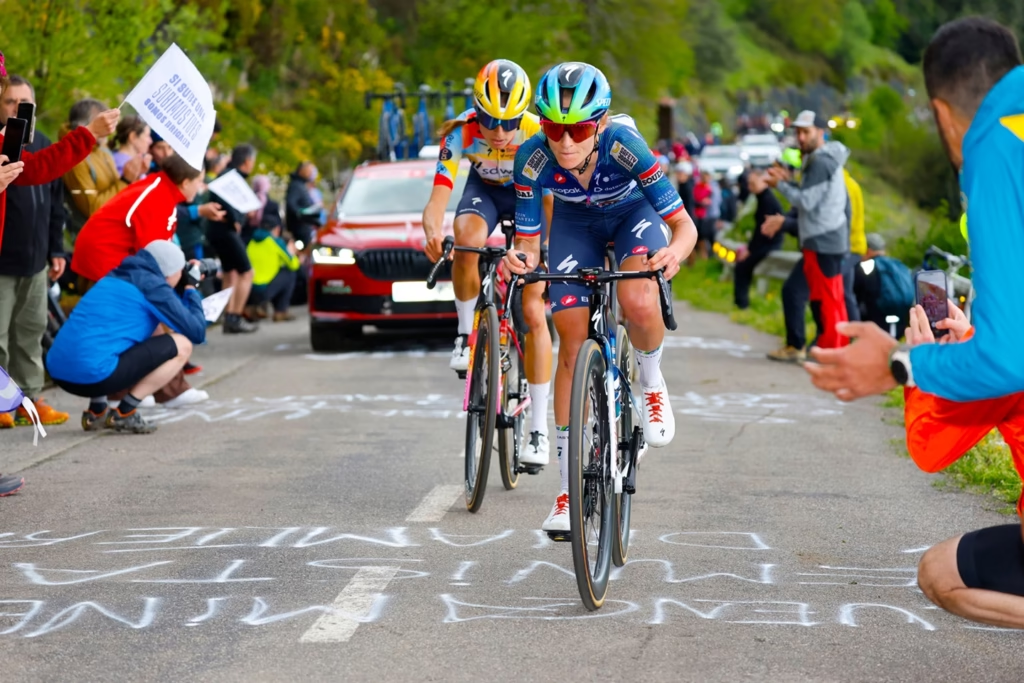 Photo Credit: Getty
Urška Žigart
Žigart should remain in consideration after fracturing her jaw at the Tour de Suisse.
She avoided surgery and resumed training, leaving enough time to recover before the Tour if her fitness continues to improve.
A fit Žigart would give AG Insurance-Soudal climbing support for Le Court-Pienaar and a strong breakaway option on stages 6, 8 and 9.
She is also a capable time-triallist and could produce a strong result in Dijon.
Her recovery follows the medical update issued after her Tour de Suisse crash.
Kristen Faulkner
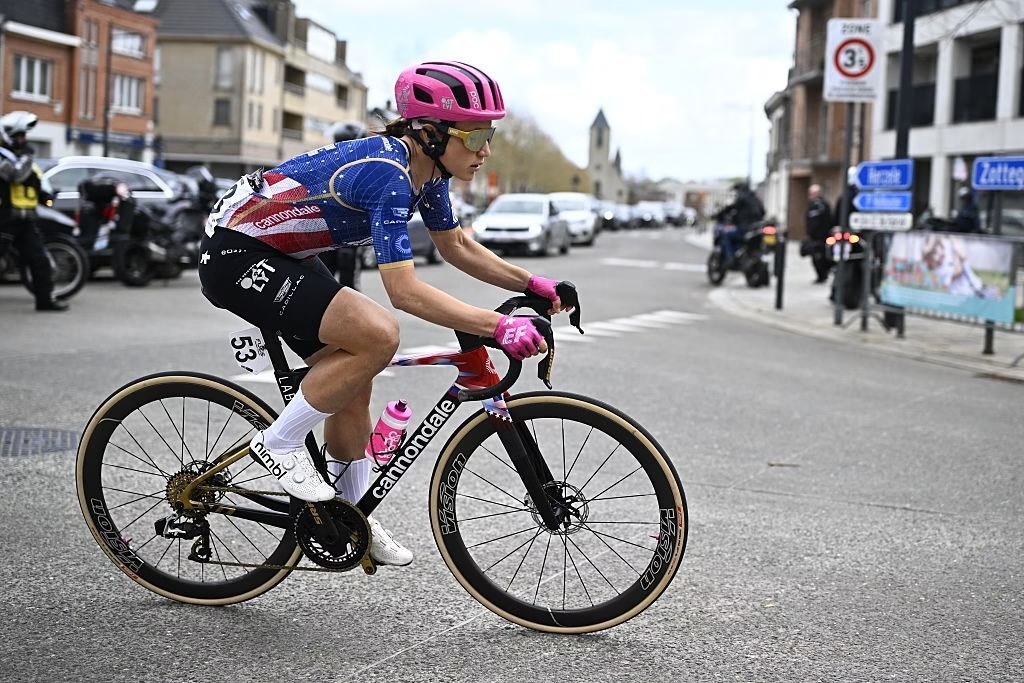
Kristen Faulkner is one of the strongest breakaway engines in the race.
Her time-trial power allows her to build and maintain gaps on open roads, while her Olympic road race victory demonstrated her ability to judge a tactical finale.
Stages 6 and 8 should provide her best opportunities.
The Dijon time trial is another target, although Reusser, Vollering and Van der Breggen begin with stronger specialist credentials.
Faulkner’s previous victories against the clock include the Pan American Games time trial.
Magdeleine Vallieres
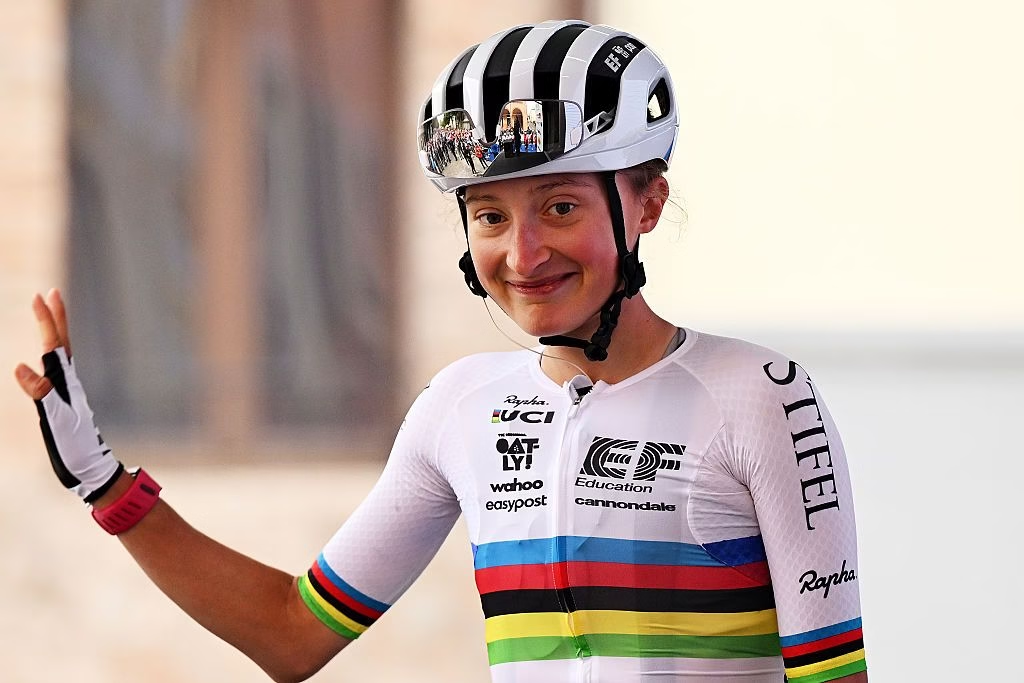
Vallieres should receive opportunities while rivals concentrate on Kerbaol and Faulkner.
She is best suited to rolling races that gradually reduce the peloton rather than one major summit finish.
Stages 3, 5 and 6 provide the most logical targets.
Her value also extends beyond personal results. An early Vallieres attack can force other teams to chase and create a later opening for Kerbaol or Faulkner.
Silvia Persico
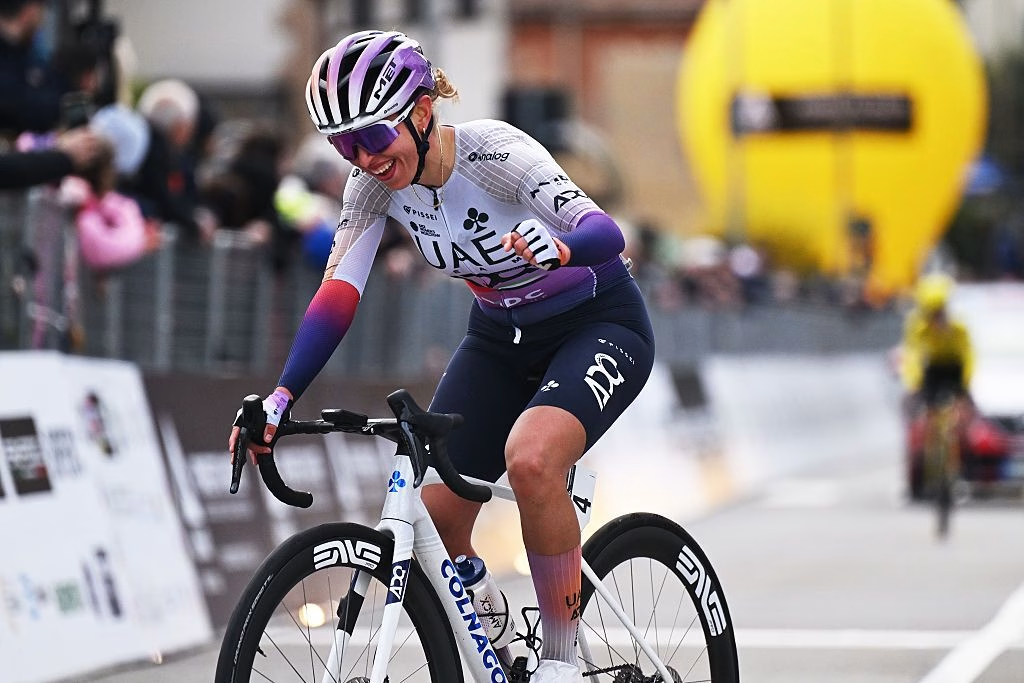
Persico gives UAE Team ADQ an important bridge between its GC leaders and stage ambitions.
She can support Longo Borghini and Blasi in the mountains, contest selective finishes and enter breakaways when the team does not need to control the race.
Her own opportunities may be limited by UAE’s yellow jersey ambitions, but she remains dangerous from a group of 20 or 30 riders.
 Photo Credit: Getty
Célia Gery
Gery combines a useful sprint with growing climbing ability and can enter breakaways while rival teams watch Vollering and Berthet.
Stages 3, 5 and 6 should suit her better than Ventoux.
A Tour stage victory would represent a major step, but Gery is riding within a team capable of creating the right tactical circumstances.
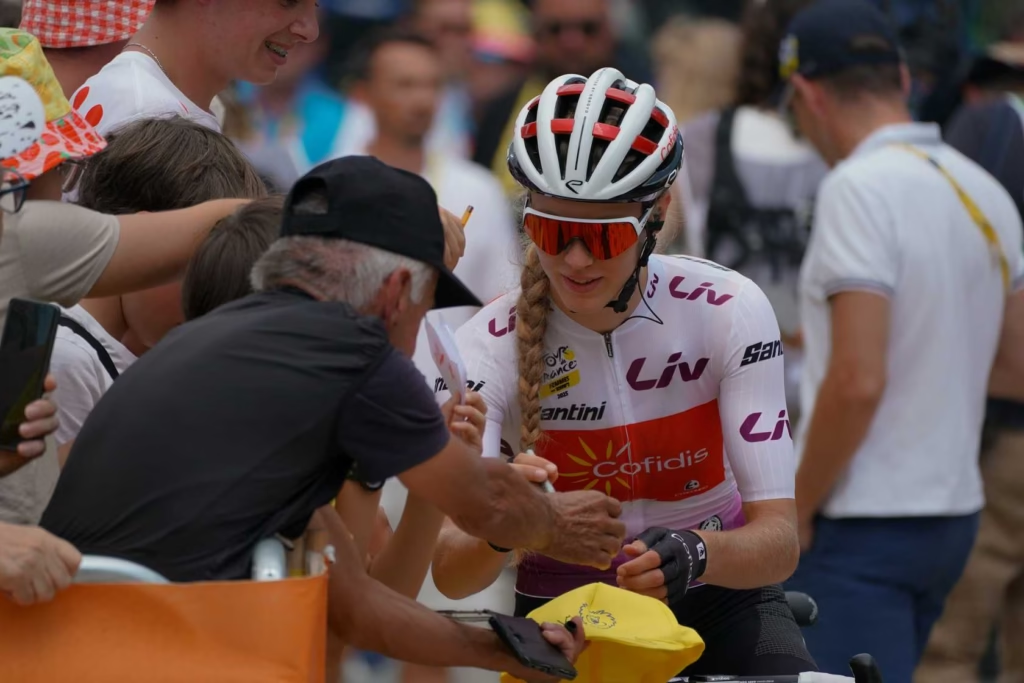
Julie Bego
Bego gives Cofidis a credible option on the hilly stages.
She is young enough to improve rapidly but already strong enough to turn breakaway freedom into a meaningful result.
The Beaujolais and Ardèche stages are her clearest opportunities.
Riders who could shape the race without winning
Some of the most important riders at the Tour will work primarily for teammates.
Berthet is expected to be central to Vollering’s mountain support. Her ability to remain with the leading group could allow FDJ to control attacks deep into the Ventoux stage.
Persico may play a similar role for Longo Borghini and Blasi, while Lippert can provide Movistar with an attacking presence around Reusser.
Kopecky’s stage hunt could indirectly support Van der Breggen. Rival teams cannot allow her to gain several minutes, forcing them to chase rather than leaving SD Worx to control the race.
Vos provides the same tactical benefit for Ferrand-Prévot. Teams interested in stage victories must help Visma manage the breakaway rather than expecting the yellow jersey squad to do everything.
The strongest Tour teams will not simply have one leader.
They will have several riders whose ambitions force their rivals to make difficult decisions.
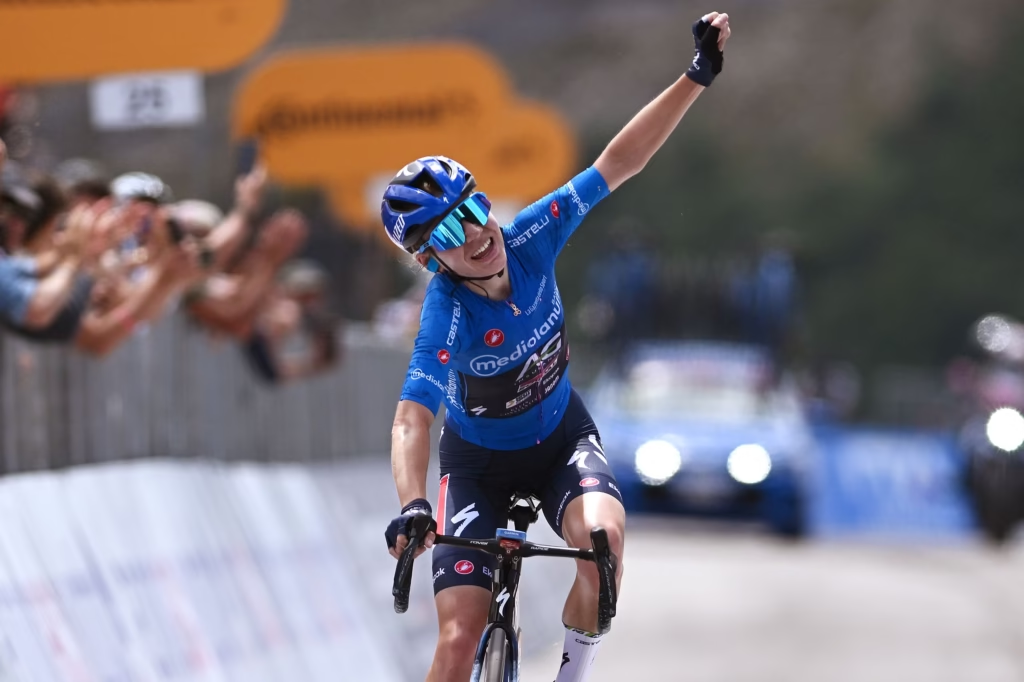
Notable riders missing from the expected field
Sarah Gigante
Gigante rides for AG Insurance-Soudal but is not expected to compete.
Her recovery from the fractured femur suffered in 2025 has taken longer than planned, with intended returns at the Vuelta and Giro both cancelled.
Her absence is significant because she would have been one of the leading specialist climbers for Ventoux.
It also gives Le Court-Pienaar a clearer path towards GC leadership.
Elise Chabbey
Chabbey will miss the Tour and the remainder of the 2026 season after announcing her pregnancy.
Her absence removes one of Vollering’s strongest potential climbing domestiques and one of the best breakaway riders in the peloton.
Chloé Dygert
Dygert is not currently expected in Canyon-SRAM’s Tour selection despite the Dijon time trial suiting her.
The team’s expected emphasis is on Niewiadoma-Phinney and Niedermaier for the general classification.
Which riders are best suited to each stage?
| Stage | Route type | Riders to watch |
|---|---|---|
| 1 | Punchy Lausanne circuit | Wiebes, Kopecky, Vos, Pieterse, Lippert |
| 2 | Likely Geneva sprint | Wiebes, Balsamo, Barbieri, Vos, Dideriksen |
| 3 | Rolling finish towards Poligny | Wiebes, Vos, Kopecky, Pieterse, Le Court-Pienaar |
| 4 | 21km individual time trial | Reusser, Vollering, Van der Breggen, Kerbaol, Faulkner |
| 5 | Hilly Beaujolais stage | Kopecky, Lippert, Pieterse, Vos, Persico |
| 6 | Difficult Ardèche terrain | Kerbaol, Faulkner, Pieterse, Longo Borghini, Bego |
| 7 | Mont Ventoux summit finish | Blasi, Ferrand-Prévot, Vollering, Van der Breggen, Fisher-Black |
| 8 | Long mountain stage to Nice | Longo Borghini, Niewiadoma-Phinney, Niedermaier, Kerbaol, Blasi |
| 9 | Short and aggressive Nice finale | Pieterse, Kopecky, Lippert, Vos, Faulkner |
Who are the leading yellow jersey favourites?
The general classification favourites fall into three groups.
Leading favourites
- Demi Vollering
- Pauline Ferrand-Prévot
- Paula Blasi
Major contenders
- Marlen Reusser
- Anna van der Breggen
- Kasia Niewiadoma-Phinney
- Elisa Longo Borghini
Podium and top-five challengers
- Antonia Niedermaier
- Niamh Fisher-Black
- Kim Le Court-Pienaar
- Cédrine Kerbaol
Vollering remains the safest choice because she combines time trialling, climbing and consistency.
Ferrand-Prévot has the clearest evidence that she can construct a peak specifically for the Tour.
Blasi has produced the best climbing breakthrough of the season and has already beaten Van der Breggen in a direct Grand Tour contest. Her inexperience and weaker time trial prevent her from moving above the two former Tour winners, but she belongs within the first group.
Reusser and Van der Breggen may emerge from Dijon ahead of all three.
Ventoux will determine whether they can keep that advantage.
Our guide to the Tour de France Femmes 2026 time-trial contenders examines which riders could gain or lose the most on stage 4.
Who are the sprinters to watch?
The sprint hierarchy begins with Wiebes.
- Lorena Wiebes
- Elisa Balsamo
- Marianne Vos
- Lotte Kopecky
- Kim Le Court-Pienaar
- Rachele Barbieri
- Amalie Dideriksen
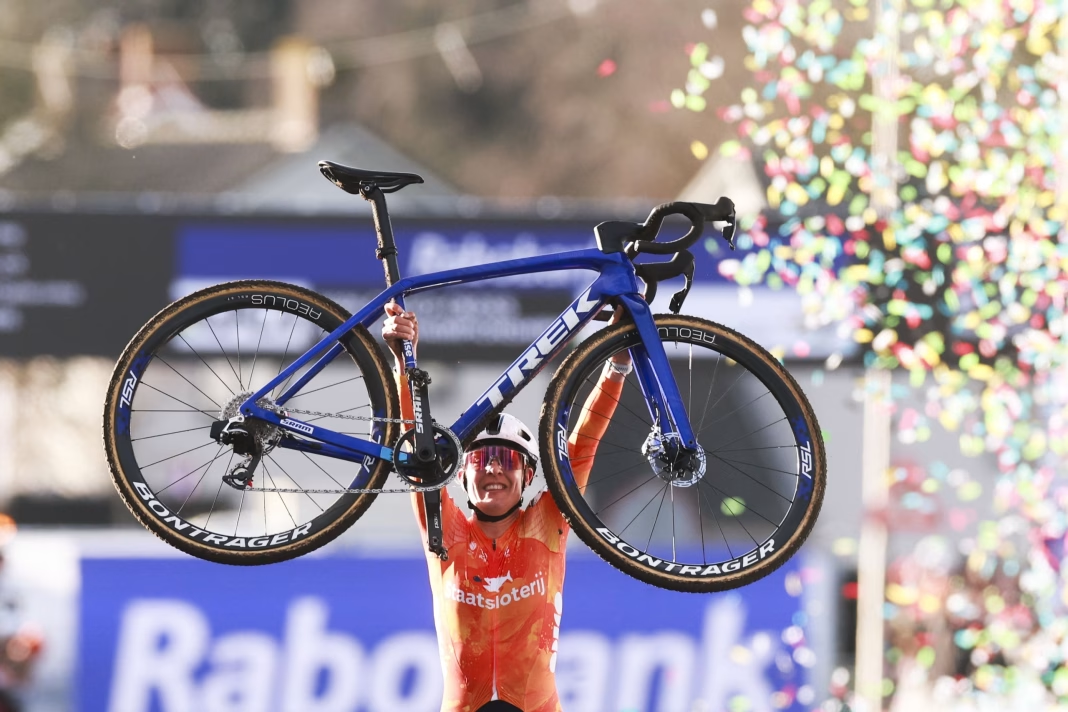
Wiebes is the clear favourite for both stage victories and the green jersey.
Balsamo is her most direct rival from a full peloton. Vos, Kopecky and Le Court-Pienaar become more dangerous as the route grows harder.
The limited number of straightforward sprint stages means consistency may matter as much as the number of victories.
-
 Photo Credit: Getty

Who are the best stage hunters?
Pieterse, Lippert, Kerbaol and Faulkner have the broadest range of realistic opportunities.
Žigart could join that group if her recovery allows her to start in strong condition.
Vallieres, Persico, Gery and Bego should become more dangerous as the race develops and riders lose time in the general classification.
The best stage hunters are not always the strongest riders.
They are often the riders far enough behind overall to receive freedom, but strong enough to turn that freedom into a victory.
Tour de France Femmes 2026 riders to watch summary
The 2026 Tour contains three clear top-level yellow jersey contenders.
Vollering offers the best balance of time trialling, climbing and consistency. Ferrand-Prévot is the defending champion and has already shown that she can peak precisely for one major objective. Blasi has won the Vuelta, outclimbed Van der Breggen on the Angliru and confirmed her form with further stage-race success.
Reusser and Van der Breggen should use the Dijon time trial to place those climbers under pressure.
Niewiadoma-Phinney and Longo Borghini bring experience and tactical range, while Niedermaier represents the strongest emerging all-round challenger behind Blasi.
Wiebes is the outstanding sprint favourite and should begin as the leading candidate for both stage wins and the points classification.
Pieterse, Lippert, Žigart, Faulkner, Kerbaol and Vallieres should animate the stages that sit between the obvious sprint and GC days.
The final start list will still refine individual roles.
The central picture is already clear: Vollering, Ferrand-Prévot and Blasi lead the GC conversation, while every sprint discussion must begin with Lorena Wiebes.

