
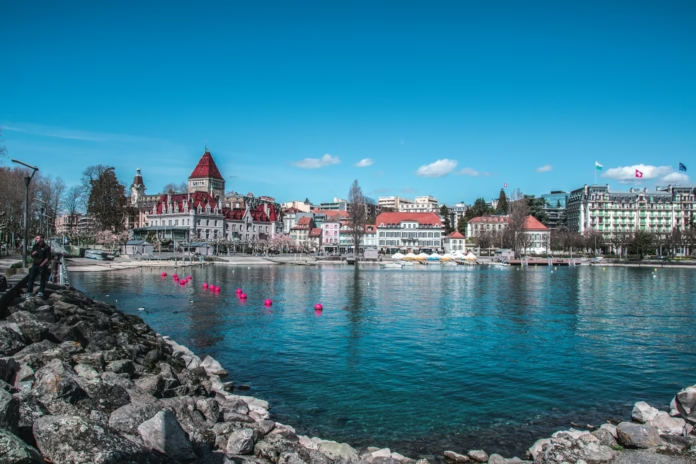
Lausanne hosts the opening stage of the 2026 Tour de France Femmes on Saturday 1 August, with the riders beginning beside Lake Geneva before returning to the city for an uphill finish at Place Saint-François.
The neutralised start is scheduled for 14:15 from Avenue de Rhodanie, while the stage finish is expected at approximately 17:44. The publicity caravan is due to leave the start at 12:15, giving spectators a full afternoon of activity before the first yellow jersey of the race is decided.
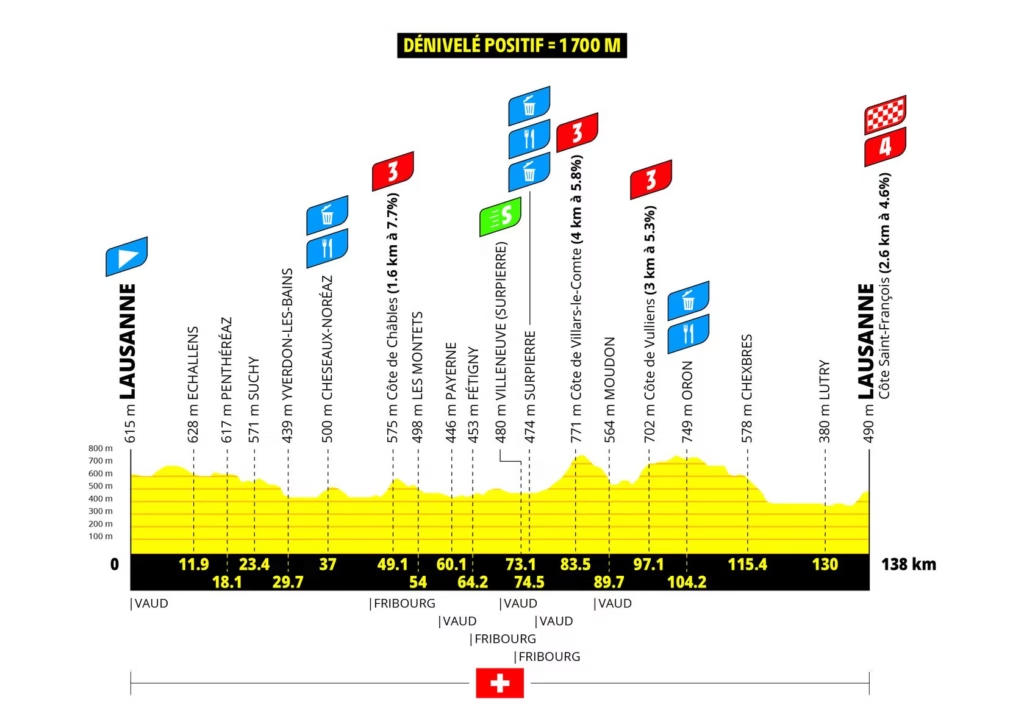
Stage 1 is officially classed as flat, but this is not a conventional opening-day sprint. The 138km route includes three category-three climbs before the peloton returns along Lake Geneva and tackles the 2.5km Côte Saint-François at an average of 4.6%. The finish line comes in Place Saint-François after a final straight of around 400 metres.
It is the first part of a three-stage Swiss opening, with the wider Tour de France Femmes 2026 Grand Départ in Switzerland continuing from Aigle to Geneva on stage 2 before the race crosses into France.
Tour de France Femmes 2026 stage 1 details
| Detail | Information |
|---|---|
| Date | Saturday 1 August 2026 |
| Route | Lausanne to Lausanne |
| Distance | 138km |
| Publicity caravan | 12:15 |
| Neutralised start | 14:15 |
| Expected finish | 17:44 |
| Start location | Avenue de Rhodanie |
| Finish location | Place Saint-François |
| Final climb | Côte Saint-François, 2.5km at 4.6% |
| Stage type | Officially flat, with an uphill finish |
The stage travels north from Lausanne towards Yverdon-les-Bains and Lake Neuchâtel before turning east through the cantons of Vaud and Fribourg. The peloton then returns through Moudon, Chexbres, Saint-Saphorin, Cully and Lutry before reaching Lausanne for the final climb.
The complete shape of the race, including the later time trial and mountain stages, is covered in the Tour de France Femmes 2026 route guide.
Where does stage 1 start in Lausanne?
The ceremonial start takes place on Avenue de Rhodanie, on the Lake Geneva shoreline in the Lausanne-Ouchy area.
Avenue de Rhodanie runs through the lakeside district west of central Ouchy, close to Vidy, the International Olympic Committee headquarters and several large waterfront parks. The broad roads and open public spaces make this a logical location for the Grand Départ infrastructure, team vehicles and publicity caravan.
The riders are due to leave at 14:15 under neutralised conditions. Racing will not begin immediately at the start arch. The peloton will first complete a controlled procession through Lausanne before reaching the official kilometre-zero point on the northern side of the city.
For spectators, this means Avenue de Rhodanie is the best place to see the riders for more than a few seconds. The start offers the chance to watch teams arrive, see the publicity caravan and experience the build-up before the race begins.
Access around the team buses and sign-on area will be controlled, however, and the precise public layout may only become clear once the local event plan and security zones are installed.
What time should you arrive at the Lausanne start?
Arriving between 10:30 and 11:00 should provide enough time to reach the lakeside, understand the access system and find a position before the publicity caravan leaves at 12:15.
Spectators interested mainly in the riders can arrive later, but the area is likely to become considerably busier during the final hour before the 14:15 rollout.
The start is being held on Swiss National Day, which should add to the atmosphere but may also increase pressure on hotels, restaurants and public transport. Travelling into Lausanne early is the safer option.
The complete field is expected to contain 21 teams and 147 riders, meaning the start area will need to accommodate a substantial number of buses, support vehicles and race personnel.
Where does stage 1 finish in Lausanne?
The finish line will be placed in Place Saint-François, one of the principal squares in central Lausanne.
The riders approach from the east after passing through Cully, Villette and Lutry. They then enter Lausanne beside Lake Geneva before beginning the final Côte Saint-François shortly after passing the Olympic Museum.
The official stage profile lists the final climb as 2.5km at 4.6%, finishing at an altitude of approximately 490 metres. Earlier route information described it as 2.3km at 5.4%, but the final published route uses the longer 2.5km measurement.
Although the average gradient is moderate, it arrives after 135km of racing and follows several earlier climbs. Positioning will be crucial because riders who begin the ascent too far back could lose contact before reaching the final straight.
The best places to watch stage 1 in Lausanne
Avenue de Rhodanie for the full Grand Départ atmosphere
The official start is the best choice for spectators who want to experience the event rather than simply see the peloton pass.
There should be activity for several hours, beginning with the publicity caravan and continuing through the team preparations and ceremonial rollout. Families and first-time spectators may find this more rewarding than waiting beside a quiet section of road for a brief passage.
The drawback is that the riders will be travelling under neutralised conditions. There will be no attacks or racing at this point.
Best for: team access, photographs, families and the Grand Départ atmosphere.
Ouchy and the Olympic Museum for the final approach
The Ouchy waterfront offers the strongest combination of scenery, accessibility and race action.
The peloton returns to Lausanne along Lake Geneva before passing the Olympic Museum and beginning the decisive climb. Spectators in this area should see the teams fighting for position at high speed, with domestiques attempting to place their leaders near the front before the gradient increases.
Ouchy also has broad lakeside promenades, parks and places to eat while waiting. The district is connected to the city centre by the M2 metro, which runs from Ouchy-Olympique through Lausanne-Gare to Lausanne-Flon.
The road near the Olympic Museum could become heavily restricted because it marks the transition into the finishing climb. Arrive early and remain behind the barriers.
Best for: lakeside scenery, high-speed positioning and easier access.
The lower Côte Saint-François for maximum tension
The opening section of the final climb should provide one of the most revealing views of the stage.
This is where the peloton will change from a fast lakeside formation into a climbing effort. Teams will begin to lose riders, pure sprinters may struggle and the first attacks could appear if the pace briefly stalls.
A position near the lower part of the climb gives spectators a clearer sense of speed than the finish line. The riders will still be carrying momentum from the lakeside, but the gradient should quickly expose anyone who has used too much energy earlier in the stage.
Best for: tactical racing, speed and watching the peloton split.
 Photo Credit: Gregory Van Gansen
The upper Côte Saint-François for attacks
Further up the climb, the race should become more selective.
A strong puncheuse may launch a sustained attack rather than wait for the final 400 metres. Even without a decisive move, gaps can open as riders fight for wheels on an urban ascent where positioning will be difficult to recover.
The upper climb may be a better choice than the finish line for spectators who want to see the decisive racing without standing several rows deep behind the barriers.
Choose a position that provides a clear sight line up the road rather than standing directly beside a junction or course crossing point, where security restrictions may limit access.
Best for: attacks, visible gradients and reduced crowds compared with the finish.
Place Saint-François for the winner and first yellow jersey
Place Saint-François is the obvious destination for anyone who wants to see the stage winner and the first yellow jersey of the 2026 Tour de France Femmes.
The final 400-metre straight should give spectators a view of the sprint after the climbing section has been completed. It could produce a reduced group, a late solo attacker or a battle between the strongest uphill finishers.
The finish area will be the busiest part of the route. Barriers, hospitality structures, television platforms and team vehicles will reduce the amount of public space available. A front-row position is likely to require arriving several hours before the expected 17:44 finish.
For supporters unable to reach the roadside, the Tour de France Femmes 2026 UK television guide explains how to follow the stage live.
Best for: the result, podium atmosphere and seeing the first race leader.
Lutry for a quieter lakeside option
Lutry is reached with approximately eight kilometres remaining and is expected to see the race at around 17:33 under the middle timing estimate.
It provides a scenic alternative to central Lausanne, with the peloton travelling beside Lake Geneva as the teams prepare for the finish. It should be less congested than Place Saint-François, although roadside space may still fill quickly.
Lutry has a railway station and local public transport connections, making it more accessible than the rural climbs earlier in the stage.
Watching in Lutry means giving up the chance to reach the Lausanne finish. The peloton is expected to cover the final eight kilometres in little more than ten minutes, so attempting to see both locations is unrealistic.
Best for: scenery, easier roadside access and spectators avoiding the city-centre crowds.
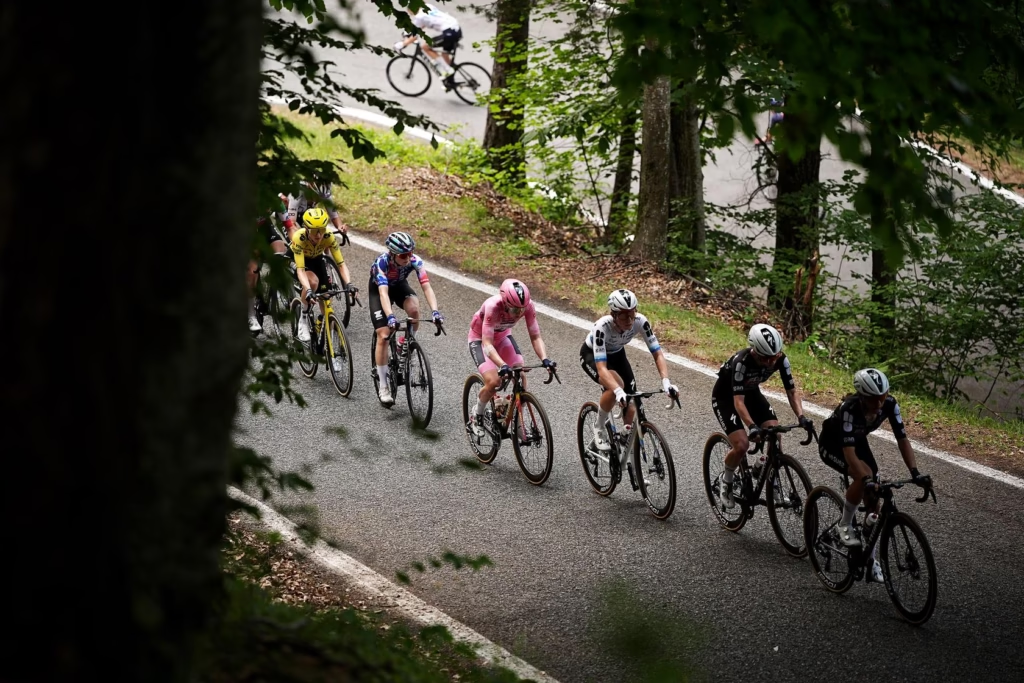 Photo Credit: RCS
Cully and the Lavaux vineyards for the best landscape
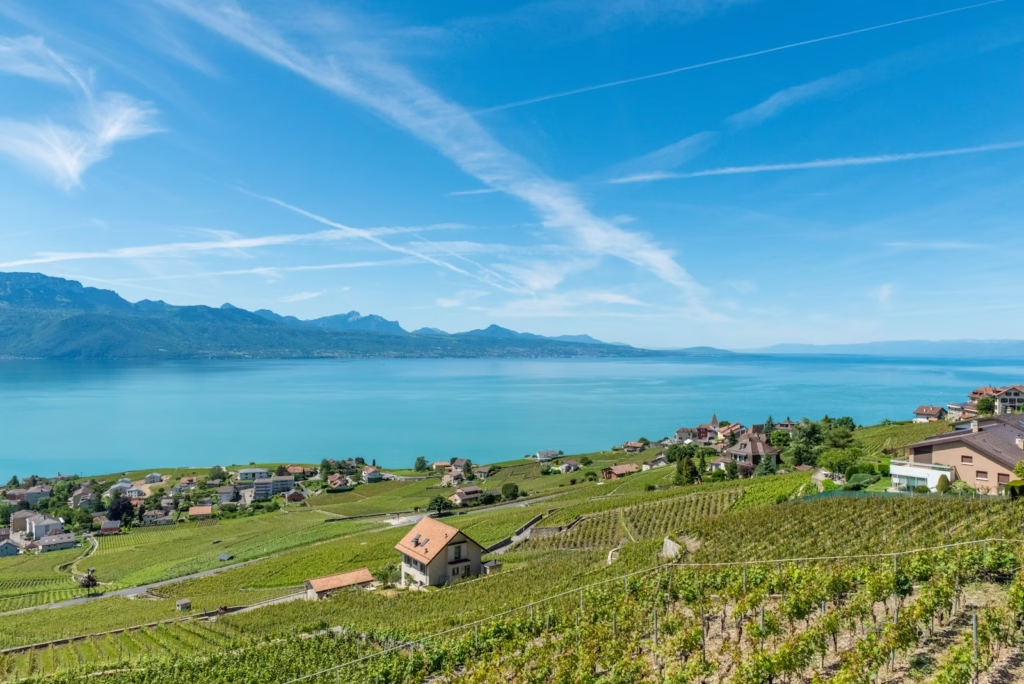
Cully sits beneath the UNESCO-listed Lavaux vineyard terraces and offers one of the most visually impressive places to watch stage 1.
The race is expected to pass through Cully at approximately 17:28, with around 12km remaining. The peloton should be moving quickly, but the combination of Lake Geneva, the vineyards and the approaching finale makes this an attractive location for photographers.
As with Lutry, this is an alternative to the Lausanne finish rather than part of a two-location plan. Remain in Cully after the passage and watch the finish on a television or mobile stream.
Best for: photography, vineyards and a less urban Tour experience.
Can you watch both the start and finish?
Yes. Watching the start on Avenue de Rhodanie and then moving to the Côte Saint-François or Place Saint-François should be possible.
The riders leave at 14:15 and are not expected to finish until around 17:44, providing more than three hours to move between the two areas. The safest plan is to leave Avenue de Rhodanie shortly after the neutralised rollout and travel on foot or by metro towards the city centre.
From the lakeside, the M2 connects Ouchy-Olympique with Lausanne-Gare and Lausanne-Flon. The finishing area can then be approached on foot, subject to security barriers and race-day crossing points.
Do not attempt to drive from the start to the finish. Road closures, restricted access and displaced traffic are likely to make a short urban journey much slower than walking or using public transport.
A second option is to watch the start and remain near Ouchy for the peloton’s return. This avoids the climb into the city centre and allows more time beside the lake, although it sacrifices the finish-line experience.
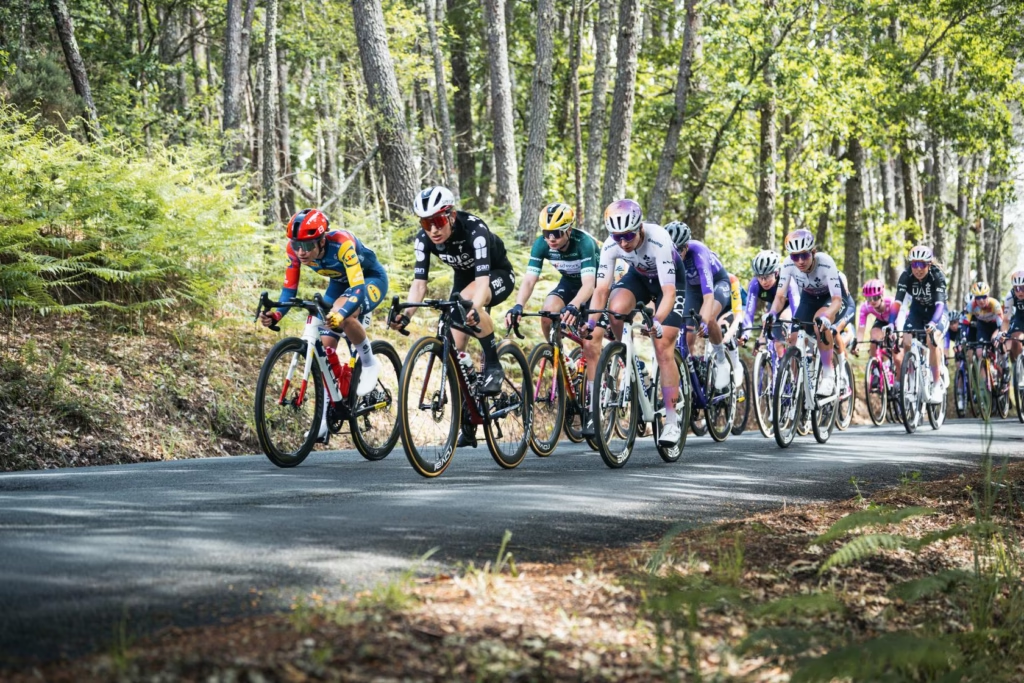 Photo Credit: Unipublic/Cxcling/Naike Ereñozaga
A recommended start-and-finish itinerary
10:30: arrive at Avenue de Rhodanie
Reach the lakeside early enough to walk around the accessible sections of the start area and find the best public viewing position.
12:15: watch the publicity caravan
The caravan is scheduled to leave two hours before the riders. Its passage is part of the Tour experience, particularly for families and spectators attending their first race.
14:15: watch the neutralised start
Remain near the barriers for the team rollout, then begin moving towards Ouchy-Olympique or the city centre.
15:00: travel towards the finish
Use the M2 or walk uphill towards Lausanne-Flon and Place Saint-François. Allow additional time for crowd-control barriers and closed pedestrian crossings.
15:30: choose a finish position
Place Saint-François offers the result and finish-line atmosphere. The Côte Saint-François offers a better view of the racing itself.
17:44: expected stage finish
The arrival time may vary depending on the speed of the race. The official schedule allows for a wider finishing window, so spectators should be in position well before the central estimate.
How to reach Lausanne
Lausanne is well connected by Switzerland’s national rail network. International visitors flying into Geneva Airport can continue towards Lausanne by train, while services also connect the city with Geneva, Bern, Basel and Zürich.
Lausanne railway station sits between the lake and the city centre. The M2 metro provides the easiest connection downhill to Ouchy-Olympique and uphill towards Lausanne-Flon.
Visitors should check the railway timetable immediately before travelling. Engineering works, event-related capacity changes and temporary transport restrictions can affect otherwise straightforward journeys.
Where to stay for stage 1
Ouchy
Ouchy is the best base for the start. It provides quick access to Avenue de Rhodanie, the lakeside parks and the Olympic Museum.
It is also a pleasant area to spend the evening before the race, although accommodation close to the lake is often among the more expensive options in Lausanne.
Lausanne-Gare
The area around the railway station is the most practical choice for visitors arriving by train. It sits between the start and finish areas and has direct M2 access to Ouchy and Lausanne-Flon.
This is the strongest option for spectators who want to watch the start and finish without relying on buses or taxis.
Flon and the city centre
Staying near Flon or Saint-François gives the easiest access to the finish.
The trade-off is a steeper or longer journey to the lakeside start, although the metro makes the descent towards Ouchy straightforward.
Lutry or Cully
These are attractive choices for a longer stay in the Lavaux region. They work particularly well for spectators prioritising the final lakeside section rather than the central Lausanne finish.
They are less convenient for attending the Avenue de Rhodanie start early in the day.
What kind of finish should spectators expect?
The stage is likely to favour riders who combine sprint speed with the ability to climb.
The Côte Saint-François is not long enough to create major general classification gaps under normal racing conditions, but it is hard enough to eliminate some pure sprinters. Teams with a puncheuse or an uphill sprinter will try to keep the race together while applying enough pressure to reduce the group.
The first three category-three climbs may also matter. The Côte de Châbles is 1.6km at 7.7%, the Côte de Villars-le-Comte is 4km at 5.8%, and the Côte de Vulliens is 3km at 5.3%. The final of those climbs is crested with around 41km remaining.
A late attack remains possible, particularly if the strongest teams hesitate on the final ascent. More likely is a reduced group reaching the 400-metre finishing straight, where positioning and timing will decide the first yellow jersey.
For readers new to the race, the beginner’s guide to the Tour de France Femmes 2026 explains the jerseys, classifications, teams and basic race format.
Practical advice for watching in Lausanne
Bring water, sun protection and a light waterproof layer. The lakeside start may feel exposed in hot weather, while conditions can change quickly around Lake Geneva.
Wear comfortable footwear. Lausanne is built on a steep slope, and even short journeys between Ouchy, the station and Saint-François involve significant climbing.
Use public transport rather than a car. The M2 is designed to connect the lakeside with the upper city, while road access near Avenue de Rhodanie, Ouchy and Saint-François is likely to be heavily restricted.
Cross the course only at staffed crossing points. Once the caravan and race convoy approach, roads can remain closed for a long period.
Take food and drinks before choosing a finish position. Leaving a front-row place near Saint-François may mean losing it.
Allow time after the finish. Thousands of spectators may attempt to reach Lausanne-Flon and Lausanne-Gare at the same time.
-
 Photo Credit: Getty



Is Lausanne worth visiting beyond the race?
Lausanne is more than a practical Grand Départ host. The city combines Lake Geneva, steep historic streets, the Olympic Museum and views towards the Alps.
Ouchy is the most relaxed part of the city, with a long promenade connecting parks, the harbour and the lakeside. Higher up, the old town includes Place de la Palud, Lausanne Cathedral and the surrounding pedestrian streets.
Cycling also has recent Tour history here. Lausanne hosted the finish of stage 8 of the 2022 men’s Tour de France, when Wout van Aert won an uphill sprint at the Stade Olympique.
The 2026 Tour de France Femmes finish uses a different part of the city, but the principle is similar. Lausanne’s steep rise away from Lake Geneva allows the race organisers to create a selective urban finale without needing a major mountain.
The opening stage will also begin the latest chapter in a race that has already produced several distinct champions. The complete Tour de France Femmes winners list covers every overall victory since the modern race was launched.
Frequently asked questions
Where does the Tour de France Femmes start in Lausanne?
Stage 1 starts from Avenue de Rhodanie beside Lake Geneva. The neutralised rollout is scheduled for 14:15 on Saturday 1 August 2026.
Where is the stage 1 finish?
The finish line will be in Place Saint-François in central Lausanne, following the 2.5km Côte Saint-François.
What time will stage 1 finish?
The expected finish time is approximately 17:44. The actual arrival could be earlier or later depending on the average speed of the race.
Can I watch the start and finish?
Yes. There are more than three hours between the neutralised start and expected finish. Walk or use the M2 metro rather than attempting to drive.
Where is the best place to watch?
Place Saint-François is best for the result and first yellow jersey. The Côte Saint-François is better for seeing attacks, while Ouchy and the Olympic Museum provide the best combination of scenery and race action.
Is stage 1 a sprint stage?
It is officially classified as flat, but the uphill finish makes a full bunch sprint less certain. The stage should favour puncheuses and sprinters who can climb.
Is watching the Tour de France Femmes free?
Roadside access is normally free. Hospitality areas and certain controlled start or finish zones may require accreditation or tickets.
Should I watch from Cully or Lausanne?
Choose Cully for the Lavaux vineyards and Lake Geneva scenery. Choose Lausanne for the final climb, stage winner and first yellow jersey. It will not be practical to see the peloton in Cully and then reach the finish before the riders.

