
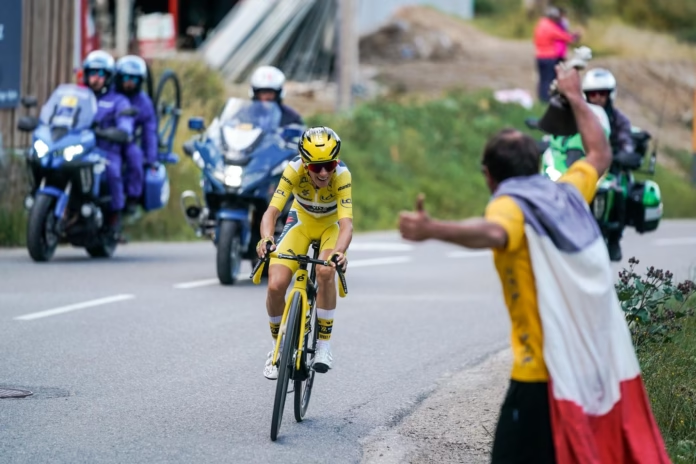
The Tour de France Femmes 2026 is the biggest women’s stage race of the season and the fifth edition of the modern Tour de France Femmes avec Zwift. It runs from Saturday, 1st August to Sunday, 9th August 2026, starting in Switzerland and finishing in Nice after nine days of racing.
For new fans, the simplest way to understand it is this: the Tour de France Femmes is a multi-day road race where the winner is the rider with the lowest total time across all stages. Each day has its own stage winner, but the biggest prize is the yellow jersey, awarded to the overall leader.
The 2026 race should be one of the most varied editions so far. It begins in Lausanne, moves through Geneva and into France, includes a 21km individual time-trial to Dijon, builds through the Beaujolais and Rhône Valley, reaches Mont Ventoux on stage 7, then finishes with two hard days around Nice.
That makes it a race for more than one type of rider. Sprinters will have chances. Puncheurs and breakaway riders will see opportunity. Time-triallists can take time on stage 4. But the final winner will almost certainly need to climb well, recover across nine days and handle the pressure of Ventoux and Nice.
For a full stage-by-stage breakdown, see our Tour de France Femmes 2026 route guide. For the wider race archive, our Tour de France Femmes hub brings together route news, previews, reports and historical coverage.
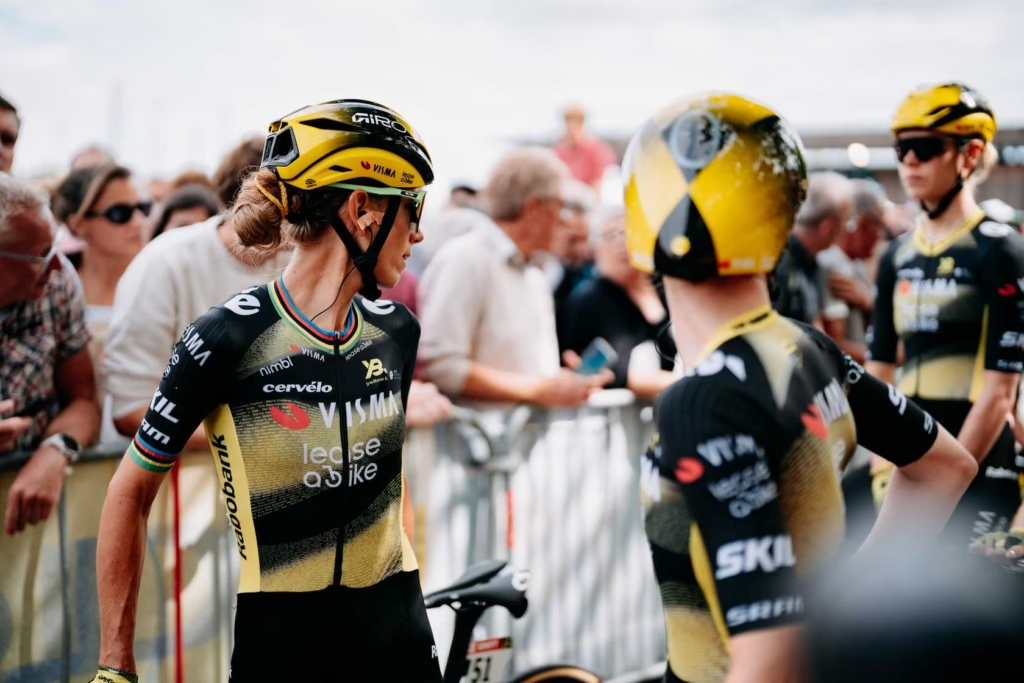 Photo Credit: A.S.O./Jennifer Lindini
Tour de France Femmes 2026 at a glance
| Detail | Tour de France Femmes 2026 |
|---|---|
| Full race name | Tour de France Femmes avec Zwift |
| Dates | Saturday, 1st August to Sunday, 9th August 2026 |
| Edition | 5th modern edition |
| Countries | Switzerland and France |
| Total distance | 1,175km |
| Number of stages | 9 |
| Teams | 22 teams of 7 riders |
| Total riders | 154 |
| Stage types | 3 flat, 3 hilly, 2 mountain, 1 individual time-trial |
| Mountain ranges | Jura, Massif Central and Alps |
| Highest point | Mont Ventoux, 1,910m |
| Hardest stage on paper | Stage 7 to Mont Ventoux |
| Final stage | Nice to Nice |
| Defending champion | Pauline Ferrand-Prévot |
What is the Tour de France Femmes?
The Tour de France Femmes is the women’s version of the Tour de France and the most important stage race in women’s cycling. The modern race was launched in 2022 and has quickly become the central target of the season for many of the best riders and teams in the world.
It is not as long as the men’s Tour de France, which lasts three weeks, but it follows the same basic logic. Riders race every day. Their times are added together. The rider with the lowest total time leads the general classification and wears the yellow jersey.
Each stage also has its own winner, which means the race has two stories happening at once. Some riders are trying to win the whole race. Others may be aiming for a stage victory, the green jersey, the mountains classification, the young rider classification or a breakaway opportunity.
That is one of the reasons the Tour de France Femmes is so easy to get into as a new fan. You do not need to understand every tactical detail immediately. You can follow the yellow jersey battle, watch for stage winners, and gradually start to see how teams use riders differently across the race.
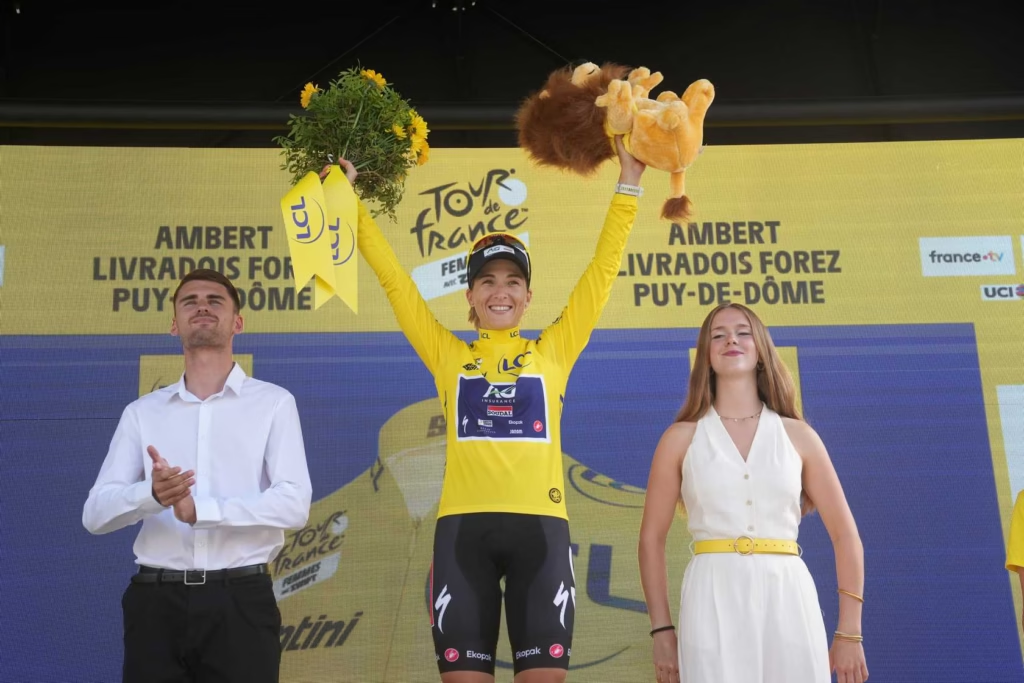 Photo Credit: A.S.O./Thomas Maheux
How does the race work?
The race is decided by cumulative time. If a rider finishes stage 1 in 3 hours, stage 2 in 4 hours, and stage 3 in 4 hours 30 minutes, those times are added together. The rider with the lowest total time leads the race overall.
Time gaps matter. If one rider finishes 40 seconds ahead of another on a climb, that 40 seconds is added to the overall standings. If a rider loses two minutes in the time-trial, she must gain that time back elsewhere.
There are also time bonuses on some stages, usually at the finish and sometimes at intermediate points. These can matter in a close race, especially if the gaps are small before the mountains.
Teams usually start with seven riders. Each team will have a plan: a general classification leader, sprint options, climbing support, road captains, domestiques and riders who may go in breakaways. Not every rider is trying to win the yellow jersey. In fact, most are there to help someone else or target specific stages.
The final team line-up will matter, because the Tour de France Femmes is not only about the biggest names. Squad depth, climbing support and sprint trains can all decide how the race is controlled. Our report on the 2026 Tour de France Femmes team selection explains the teams confirmed for the race.
The 2026 route
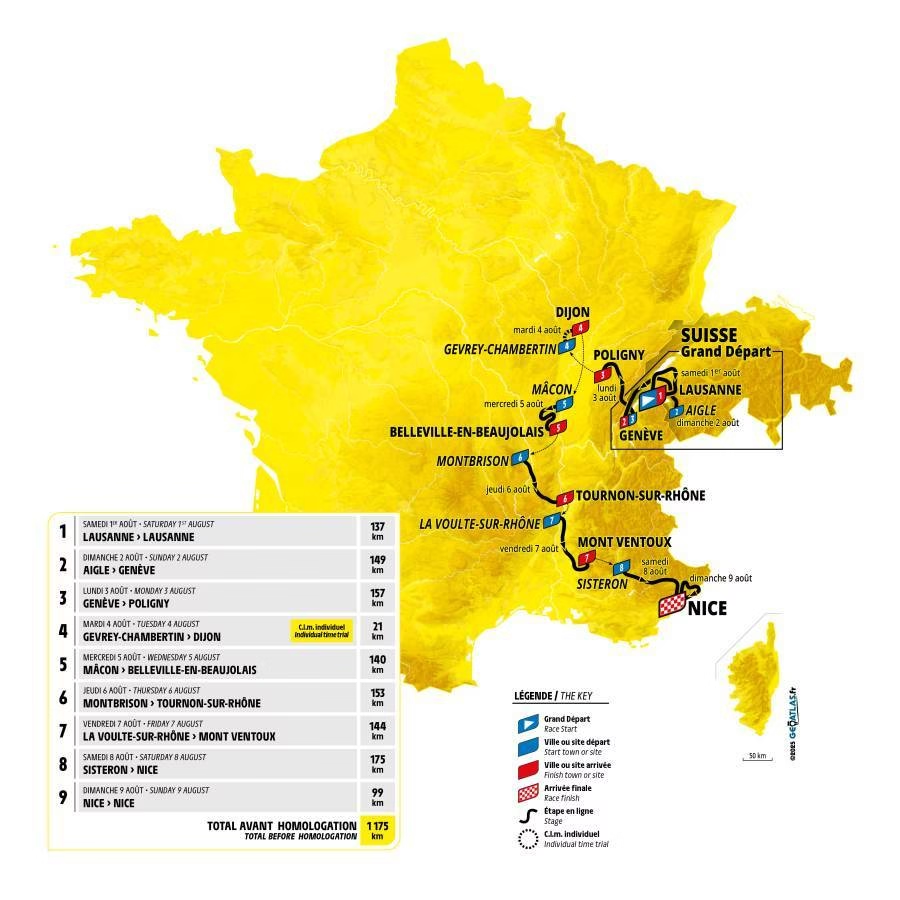
The 2026 Tour de France Femmes starts in Switzerland with a Grand Départ in Lausanne. The first three stages keep the race in Switzerland and eastern France before the time-trial in Burgundy. From there, the race moves south through Beaujolais, the Rhône corridor, Mont Ventoux and finally Nice.
Tour de France Femmes 2026 stage list
| Stage | Date | Route | Distance |
|---|---|---|---|
| Stage 1 | Saturday, 1st August | Lausanne to Lausanne | 137km |
| Stage 2 | Sunday, 2nd August | Aigle to Geneva | 149km |
| Stage 3 | Monday, 3rd August | Geneva to Poligny | 157km |
| Stage 4 | Tuesday, 4th August | Gevrey-Chambertin to Dijon | 21km individual time-trial |
| Stage 5 | Wednesday, 5th August | Mâcon to Belleville-en-Beaujolais | 140km |
| Stage 6 | Thursday, 6th August | Montbrison to Tournon-sur-Rhône | 144km |
| Stage 7 | Friday, 7th August | La Voulte-sur-Rhône to Mont Ventoux | 153km |
| Stage 8 | Saturday, 8th August | Sisteron to Nice | 175km |
| Stage 9 | Sunday, 9th August | Nice to Nice | 99km |
The key thing for beginners is that the route builds. It does not start with a decisive high-mountain stage. Instead, it layers pressure: opening roads in Switzerland, a time-trial in Dijon, hilly transition stages, then Mont Ventoux and Nice.
That means the race can change several times. The first yellow jersey may not be the final favourite. A rider who looks strong early may lose time on Ventoux. A climber who waits too long may run out of road. A time-trial specialist may take yellow in Dijon and then spend the rest of the week defending.
The Swiss start and Ventoux finish were first confirmed as headline features when the route was announced, as covered in our report on Mont Ventoux and the Swiss Grand Départ headlining the 2026 Tour de France Femmes route.
Why the 2026 route is interesting
The 2026 route is interesting because it gives different rider types a way into the race before the climbers take over.
The opening stages around Lausanne, Geneva and Poligny should create early tension. Switzerland gives the race a major international start, and the terrain is unlikely to be completely straightforward. Positioning, road furniture, short climbs and nerves can all matter in the first three days.
Stage 4 is the individual time-trial from Gevrey-Chambertin to Dijon. At 21km, it is long enough to create meaningful GC gaps, but not so long that it completely decides the race. Strong time-triallists will see it as a major opportunity. Pure climbers will need to limit losses.
Stages 5 and 6 keep the pressure on through rolling and hilly terrain. These are the sort of days where breakaways can succeed, teams can make mistakes and GC riders can lose time if they switch off.
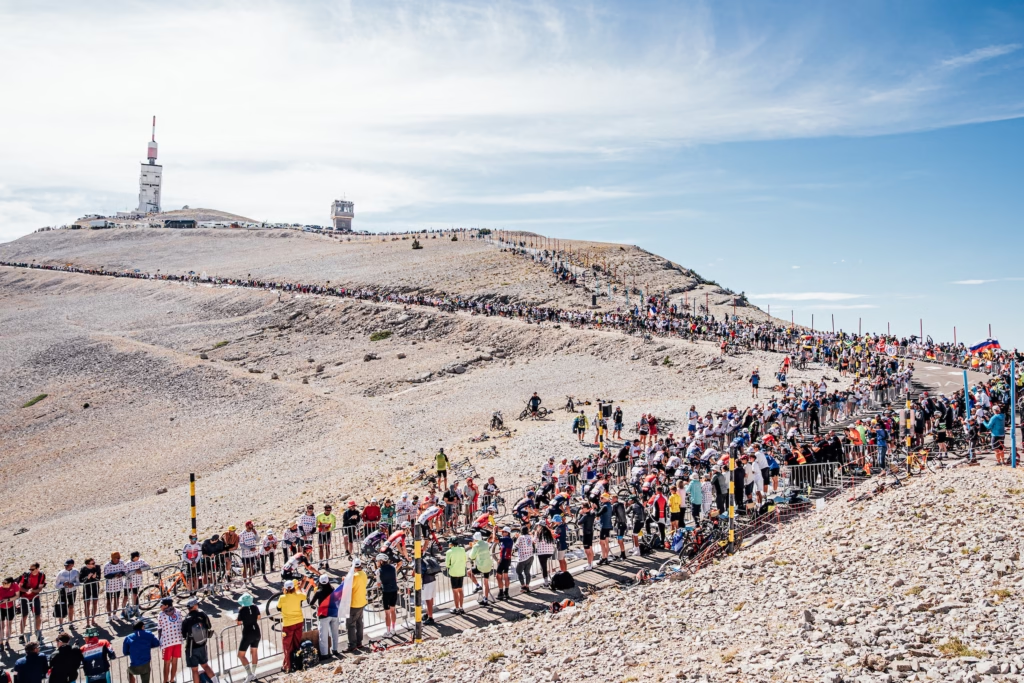
Stage 7 is the headline day: Mont Ventoux. It is the highest point of the race and the clearest summit-finish test. Riders who want to win the Tour will need to survive, and probably attack, there.
Stages 8 and 9 then take the race to Nice. That gives the final weekend a different flavour. Nice is not just a scenic finish. The roads around the city can be technical, hilly and difficult to control. If the yellow jersey battle is still close, the race may not be over after Ventoux.
That structure also fits a wider pattern in women’s cycling, where major races are using more distinctive routes to shape identity. Our feature on how race routes are shaping women’s cycling in 2026 explains why routes such as this matter beyond one edition.
What are the jerseys?
The Tour de France Femmes has several major jerseys. Each one rewards a different type of performance.
| Jersey | Colour | What it means |
|---|---|---|
| General classification | Yellow | Overall race leader by total time |
| Points classification | Green | Best points scorer, usually sprinters and consistent finishers |
| Mountains classification | Polka-dot | Best climber, based on points over categorised climbs |
| Young rider classification | White | Best rider under 23 on general classification |
| Stage winner | No jersey | Winner of that day’s stage |
| Most aggressive rider | Combativity award | Rider judged to have animated the stage |
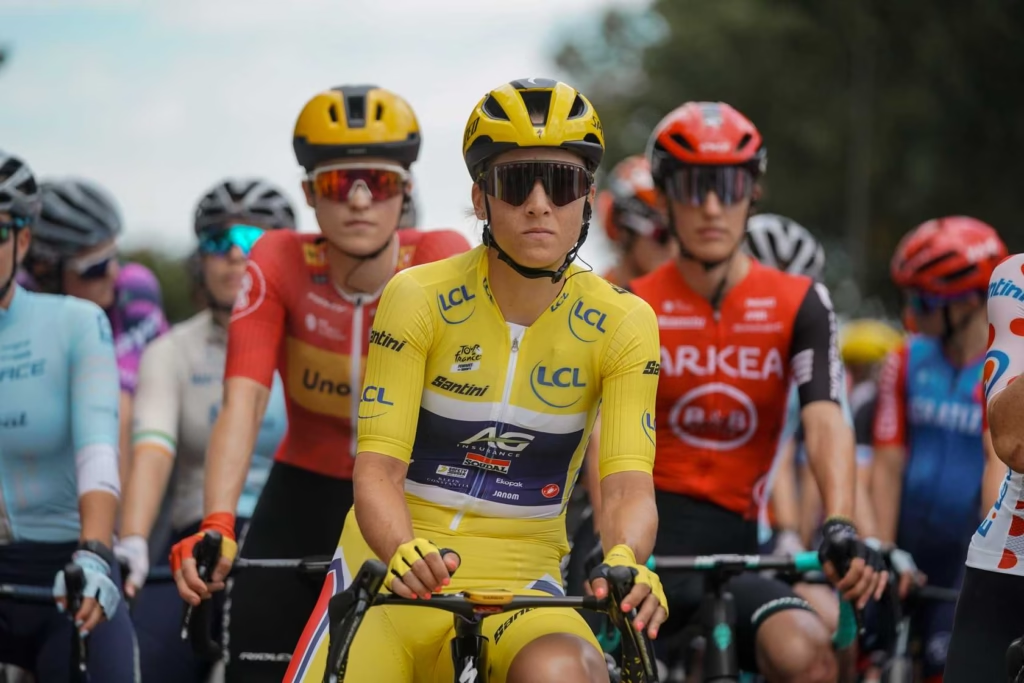 Photo Credit: A.S.O./Thomas Maheux
The yellow jersey
The yellow jersey is the most important prize. It goes to the rider with the lowest total time across the race.
In 2026, the yellow jersey battle should be shaped by three major elements: the stage 4 time-trial, the stage 7 finish on Mont Ventoux, and the final weekend around Nice. A rider who wants to win overall must be good enough across all of them.
That does not mean the winner must be the best at everything. Some riders may gain time in the time-trial and defend in the mountains. Others may lose time against the clock and try to take it back on Ventoux. The winner will be the rider who puts the full race together most cleanly.
The green jersey
The green jersey is the points classification. Riders score points at stage finishes and intermediate sprints. It is often associated with sprinters, but in the Tour de France Femmes it can also reward consistency across varied terrain.
The 2026 route has three flat stages, which should give sprinters real opportunities. But because there are also hilly stages, a time-trial and mountains, the green jersey winner will need more than a fast finish. She will need to survive the climbs, stay consistent and keep scoring even when the race becomes harder.
This makes the green jersey one of the most accessible competitions for new fans. Watch who is contesting the intermediate sprints, who is placing well in bunch finishes and who can still score points after the route gets tougher. For more on the riders who define sprinting in the women’s peloton, see our guide to the best sprinters in women’s cycling right now.
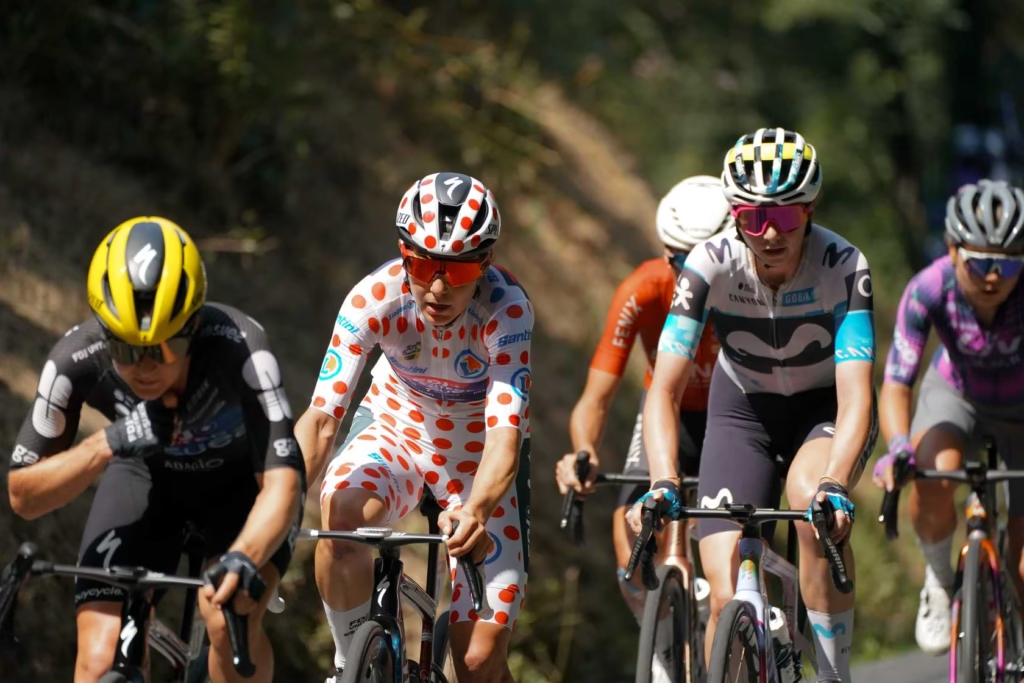 Photo Credit: A.S.O/Thomas Maheux
The polka-dot jersey
The polka-dot jersey goes to the leader of the mountains classification. Riders score points at the top of categorised climbs, with more points available on harder climbs and summit finishes.
In 2026, Mont Ventoux is the obvious focal point, but the mountains classification will not only be about that one climb. Points can be collected across the Jura, Massif Central and Alps, depending on how the route classifies each climb.
This competition often rewards attacking riders. A GC contender can win it, but so can a breakaway specialist who repeatedly targets mountain points. For beginners, the polka-dot jersey is a good way to follow riders who are not necessarily in the yellow jersey race but are still shaping the race every day.
The white jersey
The white jersey goes to the best young rider on general classification. In the Tour de France Femmes, it is awarded to riders under 23.
This is useful for spotting the next generation of GC contenders. A rider may not be ready to win the Tour outright, but a strong white jersey campaign can show that she is close to becoming a major stage-race force.
The white jersey can also overlap with the yellow jersey race. If a young rider is strong enough, she may be competing for both at once.
Who won the previous editions?
The modern Tour de France Femmes has had four different winners in its first four editions, which says a lot about how competitive the race has been.
| Year | Winner |
|---|---|
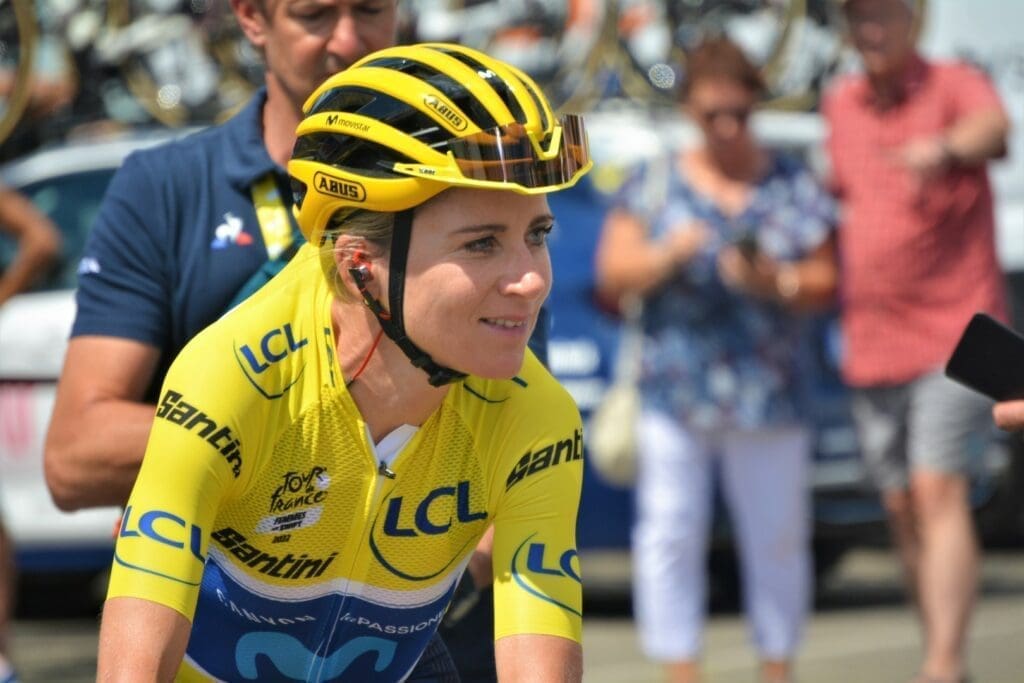
| 2022 | Annemiek van Vleuten |
| 2023 | Demi Vollering |
| 2024 | Katarzyna Niewiadoma-Phinney |
| 2025 | Pauline Ferrand-Prévot |
That list already gives the race serious weight. Van Vleuten was the dominant stage racer of her generation. Vollering then took over as the benchmark Grand Tour rider. Niewiadoma-Phinney won the 2024 edition by one of the smallest margins in modern stage-race history. Ferrand-Prévot’s 2025 victory gave France a landmark home winner in the modern race.
The 2026 edition therefore arrives with a strong recent history: a dominant champion, a narrow thriller, a home breakthrough, and now a route built around time-trialling, Ventoux and the final weekend in Nice.
For more on why Ferrand-Prévot’s 2025 victory mattered, see our feature a week on from the Tour de France Femmes 2025. Our stage report on Ferrand-Prévot conquering the Col de la Madeleine and taking yellow covers the moment that transformed the 2025 race.
Who are the main riders to watch?
The final start list will decide the exact favourites, but several rider types stand out for the 2026 route.
General classification contenders
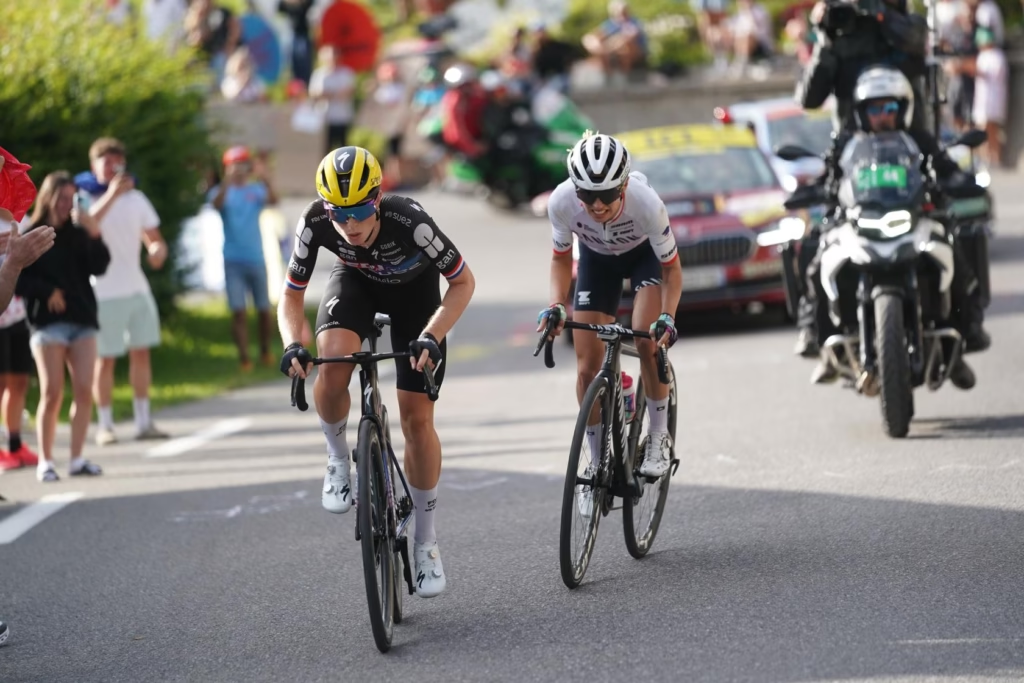
The GC contenders are the riders trying to win the yellow jersey. On this route, they need to climb well, time-trial strongly enough, recover across nine days and avoid mistakes in the early stages.
Pauline Ferrand-Prévot should be one of the biggest names if she lines up as defending champion. Her 2025 Tour campaign was built around a serious GC target, as covered before the race in our piece on Pauline Ferrand-Prévot’s 2025 Tour de France Femmes ambitions.
Demi Vollering remains one of the strongest stage racers in the world. Her 2026 season has already underlined that she is still a central reference point in women’s stage racing, as covered in our Demi Vollering 2026 season guide. Her dramatic final-stage Giro d’Italia Women victory also showed how dangerous she remains when a race is still open late, as seen in our Giro d’Italia Women 2026 final classification recap.
Katarzyna Niewiadoma-Phinney brings consistency, aggression and Tour-winning pedigree. Her 2026 form and stage-race reliability are covered in our Kasia Niewiadoma 2026 season guide, while her 2025 defence began with the context of a rider ready to fight for yellow again at the Tour de France Femmes.
Marlen Reusser could be especially dangerous because the route includes a 21km time-trial and only one truly obvious summit-finish showdown before Nice. Her profile as a time-triallist and stage-race threat is clear from her Marlen Reusser rider profile and her 2026 race programme. Her overall victory at the 2026 Tour de Suisse Women also strengthened the case that she can be more than a time-trial danger.
Other contenders will depend on form, team selection and how the season develops. The Giro d’Italia Women and Tour de Suisse Women are likely to offer important clues before the Tour begins.
Sprinters
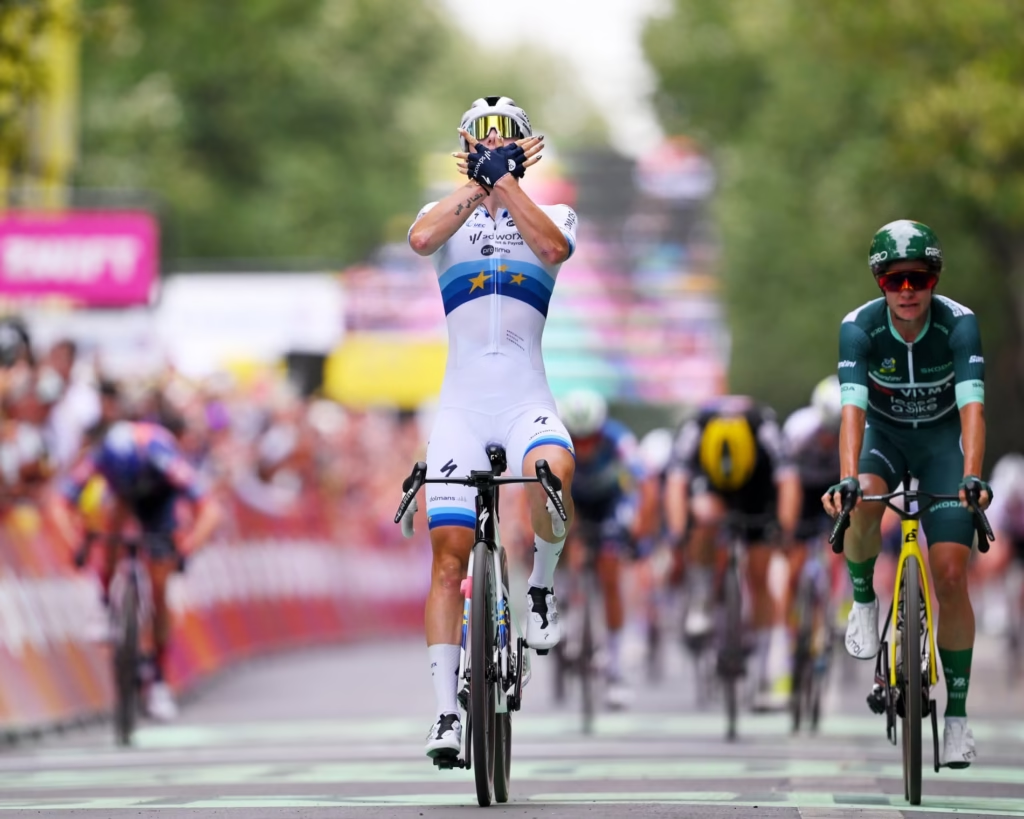
The flat stages should bring the sprinters into the race. Lorena Wiebes is the obvious reference point in most sprint fields, but the exact battle will depend on team selections and form.
Wiebes remains the fastest benchmark in many women’s sprint fields and has already shown that again in 2026, including her dominant opening-stage win at the Vuelta a Burgos Feminas. Her mix of outright speed, positioning and increasing range makes her a natural name to watch if she starts the Tour.
Sprinters will be looking at stages where the route is controlled enough for a bunch finish. But they must also survive the whole race. A Tour sprint campaign is not only about being fast. It is about positioning, team support, recovery and surviving days that do not suit them.
Puncheurs and breakaway riders
The hilly stages should suit puncheurs, classics riders and breakaway specialists. These are the riders who can attack on rolling terrain, handle repeated climbs and take chances when sprint teams or GC teams hesitate.
Stages 5 and 6 look especially important for this kind of rider. The race will be past the opening nerves, but not yet on Ventoux. That often creates space for aggressive racing.
These riders often decide whether a stage becomes controlled or chaotic. If a strong group goes clear, GC teams may not want to chase too hard before Ventoux, while sprint teams may not have enough riders left to bring everything back.

Time-triallists
Stage 4 is the key day for time-trial specialists. A 21km individual time-trial is long enough to change the yellow jersey battle and expose weaknesses in pure climbers.
Reusser is the obvious type of rider who benefits from this structure. If a strong time-triallist can take time in Dijon and climb well enough afterwards, the race could become a defence operation rather than a simple mountain showdown.
Her time-trial strength was obvious again at the Tour de Suisse Women, where she won the stage 4 time-trial and took yellow, before sealing the overall title on the final mountain stage.
The key stages
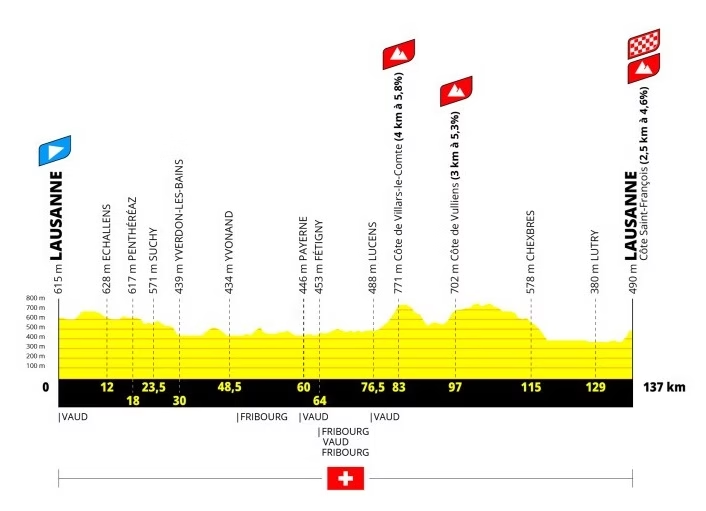
Stage 1: Lausanne to Lausanne
Stage 1 gives the race its Swiss start and first yellow jersey. Opening stages are always nervous because every team is fresh, every rider wants position and nobody wants to lose time immediately.
A stage like this can be difficult for new fans because it may not look decisive on paper, but it matters. Crashes, splits, bonus seconds and positioning can all shape the race before the bigger days arrive.
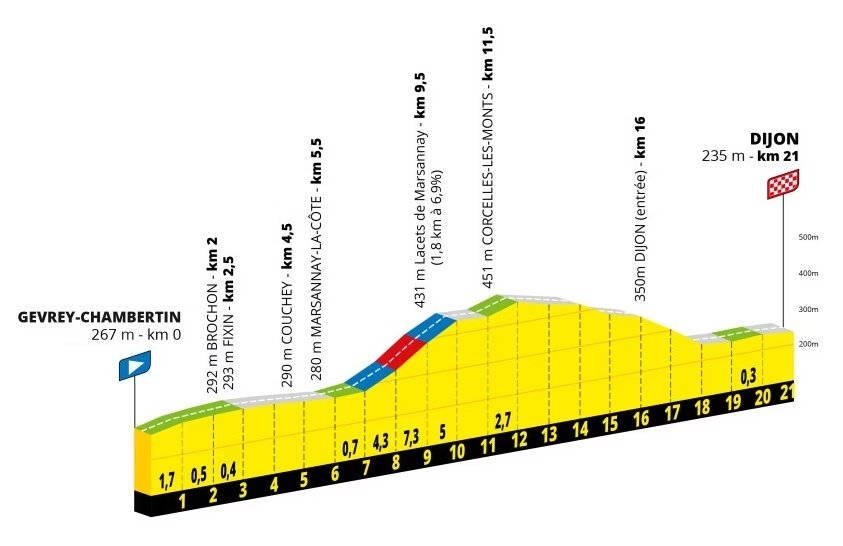
Stage 4: Gevrey-Chambertin to Dijon time-trial
The stage 4 time-trial is the first obvious GC checkpoint. Riders race alone against the clock over 21km, meaning there is nowhere to hide behind teammates.
This stage should show who has prepared properly for the full route. Climbers who struggle against the clock may lose time. All-rounders and specialists may move into yellow. It could also create pressure before the mountains, forcing some riders to attack later in the race.
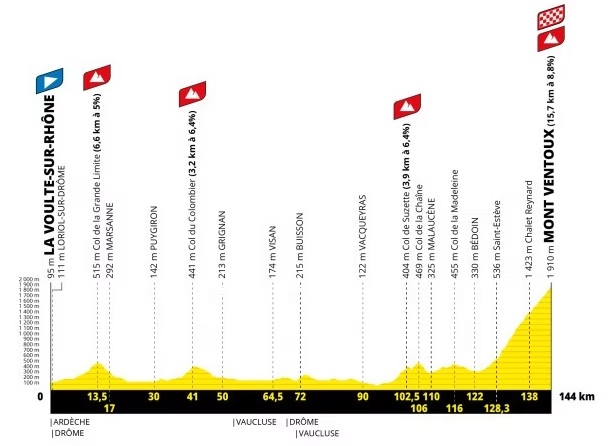
Stage 7: La Voulte-sur-Rhône to Mont Ventoux
Mont Ventoux is the headline stage of the race. At 1,910m, it is the highest point of the 2026 Tour de France Femmes and the most symbolic climb on the route.
Ventoux is not just another mountain. It has a harsh reputation because of its exposed upper slopes, changing weather and long, grinding nature. It can produce huge gaps if riders crack.
If the yellow jersey race is close before stage 7, Ventoux could decide it. If one rider is already ahead, Ventoux is where rivals must test her.
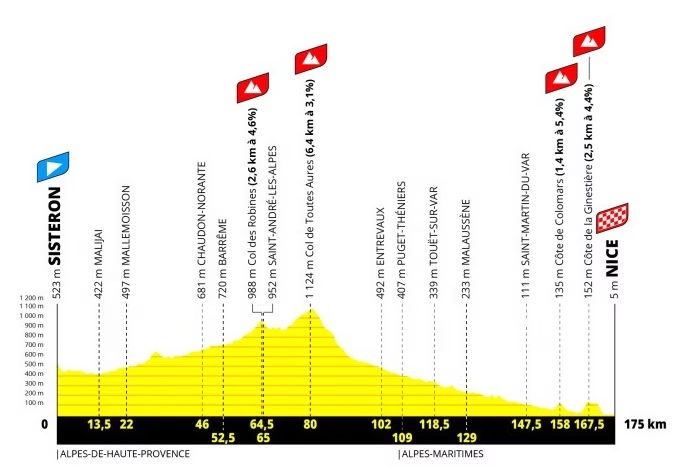
Stage 8: Sisteron to Nice
Stage 8 is the longest stage of the race at 175km. Coming the day after Mont Ventoux, that matters. Riders will be tired, teams may be reduced, and the GC picture may be tense.
A long stage after a summit finish can be awkward. Some riders recover well, others do not. Breakaways may become dangerous. Teams that used too much energy on Ventoux may struggle to control the race.
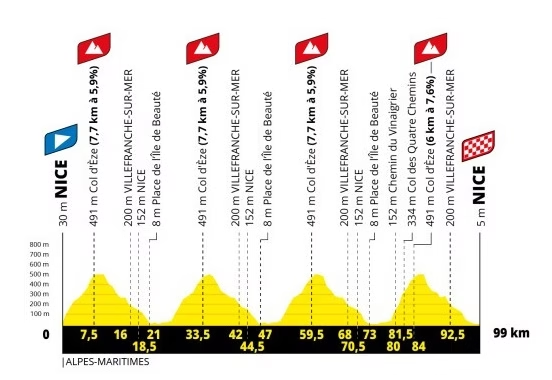
Stage 9: Nice to Nice
The final stage around Nice is only 99km, but it should not be dismissed. Nice has difficult roads nearby, and final stages in modern women’s stage races are rarely ceremonial.
If the yellow jersey battle is still close, stage 9 could be aggressive from the start. If the GC is more settled, it may become a fight for the final stage win. Either way, it gives the race a proper finishing point rather than a flat parade.
How teams race the Tour de France Femmes
Teams race the Tour in different ways depending on their goals.
A GC team will protect its leader, keep her out of trouble, place her before climbs and help her conserve energy. On mountain stages, climbing domestiques become crucial. In the time-trial, the leader must do the work alone, but team preparation still matters.
A sprint team will try to control flatter stages, chase breakaways and deliver its sprinter into the final few hundred metres. That requires a lead-out train and strong riders who can keep the race together.
Other teams may not have a realistic GC winner or top sprinter, so they may chase breakaways. For these teams, the Tour is still a huge opportunity. A stage win can define a season.
The strongest teams often have more than one plan. They may bring a GC leader, a sprinter and riders capable of attacking. That gives them flexibility, but it also creates tactical decisions. You cannot chase every goal every day.
What is a domestique?
A domestique is a rider who works for someone else on the team. They may fetch bottles, chase attacks, protect a leader from wind, set pace on climbs or position a teammate before a sprint.
Domestiques are essential in the Tour de France Femmes because the race is long enough for fatigue and support to matter. A GC leader cannot do everything alone. A sprinter cannot win without help. A team cannot control the race without riders willing to spend energy for others.
For beginners, one of the easiest ways to understand cycling is to watch who is working and who is being protected. The protected rider is usually the team leader. The riders doing the hard work around her are often the ones making the result possible.
What is a breakaway?
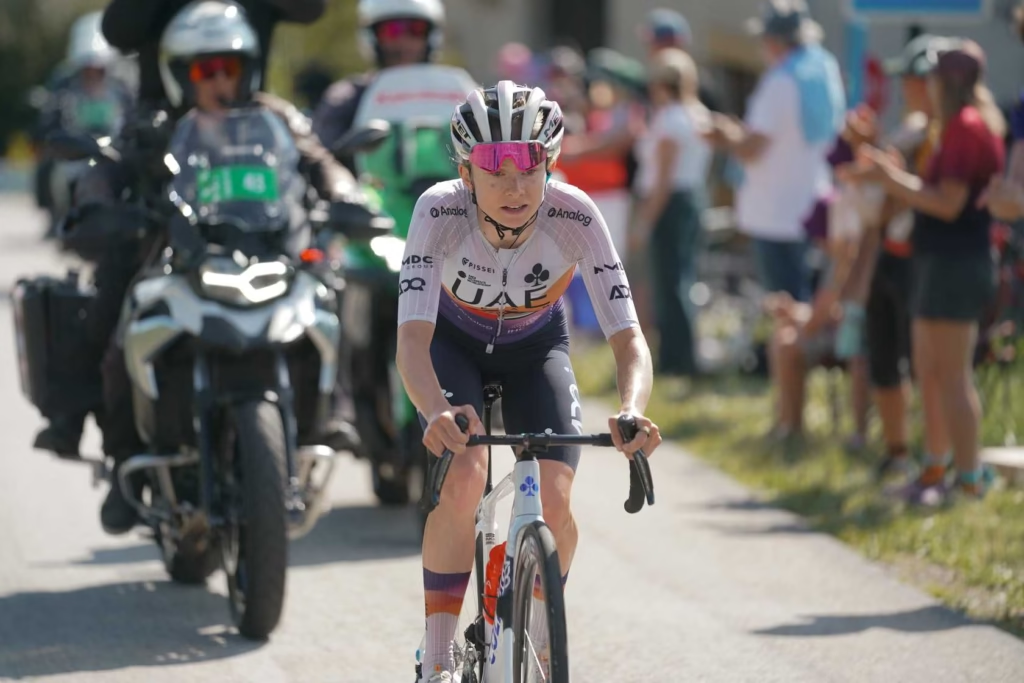
A breakaway is a rider or group of riders who attack and get ahead of the peloton. Some breakaways are caught before the finish. Others survive and win the stage.
Breakaways are important because they give more teams a way into the race. Not every team has a yellow jersey contender or a top sprinter. A breakaway can give those teams visibility and a real chance of victory.
In the Tour de France Femmes, breakaways can be especially dangerous on hilly stages. If the peloton hesitates, or if GC teams do not want to chase, a strong group can build enough of a lead to fight for the stage.
What is the peloton?
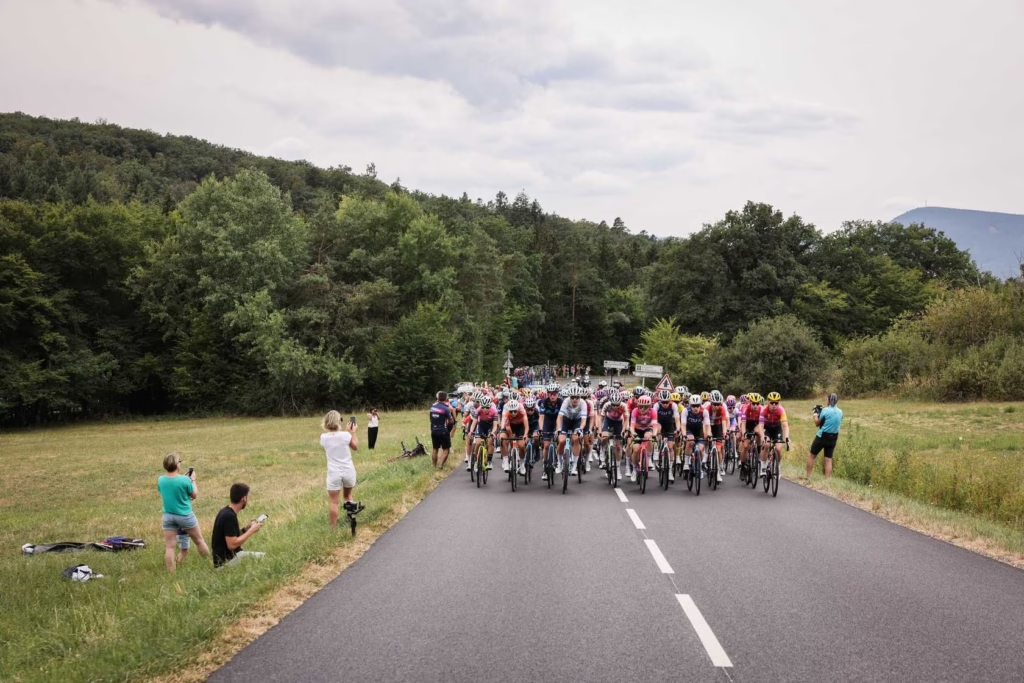
The peloton is the main group of riders. Riding in the peloton saves energy because riders benefit from drafting behind others. That is why positioning matters so much. A rider sitting safely inside the bunch uses less energy than a rider exposed in the wind.
The peloton is not just one calm group. It stretches, compresses and splits depending on speed, road width, wind, climbs and crashes. On flat stages, it may stay together until the sprint. On hilly or mountain stages, it can break apart completely.
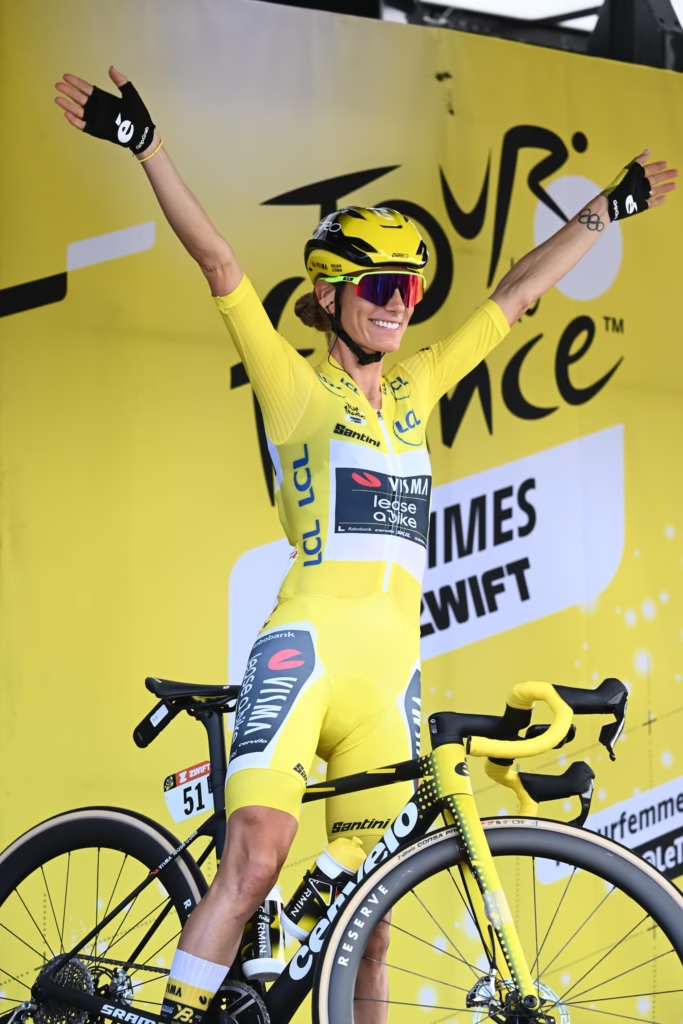 Photo Credit: A.S.O./Pauline Ballet
What is the general classification?
The general classification, or GC, is the overall race ranking by total time. The rider with the lowest total time wears the yellow jersey.
GC riders are not trying to win every stage. They are trying to finish the full race in the least time. Sometimes that means attacking. Sometimes it means following rivals. Sometimes it means avoiding risk and waiting for a better day.
The GC is the central story of the Tour, but it is not the only story. Stage wins, jerseys, breakaways and team tactics all matter too.
How hard is the Tour de France Femmes?
The Tour de France Femmes is hard because it combines intensity, terrain and pressure. The stages are shorter than the men’s Tour, but that often makes them more explosive. There is less time for the race to settle, and attacks can come earlier.
The 2026 edition is especially demanding because it includes a record total distance for the modern race, a 21km time-trial, three mountain ranges, Mont Ventoux and nearly 18,800m of total climbing.
The difficulty is not only physical. Riders must handle road furniture, positioning, team duties, weather, crashes, media attention and recovery. A rider can lose the Tour through one bad day, one missed split, one crash or one poorly timed hunger flat.
The 2026 race also sits within a wider Grand Tour season that includes the Giro d’Italia Women and La Vuelta Femenina. For UK viewers, our guide to how to watch the Giro d’Italia Women 2026 in the UK explains how the women’s Grand Tour calendar is now being treated by broadcasters.
How to watch the race as a beginner
The easiest way to watch is to pick one main storyline each day.
On flat stages, watch the sprinters and their teams. Which teams are chasing? Which riders are being protected? Who has the strongest lead-out?
On hilly stages, watch for breakaways and attacks. Are GC teams interested, or are stage hunters being allowed to fight?
On the time-trial, compare the GC riders. Who gains time? Who limits losses? Who changes the shape of the race?
On Mont Ventoux, watch the yellow jersey contenders. This is where the race should become most direct.
On the final weekend, watch who still has teammates. Late in a stage race, team strength can be as important as individual power.
For UK broadcast details, streaming options and timing, see our guide to how to watch Tour de France Femmes 2026 in the UK.
Best stages for new fans to watch
| Stage | Why it is worth watching |
|---|---|
| Stage 1 | First yellow jersey, Grand Départ atmosphere and opening nerves |
| Stage 4 | Individual time-trial, important GC gaps likely |
| Stage 6 | Hilly stage before Ventoux, possible breakaway day |
| Stage 7 | Mont Ventoux, the headline mountain finish |
| Stage 8 | Longest stage, awkward day after Ventoux |
| Stage 9 | Final stage around Nice, last chance to change the race |
If you only watch one stage, watch stage 7 to Mont Ventoux. If you watch three, choose stage 4, stage 7 and stage 9. That gives you the time-trial, the biggest climb and the finale.
Why Mont Ventoux matters
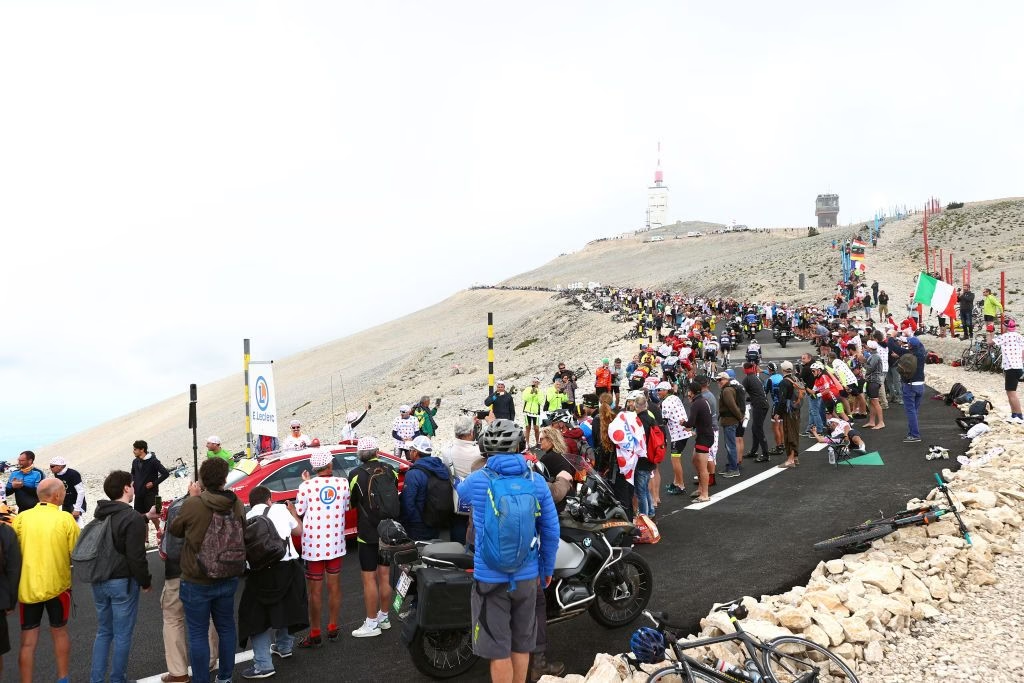
Mont Ventoux matters because it is one of cycling’s most famous climbs. It is long, exposed and mentally difficult. Even when the weather is good, it can feel hostile. When the wind blows or the heat rises, it can become brutal.
For the Tour de France Femmes, Ventoux gives the 2026 route a clear centrepiece. The race has had major climbs before, including the Tourmalet and Alpe d’Huez, and Ventoux now joins that list.
It should force the GC contenders into direct confrontation. A rider who is slightly off form can lose minutes. A rider with the legs to attack can reshape the whole race. It is the day most likely to produce the defining image of the 2026 edition.
How the 2026 race could be won
The 2026 Tour de France Femmes could be won in several ways.
A time-triallist who climbs well could take time in Dijon, defend through the hilly stages and limit losses on Ventoux. A pure climber could stay close early, then attack hard on stage 7. An all-rounder could avoid bad days, take small time gains and use consistency to beat more explosive rivals.
The route does not make the race one-dimensional. That is its strength. There is enough time-trialling to matter, enough climbing to matter, and enough awkward terrain to punish mistakes.
The winner will probably need four things: a strong time-trial, excellent climbing, good team support and no serious bad day.
-
 Photo Credit: Getty

Tour de France Femmes 2026 FAQ
When is the Tour de France Femmes 2026?
The Tour de France Femmes 2026 runs from Saturday, 1st August to Sunday, 9th August 2026.
Where does the Tour de France Femmes 2026 start?
The race starts in Lausanne, Switzerland, with stage 1 beginning and finishing in Lausanne.
Where does the Tour de France Femmes 2026 finish?
The race finishes in Nice, France, with a 99km final stage starting and finishing in the city.
How many stages are in the Tour de France Femmes 2026?
There are nine stages: three flat stages, three hilly stages, two mountain stages and one individual time-trial.
How long is the Tour de France Femmes 2026?
The total route distance is 1,175km, making it the longest edition of the modern Tour de France Femmes so far.
What is the hardest stage of the Tour de France Femmes 2026?
Stage 7 to Mont Ventoux is the hardest stage on paper. It has the highest point of the race and the most symbolic summit finish.
What are the main jerseys in the Tour de France Femmes?
The main jerseys are yellow for the overall leader, green for the points classification, polka-dot for the mountains classification and white for the best young rider.
Who won the Tour de France Femmes in 2025?
Pauline Ferrand-Prévot won the 2025 Tour de France Femmes, ahead of Demi Vollering and Katarzyna Niewiadoma-Phinney.
Is the Tour de France Femmes the same as the men’s Tour de France?
No. It is a separate women’s race, run over nine stages rather than three weeks. It is organised under the Tour de France banner and is the biggest stage-race target in women’s cycling.
Why Tour de France Femmes 2026 is worth watching
The Tour de France Femmes 2026 is worth watching because it has a route that should reward complete riders rather than only one specialty. The time-trial gives the race structure. The hilly stages create risk. Mont Ventoux gives it a centrepiece. Nice gives it a finale with room for one final twist.
It also arrives at a strong moment for women’s cycling. The modern Tour has already produced dominant performances, narrow margins, landmark victories and huge crowds. The 2026 edition now has the chance to add another layer: a Swiss start, a record distance, Ventoux and a final weekend on the Côte d’Azur.
For beginners, it is an ideal race to follow. There are clear jerseys, obvious key stages and enough variety to understand the different ways a rider can win or lose. Watch the yellow jersey, learn the teams, follow the sprinters, pay attention to the time-trial and circle Mont Ventoux.
By the time the race reaches Nice, the winner will not simply be the fastest rider on one day. She will be the rider who has handled nine days of pressure better than anyone else.
For more women’s cycling race coverage, previews and results, visit our women’s cycling hub.

