
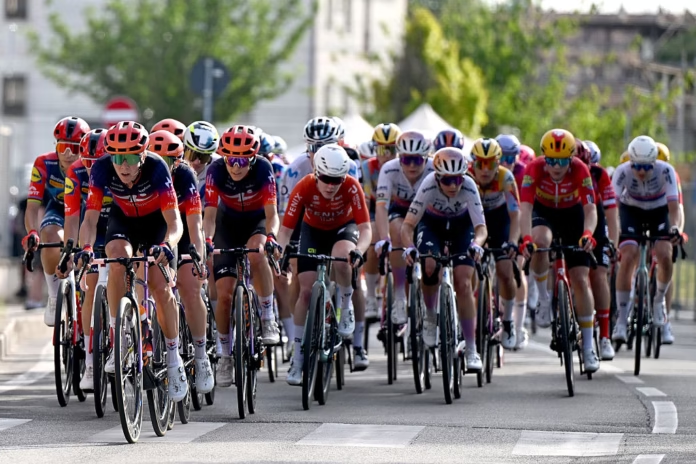
Women’s cycling in 2026 is not only being shaped by stronger teams, deeper squads and more visible stars. It is being shaped by the roads themselves.
The biggest races are becoming more ambitious in how they are designed. Grand Tours are using steeper summit finishes, proper time-trials and more varied stage structures. One-day races are adding distance, cobbles, climbs and more selective finales. Stage races that once had to compromise on length or difficulty are gradually being given space to breathe. The result is a women’s peloton that is being asked to win in more ways than before.
That shift is changing the sport. It is helping create clearer identities for races. It is making team selection more strategic. It is rewarding riders who can combine climbing, time-trialling, descending, positioning and tactical discipline. It is also exposing the gap between teams with genuine depth and those still built around one or two leaders.
The 2026 season has made this especially clear. The Tour de France Femmes, Giro d’Italia Women, La Vuelta Femenina, Tour de Suisse Women, Paris-Roubaix Femmes and Tour of Britain Women all show different versions of the same trend: route design is no longer a background detail. It is one of the main forces deciding what kind of women’s racing we get.
For wider race context, see our Women’s Cycling Race Hub, Women’s Cycling Route Guide Hub and Women’s Cycling TV Guide Hub.
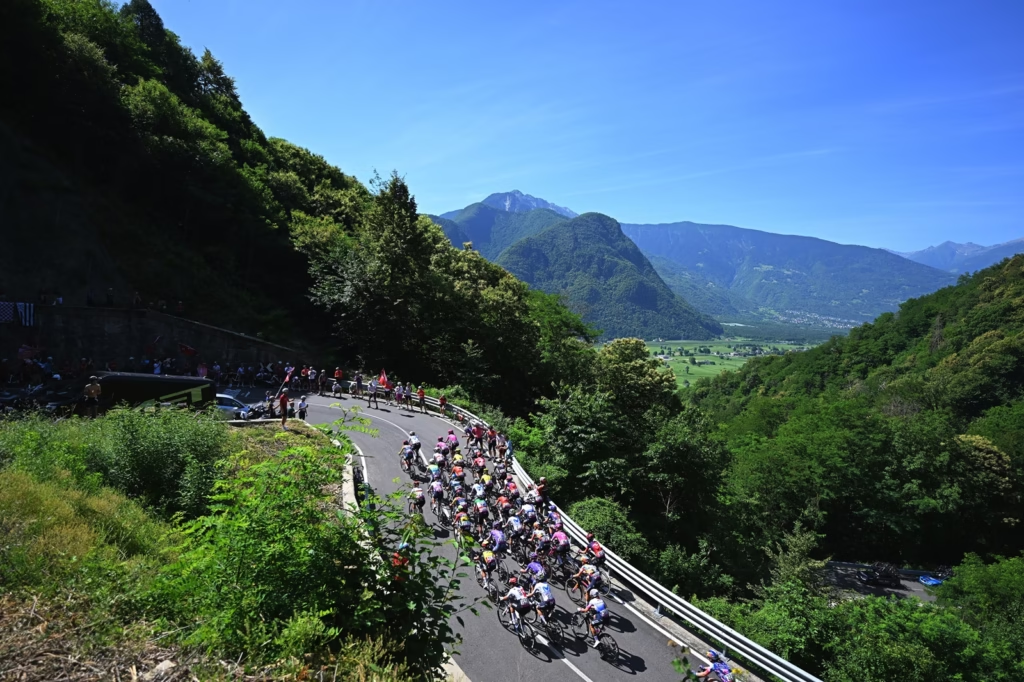
Why route design matters more in women’s cycling now
For years, women’s races were often judged by what they lacked: not enough days, not enough broadcast time, not enough mountain stages, not enough time-trial kilometres, not enough route variety. The best riders still produced brilliant racing, but the course often narrowed the range of possible outcomes.
That is changing. More races are now being built with a clearer sporting purpose. Organisers are using routes to create identity, tension and story. A stage race can be designed around climbing, time-trialling, punchy terrain or sprint balance. A one-day race can be made harder without simply copying the men’s distance. A race can give sprinters chances while still forcing them to survive.
The 2026 calendar shows that women’s cycling is moving into a more mature phase of route design. The biggest events are not just adding kilometres for the sake of it. They are adding the right kind of difficulty. Time-trials are being placed where they affect GC. Mountain stages are being used to create decisive finales. Classics are being made more selective. Medium-length stage races are being given enough variation to reward complete riders.
That changes the type of champion a race produces. A weak route can make the strongest rider wait. A strong route forces decisions. It gives attackers a reason to move early, teams a reason to gamble and viewers a clearer sense of what is at stake.
The same shift is visible in the wider Women’s WorldTour picture, where race identity is increasingly built around distinctive routes rather than simply calendar status. Our guide to the 2026 Women’s WorldTour explains how those races sit within the broader season.
The Grand Tours are becoming more specialised
The three major women’s stage races now have more distinct sporting identities. That is one of the most important developments of 2026.
La Vuelta Femenina has leaned into steep, dramatic mountain finishes. The 2026 route ended with Les Praeres and L’Angliru, two climbs that give the race a hard-edged identity. It became a race where pure climbing and high-gradient suffering were unavoidable. Paula Blasi’s overall win and Petra Stiasny’s stage victory on the Angliru fitted the route’s personality. The race asked for resilience, then gave the climbers a finale worthy of the name.
The Giro d’Italia Women has taken a different route. It remains a race of Italian variety: flat stages, technical days, climbing, an uphill time-trial and a brutal late mountain test. The inclusion of a time-trial at Nevegal and the queen stage towards Sestriere via the Colle delle Finestre created a layered GC test. Demi Vollering’s eventual overall win came through power, climbing and late-race aggression, which is exactly the kind of champion that route design should reward.
The Tour de France Femmes is now building a third identity. Its 2026 route starts in Switzerland, includes a time-trial and finishes with major climbing, including Mont Ventoux. It is not simply a sprinters’ race with a mountain finish tacked on. It is a full nine-stage GC race with enough terrain to pull different contenders into the fight.
That separation is healthy. If the Vuelta, Giro and Tour all looked the same, the season would become repetitive. Instead, the routes are pushing riders to develop broader skillsets and forcing teams to plan differently for each race.
For race-specific background, see our beginner’s guide to La Vuelta Femenina 2026, La Vuelta Femenina 2026 final classification recap, Giro d’Italia Women 2026 full route guide, Giro d’Italia Women 2026 final classification recap and our Tour de France Femmes 2026 beginner’s guide.
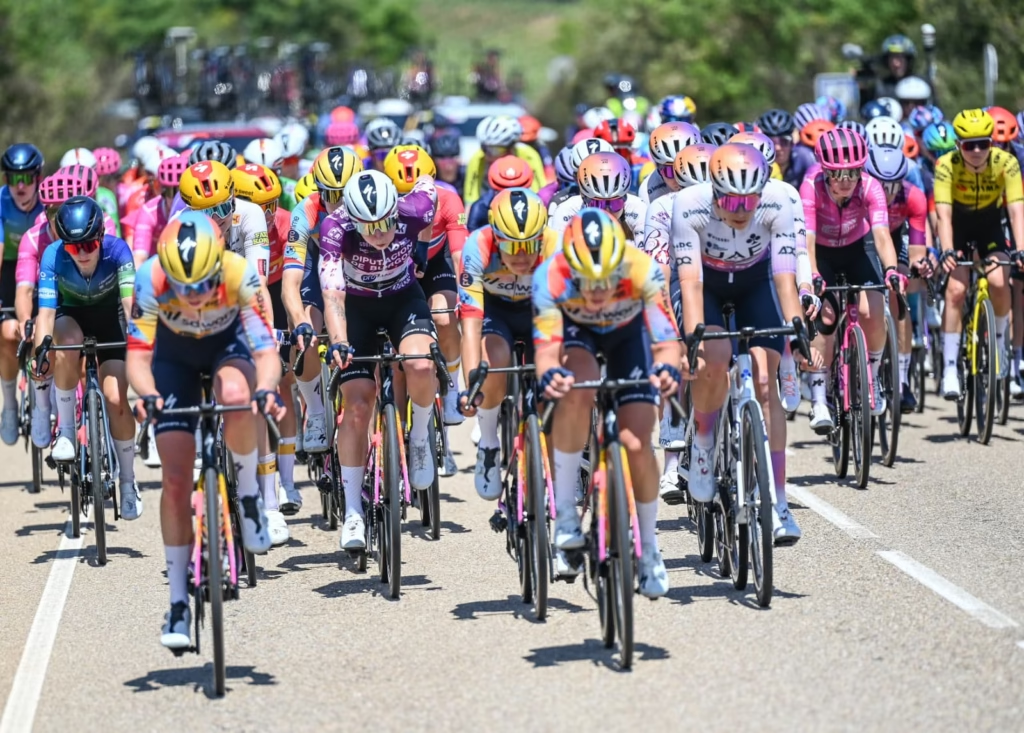 Photo Credit: Vuelta Burgos
Time-trials are becoming a bigger GC weapon
One of the clearest route trends in 2026 is the return of meaningful time-trialling to women’s stage racing.
The Giro d’Italia Women used an uphill time-trial to Nevegal, making the discipline part of the climbing contest rather than a flat specialist detour. Tour de Suisse Women included a 23.7km time-trial in Aarburg, which gave Marlen Reusser and other specialists a clear chance to influence the overall. The Tour de France Femmes also includes an individual time-trial, making it harder for pure climbers to rely only on the final mountains.
This is a major sporting improvement. Time-trials do not simply create gaps. They change how riders race before and after them. A climber who knows she may lose time against the clock has to attack earlier. A time-triallist who can take time must still survive the climbs. Teams cannot just protect one type of rider. They need a leader who can do more than one thing.
The effect is already visible. Vollering’s Giro win was shaped by her ability to combine climbing, recovery and late-race aggression, while the race’s time-trial placed Anna van der Breggen in a commanding position before the final reversal. Reusser’s presence changes the shape of any stage race with a significant race against the clock. Riders like Elisa Longo Borghini, Kasia Niewiadoma-Phinney, Neve Bradbury, Niamh Fisher-Black and Sarah Gigante all have to be judged not only by climbing form, but by how much time they can gain or lose in the measured stages.
The wider point is simple: time-trials make GC races more honest. They reward preparation, position, pacing and technical detail. They also force teams to invest in equipment, aerodynamics and specialist support. In a growing sport, that is part of the professionalisation process.
For an example of how a time-trial reshapes a shorter stage race, see our Tour de Suisse Women 2026 stage 4 preview and Tour de Suisse Women 2026 stage 4 live viewing and start time update.
Summit finishes are changing the hierarchy
The 2026 routes have also reinforced how much proper summit finishes change women’s cycling.
La Vuelta Femenina’s Angliru finale was the most obvious example. There is no way to hide on a climb like that. It turns the race into a direct test of climbing strength, pacing and mental endurance. Riders who can survive rolling terrain but not extreme gradients are exposed. Riders who can produce their best on the steepest roads are rewarded.
The Giro’s use of Sestriere and the Colle delle Finestre brought another kind of mountain test: long, historic and wearing. It was not just about a final-kilometre explosion. It was about the accumulation of climbing and the ability to stay composed when the race became hard from far out.
The Tour de France Femmes’ Mont Ventoux finish adds another layer. Ventoux is not only a climb. It is a symbol. Putting women’s racing on roads with that kind of history does more than create difficulty. It gives the race cultural weight. It tells riders, teams and viewers that the women’s race belongs on the same major climbs as the sport’s biggest stories.
This matters for rider development. If young riders know that the biggest races will be decided on real climbs, teams have to support climbing talent earlier. If Grand Tours use difficult summit finishes every year, riders like Paula Blasi, Neve Bradbury, Antonia Niedermaier, Sarah Gigante and Marion Bunel have clearer pathways to become central figures rather than occasional mountain-stage outsiders.
Routes create opportunities. Opportunities shape riders.
For more on the climbers most suited to this direction of travel, see our best women climbers in cycling 2026 feature.
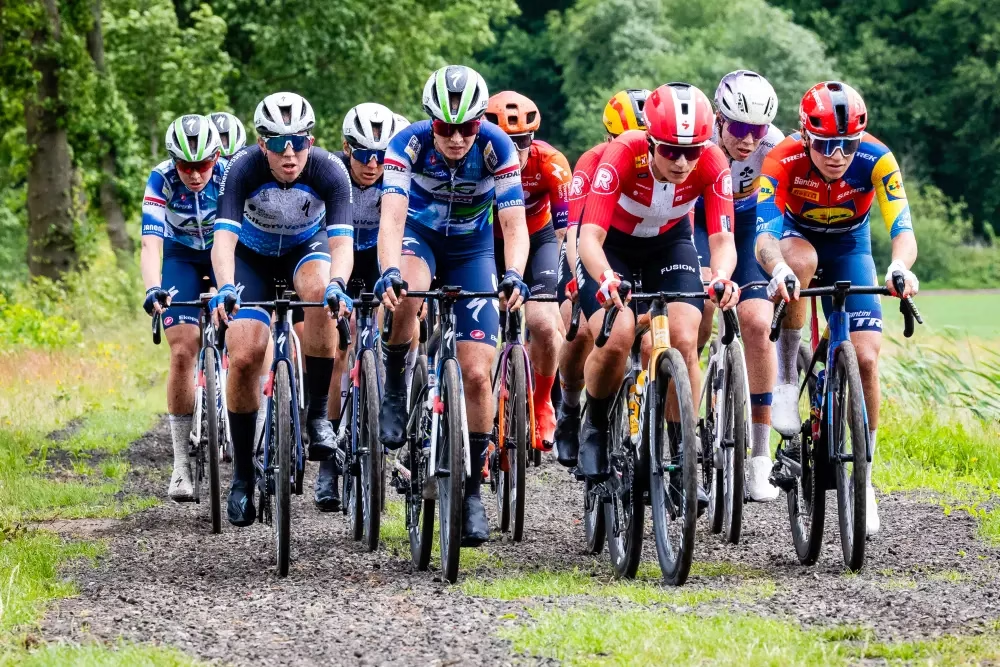 Photo Credit: Gregory Van Gansen
The classics are getting harder too
It is not only stage races that are changing. One-day races are also becoming more selective.
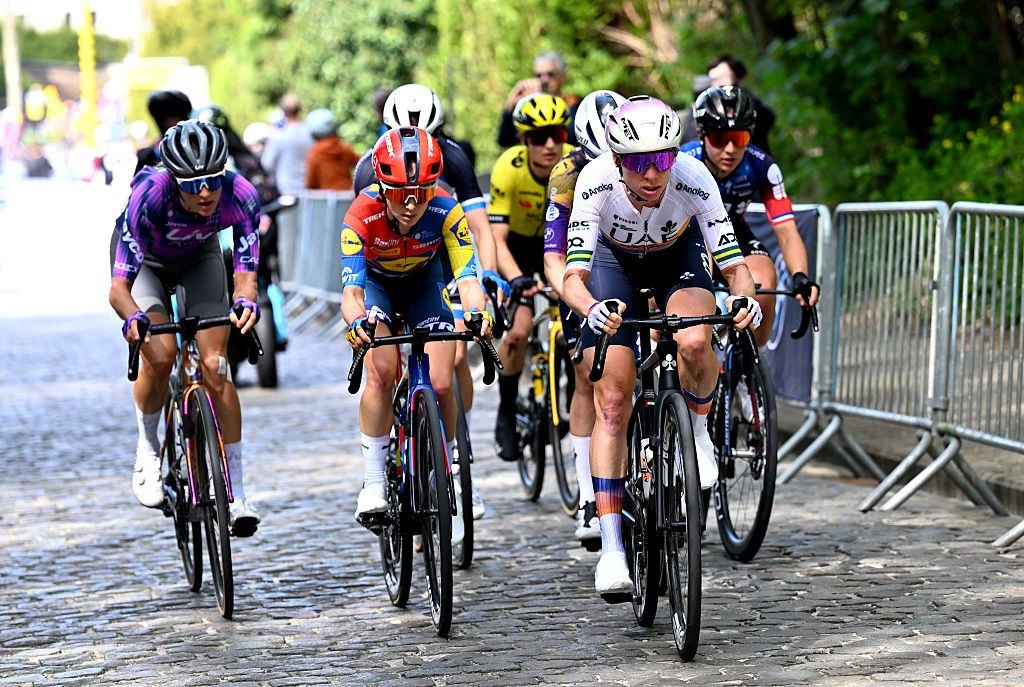
Paris-Roubaix Femmes is the clearest example. The 2026 route increased the cobbled distance and added new sectors, making it the toughest edition yet. The women’s race still does not use the full men’s template, and it still bypasses Arenberg, but the direction of travel is obvious: more difficulty, more specificity, more Roubaix character.
That kind of change matters because it rewards the right riders. A race like Paris-Roubaix Femmes should not be a generic flat one-day race that happens to finish in the velodrome. It should force riders to handle chaos, cobbles, bad luck, positioning and fatigue. The harder the route becomes, the more the race develops its own competitive truth.
The same applies across other one-day races. Hilly courses are being used to split fields rather than simply decorate route maps. Races such as Brabantse Pijl Women, Amstel Gold Race, La Flèche Wallonne Femmes and Liège-Bastogne-Liège Femmes all rely on repeated climbs, positioning and timing rather than pure endurance alone. The best routes give different riders ways to win without making the race feel random.
The 2026 pattern is not that every race should become harder in the same way. It is that each race should become more itself. Roubaix should be rougher. Flèche should be about the Mur de Huy. The Tour should be a full-stage-race test. The Giro should feel Italian in terrain and rhythm. Good route design sharpens identity.
For more on the cobbled direction of travel, see our beginner’s guide to Paris-Roubaix Femmes 2026, the full start list for Paris-Roubaix Femmes 2026 and our analysis of what Paris-Roubaix Femmes 2026 means for the season.
Tour de Suisse Women shows the value of parity done properly
Tour de Suisse Women 2026 is one of the strongest examples of route design being used to improve both sporting quality and visibility.
The race expanded to five stages and ran with largely parallel route designs to the men’s event. That is a significant step because it gives the women’s race more than symbolic proximity. It gives it structure: hilly stages, a sprint opportunity, a time-trial and a final mountain test.
The result has been a race with different routes to success. Aggressive riders could win from breakaways. GC riders had to stay alert from day one. The time-trial gave specialists a clear target. The final Villars-sur-Ollon stage ensured the overall was not only decided by positioning and seconds.
This is what parity should look like. It is not simply putting women on the same posters or using the same host towns. It is designing a race that gives the women’s peloton a proper sporting test while benefiting from shared infrastructure, shared attention and shared identity.
The Tour de Suisse model may become increasingly important. Women’s races do not always need to mirror men’s races exactly, but when they share a platform, the route has to be credible. In 2026, Tour de Suisse Women has shown how that can work.
For the race breakdown, see our Tour de Suisse Women 2026 full route guide, beginner’s guide to Tour de Suisse Women 2026 and the full start list for Tour de Suisse Women 2026.
Tour of Britain Women shows why stage count matters
The Tour of Britain Women expanding to five stages is more than a calendar note. It changes what the race can be.
A four-day race can still be excellent, but it often has to compromise. Add one more day, and the organiser has room to balance the route more effectively. A race can include a sprint stage, a hilly day, a GC stage and still have space for a finale that carries weight. The 2026 Tour of Britain Women route framework, with stages from Cumbria through Lancashire, Wales and into Warwickshire, has more geographical and sporting range than a shorter edition could easily provide.
The Great Orme stage from Mold to Llandudno is especially important. It gives the race a recognisable climbing focal point and a clear GC identity. British women’s racing benefits from this kind of route choice because it creates memory. Fans remember climbs. Riders remember where the race split. Broadcasters have a natural story to sell.
The expansion also aligns the women’s race more closely with the men’s event in stage count, but the sporting value is just as important as the parity message. More days mean more tactical variety, more chances for different riders and a stronger overall classification.
For route context, see our Tour of Britain Women 2026 route guide and our wider Women’s Cycling Race Hub.
Route design is changing team tactics
As routes become more varied, team tactics have to become more sophisticated.
A flat race with a predictable sprint finish lets teams build around one lead-out. A hilly stage race with a time-trial, summit finish and technical mid-stage climbs requires much more. Teams need climbers, time-trial support, road captains, positioning riders and domestiques who can survive deep into the race.
That benefits the strongest squads, but it also creates tactical openings for teams without the biggest budget. Smaller teams can target specific days. A punchy rider can attack before the main GC teams settle. A strong time-triallist can take a stage result even if the mountains are out of reach. A climber can build a season around one Grand Tour summit finish.
The 2026 season has shown this repeatedly. La Vuelta Femenina’s route allowed Blasi to emerge as more than a prospect. The Giro rewarded Vollering’s completeness and Longo Borghini’s stage-winning endurance. Tour de Suisse Women created space for breakaway success before the GC battle tightened. Paris-Roubaix Femmes rewarded durability and positioning rather than pure sprint power.
Routes create tactical diversity. Without route diversity, racing becomes repetitive. With it, teams have to make choices.
The same is visible beyond the biggest races. Races such as the Tour Féminin International des Pyrénées 2026 and Tour de Pologne Women 2026 show how route shape can give smaller stage races a clearer sporting purpose too.
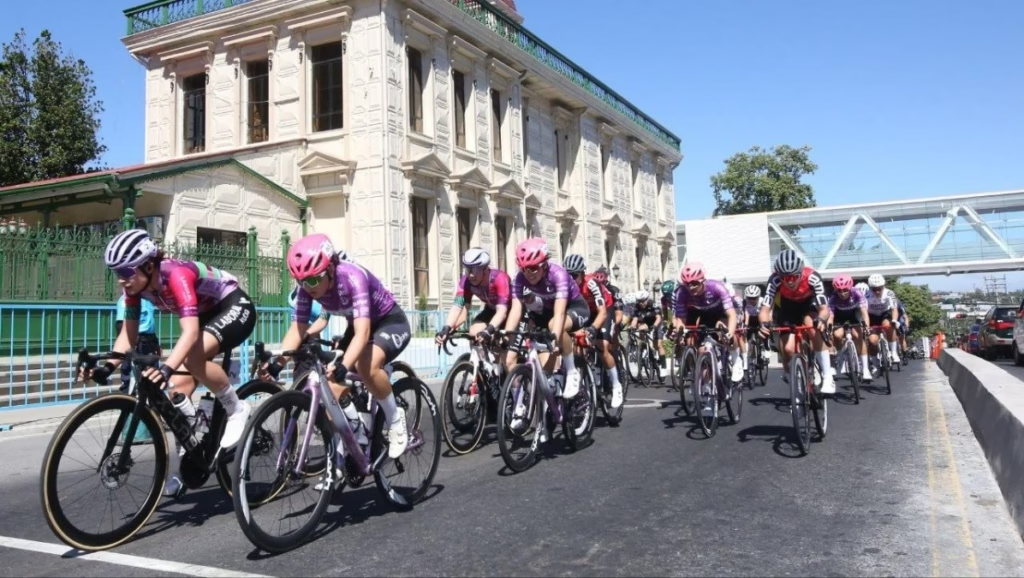 Photo Credit: Francisco Aleman
The new routes are changing rider development
The most important effects may not be immediate. They may show up in how riders develop over the next three to five years.
If young riders know women’s Grand Tours will include meaningful time-trials, they will spend more time on the time-trial bike earlier. If they know summit finishes like Angliru, Sestriere and Ventoux are becoming part of the calendar, climbers will be identified and developed more deliberately. If classics routes become longer and rougher, teams will need more riders who can handle technical racing and physical punishment.
This changes recruitment too. Teams can no longer rely only on fast finishers or all-rounders. They need pure climbers, puncheurs, time-trial specialists and durable classics riders. The best riders will still be multi-dimensional, but the supporting cast becomes more specialised.
That is a sign of a maturing sport. In developing phases, the strongest riders often win everywhere because races are not differentiated enough. As route design improves, specialisation becomes more meaningful. Sprinters get sprint stages. Climbers get real mountains. Time-trialists get proper tests. Classics riders get hard one-day races.
Women’s cycling has always had riders capable of these things. The routes are now giving them more regular chances to prove it.
The balance still needs work
The progress is clear, but route design in women’s cycling is still uneven.
Some races remain too short to create meaningful separation. Some stage races still lack time-trials or decisive GC days. Some one-day races are selective in theory but not hard enough in practice. There is also a fine line between making routes harder and making them logistically unrealistic for teams already stretched by travel, budgets and calendar density.
The women’s calendar also has to avoid copying the men’s calendar blindly. Not every race needs to be longer. Not every climb used by the men should automatically be used by the women. The aim should be appropriate difficulty, not symbolic suffering.
The best 2026 routes work because they have purpose. La Vuelta Femenina used steep climbs to create a Spanish mountain identity. The Giro combined variety with decisive GC stages. The Tour de France Femmes built towards a major final mountain test. Tour de Suisse Women used a compact but balanced five-day structure. Tour of Britain Women’s expansion gives the race space to develop. Paris-Roubaix Femmes became more like the race it is supposed to be.
That is the standard organisers should follow.
Why better routes improve the viewer experience
Good route design does not only help riders. It helps viewers.
A clear route gives fans a reason to watch. If a stage has an obvious danger point, a key climb or a decisive time-trial, the race becomes easier to understand. Viewers know what is at stake. They can follow the story before the attack happens.
This is especially important for women’s cycling because many viewers are still learning the calendar. The Tour de France Femmes has quickly built an identity because its routes have given fans memorable moments: gravel, summit finishes, time-trials, major climbs and now Ventoux. La Vuelta Femenina’s Angliru finish instantly created a narrative. Paris-Roubaix Femmes becomes more compelling when the cobbles are central to the race rather than incidental.
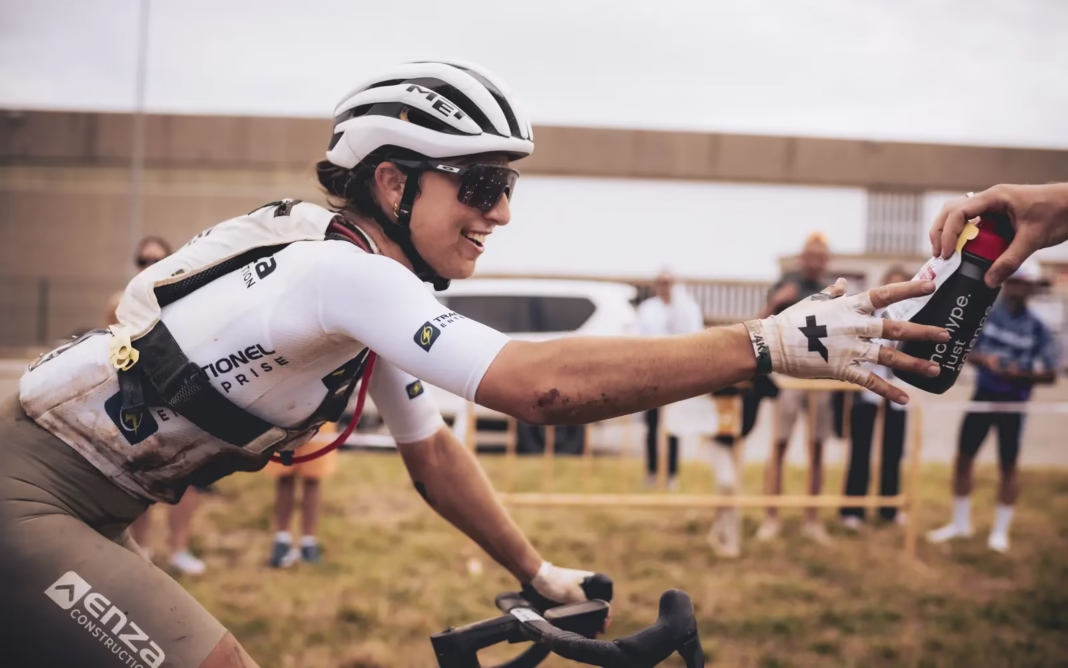
Routes are storytelling tools. They create anticipation before the race and an explanation afterwards. A well-designed route gives journalists, broadcasters and fans something to build around.
That is valuable for ProCyclingUK coverage too. Beginner’s guides, route previews, live viewing updates and race reports all become stronger when the race has a clear sporting structure. Route design helps turn individual results into a wider story.
For viewers trying to follow the calendar more closely, our Women’s Cycling TV Guide Hub sits alongside the route hub to connect race design with how to actually watch the season unfold.
-
 Photo Credit: Getty
What 2026 tells us about the future
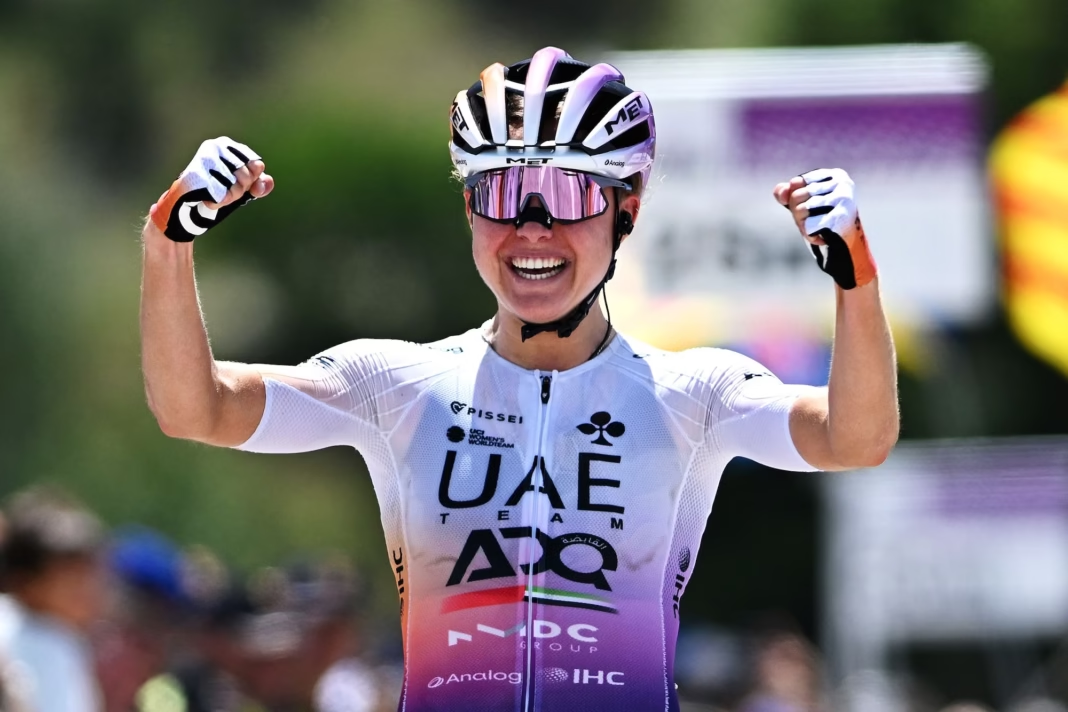
The 2026 season suggests that women’s cycling is moving away from routes that simply provide a race and towards routes that define a race.
That is a major step. The sport is no longer only asking for more events, more coverage and more investment. It is also asking for better the sporting architecture. The biggest races need to test the right riders in the right way. Smaller races need identities that justify their place in the calendar. Stage races need enough variation to make GC meaningful. Classics need enough difficulty to feel distinct.
The riders are ready for it. The top end of the women’s peloton is increasingly deep, with Demi Vollering, Pauline Ferrand-Prévot, Anna van der Breggen, Elisa Longo Borghini, Kasia Niewiadoma-Phinney, Neve Bradbury, Antonia Niedermaier, Marlen Reusser, Sarah Gigante, Niamh Fisher-Black, Marion Bunel and Paula Blasi all benefiting when the calendar asks different questions.
The routes are now catching up with the talent.
Verdict
Race routes are shaping women’s cycling in 2026 because they are deciding what kind of riders can win and what kind of teams can control the sport.
The Vuelta’s steep mountain finales rewarded climbing purity. The Giro’s mix of time-trialling, transition stages and major climbs rewarded completeness. The Tour de France Femmes is building towards a route where time-trial ability, tactical patience and Mont Ventoux climbing strength all matter. Tour de Suisse Women has shown how a compact five-day race can still be balanced and meaningful. Tour of Britain Women’s expansion gives the race more room to become a true stage-race test. Paris-Roubaix Femmes has moved further towards the rough, selective identity it needs.
That is the deeper trend. Women’s cycling is not only growing through bigger names and better coverage. It is growing through better roads. In 2026, the routes are no longer just where the racing happens. They are shaping the sport itself.

