
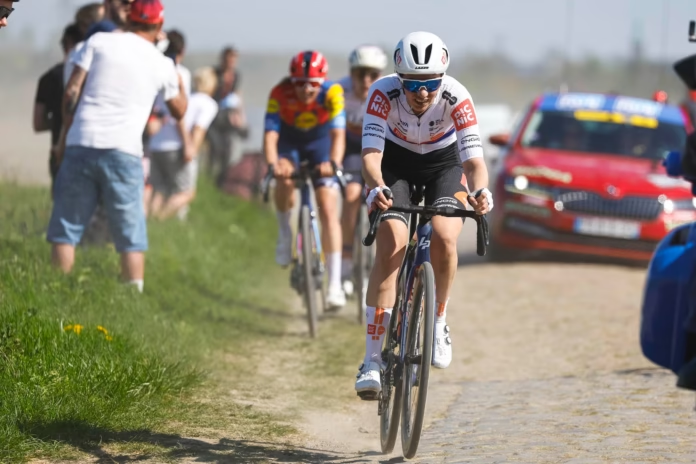
Paris-Roubaix Femmes 2026 takes place on Sunday 12 April, starting in Denain and finishing inside the Roubaix Velodrome. The 2026 edition is 148.5km long and includes 33.7km of cobbles across 21 sectors, which makes it the toughest route the women’s race has had so far. Three new sectors have been added, the loops around Denain have been removed, and the organisers have clearly leaned into making the race harder rather than simply longer.
For anyone new to it, the simplest way to understand Paris-Roubaix Femmes is this: it is not just a cobbled race, it is a race of attrition and interruption. The pavé does not merely make the riders tired. It breaks rhythm, destroys plans and keeps forcing the race into new shapes. That is why Roubaix often feels less orderly than other big Classics. A team can arrive with the strongest rider and still see everything unravel because of one puncture, one crash, or one badly timed sector.
If you want the wider cobbled-classics context first, ProCyclingUK’s A brief history of Tour of Flanders Women and Beginner’s guide to Tour of Flanders Women 2026 help show how different the two biggest cobbled races are, even though they sit close together in the calendar.
What is Paris-Roubaix Femmes?
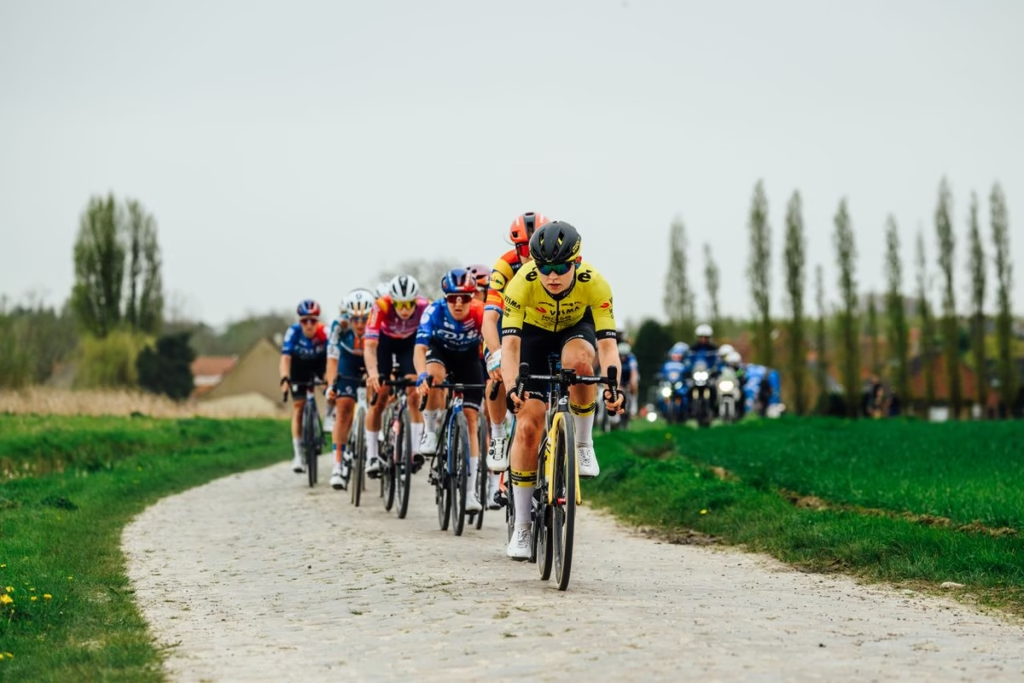
Paris-Roubaix Femmes is the women’s version of one of cycling’s most famous one-day races, finishing in the same Roubaix Velodrome as the men’s event. The modern women’s race is still young compared with the men’s, but it has quickly become one of the most important one-day races on the calendar because the route is so distinctive and the demands are so specific.
If Tour of Flanders Women is a race of cobbled climbs and repeated accelerations, Paris-Roubaix Femmes is different. This is flatter, rougher and more chaotic. The pressure comes less from steep bergs and more from speed, positioning, bike handling and survival over brutal surfaces.
Why is it called the Hell of the North?
The nickname comes from the men’s race, but it fits the women’s race too because the basic challenge is the same. The roads are flat enough to keep speeds high, but the cobbles make everything unstable. Riders are thrown around physically, teams struggle to keep control, and even the strongest favourites can be undone by bad luck.
That is the key thing for first-time viewers. Paris-Roubaix is not a race where the strongest rider always gets a clean chance to prove it. Strength matters, but so do timing, nerve and durability.
What does the 2026 route look like?
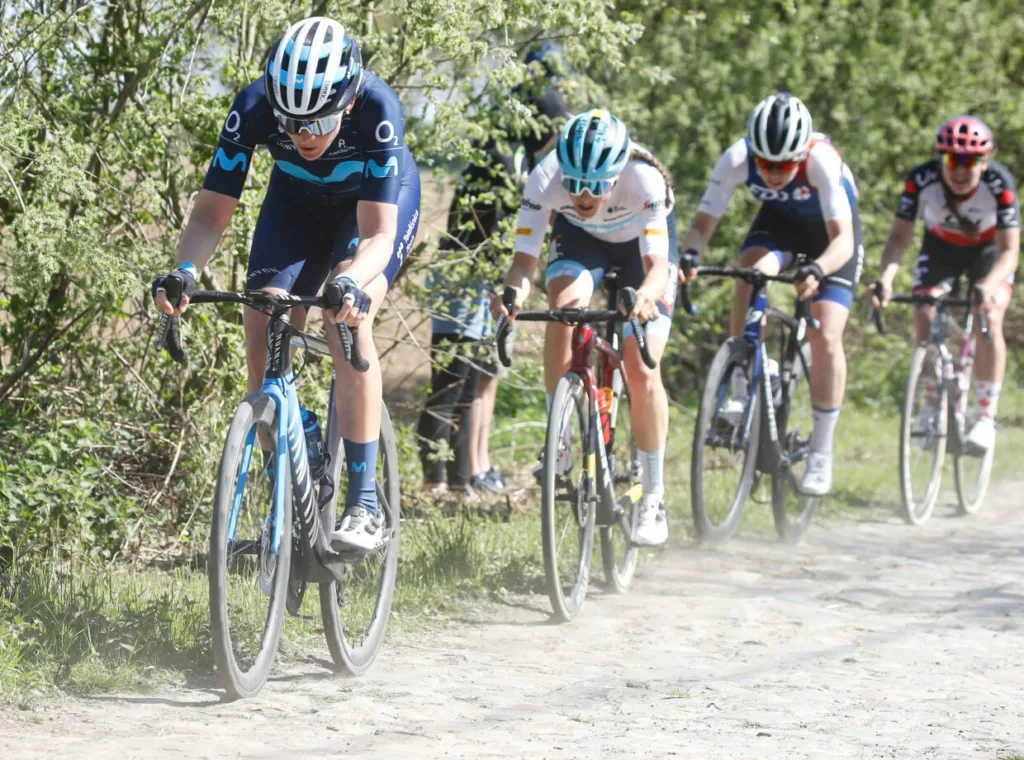
The 2026 route starts in Denain and heads north without the old opening loops around the town. That means the race gets to the harder terrain in a more direct way. The organisers have added three sectors and increased the total cobbled distance to 33.7km, up from 29.2km in 2025. The new sectors are Haussy, Saulzoir and Haveluy à Wallers, with Haveluy the most significant because it is a 2.5km four-star sector that arrives earlier than many of the race’s most famous stretches.
That matters because the race now gets serious sooner. In previous editions, there was more of a runway before the pavé really began to define things. In 2026, the route feels more direct and more demanding, which should make the selection happen earlier and more harshly.
Which sectors matter most?
The modern women’s race does not use Arenberg, so the most feared names tend to come later. Mons-en-Pévèle and Carrefour de l’Arbre remain the defining sectors because they are hard enough and late enough to break the race apart among the best riders. Camphin-en-Pévèle also matters because it comes so close to the finish and often acts as the final sharpener before Carrefour.
But one of the biggest storylines in 2026 is Haveluy à Wallers. It is new to the women’s route, long enough to matter, and difficult enough to start the real damage much earlier. That should make the whole race feel heavier, because riders will reach the final sectors with more fatigue already in their legs.
-
 Photo Credit: quentinphotographiebe
 -
 Photo Credit: Getty

Is this a race for sprinters?
Not in the normal sense.
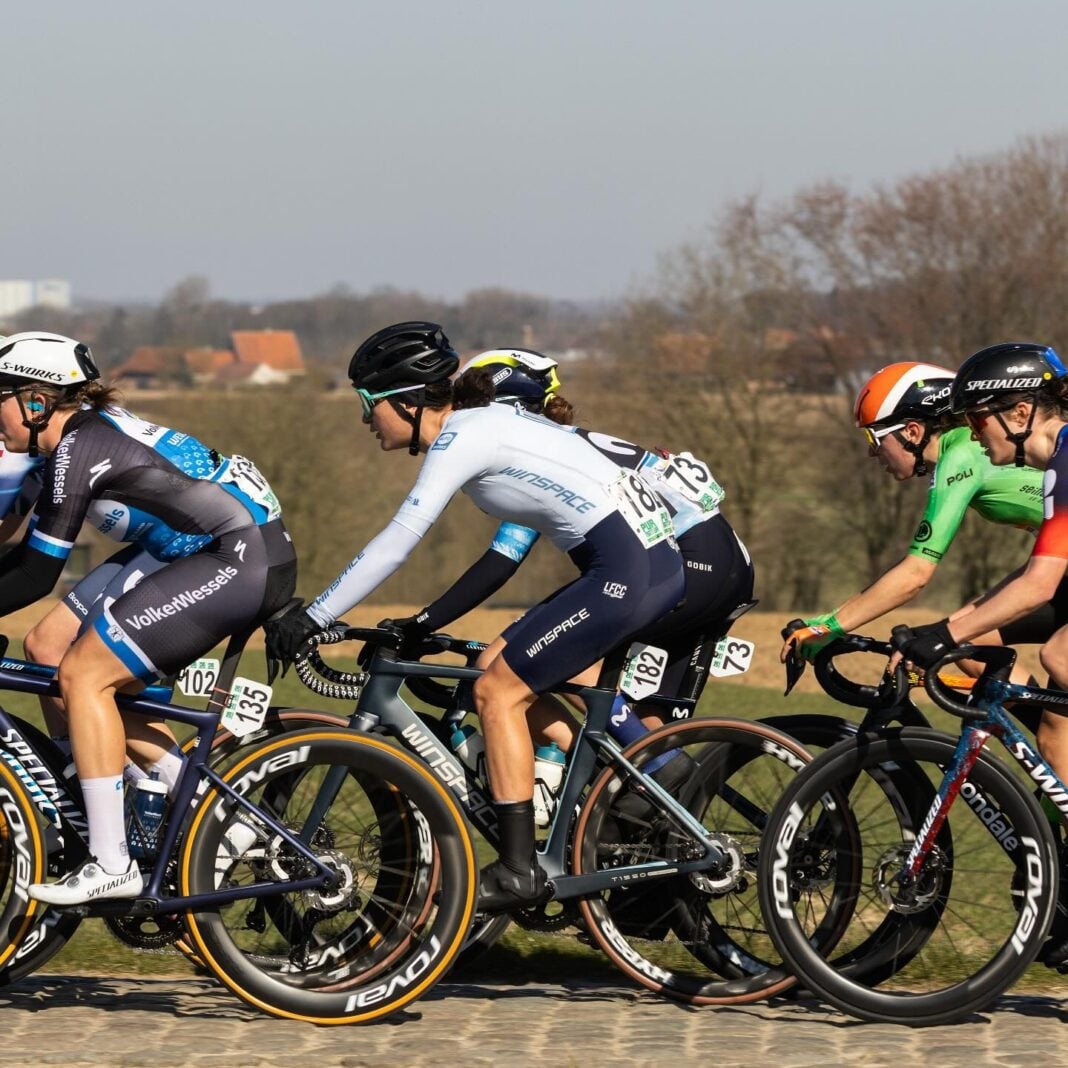
Paris-Roubaix Femmes is flat, so on paper it might look like a race for fast finishers. In reality, it is a race for riders who can survive the pavé first and still have enough left to finish strongly. Some editions can end in a small sprint, but it is rarely a clean or predictable one. The race usually rewards powerful one-day riders, strong rouleurs and classics specialists rather than pure sprinters.
That is one reason the race is so compelling. It keeps several scenarios open for a long time, but only for riders who can handle the physical punishment.
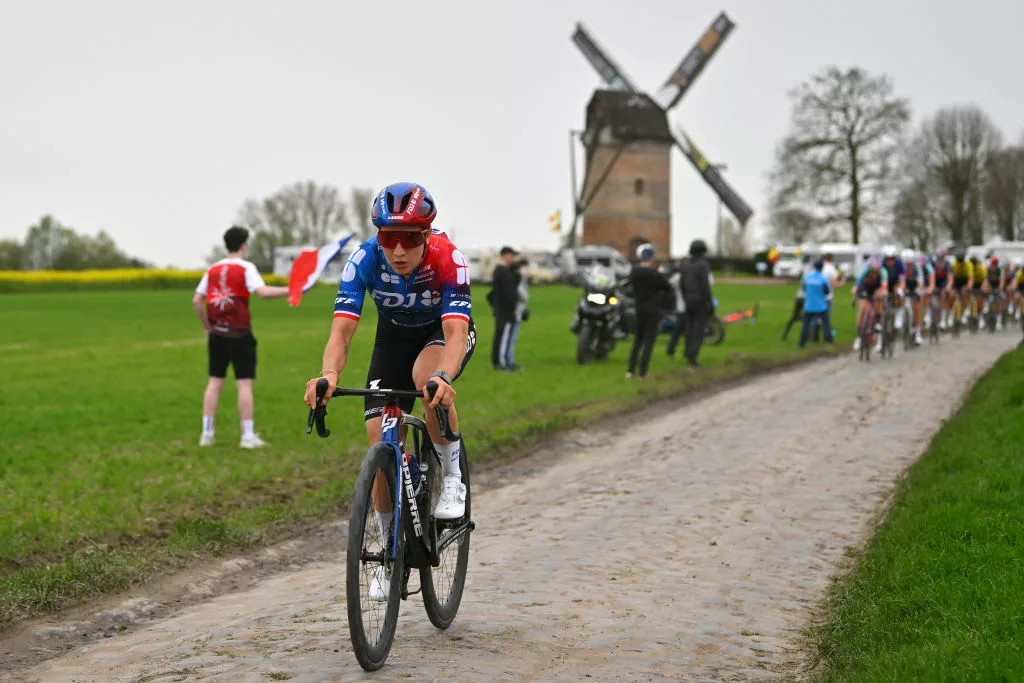 Photo Credit: Getty
Why does the velodrome finish matter so much?
The velodrome finish is one of the most iconic endings in cycling, but it is not only symbolic. It changes the psychology of the final kilometres. Riders know that if they reach Roubaix with even a tiny gap, the line is close enough to make it count. If a small group arrives together, the last lap becomes a very unusual kind of sprint, one where exhaustion and hesitation matter as much as pure speed.
For newer fans, it is also part of what makes Paris-Roubaix so memorable visually. Few races have a finish that feels so instantly recognisable.
What sort of rider wins Paris-Roubaix Femmes?
Usually someone with raw power, confidence on rough surfaces and the ability to keep making decisions under stress. Bike handling matters. Positioning matters. Mechanical luck matters. And above all, resilience matters.
That is why the race often crowns riders who feel particularly complete as one-day racers. They do not just need the legs to attack or sprint. They need the skill to survive everything that comes before that.
The 2025 edition, for example, was won by Pauline Ferrand-Prévot after a solo attack on Camphin-en-Pévèle, ahead of Letizia Borghesi and Lorena Wiebes. That podium summed the race up quite well: attack strength, classics endurance and sprint quality all still had a place, but only after the pavé had done its work.
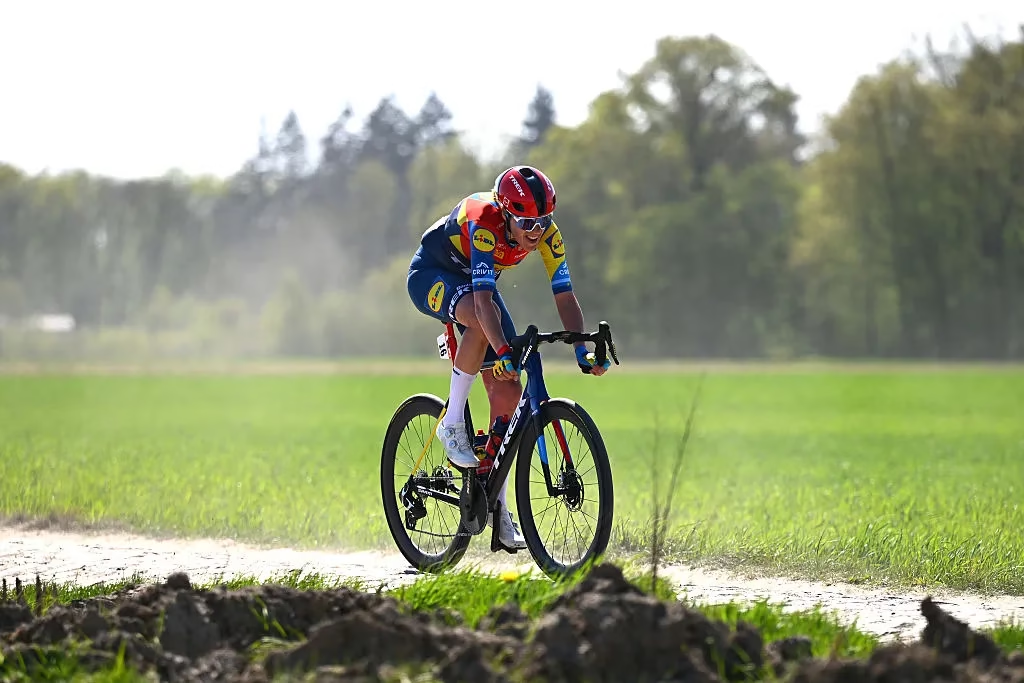 Photo Credit: Getty
What should a first-time viewer watch for?
Watch the entrances to the cobbled sectors. That is where much of the race is shaped. A rider who starts a sector too far back can lose ten places without actually being weaker. A favourite who punctures at the wrong moment can disappear from contention almost instantly.
Also watch how small mistakes get magnified. In other races, a bad corner or a tiny gap might be repairable. In Roubaix, one poor moment can become a crisis because the next sector arrives before riders have properly recovered.
What is the best way to think about Paris-Roubaix Femmes 2026?
Think of it as a race where order keeps breaking down.
The 2026 route is the toughest women’s edition yet, with more cobbles, three new sectors and a more direct path into the hard part of the race. That should make it even more selective and even less forgiving. If you are new to Paris-Roubaix Femmes, that is the main thing to remember: this is not a race that asks who is best in ideal conditions. It asks who can stay strongest when the conditions stop being ideal.
For more on how the spring builds into races like this, ProCyclingUK’s A brief history of Tour of Flanders Women, Beginner’s guide to Tour of Flanders Women 2026 and A brief history of Itzulia Basque Country are useful next reads.

