
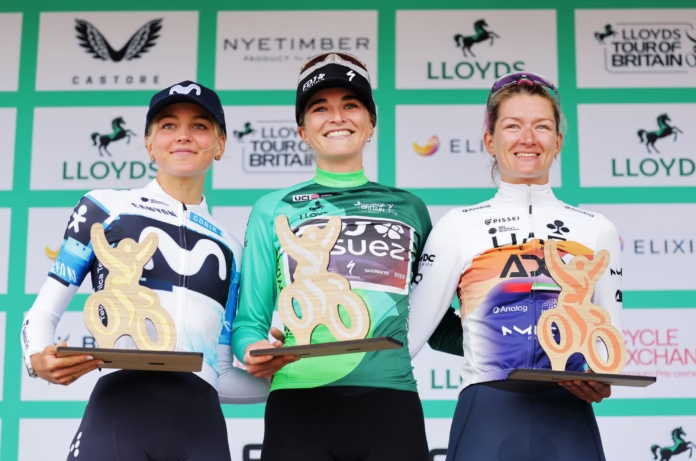
The Tour of Britain Women 2026 will mark another important step for Britain’s leading women’s stage race. The race moves into a new August slot, expands to five stages and stays on the UCI Women’s WorldTour calendar, giving it a stronger position in the second half of the season.
The full stage-by-stage route has not yet been released, so this guide focuses on what has been confirmed so far and what the new format means for the race. The key details are already significant. Tour of Britain Women 2026 will run from Wednesday 19th August to Sunday 23rd August, giving the women’s race five stages for the first time in its current Tour of Britain era.
That change gives the race more room to breathe. The 2025 edition had four stages and was still able to produce a tight, varied contest, with Ally Wollaston winning overall ahead of Cat Ferguson after the final Glasgow stage. Adding another day gives organisers more space to shape the race properly, and gives teams a more complete WorldTour stage-race test on British roads.
ProCyclingUK’s earlier report on the Tour of Britain Women expanding to five stages in 2026 looked at the significance of the move, while the latest combined announcement confirmed a wider British cycling block in which the women’s and men’s races will run across a three-week period.
 Photo Credit: Alex Whitehead/SWpix.com
 Tour of Britain Women 2026 route overview
The confirmed framework for the 2026 Tour of Britain Women is clear, even if the individual host towns and stage routes are still to be announced.
- Race: Tour of Britain Women 2026
- Dates: Wednesday 19th August to Sunday 23rd August
- Number of stages: 5
- Level: UCI Women’s WorldTour
- Previous winner: Ally Wollaston
- Organiser: British Cycling Events
The move to five stages brings the women’s race into line with the men’s Tour of Britain for 2026. It is a clear parity move, but also a sporting improvement. A five-day Women’s WorldTour race gives more room for a balanced route, with space for sprint stages, punchy finales, a possible GC day and a final stage that can still carry weight.
The race also moves from its recent June slot into late August. That places it after the Tour de France Femmes and before the late-season block that includes Classic Lorient Agglomération – Trophée Ceratizit, Tour de Romandie Féminin and the final Women’s WorldTour events of the year.
For wider calendar context, ProCyclingUK’s guide to the 2026 Women’s WorldTour explains where the Tour of Britain Women sits in the season and why its August position changes the feel of the race.
Why the new August slot matters
The calendar move is one of the biggest route-related changes for 2026, even before the stage towns are confirmed. A race in late August carries a different sporting feel from a race in early June.
In June, the Tour of Britain Women sat close to a busy run of stage races and post-Classics racing. In August, it becomes more clearly part of the late-summer Women’s WorldTour sequence. Riders coming out of the Tour de France Femmes may use it to extend form, while others may treat it as a fresh target after a mid-season reset.
That should affect the route design too. Late August gives organisers the chance to create a race that feels like a proper standalone WorldTour event rather than a compact early-summer hit-out. It may also help the race attract riders looking for high-level racing before September objectives.
From a British perspective, the move should also help the race own a bigger space in the domestic sporting calendar. A five-day event across late August gives local authorities, fans and broadcasters more time to build attention around the race.
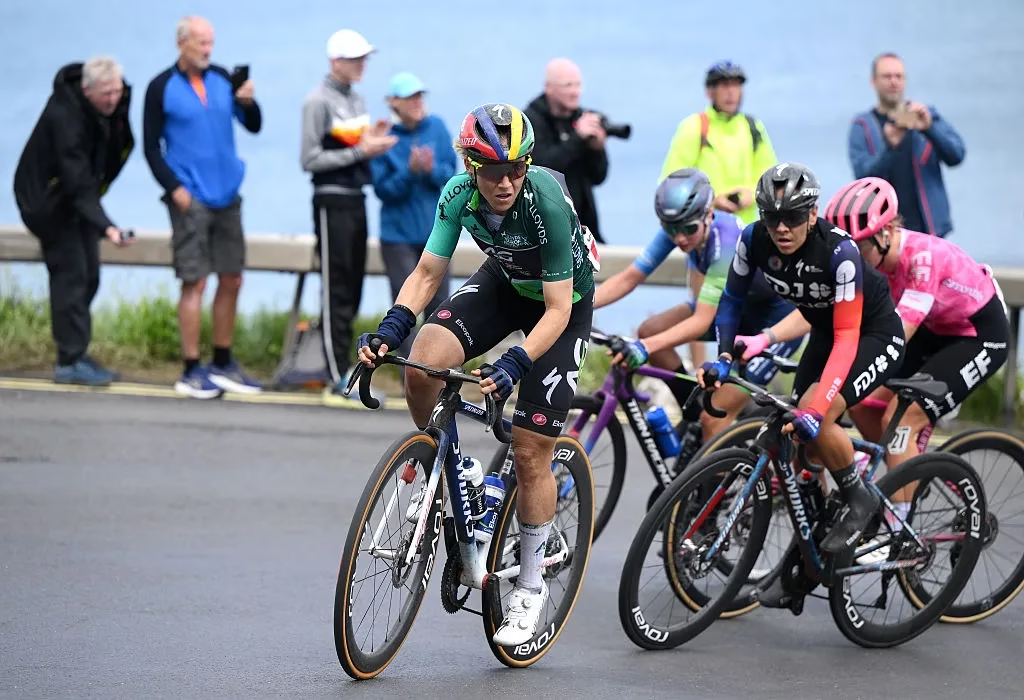 Photo Credit: Getty
What kind of route should we expect?
The Tour of Britain Women has rarely been about long mountain climbs. Its identity is built more around rolling roads, exposed terrain, short climbs, technical finishes and stages that look manageable on paper but become difficult through speed, weather and positioning.
That is likely to remain the broad template in 2026. Britain does not need alpine climbs to make a women’s stage race selective. The race can use short steep climbs, coastal roads, city circuits, exposed moorland, sharp lanes and repeated changes of rhythm to create difficulty.
The extra stage gives the organiser more flexibility. A balanced route could include one or two sprint opportunities, a punchy stage for Classics-style riders, a harder GC stage and a final day that keeps the result open. That would fit the recent character of the race, where pure climbing strength has mattered less than all-round resilience.
ProCyclingUK’s women’s cycling route guide hub tracks the wider WorldTour route calendar, including how different stage races use terrain to shape their overall battles.
What the 2025 route told us about the race’s direction
The 2025 Tour of Britain Women offered a useful clue to where the race may continue to go. It used North Yorkshire, the Tees Valley, the Scottish Borders and Glasgow to create four very different days. The route had coastal exposure, punchy climbing, open roads and a final city circuit that kept the race tense until the end.
Stage 1 from Dalby Forest to Redcar showed how a route does not need huge climbs to split the field. Crosswinds, positioning and late pressure helped create a selective day, with Kim Le Court winning and taking the first leader’s jersey.
Stage 2 to Saltburn-by-the-Sea used the short, steep finish on Saltburn Bank to produce a very different test. It was only a small climb in distance, but it was hard enough to punish poor positioning and reward riders with punch, timing and confidence.
The Scottish Borders stage then gave the race a longer, rolling GC day, before Glasgow brought the event to a city-centre finish. That combination worked because each day had a different tone. ProCyclingUK’s 2025 Tour of Britain Women race preview set out that varied route before the race, while the final-day report on Ally Wollaston overhauling Cat Ferguson in Glasgow showed how small margins and bonus seconds ultimately decided the overall result.
 Photo Credit: Alex Whitehead/SWpix.com
What the fifth stage could change
The extra stage is not only a symbolic improvement. It can change the way teams race. In a four-day event, there is less room for error and fewer opportunities to recover if a rider loses time early. Over five days, the race can breathe slightly more, and teams have more tactical decisions to make.
A fifth stage could also make the general classification more meaningful. The race can include a sprint day without sacrificing too much GC tension, or it can use a transitional stage to encourage breakaways before a harder final weekend.
It also gives British Cycling Events more room to visit a wider range of host regions. One of the strengths of the Tour of Britain format is that it moves around the country rather than relying on one fixed route identity. A five-day race improves that touring character.
The 2026 edition also sits within a bigger structural change for British racing. ProCyclingUK’s report on the 2026 Tour of Britain running women’s and men’s races back-to-back explains how the two events will form a larger late-summer block.
Who does the 2026 format favour?
Until the full route is released, the safest assumption is that the 2026 Tour of Britain Women will favour all-rounders rather than pure climbers. The race usually rewards riders who can handle short climbs, changing weather, technical roads and reduced sprints.
That makes it a strong target for Classics-style riders, punchy sprinters and GC riders who do not need long mountain passes to create differences. Riders with track speed and road endurance can also thrive here, as Wollaston showed in 2025.
Pure sprinters will hope for at least one or two clear opportunities, especially with the additional stage. But Britain’s roads rarely offer stress-free sprint days. Even flatter stages can be shaped by wind, road furniture, narrow approaches and rolling terrain.
 Photo Credit: Olly Hassell/SWpix.com
Why the route matters for British riders
The Tour of Britain Women has particular importance for British riders because it gives them a rare home Women’s WorldTour stage race. That matters for visibility, development and identity. A strong route does not only test the international peloton. It gives British riders the chance to race on familiar roads in front of home crowds.
The 2025 edition showed that clearly. Cat Ferguson finished second overall and was central to the race story, while British riders and domestic interest helped give the event a stronger local feel. Her stage victory in Kelso was one of the defining moments of the race, with ProCyclingUK reporting how Cat Ferguson won stage 3 and moved into the race lead after a dramatic day in the Scottish Borders.
It also matters for the next generation. A WorldTour race on British roads makes elite women’s cycling visible in towns, cities and regions that may not otherwise see the sport at this level. The route announcement will therefore matter not just for sporting reasons, but for where the race chooses to place that visibility.
How the race fits into the Women’s WorldTour
The Tour of Britain Women occupies a distinctive place in the Women’s WorldTour. It is not a Grand Tour, and it is not a high-mountain race. Its value comes from offering a different kind of stage-race test: shorter, sharper, more technical and often more open than the route profile suggests.
The August slot may strengthen that role. By coming after the Tour de France Femmes, it gives teams another major stage-race target before the late-season calendar turns towards one-day races and autumn objectives.
For riders who have already raced a heavy Grand Tour block, Britain may be a test of recovery and sharpness. For those who missed out on major summer results, it can become a reset point. For teams, it is a chance to chase WorldTour points, stage wins and a high-profile overall title in front of large British crowds.
-
 Photo Credit: Getty



What to watch for when the full route is announced
The most important detail will be whether the race includes one clearly decisive general classification stage. In recent editions, the Tour of Britain Women has often been decided by small gaps, bonus seconds, reduced groups and punchy finishes. A route with one harder stage could tilt the race more towards climbers and all-round GC riders.
The second key point will be the number of sprint stages. A five-day race has enough space to include sprint opportunities, but the balance matters. Too many flat stages would risk narrowing the race, while too many selective days could reduce the field of realistic winners too early.
The final stage will also be important. A city circuit can create spectacle and crowd visibility, but a harder final day can keep the general classification alive. The strongest route would probably combine both: a final stage that is spectator-friendly but still difficult enough to matter.
Tour of Britain Women 2026 route verdict
The full Tour of Britain Women 2026 route still needs to be confirmed, but the framework already points towards a stronger edition. Five stages, a late-August calendar slot and continued Women’s WorldTour status give the race a better platform than it had in 2025.
The key now is route balance. The Tour of Britain Women is at its best when it uses British roads intelligently: not pretending to be a mountain race, but making the most of short climbs, exposed terrain, technical finales and unpredictable weather. If the 2026 route does that across five stages, it could become the most complete edition since British Cycling took over the event.
For now, the confirmed detail is the structure. The race will run from Wednesday 19th August to Sunday 23rd August, with five stages on the Women’s WorldTour calendar. Once the host towns and detailed stage routes are announced, the sporting picture will become much clearer. What is already clear is that the 2026 Tour of Britain Women is being given more room to become the race it has long had the potential to be.

