

The Tour de France Femmes faces another severe weather test on Stage 3, with temperatures around the Geneva start expected to reach approximately 35°C to 36°C before the peloton begins climbing towards France.
Reaching higher ground will provide only limited relief. Conditions across the Col de la Faucille and the Jura are still expected to remain close to 30°C, leaving the riders exposed to intense heat for much of the 156.5km route to Poligny.
Heat is therefore more than an uncomfortable background detail. It can change how aggressively teams race the opening mountain, increase the physiological cost of every attack and turn hydration, cooling and bottle collection into central tactical concerns.
Stage 2 already demonstrated the potential consequences. Sterre Vervloet abandoned after becoming feverish and vomiting on the bike, while Sandrine Tas described being unable to produce her normal power in the conditions. The Tour de France Femmes abandons update after Stage 2 covers how heat contributed to a difficult afternoon for Lotto-Intermarché.
Stage 3 is longer, hillier and begins with the first sustained mountain of the Tour. There is almost no opportunity for riders to ease themselves into the day.
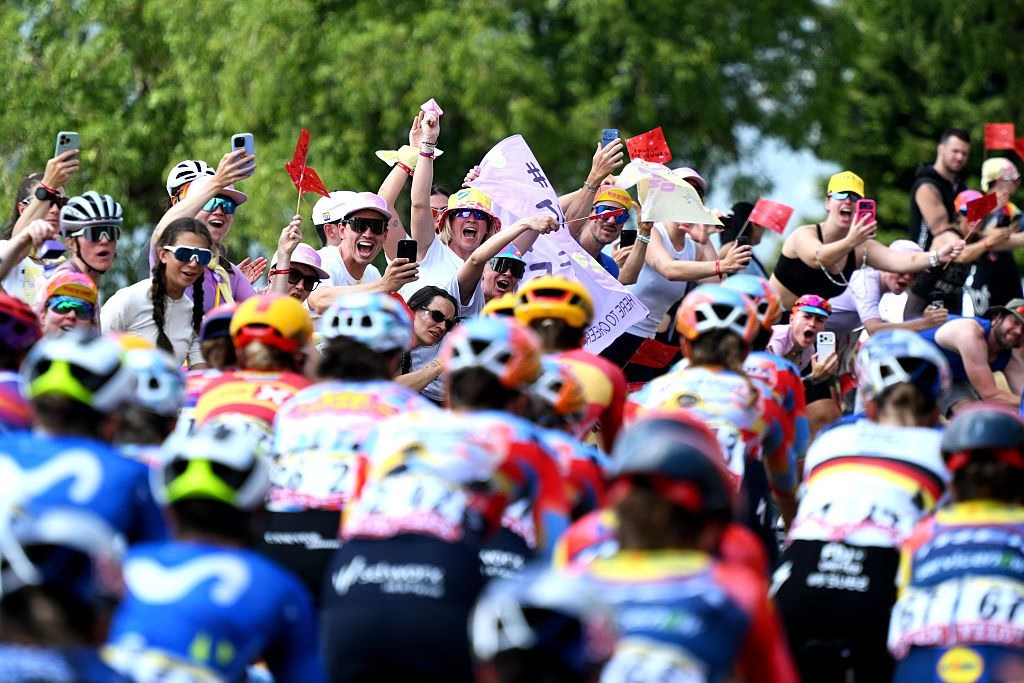
The Col de la Faucille becomes a heat-management test
The Col de la Faucille measures 11.4km at 6.3% and reaches its summit after only 23.9km.
Even in moderate temperatures, that would be a demanding way to begin a stage. In conditions above 30°C, it becomes a simultaneous test of climbing strength, pacing and temperature regulation.
Riders generate considerable metabolic heat while climbing. Their speed is lower than on flat roads, reducing the cooling effect created by air moving across the body, while the muscles continue producing heat through sustained power output.
The body attempts to manage that by increasing blood flow towards the skin and producing sweat. That creates additional cardiovascular strain because the same circulation system must support both cooling and the working muscles.
A familiar climbing power can therefore produce a higher heart rate and greater perceived effort than it would in cooler weather. Riders who attack too aggressively on the lower slopes may pay for that decision long before the summit.
The climb’s early position makes judgement especially difficult. Breakaway riders and teams trying to remove Lorena Wiebes from the yellow jersey have every incentive to race hard, but more than 130km remain after the summit.
The full route and likely tactical scenarios are covered in the Tour de France Femmes 2026 Stage 3 preview.
Drinking enough is only part of the challenge
Hydration during a stage this hot becomes a continuous logistical exercise.
Riders will begin drinking before they feel thirsty and are likely to collect bottles much more frequently than they would in milder conditions. Teams will also use ice socks, chilled drinks and water poured over the head, neck, arms and legs.
The objective is not simply to replace every drop of fluid lost through sweat. That may be impossible during a hard stage because there is a practical limit to how much fluid the stomach can process while a rider is also consuming carbohydrates and racing at high intensity.
Instead, teams try to limit dehydration while maintaining the supply of energy and electrolytes needed to continue performing.
Every bottle collection carries a tactical cost. A domestique must drop towards the team car, collect several bidons and then move back through a peloton that may already be riding hard.
The Col de la Faucille arrives too early for teams to delay that process. Riders need to begin the climb well supplied and already cooled rather than waiting for the first signs of overheating.
Missing one feed can become particularly costly if the pace rises immediately afterwards.
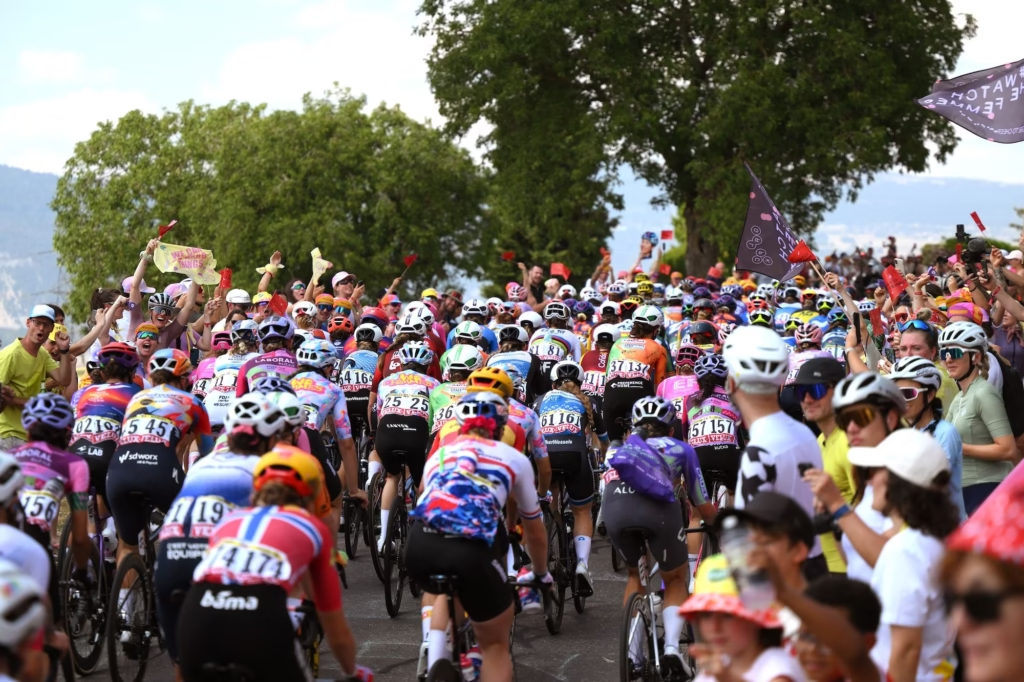
Cooling begins before the race starts
Heat management will begin during the team preparations in Geneva.
Riders may use ice vests, chilled towels, cold drinks and shaded warm-up areas to reduce their temperature before the neutralised start. The aim is to delay the point at which core temperature becomes a limiting factor once the race intensifies.
During the stage, ice placed inside the jersey can provide local cooling, while water poured over the body helps remove heat through evaporation. Teams may also adjust the concentration and temperature of drinks depending on each rider’s preferences and sweat rate.
None of those measures eliminates the problem.
Cooling can reduce thermal strain and make the conditions more manageable, but riders still need to pace themselves. Repeated attacks generate additional heat rapidly, and the body cannot immediately remove all of it simply because another ice sock arrives.
The riders who manage their temperature most effectively may not be the ones who look strongest during the first half of the Col de la Faucille. They may be the ones still capable of racing normally during the final hour.
Heat tolerance is individual, not national
It is tempting to assume that riders from hotter countries will cope better than those from northern Europe, but nationality is a poor guide to individual heat tolerance.
Recent acclimatisation matters much more.
A rider from Belgium or the Netherlands who has completed a structured heat block may be better prepared than someone from a warmer country who has spent the previous weeks training at altitude in cool temperatures.
Sweat rate, body size, hydration status, previous heat exposure and current health all influence how a rider responds. Two teammates completing the same preparation can still experience significantly different levels of strain.
Larger and more powerful riders can produce more absolute heat during intense efforts, but smaller riders are not automatically protected. Anyone beginning the stage dehydrated, unwell or carrying fatigue from the opening weekend can struggle.
The clearest warning came from Lotto-Intermarché on Stage 2. Vervloet suffered severe symptoms while Tas completed the stage but said the heat prevented her reaching her normal numbers. The difference was not explained by nationality. It was an individual response to the same conditions.
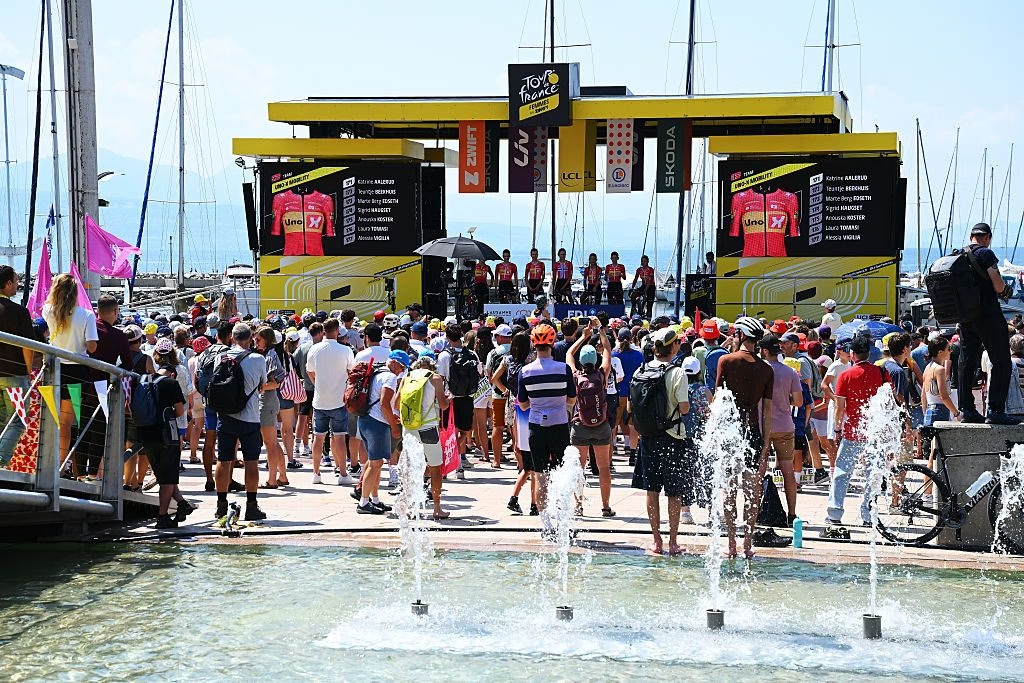 Photo Credit: Getty
Illness makes the conditions more dangerous
Teams will be especially cautious with riders showing signs of illness or incomplete recovery.
Fever, gastrointestinal problems and dehydration can all reduce the body’s ability to regulate temperature. A rider who begins the stage already compromised may reach dangerous levels of thermal strain far earlier than expected.
That creates a difficult distinction for team staff. Losing contact on the Col de la Faucille may simply mean a rider cannot sustain the pace. It may also be an early indication that she is struggling medically rather than competitively.
Concerning signs include disorientation, loss of coordination, repeated vomiting, unusual behaviour and a sudden collapse in the ability to produce power.
Vervloet’s Stage 2 withdrawal showed why those symptoms cannot be treated as something a rider should simply endure until the finish. Once she became feverish and began vomiting, continuing in temperatures above 30°C was no longer safe.
Stage 3 offers even less reason to take that risk. A rider in difficulty on the opening mountain still faces more than three hours of racing and three further categorised climbs.
Could the heat help the breakaway?
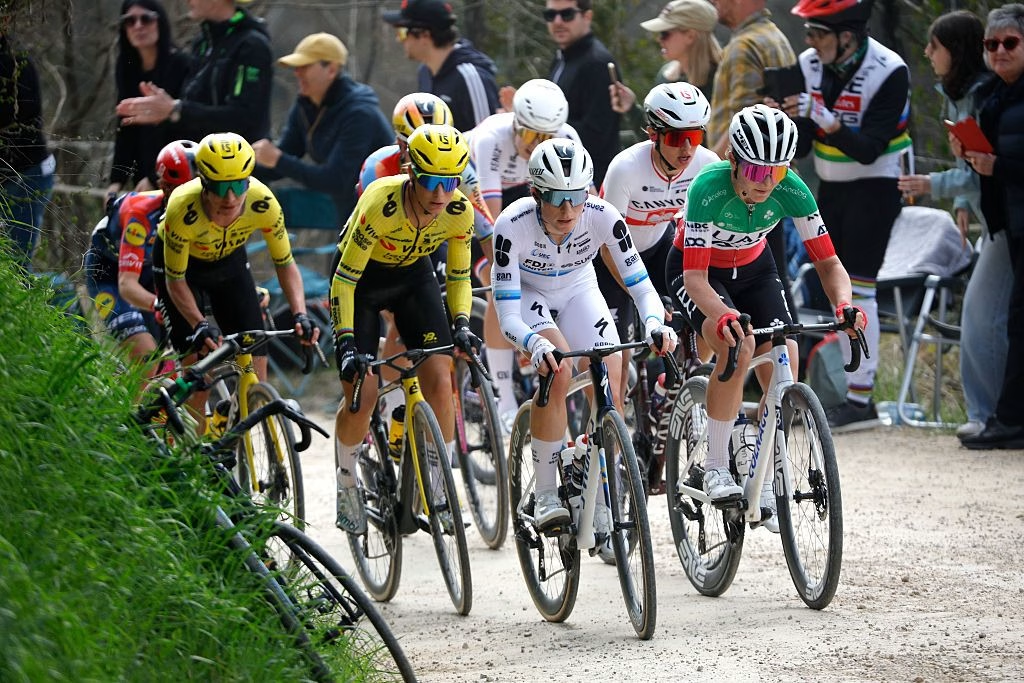
The conditions can create opportunities for attackers, but they do not automatically favour the riders at the front.
A breakaway can benefit if the peloton reduces its speed to manage the temperature or if the GC teams become reluctant to use domestiques in a long pursuit one day before the Dijon time trial.
SD Worx-Protime must also decide how much energy to spend defending Wiebes’ yellow jersey. If the team is unwilling to chase across the Jura in extreme heat, a strong group of riders without immediate GC relevance could receive a substantial advantage.
The difficulty is that breakaway riders work harder individually. A rider alone or in a small group spends more time exposed to the sun, receives less protection from the peloton and has fewer teammates available to help collect bottles.
A larger break is therefore more dangerous than one or two riders attacking alone. Several strong riders can rotate through the pace, share the workload and preserve enough energy for the late climbs.
Riders such as Kristen Faulkner, Riejanne Markus, Justine Ghekiere, Juliette Berthet, Maëva Squiban and Sarah van Dam have the strength to contribute to that type of group. Their teams can place someone ahead while keeping the principal leaders protected behind.
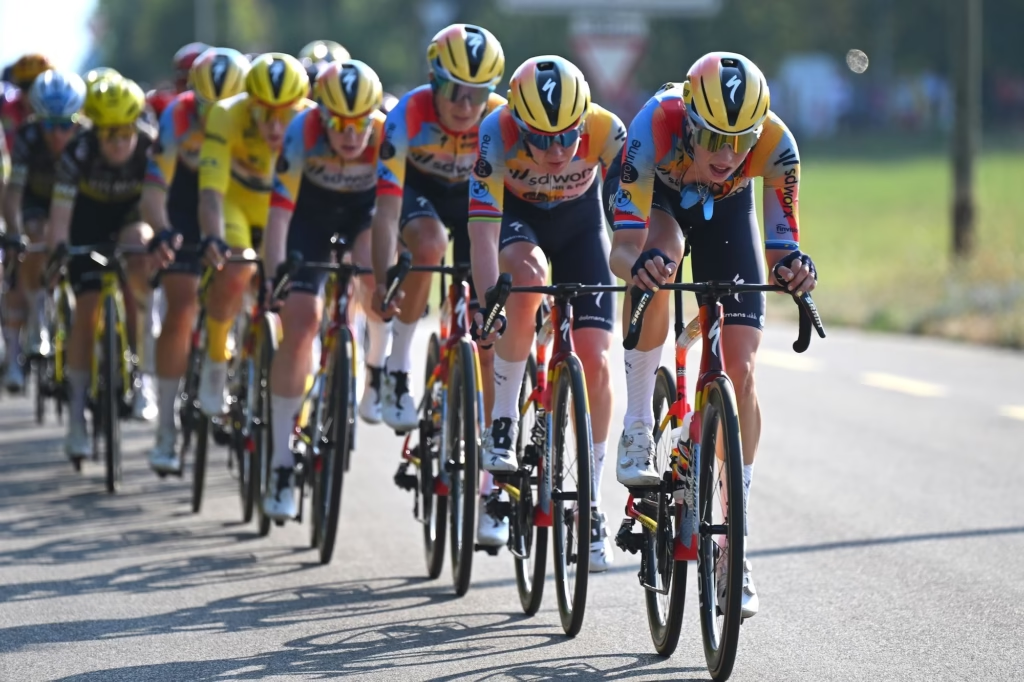
The heat may discourage an early GC battle
The Col de la Faucille offers the terrain for the first real general classification attack, but the weather may encourage restraint among the favourites.
Demi Vollering, Pauline Ferrand-Prévot, Marlen Reusser, Kasia Niewiadoma-Phinney and Elisa Longo Borghini all need to consider Tuesday’s 21km individual time trial in Dijon.
An all-out effort on the first climb could produce fatigue that is harder to recover from in extreme heat. The cost is not limited to the energy required to attack. A maximal acceleration also generates additional heat that the body must remove during the following kilometres.
The stronger teams may prefer to set a sustained pace through domestiques rather than ask their leaders to attack. That can still remove Wiebes and reduce the peloton without turning the climb into a direct GC confrontation.
A controlled group also provides practical advantages. Leaders remain surrounded by teammates, receive bottles more easily and gain greater protection from the sun and wind than they would while riding alone.
The late Côte de Chaux-Champagny and bonus point offer safer opportunities to attack after the temperature and earlier efforts have already weakened the field.
Wiebes faces a different kind of yellow jersey defence
Wiebes begins Stage 3 with a 14-second lead over Kim Le Court-Pienaar after winning both opening stages.
She does not need to climb with Vollering or Ferrand-Prévot to retain yellow. She needs to limit her loss on the Col de la Faucille and preserve enough teammates to organise a chase across the following terrain.
The heat makes that process less predictable.
A rider who reaches the summit close to her thermal limit may not immediately recover on the descent. Drinking and cooling can help, but they cannot instantly reverse the strain accumulated during a hard climb.
SD Worx-Protime must therefore make an early tactical decision. Chasing for more than 100km in extreme temperatures could use Kopecky, Anna van der Breggen and other important riders before the Tour reaches its decisive stages.
The team have already won twice. Allowing yellow to move to a rider without long-term GC ambitions would not make Stage 3 a failure.
The more damaging scenario may be spending the entire team to defend Wiebes and then losing the jersey anyway.
The current margins and classification positions are detailed in the GC and jerseys standings after Tour de France Femmes Stage 2.
 Photo Credit: Getty
Patient riders may benefit late in the stage
The heat may reward riders who resist the temptation to follow every early attack.
The Col de la Faucille is important, but the stage does not finish at its summit. Riders still face more than 130km, including the Côte de Lajoux, Col de la Savine and the late Côte de Chaux-Champagny.
Anyone who treats the opening mountain like a summit finish risks fading during the second half of the race.
Experienced riders such as Marianne Vos, Longo Borghini and Kopecky may benefit from allowing the first attacks to develop before using the longer rolling sections to return or counter.
Puck Pieterse, Noemi Rüegg and Le Court-Pienaar also have the range to survive a hard opening without needing to lead it. Their opportunity may improve as the riders who attacked in the hottest part of the day begin paying for those efforts.
Heat can create larger differences between riders than the profile alone suggests. The strongest rider in normal conditions is not always the one capable of producing the best final effort after four hours above 30°C.
The effects could carry into the Dijon time trial
The consequences of Stage 3 may remain visible after the finish in Poligny.
The riders face the Dijon individual time trial on Tuesday, where even mild dehydration or incomplete recovery can affect power and the ability to hold an aerodynamic position.
A rider finishing Stage 3 significantly depleted must replace fluid and electrolytes while also refuelling, cooling down and preparing equipment for another maximal effort.
That is particularly important for Reusser and Vollering, who expect the time trial to be one of their strongest opportunities to gain time. Ferrand-Prévot, Niewiadoma-Phinney and the other climbers cannot afford to begin Dijon carrying an avoidable recovery deficit either.
The broader Tour de France Femmes 2026 route guide shows how little recovery space exists between the Jura stage and the first major GC test.
Teams must therefore judge every chase and attack against two objectives. There is the immediate opportunity in Poligny, but also the need to preserve enough physical capacity for the following afternoon.
What to watch for during Stage 3
The clearest early indicator will be the behaviour of the GC teams on the Col de la Faucille.
A hard but controlled tempo suggests the favourites want to remove Wiebes without paying the full price of an early battle. Repeated attacks would indicate that teams believe the potential time gains justify the additional physiological cost.
Frequent riders dropping towards the cars will show how heavily teams are prioritising bottles and cooling. A leader becoming isolated may be as much a supply problem as a tactical one if her domestiques are repeatedly moving through the convoy.
The condition of the Lotto-Intermarché riders will also deserve attention after their difficulties on Stage 2. The reduced four-rider team enters another demanding stage with little support and no simple route towards recovery.
The heat may not decide the winner directly, but it will influence almost every decision made between Geneva and Poligny.
Stage 3 was already difficult because of its early mountain, repeated climbing and uncertain race structure. Temperatures approaching 36°C add another contest that cannot be seen on the profile.
The riders who manage it best may not be those who attack first. They may be those who still have the physical and tactical clarity to attack last.

