Marianne Vos and Annemiek van Vleuten belong in any serious discussion of the greatest riders in women’s cycling, but they built their records in strikingly different ways. Vos became a champion across road racing, cyclocross, track and gravel, winning major one-day races and world titles over an extraordinary span of years. Van Vleuten developed into the defining stage racer of her generation, using long mountain attacks and time-trial strength to win the Tour de France Femmes, four editions of the Giro d’Italia Women and the modern Vuelta Femenina.
Counting trophies alone obscures the most important difference. A world championship on the road, a Grand Tour overall victory and a cyclocross rainbow jersey measure different abilities. Vos’s breadth is almost without parallel; Van Vleuten’s dominance in the longest, hardest stage races was remarkable. Comparing them properly means examining where each was strongest, how their careers developed and what the women’s calendar actually offered at different times.
World championships and Olympic records
Vos won the elite women’s road race world championship three times, in 2006, 2012 and 2013. Those victories span very different stages of her career. The first established her as a prodigious young talent, while the later titles confirmed that she could remain at the top despite changes in the peloton and the demands of racing across several disciplines. She also won Olympic road race gold in London in 2012.
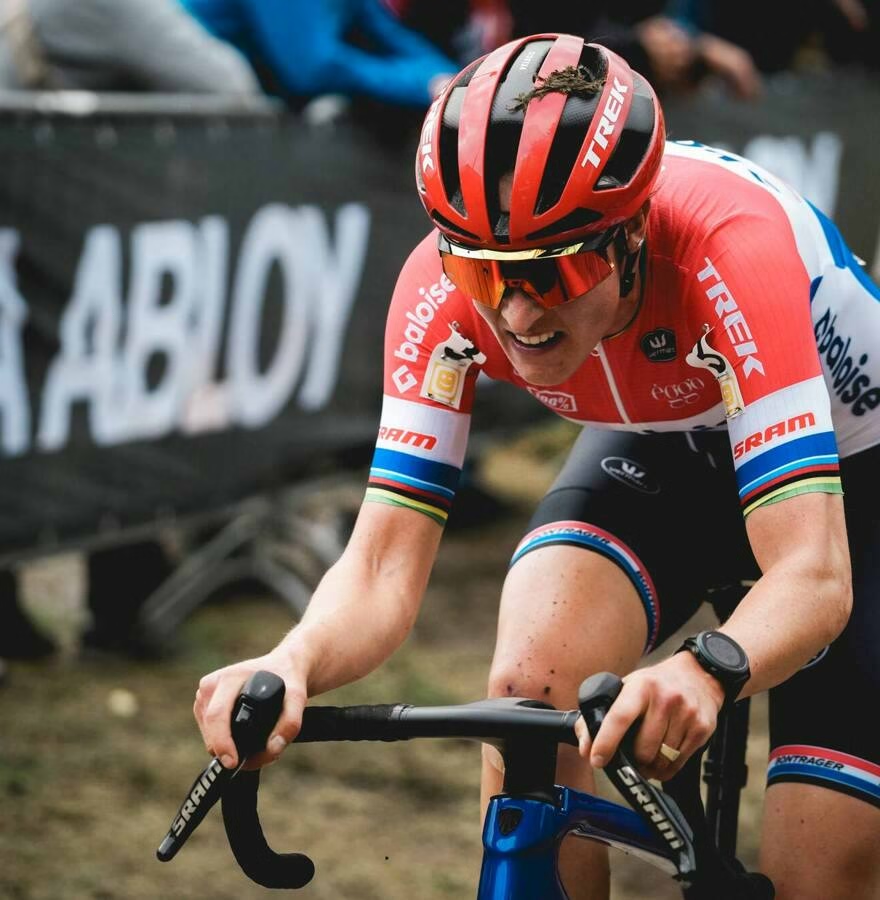
Her world-title record extends far beyond the road. Vos has eight elite cyclocross world titles, won in 2006, six consecutive years from 2009 to 2014, and again in 2022. She also won two world titles on the track and added the gravel world championship in 2024. Those results show an ability to transfer skill, fitness and competitive judgement between disciplines that place very different demands on a rider.
Van Vleuten won two elite road race world championships, in 2019 and 2022, as well as two individual time-trial world titles in 2017 and 2018. The 2022 road victory was one of the most extraordinary of her career. She had fractured an elbow in a crash during the mixed relay earlier in the championships, yet still found the strength and timing to attack late in the road race and win. It was a victory that combined tactical instinct with an unusual tolerance for adversity.
At the Tokyo Olympics, held in 2021, Van Vleuten won the individual time trial and took silver in the road race. That result completed an Olympic record that had already included the painful experience of crashing while leading the Rio road race in 2016. Both riders therefore own Olympic gold medals, but in different events and through different strengths: Vos as a road race finisher, Van Vleuten as a time trial specialist.
The Grand Tour comparison favours Van Vleuten
Van Vleuten’s most obvious advantage comes in the major stage races. She won the Giro d’Italia Women four times, in 2018, 2019, 2022 and 2023, and the inaugural modern Tour de France Femmes avec Zwift in 2022. She also won the 2023 Vuelta Femenina. Those titles were often achieved through decisive mountain performances in which she attacked from distance and made her rivals race at an intensity they could not sustain.
Her 2022 Tour victory provided the clearest demonstration. After struggling with illness early in the race, Van Vleuten recovered and took control in the mountains, winning the final two stages and finishing almost four minutes ahead of Demi Vollering overall. The decisive quality was not simply that she could climb faster. She could sustain the effort after several demanding days, recover overnight and produce another exceptional ride when the race reached its hardest terrain.
Vos has also won the Giro d’Italia Women, taking the overall title in 2011, 2012 and 2014. Those victories should not be overlooked. At her peak she was capable of combining sprinting, climbing and stage-race consistency at the highest level. Her record also includes stage wins and points classifications across many races, including the modern Tour de France Femmes, where she won two stages and the green jersey in 2022.
Their priorities and the available calendar explain much of the difference. Van Vleuten increasingly structured her seasons around winning major general classifications. Vos was more likely to target a mixture of stages, Classics, championships and races in other disciplines. It would be wrong to infer from the Grand Tour totals alone that one rider was simply superior in every aspect of road cycling.
One-day races show Vos’s range
Vos’s ability to win from very different race situations is central to her reputation. She has been a devastating sprinter from reduced groups, a rider capable of attacking on short climbs and a tactical presence who can turn an uncertain finale in her favour. Her victories include major Classics and championship races as well as a remarkable collection of stage wins. Few riders have remained competitive across so many different types of finish for so long.
Her 2012 Olympic road race win is a useful example. The event demanded tactical awareness in wet conditions, the ability to survive the decisive selection and enough speed to finish the job. It was not a victory that could be explained by a single power figure or a long solo attack. Vos had to read the race and deliver at precisely the right moment.
Van Vleuten was also an exceptional one-day racer. She won the Tour of Flanders and Liège-Bastogne-Liège, and her world championship road victories show that she could convert endurance into success outside stage races. Her preferred method was often different from Vos’s: make the race so hard that a sprint became irrelevant, then sustain an attack long enough to remove the tactical uncertainty of the final kilometres.
Those contrasting approaches are part of what made their overlapping careers so interesting. Vos could win a race from a group that had survived the hardest terrain; Van Vleuten could make that terrain decisive before the group reached the finish. Neither method is inherently more valuable. The better one depends on the course, the opponents and the specific demands of the event.
Cyclocross, track and gravel change the picture
If the comparison extends beyond road racing, Vos moves into a category of her own. Eight elite cyclocross world titles represent a level of sustained success that very few athletes in any cycling discipline have matched. Winning in 2006 and again in 2022 also demonstrates longevity: she returned to the top of a technically demanding sport sixteen years after her first rainbow jersey.
Cyclocross demands much more than road fitness. Riders must accelerate repeatedly, choose lines through mud and sand, dismount and remount at speed, and maintain concentration while the course changes beneath them. Vos’s success in that environment is evidence of an unusually broad set of skills. It is not directly comparable with winning a mountain stage in the Tour de France Femmes, but it strengthens any argument about all-round cycling ability.
Her track record adds another dimension. Vos won Olympic gold in the points race at Beijing in 2008 and earned world titles in track events. In 2024 she became the gravel world champion, adding another discipline to a collection that already covered road, track and cyclocross. The gravel title was particularly significant because it came so long after her first world championship and required yet another adaptation to a different racing format.
Van Vleuten’s career was overwhelmingly focused on the road, and judging her by the number of disciplines she did not contest would be unfair. Her achievements should be assessed against the goals she actually pursued. In her chosen arena, she developed a combination of climbing, time trialling and recovery that made her one of the most difficult riders to beat in a multi-day race.
How their careers developed
Vos reached the top of the sport unusually young. Her first road world title came in 2006, and she was already a multi-discipline champion before many of her later rivals had established professional careers. That early success created the expectation that she could win almost anywhere, an expectation she repeatedly met while also navigating injuries, illness and the demands of a long career.
Van Vleuten’s trajectory was different. She became more dominant in the later stages of her career, developing into a specialist who could repeatedly win the biggest stage races. Her most celebrated results came in her thirties, and she retired at the end of 2023 after a final season that still included major general classification victories. Her development challenged the assumption that a rider’s best years must come early.
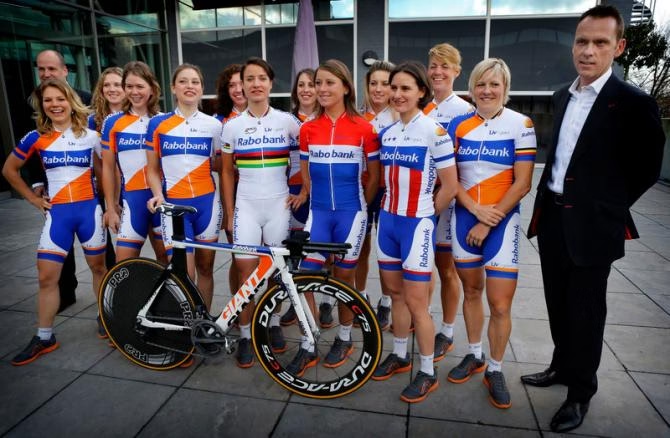
They were also teammates during the Rabobank era, part of a Dutch programme that helped shape the modern professional women’s peloton. That shared history matters because their careers were not entirely separate stories. They competed against one another, represented the Netherlands together and contributed to a period in which Dutch riders set much of the international standard.
Women’s cycling changed substantially during their careers. The modern Tour de France Femmes only began in 2022, long after both riders had already achieved major success. Race lengths, television coverage, team resources and opportunities for sustained professional competition have evolved. Any all-time comparison must acknowledge that a rider’s opportunities depend partly on the calendar available at the time.
Which record is stronger?
On Grand Tour general classifications, Van Vleuten has the clearer claim. Four Giro titles, the 2022 Tour de France Femmes and the 2023 Vuelta Femenina are a formidable collection. Her ability to dominate the decisive mountain stages gave her an advantage over riders whose strengths were more evenly distributed across the season.
On breadth of achievements, Vos has the stronger case. Three road world titles, eight cyclocross world titles, track world titles, Olympic gold medals in different disciplines and a gravel world title are not the record of a rider who specialised narrowly. Her road career alone would place her among the greats, while the achievements elsewhere make the comparison more difficult for any rival.
There is also no simple answer to the question of longevity. Vos won her first world title in 2006 and was still collecting major results in the 2020s. Van Vleuten continued to win the biggest stage races at the age of 40. One story is about maintaining an exceptional level over a very long period; the other is about reaching extraordinary heights relatively late and sustaining them until retirement.
Their records describe two distinct ways of becoming the best in the world. Vos is the reference point for versatility, one-day racecraft and success across disciplines. Van Vleuten is the reference point for relentless stage-race dominance and the ability to turn difficult terrain into an unbridgeable advantage. Their careers helped define different possibilities for what a women’s cycling champion could be.
Where to explore their achievements
For further context, ProCyclingUK has covered the Rabobank and Rabo Liv team history, the history of the Giro d’Italia Women, the return of the Tour de France Femmes and the road world championship records. Those histories help place their victories in the changing structure of the sport.
-
 Photo Credit: Telenet Superprestige
-
 Photo Credit: Getty