
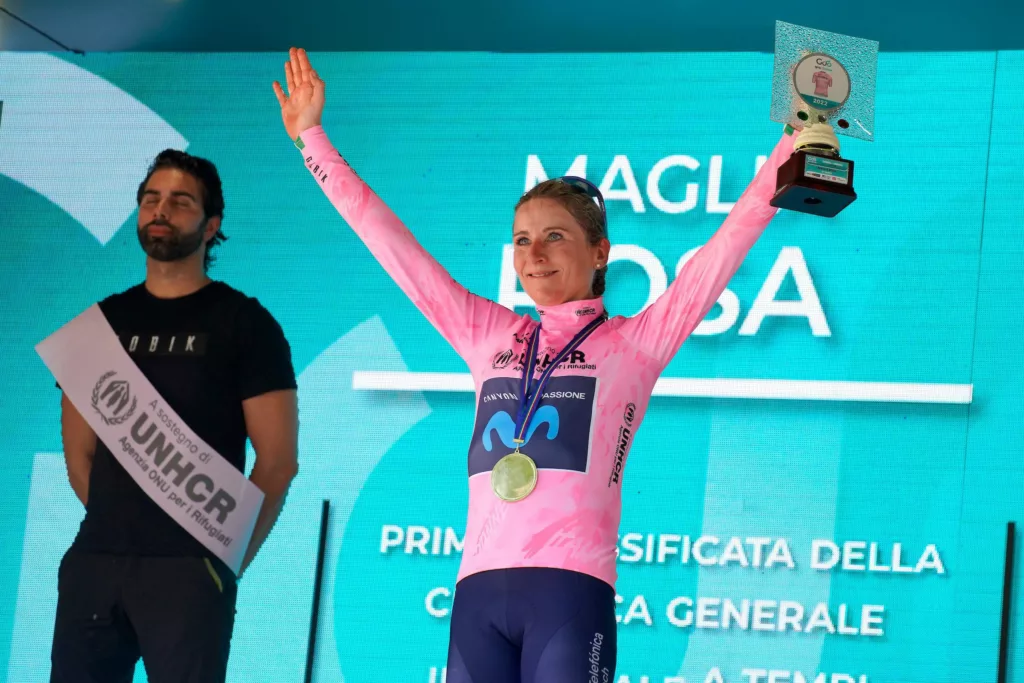
The Giro d’Italia Women is the longest-running and most symbolically important stage race in women’s professional cycling. It has carried several names, survived uncertain eras, produced some of the sport’s defining champions, and for long stretches, stood almost alone as the race that gave women a true Grand Tour-style platform.
First held in 1988, the race has been known as the Giro d’Italia Femminile, the Giro Donne, the Giro Rosa and now the Giro d’Italia Women. The branding has changed with organisers, sponsors and periods of reinvention, but the central idea has remained the same: a demanding Italian stage race that tests the best riders across mountains, time trials, rolling roads and pressure-heavy days of attrition.
Its history is not always tidy. There have been gaps, reductions, organisational changes, disputes about coverage and years when the race carried more prestige than the structure around it could properly support. Yet that is also why it holds such a strong place in the sport. To understand the Giro d’Italia Women is to understand a large part of the story of modern women’s cycling itself.

The beginning: Maria Canins and the first women’s Giro
The first edition of the race was held in 1988, when it was still the Giro d’Italia Femminile. The inaugural winner was Maria Canins, one of the most important Italian riders of her generation and already a major name in women’s cycling. Canins had won the women’s Tour de France in 1985 and 1986, and her victory in the first women’s Giro gave the new race immediate sporting credibility.
That first edition arrived during a complicated period for women’s stage racing. Major women’s races often depended on fragile organisational structures, limited media attention and uncertain sponsorship. The Italian race therefore, began not as a polished equivalent to the men’s Giro d’Italia, but as part of a wider effort to give women more than isolated one-day races and championships.
Roberta Bonanomi won the second edition in 1989, before Catherine Marsal took victory in 1990. Marsal’s win gave the race an early international flavour. It was not simply an Italian domestic race with foreign guests, but a developing stage race capable of attracting some of the strongest riders in Europe.
The early years were still unstable. The race was not held in 1991 or 1992, a reminder of how uncertain the infrastructure around women’s racing remained. When it returned in 1993, Lenka Ilavská became the first Slovak winner, continuing the international pattern that had already begun in the opening editions.
The 1990s: Michela Fanini, Fabiana Luperini and the rise of the climbing Giro
The 1990s gave the Giro d’Italia Women its first great era. Michela Fanini won in 1994, taking what would become one of the race’s most poignant victories. Fanini was one of Italy’s brightest talents, but she died later that year in a car crash at the age of just 21. Her name remained deeply connected to Italian women’s cycling, not only through her own results but through the race later created in her memory, the Giro della Toscana Int. Femminile – Memorial Michela Fanini.
From 1995, the race entered the Fabiana Luperini years. Luperini won four editions in a row from 1995 to 1998, establishing herself as the first true Giro d’Italia Women dynasty rider. Her success shaped how the race was understood. The Giro became increasingly associated with climbing, mountain dominance and the ability to impose pressure across repeated hard days.
Luperini was not a one-week specialist. She was one of the finest climbers women’s cycling had seen, and her Giro record reflected that authority. She could take control in the mountains and defend it with a consistency that made her difficult to dislodge once the race turned vertical.
Her run also helped define the Giro as Italy’s most prestigious women’s stage race. The event had not yet reached the fully modern professional era, but by the late 1990s it had become a place where the best general classification riders had to prove themselves. Winning the Giro meant more than winning a collection of stages. It meant surviving a race that increasingly demanded specialist climbing strength, recovery and team support.
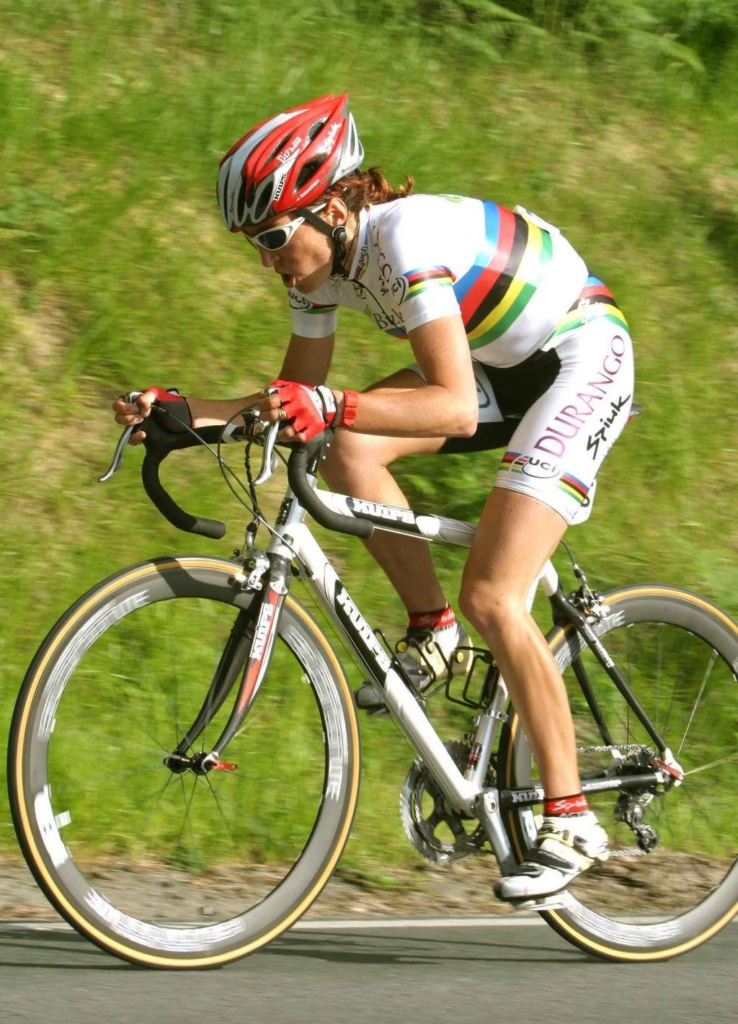
Joane Somarriba and the turn of the millennium
After Luperini’s four-year hold on the race, Joane Somarriba took back-to-back victories in 1999 and 2000. The Spanish rider’s success marked another shift in the Giro’s competitive identity. Somarriba would become one of the defining stage racers of her era, also winning the Grande Boucle Féminine Internationale and the world time trial title in 2003.
Her Giro victories came at a time when women’s stage racing still had multiple major reference points. The Grande Boucle, Tour de l’Aude and Giro Donne all formed part of a broader stage-racing landscape, although one that never had the same financial security or public profile as the men’s calendar.
The Giro remained different because it developed its own style. It was less about borrowing prestige from the men’s Giro than about creating a women’s race with its own lineage. By 2000, the list of winners already included Canins, Bonanomi, Marsal, Fanini, Luperini and Somarriba. That was enough to make the race a central part of the women’s cycling calendar.
The 2000s: Brändli, Cooke, Pučinskaitė and Luperini’s return
The early 2000s produced one of the most varied periods in the race’s history. Nicole Brändli won in 2001, 2003 and 2005, becoming one of the race’s most successful riders. Svetlana Stolbova, also known in cycling records as Svetlana Bubnenkova, won in 2002. Nicole Cooke took victory in 2004, adding the Giro to a career that would later include Olympic and world road race titles in 2008.
Cooke’s victory remains one of the most important British results in the history of the race. She was not simply a fast finisher or a one-day specialist. At her best, Cooke combined aggression, climbing resilience and tactical sharpness, and the Giro suited that range.
Edita Pučinskaitė then won in 2006 and 2007, giving the race another repeat champion. Her victories reinforced the international character of the Giro. Italy hosted the race, but the winner’s list was increasingly a map of women’s cycling’s strongest nations: Italy, France, Spain, Switzerland, Lithuania, Great Britain, Slovakia, the United States and beyond.
Then came one of the most remarkable returns in Giro history. Fabiana Luperini won again in 2008, a full decade after her fourth consecutive victory. It was her fifth overall win, making her the most successful rider in the race’s history. That fifth title gave her record a different weight. Luperini was not only the dominant figure of the late 1990s, she had also survived long enough at the top to win again in a new era.

From Giro Donne to the last Grand Tour standing
By the late 2000s and early 2010s, the Giro Donne had become even more important because other major women’s stage races were disappearing or losing force. The Grande Boucle Féminine Internationale faded, and the Tour de l’Aude also disappeared from the calendar. For a period, the Giro was effectively the closest thing women’s cycling had to a Grand Tour.
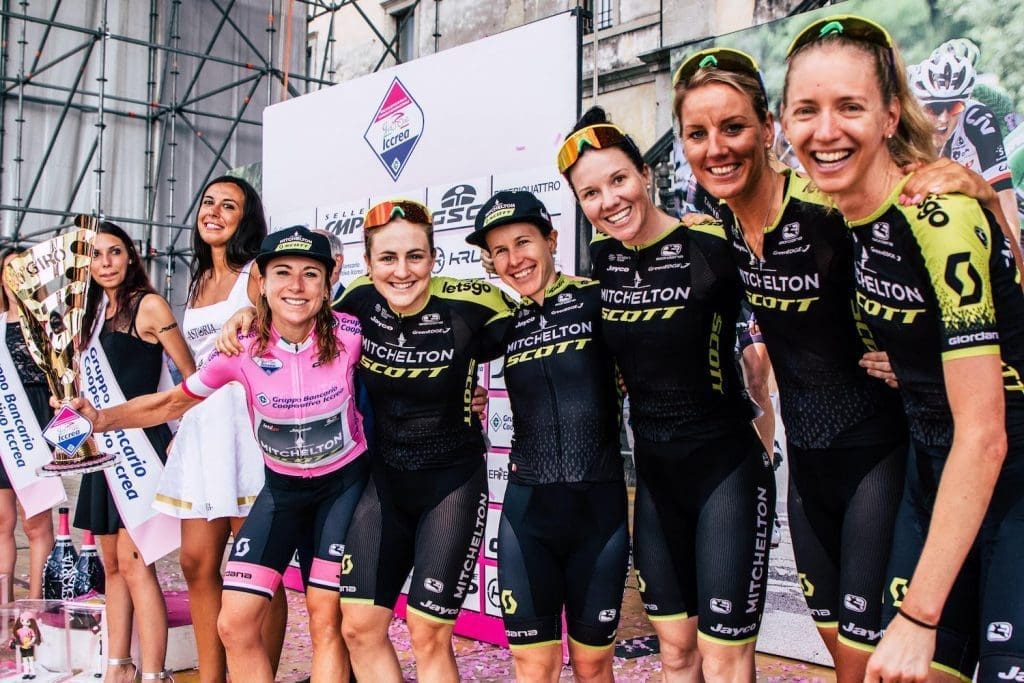
Claudia Lichtenberg, then widely known in results as Claudia Häusler, won the 2009 edition for Cervélo TestTeam. Mara Abbott followed in 2010, becoming the first American winner of the Giro. Abbott’s victory was built on climbing strength, and she returned to win again in 2013.
Those years underline an important part of the race’s identity. The Giro did not just reward the most complete rider in an abstract sense. It often rewarded the rider who could climb better than everyone else when the race reached its hardest terrain. Abbott’s wins, like Luperini’s before her, helped preserve the Giro’s mountain-race image.
At the same time, the event was carrying a burden it should never have had to carry alone. Women’s cycling needed more major stage races, not one race doing all the prestige work. The Giro’s importance increased partly because the rest of the stage-racing calendar had become too thin.
The Marianne Vos years
Marianne Vos won the Giro in 2011, 2012 and 2014, adding three overall titles to a career already overflowing with road, cyclocross and track achievements. Her Giro victories were different in character from those of pure climbers. Vos was not built as a traditional mountain specialist in the Luperini or Abbott mould, but her versatility made her devastating.
She could win sprints, survive climbs, handle technical days and race with a tactical intelligence that made her hard to isolate. In that sense, her Giro success widened the race’s profile. It did not belong only to pure climbers. A rider with enough climbing resistance and enough stage-winning weapons could also build a winning general classification campaign.
Vos’s era also coincided with the gradual professionalisation of women’s cycling. Coverage remained inconsistent, and the sport still lacked the broadcast depth and investment it deserved, but the level of competition was rising. Teams were becoming more structured, riders were racing fuller calendars, and the biggest names were becoming more visible to international audiences.
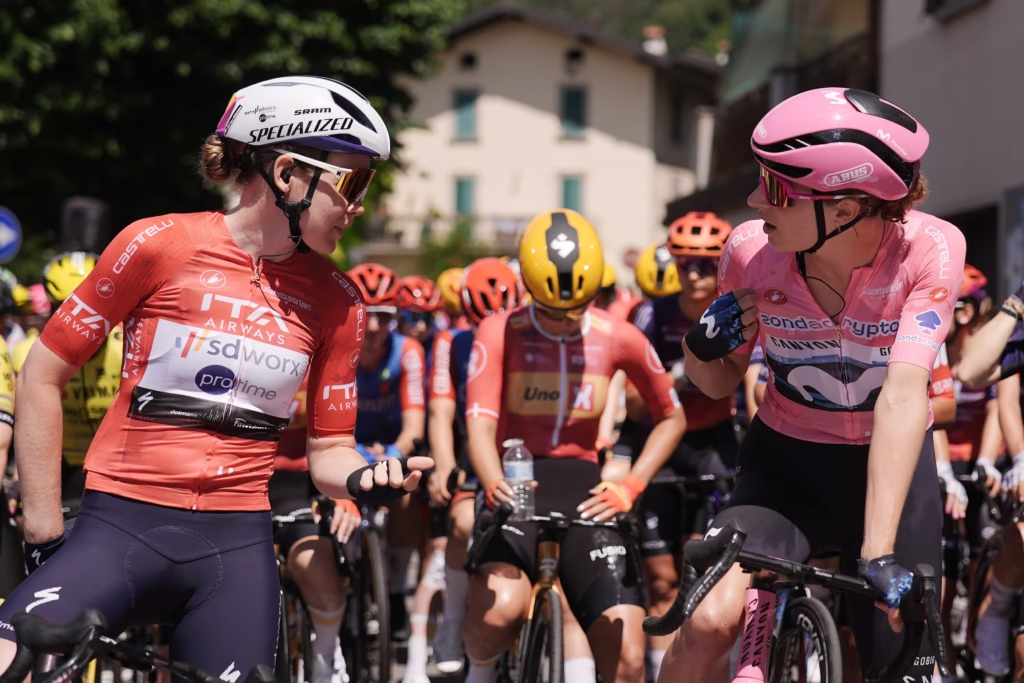 Photo Credit: LaPresse
Anna van der Breggen and the modern Dutch grip on the Giro
Anna van der Breggen won her first Giro in 2015, before adding further titles in 2017, 2020 and 2021. Her four victories place her among the race’s defining champions, and her dominance came during a period when Dutch riders shaped the top of women’s road racing.
Van der Breggen’s Giro record reflected her wider strengths. She was calm, efficient, tactically disciplined and extremely hard to break once she had control of a race. She could climb with the best, time trial with authority and read a stage race with the patience of a rider who understood when not to waste effort.
Megan Guarnier interrupted that Dutch sequence by winning in 2016 for Boels-Dolmans. Her victory was part of a superb season in which she also won the Women’s WorldTour overall and established herself as one of the best all-rounders in the peloton. It also showed the depth of Boels-Dolmans, the team structure that would become one of the dominant forces in women’s cycling.
By the late 2010s, the Giro had become a key battleground for the sport’s strongest stage racers. The race still had its organisational criticisms, particularly around live coverage and parity of presentation, but the sporting level was unquestionable. To win the Giro in this era meant beating riders who were increasingly training, racing and preparing with fully modern professional standards.
Annemiek van Vleuten and the age of long-range dominance
Annemiek van Vleuten won the Giro in 2018, 2019, 2022 and 2023. Her victories gave the race another era-defining champion, and perhaps no modern rider embodied the Giro’s brutality better than Van Vleuten.
Van Vleuten’s best Giro performances were built on sustained climbing power, time trial strength and an ability to make races explode from distance. She did not only win by waiting for final climbs. She often changed the rhythm of entire races, forcing rivals into survival mode long before the finish.
Her 2018 and 2019 wins came during a period when she was becoming the most feared stage racer in the world. After the disrupted 2020 season, she returned to the Giro’s top step in 2022 and 2023 with Movistar, underlining both her longevity and her dominance of the revived Grand Tour landscape.
Those later victories came in a changed context. The Tour de France Femmes returned in 2022, La Vuelta Femenina developed into a more substantial stage race, and women’s cycling finally had a more recognisable Grand Tour structure. The Giro was no longer carrying that identity alone. Instead, it had to defend its historic place within a growing elite stage-race calendar.
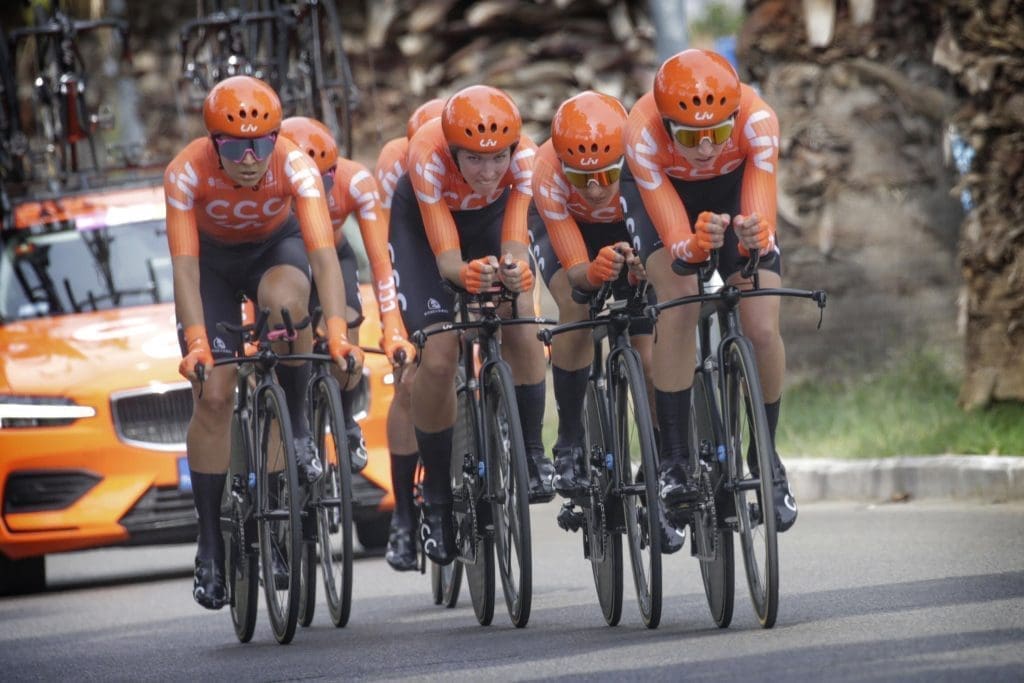
The Giro Rosa years and the fight for status
The race’s period as the Giro Rosa brought both visibility and criticism. The name became familiar to fans, and the race continued to attract the best riders, but presentation did not always match the level of the athletes. Limited live coverage, short highlight packages and organisational inconsistencies became recurring complaints.
This tension is central to the race’s modern history. The Giro had the roll of honour, the terrain and the prestige, but women’s cycling was changing around it. Riders, teams and fans expected more. A race with the history of the Giro could no longer rely solely on heritage. It needed to look and feel like one of the sport’s biggest events.
There were also calendar pressures. For many years, the race sat close to the men’s Tour de France, fighting for attention during the busiest part of the cycling media year. That position made it harder for the Giro to command the space its sporting importance deserved.
Still, the Giro Rosa years produced exceptional racing. The winners list from 2011 onwards reads like a condensed history of the modern women’s peloton: Vos, Abbott, Van der Breggen, Guarnier, Van Vleuten and Longo Borghini. Whatever criticisms surrounded the race, the road kept delivering champions of the highest order.
Elisa Longo Borghini and the Italian revival
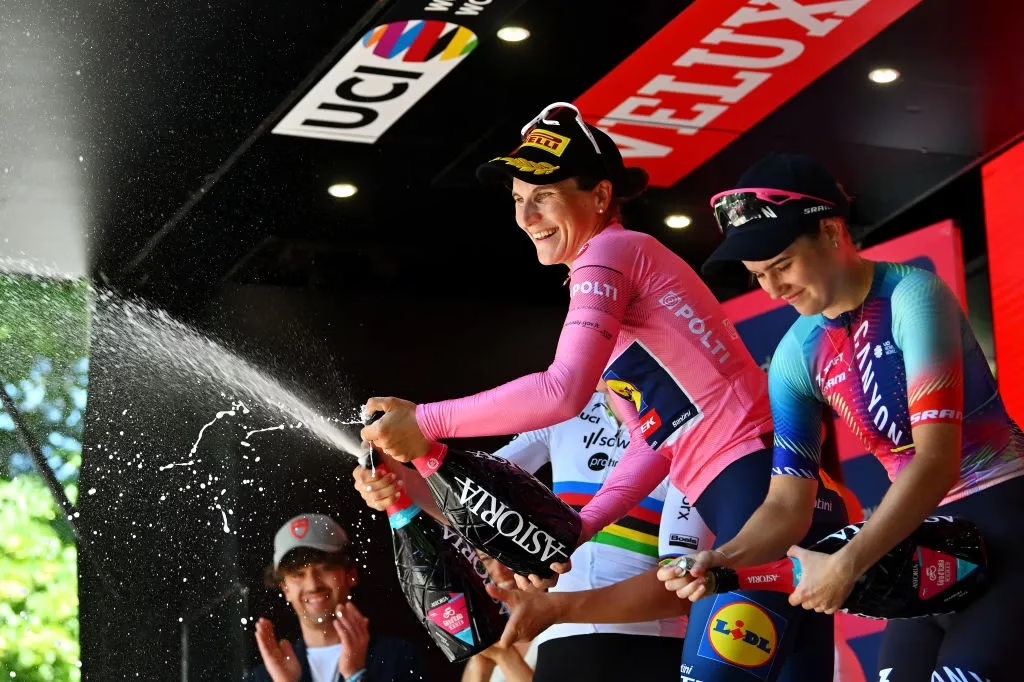
Elisa Longo Borghini’s 2024 victory was one of the most emotionally significant wins in recent Giro history. An Italian winner in the Giro d’Italia Women carries a different resonance, especially when the rider is already one of the country’s most respected modern racers.
Longo Borghini had spent years as a rider capable of shaping major races without always being the rider who finished them off in the general classification. Her 2024 Giro win with Lidl-Trek felt like the result of persistence as much as raw strength. She raced with authority, handled the pressure of expectation and became the first Italian winner of the race since Fabiana Luperini in 2008.
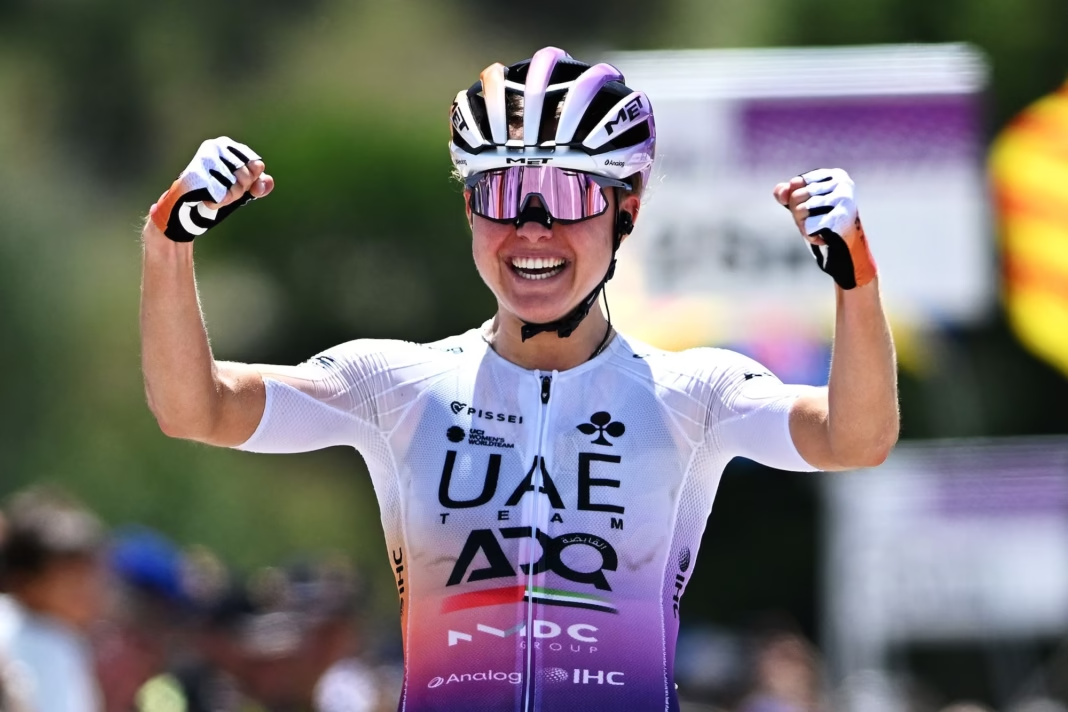
She then won again in 2025, this time with UAE Team ADQ, becoming the first rider since Annemiek van Vleuten to take consecutive editions. That second win changed the scale of her Giro legacy. One victory could be framed as a career-defining home triumph. Two in a row made her a central figure in the race’s modern history.
Longo Borghini’s success also connected the Giro’s past and present. The race began with Italian riders such as Canins, Bonanomi, Fanini and Luperini. After years of international dominance, an Italian champion returned to the centre of the story.
RCS Sport and the Giro d’Italia Women era
From 2024, RCS Sport took over organisation of the race in collaboration with the Italian Cycling Federation. That was more than a branding change. It aligned the women’s race more closely with the wider Giro d’Italia identity and gave it a stronger platform for presentation, route design and international recognition.
The Giro d’Italia Women name restored a direct connection with the men’s Giro brand, but the challenge has always been to ensure that connection strengthens the women’s race rather than making it feel secondary. The best version of the modern Giro d’Italia Women is not a supporting act. It is a major race with its own history, its own champions and its own sporting rhythm.
The 2026 edition represents another important step. With nine stages and a calendar position moving it away from the immediate shadow of the Tour de France, the Giro d’Italia Women has a better chance to stand as one of the central events of the women’s season. The race now sits within a stronger Grand Tour trio alongside La Vuelta Femenina and the Tour de France Femmes.
For more detail on the current edition, ProCyclingUK’s Giro d’Italia Women 2026 full route guide explains how the modern race has been shaped around a nine-stage course, while the beginner’s guide to Giro d’Italia Women 2026 gives newer fans a clearer route into the race’s format, contenders and wider significance.
That context is important. The Giro no longer has to be the only major stage race carrying women’s cycling. It can instead be what it should always have been: the Italian Grand Tour of the women’s peloton, with deep history and a distinctive sporting identity.
The riders who shaped the Giro d’Italia Women
Fabiana Luperini remains the race’s benchmark rider. Five overall victories, including four consecutive wins from 1995 to 1998 and a final title in 2008, give her a record that still defines the Giro’s history. She is the clearest example of the race as a climber’s proving ground.
Anna van der Breggen and Annemiek van Vleuten each won the race four times, giving the modern Dutch era its own weight. Van der Breggen represented control, timing and composure. Van Vleuten represented force, distance and the ability to turn a hard race into a demolition.
Marianne Vos’s three overall victories added another layer. Her success showed that the Giro could also belong to a rider of extraordinary versatility. Vos could win in ways that pure climbers could not, and her Giro record sits alongside her achievements across almost every discipline and race format.
Nicole Brändli, Joane Somarriba, Mara Abbott, Edita Pučinskaitė and Elisa Longo Borghini all have essential places in the race’s history. Brändli was a three-time winner, Somarriba helped bridge the Luperini years and the early 2000s, Abbott became the race’s great American climber, Pučinskaitė brought back-to-back Lithuanian success, and Longo Borghini has become the defining Italian winner of the modern era.
Nicole Cooke’s 2004 victory remains a key British landmark. It came before her Olympic and world title double in 2008, but it already showed the full range of a rider who could win on difficult terrain and impose herself across a stage race.
Why the Giro has always suited climbers
The Giro d’Italia Women has never been only a climbing race, but the mountains have shaped its identity more than any other terrain. Italy gives organisers the chance to build routes around long climbs, steep finishes and difficult transitional stages. Even when the race has been shorter than a traditional Grand Tour, it has usually carried enough vertical difficulty to expose weakness.
That is why riders such as Luperini, Abbott, Van der Breggen and Van Vleuten have been so successful here. The Giro rewards riders who can climb repeatedly, not just produce one isolated mountain performance. It also rewards recovery. A rider can look strong one day and crack the next if the race has accumulated enough fatigue.
The race has also often used time trials to sharpen the general classification. That has favoured complete riders rather than pure climbers alone. Van der Breggen and Van Vleuten were especially difficult to beat because they could gain time in the mountains and defend or extend it against the clock.
This combination has kept the Giro distinct. The Tour de France Femmes has quickly become the biggest media event in women’s stage racing, and La Vuelta Femenina has developed its own identity around Spanish climbs and increasingly tough finales. The Giro, though, still has the deepest stage-race memory. Its mountains are not just route features. They are part of the race’s mythology.
The Giro’s place in women’s cycling history
The Giro d’Italia Women has often reflected the state of women’s cycling more clearly than almost any other race. When the sport lacked investment, the Giro showed both what was possible and what was missing. When the calendar lost other major stage races, the Giro became a survivor. When modern women’s cycling began demanding better coverage, the Giro became one of the races most scrutinised.
That scrutiny was earned because the race was important. Fans and riders expected more from the Giro precisely because it carried so much history. A race with winners such as Canins, Luperini, Vos, Van der Breggen, Van Vleuten and Longo Borghini could not be treated as a minor event.
Its survival also gave the sport continuity. Women’s cycling has had too many races vanish, pause, rebrand or restart. The Giro’s line from 1988 to the present is not uninterrupted, but it is still one of the strongest historical threads in the sport. It links the pioneers of the late 1980s to the fully professional peloton of today.
For wider historical context, ProCyclingUK’s women’s cycling race history hub brings together more guides on the races that have shaped the sport, from long-running stage races to the modern Women’s WorldTour calendar.
-
 Photo Credit: Getty
All Giro d’Italia Women overall winners
- 1988: Maria Canins
- 1989: Roberta Bonanomi
- 1990: Catherine Marsal
- 1991: Not held
- 1992: Not held
- 1993: Lenka Ilavská
- 1994: Michela Fanini
- 1995: Fabiana Luperini
- 1996: Fabiana Luperini
- 1997: Fabiana Luperini
- 1998: Fabiana Luperini
- 1999: Joane Somarriba
- 2000: Joane Somarriba
- 2001: Nicole Brändli
- 2002: Svetlana Stolbova
- 2003: Nicole Brändli
- 2004: Nicole Cooke
- 2005: Nicole Brändli
- 2006: Edita Pučinskaitė
- 2007: Edita Pučinskaitė
- 2008: Fabiana Luperini
- 2009: Claudia Lichtenberg
- 2010: Mara Abbott
- 2011: Marianne Vos
- 2012: Marianne Vos
- 2013: Mara Abbott
- 2014: Marianne Vos
- 2015: Anna van der Breggen
- 2016: Megan Guarnier
- 2017: Anna van der Breggen
- 2018: Annemiek van Vleuten
- 2019: Annemiek van Vleuten
- 2020: Anna van der Breggen
- 2021: Anna van der Breggen
- 2022: Annemiek van Vleuten
- 2023: Annemiek van Vleuten
- 2024: Elisa Longo Borghini
- 2025: Elisa Longo Borghini
The legacy of the Giro d’Italia Women
The Giro d’Italia Women is a race of survival, reinvention and sporting depth. It has not always had the platform it deserved, but its champions have given it a history that few races in women’s cycling can match.
Its roll of honour tells the story clearly. Canins and Bonanomi connect it to the first generation of modern Italian women’s stage racing. Fanini gives it emotion and tragedy. Luperini gives it a record-setting climbing dynasty. Somarriba, Brändli, Cooke and Pučinskaitė show its international growth. Vos, Van der Breggen and Van Vleuten make it central to the modern era. Longo Borghini brings the Italian thread back to the front.
The modern Giro d’Italia Women now has a stronger brand, a clearer calendar role and a place within a more complete women’s Grand Tour landscape. That should help it grow, but the race’s value does not begin with modern reform. Its value comes from decades of riders treating it as one of the hardest and most prestigious prizes in the sport.
For all the changes in name, structure and presentation, the Giro d’Italia Women remains what it has always been at its best: a race where the strongest riders are forced to prove themselves day after day, on Italian roads that rarely give anything away cheaply.

