
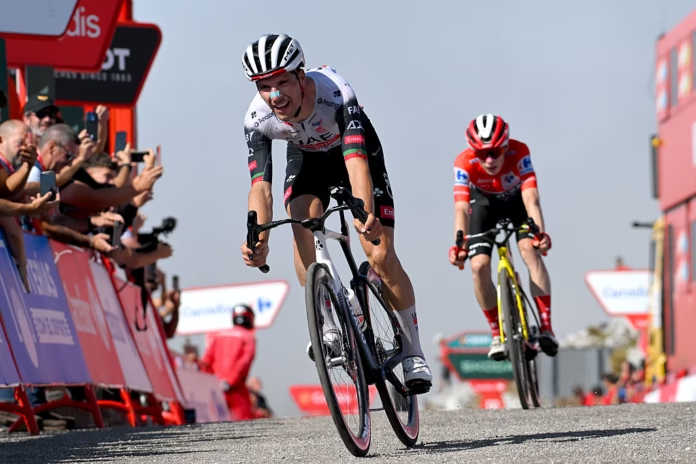
Extreme heat has become almost inseparable from the modern Vuelta a España.
Every August and September, the same question appears as riders pour water over themselves, stuff ice into their jerseys and race across exposed Spanish roads in temperatures that can climb well beyond 30°C: why is the Vuelta always raced when Spain is so hot?
The simplest answer is the calendar.
The Vuelta is cycling’s third men’s Grand Tour and occupies the late-August to mid-September slot after the Giro d’Italia in May and Tour de France in July. In 2026, the race runs from 22 August to 13 September, placing much of it directly in the final weeks of the Spanish summer.
But the timing is only part of the explanation. The geography of the Vuelta, particularly its frequent use of southern, inland and Mediterranean Spain, can expose riders to some of the hottest racing conditions of the entire WorldTour season.
That is especially relevant in 2026, with the Vuelta a España route taking the race progressively south before a final week dominated by Andalusia.
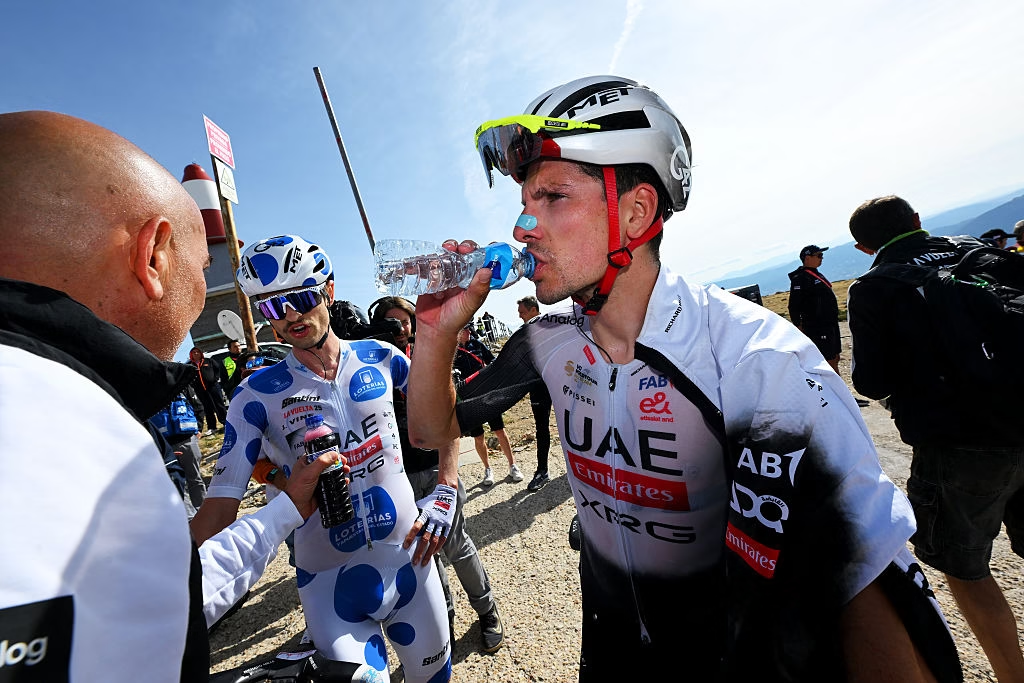 Photo Credit: Getty
Why does the Vuelta take place in August and September?
The Vuelta has to fit within a crowded professional cycling calendar.
The Giro d’Italia occupies May, while the Tour de France takes the prime July position. That leaves the Vuelta in its established late-summer slot, normally beginning during the second half of August and finishing in September.
Moving the race significantly earlier would create major clashes with the Tour de France and the races riders use to prepare for it.
Moving it considerably later would create a different problem. The Vuelta would begin overlapping more heavily with the World Championships, European Championships and autumn Classics, while conditions in the mountains become increasingly unpredictable as September moves towards October.
The existing slot is therefore a compromise.
It gives riders time to reset after the Tour before the final Grand Tour begins, while allowing the Vuelta to finish before the European road season moves completely into its autumn programme.
The consequence is obvious: Spain is often still extremely hot when the race arrives.
Spain is still in summer when the Vuelta starts
Late August is not the beginning of autumn in much of Spain.
Large parts of the country remain in full summer conditions, particularly inland and across the south.
The Vuelta compounds that by regularly travelling through regions where shade can be limited and road temperatures significantly higher than the official air temperature measured nearby.
A television graphic showing 35°C therefore does not necessarily capture what a rider is experiencing.
The peloton may be riding for four or five hours across dark asphalt exposed directly to the sun, with heat radiating upwards from the road while the riders themselves generate substantial metabolic heat through sustained exercise.
That combination can make a seemingly manageable air temperature much more difficult.
 Photo Credit: Getty
Why can the Vuelta feel hotter than the Tour de France?
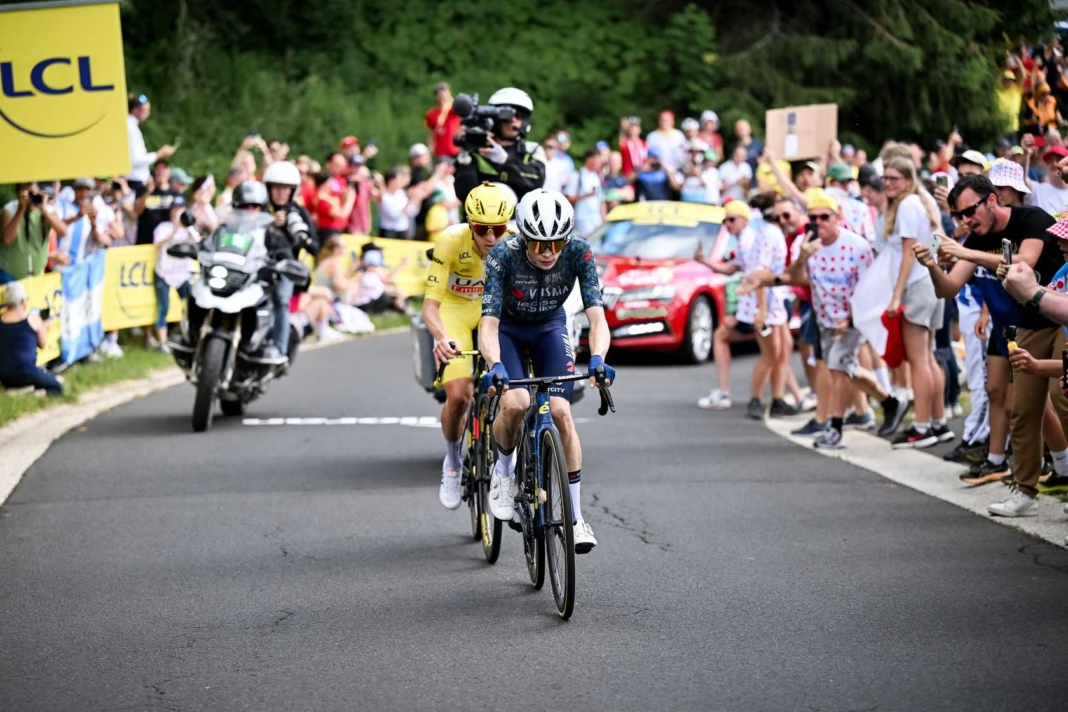
The Tour de France also experiences severe heat. The 2026 Tour provided another reminder, with extreme temperatures affecting several stages and forcing organisers to adapt parts of the race.
ProCyclingUK’s Tour de France heat protocol explainer looked at the measures available when conditions become dangerous, while Stage 9 of the 2026 Tour was shortened because of extreme heat.
The difference with the Vuelta is partly one of geography and partly one of duration.
The Tour can move rapidly between very different climatic zones. A hot day in southern France might be followed several stages later by cooler conditions in the mountains or farther north.
The Vuelta can remain within hot regions for much longer.
Long sections through Andalusia, Murcia, Extremadura, Valencia and central Spain can expose the peloton to successive days of dry heat rather than one isolated extreme stage.
That can make the thermal stress cumulative rather than simply dramatic.
Why doesn’t the Vuelta simply move to a cooler month?
It sounds straightforward, but moving a Grand Tour is much harder than changing the date of an ordinary one-day race.
The entire WorldTour calendar is structured around the three Grand Tours.
Teams build rider programmes around them. Broadcasters reserve coverage windows. Host towns plan years ahead. Sponsors build campaigns around established dates, and other major races occupy almost every viable part of the European season.
Moving the Vuelta into October, for example, would place it directly against major autumn races and increasingly unstable mountain weather.
Moving it into June would interfere with Tour de France preparation.
Moving it earlier still would begin to clash with the Giro d’Italia.
There is also no guarantee that moving the Vuelta by a couple of weeks would eliminate extreme heat. Southern Spain can remain very warm deep into September.
The late-August position is therefore imperfect, but it serves a sporting purpose within the wider calendar.
Has the Vuelta always been raced in late summer?
No.
For much of its history, the Vuelta was actually a spring race.
That is one of the most important pieces of context behind the question.
The event traditionally took place around April and May before being moved permanently to its late-season position in the 1990s.
That change helped give the Vuelta more distance from the Giro d’Italia and a clearer place as the third Grand Tour of the season.
It also fundamentally changed the climatic character of the race.
A spring Vuelta could still encounter warm conditions, particularly in southern Spain, but the prolonged heat associated with August racing was naturally much less likely.
The modern calendar therefore plays a major role in why high temperatures have become such a familiar part of the race.
For more on how the event itself developed, ProCyclingUK’s history of the Vuelta a España traces the race from its beginnings in 1935 through its evolution into cycling’s third Grand Tour.
Why was the Vuelta moved from spring to late summer?
The Vuelta had struggled for status when positioned close to the Giro.
The two Grand Tours competed for riders, media attention and prestige.
Placing the Spanish race later in the season gave it its own window.
It also created a useful sporting dynamic that remains part of the Vuelta today.
Riders who miss the Tour, crash out of it or underperform in July can reset their season around Spain. Others can attempt a second Grand Tour after racing the Giro or Tour.
That helps explain why Vuelta fields can sometimes look very different from what teams originally intended several months earlier.
The Vuelta a España 2026 start list is another example, with riders arriving after very different paths through the Giro and Tour.
The disadvantage is that this strategically useful calendar position coincides almost perfectly with the end of the Spanish summer.

How hot does the Vuelta a España get?
There is no single typical Vuelta temperature because the geography changes so much.
A mountain stage in Andorra or northern Spain can be relatively cool, particularly at altitude.
A stage across inland or southern Spain can be completely different.
Temperatures above 30°C are common during hotter editions, while heatwaves can push conditions significantly higher.
What matters physiologically is also more complicated than the air temperature shown on television.
Humidity, wind, direct sunlight and radiant heat from the road all change how effectively riders can cool themselves.
That is why two stages with identical official temperatures can feel completely different.
An exposed 35°C stage with little wind can impose far greater thermal stress than the same temperature on a breezier road or at altitude.
What does extreme heat do to professional cyclists?
Heat changes almost every part of endurance performance.
A rider produces enormous amounts of heat internally while exercising. In cooler conditions, much of that can be released into the surrounding environment.
As the outside temperature rises, that process becomes harder.
The body increasingly relies on sweating and evaporation to maintain a safe core temperature.
That creates several consequences.
Riders lose more fluid, need bottles more frequently and face a greater risk of dehydration. Their cardiovascular system also has to work harder because blood is being directed towards the skin for cooling while simultaneously supplying the working muscles.
Core temperature rises.
Perceived exertion increases.
Power that would normally feel sustainable becomes harder to maintain.
That is why a stage raced at 35°C is not simply the same stage with warmer scenery. The physiological demand itself changes.
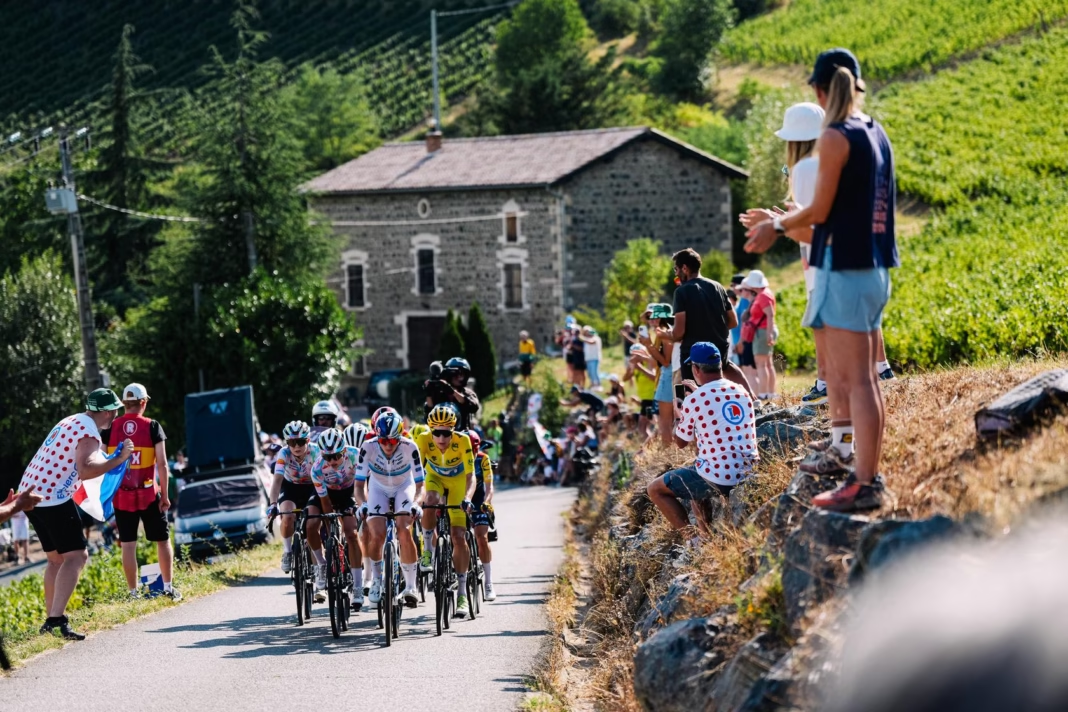
The effect was visible again during the 2026 Tour de France Femmes, when temperatures around 36°C became a significant factor on Stage 3.

Why do riders pour water over themselves?
Water is not only for drinking.
Pouring cold water over the body helps riders remove heat through evaporation and direct cooling.
That is why riders repeatedly empty bottles over their heads, necks and jerseys during hot stages.
Teams also use ice socks or ice vests, particularly before stages and during warm-ups.
An ice sock can be placed down the back of a jersey so cooling continues while the rider is moving. The neck and upper back are common positions because the ice can remain relatively secure without interfering with pedalling.
Riders may also use cold drinks, chilled towels and other pre-cooling strategies before particularly hot stages.
None of these methods removes the effect of heat entirely.
The objective is to slow the rise in core temperature and reduce the physiological cost of cooling.
Why do Vuelta riders drink so much?
Fluid requirements can become enormous in hot conditions.
Professional riders may go through multiple bottles every hour depending on temperature, race intensity and their individual sweat rate.
Those bottles usually contain more than water.
Teams use carbohydrate and electrolyte drinks because riders simultaneously need fuel and replacement sodium.
Sweat contains electrolytes, particularly sodium, and riders can lose substantial amounts during a long hot stage.
Modern teams increasingly individualise hydration strategies using rider-specific information about sweat rate and sodium loss.
The aim is not necessarily to replace every drop of fluid lost during the stage. That can be practically impossible.
The priority is preventing dehydration from becoming large enough to significantly affect performance, concentration or health.
 Photo Credit: Getty
Does heat affect the general classification?
It can.
Heat tolerance varies substantially between riders.
Some athletes naturally cope better with high temperatures, while others can improve their tolerance through heat acclimation before the race.
That means extreme conditions can become another performance variable alongside climbing ability, recovery and altitude.
The effect can also accumulate.
A rider may not visibly crack because of the heat on one stage, but several days of increased dehydration, poorer sleep and elevated physiological stress can contribute to fatigue later in the race.
That becomes particularly relevant during a three-week Grand Tour.
The strongest rider in cool conditions is not automatically affected in exactly the same way when temperatures rise towards the mid or high 30s.
Can an extreme-heat Vuelta stage be changed?
Yes.
Professional cycling has procedures for dangerous weather, including high temperatures.
Depending on the severity of the conditions, measures can include additional feeding opportunities, increased access to water and changes to normal race procedures.
More significant alterations can also be considered when athlete safety becomes a serious concern.
The 2026 Tour showed that this is not theoretical. Organisers shortened Stage 9 because of forecast extreme heat, while additional measures were introduced elsewhere during the race.
Our Tour de France heat protocol guide explains how those interventions can work.
The same underlying safety principles apply when the Vuelta encounters dangerous temperatures.

Could climate change make the Vuelta’s date more problematic?
This is becoming an increasingly difficult question for professional cycling.
The Vuelta’s late-August calendar position was established in a climate that is changing.
More frequent extreme temperatures and prolonged heatwaves create additional challenges for riders, spectators, race staff and organisers.
The issue is not unique to Spain.
ProCyclingUK looked at the wider problem earlier this summer in Can the Tour de France survive racing in July heat?, particularly as modern summer temperatures increasingly test assumptions built into cycling’s traditional calendar.
For the Vuelta, the issue is arguably even more obvious because the race deliberately takes place across Spain at the end of August.
That does not mean its calendar slot is about to change.
It does mean heat management is likely to become a more important part of how the race is organised.
Start times, water availability, route design and emergency protocols all become more significant when exceptional temperatures are forecast.
-
 Photo Credit: A.S.O./Billy Ceusters
Will the Vuelta a España 2026 be particularly hot?
The exact weather for all three weeks cannot be known in advance, but the route creates obvious potential for heat to become an important factor.
The race begins on 22 August and finishes on 13 September.
The opening stages move from Monaco through France and Andorra before the race heads into Spain. The later stages then move increasingly towards southern Spain, including a decisive final week in Andalusia.
That matters because the 2026 Vuelta route also concentrates substantial climbing into the second half of the race.
Heat combined with repeated mountain stages can create a very different challenge from either factor in isolation.
It also arrives when accumulated fatigue is already at its greatest.
By the final week, riders have almost two weeks of racing in their legs. Even small differences in hydration, recovery and heat tolerance can begin to matter more.
The actual day-to-day forecast will become much more useful once the race is underway, but the geography makes high temperatures one of the obvious conditions to watch.
So why is the Vuelta always so hot?
The answer ultimately comes down to calendar plus geography.
The Vuelta is raced in late August and early September because that is the established space available for cycling’s third Grand Tour after the Giro and Tour.
At exactly the same time, much of Spain is still experiencing summer.
The race then deliberately seeks out roads across inland, Mediterranean and southern Spain, where high temperatures can remain common well into September.
Put those factors together and heat becomes much more likely than it would be during the Vuelta’s old spring calendar position.
It is not that organisers deliberately choose extreme temperatures as another obstacle.
It is the consequence of holding a three-week Grand Tour across Spain at the end of summer.
That has become part of the Vuelta’s identity, alongside steep summit finishes, aggressive racing and unpredictable general classifications.
The difference now is that temperature increasingly affects more than the spectacle.
As extreme summer heat becomes a bigger sporting and safety issue, how the Vuelta manages the conditions may become almost as important as which mountains it chooses to climb.

