A Grand Tour is the biggest test in men’s road cycling: a stage race lasting three weeks, usually built around 21 days of racing and two rest days. There are only three: the Tour de France, Giro d’Italia and Vuelta a España. Winning one can define a rider’s career. Winning all three across a career places a rider in a much smaller group.
The basic idea is simple. Every stage produces a winner, but the overall race is decided by adding together each rider’s time from every stage. That creates the general classification, or GC. Around it sit separate competitions for points, mountains and young riders, while teams chase stage wins, breakaways and their own tactical objectives. The result is several races taking place at once over the same roads.
What makes a race a Grand Tour?
The term Grand Tour is reserved for the Tour de France, Giro d’Italia and Vuelta a España. Other stage races can last a week and contain many of the same ingredients, including mountain stages, time trials and classification jerseys, but they are not Grand Tours. The distinction is historical as well as sporting.
A modern men’s Grand Tour normally contains 21 stages spread across 23 days, with two rest days. Riders cover thousands of kilometres and must remain competitive through changing terrain, weather, crashes, illness and accumulated fatigue. A one-week stage race can identify the strongest rider over several demanding days. A Grand Tour asks whether that rider can keep doing it for three weeks.
How does the general classification work?
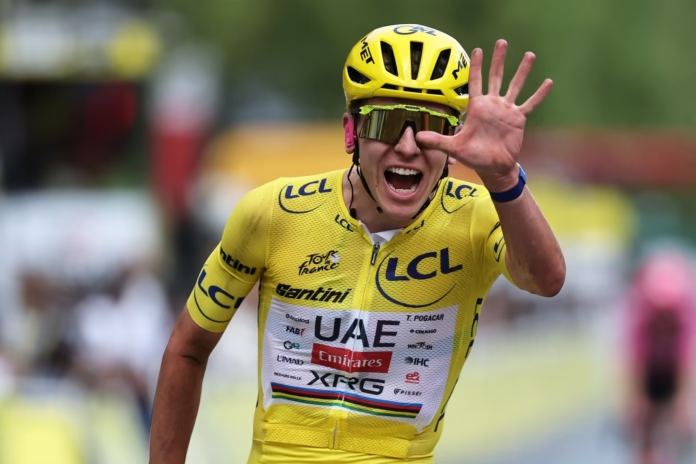
The general classification is the main competition. A rider’s finishing time from each stage is added to their running total. The rider with the lowest cumulative time leads the race and wears its leader’s jersey: yellow at the Tour, pink at the Giro and red at the Vuelta.
This is why a rider can win a Grand Tour without winning many stages, or sometimes without winning a stage at all. GC is about the total time across the entire race. A contender might gain two minutes on a mountain stage, lose 30 seconds in a time trial and finish safely in the peloton on a sprint day. What matters is the final balance after the last stage.
Small time bonuses can also be available at selected finishes and intermediate points. Those seconds matter when the strongest riders are closely matched, but the biggest GC gaps are usually created in the mountains and time trials.
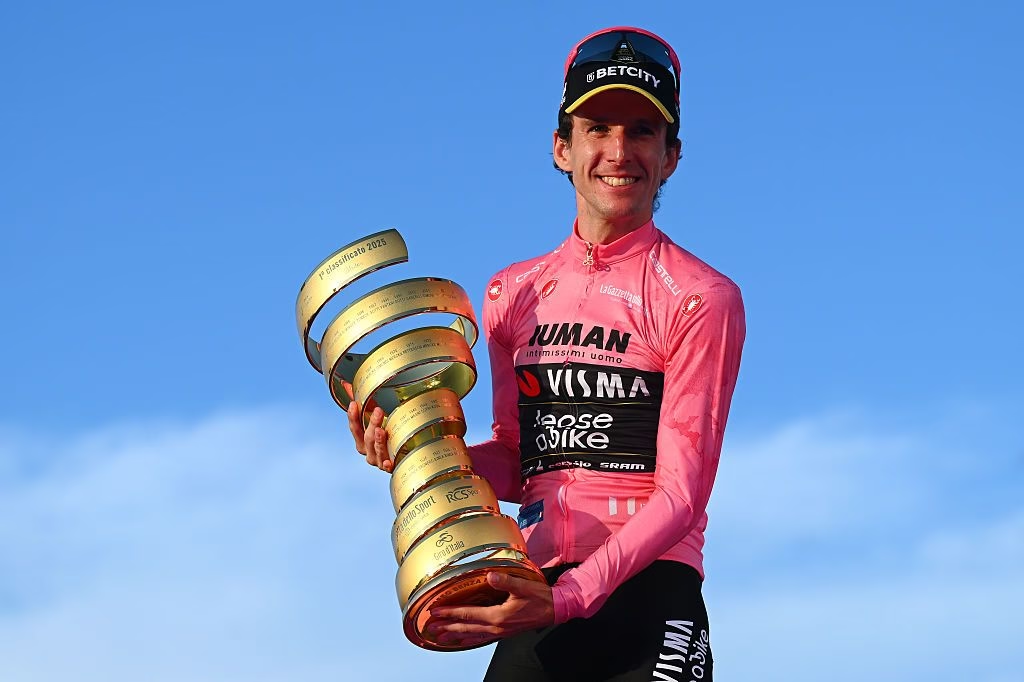 Photo Credit: Getty
What are the other Grand Tour classifications?
The overall winner receives most of the attention, but Grand Tours contain several season-defining competitions. The points classification rewards points collected at stage finishes and intermediate sprints. It often favours sprinters, although the exact scoring system can make all-round riders competitive too.
The mountains classification awards points over categorised climbs. It does not simply identify the best climber on GC. Riders can deliberately enter breakaways to collect mountain points, making it a separate tactical contest. The young rider classification, where used, is effectively a GC for riders below the race’s age threshold: the eligible rider with the lowest overall time leads.
There is also a team classification, while individual races have additional awards. The important distinction for a new viewer is that the leader of one competition does not have to be leading another. A sprinter can be fighting for the points jersey while sitting hours behind the GC leader.
What types of stages are in a Grand Tour?
Grand Tours work because the terrain changes constantly. Flat stages are the most obvious opportunities for sprinters, although breakaways, wind and crashes can complicate them. Hilly and medium-mountain stages suit attackers, puncheurs and breakaway specialists, and can sometimes become unexpectedly important to GC.
Mountain stages are where the leading climbers are most exposed. Long ascents, repeated climbs and summit finishes can create minutes rather than seconds between contenders. Individual time trials remove most team tactics and send riders against the clock one by one. Team time trials, when included, require the whole squad to ride together against the clock.
Not every stage has to change the overall standings. A seemingly quiet sprint stage can still drain energy, and positioning battles can be exhausting even when the GC contenders receive the same finishing time. Surviving those days is part of winning a Grand Tour.
How is a Grand Tour different from an ordinary stage race?
The obvious difference is duration, but the consequences run much deeper. A week-long race allows riders to target a small number of decisive stages. Over three weeks, recovery becomes part of the competition. A rider can look unbeatable in week one and fade in week three, while another can improve as rivals tire.
Teams also need broader squads. A GC leader requires climbers for the mountains, riders who can protect them on flat roads and teammates capable of controlling breakaways. Sprinters need lead-out support but must still survive the high mountains inside the time limit. Riders targeting stages have to judge when to spend energy and when to save it.
The cumulative workload changes tactics. Chasing every attack is impossible. Teams deliberately allow some breakaways to gain large advantages because the riders in them are no threat to GC. A rider who has lost an hour overall can therefore become much more dangerous in the battle for a stage win.
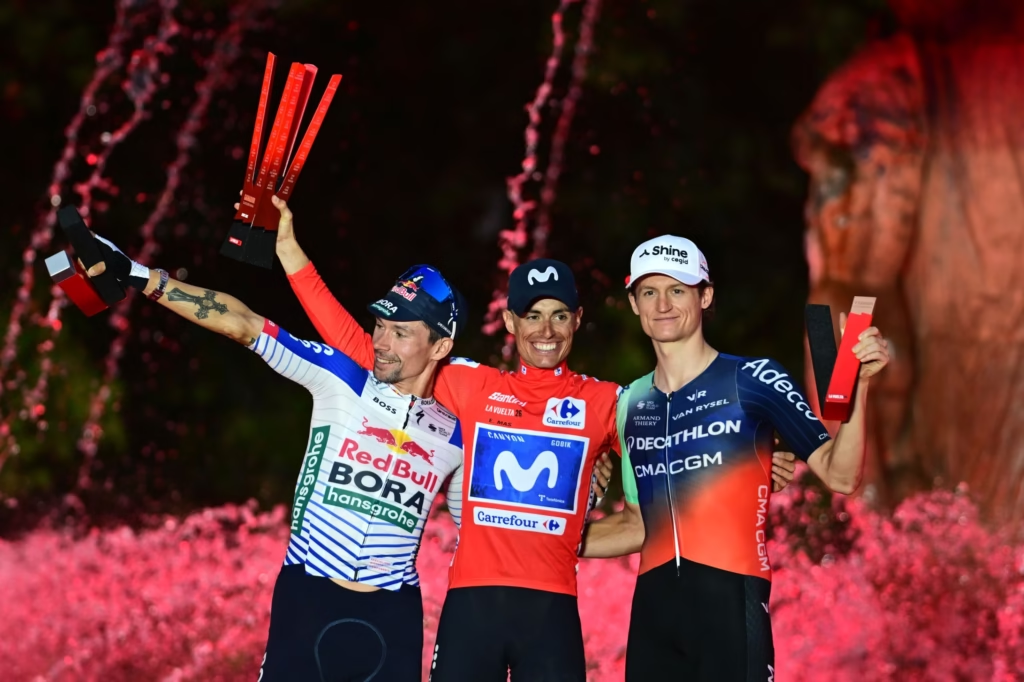 Photo Credit: Getty
Tour de France vs Giro d’Italia vs Vuelta a España
The three races use the same basic Grand Tour format but have distinct identities. The Giro d’Italia comes first in the men’s calendar, traditionally in May. Its leader wears the maglia rosa, or pink jersey. High mountains, variable spring weather and the possibility of snow at altitude have long shaped its character.
The Tour de France follows in July and is cycling’s most internationally recognised race. The yellow jersey carries enormous sporting and commercial weight, and the depth of preparation means even apparently straightforward stages can be intensely controlled. Pressure around positioning is often as important as the route itself.
The Vuelta a España is the final men’s Grand Tour of the season, normally beginning in August. It has developed a reputation for steep climbs, punchy summit finishes and less predictable racing. Riders arrive with very different workloads: some are targeting the race specifically, while others are carrying fatigue from the Giro, Tour or both.
None is inherently easier. The route changes every year, as do the weather, field and tactical demands. A rider suited to long Alpine climbs may face a different challenge from repeated short, steep Vuelta ascents, while a Giro shaped by difficult weather can become a test that goes far beyond the published profiles.
Which riders have won all three Grand Tours?
Winning the Tour, Giro and Vuelta across a career is known informally as completing the career Grand Tour set. It remains rare because the races demand different preparation and because the Tour, in particular, often dominates the programme of the leading GC riders.
Jacques Anquetil, Felice Gimondi, Eddy Merckx, Bernard Hinault, Alberto Contador, Vincenzo Nibali, Chris Froome and Jonas Vingegaard have all won each of the three men’s Grand Tours. Vingegaard joined that group by winning the 2026 Giro d’Italia, having already won the Tour and Vuelta.
That is different from winning all three in the same season. No male rider has won the Giro, Tour and Vuelta in a single year. Even attempting to race all three creates an exceptional physical and logistical challenge.
Why do riders rarely race all three Grand Tours in one season?
Three Grand Tours mean 63 race stages before counting warm-up races, national championships or other objectives. The issue is not simply whether a rider can finish them. A GC contender needs to arrive close to peak condition, recover from three weeks of racing and then build towards another peak within a short period.
The Giro-Tour double is difficult because there is limited recovery time between May and July. The Tour-Vuelta combination is more common, but Tour fatigue can still become decisive late in the Vuelta. Racing all three is usually more realistic for a domestique or stage hunter than for somebody expected to challenge for overall victory every time.
Sepp Kuss provided a useful modern example in 2026 by starting the Vuelta after completing both the Giro and Tour. Merely reaching a third Grand Tour with two already in the legs changes what a team can reasonably expect from a rider.
Are there women’s Grand Tours?
Women’s professional cycling has major multi-day stage races linked to the same three countries and traditions, but they do not simply copy the men’s 21-stage format. The Tour de France Femmes avec Zwift, Giro d’Italia Women and La Vuelta Femenina are the leading women’s stage races associated with the Tour, Giro and Vuelta names.
They are shorter than the men’s Grand Tours and have their own histories, routes and formats. Calling them women’s equivalents is useful for orientation, but treating them as scaled-down versions of the men’s races misses how women’s stage racing has developed. Their classifications and stage-race tactics are familiar, while the shorter duration often changes how aggressively teams can race from the opening days.
What should a beginner watch in a Grand Tour?
Start with the GC rather than trying to follow every competition at once. Note who leads, the time gaps between the main contenders and which team is controlling the peloton. On mountain days, count how many teammates each favourite still has. In time trials, compare the intermediate splits rather than waiting only for the finish.
Then look beyond the overall race. A breakaway may be fighting for the stage while the GC contenders race several minutes behind. A sprinter can spend a mountain stage simply trying to survive before becoming the favourite the next afternoon. A rider deliberately losing time can even be preparing for a later breakaway.
That layered structure is what makes a Grand Tour different. There is one overall winner after three weeks, but getting there requires dozens of smaller contests to unfold first.