
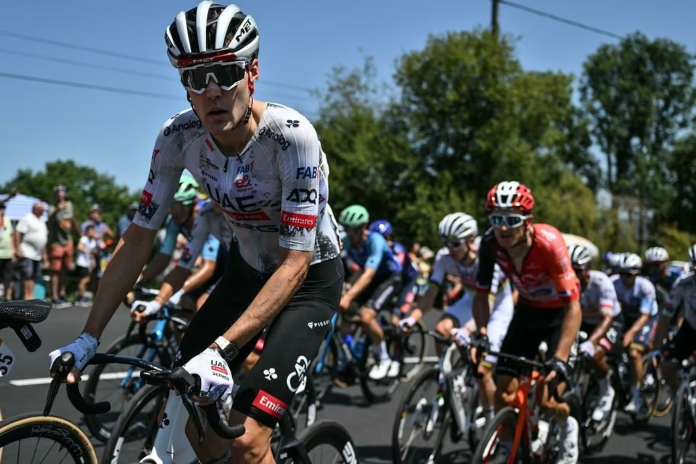
A domestique at the Tour de France is a rider whose job is to work for a team leader rather than chase personal success. The word comes from French and is usually translated as “servant”, but in cycling it means something more specific: the rider who protects, feeds, positions, paces and sacrifices for the team’s main objective.
That objective might be winning the yellow jersey, delivering a sprinter to the final kilometre, defending the green jersey, helping a climber survive the flat stages, or setting up a breakaway rider for a stage win. The domestique is the rider doing much of the invisible labour that makes those outcomes possible.
The Tour de France is often presented through its champions: Tadej Pogačar attacking in the mountains, Jonas Vingegaard defending yellow, Jasper Philipsen sprinting, Mathieu van der Poel lighting up a hilly stage. But none of those riders operates alone. Behind every leader is a structure of teammates whose work may not appear in the results sheet, but can decide the race.
For newer fans, understanding domestiques is one of the biggest steps towards understanding the Tour itself. Cycling looks like an individual sport because one rider crosses the line first. In reality, the Tour is one of the most team-dependent sports in the world. Our beginner’s guide to Men’s Tour de France 2026 explains the wider race structure, while this guide focuses on the riders who make team tactics work.
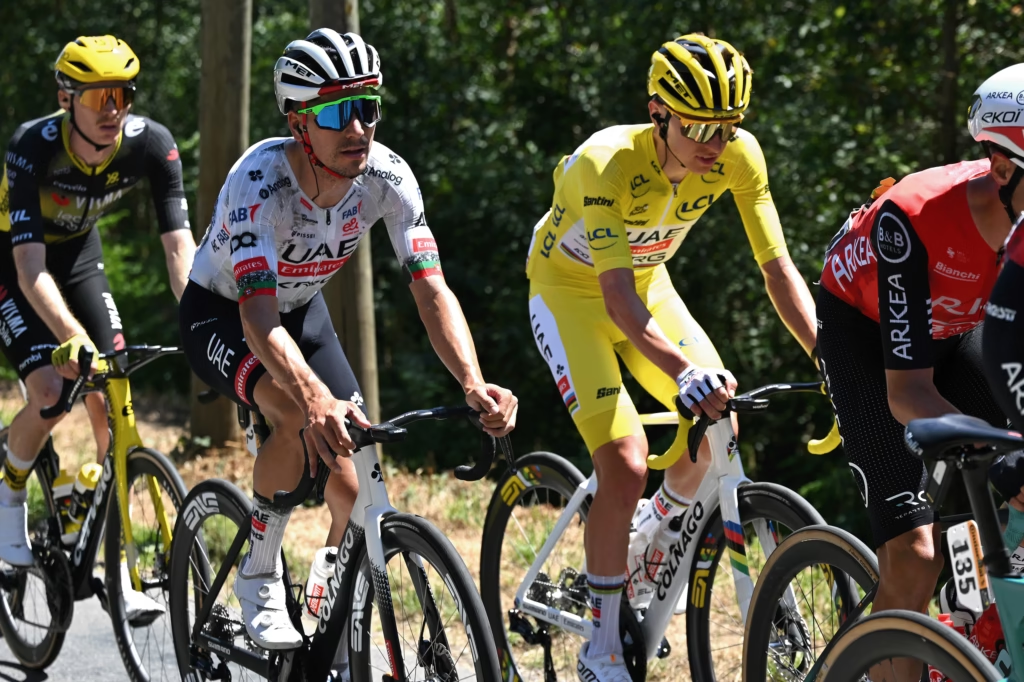
Domestique meaning at a glance
| Question | Answer |
|---|---|
| What is a domestique? | A rider who works for a team leader or team goal |
| What does domestique mean? | It comes from French and roughly means servant |
| Do domestiques try to win stages? | Usually not, unless given freedom on specific days |
| What do domestiques do? | Protect leaders, fetch bottles, chase breakaways, set pace and position teammates |
| Are domestiques weaker riders? | No. Many are elite specialists with huge endurance and tactical value |
| Do all teams have domestiques? | Yes, though their exact roles vary by team and stage |
| Can a domestique become a leader? | Yes. Some riders move between helper and leader roles depending on the race |
| Why do domestiques matter at the Tour? | They save energy for leaders and control the race around them |
What does a domestique actually do?
A domestique’s job changes constantly during a Tour de France stage. On television, the role can look simple: riding on the front, fetching bottles, or sitting next to a leader. In reality, it is a mix of physical work, tactical awareness and self-sacrifice.
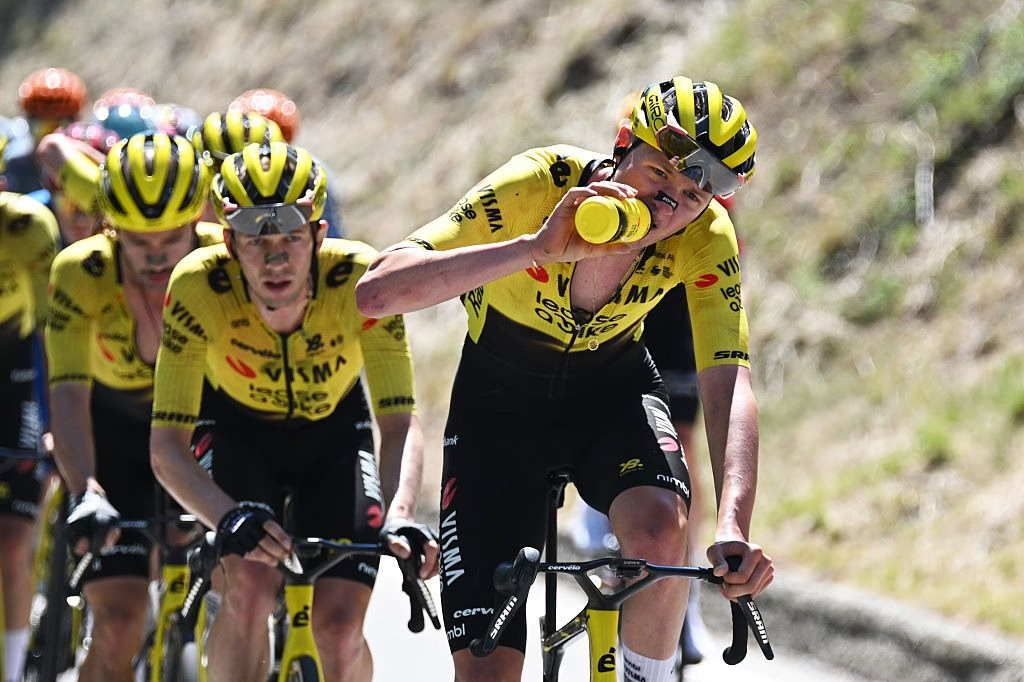
A domestique might drop back to the team car, collect bottles, gels and clothing, then ride back through the convoy to deliver them to teammates. They might ride into the wind for hours to shelter a leader. They might chase a dangerous breakaway. They might position a sprinter before a finish, control the pace on a climb, or wait after a leader punctures and help bring them back to the peloton.
The key point is that a domestique spends energy so the leader does not have to. That is the job in its simplest form.
At the Tour de France, energy is the most valuable currency. A rider trying to win the race cannot afford to waste effort in the wind, panic after every attack, fight alone for every position or chase every move personally. Domestiques absorb that work. They keep the leader fresh for the moments that matter.
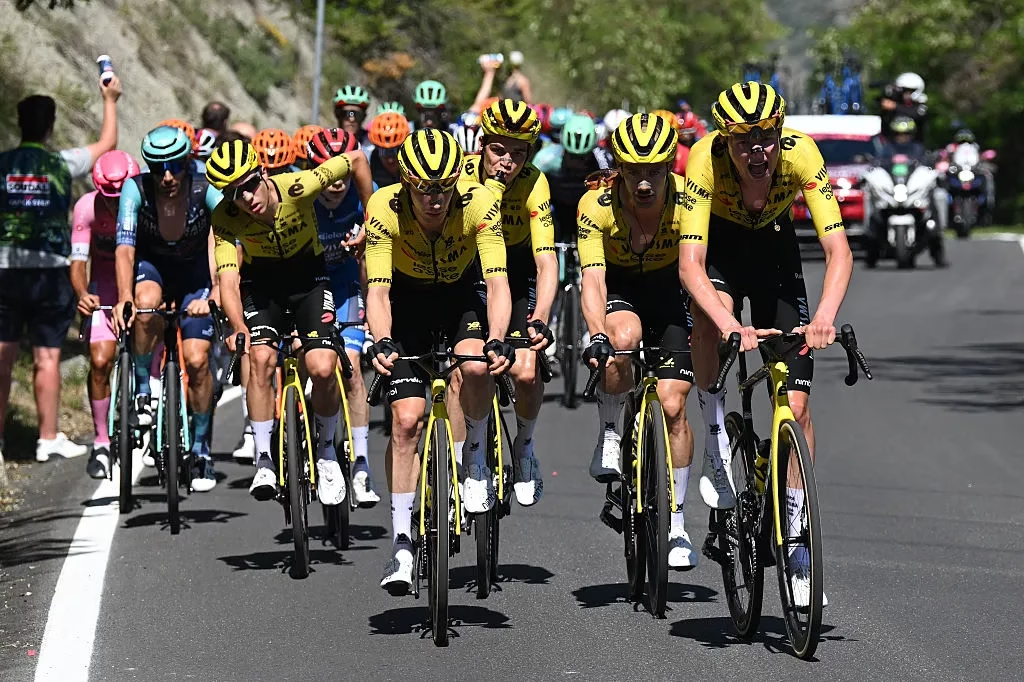
Why are domestiques so important at the Tour de France?
The Tour de France is three weeks long. It is not enough to be strong on the final climb. A leader must survive crosswinds, crashes, nervous sprint stages, bad weather, feed zones, long transfers, technical descents and repeated mountain blocks. Domestiques help turn that chaos into something manageable.
That is especially important in the 2026 Tour de France, which starts with a Barcelona team time-trial, then moves through hilly Catalan stages, the Pyrenees, Massif Central, Vosges, Jura and Alps. The route includes flat stages, hilly stages, mountain stages, summit finishes and two time-trials, meaning different domestiques will matter on different days. Our Tour de France 2026 full route guide explains the shape of the race in detail.
A leader can lose the Tour before the big mountains if the team does not protect him properly. A puncture at the wrong moment, poor positioning before a climb, being caught behind a crash, or wasting too much energy in the wind can all have consequences days later.
Domestiques reduce those risks. They make the race more predictable for their leader.
Different types of domestique
Not all domestiques do the same job. Teams select riders for specific tasks, and the Tour’s varied route means a strong squad needs several kinds of helpers.
| Type of domestique | Main job |
|---|---|
| Flat-road domestique | Protects leaders on flat stages, rides into the wind and controls breakaways |
| Mountain domestique | Sets pace on climbs and stays with the leader deep into hard stages |
| Lead-out rider | Guides a sprinter through the final kilometres |
| Road captain | Makes tactical decisions and organises the team on the road |
| Climbing support rider | Helps a GC leader before and during mountain stages |
| Rouleur | A powerful rider used for chasing, positioning and long efforts |
| Super-domestique | A top-level rider strong enough to win races but working for a leader |
The best Tour teams usually combine several of these roles. A GC leader needs mountain support, but also flat-road protection. A sprinter needs lead-out riders, but also teammates who can bring back breakaways. A team targeting stages needs riders who can control some days and attack on others.
That is why team selection is so important. Eight riders have to cover three weeks of work, and the full start list for Tour de France 2026 will reveal how each team has balanced leaders, climbers, rouleurs, lead-out riders and road captains.
Domestiques on flat stages
Flat stages might look like simple sprint days, but they are some of the most stressful days for domestiques. The pace can be high, the peloton crowded, and the risk of crashes constant.
On these stages, domestiques protect leaders from the wind and keep them near the front without exposing them too early. For GC teams, the goal is usually simple: finish safely, lose no time, and avoid crashes. That requires constant positioning work.
For sprint teams, domestiques have a different job. They may control the breakaway for most of the day, then form a lead-out train in the final kilometres. A lead-out rider is a specialised type of domestique whose job is to deliver the sprinter into the best possible position before the final sprint.
The best lead-out work is almost invisible until the finish. If a sprinter appears exactly where he needs to be with 200 metres to go, that is usually the result of several teammates spending the previous 10km fighting for position.
Our guide to the Tour de France 2026 route’s best days for sprinters shows where this kind of domestique work could be especially important.
Domestiques in the mountains
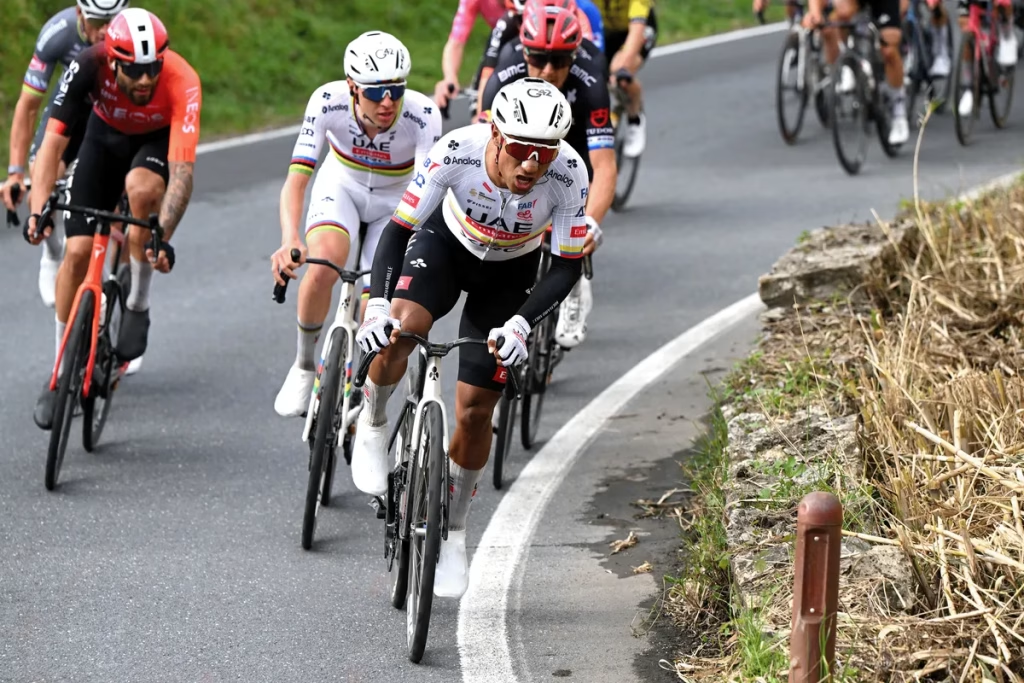
Mountain domestiques are some of the most valuable riders at the Tour de France. Their job is to stay with the leader deep into difficult climbs, control the pace, discourage attacks and help if something goes wrong.
A strong mountain domestique can transform a leader’s race. If a GC contender has teammates around him on the final climb, he can stay calmer. He does not need to chase every move himself. He can ask the team to set a pace that suits him. He can use teammates as a shield before launching his own attack.
If a leader is isolated too early, the race becomes much harder. Every acceleration becomes a personal decision. Every rival can test him. Every weakness is exposed.
That is why teams such as UAE Team Emirates-XRG, Visma-Lease a Bike, Red Bull-BORA-hansgrohe and Soudal Quick-Step invest so much in climbing support. The leader may get the headlines, but the mountain domestiques often decide how the stage is raced before the favourites attack.
The 2026 Tour includes major mountain blocks in the Pyrenees and Alps, plus difficult terrain through the Vosges and Jura. Our Tour de France 2026 mountain stages ranked by difficulty guide explains where mountain domestiques could be under the most pressure, while the Tour de France 2026 Pyrenees guide shows why the first mountain tests come early.
What is a super-domestique?
A super-domestique is a rider who is strong enough to win major races or lead teams elsewhere, but who works for another leader in a specific race. At the Tour de France, these riders can be decisive.
A super-domestique might be a Grand Tour contender in his own right, but use his strength to protect a stronger team leader. He might set a brutal pace on a climb, cover attacks, help after a crash, or stay with the leader until only a small group remains.
The role is powerful because it gives a team tactical depth. If a leader has a super-domestique still with him late in a mountain stage, rivals know that any attack may be chased by someone who is almost as strong as a team leader.
This is one reason modern super-teams can look so dominant. They are not only built around one star. They are built around several riders who could lead elsewhere but are prepared to work for a bigger goal.
Do domestiques ever win stages?
Yes, domestiques can win Tour de France stages, but usually only when they are given freedom. A rider may spend most of the race working for a leader, then get permission to join a breakaway on a stage that does not threaten the team’s main plan.
This is one of the most satisfying parts of the Tour. A rider who has spent days fetching bottles, chasing moves and riding himself empty may suddenly get a chance to race for himself. When that happens, the result often feels especially popular inside the peloton because everyone knows how much work domestiques do.
Some domestiques are also part-time leaders. A rider may work for the team in the mountains, but chase a stage win on a day when the GC battle is less intense. Others may begin as leaders, lose time, then become domestiques later in the race.
The Tour is fluid. Roles can change depending on form, crashes, time gaps and team priorities. That is why the Tour de France 2026 breakaway stages ranked guide matters: some of the best opportunities may go to riders who have spent other stages working for someone else.
What does a domestique do for a GC leader?
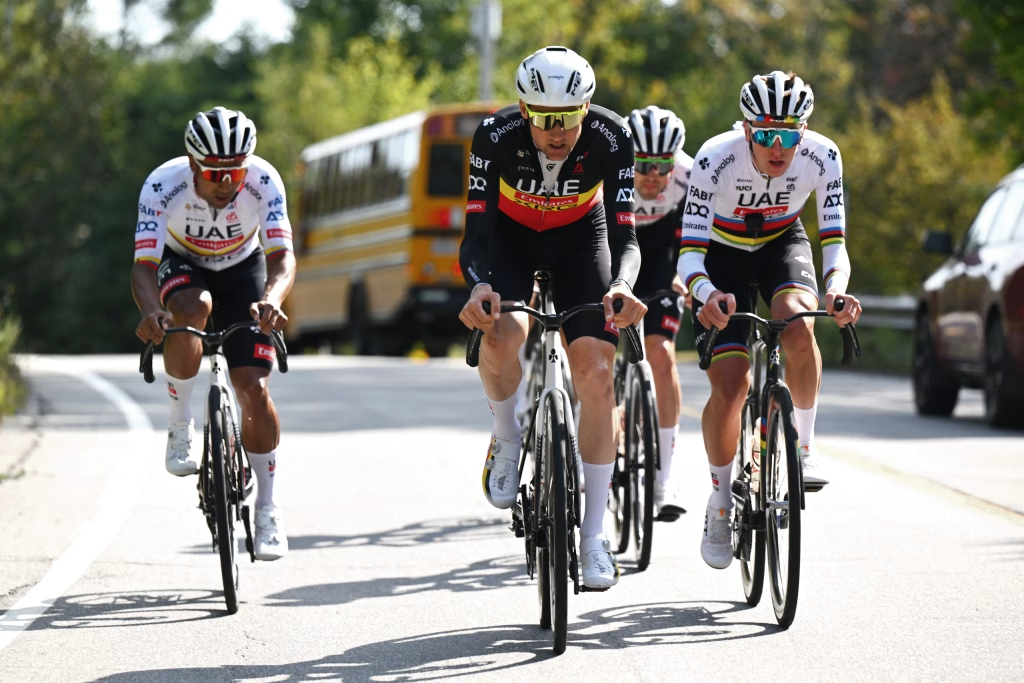
For a general classification leader, domestiques are essential. Their job is to help the leader lose as little energy and time as possible before the decisive moments.
That can include:
| Job | Why it matters |
|---|---|
| Riding in the wind | Saves the leader energy |
| Positioning before climbs | Keeps the leader out of trouble |
| Chasing attacks | Stops rivals gaining easy time |
| Setting mountain pace | Controls the rhythm of the stage |
| Fetching food and bottles | Prevents the leader wasting energy |
| Waiting after mechanical problems | Helps bring the leader back |
| Managing nervous stages | Reduces crash and time-loss risk |
A GC leader without domestiques becomes vulnerable. Even the strongest rider in the race can be weakened if isolated too often. The Tour is too long, too fast and too tactical to be managed alone.
Our Tour de France 2026 GC favourites ranked guide is also a guide to team strength in disguise. The strongest favourites usually have not only the best legs, but the best support.
What does a domestique do for a sprinter?
For a sprinter, domestiques are just as important, but the work is different. Sprint teams need riders who can control the breakaway, keep the sprinter protected through the day, then organise the final kilometres.
A sprint domestique may ride on the front for hours to keep the breakaway within reach. Later, lead-out riders take over. They guide the sprinter through roundabouts, corners, road furniture and fighting for position. In the final kilometre, each rider peels off after doing their effort, leaving the sprinter as close as possible to the front at the right moment.
A good lead-out can be the difference between winning and finishing 8th. At Tour speed, a sprinter who starts from the wrong position may never get back.
The green jersey battle also depends heavily on domestiques. Riders chasing points need help at intermediate sprints, stage finishes and difficult days where surviving in the front group matters. Our Tour de France 2026 green jersey guide explains how team support shapes that competition, while the Tour de France 2026 jerseys explained guide breaks down how the yellow, green, polka-dot and white jerseys work.
Why do domestiques fetch bottles?
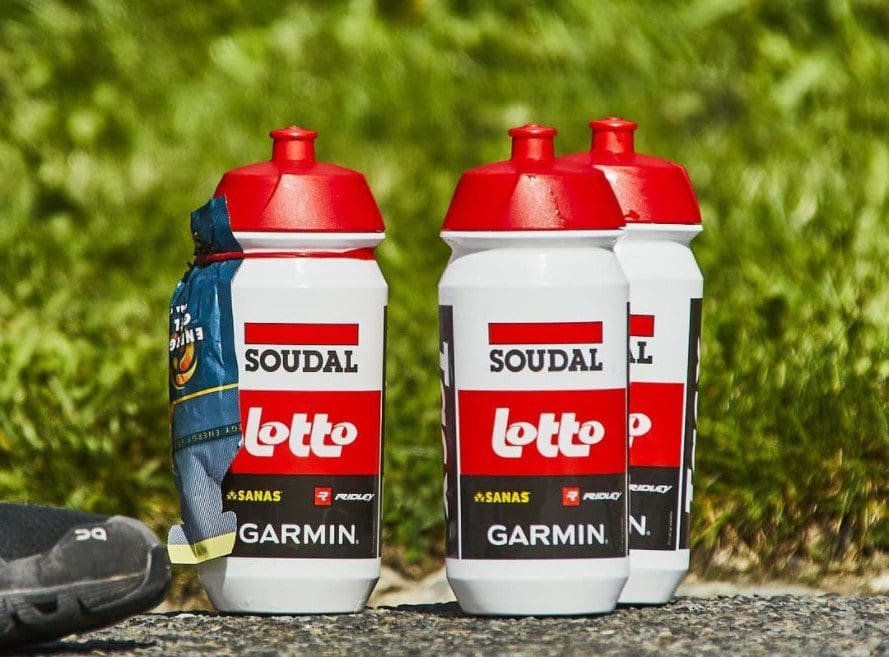
Fetching bottles is one of the most visible domestique tasks. Riders call it going back to the car. A domestique drops from the peloton to the team car, collects bottles, gels, food or clothing, stuffs them into jersey pockets, then rides back to the group to distribute them.
It looks simple, but it is hard work. Dropping back and returning to the peloton costs energy. Doing it on a fast stage, in crosswinds, or before a climb can be extremely demanding.
The reason leaders do not usually do this themselves is obvious: it wastes energy and risks poor positioning. A GC contender does not want to be caught behind a split because he was collecting bottles. A sprinter does not want to miss a key moment because he was at the team car.
Domestiques take that risk so the leader does not have to.
What is a road captain?
A road captain is an experienced rider who helps organise the team during the race. They may also be a domestique, but the role is more tactical than physical.
The road captain communicates with teammates, reads the mood of the race, helps decide when to chase, keeps riders calm, and acts as a link between the sports director in the team car and the riders in the peloton.
In the Tour de France, this matters because radio instructions are only part of racing. A rider inside the peloton can see and feel things a team car cannot. They know if the bunch is nervous, if the wind is dangerous, if a rival team is preparing an attack, or if a leader is badly positioned.
A good road captain can save a team from chaos.
Are domestiques paid less than leaders?
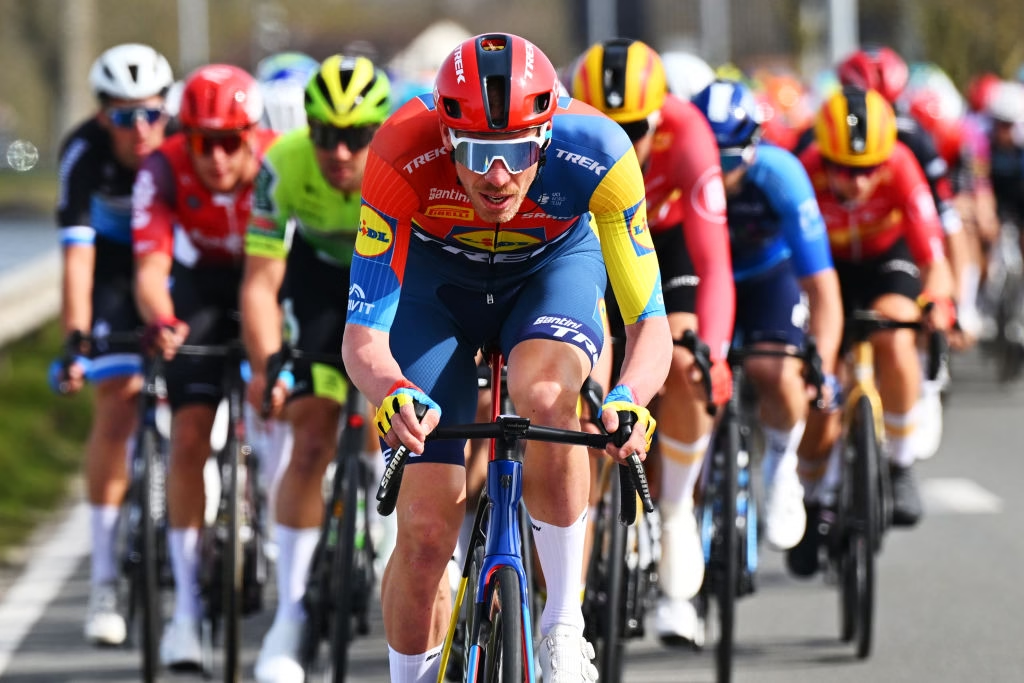
Generally, team leaders and major stars earn more than domestiques, but the best domestiques are still highly valued. A reliable Tour domestique can have a long and respected career because teams know how hard the role is to replace.
The strongest domestiques are not just strong riders. They are trustworthy. They understand sacrifice, positioning, team timing and how to read the race. A leader needs to know that when the team says “stay with him”, the domestique will still be there after hours of work.
Some domestiques become famous precisely because of their loyalty and reliability. They may not win many races, but within the sport they are recognised as essential.
Can a domestique refuse to work?
In theory, a rider can ignore team orders, but in practice cycling depends heavily on trust. A rider who refuses to work for the agreed team plan risks damaging his reputation and his future role within the team.
That does not mean domestiques have no ambition. Many want their own chances. The balance is managed before and during the race. A rider may work on some days and be given freedom on others. A team may promise breakaway opportunities in return for support in GC or sprint stages.
The best teams handle this balance clearly. Confusion creates tension. Clarity creates commitment.
Why domestiques are not just “helpers”
Calling domestiques helpers can make the role sound simple. It is not. The best domestiques are elite athletes performing specialised work at the highest level of the sport.
A rider setting pace on a mountain stage may be producing an effort that most professionals could not sustain. A rider controlling a breakaway on the flat may spend hours at the front. A lead-out rider may have to deliver a sprint at 60km/h through a chaotic finale. A road captain may be making tactical calls while physically exhausted.
Domestique work is not lesser racing. It is different racing.
That is why leaders often speak so strongly about their teammates. They know the result is shared, even if only one rider stands on the podium.
Famous domestique jobs during the Tour
The most obvious domestique work is not always the most important. Sometimes the decisive job happens 80km from the finish, when a rider keeps the leader out of trouble in crosswinds. Sometimes it happens on a climb before television viewers realise the final selection is forming. Sometimes it happens after a puncture, when a teammate drops back and burns all his energy to bring the leader back.
Examples of domestique work include:
| Situation | Domestique role |
|---|---|
| Leader punctures | Waits, gives wheel if needed, helps chase back |
| Breakaway gains too much time | Rides on front to reduce the gap |
| Crosswinds split the peloton | Keeps leader near the front |
| Sprint finish approaching | Forms lead-out train |
| Mountain stage becomes hard | Sets tempo to protect leader |
| Leader is isolated | Covers attacks and keeps rivals under control |
| Feed zone is chaotic | Collects and distributes food and bottles |
The Tour rewards the team that does these small things repeatedly. On the 2026 route, that will begin immediately in Barcelona, where the opening team time-trial creates a collective test before any road stage has even settled. Our Tour de France 2026 team time-trial explained article explains why that stage will be about both leaders and the riders around them.
How to spot domestiques while watching the Tour
Once you know what to look for, domestiques become much easier to recognise.
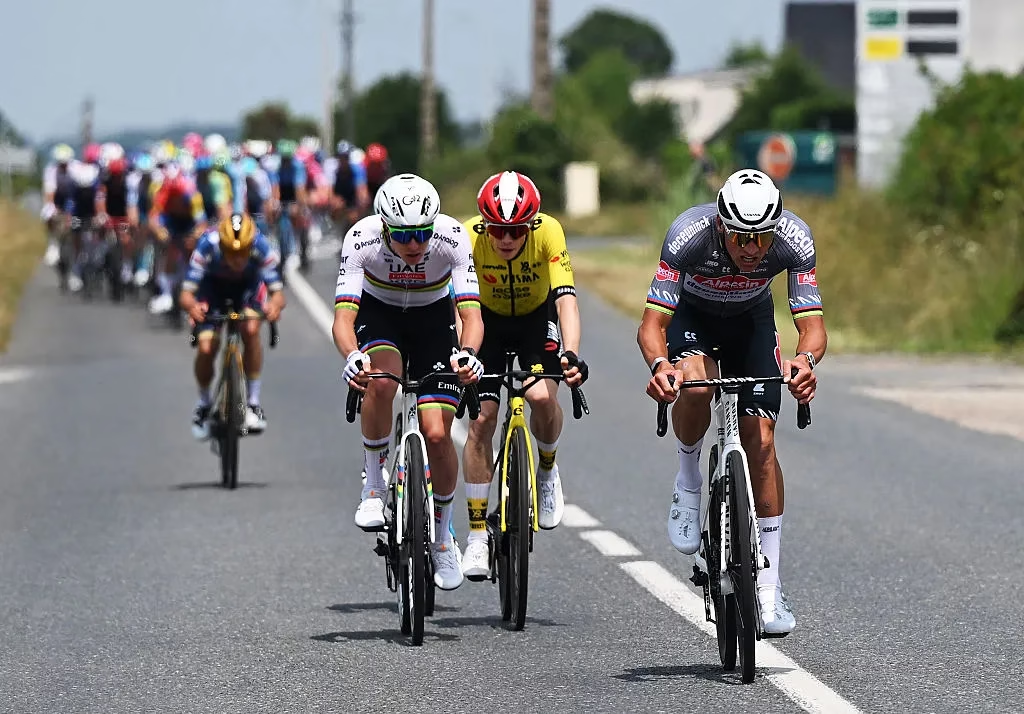
Watch the front of the peloton on flat stages. The riders doing long pulls are often domestiques controlling the race. Watch the riders dropping back to the team car and returning with bottles. Watch the lead-out trains forming in the final 10km of sprint stages. Watch mountain stages, where a teammate may set pace until he swings off, exhausted, leaving the leader to continue.
Also watch what happens after mechanicals or crashes. If a leader has a problem, a teammate may immediately wait. That rider’s personal race is effectively over for the day, but the team objective survives.
That is domestique work at its clearest: sacrifice in real time.
-
 Photo Credit: Getty

Domestique FAQ
What does domestique mean in cycling?
A domestique is a rider who works for a team leader or team objective rather than chasing personal success. The word comes from French and is usually translated as servant.
What does a domestique do at the Tour de France?
A domestique protects leaders, fetches bottles, chases breakaways, sets pace, helps after punctures, positions teammates and supports sprint or GC plans.
Can a domestique win a Tour de France stage?
Yes. Domestiques can win stages if they are given freedom, especially from breakaways. Some riders work for the team on some days and chase personal success on others.
Is a domestique a weaker rider?
No. Domestiques are elite professionals. Many are among the strongest riders in the race, but their job is to use that strength for a teammate.
What is a super-domestique?
A super-domestique is a very strong rider who could lead or win races elsewhere but works for a team leader in a specific race.
What is the difference between a domestique and a team leader?
A team leader is the rider the team is trying to help win a stage, jersey or overall classification. A domestique is a rider who sacrifices his own chances to support that goal.
Why do domestiques ride at the front?
They ride at the front to control the pace, chase breakaways, protect leaders from the wind, position teammates and make the race harder or safer depending on the team’s plan.
Why domestiques define the Tour de France
The Tour de France is remembered through winners, but it is built by domestiques. They are the riders who make the race function. They turn individual talent into team performance. They protect the leaders before the cameras focus on the favourites. They spend energy early so someone else can attack late.
Without domestiques, the Tour would be far more chaotic and far less tactical. Leaders would be isolated. Sprinters would be left to fight alone. Breakaways would be harder to control. Mountain stages would become less structured. The yellow jersey would still matter, but the race around it would be completely different.
That is why understanding domestiques changes how the Tour looks. The rider pulling on the front 100km from the finish may not win the stage, but he may decide who can. The rider collecting bottles may not appear in the highlights, but he may be preserving the energy that wins the Tour days later.
The domestique is not a background figure. At the Tour de France, he is part of the machinery that makes victory possible.
For more beginner-friendly race build-up, the Tour de France hub brings together route guides, jersey explainers, start-list coverage and rider analysis for the 2026 edition.

