
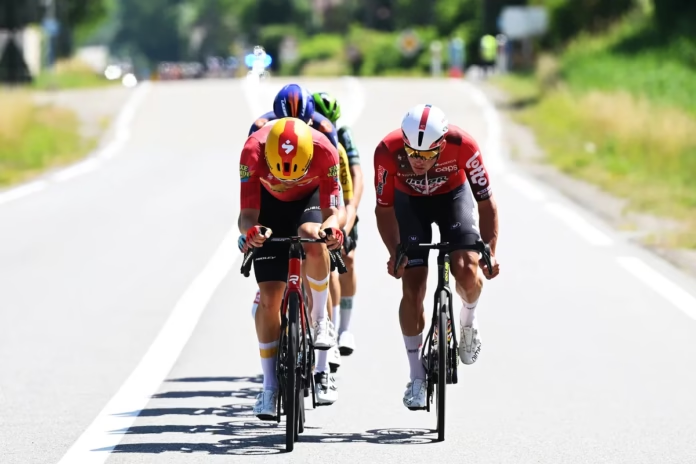
The Tour de France 2026 route has plenty for the yellow jersey contenders, but it also offers a rich set of opportunities for breakaway riders. The race includes 7 flat stages, 4 hilly stages and 8 mountain stages, with the route moving through the Pyrenees, Massif Central, Vosges, Jura and Alps before the final day in Paris.
Not every hard stage is automatically a breakaway day. Some mountain stages will be too important for the general classification, some flat stages will be too tempting for sprint teams, and some hilly days may depend heavily on the race situation. The best breakaway stages are usually the ones that sit between those categories: hard enough to discourage a sprint chase, but not always so decisive that the GC teams insist on controlling everything.
That is what makes the 2026 Tour so interesting. The early Pyrenean stages may be watched closely by the GC contenders, while the final Alpine weekend should be dominated by the yellow jersey battle. In between, there are several stages where the breakaway has a strong chance, especially around Foix, Ussel, Le Lioran, Belfort, Le Markstein, Chambéry and even the final Paris stage.
This ranking looks at the stages most likely to suit breakaway riders, based on terrain, position in the race, team incentives and how much control the peloton is likely to have. For the pure climbing context, see our Tour de France 2026 mountain stages ranked by difficulty, while the wider race-shaping picture is covered in our Tour de France 2026 route analysis.
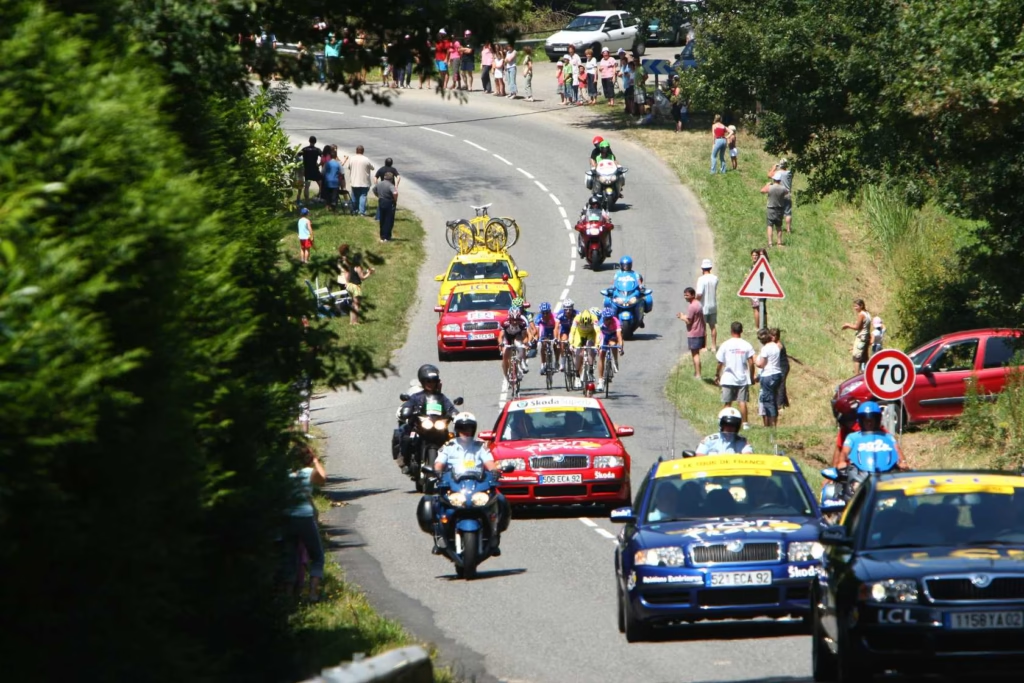
What makes a good Tour de France breakaway stage?
A good Tour de France breakaway stage usually needs three things: difficult terrain, uncertain motivation from the peloton, and enough tactical room for attackers to build a useful gap.
Flat stages can produce breakaways, but they rarely survive if the sprint teams are organised. High mountain stages can also go to breakaways, especially when the GC riders are watching each other, but the hardest summit finishes often bring the favourites back into the fight. Hilly stages and medium mountain stages are usually the best ground because they create selection without always demanding full GC control.
Race position matters too. A stage before a rest day can encourage attackers because riders know they can empty themselves. A stage after a rest day can be unpredictable because some teams restart slowly. A stage before a major GC day may be left to the break if the favourites want to save energy. A stage late in the Tour can also suit attackers from teams still searching for a win.
The 2026 route has several of these ingredients, especially in the second week. The Pyrenees come early, the Massif Central arrives after the first rest day, the Vosges and Jura form a difficult middle block, and the Alps bring both GC danger and breakaway opportunity depending on how close the yellow jersey battle remains.
1. Stage 13: Dole to Belfort
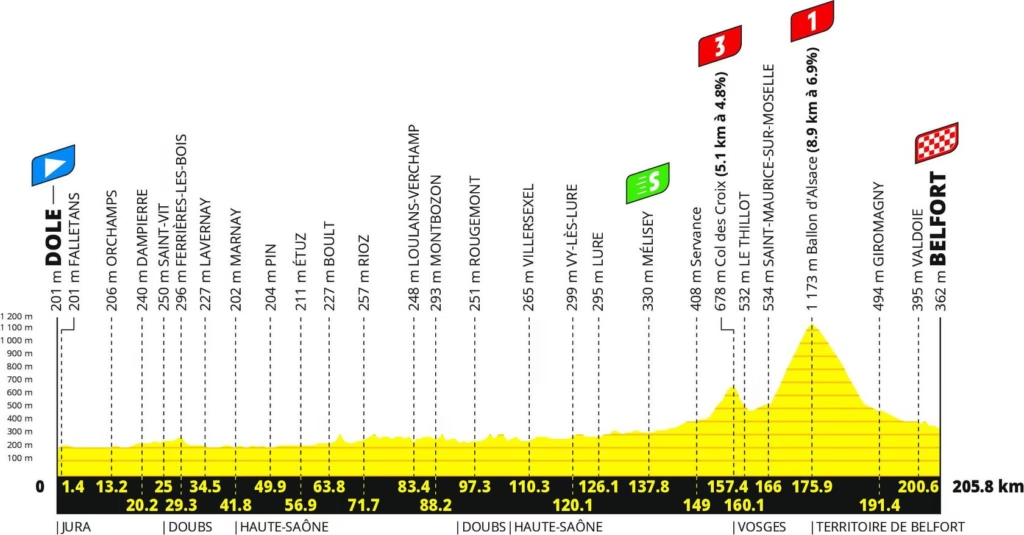
Stage 13 from Dole to Belfort looks like the best breakaway stage of the Tour de France 2026. It is officially a hilly stage rather than a mountain stage, but its 205.8km distance makes it difficult to control and its position in the race makes it tactically perfect for attackers.
This comes the day before the Vosges mountain stage to Le Markstein, so GC teams may prefer not to spend too much energy chasing. Sprint teams will find the route too awkward to control unless the profile proves easier than expected, while puncheurs and rouleurs will see a clear chance to go from distance.
The long distance is a major part of the appeal. Over 200km, a strong breakaway can build rhythm, divide the chasing responsibilities and make the peloton question whether the effort is worth it. If the group contains riders from several teams still without a stage win, it could be extremely difficult to bring back.
This is the sort of Tour stage where the breakaway can form early, settle into a strong advantage, then fracture late as the strongest riders begin attacking each other. It may not have the glamour of Alpe d’Huez or the Galibier, but for stage hunters, Belfort could be one of the most important finishes of the race.
2. Stage 10: Aurillac to Le Lioran
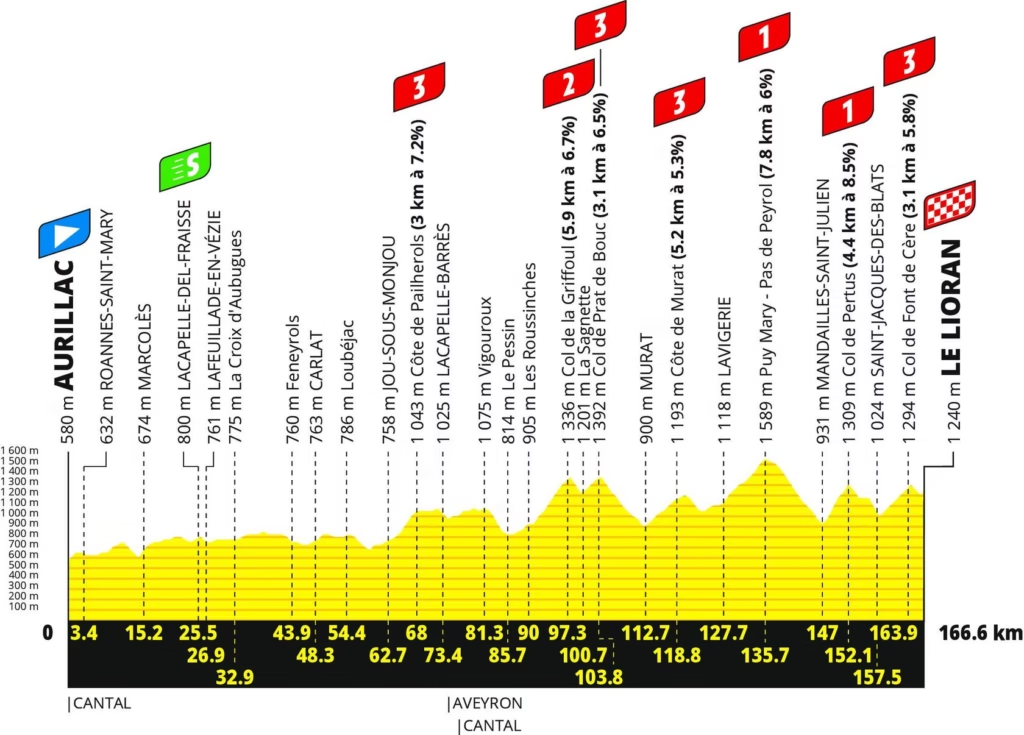
Stage 10 to Le Lioran is one of the most obvious breakaway opportunities on the route, even if the GC riders could also become involved. It is 166.6km long, comes immediately after the first rest day and includes repeated climbs through the Massif Central.
The terrain is ideal for a strong breakaway. The route includes the Côte de Pailherols, Col de la Griffoul, Col de Prat de Bouc, Côte de Murat, Puy Mary – Pas de Peyrol, Col de Pertus and Col de Font de Cère. None of those climbs has the same prestige as the Tourmalet, Galibier or Alpe d’Huez, but together they create a stage that is hard to control.
The rest-day placement adds another layer. Teams often restart cautiously, while riders outside the GC may see a chance to attack before the high mountain rhythm resumes. The repeated climbs also favour breakaway riders who can climb well, descend properly and handle changes of pace.
The only reason this is not ranked first is the possibility of GC movement. Le Lioran is difficult enough to tempt the favourites, especially if a team wants to test a rival after the rest day. Even so, the breakaway has a strong chance here because the stage is hard, irregular and not quite important enough for every GC team to control from start to finish.
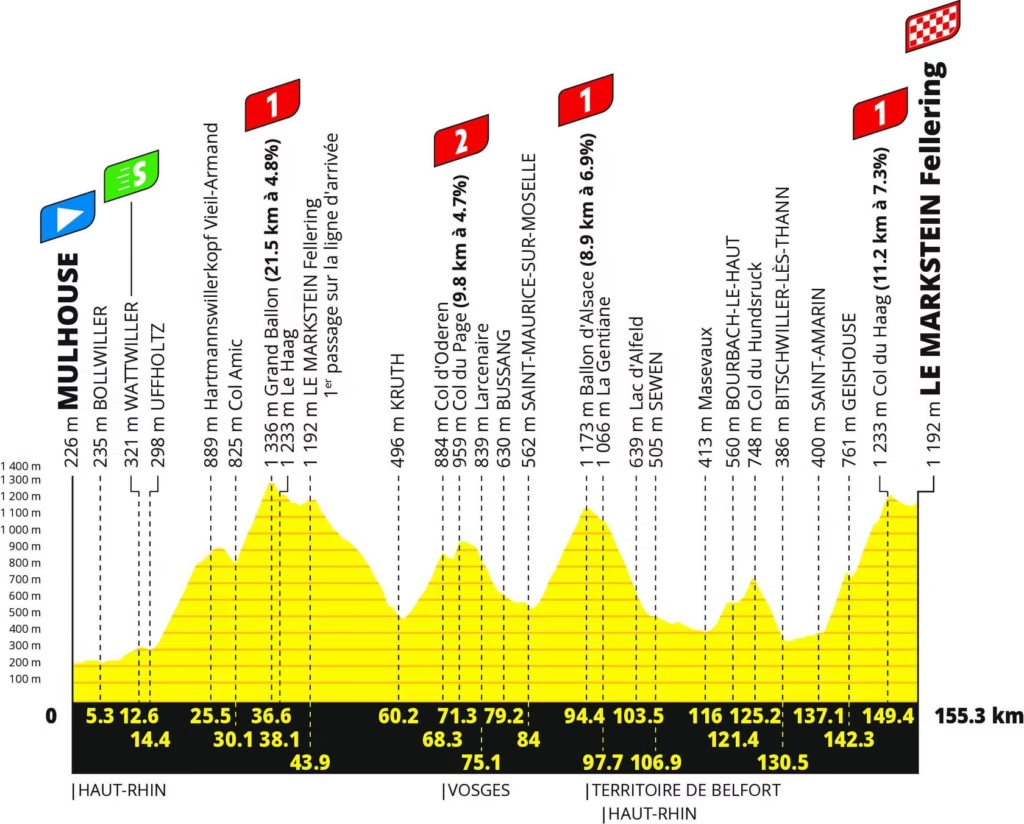
3. Stage 14: Mulhouse to Le Markstein Fellering
Stage 14 to Le Markstein Fellering is a mountain stage, but it has strong breakaway potential because it arrives in the Vosges and does not finish with a long classic summit climb in the style of Alpe d’Huez or Plateau de Solaison.
At 155.3km, with 3,800m of climbing, this is a serious day. The route includes the Grand Ballon, Col du Page, Ballon d’Alsace and Col du Haag before the finish at Le Markstein. The Col du Haag may be the key climb because it crests close to the finish and is new to the Tour.
The stage sits between the hilly day to Belfort and the major summit finish at Plateau de Solaison. That makes it tactically awkward. GC teams may want to keep control, but they may also be reluctant to spend everything before stage 15. If the yellow jersey group is cautious, a strong climbing breakaway could get its chance.
This is a stage for breakaway riders who can handle real mountain terrain rather than just rolling hills. It suits climbers who are far enough down on GC to be allowed freedom, as well as puncheurs with the endurance to survive the Grand Ballon and the final Vosges climbs.
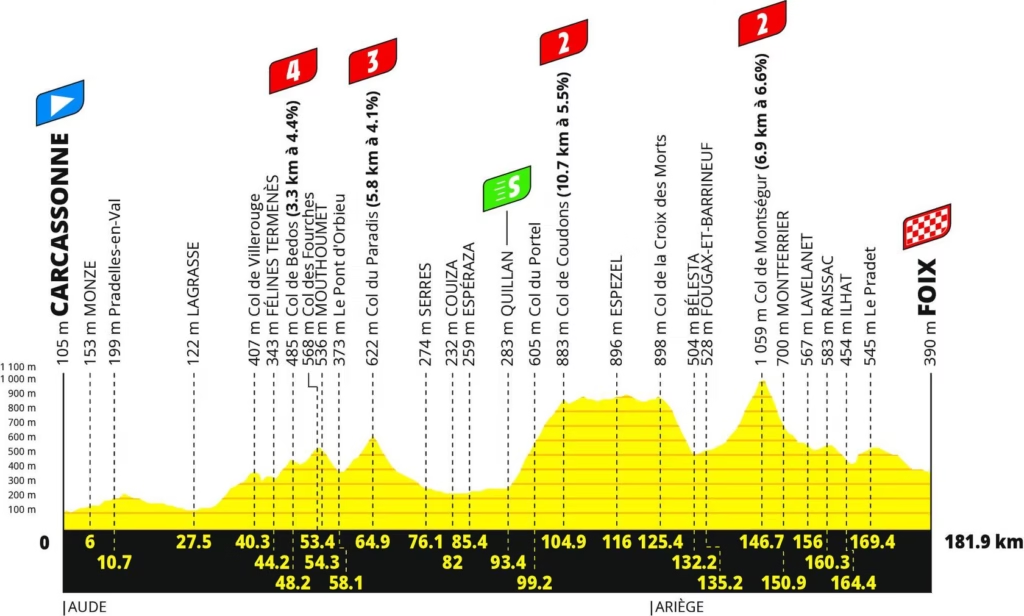
4. Stage 4: Carcassonne to Foix
Stage 4 from Carcassonne to Foix is one of the earliest real breakaway opportunities. It comes after the team time trial, the Barcelona hilly stage and the first mountain stage to Les Angles, which means the race may already have a loose hierarchy but not yet a settled rhythm.
Foix is often a finish that invites attacking racing. The roads around the Ariège are well suited to breakaways because the terrain can be hard without always demanding a full GC showdown. This stage is officially hilly, not a major mountain day, and that distinction matters. Sprint teams will not see it as an easy chase, while GC teams may not want to make it a full-on battle so early.
The timing is the key reason it ranks highly. The favourites will already have had an early climbing test on stage 3, but the race will still be in its first week. Teams may be willing to allow a non-threatening group to go, especially if the break contains riders who lost time in the opening days.
This could be one of the first stages where the Tour opens up beyond the GC and sprint storylines. It is an ideal stage for teams who missed out in Barcelona or at Les Angles to try to put a rider into the move and chase a valuable early win.
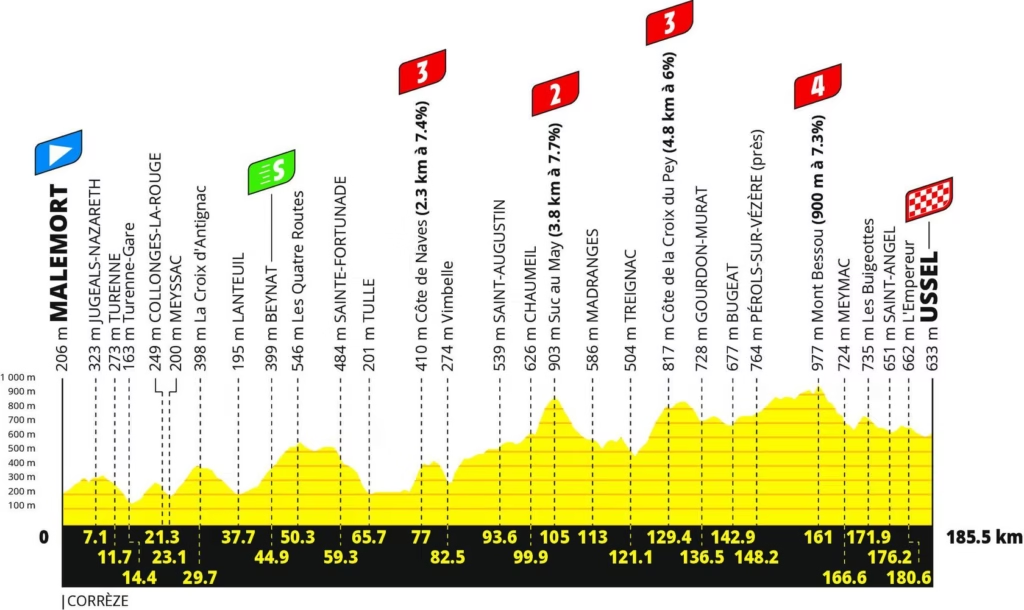
5. Stage 9: Malemort to Ussel
Stage 9 from Malemort to Ussel is another strong breakaway candidate. It is a hilly stage, 185.5km long, and comes immediately before the first rest day. That placement is almost always useful for attackers because riders know they can spend energy before a day off.
The route should suit a breakaway made up of strong rouleurs, classics-style riders and punchy climbers. It is unlikely to be straightforward enough for pure sprinters, but it may not be hard enough for the GC teams to make it a major objective. That middle ground is often where breakaways thrive.
The final day before the rest day can also change team incentives. Sprint teams may hesitate if the terrain is difficult. GC teams may want a quieter day before the Massif Central stage to Le Lioran. Teams without a win may feel stage 9 is their best chance before the race becomes more mountainous.
Ussel could therefore become a classic Tour breakaway finish: a large early group, several teams represented, attacks over the late hills and a reduced contest at the finish. It may not be the hardest stage, but it has the right ingredients.
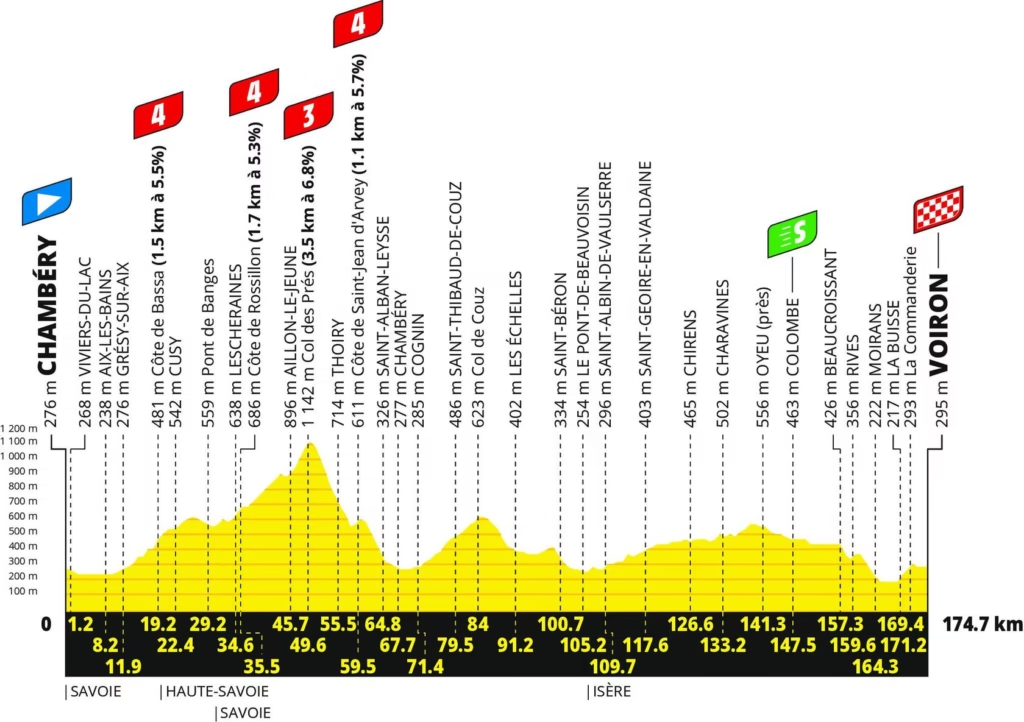
6. Stage 17: Chambéry to Voiron
Stage 17 from Chambéry to Voiron is officially a flat stage, but its position in the race makes it more interesting than a standard sprint day. It comes after the stage 16 individual time trial and before the final Alpine block to Orcières-Merlette and back-to-back Alpe d’Huez finishes.
On paper, the sprint teams will see this as one of their last chances. In practice, the stage could still be vulnerable to a breakaway if the peloton is tired, if sprint teams have lost riders, or if GC teams are focused on conserving energy for the Alps. For the wider sprint context, see our Tour de France 2026 sprint stages ranked.
The route covers 174.7km and should attract riders who know they may not get another realistic opportunity. By this point in the Tour, many teams will already have lost their first-choice plans. Some will be chasing stage wins because GC hopes have faded. Others will want to place riders up the road to avoid doing work later.
This is not the most obvious breakaway stage, but late-Tour fatigue can change everything. If the sprint teams are still strong, it may be a bunch finish. If they are weakened or hesitant before the Alps, stage 17 could become a very difficult chase.
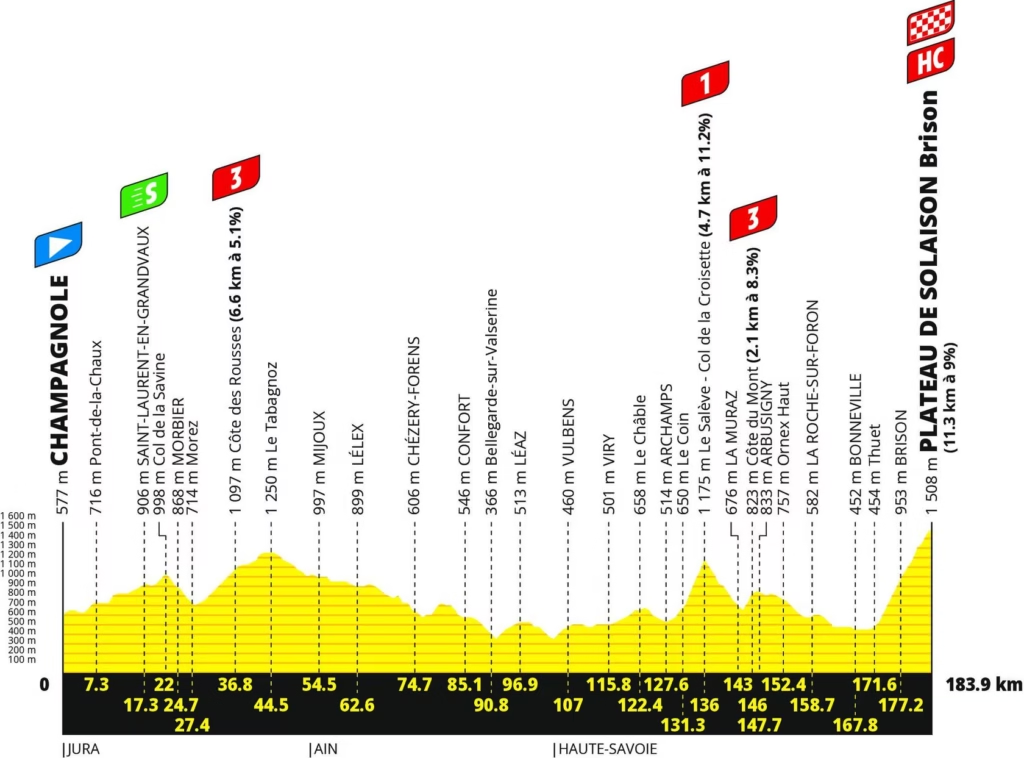
7. Stage 15: Champagnole to Plateau de Solaison
Stage 15 to Plateau de Solaison is one of the hardest mountain stages of the race, and that makes it complicated for breakaway prediction. It is a major GC day, but it also comes on the eve of the second rest day, which can encourage riders to go all-in from distance.
The stage is 183.9km long and finishes on Plateau de Solaison, a new Tour climb of 11.3km at around 9 per cent. Before that, the route includes tough terrain through the Jura and Haute-Savoie, including Le Salève – Col de la Croisette, which is steep enough to shred the race before the final climb.
If the GC battle is tight, the favourites may control the stage and fight for the win themselves. But if a strong climbing breakaway gets enough time, it could still survive because the stage is so hard to manage. The yellow jersey team may not want to chase all day before a brutal final climb.
This stage is better suited to climbers than opportunists. A successful breakaway rider here would need to be strong enough to survive real GC-level terrain and still have something left for Plateau de Solaison. It is not the safest breakaway pick, but it has a high ceiling.
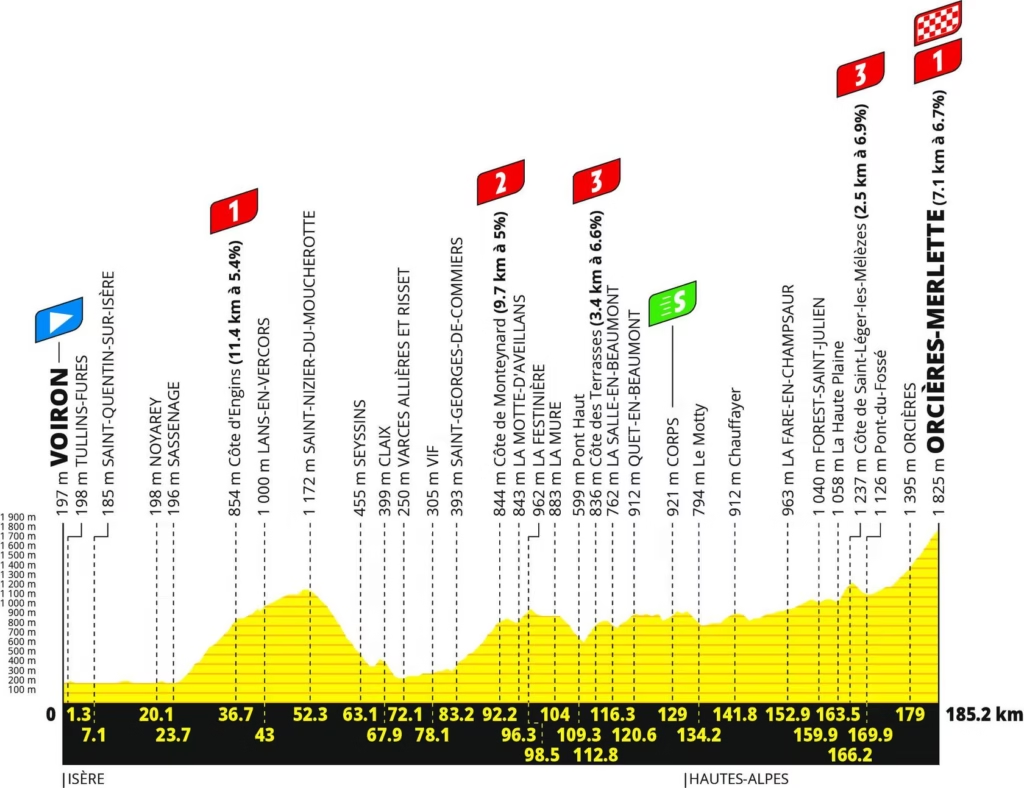
8. Stage 18: Voiron to Orcières-Merlette
Stage 18 to Orcières-Merlette begins the final Alpine block. It is 185.2km long, with several climbs before the final ascent to the ski station. It is clearly a mountain stage, but it is not as severe as stage 20, which gives it some breakaway appeal.
The stage comes after the individual time trial and the transitional day to Voiron. GC teams may be more interested in managing the first Alpine day than chasing a breakaway all afternoon, especially with Alpe d’Huez waiting on stages 19 and 20.
The final climb to Orcières-Merlette is hard enough for the GC riders to test each other, but not necessarily hard enough to guarantee a full general classification battle from distance. That opens the door for a strong break if it contains climbers who are not a threat overall.
The problem for the breakaway is timing. If the time trial has shaken up the GC, stage 18 could become a launchpad for riders who need to recover time. If the race is close, the favourites may pull the break back on the final climb. If the GC is more settled, this becomes a much better breakaway chance.
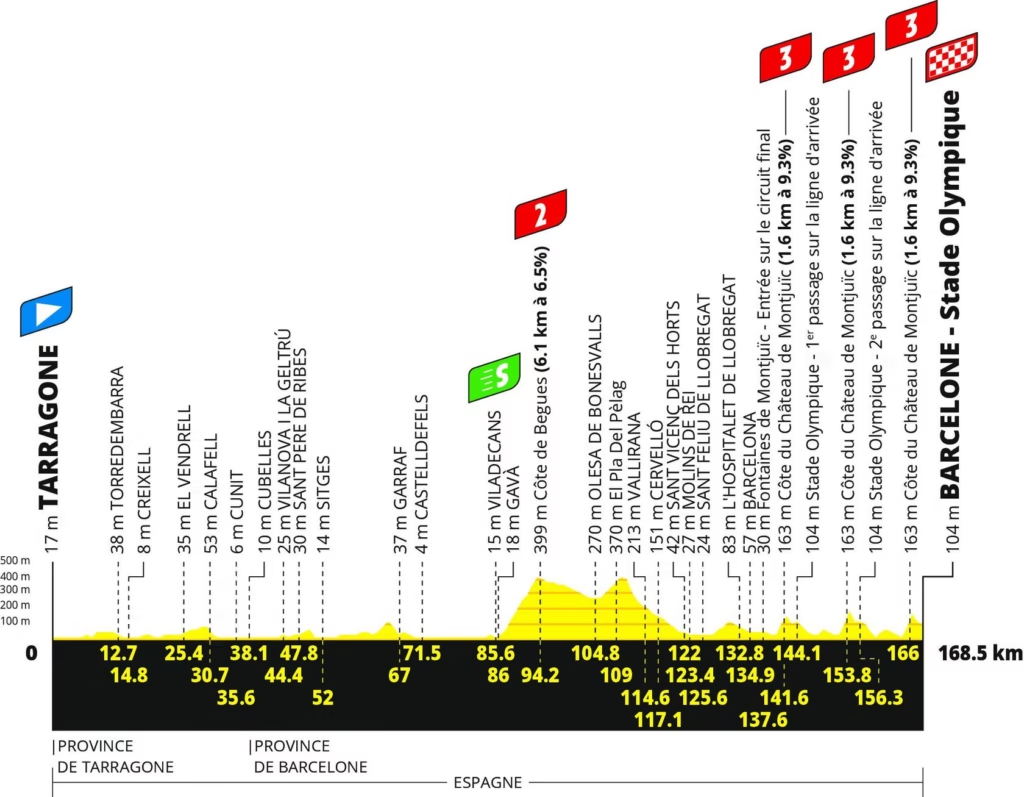
9. Stage 2: Tarragona to Barcelona
Stage 2 from Tarragona to Barcelona is a hilly stage and a tempting early breakaway opportunity, but the context makes it difficult. It comes on the second day of the race, after the Barcelona team time trial, when almost every team is still fresh and motivated.
The route should encourage attacks because it is not a simple flat stage. Barcelona offers urban tension, climbing and positioning stress, and the Côte de Begues is one of the new climbs on the 2026 route. That gives attackers something to work with, especially if the stage becomes harder to control than expected. The opening weekend is covered in more detail in our Tour de France 2026 Grand Départ guide.
The issue is that early Tour stages are usually heavily managed. Teams with sprinters, puncheurs and GC leaders will all want position. The yellow jersey situation will still be fresh, and many teams will be unwilling to let a strong group disappear so early.
This could be an entertaining attacking stage, but the breakaway may need chaos rather than pure strength to survive. It is more likely to produce late moves, splits or a reduced sprint than a classic all-day breakaway win.
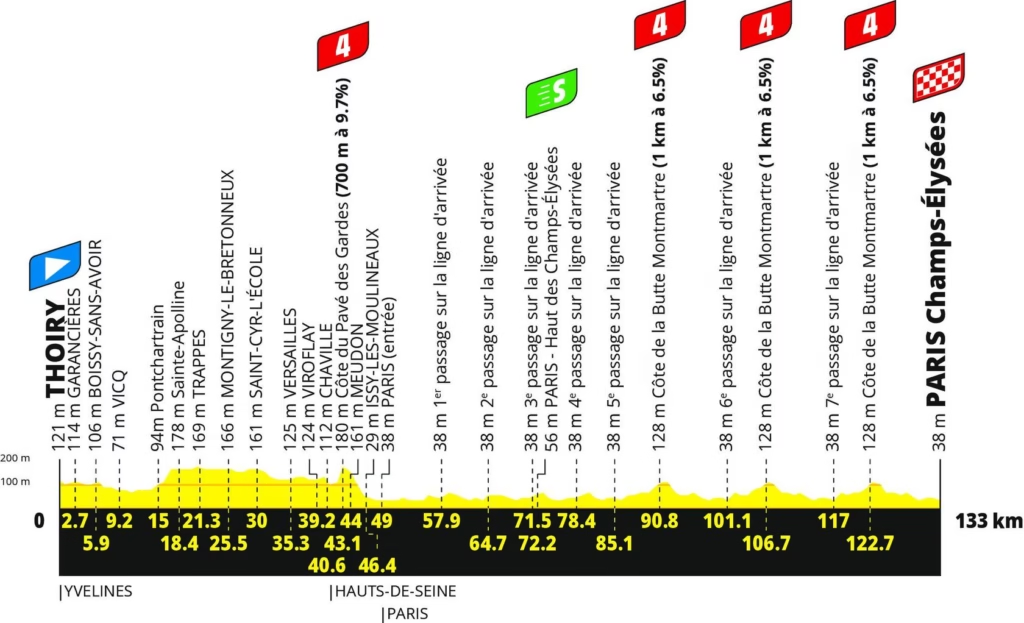
10. Stage 21: Thoiry to Paris Champs-Élysées
Stage 21 is listed as a flat stage, but the 2026 Paris finish is more interesting than the usual final-day procession. The route includes the Paris Champs-Élysées finish and the Montmartre climb, giving attackers more to work with than they would have on a traditional ceremonial sprint stage.
That said, it remains a difficult stage for a breakaway to win. The final day of the Tour is one of the most prestigious sprint opportunities in cycling, and the fast teams will be desperate to control it if they still have their sprinters. Even with Montmartre in the route, the stage may still come back together if enough sprint teams are committed.
The reason it makes this ranking is the altered finale. Repeated climbing in Paris changes the texture of the stage and gives punchy attackers at least a route into the conversation. If the sprinters’ teams are tired, depleted or caught out by the climb, a late move could become dangerous.
It is not a classic breakaway day, but it is not a completely predictable parade either. That makes stage 21 worth watching beyond the usual champagne images and final sprint build-up.
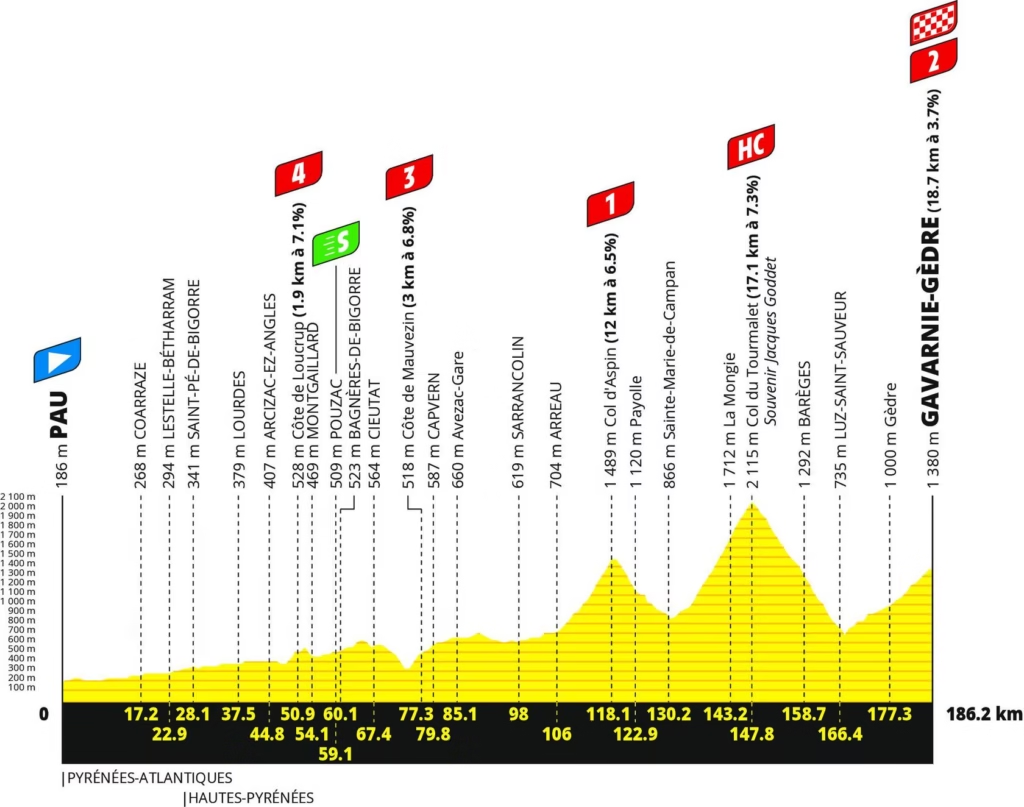
11. Stage 6: Pau to Gavarnie-Gèdre
Stage 6 to Gavarnie-Gèdre is the first major mountain finish of the Tour and has some breakaway potential, but the GC stakes are high enough to make it difficult. The stage includes the Col d’Aspin, Col du Tourmalet and the final climb to Gavarnie-Gèdre, which means the yellow jersey contenders will be alert throughout.
Breakaways often like early mountain stages because the GC teams do not always want to take full responsibility. The problem here is that stage 6 arrives early enough to define the first week. Any team with a serious overall contender will want to avoid giving away too much time or allowing a dangerous rider up the road.
The final climb is not as steep as Plateau de Solaison or Alpe d’Huez, but it comes after the Tourmalet. That makes it a genuine GC test. The early yellow jersey picture, and the wider race for the overall, is covered in our Tour de France 2026 GC favourites ranked.
The most likely successful move would be a strong climbing break made up of riders already out of GC contention. Even then, it may need a generous gap before the Tourmalet and a cautious yellow jersey group behind.
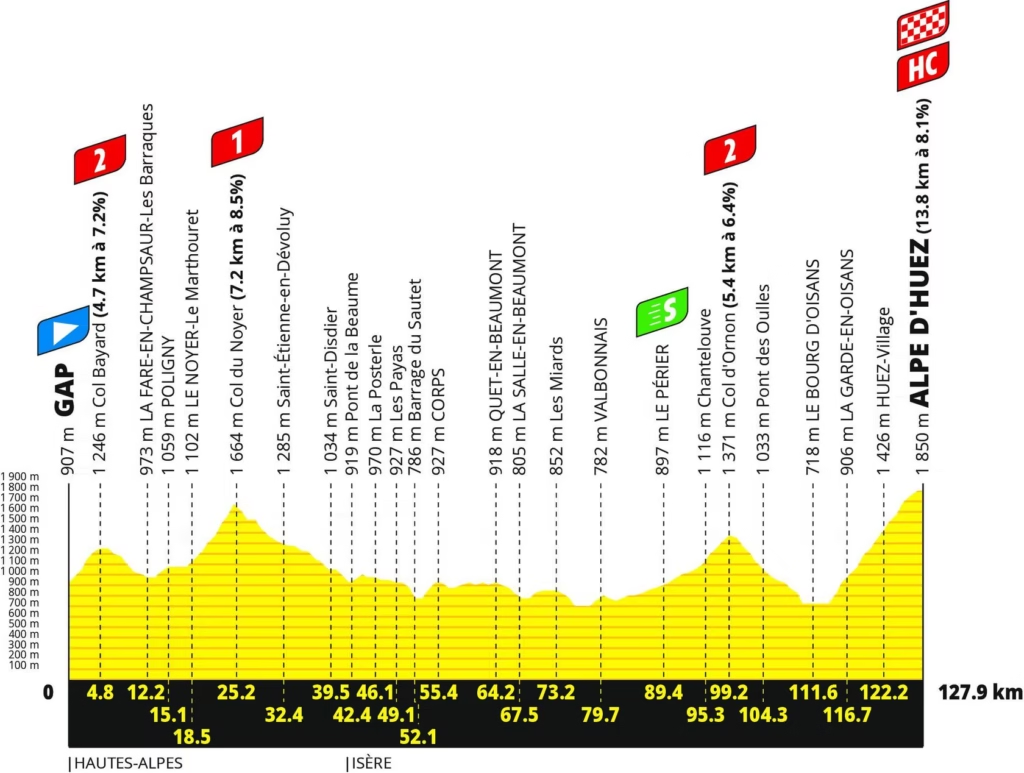
12. Stage 19: Gap to Alpe d’Huez
Stage 19 to Alpe d’Huez is short, sharp and spectacular, but it is less suited to a breakaway than several earlier stages. At 127.9km, it could be raced aggressively from the start, yet the finish on Alpe d’Huez will almost certainly attract the GC favourites.
The stage includes the Col Bayard, Col du Noyer, Col d’Ornon and the final climb to Alpe d’Huez. Those climbs can help form a strong breakaway, but the short distance makes it harder for attackers to build a large advantage. GC teams may also want to control the race because this is the first of the two Alpe d’Huez finishes.
A breakaway could still win if the yellow jersey battle becomes cagey and the right group goes early. But the final climb is too famous and too important to assume the favourites will let the stage go easily. The significance of the double Alpe d’Huez finish is covered in our feature on why back-to-back Alpe d’Huez finishes could define the Tour de France 2026.
This is more likely to be a GC day with breakaway riders acting as satellite options, rather than a pure breakaway stage.
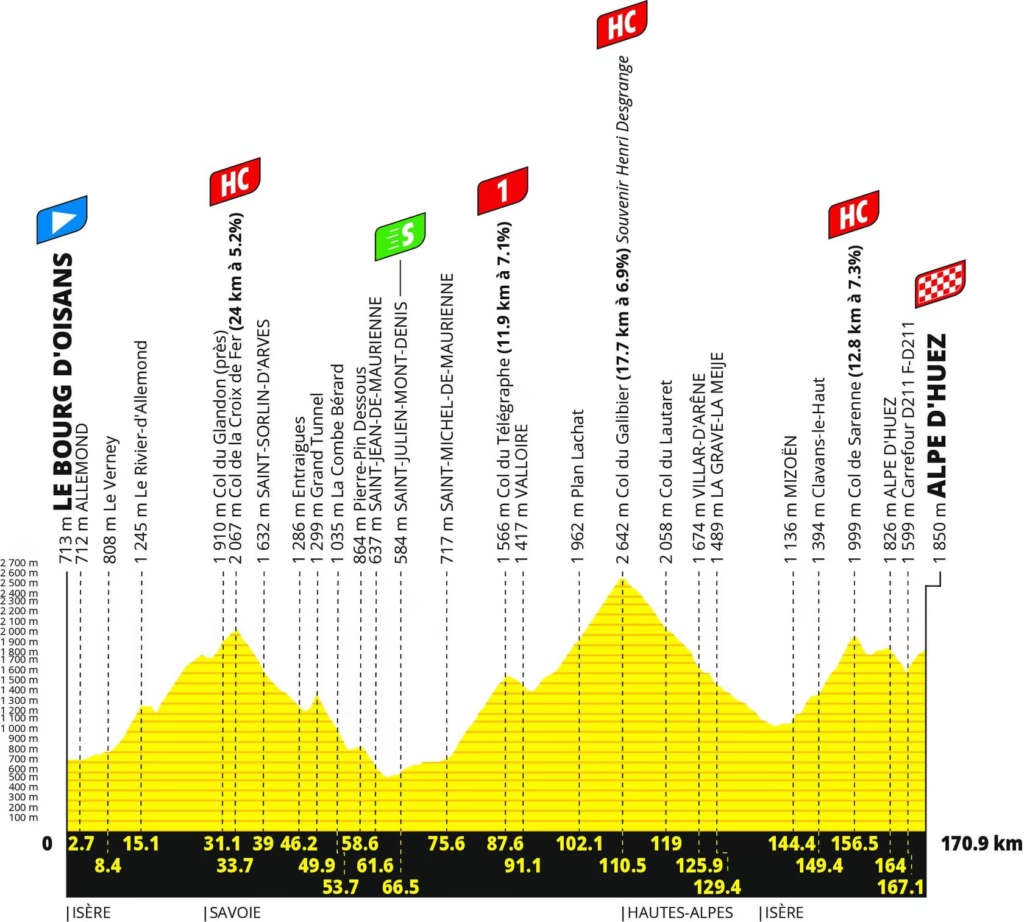
13. Stage 20: Le Bourg d’Oisans to Alpe d’Huez
Stage 20 is the Tour de France 2026 queen stage, and it can technically go to a breakaway. In practice, the yellow jersey battle should dominate.
The route over the Croix de Fer, Télégraphe, Galibier, Sarenne and Alpe d’Huez is huge. At 170.9km, with the highest point of the race on the Galibier and a final summit finish on Alpe d’Huez, this is the stage where GC teams will have the most reason to race all day.
A breakaway may go early on the Croix de Fer, and it may contain important satellite riders. It may even take mountain points on the Galibier or Sarenne. But for the stage win, the favourites should have a major say unless the GC is already settled.
This is a brilliant stage for attacking, but not necessarily the best stage for a breakaway to stay clear. The difference matters. Stage 20 will almost certainly be aggressive. It is just more likely to be aggressive because of the yellow jersey than because of stage hunters.
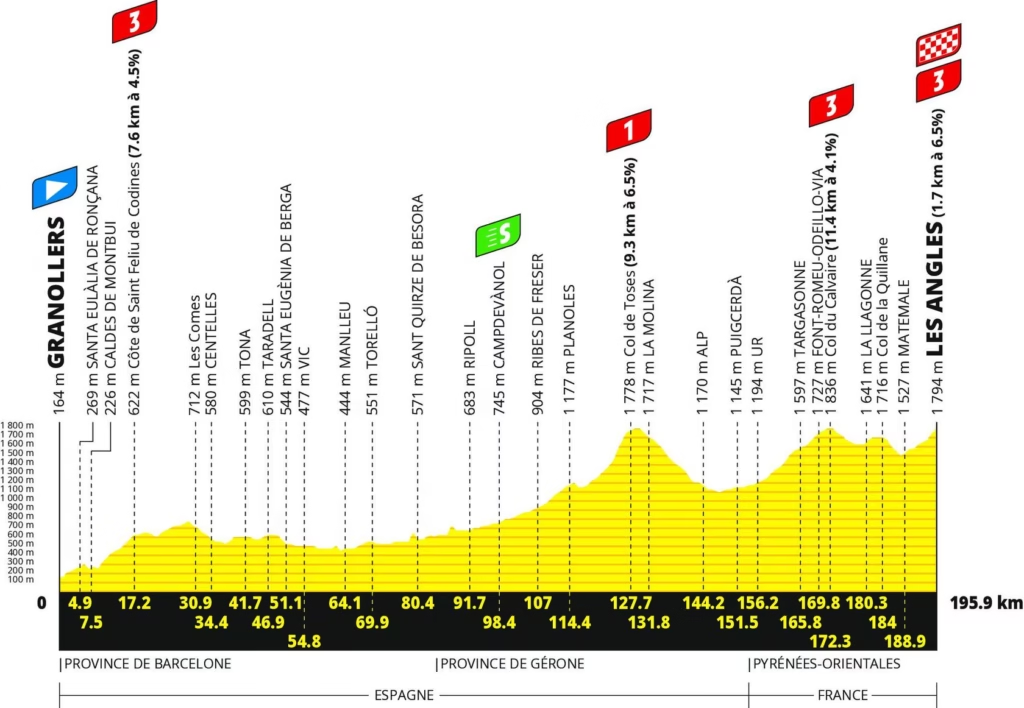
14. Stage 3: Granollers to Les Angles
Stage 3 to Les Angles is the first mountain stage of the Tour, which gives it some breakaway appeal. The route includes the Col de Toses, Col du Calvaire and the final kick to Les Angles, with 195.9km of racing and plenty of climbing.
The issue is timing. Because this is the first real mountain test, the GC teams will be very attentive. The team time trial will have already created early gaps, and any leader who has lost time may want to test the race. The yellow jersey team will also be motivated to defend.
A breakaway can still form, but it may be hard to get enough freedom. The peloton will still be fresh, sprint teams will not yet be exhausted, and GC teams will be nervous rather than passive.
This may be a stage where the breakaway shapes the day without necessarily winning it. Early attackers can collect mountain points, force chasing and set the tone, but the final climb may still bring the main contenders back into the frame.
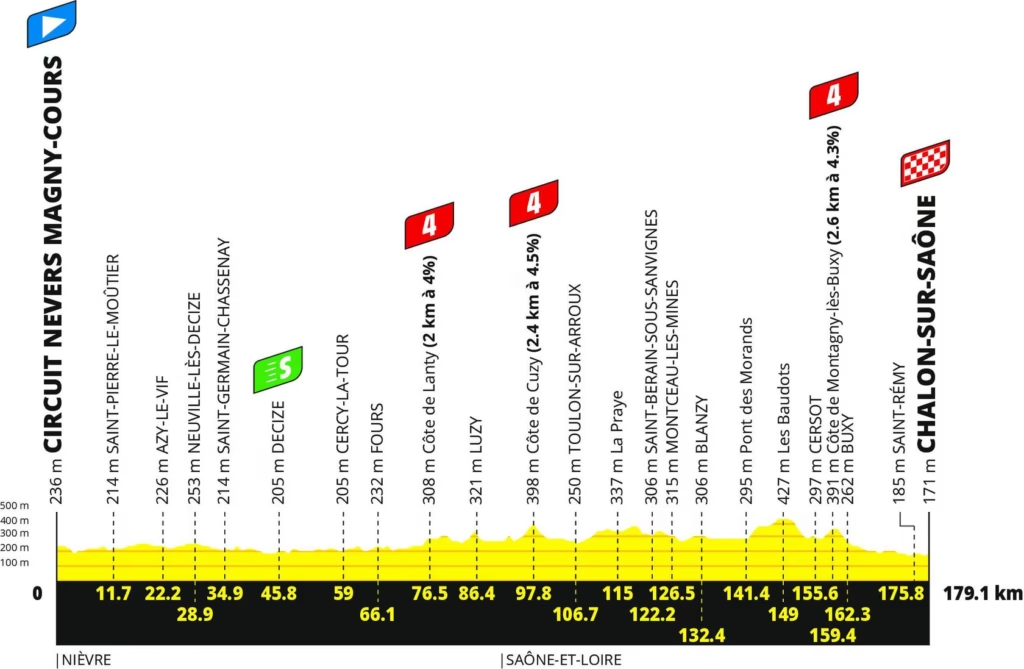
15. Stage 12: Circuit Nevers Magny-Cours to Chalon-sur-Saône
Stage 12 is officially flat, which usually pushes it towards the sprint teams. At 179.1km, it gives attackers time to build a gap, but the profile is unlikely to scare enough fast teams out of chasing.
The stage comes after another flat day to Nevers and before the hilly stage to Belfort. That position does not help the breakaway much. Sprinters’ teams will know that the following days become more difficult, so they may see this as an important opportunity.
The start at Circuit Nevers Magny-Cours gives the stage a distinctive setting, but the likely race pattern should still be controlled. A small breakaway may go early, gain a manageable advantage and then be brought back before the finish.
It only rises above the pure sprint days because Tour flat stages late in the second week can become unpredictable if teams are tired or short of helpers. Even so, this is a long shot for the break.
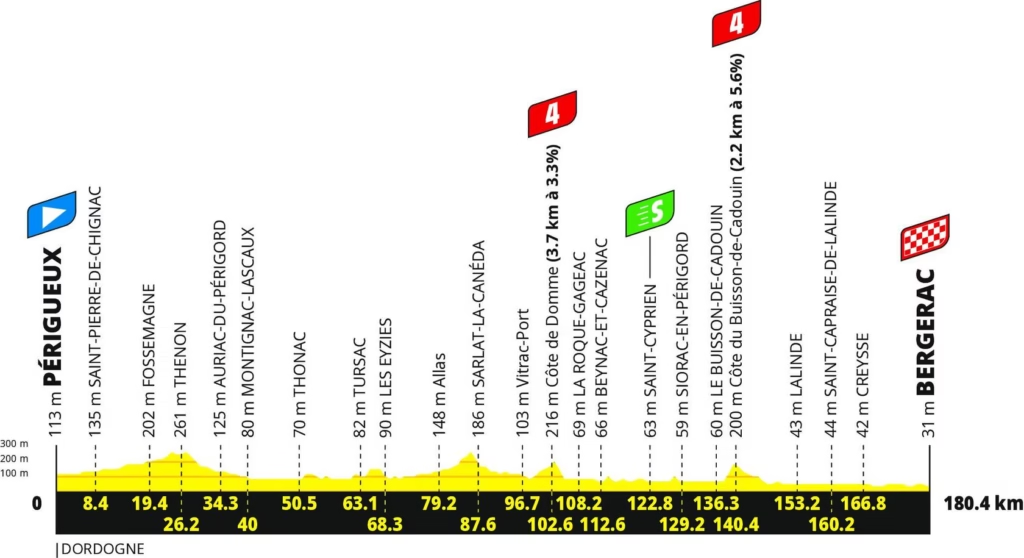
16. Stage 8: Périgueux to Bergerac
Stage 8 from Périgueux to Bergerac is a flat stage and should be one of the clearest sprint opportunities of the first half of the race. The route is 180.4km, and although the Dordogne roads can sometimes be rolling or exposed, the stage should interest the fast teams.
The breakaway’s best hope would be hesitation from sprint teams after the early Pyrenean block. Stage 6 to Gavarnie-Gèdre will have taken some energy from the peloton, and stage 9 to Ussel comes the next day. But that is unlikely to be enough to make stage 8 a serious breakaway target.
Sprinters do not get unlimited chances in the 2026 Tour, so stages like Bergerac will be chased hard. Unless weather, crosswinds or crashes change the picture, this should be a day where the breakaway spends most of the afternoon on television before being caught.
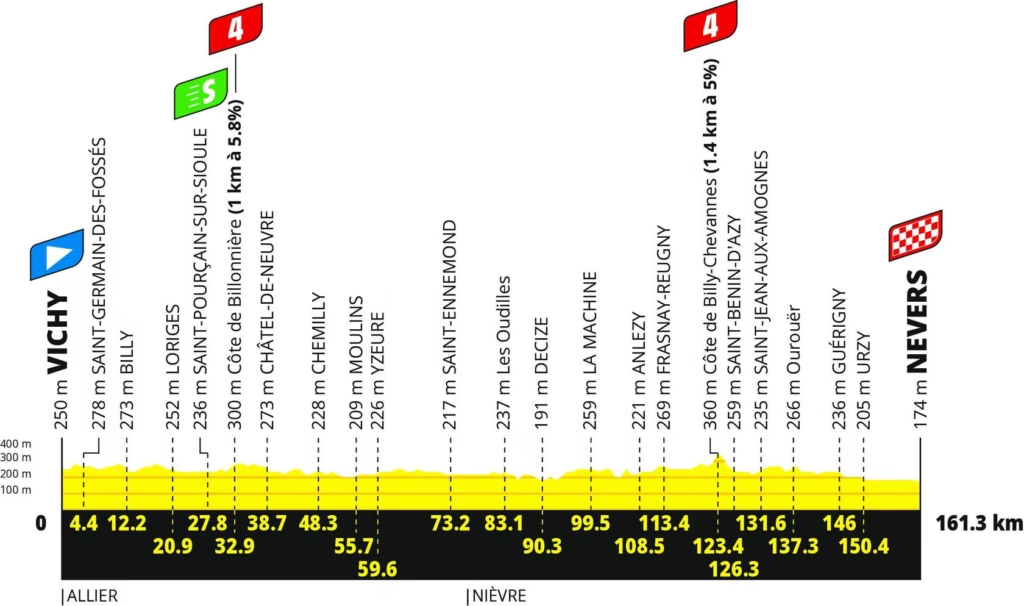
17. Stage 11: Vichy to Nevers
Stage 11 from Vichy to Nevers is another flat stage and looks like a likely sprint finish. It comes after the difficult Le Lioran stage, which might create some tired legs, but it also gives the sprint teams an obvious chance to take control again.
The breakaway could have a little hope if the previous day has been especially hard and if the sprint teams are disorganised. But the profile does not offer enough natural protection. Without late climbs or technical finishing terrain, attackers will struggle to hold off a committed chase.
For many fast teams, stage 11 may be one of the clearest chances of the second week. That alone makes it hard to see the break surviving.
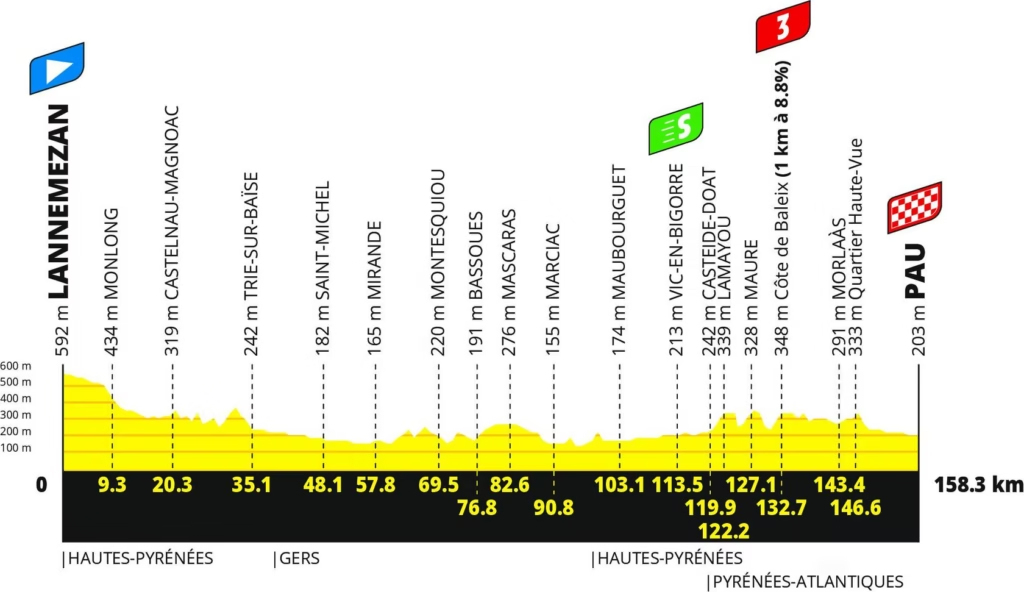
18. Stage 5: Lannemezan to Pau
Stage 5 from Lannemezan to Pau is flat, relatively early in the race and placed between the hilly stage to Foix and the first major Pyrenean summit finish at Gavarnie-Gèdre. That combination points strongly towards a sprint or at least a controlled peloton.
Breakaways will go, as they almost always do at the Tour, but the stage is unlikely to give them enough terrain. Sprint teams will be motivated because the Pyrenees arrive properly the next day, while GC teams may also prefer a controlled day before Gavarnie-Gèdre.
Pau is a familiar Tour town, but this edition’s stage into the city looks more like a day for the fast finishers than the attackers. The breakaway chance is low unless the peloton misjudges the chase or weather disrupts the race.
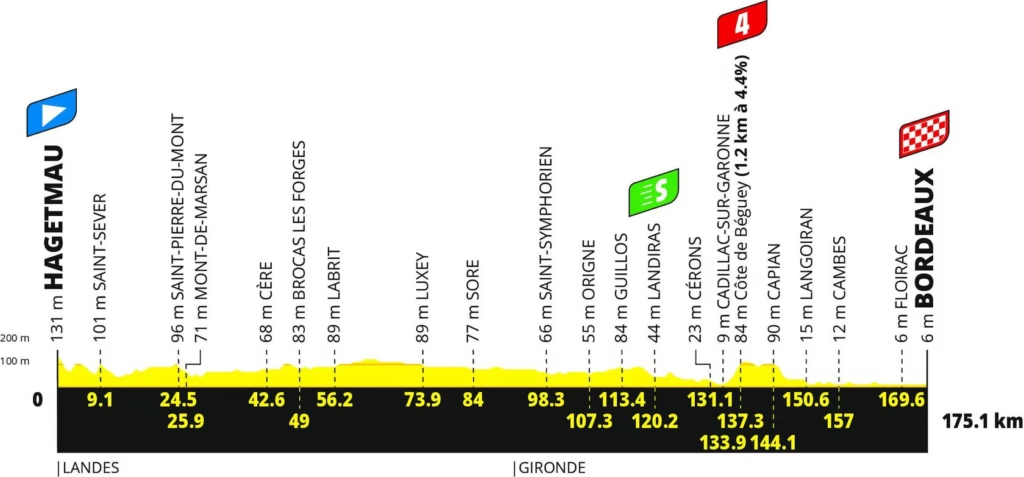
19. Stage 7: Hagetmau to Bordeaux
Stage 7 from Hagetmau to Bordeaux is one of the strongest sprint indicators on the whole route. Bordeaux is a classic fast finish city, and at 175.1km the stage should be manageable for the sprinters’ teams.
It comes the day after the Gavarnie-Gèdre summit finish, so the peloton may be tired, but that may actually help the sprint teams because GC riders will be happy for a calmer day. The breakaway will likely be allowed to form, but only within limits.
This is the sort of stage where the peloton often controls the gap precisely. The break may get screen time, intermediate points and combativity attention, but the finishing context heavily favours a bunch sprint.
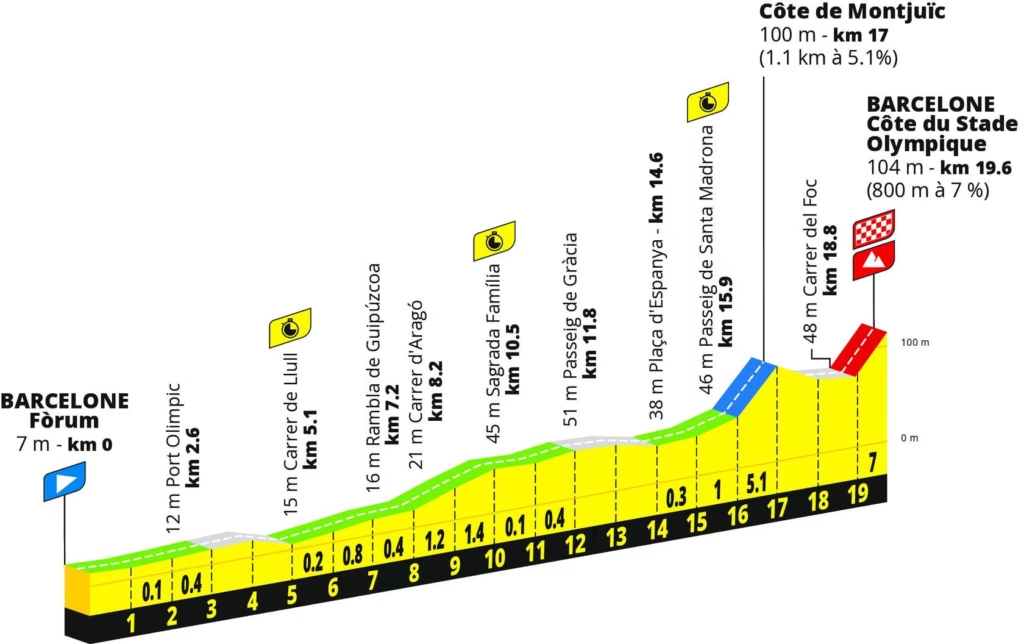
20. Stage 1: Barcelona to Barcelona team time trial
Stage 1 is not a breakaway stage because it is a team time trial. The route is 19.6km around Barcelona and will immediately shape the early general classification, but there is no breakaway dynamic in the normal road-race sense.
Its importance for attackers comes later. Riders who lose time in the team time trial may receive more freedom in the first week, especially on stages 4 and 9. Strong teams may also gain early control of the yellow jersey, which could affect how much they are willing to chase on hilly stages.
As a standalone stage, though, it sits at the bottom of the breakaway ranking for the simple reason that no road-stage breakaway can win it.
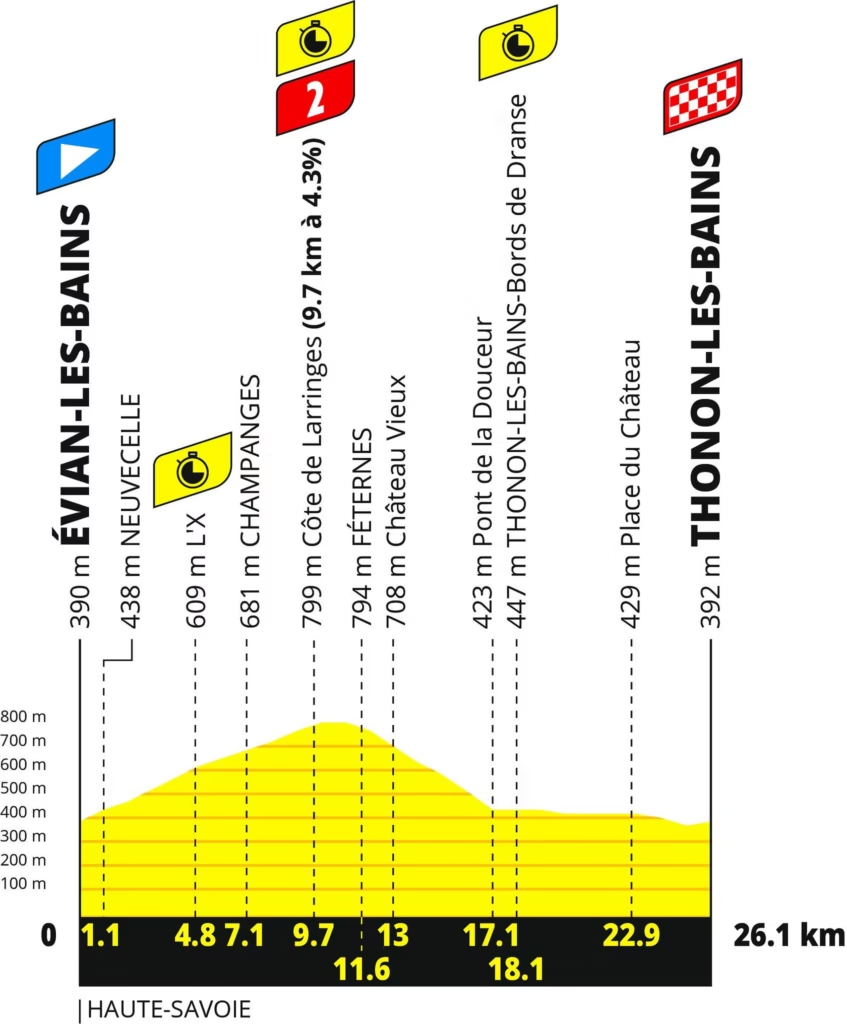
21. Stage 16: Évian-les-Bains to Thonon-les-Bains individual time trial
Stage 16 is also not a breakaway stage because it is an individual time trial. The 26.1km route between Évian-les-Bains and Thonon-les-Bains will be important for the GC, but it does not offer attackers a road-race opportunity.
Its effect on the breakaway race may come indirectly. Riders who lose time in the time trial may be given more freedom on stage 17 to Voiron or stage 18 to Orcières-Merlette. Teams that fall out of GC contention may also shift towards stage hunting in the final week.
That makes stage 16 important for the wider race, but not relevant as a breakaway target.
-
 Photo Credit: Cor Vos
Which Tour de France 2026 stages are best for breakaways?
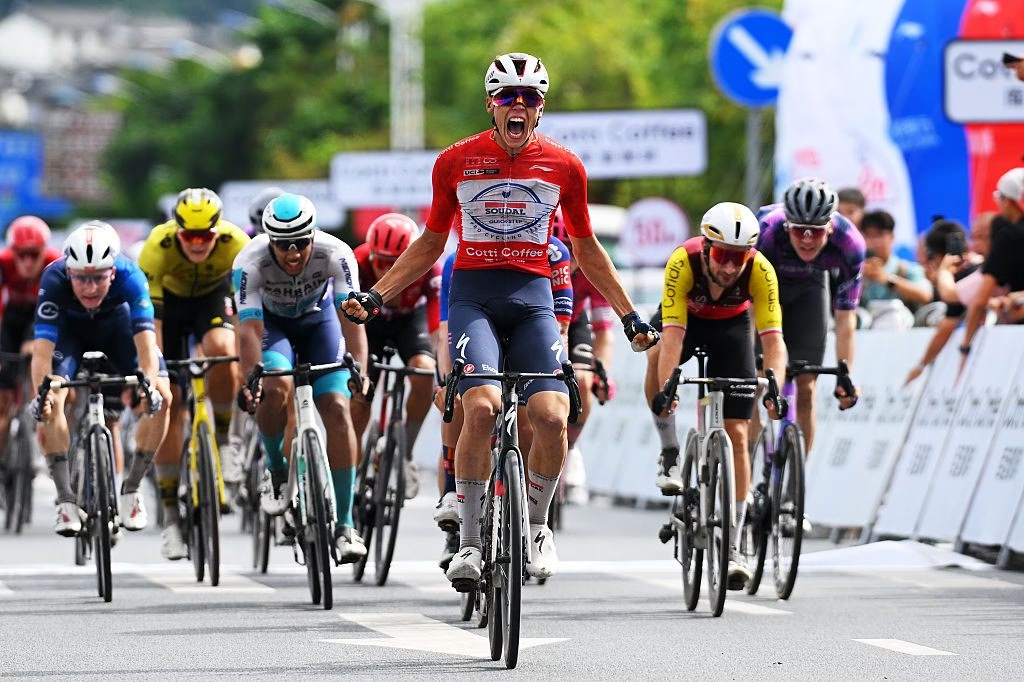
The best breakaway stages in the Tour de France 2026 are likely to be stage 13 to Belfort, stage 10 to Le Lioran, stage 14 to Le Markstein, stage 4 to Foix and stage 9 to Ussel. Those stages combine enough difficulty to discourage a straightforward sprint chase with enough uncertainty to stop GC teams from controlling everything.
Stage 15 to Plateau de Solaison and stage 18 to Orcières-Merlette are the most interesting mountain-stage breakaway possibilities, but both depend heavily on the GC situation. If the yellow jersey battle is close, the favourites may take over. If the race is more controlled or if a strong climbing break gains enough time, either stage could still go to attackers. The same uncertainty applies to the Tour de France 2026 climbers guide, because the polka-dot jersey battle may overlap heavily with the breakaway race.
The flatter stages to Pau, Bordeaux, Bergerac, Nevers and Chalon-sur-Saône are less likely breakaway wins because sprint teams should be motivated. The final Paris stage is a special case because Montmartre changes the usual pattern, but a breakaway victory there would still require a tired or disrupted chase.
The 2026 Tour is therefore a good route for attackers, but not in an obvious way. The best opportunities are hidden in the middle of the race, around the hilly and medium mountain stages where the sprinters are uncomfortable, the GC teams are cautious, and the strongest stage hunters can turn a long day into a winning one.

