
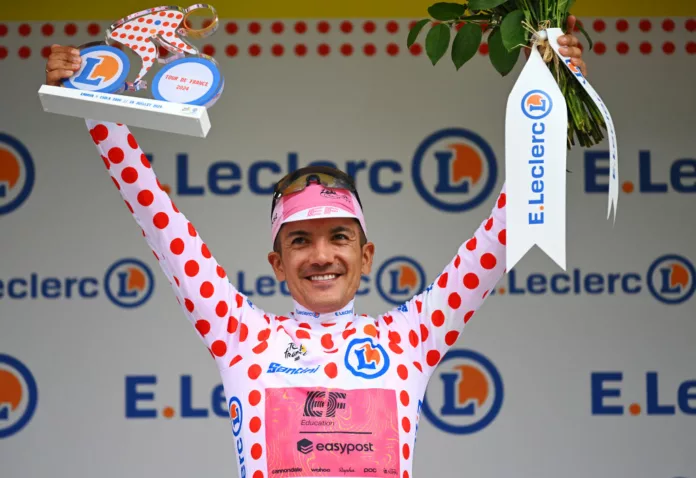
The Tour de France 2026 route looks built for a serious mountains classification battle. With 8 mountain stages, 5 summit finishes, the Col du Tourmalet, Plateau de Solaison, Orcières-Merlette and back-to-back days on Alpe d’Huez, the polka-dot jersey should be more than a side contest. It could become one of the defining threads of the race.
The complication is that modern Tour de France mountains classifications often get pulled towards the general classification fight. When the hardest climbs come late in stages and summit finishes carry big points, the riders fighting for yellow naturally collect mountain points as a by-product. That makes Tadej Pogačar and Jonas Vingegaard obvious candidates, even if neither begins the race with the polka-dot jersey as a primary goal.
But the 2026 route also gives space to specialist climbers, breakaway riders and GC contenders who may lose time early and reset their race. The key stages are spread across the Pyrenees, Massif Central, Vosges, Jura and Alps, which means the mountains classification could change hands several times before the decisive Alpine weekend.
For full route context, see our Tour de France 2026 full route guide, Tour de France 2026 route analysis, Tour de France 2026 mountain stages ranked by difficulty and Tour de France 2026 jerseys explained.
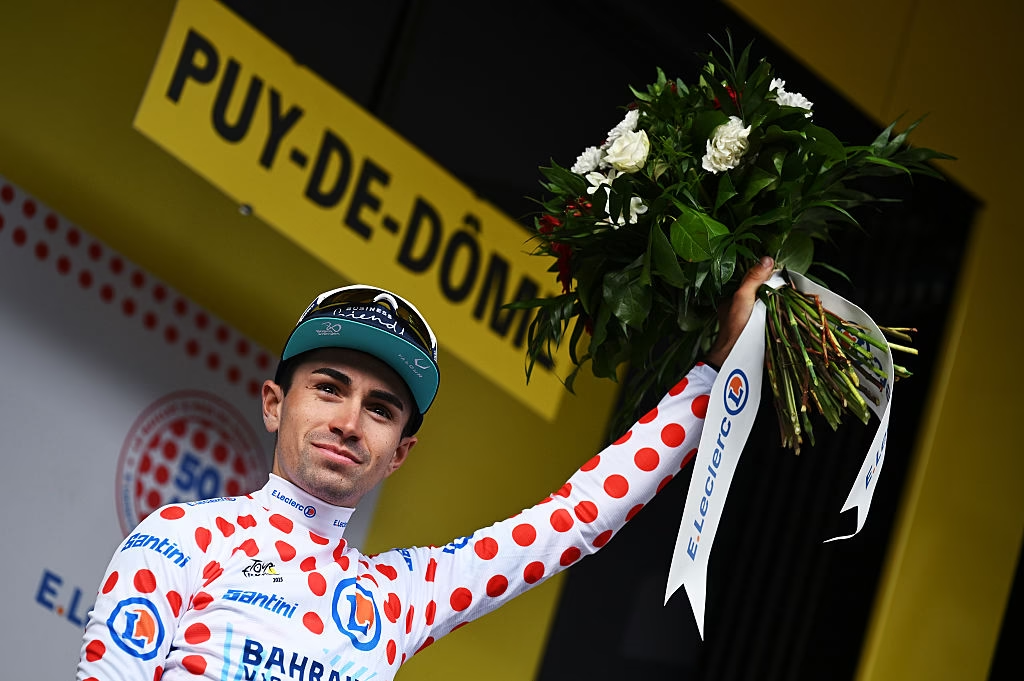
How does the Tour de France polka-dot jersey work?
The polka-dot jersey is awarded to the leader of the mountains classification. Riders score points by crossing categorised climbs near the front, with harder climbs worth more than smaller climbs. Fourth-category climbs give only a small reward, while first-category and hors catégorie climbs can decide the competition.
That means the jersey does not always go to the best climber in the race. It goes to the rider who collects points most efficiently. Sometimes that is the eventual yellow jersey winner. Sometimes it is a breakaway rider who targets mid-stage climbs, sacrifices overall ambitions and builds a lead before the final mountain block.
The 2026 route makes that balance especially interesting. There are enough hard summit finishes for the GC riders to score heavily, but there are also mountain days where breakaways can take points before the favourites reach the final climb.
The winner will need one of three profiles:
- A yellow jersey contender who dominates the summit finishes
- A GC rider who loses time and switches to stages and mountains
- A specialist climber who repeatedly gets into the right breakaways
That makes the polka-dot jersey less predictable than the yellow jersey, even on a route this mountainous. For a fuller breakdown of how the race’s four main jerseys work, see our Tour de France 2026 jerseys explained guide.
Which Tour de France 2026 stages matter most for the polka-dot jersey?
The key mountain stages are:
| Stage | Route | Why it matters for the mountains classification |
|---|---|---|
| Stage 3 | Granollers to Les Angles | Early mountain points and first climbing selection |
| Stage 6 | Pau to Gavarnie-Gèdre | Tourmalet plus summit finish makes it an early polka-dot marker |
| Stage 10 | Aurillac to Le Lioran | Massif Central climbs could favour a breakaway |
| Stage 14 | Mulhouse to Le Markstein Fellering | Vosges climbing day with multiple point-scoring chances |
| Stage 15 | Champagnole to Plateau de Solaison | Steep Jura summit finish, likely major GC and KOM points |
| Stage 18 | Voiron to Orcières-Merlette | First Alpine summit finish after the time trial |
| Stage 19 | Gap to Alpe d’Huez | Short, sharp mountain stage with major final-climb points |
| Stage 20 | Le Bourg d’Oisans to Alpe d’Huez | Queen stage with Croix de Fer, Télégraphe, Galibier, Sarenne and Alpe d’Huez |
Stage 20 is the biggest polka-dot stage on the route. It comes on the penultimate day and includes a chain of major climbs, including the Galibier and a second finish on Alpe d’Huez. If the mountains classification is still close, this is where it can be won or lost.
Stage 15 to Plateau de Solaison may be the most important pre-Alps stage. The Col de la Croisette and final climb to Solaison are steep enough to create serious gaps, and a rider who wins there could take a major step in both GC and the mountains competition.
Stage 6 to Gavarnie-Gèdre is the first major test. If the Tourmalet and the summit finish are raced hard, the first serious polka-dot hierarchy could appear before the race has even reached the first rest day.
The full breakdown of the hardest climbing days is covered in our Tour de France 2026 mountain stages ranked by difficulty, while our route analysis looks at how those same stages shape the yellow jersey fight.
Why the 2026 polka-dot jersey may favour GC riders
The strongest argument for a GC rider winning the polka-dot jersey is simple: the route has 5 summit finishes. Gavarnie-Gèdre, Plateau de Solaison, Orcières-Merlette and Alpe d’Huez twice all reward the riders who are strongest at the end of mountain stages.
If Pogačar, Vingegaard, Evenepoel, Lipowitz, Seixas, del Toro or Ayuso are fighting for yellow deep into the race, they will naturally collect points on the biggest climbs. They do not need to chase the jersey in the traditional sense. They only need to keep finishing near the front on the hardest mountain days.
That is especially true if the battle for yellow becomes aggressive early. If the GC teams control the breakaways on stage 6, stage 15, stage 19 and stage 20, the polka-dot jersey will drift towards the same riders fighting for the podium.
The late route design also matters. Two Alpe d’Huez stages in a row make it harder for a breakaway climber to protect a lead in the mountains classification if the GC contenders dominate the final weekend.
Why a breakaway climber can still win it
The counterargument is that the Tour still has enough climbing spread across the race for a committed breakaway rider to build a buffer.
Stage 10 to Le Lioran, stage 14 to Le Markstein Fellering and parts of stage 18 to Orcières-Merlette could all suit riders who are no longer dangerous on GC. If a climber loses time early, gets freedom from the bunch and targets the right days, they can score repeatedly before the yellow jersey contenders begin racing.
That is how many successful polka-dot campaigns are built. The rider does not need to be the best climber in the race. They need to be the most committed. They need to attack early, read the points structure, and keep going back into breakaways when everyone else is thinking about stage wins or survival.
The problem in 2026 is that the final Alpine weekend is so heavy. A breakaway climber may need a substantial lead before stages 19 and 20. If the jersey is still close going into the back-to-back Alpe d’Huez finishes, the GC contenders become very difficult to hold off.
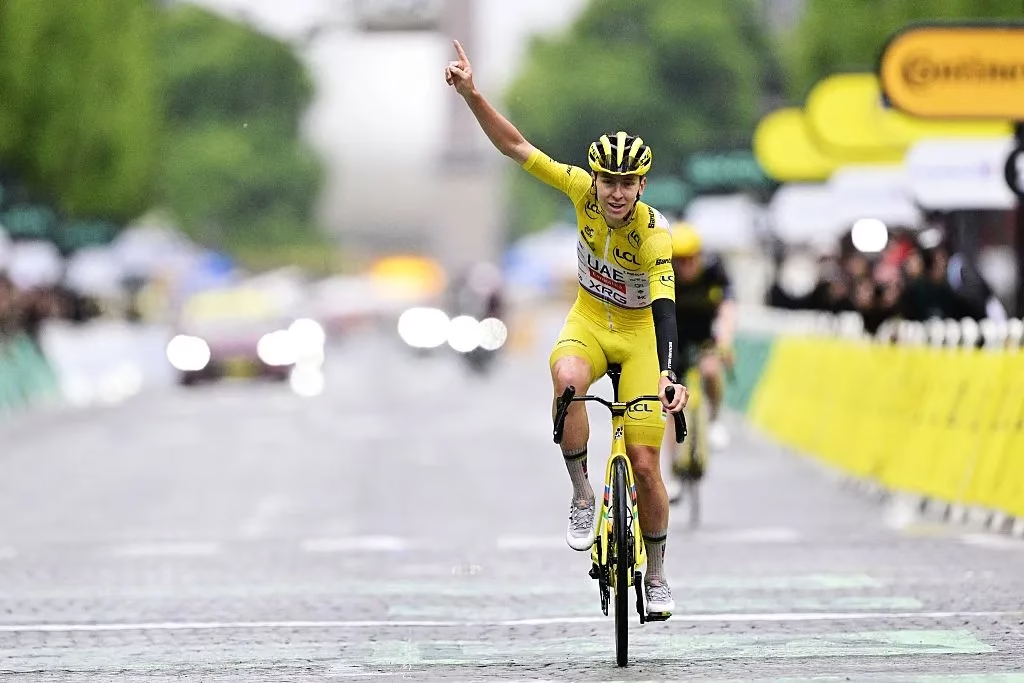
Tadej Pogačar
Tadej Pogačar is the most obvious favourite for the polka-dot jersey because he is also the most obvious favourite for the yellow jersey. If he is at his best, the route gives him repeated chances to score heavily on summit finishes.
Pogačar has the right profile for this competition even when he is not actively targeting it. He attacks on climbs, wins mountain stages, and often turns GC days into stage-winning opportunities. On a route with Gavarnie-Gèdre, Plateau de Solaison and two finishes on Alpe d’Huez, that matters.
The key question is whether UAE Team Emirates-XRG manage the race around yellow rather than every mountain point. If Pogačar controls the GC, he may not need to contest every climb. But if the race becomes a repeated head-to-head with Vingegaard, the points will come naturally.
His strongest route to the polka-dot jersey is through dominance. Win or podium on the key summit finishes, stay close on the intermediate mountain days, and the classification may take care of itself.
Likelihood: very high if he dominates the GC battle
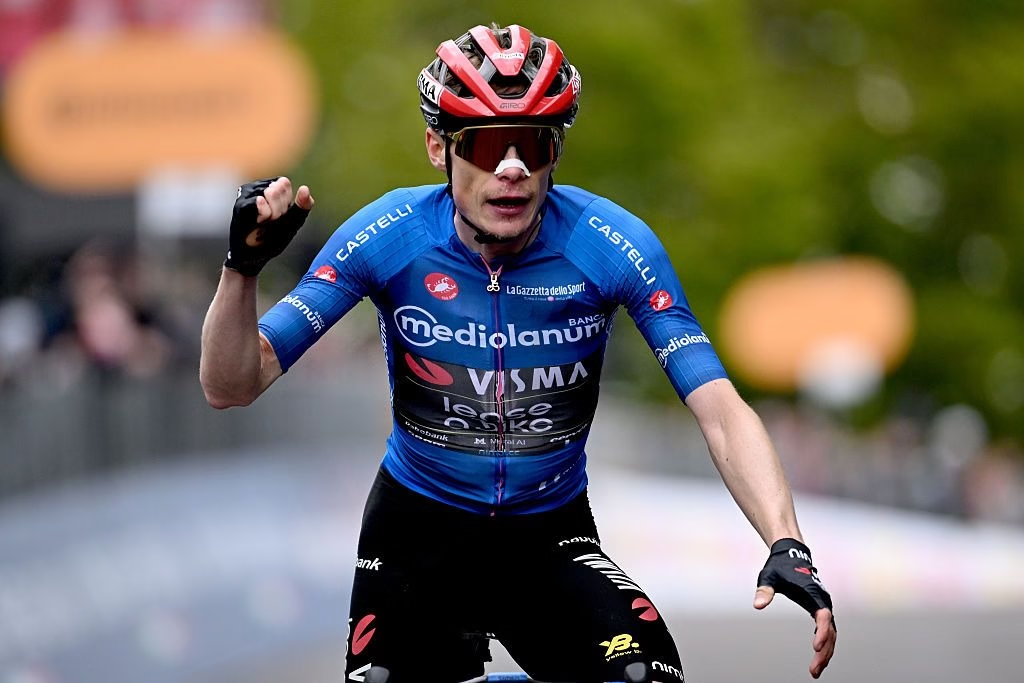
Jonas Vingegaard
Jonas Vingegaard is the other natural favourite. He has the climbing depth, Tour pedigree and stage-race consistency to score heavily across the biggest days. If the race becomes a sustained mountain duel between Vingegaard and Pogačar, the polka-dot jersey could become a direct extension of the yellow jersey fight.
Vingegaard’s profile is slightly different from Pogačar’s. He may be less likely to chase every punchy or opportunistic point, but on the hardest climbs he is one of the riders most likely to be present. That makes stage 15, stage 19 and stage 20 especially important for him.
His 2026 season also adds intrigue. Coming into the Tour after a Giro d’Italia win makes his preparation different, but if he carries that form into July, he will be a major force in the mountains. Team Visma | Lease a Bike also have enough structure to control or shape the mountain days when required.
Vingegaard can win the polka-dot jersey without changing his race plan. If he is fighting for yellow until Paris, he will be scoring on the biggest climbs.
Likelihood: very high if he is still at GC-winning level after the Giro
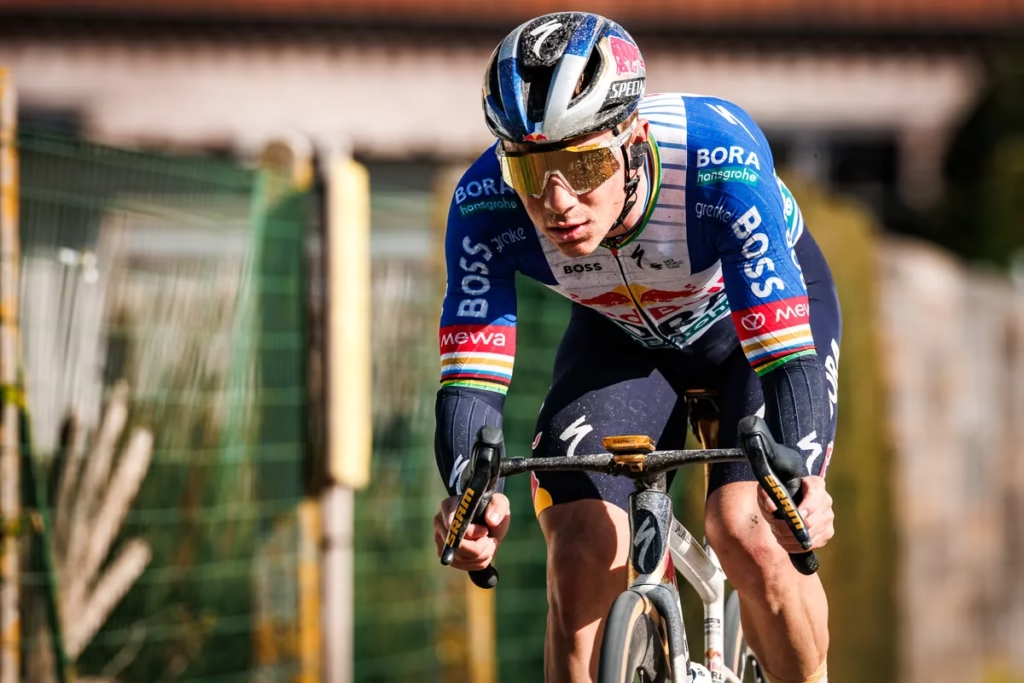 Photo Credit: Getty
Remco Evenepoel
Remco Evenepoel is not the purest climber among the main Tour favourites, but he is still a serious polka-dot possibility because of the way the route could force him into a different race. If he remains close on GC, he can score through summit finishes. If he loses time, he becomes one of the most dangerous stage-hunting riders in the race.
That second version may actually be the more interesting one. Evenepoel in breakaways, free from direct yellow jersey control, would be a nightmare for rivals. He has the engine to attack from distance, the time-trial strength to hold gaps in valleys, and the climbing level to survive hard mountain stages if he chooses the right moments.
The issue is whether Red Bull-BORA-hansgrohe want him focused entirely on GC, especially with Florian Lipowitz also expected to be part of the Tour picture. A dual-leader setup can complicate a polka-dot campaign. If both riders are still high overall, neither gets freedom.
Evenepoel’s best route to the polka-dot jersey is a mid-race reset: lose enough time to gain room, then target stages 14, 15, 18, 19 and 20 aggressively.
Likelihood: medium, but high if he switches from GC to stage hunting
Florian Lipowitz
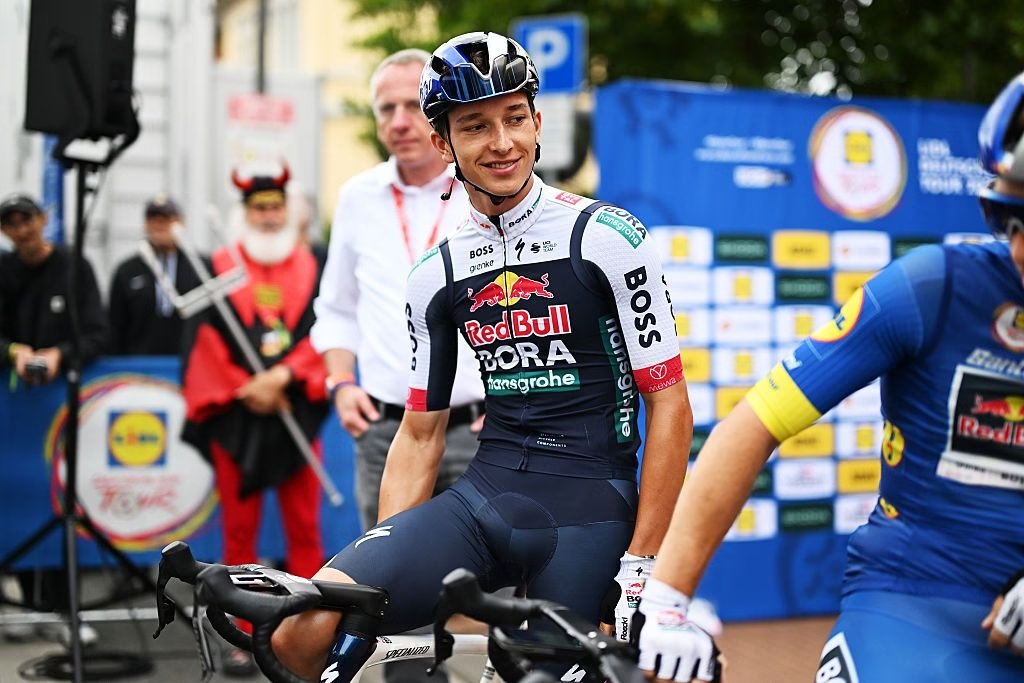
Florian Lipowitz is a very realistic rider to include because he should be close enough to the main GC battle to score on big climbs, but not so dominant that the polka-dot jersey becomes automatic. That can be a useful position.
If Lipowitz starts strongly and remains a podium contender, he will collect points through consistency. If he slips out of the podium fight, he may become more active in breakaways or late mountain attacks. Either route keeps him in the conversation.
The Red Bull-BORA-hansgrohe dynamic with Evenepoel will be important. If Evenepoel is the clear leader, Lipowitz may be asked to work. If Lipowitz is stronger in the mountains, he could end up as the team’s main GC card. If the race fragments, he may be allowed to chase stage results.
He is unlikely to be the most explosive polka-dot contender, but he is the kind of rider who can stay near the front day after day.
Likelihood: medium-high if he rides for GC across all three weeks
Paul Seixas
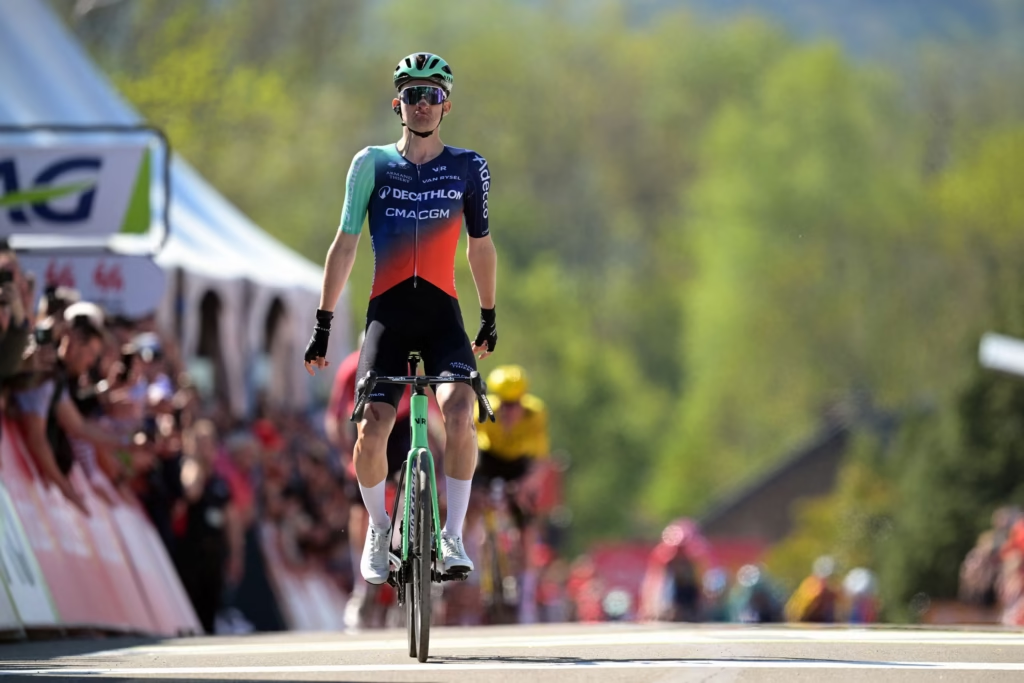
Paul Seixas is one of the most compelling names for the 2026 mountains classification because he is expected to make his Tour debut with both form and freedom. Decathlon CMA CGM Team are building around him, and the route gives him a chance to show himself in the mountains without needing to carry the same pressure as Pogačar or Vingegaard.
The question is whether he races as a GC rider, a learning-stage contender or a genuine polka-dot hunter. If he remains high overall, he may collect points naturally but be limited by the need to manage his effort. If he loses time, he becomes much more dangerous for breakaways.
Seixas’ appeal is that he should suit repeated climbing days. Stage 15 to Plateau de Solaison and the final Alpine weekend look like natural tests for him. He may not need to win the jersey for the race to be a success, but he has the profile to become involved if the competition opens up.
His form has already been a key storyline in June, and our Tour Auvergne – Rhône-Alpes 2026 contenders preview explains why he has been viewed as one of the most important Tour-ready climbers in the build-up.
For French fans, a Seixas polka-dot campaign would also carry an obvious emotional pull. A young French climber attacking through the mountains is exactly the kind of storyline the Tour tends to amplify.
Likelihood: medium-high, especially if GC ambitions become secondary
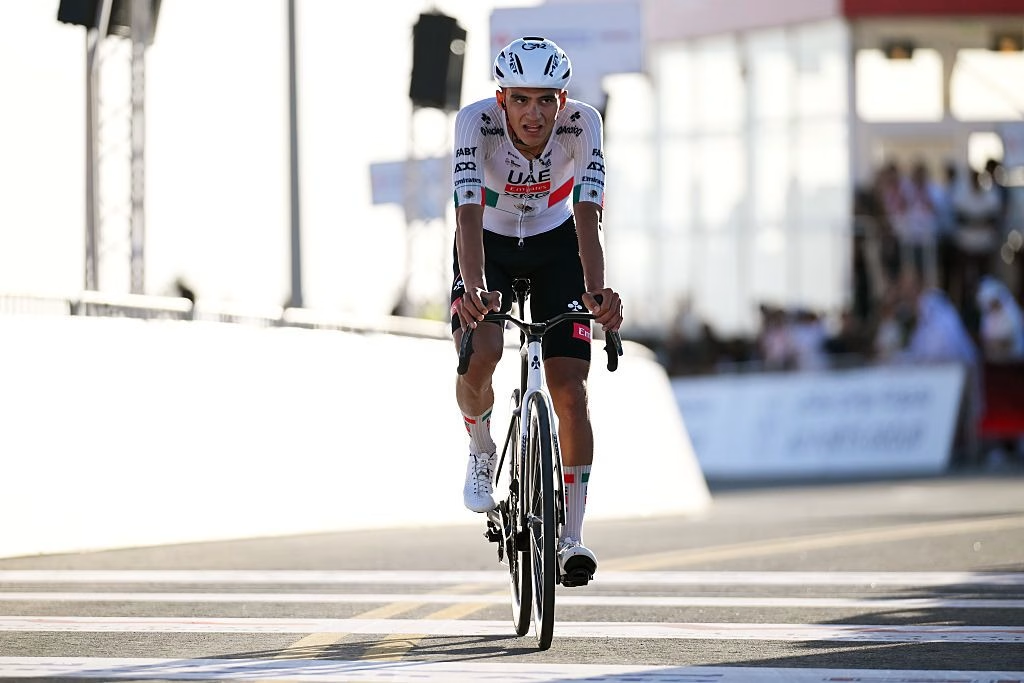 Photo Credit: Getty
Isaac del Toro
Isaac del Toro is one of the most dangerous wildcard climbers in the race. UAE Team Emirates-XRG are expected to have Pogačar as their main yellow jersey leader, which may limit del Toro’s personal freedom if the team are controlling the race. But if he is used aggressively, he could become a major factor in the mountains classification.
Del Toro’s strength is that he can change the rhythm of a race. He is not only a steady climber. He can attack, force reactions and make stages messy. That kind of rider can score mountain points quickly if given the chance.
The problem is team hierarchy. If Pogačar is fighting for yellow, del Toro may spend the biggest climbs working rather than chasing points. He may also be too high on GC early to be allowed into the right breakaways.
His best route to the polka-dot jersey is either through a protected secondary role, where he is allowed to follow moves and hunt stages, or through a scenario where UAE Team Emirates-XRG use him tactically before Pogačar moves later.
Del Toro, like Seixas and Ayuso, has been part of the wider June form-check discussion around Tour Auvergne – Rhône-Alpes 2026, which is one reason he makes sense here rather than as a speculative outsider.
Likelihood: medium, but his role may matter more than his legs
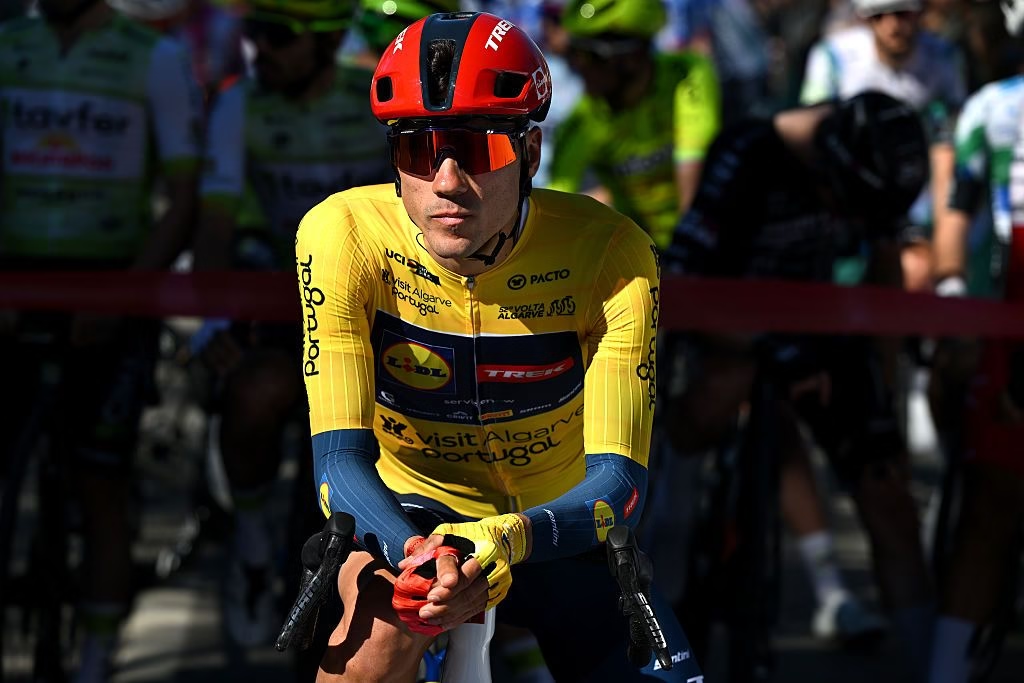
Juan Ayuso
Juan Ayuso is another rider whose polka-dot prospects depend on team role and GC position. If he starts the Tour with serious overall ambitions, he will be aiming at yellow or the podium rather than mountain points. But his climbing level makes him impossible to ignore.
Ayuso can score on summit finishes, especially if Lidl-Trek race aggressively on the steeper mountain days. Plateau de Solaison, Orcières-Merlette and Alpe d’Huez all suit a rider who can climb explosively but also sustain pressure.
The issue is whether he will have the freedom to chase the jersey. Lidl-Trek may also have Giulio Ciccone, Mattias Skjelmose and stage-hunting options in the same Tour selection, which could spread their climbing ambitions across several riders.
Ayuso’s best chance is if he is close enough on GC to score big summit points but not boxed into a conservative podium defence. If he has to attack to gain time, the polka-dot jersey becomes more realistic.
Likelihood: medium, depending on GC role
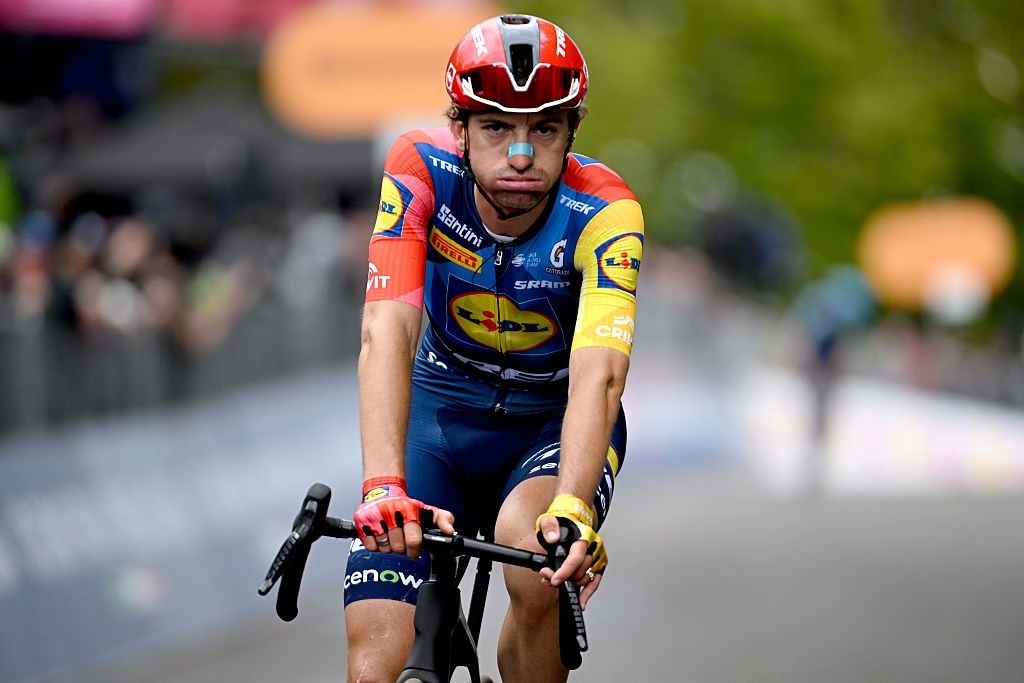
Giulio Ciccone
Giulio Ciccone is the most obvious specialist polka-dot contender if he is on the Lidl-Trek Tour team. He has already shown he understands how to win the mountains classification, and his profile fits the race when he is free to attack.
The 2026 route gives him opportunities before the final Alpine weekend. Stage 10 to Le Lioran, stage 14 to Le Markstein Fellering and stage 18 to Orcières-Merlette could all suit an aggressive climber who is not treated as a top GC threat. Ciccone does not need to follow Pogačar and Vingegaard every day. He needs to get ahead of them and collect points before the final selection.
His biggest challenge may come from within his own team. If Ayuso and Skjelmose are chasing GC, Ciccone may have to balance support duties with personal ambition. But Lidl-Trek could also use him as a tactical attacker, which would make him more dangerous.
Ciccone is probably the strongest non-GC pick for the polka-dot jersey, provided he is selected and given freedom.
Likelihood: high among specialist contenders
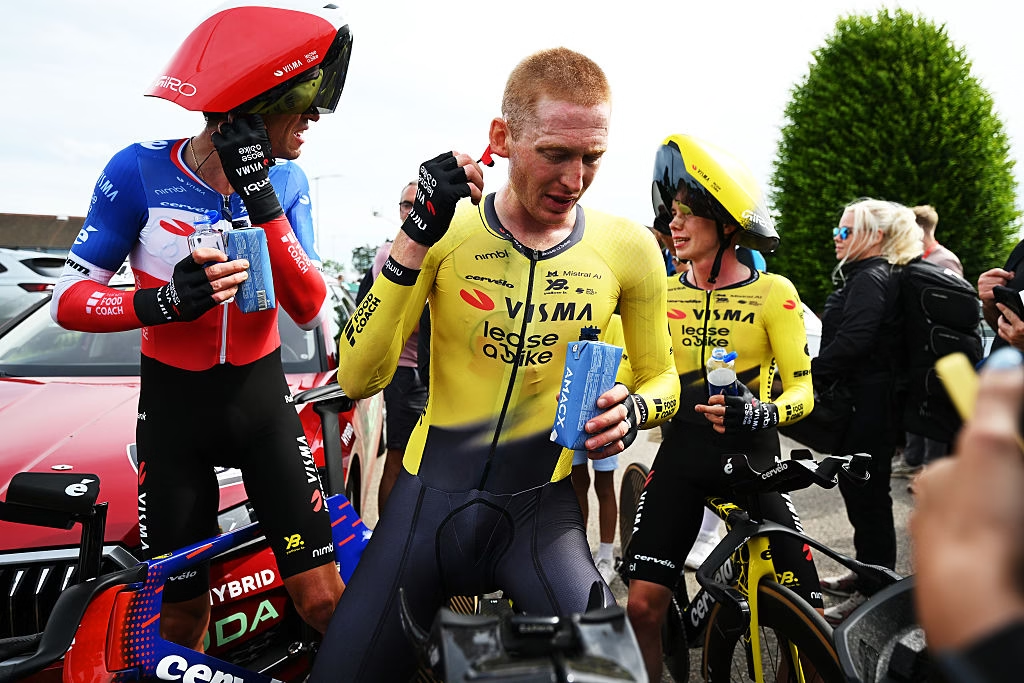 Photo Credit: Getty
Matteo Jorgenson
Matteo Jorgenson is a more complex candidate. He is likely to be at the Tour as a major Team Visma | Lease a Bike asset, but his job may be tied closely to Vingegaard’s yellow jersey campaign. That can reduce his own polka-dot chances.
Still, Jorgenson has the engine, climbing ability and tactical intelligence to score heavily if the race opens. He can go in breakaways, survive long mountain stages and use valleys better than many pure climbers. If Vingegaard is in control or if Team Visma | Lease a Bike want a satellite rider up the road, Jorgenson could take points almost as a side effect.
His route to the jersey probably requires unusual race circumstances. He needs either freedom from team duties, Vingegaard dominance that allows him to attack, or an early GC shift that makes him a stage-hunting card rather than a pure support rider.
He is more likely to shape the mountains classification than win it, but he should not be dismissed. He is also one of the riders who makes the Tour de France 2026 team-by-team guide so important, because his own chances depend heavily on Team Visma | Lease a Bike’s wider plan around Vingegaard.
Likelihood: medium-low, mainly because of team duties
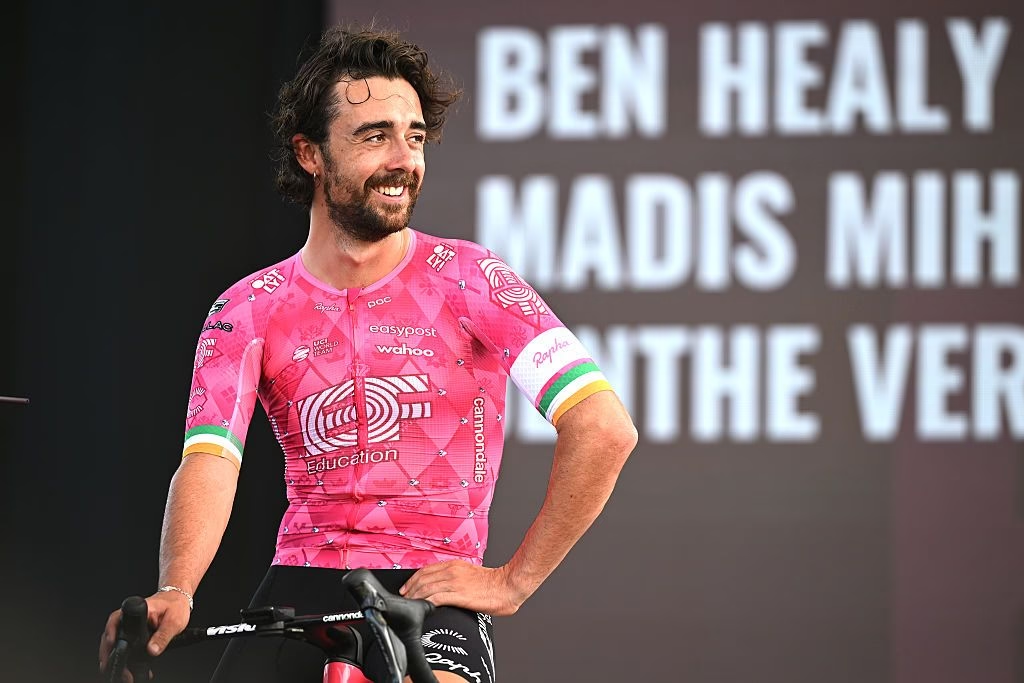
Ben Healy
Ben Healy is a tempting polka-dot name if EF Education-EasyPost select him for the Tour. He is not a pure high-mountain climber in the Pogačar or Vingegaard sense, but he is one of the best long-range attackers in the peloton and has already shown he can make a Tour de France stage come alive from distance.
That matters for the mountains classification because the jersey often rewards repeated aggression. Healy can attack before the main favourites are ready to race, take points over early climbs and keep pressing through rolling mountain terrain. Stages like Le Lioran and Le Markstein could suit him if the breakaway is given room.
The harder summit finishes are a bigger question. If the competition comes down to Alpe d’Huez and Plateau de Solaison, Healy may struggle to score enough against the pure climbers. But if he builds a points lead through breakaways, he can become a serious threat.
His candidacy depends first on selection and then on freedom. If both are there, he is one of the more interesting non-GC options.
Likelihood: medium if selected and given licence to attack
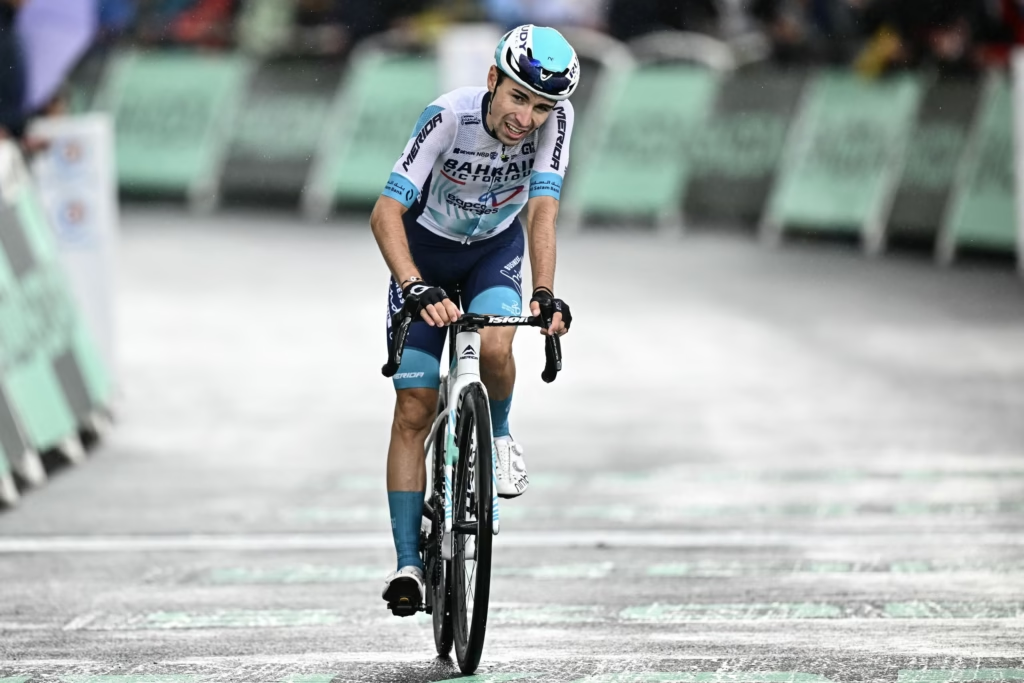
Lenny Martinez
Lenny Martinez would be a natural polka-dot contender if he is selected and allowed to chase mountain stages. His climbing ability is obvious, and he has the right profile for a jersey campaign built around repeated mountain breakaways rather than a full GC challenge.
The 2026 route should suit him in theory. The Pyrenees may come early, the Vosges and Jura give opportunities before the final week, and the Alpine stages are hard enough for a lightweight climber to matter if he arrives with points already banked.
The uncertainty is race role. If Bahrain Victorious take him with GC ambitions, he may be held back by the need to stay consistent. If he loses time or starts with stage-hunting freedom, the polka-dot jersey becomes much more realistic.
Martinez is exactly the kind of rider who can animate the competition, but he needs the right tactical situation.
Likelihood: medium if selected and freed from GC expectations
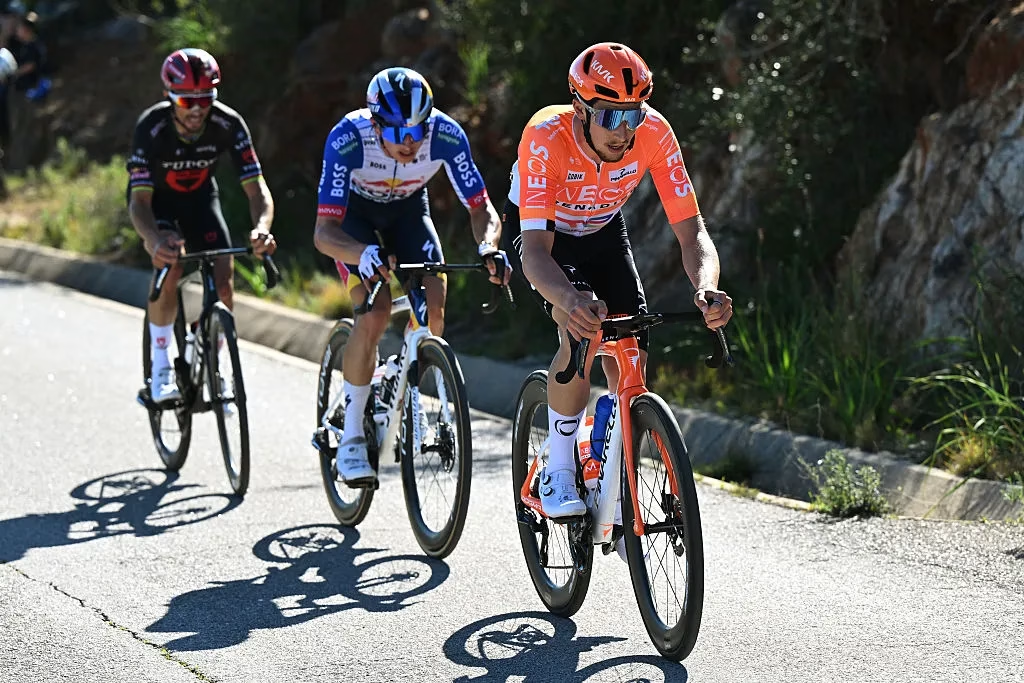 Photo Credit: Getty
Kévin Vauquelin
Kévin Vauquelin is more of a stage-race and punchy climbing candidate than a pure mountains jersey favourite, but he belongs in the conversation because of the shape of the 2026 Tour. If Netcompany INEOS Cycling Team go into the race with several GC-style options, Vauquelin may end up with a flexible role.
That can be useful in the polka-dot competition. A rider who is too dangerous on GC may be blocked from breakaways. A rider who is out of the podium fight but still climbing well can suddenly become dangerous. Vauquelin’s ability to race aggressively over hard terrain makes him interesting on stages like Le Lioran, Le Markstein and Orcières-Merlette.
He is less likely to outscore the pure climbers on the biggest summit finishes, so he would need a breakaway-based campaign. If he loses time early and commits to the jersey, he could become a factor.
Likelihood: medium-low, but tactically interesting
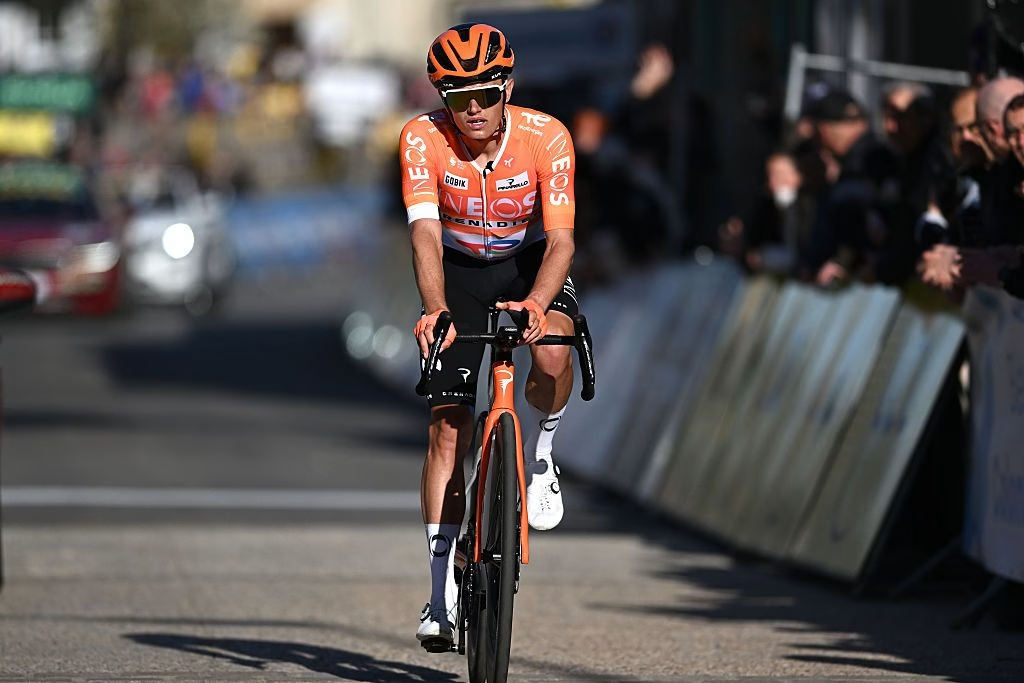
Oscar Onley
Oscar Onley is another rider whose polka-dot chances depend on how his GC race develops. If he starts with overall ambitions, the jersey is probably secondary. If he slips out of contention, he has the climbing ability to target mountain stages and collect points.
Onley’s best days tend to come when the gradients bite and the group is reduced. That makes the summit finishes attractive, but he may need more freedom than a protected GC rider usually gets. If Netcompany INEOS Cycling Team have multiple riders high overall, the internal hierarchy could also shape his opportunities.
He is unlikely to start the Tour as a polka-dot specialist. But if the race breaks the right way, he could become one of the riders who turns the mountains classification into a second-half objective.
Likelihood: medium-low, depending on GC position
Aurélien Paret-Peintre and Léo Bisiaux
Aurélien Paret-Peintre and Léo Bisiaux are worth grouping together because both could matter through Decathlon CMA CGM Team’s support structure around Seixas. If selected, their first job may be to help the French leader, but both have the climbing quality to influence mountain stages.
Paret-Peintre is the more experienced stage-hunting option. He knows how to survive hard days, read breakaways and use terrain intelligently. Bisiaux is younger and still developing, but a race like this can create opportunities quickly if the team finds itself with multiple riders in mountain groups.
Their polka-dot chances are probably secondary to team duties. But if Seixas is secure or if the team chooses to race aggressively with riders up the road, either could collect points in support of a wider strategy.
Likelihood: low as outright winners, but useful in shaping the contest
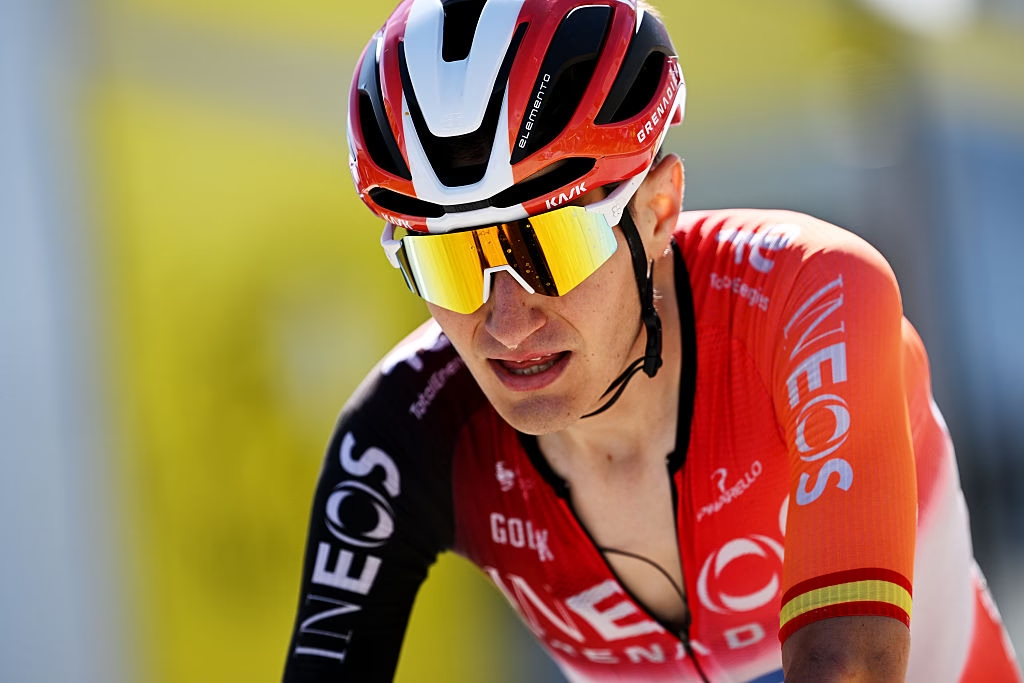
Carlos Rodríguez
Carlos Rodríguez is a difficult rider to place. On climbing ability alone, he is good enough to be part of the polka-dot conversation. In practical terms, his chances depend on whether he begins the Tour as a genuine GC leader, a co-leader, or a rider trying to rebuild momentum.
If he is high on GC, he will not be allowed the freedom needed for a classic mountains jersey campaign. If he loses time and switches to stage hunting, he becomes more interesting. He has the climbing consistency for hard summit finishes and the experience to manage three-week racing.
His challenge is that the 2026 polka-dot contest may require repeated aggression, not just steady climbing. Rodríguez can score on big days, but he may need to be more proactive than usual to win the classification.
Likelihood: low-medium, but higher if GC plans collapse early
Can a pure breakaway rider win the polka-dot jersey?
Yes, but the window is narrower than usual. The 2026 Tour gives breakaway riders enough opportunities to build a points lead, but the final Alpine weekend is so heavy that they may need a sizeable advantage before stages 19 and 20.
The ideal breakaway polka-dot rider in 2026 will be someone who:
- Loses enough time early to gain freedom
- Climbs well enough to score on first-category and HC climbs
- Can repeat attacks across several mountain stages
- Does not have to work every day for a GC leader
- Survives the final week without fading
That points towards riders such as Ciccone, Healy, Martinez, Paret-Peintre, Vauquelin or Onley if their GC or team roles allow it. But the problem remains obvious: if Pogačar and Vingegaard are fighting hard on every summit finish, breakaway riders may run out of points late.
This is also why the opening week matters. The Tour de France 2026 Grand Départ guide explains how Barcelona and the early Spanish stages could shape the race before the first major climbing block. Riders who lose time early may be given more room later, which is often the first step towards a realistic polka-dot challenge.
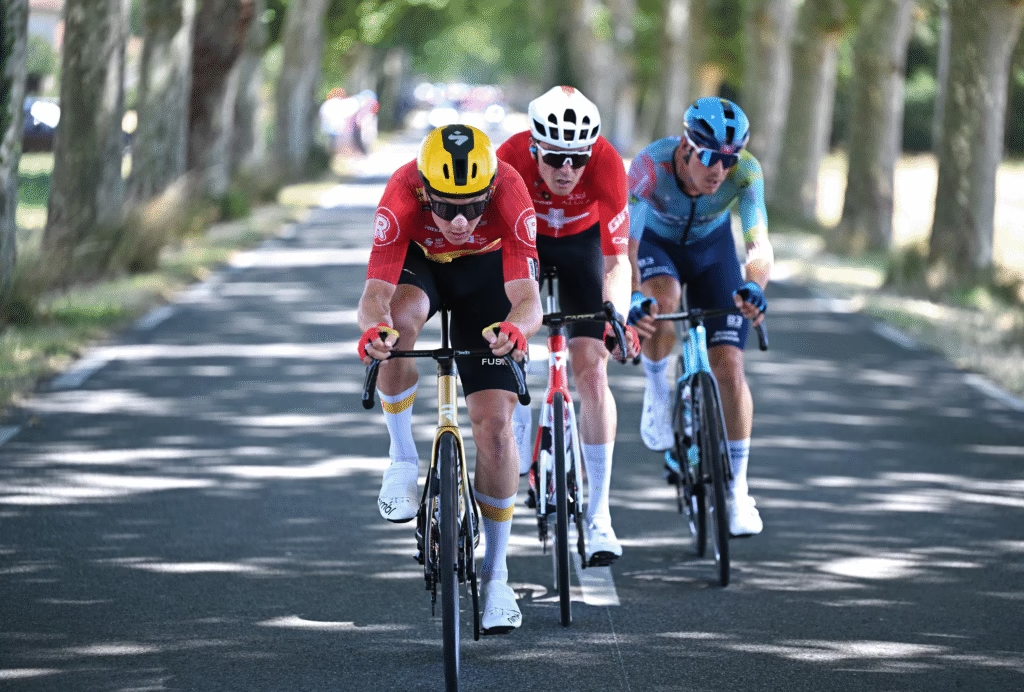
Who is least likely to be allowed in breakaways?
The main GC favourites will be closely marked. Pogačar, Vingegaard, Evenepoel, Lipowitz, Seixas, del Toro, Ayuso and possibly Jorgenson will not be given easy freedom if they are still high on the general classification.
That does not stop them from scoring points. It actually makes them more likely to collect the biggest summit-finish rewards. But it does mean their route to the polka-dot jersey is different. They will win it through GC racing, not through classic breakaway hunting.
This also matters for riders such as Seixas and del Toro. Both would be excellent polka-dot candidates with freedom. But if they are inside the top 10 overall, the peloton will not let them ride away early on mountain stages.
For a wider look at how those GC dynamics shape the whole race, our Tour de France 2026 route analysis explains why the 2026 route is likely to make teams commit early rather than wait for the final weekend.
Which team has the strongest polka-dot options?
UAE Team Emirates-XRG have the strongest top-end option through Pogačar, with del Toro as a dangerous secondary climber. If Pogačar is dominant, the jersey can come through the yellow jersey battle. If del Toro is given freedom, the team has another possible route.
Team Visma | Lease a Bike have Vingegaard as the obvious candidate and Jorgenson as a possible tactical option. Their approach will depend heavily on whether Vingegaard is attacking or controlling.
Red Bull-BORA-hansgrohe have two interesting cards in Evenepoel and Lipowitz. If both are high on GC, the team may focus on yellow or the podium. If one loses time, the mountains classification becomes a logical secondary target.
Lidl-Trek may have the most obvious specialist option in Ciccone, plus Ayuso and Skjelmose if the GC route opens up. That gives them one of the more flexible polka-dot structures.
Decathlon CMA CGM Team’s hopes revolve around Seixas, but Paret-Peintre and Bisiaux could also matter if the team races with riders up the road.
The full team picture will become clearer as selections firm up, and our Tour de France 2026 team-by-team guide is the best place to track how each squad’s climbing plan fits together.
 Photo Credit: A.S.O./Billy Ceusters
Who are the top favourites for the 2026 polka-dot jersey?
The clearest favourites are:
- Tadej Pogačar
- Jonas Vingegaard
- Giulio Ciccone
- Paul Seixas
- Remco Evenepoel
- Florian Lipowitz
- Isaac del Toro
- Juan Ayuso
- Ben Healy
- Lenny Martinez
That order reflects both climbing ability and realistic race role. Pogačar and Vingegaard top the list because they are the riders most likely to dominate the hardest summit finishes. Ciccone is the best specialist option because he knows how to chase this jersey and can score from breakaways. Seixas is high because of his likely Tour role, French climbing storyline and potential freedom if the GC battle shifts.
Evenepoel, Lipowitz, del Toro and Ayuso are all strong enough to win it, but their chances depend on how their teams balance GC ambition with mountain-stage aggression. Healy and Martinez are more conditional picks, but both make sense if they are selected and given the right tactical freedom.
The eventual shortlist will depend on the confirmed Tour start list. For updates as teams finalise their squads, see our full start list for Tour de France 2026.
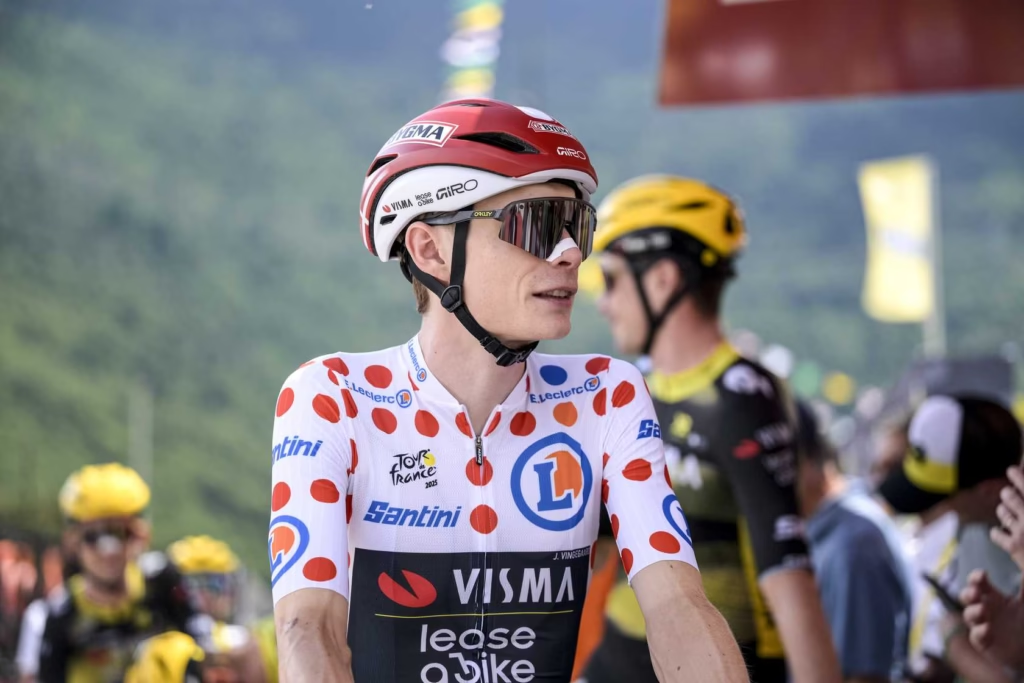 Photo Credit: A.S.O./Charly López
Best pure climber pick: Jonas Vingegaard
If this were judged only by sustained climbing on the hardest mountains, Vingegaard would be the best pure climber pick. Plateau de Solaison, the Galibier, Sarenne and Alpe d’Huez all suit the type of rider who can keep pressure high for a long time.
The question is whether he can do that repeatedly after his Giro d’Italia campaign. If he arrives fresh enough, he can win mountain stages, score heavily on HC climbs and challenge Pogačar directly.
Best attacking pick: Tadej Pogačar
Pogačar is the best attacking pick because he is more likely to turn mountain days into stage-winning moves. If he repeatedly attacks for time bonuses, stage wins and psychological pressure, the polka-dot jersey may follow naturally.
He does not need to ride like a traditional King of the Mountains contender. He only needs to race like Pogačar.
Best specialist pick: Giulio Ciccone
Ciccone is the best specialist pick because he understands how to win this jersey without needing to be the best GC rider. He can target the right climbs, attack early and treat the competition as a primary objective.
His biggest barrier is not ability. It is team role. If Lidl-Trek give him freedom, he becomes one of the most credible non-GC winners.
Best French storyline: Paul Seixas
Seixas is the obvious French storyline. A debut Tour, a mountain-heavy route and a home audience hungry for a new climbing figure all point towards a possible polka-dot campaign if the GC picture allows it.
He may begin the race focused on learning and riding GC, but the mountains classification could become a natural target if he is close to the front on the summit finishes or loses enough time to attack.
Best outsider: Ben Healy
Healy is the best outsider because he can make races unstable. He is unlikely to beat the pure climbers on the hardest summit finishes, but he can take points before the favourites begin racing. On the right day, that matters.
If EF Education-EasyPost select him and give him licence to attack, he could build a points lead before the final Alpine block. Holding it would be harder, but he is one of the few riders with the instinct to make the competition unpredictable.
How the polka-dot fight differs from the green jersey battle
The green jersey and polka-dot jersey can look similar from a distance because both depend on collecting points, but the type of rider and the rhythm of the campaign are completely different.
The green jersey rewards consistency across flat stages, intermediate sprints and repeat placings. The polka-dot jersey rewards being in the right mountain moves, scoring on categorised climbs and surviving the biggest summit finishes.
That means the green jersey battle can be built through controlled sprint stages, while the polka-dot jersey often depends on risk. A climber has to attack early, spend energy before the GC riders move, and sometimes sacrifice a stage result to take points over a summit.
For comparison, our Tour de France 2026 sprinters guide looks at why the green jersey fight should follow a very different pattern.
-
 Photo Credit: Cor Vos
 -
 Photo Credit: Zac Williams/AusCycling
Prediction: who will win the Tour de France 2026 polka-dot jersey?
The safest prediction is that the polka-dot jersey will go to a GC contender rather than a pure breakaway climber. The route has too many summit finishes and too much late Alpine weight for the yellow jersey favourites to avoid collecting major points.
Pogačar is the narrow pick because of his ability to win on different types of mountain stages. If he is chasing a fifth Tour victory, he is likely to score heavily on Gavarnie-Gèdre, Plateau de Solaison and Alpe d’Huez. Vingegaard is the main threat, especially if the hardest sustained climbs become decisive.
Ciccone is the best alternative if the GC teams allow breakaways enough room before the final week. Seixas is the most interesting wildcard because he could either score through GC consistency or switch into an attacking role if the race opens up.
Prediction: Tadej Pogačar to win the 2026 Tour de France polka-dot jersey, with Jonas Vingegaard and Giulio Ciccone the two strongest challengers.
Tour de France 2026 polka-dot jersey verdict
The 2026 mountains classification should be one of the strongest jersey battles of the Tour. The route is too hard for a token climber’s competition, and the final weekend on Alpe d’Huez gives the jersey a proper late-race climax.
The GC riders have the advantage because the hardest points are tied to the biggest stages. Pogačar and Vingegaard may not need to target the jersey directly to win it. But riders such as Ciccone, Seixas, Evenepoel, Lipowitz, del Toro, Ayuso, Healy and Martinez can all influence the race if they get freedom at the right moments.
The polka-dot jersey is often about timing as much as climbing. In 2026, timing may be everything. Score early, survive the middle mountains, then still have enough left for Alpe d’Huez twice. That is a demanding formula, and it should make the mountains classification one of the most compelling contests of the race.
For newer fans following the Tour for the first time, our beginner’s guide to Men’s Tour de France 2026 explains how the overall race works, while our Tour de France winners list gives the historical context behind the yellow jersey battle that often shapes the mountains classification too.

