
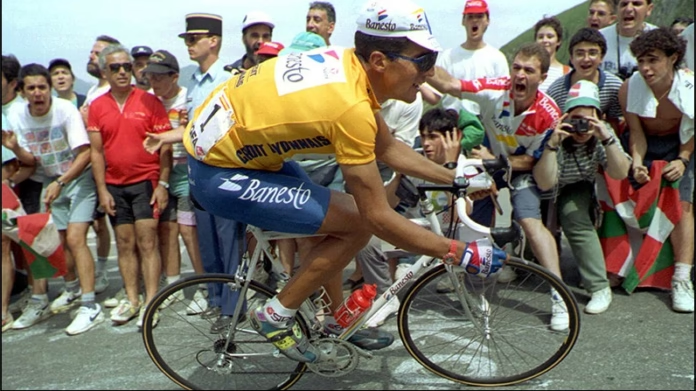
The Tour de France is not one race but several races happening at the same time. The yellow jersey is the one everyone knows, because it marks the rider leading the race overall. But the green, polka-dot and white jerseys all tell their own stories across the three weeks.
That is one of the reasons the Tour can feel busy to new fans. One rider may win the stage, another may take the yellow jersey, a sprinter may be fighting for green, a climber may be targeting polka-dot points, and a young GC rider may be protecting white. All of those battles can be happening on the same road, sometimes with completely different teams chasing different outcomes.
The Tour de France 2026 runs from Saturday, 4th July to Sunday, 26th July, starting with a team time trial in Barcelona and finishing in Paris. The route includes seven flat stages, four hilly stages, eight mountain stages, five summit finishes, one team time trial and one individual time trial. That gives every jersey competition a different rhythm, with sprint days, mountain days and GC days all spread across the race.
For the full route breakdown, see our Tour de France 2026 full route guide, while our beginner’s guide to the Men’s Tour de France 2026 explains the wider structure of the race.
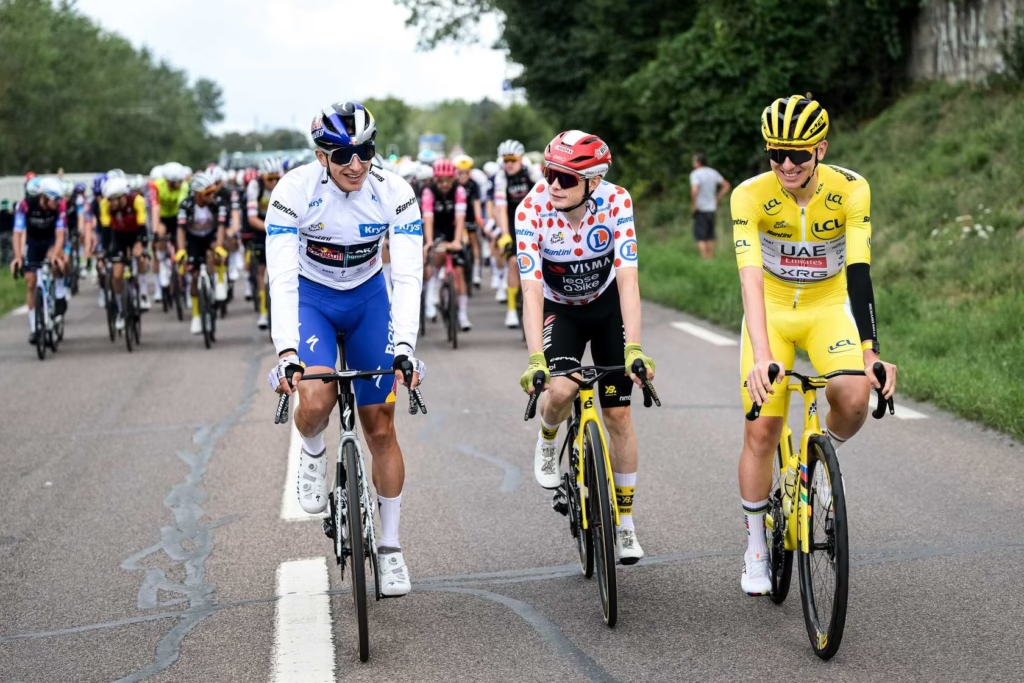
What are the four main Tour de France jerseys?
The four main Tour de France jerseys are:
- Yellow jersey: leader of the general classification
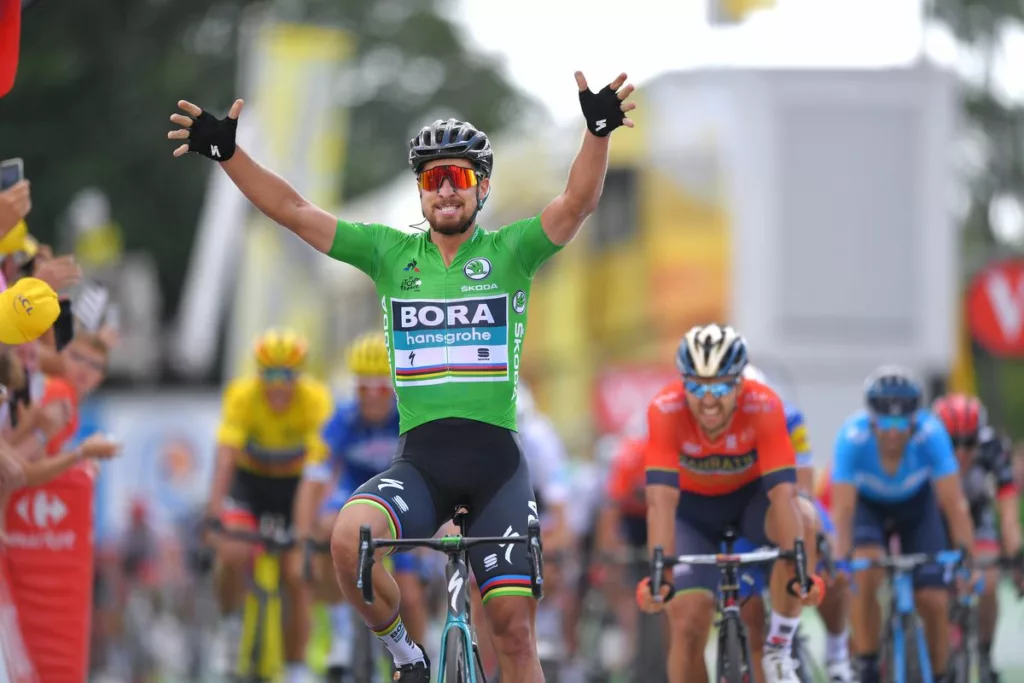
- Green jersey: leader of the points classification
- Polka-dot jersey: leader of the mountains classification
- White jersey: best young rider on general classification
Each jersey is calculated differently. Yellow and white are based on time. Green and polka-dot are based on points. That means a rider can be central to one classification without being a serious contender in another.
A sprinter can lead green without being anywhere near yellow. A climber can chase polka dots without trying to win the Tour overall. A young rider can wear white while also fighting for yellow. The overlap between those competitions is one of the things that makes the Tour de France tactically interesting.
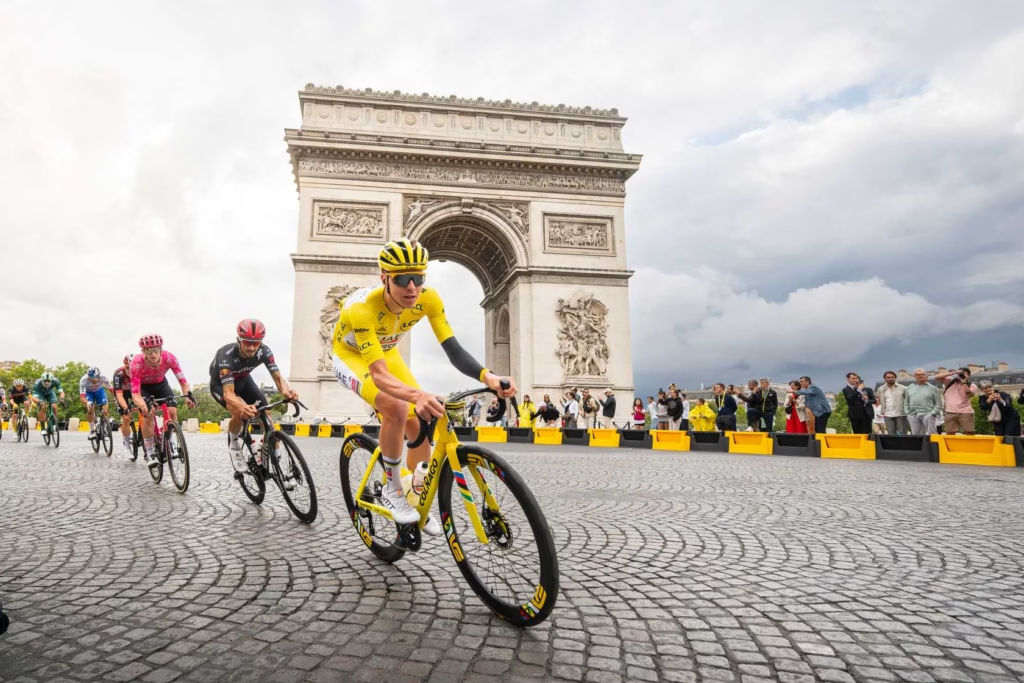
Yellow jersey: the overall race leader
The yellow jersey is the most important jersey at the Tour de France. It is worn by the leader of the general classification, usually shortened to GC.
The general classification is based on total time. Every rider’s time is added together from each stage. The rider who has completed the race in the lowest total time wears yellow.
That means the yellow jersey is not necessarily worn by the rider who has won the most stages. A rider could win no stages at all and still win the Tour if they are consistently faster across the whole race. Equally, a sprinter might win several flat stages but lose hours in the mountains and never come close to yellow.
How is the yellow jersey decided?
The yellow jersey is decided by:
- Total time across all stages
- Time gained or lost on climbs, time trials and crosswind days
- Bonus seconds on selected stage finishes
- Team time trial performance
- Avoiding crashes, splits and bad days
- Consistency across all three weeks
The 2026 route should make the yellow jersey battle especially layered. Stage 1 is a team time trial in Barcelona, meaning GC gaps can open immediately. Stage 3 already takes the race to Les Angles in the Pyrenees, while stage 6 finishes at Gavarnie-Gèdre. Later in the race, Le Lioran, Le Markstein, Plateau de Solaison, Orcières-Merlette and back-to-back Alpe d’Huez finishes all add more pressure.
The individual time trial on stage 16 between Évian-les-Bains and Thonon-les-Bains will also matter. A strong climber who loses time against the clock may need to attack in the Alps, while a time-trial specialist who survives the mountains can use that stage to recover ground.
For a deeper look at where the GC could be won and lost, read our Tour de France 2026 route analysis.
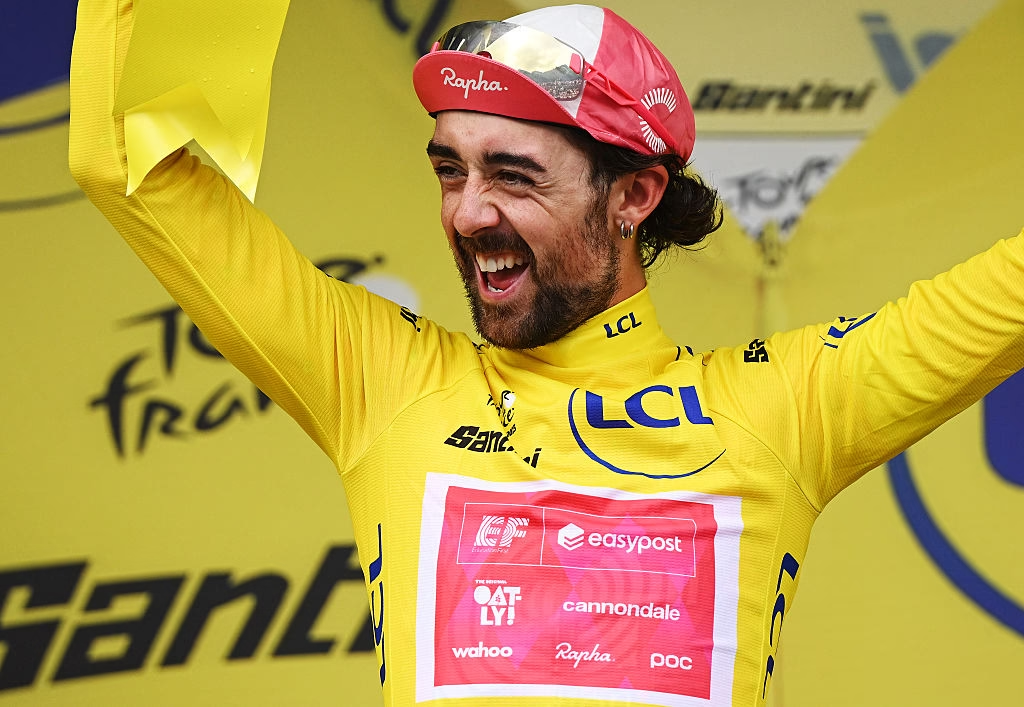 Photo Credit: Getty
Who could win the yellow jersey in 2026?
The leading yellow jersey contenders should be the strongest all-round stage racers: riders who can climb, time trial, recover, handle pressure and avoid losing time on difficult transition stages.
The main Tour de France 2026 GC contenders include:
- Tadej Pogačar
- Jonas Vingegaard
- Remco Evenepoel
- Isaac del Toro
- Juan Ayuso
- João Almeida
- Paul Seixas
- Primož Roglič
- Florian Lipowitz
- Oscar Onley
- Kévin Vauquelin
- Carlos Rodriguez
- Matteo Jorgenson
- Cian Uijtdebroeks
- Felix Gall
Pogačar and Vingegaard remain the clearest reference points because of their proven Grand Tour level. Evenepoel’s time trialling gives him a different route into the race, while the depth behind them should be strong enough to make the fight for the podium and top 10 just as important.
The 2026 Tour is not built around one obvious decisive day. The yellow jersey could change hands early, settle briefly, then explode again in the final week. That makes consistency just as important as peak climbing form.
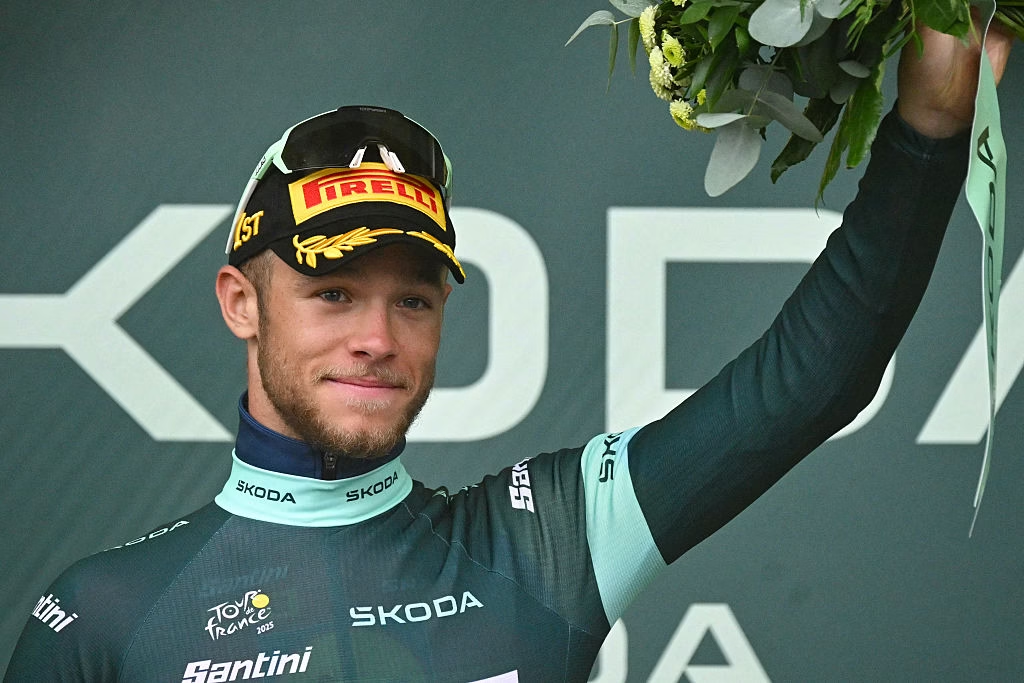
Green jersey: the points classification
The green jersey is worn by the leader of the points classification. It is usually thought of as the sprinters’ jersey, but the full contest is more complicated than that.
Riders score points at stage finishes and intermediate sprints during road stages. Flat stages usually offer the biggest points at the finish, which is why pure sprinters target green. But a rider who wants to win the jersey cannot rely only on one or two stage wins. They need repeated scoring across the race.
How is the green jersey decided?
The green jersey is decided by:
- Points scored at stage finishes
- Points scored at intermediate sprints
- Consistent placings across flat stages
- Surviving the mountains inside the time limit
- Team support for sprint positioning
- Commitment to chasing points across three weeks
The 2026 route gives the sprinters seven official flat stages, but those chances are spread through the race. Stage 5 to Pau is the first obvious sprint opportunity, with Bordeaux, Bergerac, Nevers, Chalon-sur-Saône, Voiron and Paris also standing out.
That spread matters. There is no long early sequence of easy sprint days before the mountains begin. Stage 1 is a team time trial, stage 2 finishes around Montjuïc in Barcelona, stage 3 heads into the Pyrenees, and stage 6 climbs to Gavarnie-Gèdre. The fast men will have to survive proper climbing before they can even settle into the race.
Our Tour de France 2026 sprinters guide looks at the main contenders for the points classification in more detail.
Who could win the green jersey in 2026?
The green jersey should favour a rider who can combine sprint wins with consistency. Winning one stage is not enough if rivals keep scoring every day.
The main green jersey contenders include:
- Jonathan Milan
- Jasper Philipsen
- Tim Merlier
- Biniam Girmay
- Arnaud De Lie
- Olav Kooij
- Bryan Coquard
- Jordi Meeus
- Kaden Groves
- Wout van Aert
Jonathan Milan looks like one of the best fits for the route because of his power, durability and points-race profile. Jasper Philipsen brings proven Tour sprint craft and a strong lead-out structure. Tim Merlier may be the fastest on a perfect flat finish, while Girmay and De Lie become more interesting if the points battle is shaped by harder days and reduced sprints.
Van Aert is always a wildcard because he can score almost anywhere, but his role may depend on Team Visma | Lease a Bike’s yellow jersey priorities.
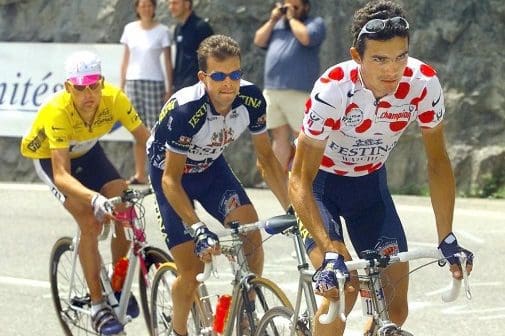
Polka-dot jersey: the mountains classification
The polka-dot jersey is worn by the leader of the mountains classification. It is often called the King of the Mountains jersey, or KOM jersey.
Riders score points by being among the first over categorised climbs. The harder the climb, the more points are available. In general, small climbs offer fewer points, while major mountain passes and summit finishes offer much more.
How is the polka-dot jersey decided?
The polka-dot jersey is decided by:
- Points scored on categorised climbs
- Points scored on major mountain passes
- Points scored on summit finishes
- Breakaway success in mountain stages
- The number and category of climbs in the route
- Whether GC riders or attackers dominate the mountain days
This is where the polka-dot jersey becomes tactically interesting. Sometimes it is won by a GC rider because the biggest mountain stages are also decisive for yellow. Other times, it is won by a breakaway specialist who targets climbs early in stages, collects points, and builds a lead in the competition without threatening the overall win.
The 2026 Tour route gives the mountains classification plenty of scope. The race visits the Pyrenees, Massif Central, Vosges, Jura and Alps, with summit finishes at Gavarnie-Gèdre, Plateau de Solaison, Orcières-Merlette and Alpe d’Huez twice. Stage 20 also includes the Galibier and the Col de Sarenne before the final climb to Alpe d’Huez.
That means the polka-dot jersey may not be settled until very late. A rider could build an early lead in the Pyrenees, but the final Alpine weekend carries enough climbing weight to change the competition dramatically.
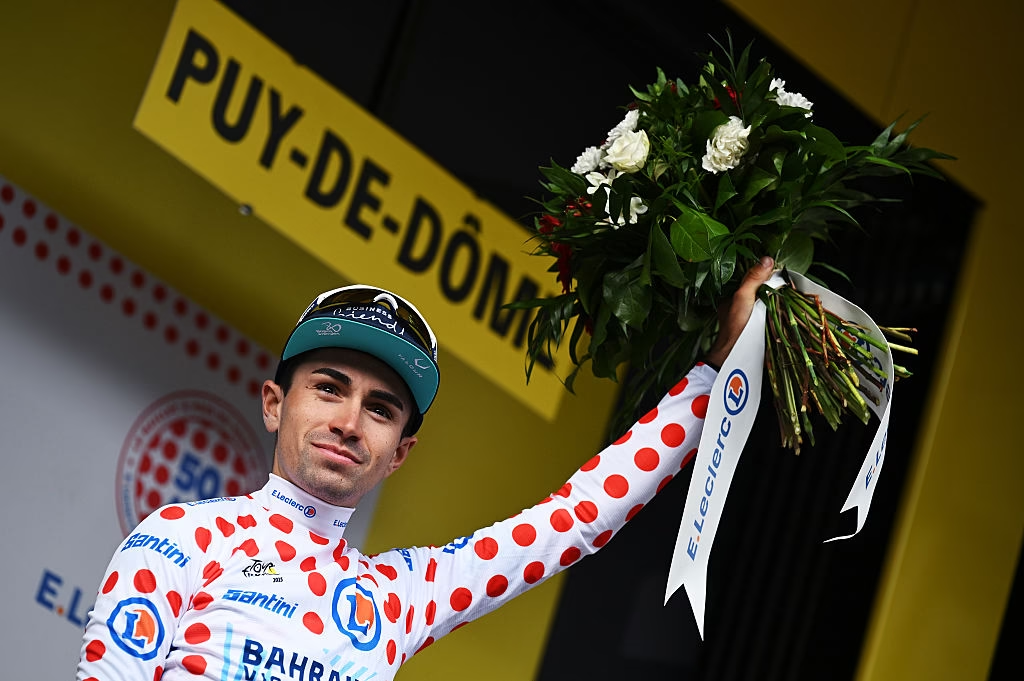
Who could win the polka-dot jersey in 2026?
The polka-dot jersey can be harder to predict before the race because it depends on team tactics and how the GC battle develops. Some riders may only target the mountains classification after losing time overall. Others may begin the race with that jersey as a clear goal.
Possible polka-dot contenders include:
- Tadej Pogačar
- Jonas Vingegaard
- Giulio Ciccone
- Felix Gall
- Richard Carapaz
- Ben Healy
- Romain Grégoire
- Santiago Buitrago
- Einer Rubio
- Valentin Paret-Peintre
- Lenny Martinez
- Neilson Powless
The strongest GC riders can win the jersey if they dominate summit finishes, but they may not want the extra podium duties and tactical attention that come with it. That opens the door for breakaway climbers, especially if they lose enough time early to be given freedom.
The polka-dot competition often rewards aggression. A rider needs the legs to climb, but also the instinct to get into the right moves before the big points are available.
White jersey: the best young rider
The white jersey is worn by the best young rider on general classification. It works like the yellow jersey, but only riders under the age limit are eligible.
That means the white jersey is based on time, not points. The eligible rider with the lowest total time wears white. If a young rider is also leading the overall race, they will wear yellow, and the next eligible rider may wear white on the road.
How is the white jersey decided?
The white jersey is decided by:
- Total time across all stages
- Eligibility under the young rider age rule
- Climbing strength
- Time trial ability
- Recovery across three weeks
- Avoiding crashes and time losses
- Staying close to the main GC contenders
The white jersey has become one of the most important secondary classifications because many of the sport’s best riders are already Grand Tour contenders at a young age. It is not just a development prize. In modern cycling, the white jersey battle often overlaps directly with the fight for the podium.
The 2026 route should reward young riders who can climb repeatedly and time trial well. The first week is hard enough to remove weaker contenders quickly, while the final week gives proper climbers a chance to move up.
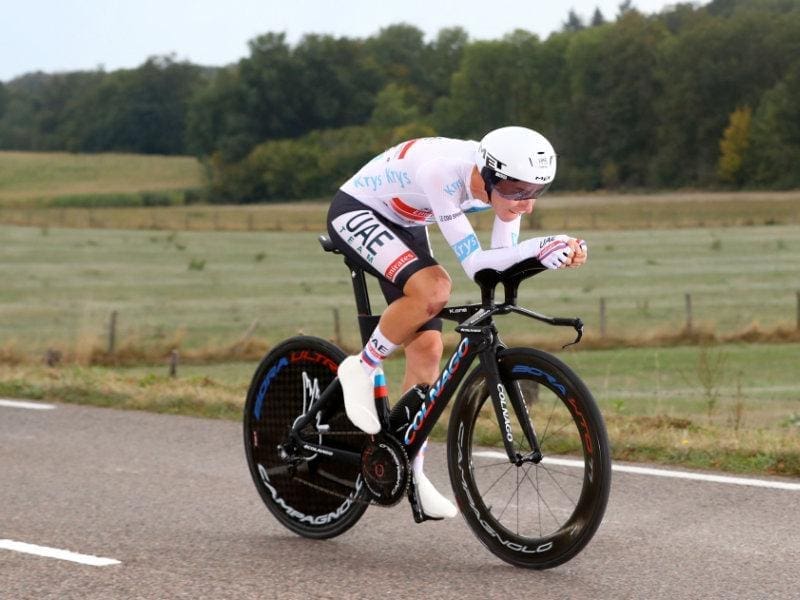
Who could win the white jersey in 2026?
The white jersey field depends on the final start list and rider eligibility, but the 2026 race should have several young GC names capable of aiming high overall.
Possible white jersey contenders include:
- Isaac del Toro
- Paul Seixas
- Florian Lipowitz
- Oscar Onley
- Cian Uijtdebroeks
- Léo Bisiaux
- Jørgen Nordhagen
- Juan Ayuso, depending on eligibility cut-off
- António Morgado, depending on role
- Matthew Riccitello, depending on selection
Del Toro may be the most obvious name if selected with GC leadership or protected status. Seixas gives France a hugely interesting young rider to follow, while Onley, Lipowitz and Uijtdebroeks all fit the mould of riders who can stay close in a hard mountain-heavy race.
The white jersey could also be shaped by team hierarchy. A young rider riding for a leader may lose time through support work, while another rider given freedom could quietly build a strong overall position.
Can one rider lead more than one jersey competition?
Yes. A rider can lead more than one classification at the same time. For example, a GC rider who wins a mountain stage could lead yellow and polka-dot. A young rider leading the race overall could lead both yellow and white.
However, one rider cannot physically wear multiple jerseys in the peloton. There is an order of priority. Yellow comes first. If the yellow jersey leader also leads another classification, the next rider in that other classification may wear that jersey on the road.
That is why fans sometimes see a rider wearing white, green or polka-dot even though another rider is technically leading that classification. It is not a mistake. It is the jersey-priority system at work.
What other Tour de France classifications are there?
The four leader jerseys are the main visible competitions, but the Tour de France also includes other awards and standings.
These include:
- Team classification
- Combativity prize
- Super-combativity award
- Stage winner prizes
- Intermediate sprint points
- Mountains points
- Daily classification awards
The team classification is based on the combined times of each team’s best riders on each stage. The combativity prize rewards aggressive racing, often from breakaway riders. These competitions do not have the same public profile as yellow, green, polka-dot and white, but they still shape how teams race.
For newer viewers, the key is to start with the four main jerseys. Once those make sense, the rest of the race becomes much easier to follow.
 Photo Credit: Getty
Why the jerseys matter at the Tour de France
The jerseys give the Tour de France structure. A flat stage is not only about who wins the sprint, because the green jersey may shift. A mountain stage is not only about the yellow jersey, because the polka-dot competition may be shaped by the breakaway. A young rider finishing safely in the GC group may be having a successful day even without attacking.
That is what makes the race layered. Different teams start each stage with different aims. A GC team may want control. A sprint team may want a bunch finish. A climber may want mountain points. A young rider’s team may only care about avoiding time loss. A breakaway rider may be chasing combativity or visibility.
The Tour de France 2026 route should make those competitions particularly active. The early team time trial, early Pyrenees, five summit finishes, stage 16 individual time trial and back-to-back Alpe d’Huez finales all create pressure. The sprinters have chances, but they must work around the mountains. The climbers have repeated opportunities, but they must choose their days carefully. The young riders cannot afford a slow start.
Quick guide to the Tour de France jerseys
| Jersey | Classification | How it is won | Typical contenders |
|---|---|---|---|
| Yellow | General classification | Lowest total time | GC riders and Grand Tour leaders |
| Green | Points classification | Points from finishes and intermediate sprints | Sprinters and versatile fast finishers |
| Polka-dot | Mountains classification | Points from categorised climbs | Climbers, breakaway riders and GC contenders |
| White | Young rider classification | Lowest total time among eligible young riders | Young GC riders and future Tour contenders |
-
 Photo Credit: Cor Vos
 -
 Photo Credit: Zac Williams/AusCycling

Tour de France 2026 jersey FAQs
What does the yellow jersey mean?
The yellow jersey is worn by the rider leading the Tour de France overall. It is based on total time across all stages. The rider with the lowest cumulative time wears yellow.
What does the green jersey mean?
The green jersey is worn by the leader of the points classification. Riders score points at stage finishes and intermediate sprints, with flat stages usually offering the biggest rewards for sprinters.
What does the polka-dot jersey mean?
The polka-dot jersey is worn by the leader of the mountains classification. Riders score points by being among the first over categorised climbs and mountain finishes.
What does the white jersey mean?
The white jersey is worn by the best young rider on general classification. It is calculated like the yellow jersey, but only eligible young riders are counted.
Can the same rider win yellow and white?
Yes. If an eligible young rider has the lowest overall time, they can lead both yellow and white. They would wear yellow, while the next eligible rider may wear white on the road.
Can a sprinter win the yellow jersey?
It is possible for a sprinter to wear yellow early in some Tours, especially after a flat opening stage, but it is very unlikely for a pure sprinter to win the Tour overall because the mountains and time trials create large gaps.
Can a GC rider win the polka-dot jersey?
Yes. GC riders often score heavily on summit finishes and major climbs. However, the polka-dot jersey can also be won by breakaway climbers who target mountain points throughout the race.
Which jersey is the most important?
The yellow jersey is the most important because it represents the overall leader and eventual Tour de France winner. Green, polka-dot and white are still major prizes, but yellow is the central competition.
Final thoughts
The yellow jersey tells you who is winning the Tour de France. The green jersey shows who is leading the points battle. The polka-dot jersey marks the best climber. The white jersey highlights the best young rider in the overall standings.
Once those four competitions make sense, the Tour becomes much easier to follow. A stage can matter even if the yellow jersey does not change. A breakaway can shape the mountains classification. A bunch sprint can transform the green jersey. A young rider can quietly gain ground in white while the bigger names dominate the headlines.
The Tour de France 2026 route should give every jersey room to breathe. The GC riders will fight for yellow across Barcelona, the Pyrenees, the time trial and the Alps. The sprinters will chase green through the flat stages. The climbers will look at the five summit finishes and the major mountain passes. The next generation will try to turn the white jersey into proof that they belong near the front of the biggest race in cycling.

