
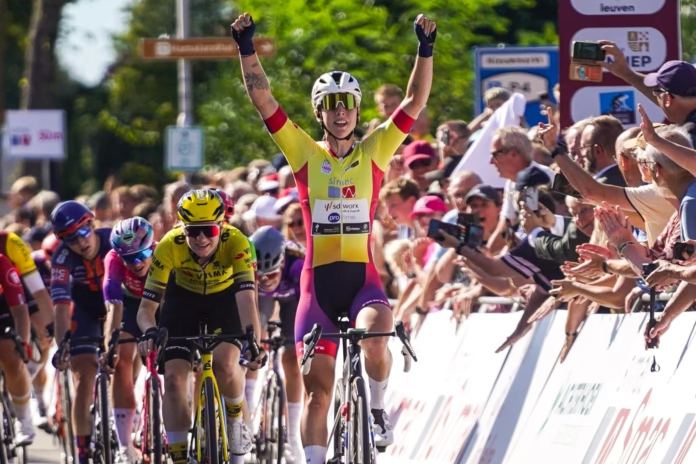
The Simac Ladies Tour has traditionally been one of the most distinctive late-season stage races in women’s professional cycling. Rather than relying on major mountains to separate the favourites, it has been built around the particular demands of racing in the Netherlands: fast roads, exposed sections, crosswinds, short time trials, technical positioning battles and opportunities for the strongest sprinters and Classics riders.
The 2026 edition brings a major change. The race formerly known as the Simac Ladies Tour has been incorporated into the relaunched Eneco Tour, with men’s and women’s races taking place alongside one another from 13 to 18 October 2026.
It also moves out of the UCI Women’s WorldTour for 2026 and is classified as a UCI 2.1 stage race. That makes this season something of a reset for a race whose history stretches back to 1998.
For newcomers, though, the basic attraction remains. This is a race where a completely flat road can suddenly become more dangerous to the general classification than a mountain, where seconds gained in a short time trial can decide the overall winner and where some of the world’s fastest riders can realistically challenge for GC.
 Photo Credit: Getty
What is the Simac Ladies Tour?
The race began in 1998 as the Holland Ladies Tour, created at a time when the strength of Dutch women’s cycling was not matched by the country’s stage-racing calendar.
Its name has changed repeatedly through sponsorship. It has previously been known as the Profile Ladies Tour, BrainWash Ladies Tour, Boels Rental Ladies Tour and, most recently, Simac Ladies Tour.
The 2025 Simac Ladies Tour preview provides a useful look at the race in its familiar WorldTour form, including its history, route characteristics and established place within the women’s calendar.
For much of its recent history, the race has occupied an important position towards the end of the Women’s WorldTour season.
Unlike the Tour de France Femmes, Giro d’Italia Women or La Vuelta Femenina, however, it has never been built around enormous Alpine or Pyrenean climbs.
Its defining characteristics are instead:
- fast and predominantly flat roads
- exposed sections susceptible to crosswinds
- narrow roads and frequent changes of direction
- bunch sprints
- individual time trials or prologues
- short, punchy climbs
- constant battles for position
That creates racing which can be much harder than the elevation profile suggests.
What is the Simac Ladies Tour called in 2026?
This is the biggest source of potential confusion.
The race was originally expected to continue as the Simac Ladies Tour in September 2026. Those plans subsequently changed when the women’s event was combined with the Tour of Holland as part of a new joint men’s and women’s race.
Eneco then returned as title sponsor.
The official 2026 race is therefore the Eneco Tour, with both men’s and women’s competitions running between Tuesday 13 October and Sunday 18 October.
Simac remains involved with the event, but the Simac Ladies Tour is no longer the principal public-facing name.
Searches for “Simac Ladies Tour 2026”, “Ladies Tour of Holland 2026” and “Eneco Tour Women 2026” may therefore all be referring to what is effectively the continuation of the same historic Dutch women’s stage race.
Photo Credit: GettyIs the Simac Ladies Tour still a Women’s WorldTour race?
No.
This is an important difference from recent editions.
The Simac Ladies Tour was part of the Women’s WorldTour in 2025. The reorganised women’s Eneco Tour is listed by the UCI as a 2.1 race in 2026.
That changes the participation framework.
WorldTeams do not have the same participation obligations they would have had for a Women’s WorldTour event, meaning there is greater potential for variation in the strength and composition of the start list.
It does not mean the racing itself suddenly becomes low-level. The event retains a strong sporting history, takes place in one of the world’s most important cycling nations and uses terrain particularly attractive to Dutch and northern European teams.
The final start list will therefore tell us much more about the competitive level of the inaugural women’s Eneco Tour than its classification alone.
When is the 2026 Eneco Tour Women?
The race consists of an opening prologue followed by five stages.
| Date | Race day | Location | Distance | Type |
|---|---|---|---|---|
| 13 October | Prologue | The Hague | 4km | Prologue |
| 14 October | Stage 1 | Ede | 79.5km | Flat |
| 15 October | Stage 2 | Tilburg | 13.6km | Individual time trial |
| 16 October | Stage 3 | Sittard-Watersley | 87.8km | Hilly |
| 17 October | Stage 4 | Hoogeveen-Col du VAM | 114.3km | Hilly |
| 18 October | Stage 5 | Arnhem | 78.2km | Flat |
That gives the women approximately 377.4km of racing.
The distances are strikingly short compared with many major stage races. Only the Col du VAM stage exceeds 100km.
Short does not necessarily mean easy. In some circumstances it can have the opposite effect.
A 78km or 88km road stage gives riders relatively little reason to conserve energy. Teams can attack earlier, the pace can remain extremely high and mistakes become harder to recover from because there is less road available to organise a chase.
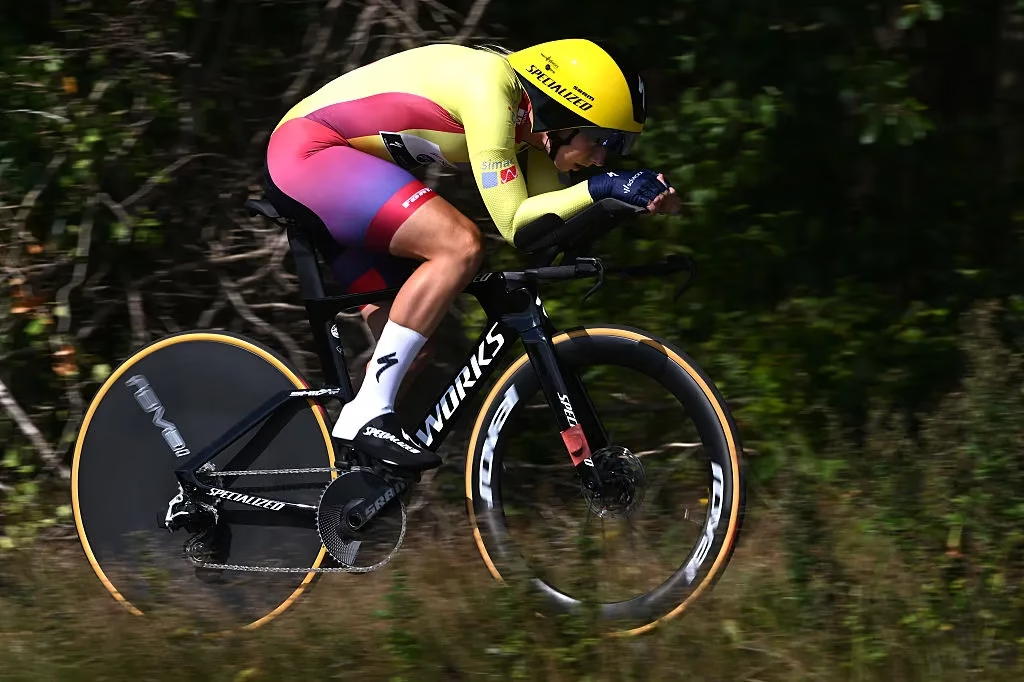 Photo Credit: Getty
How does the general classification work?
As with almost every conventional stage race, the overall winner is decided primarily by cumulative time.
Each rider receives a finishing time for every stage. Those times are added together, and the rider with the lowest total time leads the general classification.
For example:
| Rider | Overall time |
|---|---|
| Rider A | 4:10:00 |
| Rider B | 4:10:07 |
| Rider C | 4:10:19 |
Rider A would lead Rider B by seven seconds and Rider C by 19 seconds.
The important part is understanding how those gaps are created.
In a mountainous race, much of the GC separation might come from two or three long climbs. At the Eneco Tour, riders can lose time in several very different ways.
They can concede seconds in a time trial, miss a crosswind split, be poorly positioned entering a short climb or become caught behind a gap during a technical finale.
That makes consistency particularly important.
Why are the time trials so important?
There are effectively two races against the clock in six days.
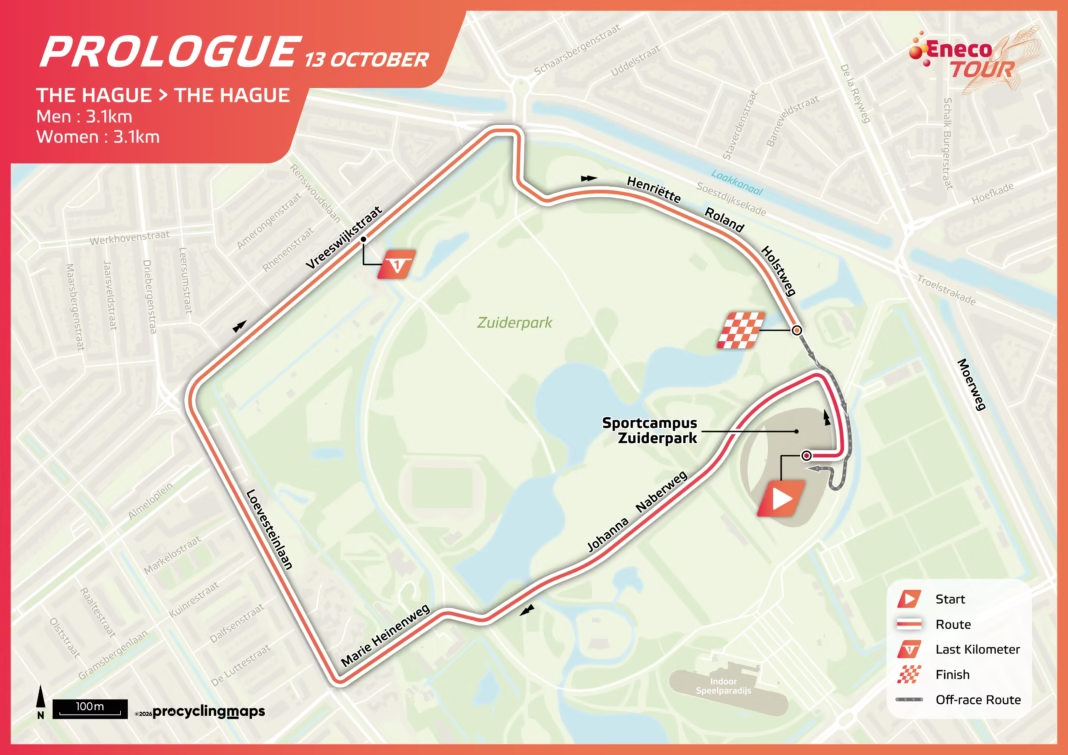
The opening prologue in The Hague is only 4km. Gaps should be relatively small, but it will establish the first race leader and suit riders capable of producing enormous power for only a few minutes.
Two days later comes the more important 13.6km individual time trial in Tilburg.
That is long enough for strong specialists to create meaningful GC gaps.
Time trialling has regularly mattered at this race. In 2025, Zoe Bäckstedt won the Stage 5 time trial over 10.2km, while Lorena Wiebes did enough against the clock to protect the overall lead she had accumulated through her sprinting and aggressive racing.
Approximately 17.6km of the 2026 race will be ridden individually against the clock. In a race totalling only around 377km, that gives time-trial ability considerable influence over the final classification.
A rider losing 30 or 40 seconds in Tilburg may need to attack aggressively on the following two hilly days.
Why can a flat Dutch stage decide the race?
The Netherlands does not need mountains to produce major GC gaps.
Wind can do the job instead.
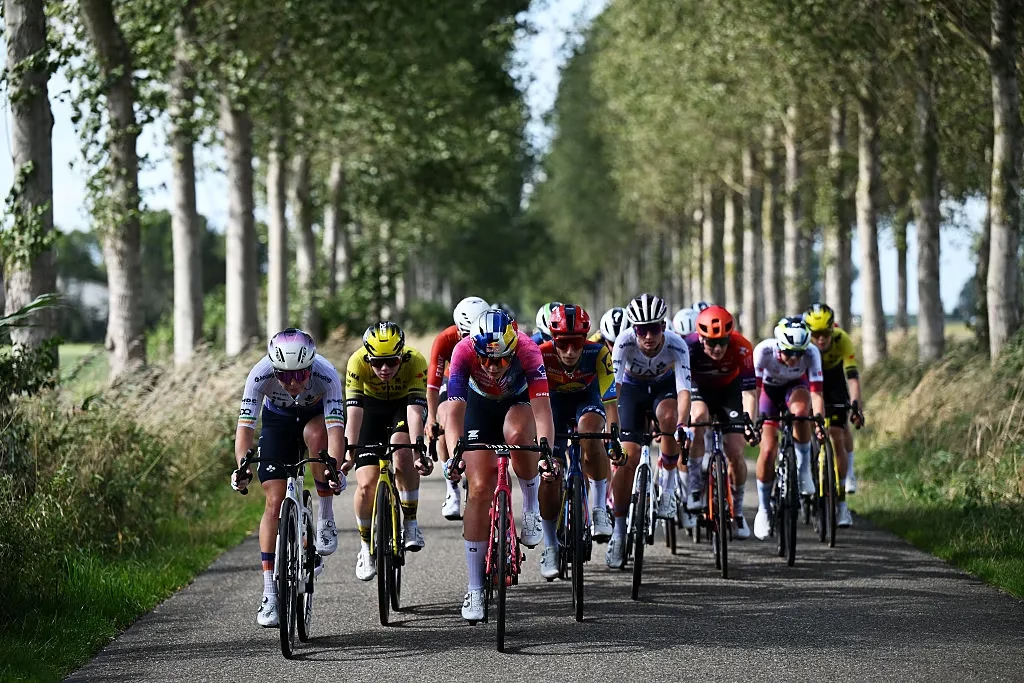
A strong crosswind changes the way riders can shelter behind one another. Rather than sitting directly behind the wheel in front, riders begin forming diagonal lines across the road known as echelons.
The problem is that the road has a limited width.
Once the available sheltered positions are occupied, the riders behind are forced into the wind. If the pace is high enough, gaps begin to appear.
Those gaps can quickly become permanent.
The 2025 Simac Ladies Tour demonstrated this repeatedly. Stage 2 was blown apart by crosswinds, with an 11-rider group reaching the finish ahead after the race fragmented.
The following day produced more of the same. Stage 3 again split into echelons, leaving only 17 riders in the decisive front group.
That is why watching the weather forecast can be almost as important as looking at the stage profile.
A road marked as completely flat can still become one of the most dangerous GC stages of the week.
What should beginners look for before an echelon forms?
The best warning often comes from the teams rather than the weather graphic.
If several powerful squads suddenly begin moving riders towards the front of the peloton, there is usually a reason.
Watch for:
- teams forming lines down one side of the road
- domestiques repeatedly moving their leader forwards
- a sudden increase in speed
- riders fighting unusually hard for the first 20 positions
- exposed farmland with little protection from buildings or trees
- the bunch beginning to stretch into one long line
When several Classics-oriented teams simultaneously recognise an exposed crosswind section, the attack can be almost instantaneous.
A GC contender sitting 60th in the bunch may already be in serious trouble before a visible gap actually appears.
The Limburg stage changes the character of the race
Stage 3 takes the women to Sittard-Watersley in South Limburg.
This is very different terrain from the stereotypical image of flat Dutch cycling.
Limburg provides rolling roads, short climbs, repeated changes of gradient and frequent opportunities to attack. There may not be one giant ascent capable of deciding the entire race, but a succession of smaller efforts can gradually remove riders from contention.
At only 87.8km, the stage should encourage aggressive racing.
It also comes immediately after the Tilburg time trial.
That creates an obvious tactical situation. Riders who gain time in Tilburg will want control. Riders who lose time will have one of their best opportunities to attack.
The overall race could therefore change from a controlled time-trial contest into something much more volatile within 24 hours.
What is the Col du VAM?
Stage 4 finishes on one of the most recognisable climbs in Dutch cycling: the Col du VAM.
Despite the name, this is not remotely comparable with a major Alpine col.
The climb is built on a former landfill site in Drenthe, transformed into a cycling facility with a network of short, steep roads rising above the surrounding landscape.
That unusual setting has made it an important location in Dutch racing.
The climb was particularly associated with the Ronde van Drenthe, whose demise removed one of the traditional fixtures built around the VAMberg. ProCyclingUK looked at the climb’s place within that event in the story of the end of the Ronde van Drenthe.
The climbs are not long, but they are steep enough for positioning and explosive power to become important.
Stage 4 is also the longest women’s stage of the Eneco Tour at 114.3km.
For a punchy Classics rider trying to recover time lost to a heavier time-trial specialist, the Col du VAM stage could be crucial.
Is the Eneco Tour a race for sprinters?
More than most stage races.
The old Simac Ladies Tour was exceptionally friendly to fast riders because there was rarely enough sustained climbing to eliminate the strongest all-round sprinters from GC contention.
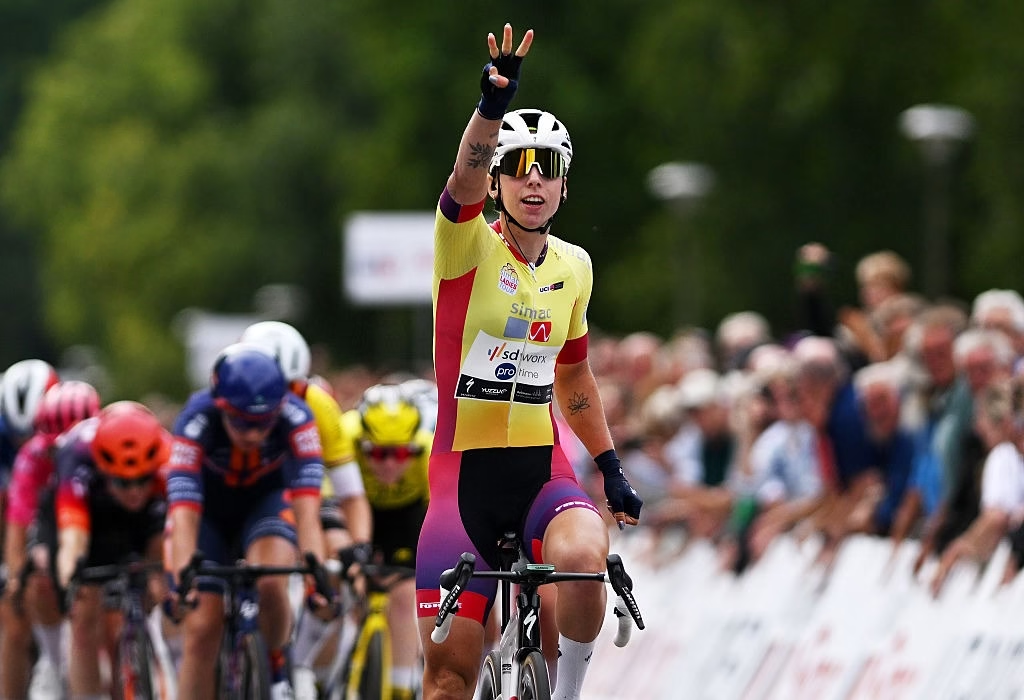
Lorena Wiebes demonstrated that perfectly in 2025.
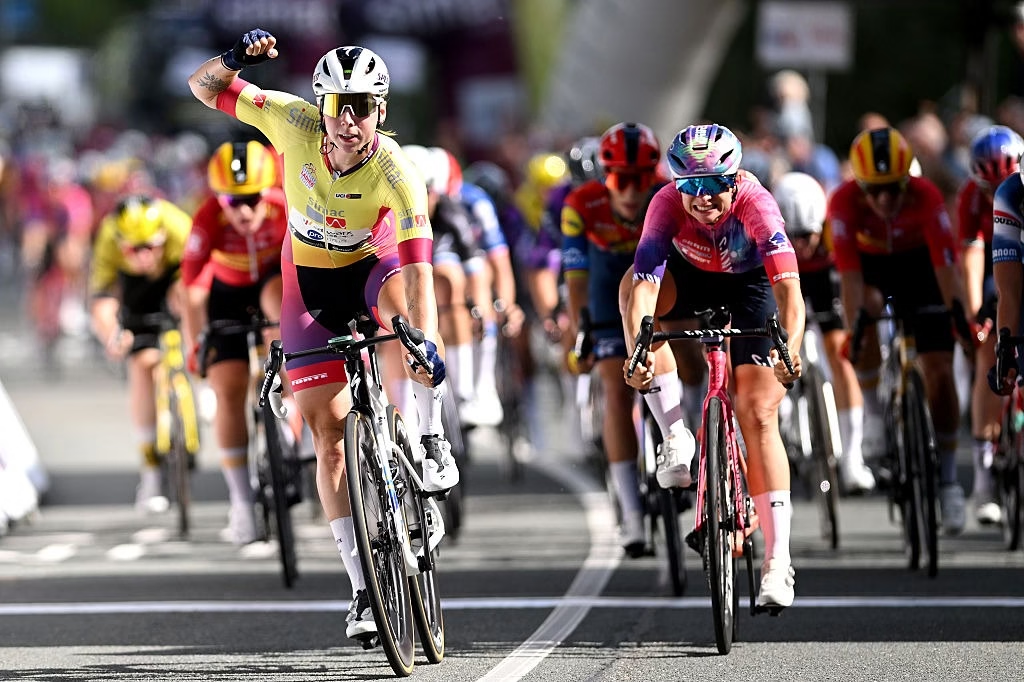
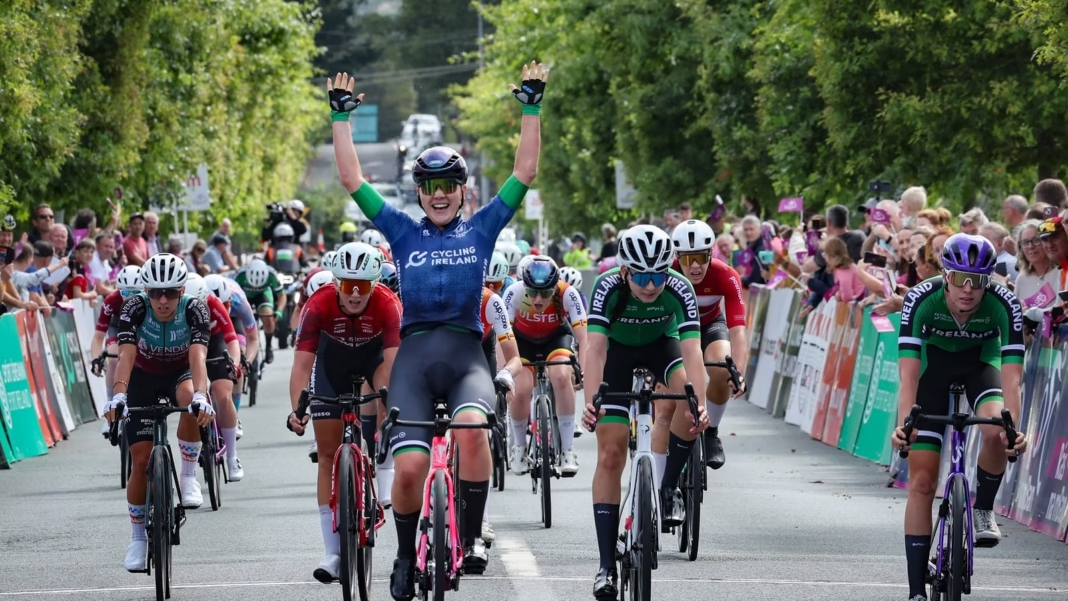
She won five of the six stages and ultimately took the overall classification. Her dominance was not simply the result of repeatedly winning bunch sprints. She survived the crosswinds, remained well positioned when the race split and limited her losses in the time trial.
Her fifth stage victory also secured the 2025 Simac Ladies Tour overall title.
That is relatively unusual in modern stage racing.
At the Tour de France Femmes or Giro d’Italia Women, a pure sprinter generally has no realistic possibility of winning the overall classification because the mountain stages create enormous gaps.
Here, the equation is different.
A rider with elite sprint speed who can time trial well, survive the short climbs and stay on the correct side of every crosswind split can remain in contention throughout the week.
What type of rider can win the overall race?
The ideal rider is an all-round powerhouse, rather than a pure climber.
A serious GC contender needs several qualities:
- strong time-trial ability
- excellent positioning
- high sustained power on flat roads
- enough acceleration for short climbs
- confidence in crosswinds
- good bike handling
- tactical awareness
- ideally, enough finishing speed to profit from bonus seconds
That explains why the race’s roll of honour contains so many riders associated with the Classics.
Marianne Vos, Ellen van Dijk, Annemiek van Vleuten, Chantal van den Broek-Blaak, Lisa Brennauer, Lorena Wiebes and Lotte Kopecky have all won the race.
The characteristics differ between them, but all were exceptionally difficult riders to expose on fast, technical northern European roads.
Marianne Vos remains the record holder
Marianne Vos has won the race four times, taking four consecutive overall victories between 2009 and 2012.
That record captures the type of versatility traditionally rewarded here.
At her best, Vos could sprint, climb short hills, position herself exceptionally well and respond immediately when the race became tactical.
More recent editions have belonged largely to another generation.
Recent overall winners include:
- 2025: Lorena Wiebes
- 2024: Lotte Kopecky
- 2023: Lotte Kopecky
- 2022: Lorena Wiebes
- 2021: Chantal van den Broek-Blaak
- 2019: Christine Majerus
- 2018: Annemiek van Vleuten
- 2017: Annemiek van Vleuten
Kopecky’s 2024 victory was particularly dramatic. She won the final stage and overturned the GC in Arnhem using the ten-second winner’s bonus to move ahead of Franziska Koch.
It was a good example of how small margins can remain important right until the final kilometres of this race.
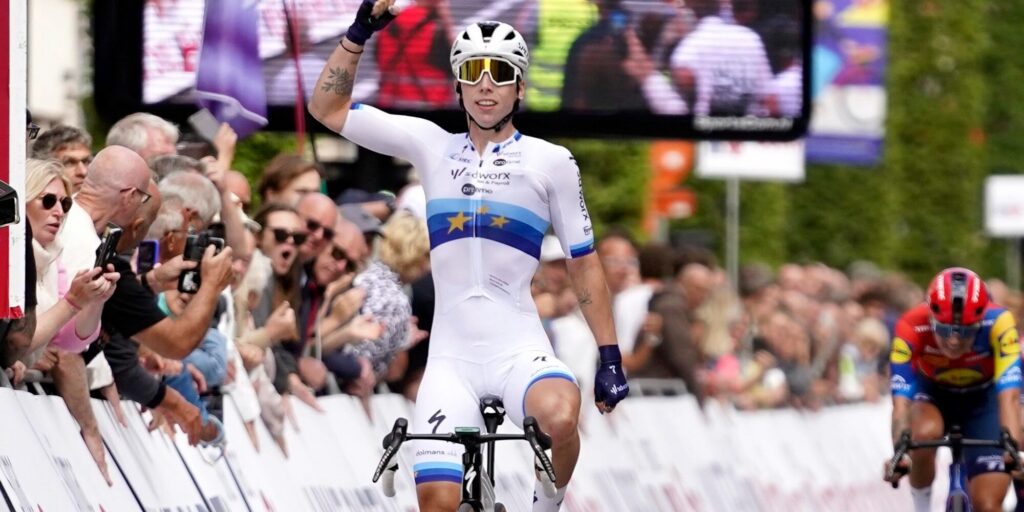 Photo Credit: Cor Vos
What should beginners watch during each stage?
Understanding the race becomes much easier if you concentrate on slightly different things depending on the terrain.
Flat stages
Watch the position of the major teams.
If all the favourites suddenly begin moving towards the front despite there being no climb approaching, wind or a technical section is probably coming.
In a conventional sprint finish, pay attention to the final five kilometres rather than just the last 200 metres. Sprint trains will be fighting for control long before their leader actually launches.
Prologue and time trial
Follow the intermediate times and compare GC contenders directly.
Finishing fifth on a time-trial stage might represent an excellent result if every major GC rival finishes behind.
Likewise, a rider can finish 15th and still remain in overall contention if the time gaps are small.
Limburg
Look for repeated accelerations rather than expecting one decisive mountain.
The difficulty comes from accumulation. Riders who can survive one short climb may eventually struggle after the fifth, sixth or seventh acceleration.
Col du VAM
Positioning is vital.
On a short, steep climb, starting 40th in the bunch can be costly because the front riders may already have accelerated before those further back even reach the foot of the climb.
Arnhem
Check the GC gaps before the final stage begins.
If only a few seconds separate the leading riders, attacks and bonus seconds can still change the overall result.
How do time bonuses affect the race?
Time bonuses can be particularly important in a race where natural GC gaps are relatively small.
Depending on the regulations used for the 2026 event, riders may be able to subtract bonus seconds from their overall time by finishing near the front of stages or through designated intermediate competitions.
That is one reason riders with a fast sprint can be so dangerous.
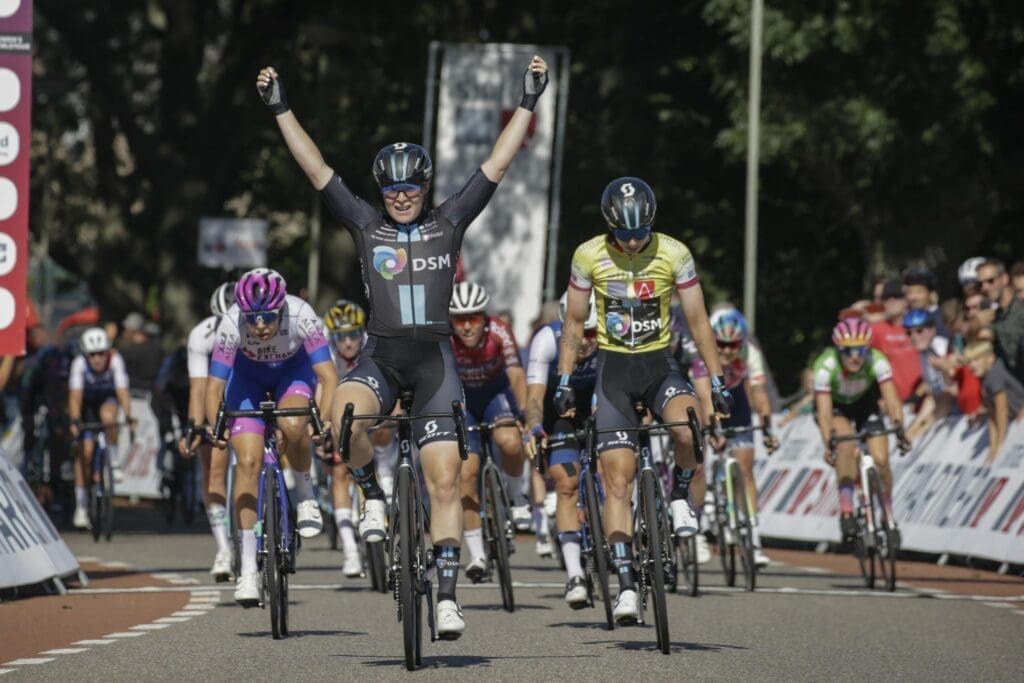
A rider might only be equal to a rival on the road but repeatedly collect bonus seconds by finishing first, second or third.
Over several stages, those small rewards add up.
Kopecky’s 2024 overall victory provided an excellent example of this principle. The stage winner’s bonus in Arnhem was enough to help transform the final classification.
The detailed 2026 competition regulations will determine exactly where and how bonuses are available.
What jerseys will riders compete for?
The most important competition remains the general classification.
The rider with the lowest accumulated time wears the race leader’s jersey and is the rider currently winning the Eneco Tour.
Stage races also commonly include secondary competitions such as points, climbing, young rider or intermediate classifications.
Because 2026 represents the first edition under the new combined Eneco Tour format, the definitive classification structure and jersey regulations should be taken from the final technical regulations once they are published.
For a beginner, the easiest place to start is simply with the GC.
Stage victories matter, but the rider leading on cumulative time is winning the race.

How is the 2026 race different from the old Simac Ladies Tour?
The changes go considerably beyond the name.
The women’s race is now integrated with the men’s Eneco Tour, with both competitions taking place across the same six days.
There is an evening prologue in The Hague, followed by five compact stages spread across the Netherlands.
The race has also moved from the Women’s WorldTour to UCI 2.1 level.
Perhaps most interestingly, the new route compresses many of the traditional ingredients of Dutch stage racing into only 377km.
There are two individual tests against the clock, flat stages vulnerable to wind, a hilly Limburg day and a Col du VAM stage.
There is very little neutral terrain where GC riders can simply switch off.
How does the Eneco Tour compare with other women’s stage races?
The easiest comparison is to consider what it does not contain.
There is no Mont Ventoux.
There are no Alpine summit finishes.
There are no hour-long mountain climbs designed to identify the strongest pure climber.
Instead, the race asks a different question: who is hardest to catch out?
A potential winner needs enough power to time trial, enough explosiveness for the short climbs, enough speed to profit from bonuses and enough tactical awareness to recognise dangerous moments before they happen.
That is what makes this style of racing so accessible for beginners but tactically interesting for experienced cycling fans.
You can often see the decisive moment developing in real time.
A team moves forwards.
The road turns.
The crosswind hits.
Twenty riders suddenly have five metres.
Five metres becomes 50.
Within a few kilometres, a GC contender can find themselves chasing a race that has already disappeared up the road.
The name may have changed for 2026, but that remains the essence of the old Simac Ladies Tour and the challenge the new women’s Eneco Tour inherits.

