
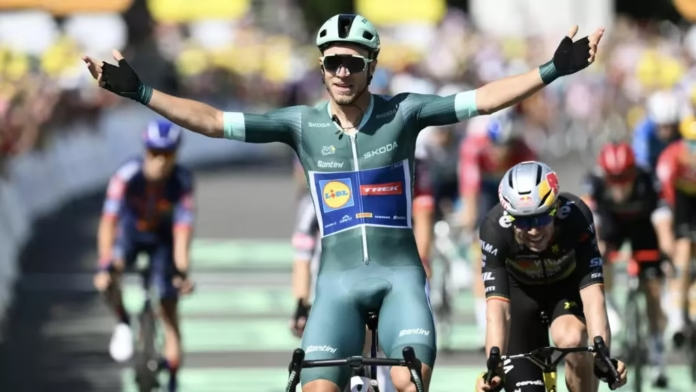
The Tour de France 2026 gives the sprinters two races to think about. The first is the obvious one: stage wins. Bordeaux, Bergerac, Nevers, Chalon-sur-Saône, Voiron and Paris all look like major targets if the fast teams control the day. The second is the green jersey, and that competition could be much more tactical than a simple count of bunch sprint victories.
The route includes seven flat stages, four hilly stages and eight mountain stages, with the race starting in Barcelona on Saturday, 4th July and finishing in Paris on Sunday, 26th July. That balance gives the sprinters clear opportunities, but not an easy ride through the three weeks. They will have to survive early Pyrenean pressure, a first-week summit finish, a difficult middle phase, a stage 16 time trial and the final Alpine block before the last sprint in Paris.
The points classification could also be shaped by the expected return of two intermediate sprints on the seven flat stages. If that format is confirmed in the final race regulations, green becomes less about one dominant sprinter winning two or three stages and more about repeated scoring. The rider who wins green will need speed, consistency, team support and the appetite to chase points long before the finish line. With Milan currently absent from the confirmed Lidl-Trek Tour selection, the green jersey picture shifts towards Mads Pedersen, Jasper Philipsen, Tim Merlier, Biniam Girmay, Arnaud De Lie and Olav Kooij.
For the full stage-by-stage breakdown, see the Tour de France 2026 full route guide, while the Tour de France 2026 route analysis explains how the race is built around pressure from Barcelona to Alpe d’Huez.
Editor’s note: This article has been updated to reflect the current confirmed Tour de France 2026 start-list picture. Jonathan Milan is not currently listed for Lidl-Trek, with Mads Pedersen instead appearing as the team’s main sprint and points-classification option.
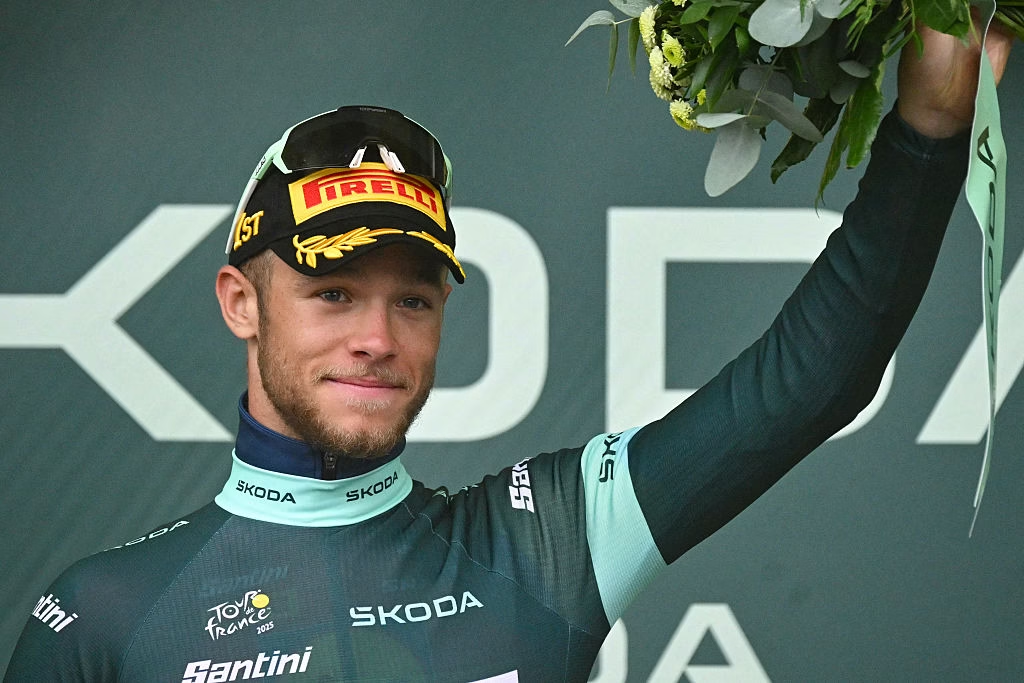
How does the Tour de France green jersey work?
The green jersey is the Tour de France points classification. Riders score points at stage finishes and at intermediate sprints during normal road stages. Flat stages carry the biggest finish-line points rewards, which is why the competition is usually targeted by sprinters.
The basic idea is simple: the rider with the most points wears green. The reality is more complicated. A pure sprinter can win stages and still lose the competition if they miss intermediate points, struggle through the mountains, abandon, or fail to place consistently when the sprint is messy.
The best green jersey contenders usually combine four qualities:
- They can win flat bunch sprints
- They can place consistently even when they do not win
- They can survive the mountains inside the time limit
- They are willing to fight for intermediate sprint points
The final point could be especially important in 2026. If the flat stages include two intermediate sprints, the green jersey becomes more tactical. A rider with a strong lead-out and a serious points plan could build a lead before Paris without needing to win every bunch sprint.
Which Tour de France 2026 stages suit the sprinters?
The seven official flat stages should form the backbone of the green jersey battle.
| Stage | Date | Route | Distance | Sprint outlook |
|---|---|---|---|---|
| Stage 5 | Wednesday, 8th July | Lannemezan to Pau | 158.3km | First clear sprint chance after early GC pressure |
| Stage 7 | Friday, 10th July | Hagetmau to Bordeaux | 175.1km | One of the best pure sprint opportunities |
| Stage 8 | Saturday, 11th July | Périgueux to Bergerac | 180.4km | Likely bunch sprint if teams control the break |
| Stage 11 | Wednesday, 15th July | Vichy to Nevers | 161.3km | Sprint stage with some small climbs to manage |
| Stage 12 | Thursday, 16th July | Circuit Nevers Magny-Cours to Chalon-sur-Saône | 179.1km | Another strong fast-finish opportunity |
| Stage 17 | Wednesday, 22nd July | Chambéry to Voiron | 174.7km | More complicated, but still a major sprint target |
| Stage 21 | Sunday, 26th July | Thoiry to Paris Champs-Élysées | 133km | Final sprint in Paris |
The key point is that the sprint stages are spread out. There is no soft opening sequence where the fast men can collect several easy chances before the climbers take over. Stage 1 is a team time trial. Stage 2 finishes around Montjuïc in Barcelona. Stage 3 already heads to Les Angles in the Pyrenees. Stage 6 climbs to Gavarnie-Gèdre.
That makes stage 5 in Pau important. It is not just a stage-win chance. It could be the first proper green jersey test. Bordeaux and Bergerac then look like the most obvious back-to-back sprint targets before the route turns more complicated again.
The five stages that could decide the Tour de France 2026 focuses more on the yellow jersey, but the same route pressure affects the sprinters too. The fast men have to manage their efforts around a race designed mainly to test GC riders.
 Photo Credit: Getty
Why the 2026 green jersey battle could be different
The expected use of two intermediate sprints on flat stages could change the way teams race. It gives sprinters more chances to score points before the finish, but it also gives breakaway riders something to chase. If the first intermediate sprint comes early and the second comes later, teams may have to decide how much energy to spend before the final sprint.
That creates three possible green jersey strategies.
The power sprinter strategy
This is the most direct route to green. Win the biggest bunch sprints, score heavily on flat finishes and use team strength to collect intermediate points when needed. Tim Merlier, Jasper Philipsen and Olav Kooij are the clearest pure-sprint fits for this approach, while Mads Pedersen becomes more dangerous if the competition rewards repeated scoring rather than only flat-stage wins.
The consistency strategy
This is about winning when possible, but also finishing second, third or fourth when the sprint does not go perfectly. Jasper Philipsen fits this profile because he has Tour experience, positioning skill and a proven lead-out environment.
The versatile sprinter strategy
This relies on scoring on flat stages, then adding points on harder days where the pure fast men may be dropped. Biniam Girmay, Arnaud De Lie, Mads Pedersen and Michael Matthews are the riders who make this route more interesting.
The green jersey is rarely won by accident. It needs commitment. A rider who says they only want stage wins may still get pulled into the contest, but the winner usually needs a team willing to fight for intermediate points and daily positioning.
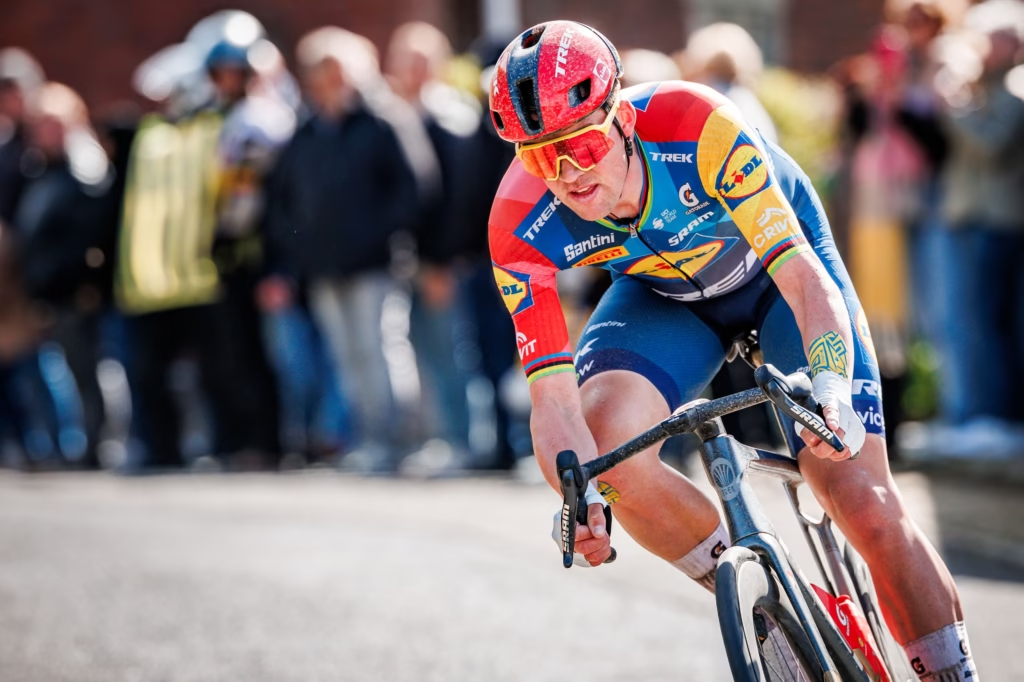 Photo Credit: Getty
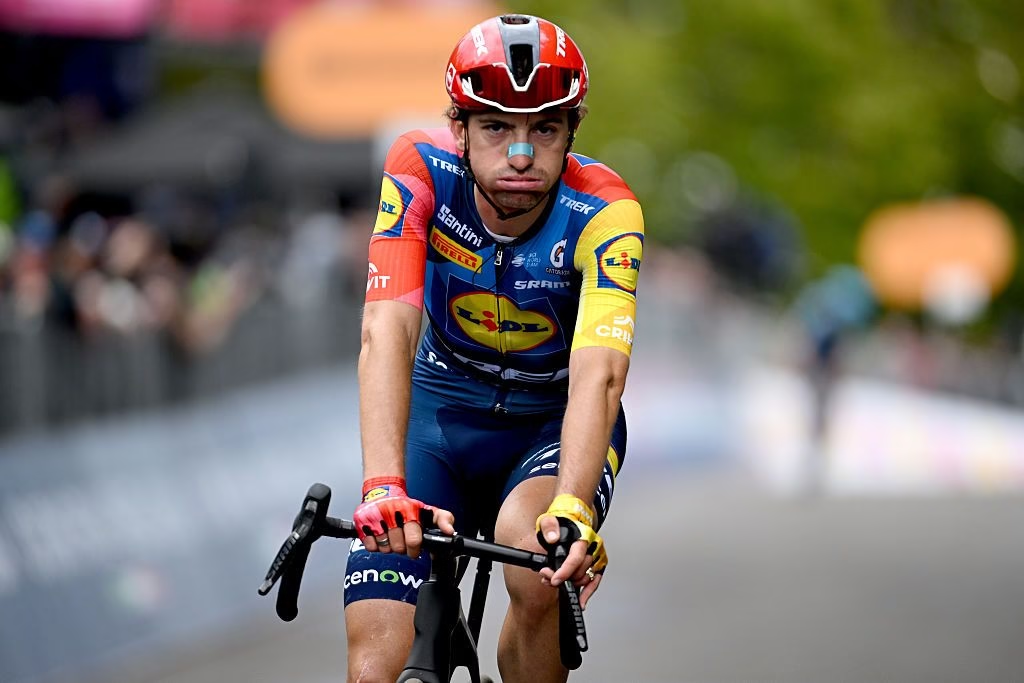
1. Mads Pedersen
Mads Pedersen now looks like the strongest green jersey candidate from the confirmed start-list picture. He is not the fastest pure sprinter in the race, but the green jersey is rarely just a top-speed contest. It rewards consistency, durability, intermediate sprint commitment and the ability to score on days that are too hard for some of the pure fast men.
That is where Pedersen’s case becomes strong. Lidl-Trek’s current Tour selection points towards him as the team’s main sprint and points-classification option, rather than Jonathan Milan. With Juan Ayuso also in the squad for GC, Lidl-Trek will have split priorities, but Pedersen is still the rider most naturally suited to a full green jersey campaign.
The 2026 route helps him. The flat stages give him scoring chances, but the harder sprint days may matter even more. Stage 17 to Voiron and the final Paris stage with the Montmartre climbs could both favour a rider who can survive pressure and still sprint from a reduced group.
Pedersen’s path to green is not about winning every flat sprint. It is about staying in the points race every day. If Philipsen, Merlier and Kooij split the pure bunch sprints while Pedersen keeps scoring on intermediates, harder finishes and reduced bunch days, he could be the rider wearing green in Paris.
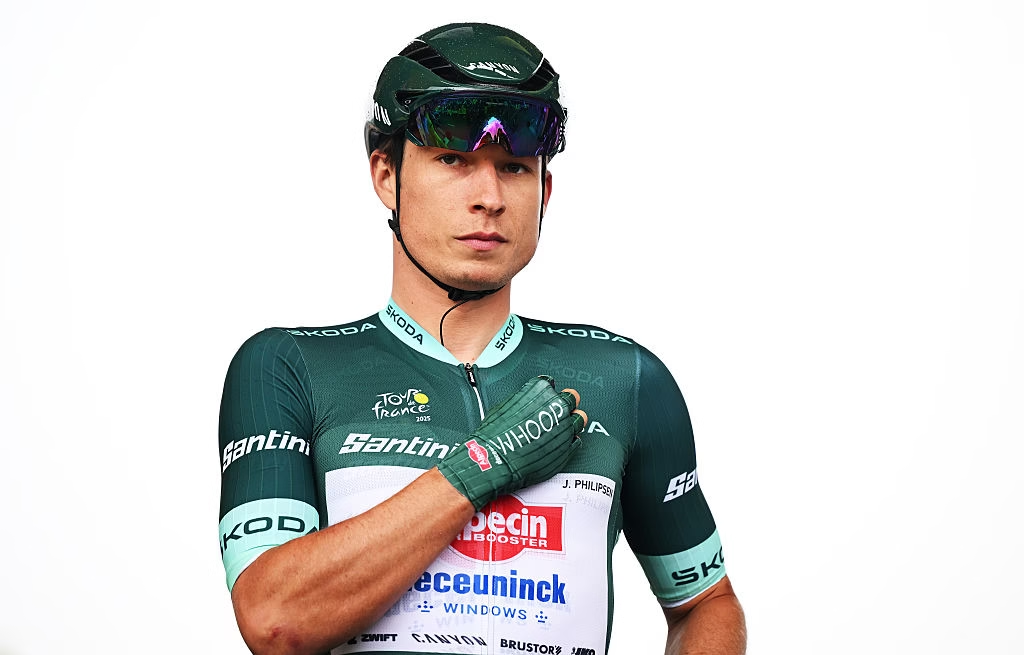
2. Jasper Philipsen
Jasper Philipsen is the best pure sprint package in the confirmed Tour de France 2026 field and the most obvious threat to Pedersen’s green jersey hopes. He is not just fast. He is experienced, aggressive in positioning and backed by one of the best sprint structures in the peloton.
Philipsen’s green jersey case is built on reliability. He can win bunch sprints, but he can also keep scoring when he does not win. That is important in a points competition where second, third and fourth places can keep a rider in contention across three weeks.
The route gives him several strong opportunities. Bordeaux, Bergerac, Nevers, Chalon-sur-Saône, Voiron and Paris could all suit him if the race comes back together. Stage 17 to Voiron may be more complicated because of the earlier terrain, but Philipsen has shown before that he can handle more than a completely flat day.
The question is whether he can score consistently enough on the harder days to match Pedersen’s all-round points profile.
He is ranked second, but he is close enough to Pedersen that a strong run of flat-stage results could quickly put him in control of the points competition.
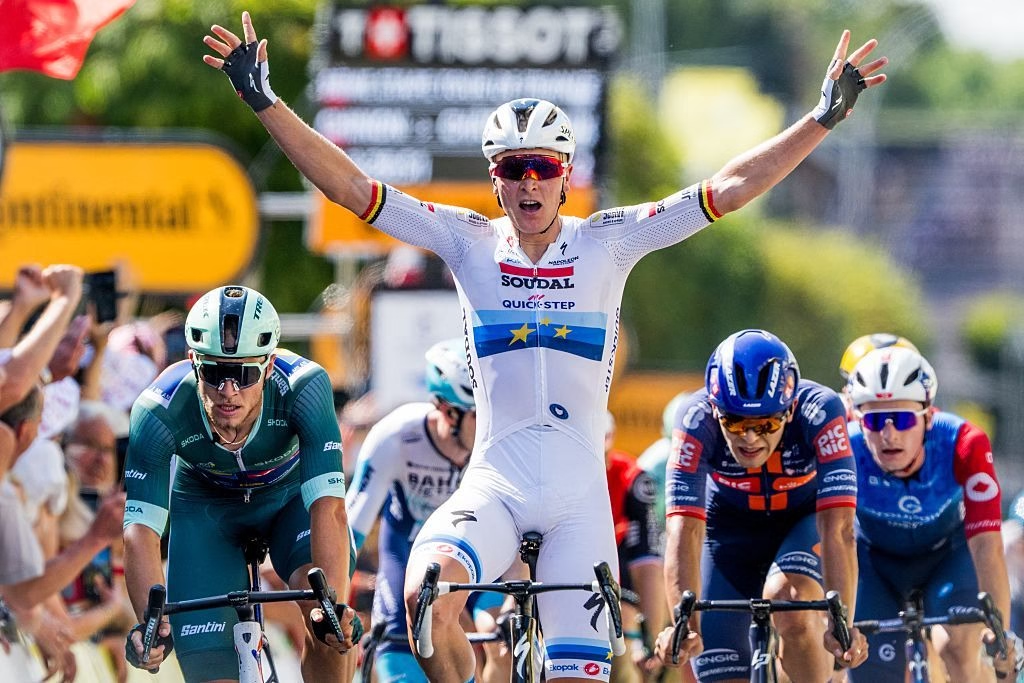 Photo Credit: Getty
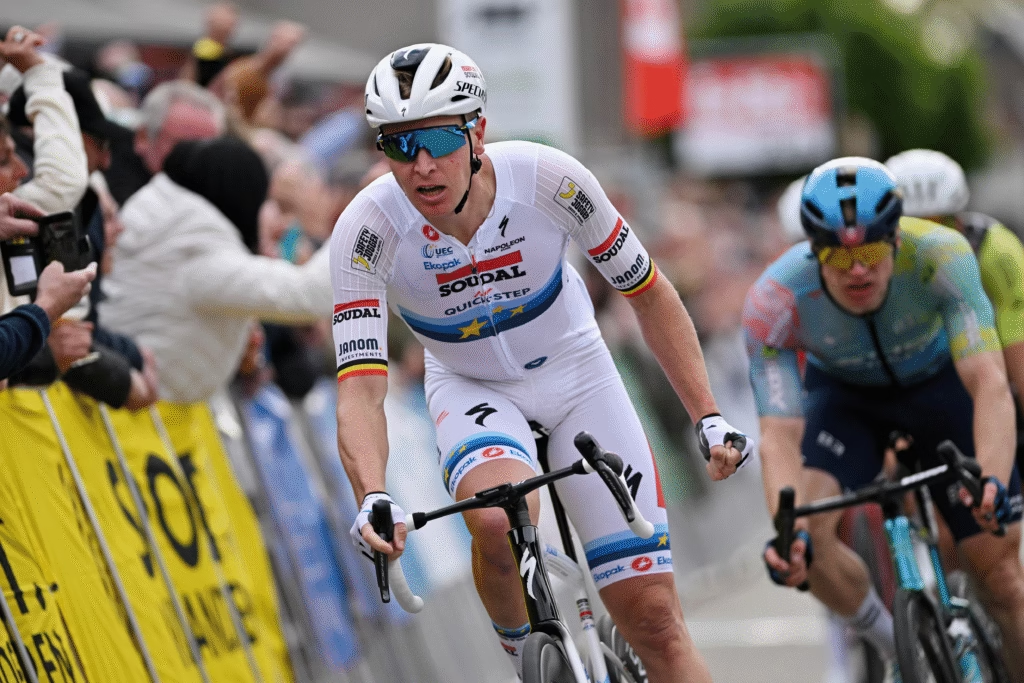
3. Tim Merlier
Tim Merlier may be the fastest rider in a straight flat sprint, which automatically puts him high on the list. If the Tour de France 2026 produces clean bunch finishes, he can win stages. The bigger question is whether he can win the green jersey.
Merlier’s challenge is not speed. It is accumulation. Green requires him to score repeatedly, survive the mountains and stay close on days where the sprint is not perfect. The route’s early mountains and brutal final week make that harder than simply targeting one or two flat stages.
The 2026 route does give him enough chances to matter. Pau, Bordeaux, Bergerac, Nevers and Chalon-sur-Saône all offer realistic opportunities before the final mountain block gets too severe. If he wins two stages early, the whole points competition changes.
He may also benefit from extra intermediate sprints if Soudal Quick-Step commit to the classification. The question is whether that commitment makes sense if the mountain stages start to cost too much energy.
Merlier may be the fastest rider in the race on a clean, flat finish. The green jersey question is whether he can turn that speed into repeated scoring across three weeks, especially when Pedersen, Philipsen, Girmay and De Lie may score more easily on harder days.
4. Biniam Girmay
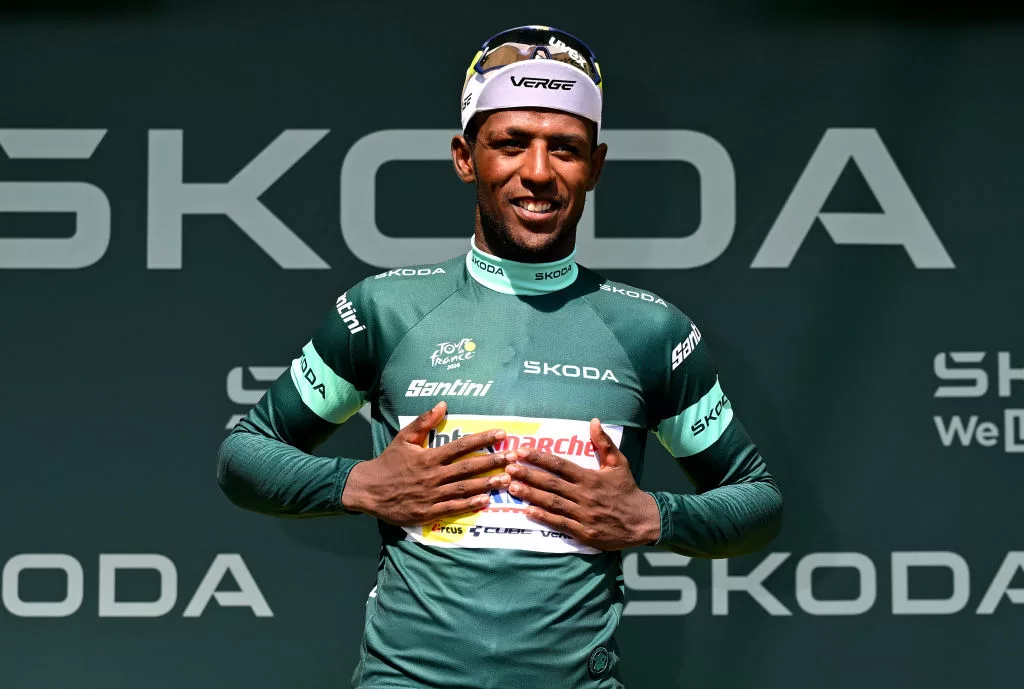
Biniam Girmay is one of the most interesting green jersey contenders because he does not need every stage to be pan-flat. He can sprint, handle rolling terrain and profit on days where the pure fast men lose contact.
That makes him especially relevant in a Tour with four hilly stages and several flat days that still contain obstacles. Stage 2 around Barcelona may be too hard for many pure sprinters, but Girmay’s ability on tougher finishes makes him a rider to watch whenever the bunch is reduced. The same logic applies to transition days where breakaways and reduced groups become more likely.
His green jersey path is different from Merlier, Philipsen or Kooij. He may not win the most straightforward drag-race sprints, but he can score in more varied situations. If Philipsen, Merlier and Kooij split the pure sprint wins while Girmay keeps placing on hilly and intermediate days, the points race can tilt towards him.
The challenge is team control. To win green, Girmay needs consistent help in the final kilometres and a plan for intermediate sprints. He cannot rely only on chaotic days.
He is not the top favourite, but the route gives him enough alternative scoring opportunities to be dangerous.
5. Arnaud De Lie
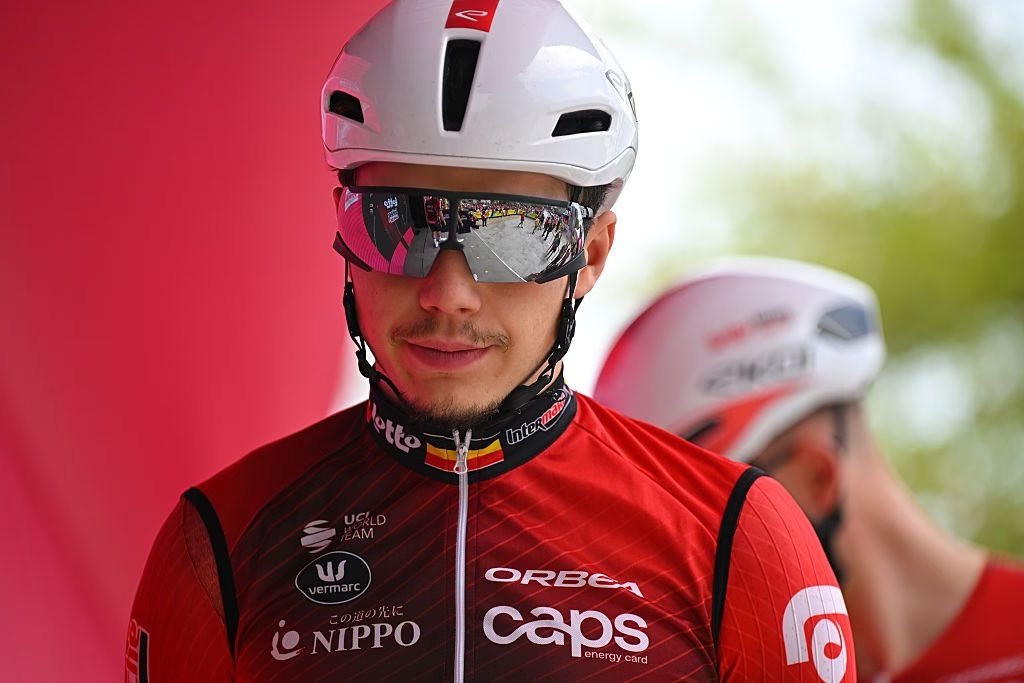
Arnaud De Lie is another rider who becomes more interesting because the Tour is not only about flat speed. He has the strength for harder days, the power for reduced sprints and the racing instinct to take points when a stage becomes messy.
On a completely flat, perfectly organised sprint, Philipsen, Merlier and Kooij may all have a cleaner winning profile. De Lie’s strength is his ability to stay in contention when the race gets harder. That can be useful on days where a late climb, wind or rolling terrain takes the sting out of the pure sprinters.
The 2026 green jersey battle could reward that kind of resilience. If two intermediate sprints on flat stages make teams race earlier, and if hilly stages become points opportunities for versatile fast men, De Lie has a route into the competition.
His issue is turning potential into repeated Tour results. He will need to avoid being boxed in, score even when he does not win and get through the mountains without burning too much energy. For a rider of his style, green is possible, but it requires a disciplined points campaign rather than isolated bursts of brilliance.
De Lie is one of the strongest outside picks.
6. Olav Kooij
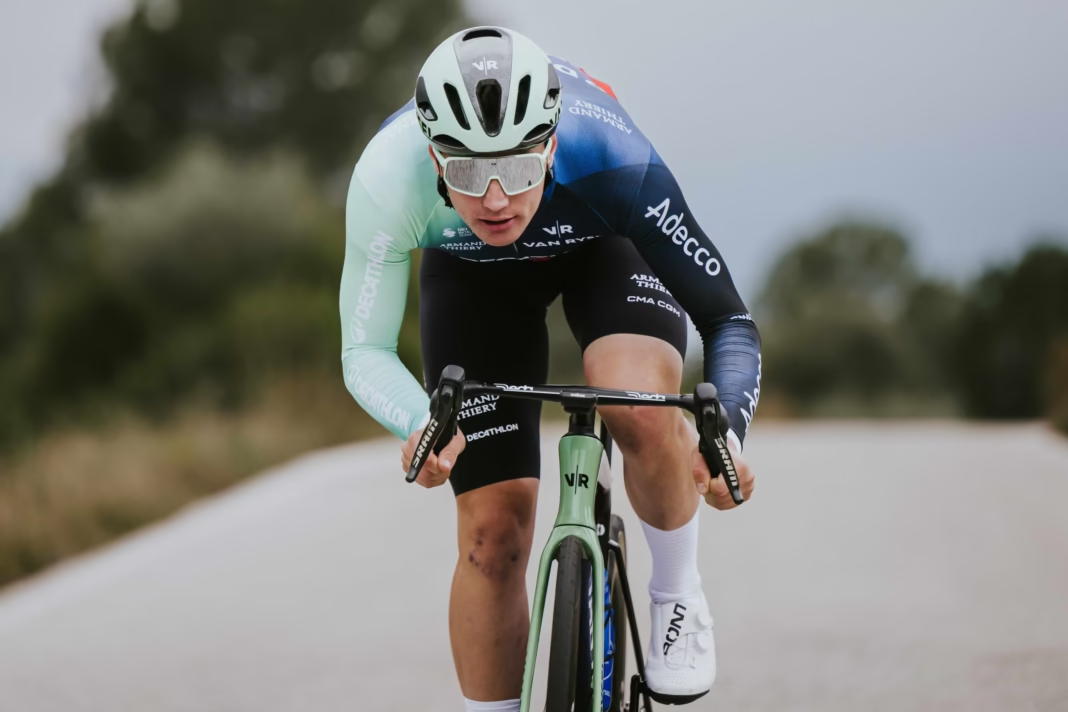
Olav Kooij’s place in this guide comes with a selection and role caveat. If he is selected with a proper lead-out, he becomes one of the most important sprint names in the race. If his team is built more heavily around GC, his green jersey ceiling becomes harder to judge.
Kooij has the speed to win Tour stages. He is clean, technically good and increasingly experienced in high-level sprinting. The question is whether the 2026 Tour gives him the team environment needed to chase both stage wins and green.
A full points campaign needs repeated support: positioning, intermediate sprint work, chase responsibility and lead-out commitment. If that structure is there, Kooij can score heavily on flat days. If it is not, he may become more of a selective stage-win option.
His green jersey chances depend less on ability than opportunity. As a stage winner, he is a genuine contender. As a points-classification rider, he needs team commitment.
Other sprinters and fast finishers to watch
There will be more than six riders capable of shaping the points competition, even if not all of them are full green jersey contenders.
Pascal Ackermann gives Team Jayco-AlUla a more traditional sprint option, while Michael Matthews offers the harder-day alternative. Søren Wærenskjold gives Uno-X Mobility a powerful fast finisher who could be dangerous if the sprint is messy or reduced.
Mathieu van der Poel is not a green jersey favourite if Philipsen is Alpecin-Premier Tech’s sprint leader, but he can still take points away from others on selective days. Jake Stewart and Lewis Askey give NSN Cycling Team extra sprint depth around Biniam Girmay, while Alex Aranburu, Dorian Godon, Jasper Stuyven and Matteo Trentin all belong in the reduced-bunch conversation.
These riders may not win green, but they can decide who does by taking points away from the main favourites.
The green jersey is often shaped by these riders even if they do not win it. Every third place, every intermediate sprint and every reduced finish can take points away from the favourites.
Which teams have the best sprint set-ups?
The green jersey is rarely an individual project. Lead-outs, positioning riders, road captains and domestiques all matter, especially when every flat stage could include multiple sprint points.
Strong green jersey team profiles
| Team | Likely sprint angle | Green jersey relevance |
|---|---|---|
| Lidl-Trek | Pedersen for green and hard sprint days | Best all-round points profile |
| Alpecin-Premier Tech | Philipsen with Van der Poel support | Best pure sprint structure |
| Soudal Quick-Step | Merlier for flat finishes | Major stage-win threat |
| Decathlon CMA CGM Team | Kooij for bunch sprints | Strong if fully backed |
| Lotto-Intermarché | De Lie for powerful sprint finishes | Dangerous on harder days |
| NSN Cycling Team | Girmay for varied sprint days | Strong if the race becomes selective |
| Team Jayco-AlUla | Ackermann and Matthews split options | Flexible but role-dependent |
| Uno-X Mobility | Wærenskjold and Cort for stage chances | Outside points and stage-win value |
Team priority will matter. If a team is chasing yellow, its sprinter may not get full support every day. If a team has no GC contender, it can spend more energy on intermediate sprints and sprint positioning.
The stages that could decide the green jersey
The points competition will not be decided by one stage, but some days stand out.
Stage 5: Lannemezan to Pau
This is the first clear sprint opportunity after a demanding opening. The rider who wins here immediately becomes a green jersey reference point.
Stage 7: Hagetmau to Bordeaux
Bordeaux should be one of the best pure sprint chances of the race. A full bunch sprint here could heavily shape the standings.
Stage 8: Périgueux to Bergerac
A second consecutive sprint opportunity would favour teams with depth. If a rider wins both Bordeaux and Bergerac, the green jersey battle changes quickly.
Stage 11: Vichy to Nevers
A flat stage after the first rest day, but with enough terrain to keep the day active. Good for sprinters who can handle a less straightforward run-in.
Stage 12: Circuit Nevers Magny-Cours to Chalon-sur-Saône
Another major chance before the race tilts towards the Vosges and Alps. Teams chasing green cannot afford to miss this one.
Stage 17: Chambéry to Voiron
This may be the most interesting sprint stage. It has earlier terrain before a flatter finale, so it could reward tougher sprinters or punish those who are fading after two weeks.
Stage 21: Thoiry to Paris Champs-Élysées
The final sprint in Paris could still decide green if the points gap is close. It is also the stage every sprinter wants, regardless of the classification.
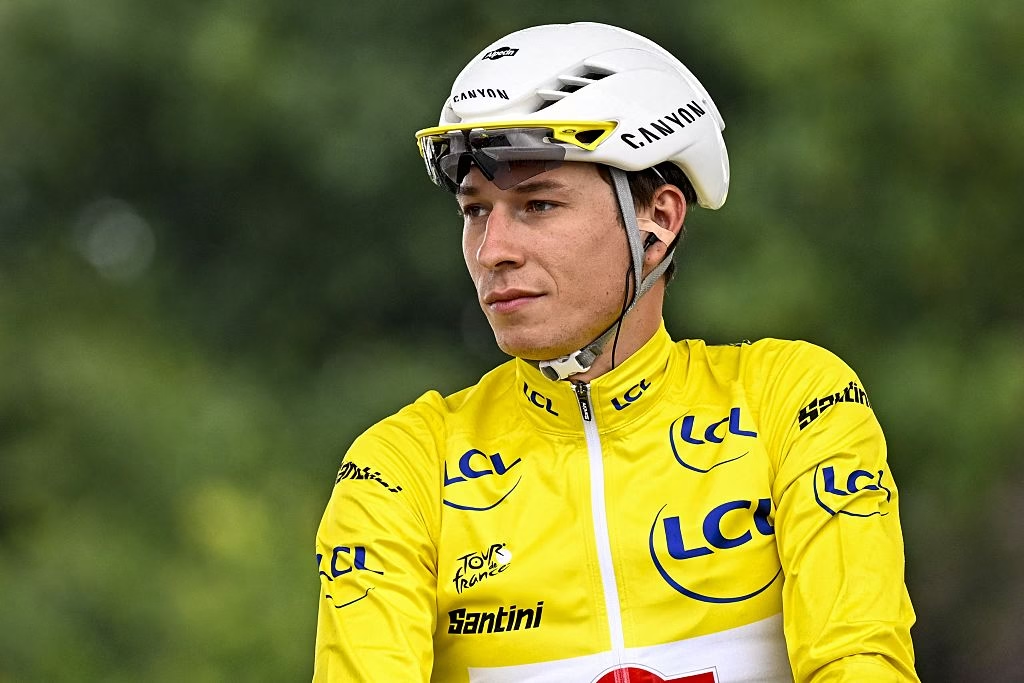
The 2026 route suits a sprinter who can do three things: win flat sprints, survive hard terrain and keep scoring at intermediates.
That points towards Mads Pedersen and Jasper Philipsen first, but for different reasons. Pedersen has the durability and all-round points profile to score beyond the pure bunch sprints. Philipsen has the Tour craft, lead-out support and proven ability to win on the biggest sprint stages. Tim Merlier may be the fastest on a perfect flat finish, but green asks for more than peak speed. Biniam Girmay and Arnaud De Lie become more dangerous if the hilly and reduced sprint days carry enough points to pull them closer.
The expected two-intermediate-sprint format could also make the race more aggressive. If teams send riders into breakaways to deny points, the sprint squads may need to chase earlier than usual. If sprinters contest both intermediate sprints and the finish, fatigue could build quickly. That may favour the most durable fast men rather than the purest top-speed specialists.
With Jonathan Milan currently absent from the confirmed Lidl-Trek Tour selection, the balance changes. Lidl-Trek’s green jersey focus now looks more likely to run through Pedersen, which turns the competition into a broader battle between durability, repeated scoring and pure sprint wins rather than a straight Milan-versus-Philipsen power contest.
Tour de France 2026 green jersey contender tiers
Rather than treating the green jersey battle as a straight list of sprinters, it is better to split the field by route to victory. Some riders can win green by dominating flat stages. Others need consistency. A smaller group need the race to become harder, with reduced sprints and hilly days carrying more weight.
Tier 1: The main green jersey favourites
Mads Pedersen and Jasper Philipsen are the two clearest favourites from the confirmed start-list picture.
Pedersen has the strongest all-round points profile. He can score on flat stages, harder finishes, intermediate sprints and reduced-bunch days. If the race becomes attritional and the pure sprinters split the stage wins, his route to green becomes very convincing.
Philipsen has the best pure sprint package. He has Tour experience, positioning skill and one of the strongest sprint structures in the race with Alpecin-Premier Tech. If he wins multiple bunch sprints and keeps scoring consistently, he can absolutely win green again.
Tier 2: The pure sprint threats
Tim Merlier and Olav Kooij are the two strongest pure sprint threats behind Philipsen.
Merlier may be the fastest rider in the race on a clean, flat finish. If Soudal Quick-Step position him well and he wins early, he can quickly become a major points-classification factor. The question is whether he can keep scoring once the race becomes harder.
Kooij has the speed to win Tour stages and the acceleration to beat the biggest names on the right day. His green jersey ceiling depends on how fully Decathlon CMA CGM Team commit to his sprint campaign alongside their wider ambitions with Paul Seixas.
Tier 3: The versatile scorers
Biniam Girmay and Arnaud De Lie are the dangerous alternatives if the race becomes selective.
Girmay can score on stages that are too hard for the pure sprinters, and his consistency could become valuable if the green jersey battle is shaped by repeated placings rather than one rider dominating the bunch sprints. De Lie brings power, durability and a strong reduced-sprint profile, making him especially dangerous on harder run-ins.
If the green jersey competition is shaped by hilly stages, intermediate sprints and attritional days rather than only flat finishes, this tier becomes much more important.
Tier 4: The role-dependent stage winners
Pascal Ackermann, Michael Matthews, Søren Wærenskjold and Mathieu van der Poel can all influence the points classification, but their green jersey chances depend heavily on role and opportunity.
Ackermann gives Team Jayco-AlUla a more traditional bunch-sprint option, while Matthews is better suited to harder finishes. Wærenskjold has the power to be dangerous in messy or reduced sprints, but Uno-X Mobility have other stage ambitions too. Van der Poel is unlikely to chase green if Philipsen is Alpecin-Premier Tech’s sprint leader, but he can still take major points away from others on selective days.
Tier 5: The points disruptors
Jake Stewart, Lewis Askey, Alex Aranburu, Dorian Godon, Jasper Stuyven and Matteo Trentin are unlikely to win green, but they can shape the competition.
They can take points from the main favourites in reduced bunches, intermediate sprints and awkward finales. That matters across three weeks. The green jersey is often decided not only by who wins the biggest sprint stages, but by who loses points to riders just outside the main contender group.
-
 Photo Credit: Getty

Verdict: who will win the green jersey?
Mads Pedersen is now the best pick for the Tour de France 2026 green jersey from the current confirmed start-list picture. He may not be the fastest pure sprinter in the race, but he has the best blend of durability, finishing speed, intermediate sprint potential and route fit.
Jasper Philipsen is the biggest direct threat. If the race produces several clean bunch sprints and Alpecin-Premier Tech control the finishes well, he can absolutely win green. His advantage is Tour sprint craft: positioning, experience and the ability to keep scoring even when he does not win.
Tim Merlier and Olav Kooij are major stage-win contenders, but both need consistency across the full race to turn sprint victories into a points-classification win. Merlier has the raw speed to dominate a clean bunch sprint, while Kooij has the acceleration and freshness to become one of the breakout sprint names of the race.
Biniam Girmay and Arnaud De Lie are the dangerous alternatives. If the race becomes selective, if the intermediate sprints matter heavily, or if the pure sprinters lose points on harder stages, both can move into the centre of the contest. Girmay’s route is built on repeated scoring across varied terrain, while De Lie’s power makes him especially dangerous in harder finishes.
With Jonathan Milan currently absent from the confirmed Lidl-Trek Tour selection, the green jersey race looks less like a Milan versus Philipsen power contest and more like a wider points battle between Pedersen’s durability, Philipsen’s Tour sprint craft, Merlier’s raw speed, Kooij’s acceleration and the harder-day scoring of Girmay and De Lie.
Prediction: Mads Pedersen.

