
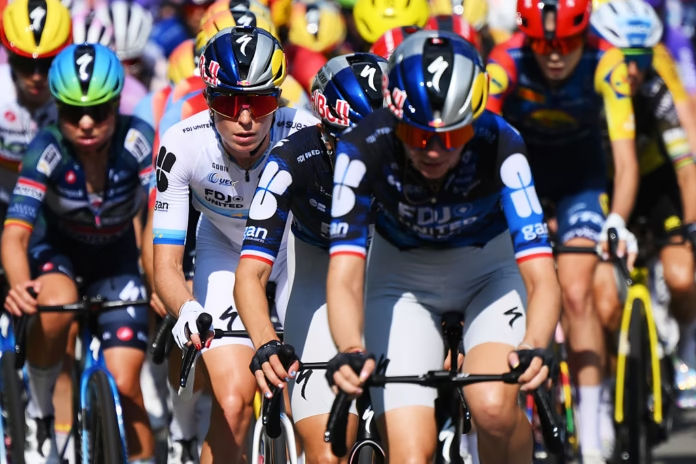
Stage 6 of the 2026 Tour de France Femmes gives the breakaway specialists, puncheurs and resilient fast finishers one final opportunity before the race reaches Mont Ventoux.
The 153.4-kilometre route from Montbrison to Tournon-sur-Rhône contains six categorised climbs and approximately 2,500 metres of elevation. It is less severe than the relentless Beaujolais terrain of Stage 5, but there is almost no extended period in which the peloton can properly relax.
The Col de Lalouvesc provides the longest climb of the day before the Côte de Boucieu-le-Roi offers a final attacking point 15.9 kilometres from the finish. From there, the race descends towards the Rhône and a flat finish in Tournon-sur-Rhône.
That combination creates an unusually open stage. It may be difficult enough to remove the pure sprinters, yet not selective enough for the leading general classification riders to gain substantial time. With the Mont Ventoux summit finish waiting less than 24 hours later, the teams fighting for yellow may be content to let a strong breakaway contest the stage.
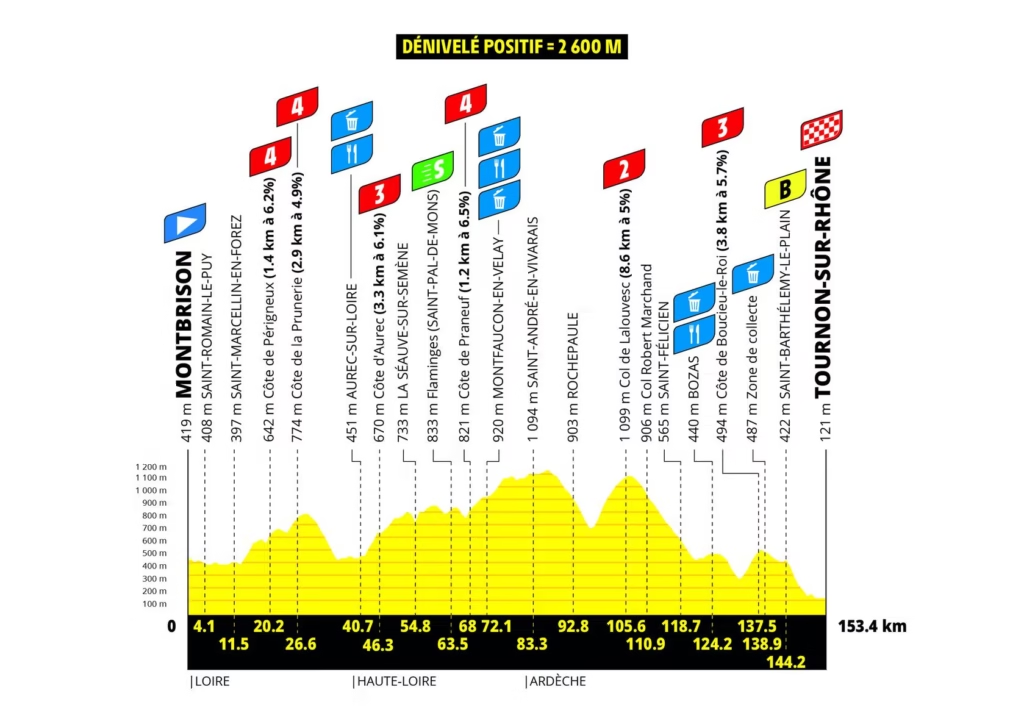
Tour de France Femmes Stage 6 route
| Detail | Stage 6 |
|---|---|
| Date | Thursday 6 August 2026 |
| Start | Montbrison |
| Finish | Tournon-sur-Rhône |
| Distance | 153.4km |
| Stage type | Hilly |
| Elevation gain | Approximately 2,500 metres |
| Neutralised start | 13:35 CEST / 12:35 BST |
| Expected finish | 17:41 CEST / 16:41 BST |
| Main climb | Col de Lalouvesc |
| Final climb | Côte de Boucieu-le-Roi, summit 15.9km from the finish |
Stage 6 is another of the hilly transition days identified in the full Tour de France Femmes 2026 route guide, but its difficulty is distributed differently from Stage 5.
The climbing begins early and continues throughout the day before becoming more sustained in the second half. Rather than one obvious decisive ascent, the riders face a succession of opportunities for the breakaway to form, split and reorganise.
The six categorised climbs are:
- Côte de Périgneux: 1.4km at 6.2%, Category 4
- Côte de la Prunerie: 2.9km at 4.9%, Category 4
- Côte d’Aurec: 3.3km at 6.1%, Category 3
- Côte de Praneuf: 1.2km at 6.5%, Category 4
- Col de Lalouvesc: 8.6km at 5%, Category 2
- Côte de Boucieu-le-Roi: 3.8km at 5.7%, Category 3
The Col de Lalouvesc tops out with 47.8 kilometres remaining, while the final classified climb ends 15.9 kilometres from the finish.
A fast start should decide the shape of the stage
The Côte de Périgneux and Côte de la Prunerie both arrive inside the opening 27 kilometres, encouraging an aggressive start.
Neither is difficult enough to create meaningful separation between the GC favourites, but both can help the strongest attackers distance riders trying to enter the break through positioning alone. Teams still searching for a stage victory will recognise that this may be their best remaining opportunity before the Tour becomes increasingly centred on the overall classification.
The problem will be establishing the right move.
A small group of three or four riders may struggle to survive across 153 kilometres. A larger escape containing capable climbers, powerful rouleurs and several teams could quickly become difficult to chase, particularly if nobody in the group remains close enough on GC to threaten yellow.
Stage 5 demonstrated how tactically complicated a break becomes when riders with genuine overall ambitions are allowed up the road. The race leader’s team and the other GC squads should therefore inspect the composition carefully before granting anyone substantial freedom.
A rider already several minutes down may be permitted to continue. Someone still capable of moving into the top 10 is likely to trigger an immediate response.
The terrain and likely tactical hesitation explain why Stage 6 was highlighted as the central opportunity in our Tour de France Femmes breakaway specialists guide.
 Photo Credit: Getty
Col de Lalouvesc is long rather than brutal
The Col de Lalouvesc is the central climbing feature of the stage.
At 8.6 kilometres and an average gradient of 5%, it lacks the severity required to guarantee major gaps between the strongest climbers. Its difficulty comes instead through duration, its position after more than 90 kilometres of racing and the accumulated fatigue produced by the earlier climbs.
A determined team could use Lalouvesc to eliminate the remaining pure sprinters. An attacker could also use the upper slopes to reduce a large breakaway to a smaller and more manageable selection before the descent.
However, the summit comes almost 48 kilometres from Tournon-sur-Rhône. That makes a long-range attack possible, but difficult to sustain if several riders behind are prepared to cooperate.
For the GC favourites, it looks more like a climb to manage efficiently than one on which to launch a decisive offensive. Any team increasing the pace must balance the limited potential gain against the energy that will be required on Mont Ventoux the following afternoon.
Unless the yellow jersey shows clear weakness, there is little incentive to empty an entire team more than 40 kilometres from the finish.
Côte de Boucieu-le-Roi is the final launch point
The Côte de Boucieu-le-Roi should decide which riders remain in contention for the stage.
The climb measures 3.8 kilometres at 5.7% and tops out with 15.9 kilometres remaining. Those figures appear relatively moderate, but it arrives after more than 135 kilometres of rolling terrain and should be raced at a much higher intensity than its average gradient suggests.
A reduced breakaway may begin attacking before the foot. Riders without a strong sprint cannot afford to carry someone such as Liane Lippert, Puck Pieterse or Marianne Vos comfortably towards Tournon-sur-Rhône.
Within the peloton, the climb is difficult enough for a team to remove most of the surviving sprinters. The pace required to do so may also create a small group containing GC riders and the strongest puncheurs at the summit.
The descent then complicates the finish. Anyone gaining ten or 15 seconds on the climb can attempt to defend that margin on the run towards the Rhône, while the chasing group may lose organisation as its riders begin thinking about the sprint.
There is also a bonus point at Saint-Barthélemy-le-Plain with 9.2 kilometres remaining, offering six, four and two seconds. If the break has already been caught, those bonuses could tempt the GC contenders into another brief tactical contest before the finish.
 Photo Credit: Getty
Will the GC riders race or wait for Ventoux?
The position of Stage 6 within the Tour matters as much as its terrain.
Stage 7 covers 146.8 kilometres from La Voulte-sur-Rhône to Mont Ventoux and includes approximately 3,565 metres of climbing. Its final ascent from Bédoin measures 15.7 kilometres at 8.8%, making it the defining climbing test of the race.
Every domestique used in a prolonged Stage 6 chase is one fewer rider available to control the approach to Bédoin and the lower slopes of Ventoux.
The strongest overall contenders are therefore likely to spend much of Thursday watching one another rather than committing to a full-scale offensive. The race leader’s first responsibility will be preventing a dangerous rider entering the break, while the principal challengers must preserve their mountain support.
That hesitation should favour the escape.
The situation changes if a team misses the break or believes it has a clear favourite for the stage. A controlled advantage of two or three minutes would leave the peloton close enough to bring the move back over the final 50 kilometres. Once the gap moves beyond five minutes, the stage should belong to the attackers.
The wider GC hierarchy and the riders expected to shape the battle for yellow are covered in our Tour de France Femmes 2026 contenders preview.
Can the sprinters survive?
This is unlikely to become a conventional full-peloton sprint.
Lorena Wiebes has the strength to survive rolling terrain, but Stage 6 includes too much climbing for SD Worx-Protime to control comfortably from the start. The Col de Lalouvesc and Côte de Boucieu-le-Roi also give rival teams two clear opportunities to isolate her.
Wiebes does not necessarily need the entire peloton to remain together. If she reaches the final summit within a manageable distance of the leaders, the descending and flatter closing kilometres could allow her to return.
The difficulty is finding teams willing to help.
The puncheurs and breakaway specialists will want Wiebes eliminated. The GC teams have no interest in organising a chase for her. SD Worx-Protime may therefore need to commit substantial resources simply to keep the stage within reach.
Elisa Balsamo faces a similar challenge. She can climb better than many pure sprinters and could survive if the stage is raced conservatively, but the final ascent is likely to be ridden hard enough to place her under pressure.
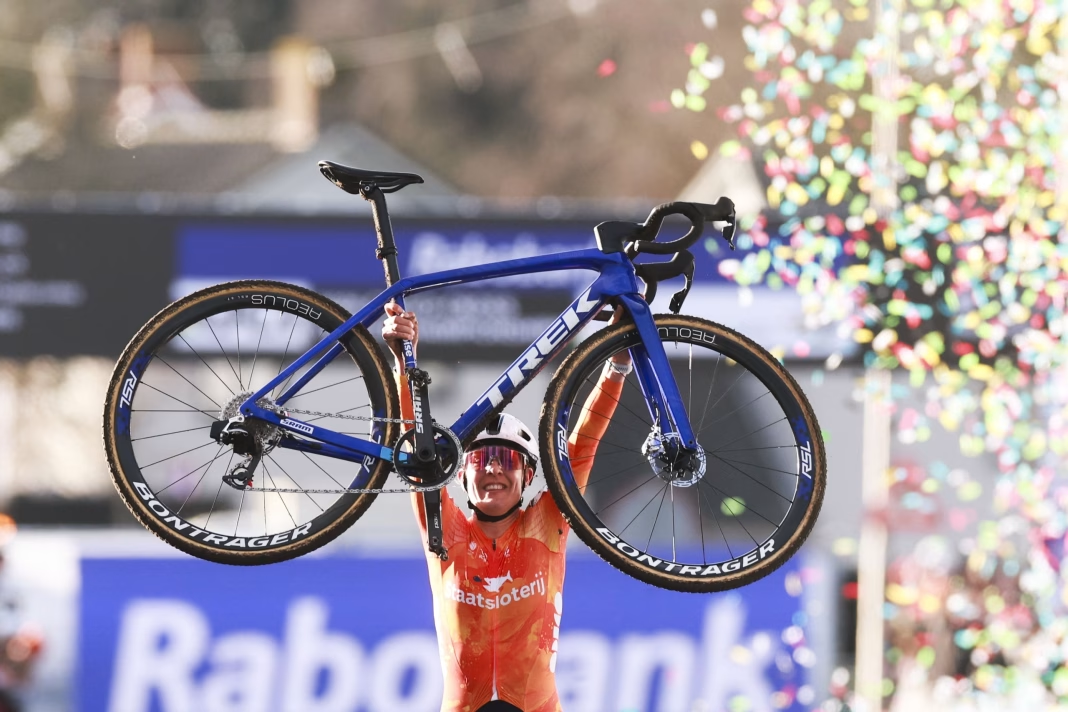
Marianne Vos is a more natural contender. She can survive repeated moderate climbs, position herself through a technical finale and win from almost any reduced group. Few riders become more dangerous as a stage grows harder, as explored in our Marianne Vos 2026 season guide.
The Stage 6 contenders
Liane Lippert
Lippert is one of the clearest favourites if Movistar permit her to attack.
She has the ideal characteristics for the final 40 kilometres. The German can climb well enough to make the selection over Lalouvesc, attack on the Côte de Boucieu-le-Roi and win a reduced sprint if a small group reaches Tournon-sur-Rhône.
Lippert is already a Tour de France Femmes stage winner, having beaten Lotte Kopecky in the difficult 2023 finish at Mauriac. Her ability to convert hilly terrain into a victory is established rather than theoretical.
Her role may depend on how much support the team require around their GC leader. Sending Lippert into the escape creates a possible route towards the stage win, but keeping her behind provides valuable protection before Ventoux. The tactical flexibility she gives Movistar was one of the central strengths in the team’s confirmed Tour de France Femmes squad.
Puck Pieterse
Pieterse has the climbing ability, acceleration and bike-handling skills required for almost every plausible Stage 6 scenario.
The climbs are difficult enough to suit her but not so long that the pure climbers automatically take control. She can attack on the final ascent, commit fully on the descent or wait for a reduced sprint.
Her versatility makes her difficult to control because rival riders cannot rely on one obvious weakness. The full range of her options is examined in our Puck Pieterse Tour de France Femmes profile.
Marianne Vos
Vos may be the most dangerous rider if the break is caught late.
The six climbs should reduce the field without necessarily eliminating her, while the descent and flatter run to Tournon-sur-Rhône give dropped riders an opportunity to return. If Vos reaches the finish in a group of 20 or 30 riders, she will be exceptionally difficult to beat.
Team Visma | Lease a Bike must still balance her stage ambitions against its general classification responsibilities. That may prevent the team controlling the entire race, but Vos does not need conventional control if other squads bring the break within range.
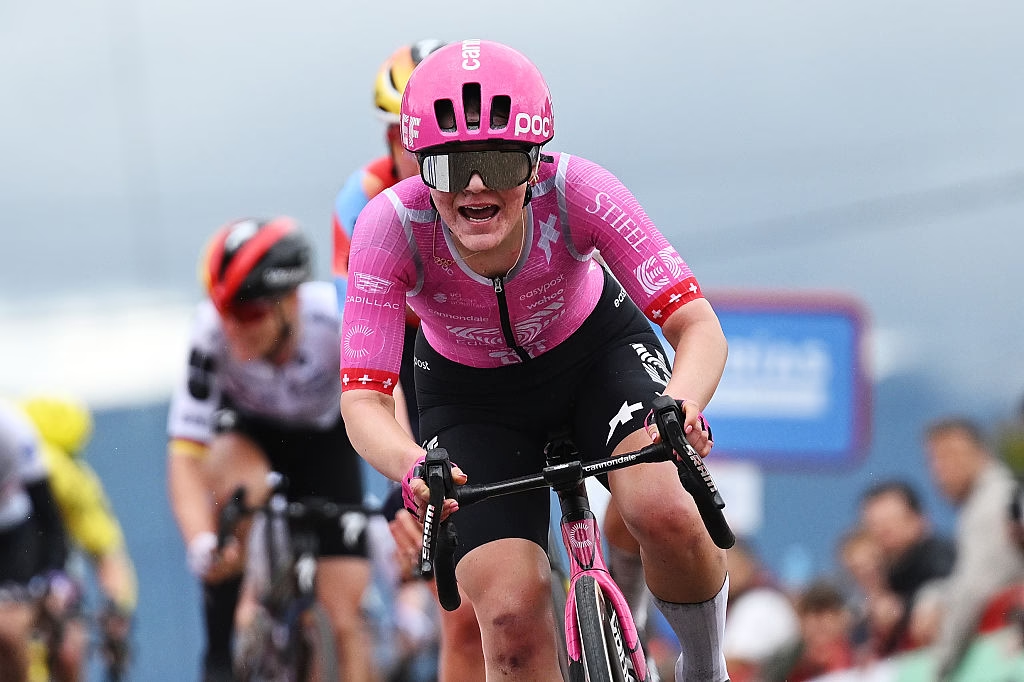 Photo Credit: Getty
Noemi Rüegg
Rüegg’s condition will need to be assessed after she crashed following contact with a Shimano neutral-service motorbike near the summit of the Col de Durbize on Stage 5.
The incident happened at relatively low speed and she was able to remount, but any soreness may become more apparent after the stage rather than immediately.
Provided she has escaped significant injury, the Swiss rider is well suited to Stage 6. She can climb, race aggressively and finish quickly from a reduced group. Her route to Tour success has always been through hard stages that remove the pure sprinters, an idea explored further in the Tour de France Femmes sprinters guide.
Maëva Squiban
Squiban remains one of the most dangerous riders to give freedom.
She is climbing strongly, has no reason to wait for a sprint and is prepared to commit from distance. UAE Team L’IMAD can use her aggressively while preserving its main GC options for Mont Ventoux.
The main concern is recovery. Squiban expended considerable energy in the Stage 5 breakaway and may find it difficult to repeat the same level less than 24 hours later.
Justine Ghekiere
Ghekiere is another natural breakaway candidate.
The Belgian is strongest when a stage contains repeated climbing rather than one decisive summit finish. The Col de Lalouvesc gives her enough terrain to reduce the group, while the final climb offers a clear place to attack riders with faster finishes.
The available mountains points also add another incentive to enter the move. Stage 6 offers 17 points across its six categorised climbs, making it an important day in the Tour de France Femmes polka-dot jersey competition.
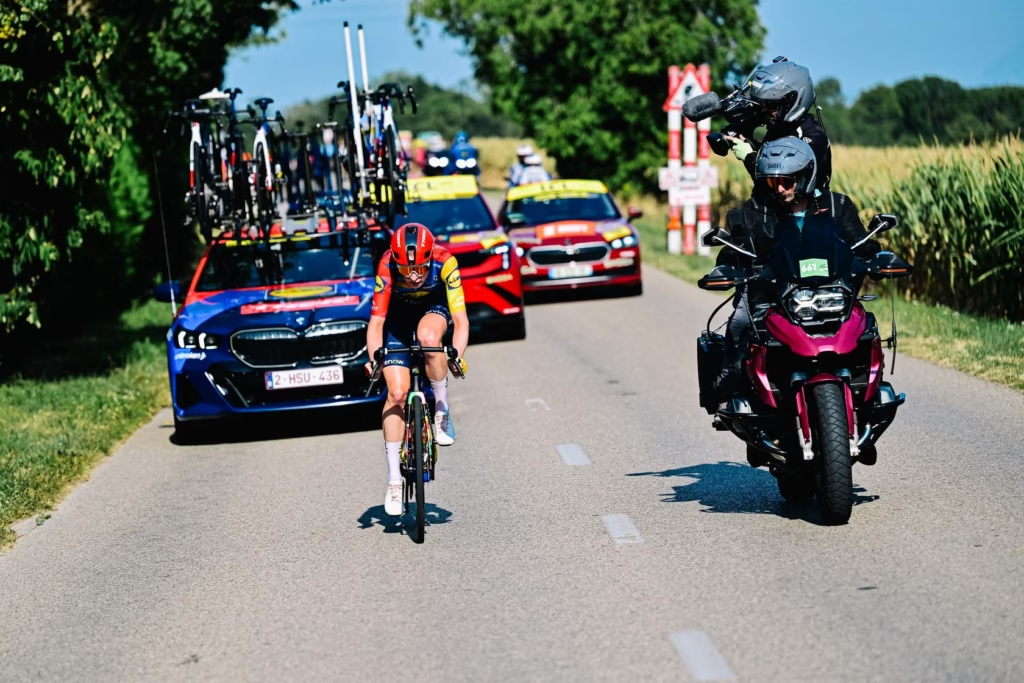 Photo Credit: A.S.O./Billy Ceusters
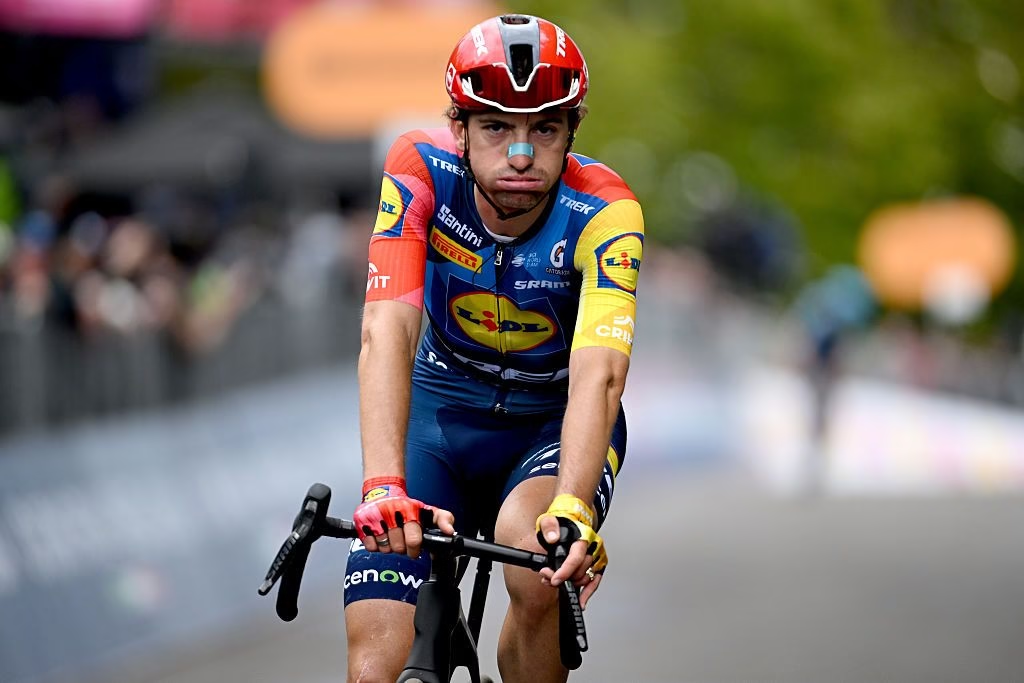
Riejanne Markus
Markus offers Lidl-Trek a strong all-round option.
She can enter the break on flatter roads, maintain a high pace across the long middle section and survive the categorised climbs. Her ability against the clock also makes her particularly dangerous if she creates a small gap over the final ascent.
Lidl-Trek have enough depth to place more than one rider in the move, giving them the option of attacking repeatedly rather than asking Markus to defeat every rival alone.
Magdeleine Vallières
Vallières has the climbing strength and aggressive instincts required for Stage 6.
She is unlikely to wait for a reduced sprint containing riders such as Lippert, Pieterse or Vos, so her best route to victory involves attacking on Lalouvesc or using the Côte de Boucieu-le-Roi to create a smaller selection.
EF Education-Oatly have several potential stage hunters, allowing them to place pressure on rival teams rather than making one rider carry the entire plan.
Paula Blasi
Blasi has been one of the strongest climbers and puncheurs of the 2026 season, but her GC position may prevent her receiving the freedom given to a conventional stage hunter.
The final climb is within her range, while the descent and short flat run to the finish suit a rider capable of combining an attack with a fast finish. She is dangerous both from a reduced peloton and through a late move among the favourites.
Her rapid development and wider Tour prospects are covered in our Paula Blasi profile.
-
 Photo Credit: Getty

How Stage 6 is likely to unfold
The first 30 kilometres should be fast and difficult to control as teams attempt to establish the break across the opening climbs.
The GC teams will inspect every move for riders capable of threatening their overall positions. Once a sufficiently harmless but strong group gets away, the pace in the peloton may settle.
The escape will need to build its decisive advantage before the Col de Lalouvesc. That climb should expose weaker members and encourage the first serious attacks among the leaders.
Behind, the overall contenders are likely to ride defensively unless the gap remains small enough to make a stage victory realistic. A reduced peloton could still reach the Côte de Boucieu-le-Roi close to the break, creating a late collision between the surviving attackers and the strongest puncheurs from behind.
The final climb should produce repeated accelerations. Riders without a sprint must attack before the summit, while those confident in their finishing speed will attempt to keep the group together.
A small breakaway group remains the most likely source of the winner. The exact outcome depends on whether the leading riders cooperate after Lalouvesc or begin attacking one another too early.

