
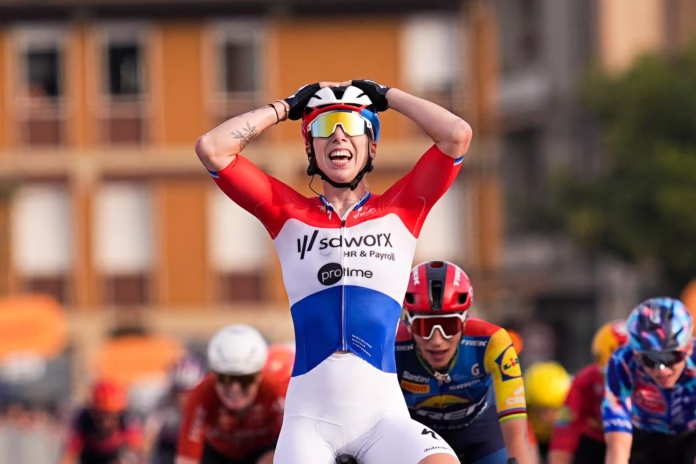
The Tour de France Femmes 2026 does not offer many straightforward sprint days, which puts even more emphasis on the small group of riders capable of winning when the race does come back together.
At the top of that list are Lorena Wiebes and Charlotte Kool, the two purest sprint references in the field. Elisa Balsamo and Chiara Consonni sit just behind them, while Marianne Vos, Lotte Kopecky and Noemi Rüegg become increasingly dangerous as the stage gets harder.
The route matters because not every officially flat stage is actually easy. Geneva should offer the cleanest conventional bunch sprint, while Lausanne and Poligny favour riders who can survive more climbing before using their speed.
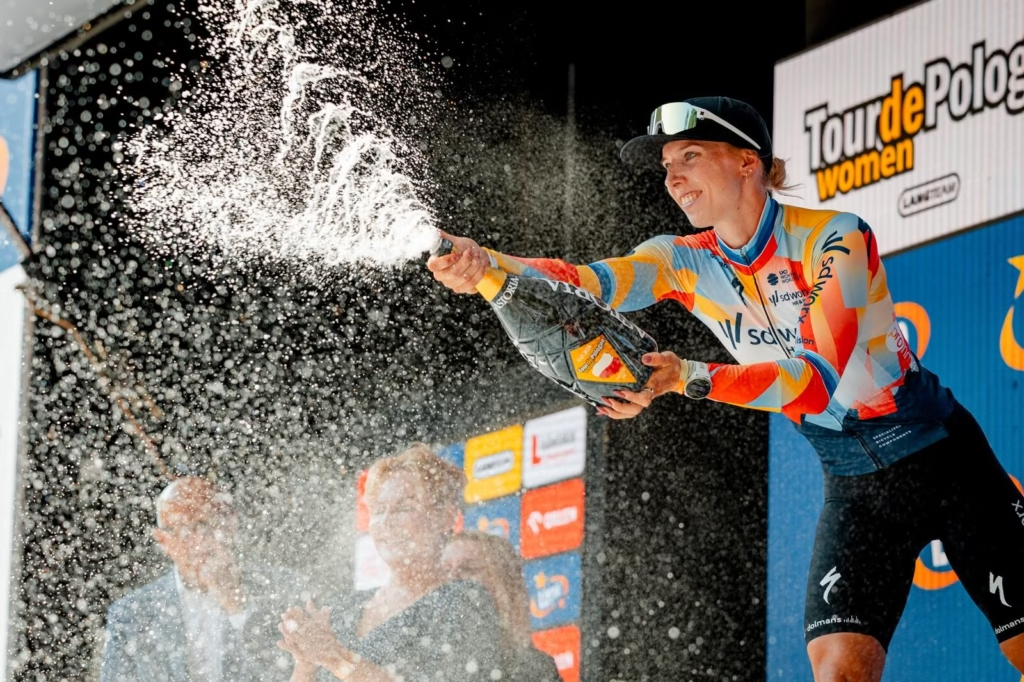
Lorena Wiebes is still the benchmark
Lorena Wiebes starts as the strongest pure sprinter in the race.
When a full peloton reaches the final kilometre, she has the combination of top speed, positioning and SD Worx-Protime support that makes her the rider everyone else has to beat.
Her advantage is no longer just outright acceleration. Wiebes has also become better at surviving harder racing, which makes her especially dangerous on a Tour where even the flatter stages contain enough climbing to expose weaker sprinters.
Stage 2 into Geneva is the clearest opportunity.
If the bunch arrives together and SD Worx-Protime deliver her into the final 200 metres in good position, she should be favourite.

Charlotte Kool is the most obvious direct rival
Charlotte Kool remains the rider most capable of beating Wiebes head-to-head.
She has already done it on Tour stages and has the raw speed to win even when the sprint is decided from a relatively small number of riders.
The question is whether Fenix-Premier Tech can keep her close enough to the front through the final kilometres.
Kool does not have quite the same depth of lead-out support as Wiebes, so positioning becomes crucial. Christina Schweinberger can help guide her through the run-in, but Kool may still need to use the bigger sprint trains around her.
If she reaches Wiebes’ wheel with 200 metres to go, the race is open.
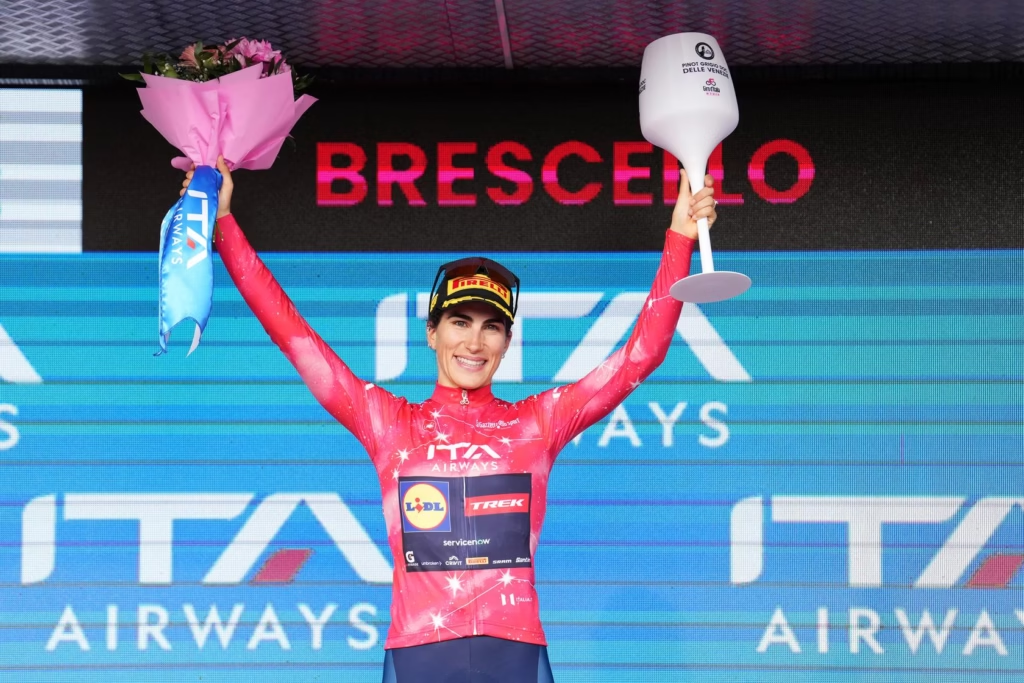 Photo Credit: RCS
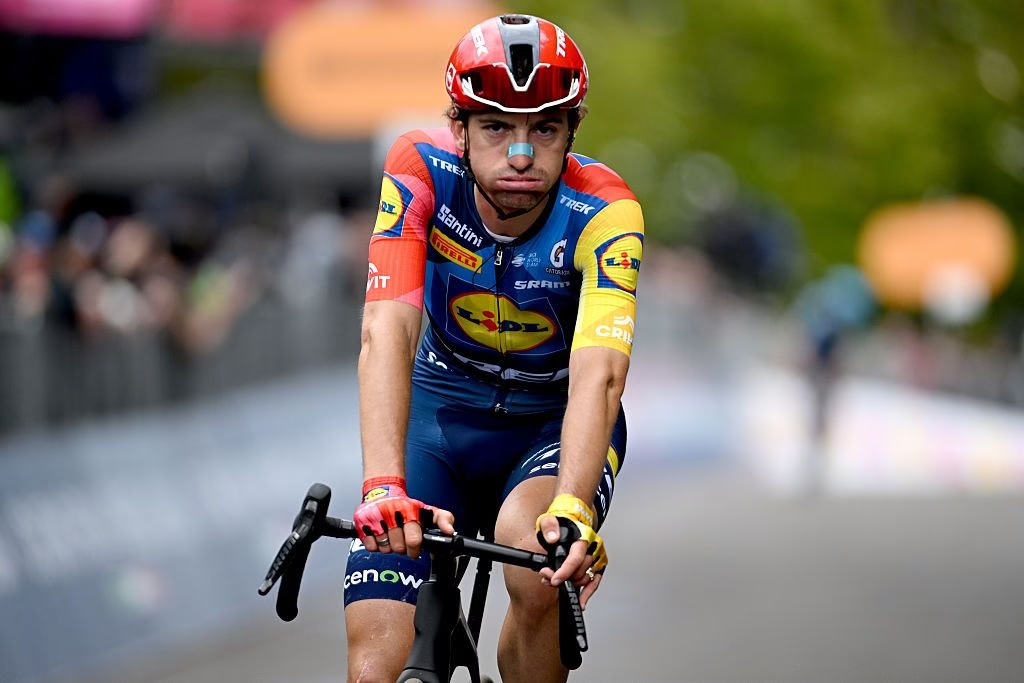
Elisa Balsamo has the best blend of sprint speed and endurance
Elisa Balsamo may be the most interesting rider behind the top two because she can win in more than one type of sprint.
She is fast enough to beat almost anyone in a conventional bunch finish, but she also handles climbing better than many pure sprinters.
That immediately makes Stage 3 to Poligny interesting.
If Kool is dropped and Wiebes has been forced to work hard, Balsamo could arrive at the finish with more left in reserve.
Lidl-Trek also have enough depth to support her without needing to organise every stage exclusively around a sprint.
Balsamo is probably the rider most likely to benefit if the Tour’s sprint stages turn out harder than expected.
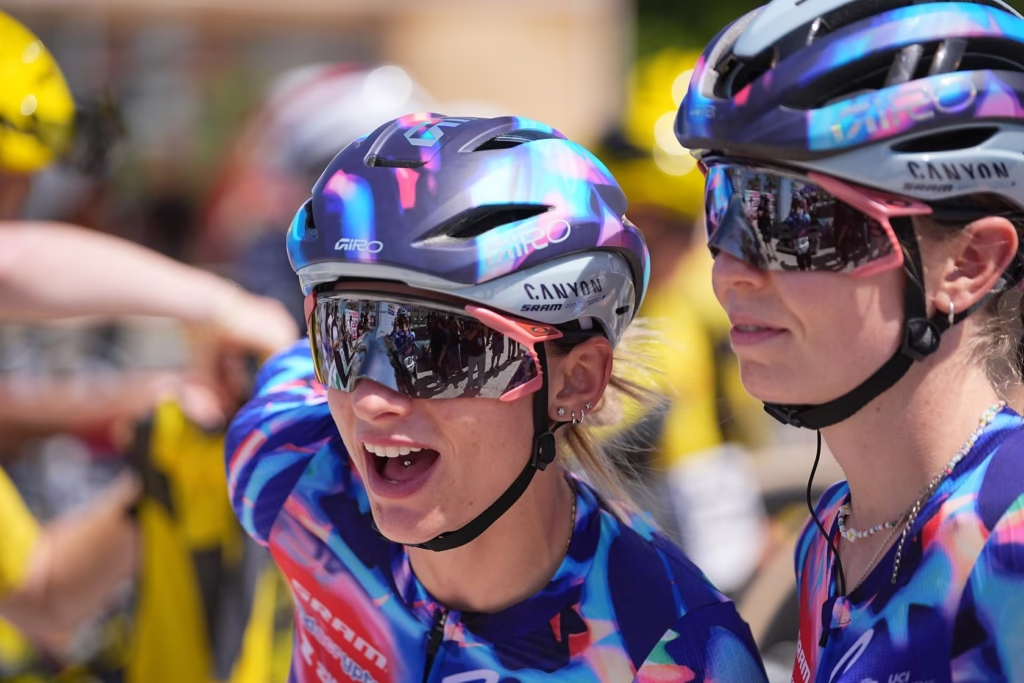 Photo Credit: RCS
Chiara Consonni is Canyon SRAM’s main pure sprint option
Chiara Consonni gives Canyon SRAM a genuine top-level sprint card.
Her acceleration is good enough to challenge Wiebes, Kool and Balsamo directly, even if she may not receive the same level of dedicated lead-out support.
Canyon SRAM have significant GC objectives through Katarzyna Niewiadoma-Phinney and Antonia Niedermaier, while Zoe Bäckstedt has the Dijon time trial as a major target.
That means Consonni may need to freelance more than the riders from teams built around a pure sprint leader.
She has the speed to make that work.
A clean run through the final kilometre puts her firmly in contention for a stage win.
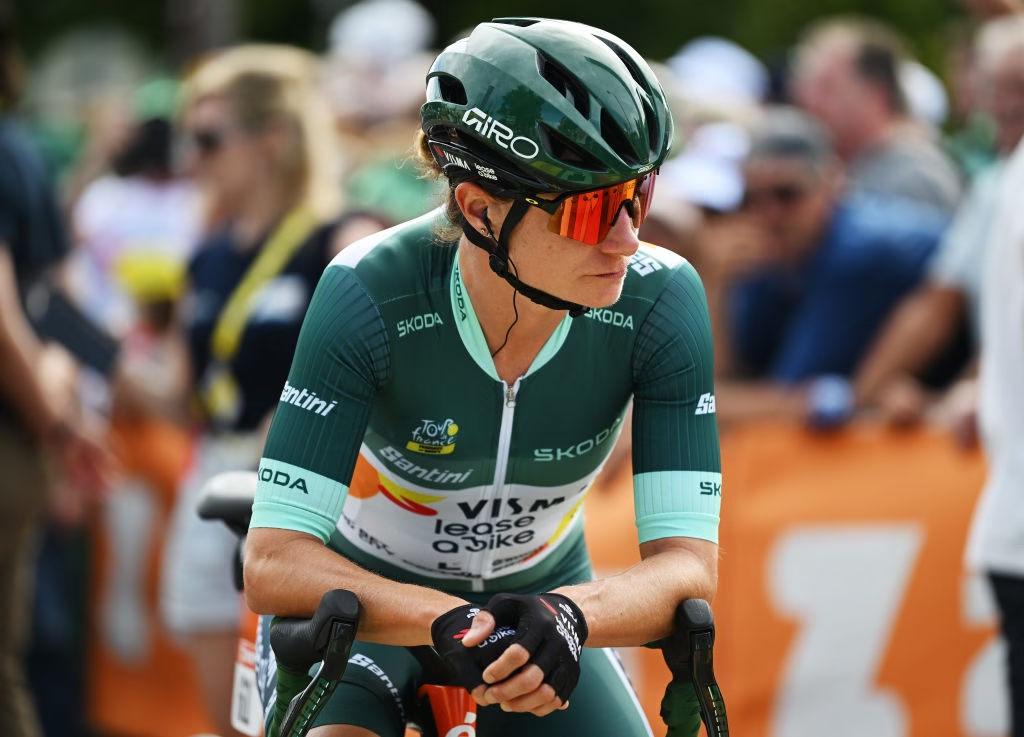
Marianne Vos becomes more dangerous as the stage gets harder
Marianne Vos is not necessarily the rider to back first in a completely flat 70km/h sprint against Wiebes.
She becomes far more dangerous when the stage is harder.
Lausanne is the obvious example. The climbing and uphill finale make survival and timing just as important as top speed.
Vos can handle that.
She can also threaten on Stage 3 if the race has already removed some of the faster pure sprinters.
Visma’s priority is Pauline Ferrand-Prévot’s yellow jersey defence, but Vos remains too strong to be treated only as a road captain.
If the right finish appears, she is still one of the best riders in the race.
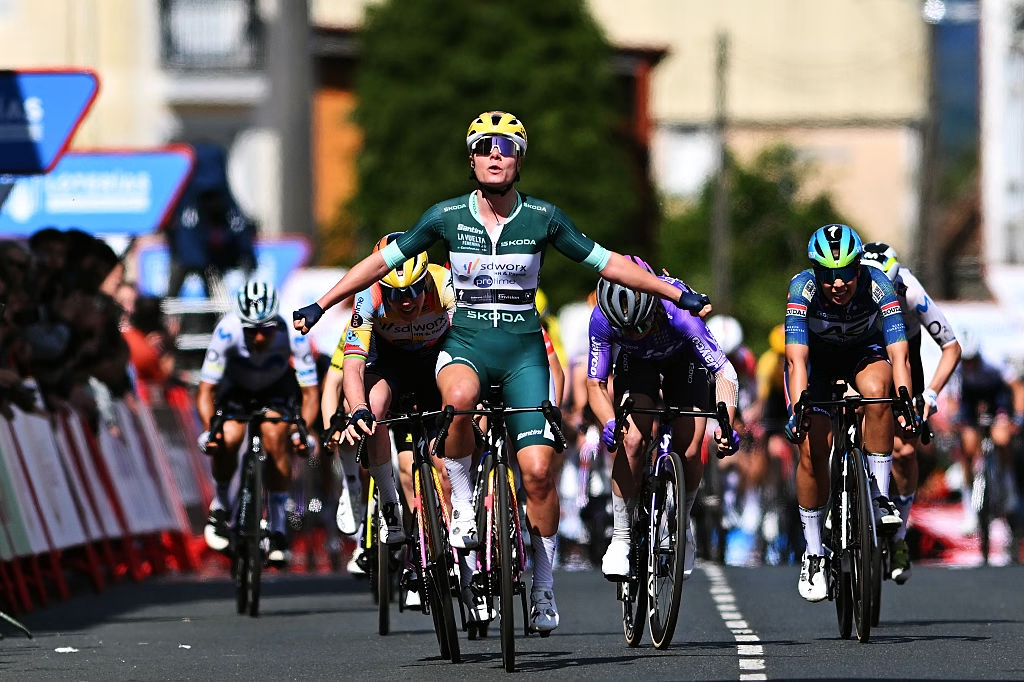 Photo Credit: Getty
Lotte Kopecky is the strongest reduced-sprint wildcard
Lotte Kopecky gives SD Worx-Protime a second elite finishing option.
She does not need to contest the straightforward bunch sprints because Wiebes covers those.
Her value comes when the stage becomes too hard for the pure sprinters.
Kopecky can survive repeated climbing and still produce a very fast finish from a reduced group. That makes Lausanne and potentially Poligny far more interesting for her than Geneva.
If Wiebes survives, SD Worx-Protime have the fastest rider.
If Wiebes is dropped, they may still have Kopecky.
That tactical flexibility is one of the team’s biggest advantages.
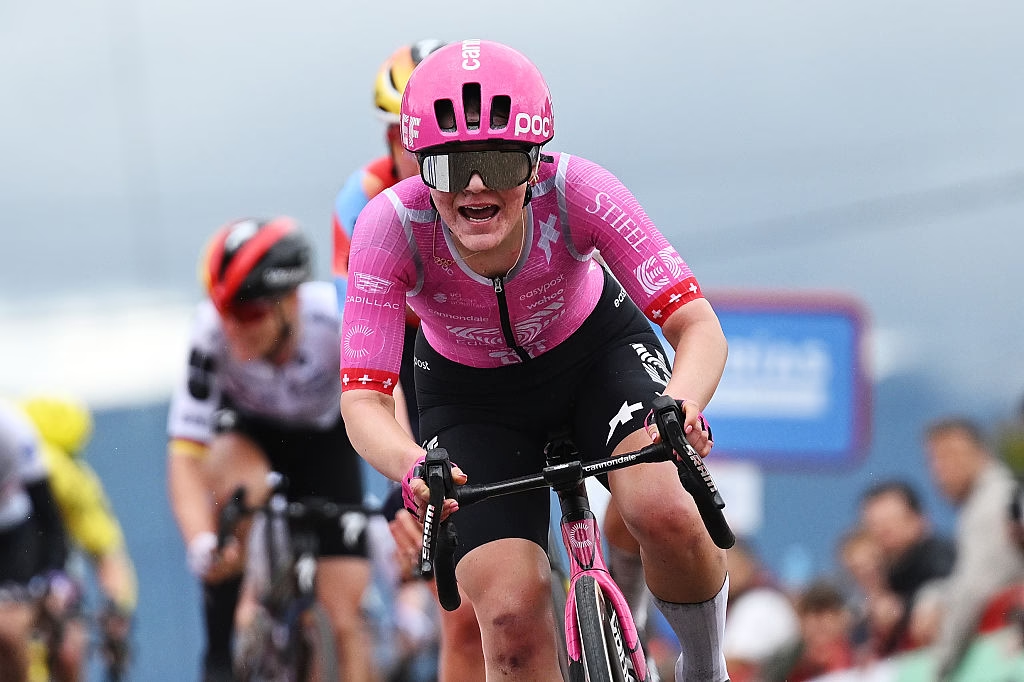 Photo Credit: Getty
Noemi Rüegg can win when the peloton has already been reduced
Noemi Rüegg is the strongest rider just below the established sprint stars.
She is not likely to beat Wiebes or Kool in a conventional flat sprint, but she does not need to.
Rüegg’s route to a stage win is through harder racing.
If climbing reduces the field to 20 or 30 riders, her combination of punch and finishing speed becomes much more dangerous.
Stage 1 and Stage 3 suit her significantly better than Geneva.
EF Education-Oatly also have the freedom to make those stages harder rather than simply waiting for a sprint.
That makes Rüegg one of the most realistic upset candidates.
-
 Photo Credit: Getty
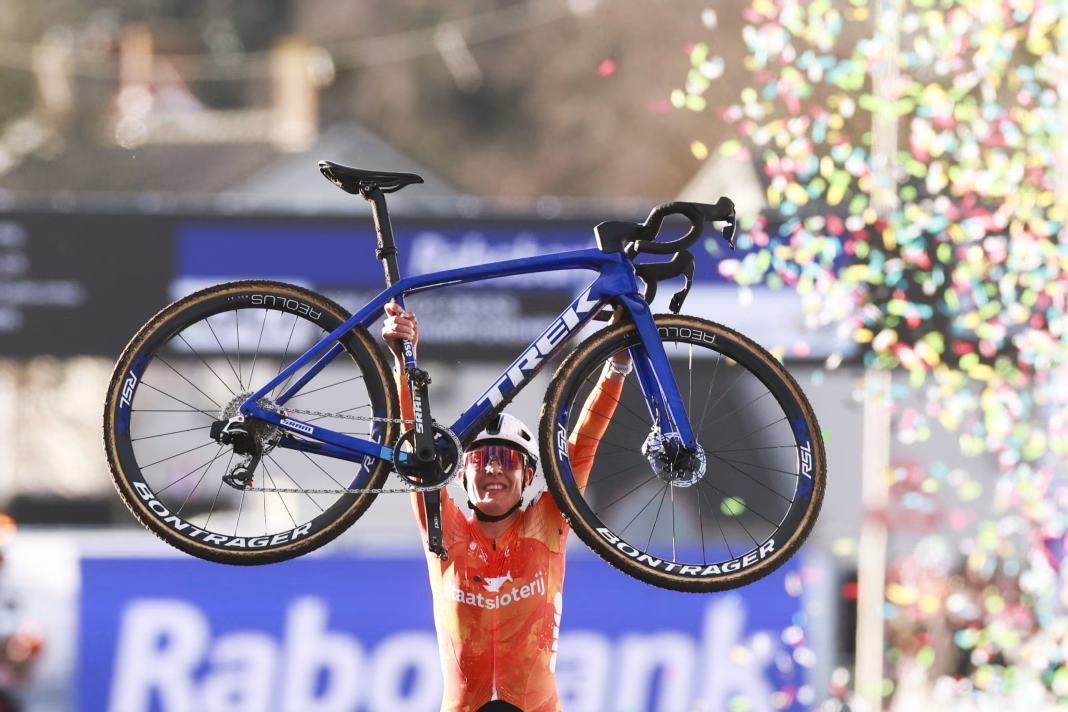

The sprint hierarchy for 2026
The strongest fast finishers on the confirmed start list are:
- Lorena Wiebes
- Charlotte Kool
- Elisa Balsamo
- Chiara Consonni
- Marianne Vos
- Lotte Kopecky
- Noemi Rüegg
Wiebes and Kool are the two clearest choices for a conventional bunch sprint.
Balsamo and Consonni are strong enough to beat them directly.
Vos, Kopecky and Rüegg become more dangerous as the climbing increases and the group gets smaller.
That is the key distinction in the 2026 Tour.
The fastest rider is Wiebes, but the hardest sprint stages may not be won by the fastest rider at all.

