
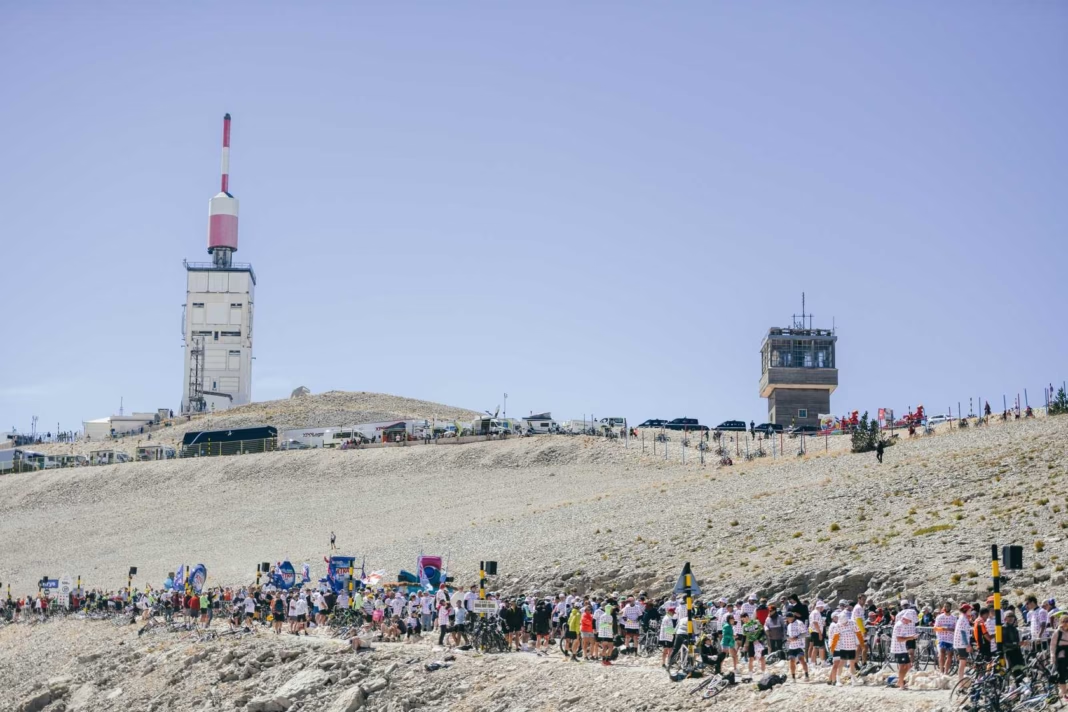
Mont Ventoux will provide the defining mountain test of the 2026 Tour de France Femmes, with Stage 7 finishing at the summit of the Giant of Provence on Friday 7 August.
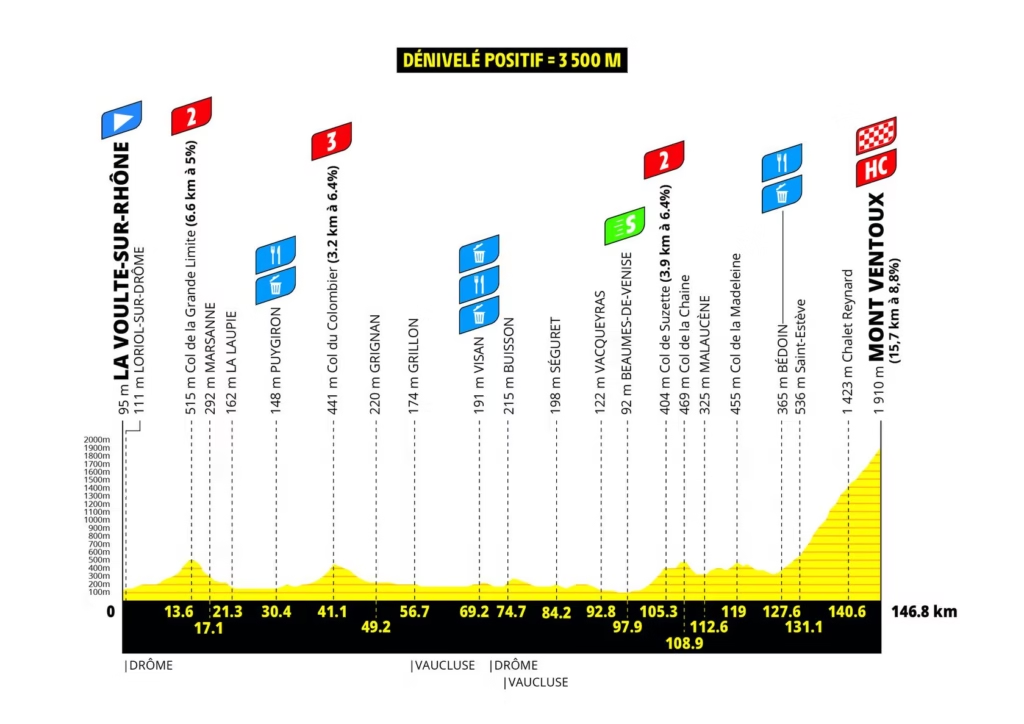
The route covers 146.8km from La Voulte-sur-Rhône and includes approximately 3,565 metres of climbing. Its final ascent approaches Mont Ventoux from Bédoin, with the officially categorised section measuring 15.7km at an average gradient of 8.8%. The finish sits beside the summit observatory at an altitude of 1,910 metres, making it the highest point reached anywhere in the 2026 race.
This will be the first time the modern Tour de France Femmes has visited Mont Ventoux, but it is not the first important women’s race to finish there. Anna Kiesenhofer won a summit stage of the Tour Féminin de l’Ardèche in 2016, while Marta Cavalli dominated the women’s Mont Ventoux Dénivelé Challenge in 2022. Those performances form a small but significant part of the mountain’s women’s cycling history before the Tour arrives.
Ventoux should expose the genuine differences between the leading climbers. The combination of sustained gradients, heat, altitude and the accumulated fatigue from six previous stages could produce the largest time gaps of the race. It may decide who leaves Provence in yellow, but the final weekend around Nice means the Tour will not necessarily be settled at the summit.
The complete nine-stage course is covered in our Tour de France Femmes 2026 route guide.
Tour de France Femmes 2026 Mont Ventoux stage at a glance
| Detail | Information |
|---|---|
| Stage | Stage 7 |
| Date | Friday 7 August 2026 |
| Route | La Voulte-sur-Rhône to Mont Ventoux |
| Distance | 146.8km |
| Stage type | Mountain |
| Total climbing | Approximately 3,565 metres |
| Local start time | 12:50 |
| Expected local finish | 17:17 |
| UK start time | 11:50 BST |
| Expected UK finish | 16:17 BST |
| Final climb | Mont Ventoux from Bédoin |
| Categorised climb distance | 15.7km |
| Average gradient | 8.8% |
| Summit altitude | 1,910 metres |
| Classification | Hors catégorie |
| Finish bonuses | 10, 6 and 4 seconds |
The stage contains four officially categorised climbs: the Col de la Grande Limite, Col du Colombier, Col de Suzette and Mont Ventoux. The riders also cross additional rising terrain around the Col de la Chaîne and Col de la Madeleine before reaching Bédoin, ensuring the approach to the final climb is already tiring.
The stage’s place within the wider race is explained in our Tour de France Femmes 2026 calendar.
Why Mont Ventoux is one of cycling’s most famous climbs
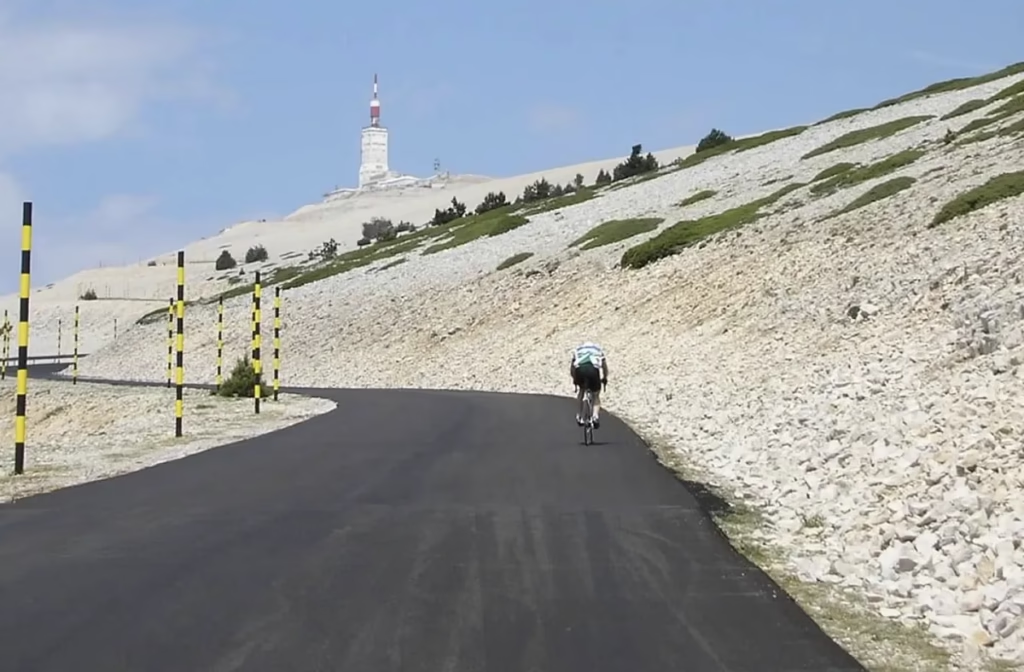
Mont Ventoux rises almost alone above the surrounding landscape of Provence. Its isolation gives the mountain a presence that is difficult to reproduce elsewhere, while the pale limestone of its exposed upper slopes creates the barren appearance behind its nickname of the Bald Mountain.
The communications tower and observatory at the summit can be seen from kilometres away. For riders, that visibility is not necessarily encouraging. The finish remains distant even after the forest disappears at Chalet Reynard, and the road continues climbing across an open landscape where wind, heat and changing weather can influence the race.
Ventoux has built much of its reputation through the men’s Tour de France, producing famous victories, dramatic collapses and one of the sport’s defining tragedies with the death of Tom Simpson in 1967. Its sporting importance is based on more than history, however. The Bédoin side combines a long approach with a severe central section through the forest and an exposed final six kilometres close to the summit.
The climb does not provide many natural recovery points. Once the road steepens beyond Saint-Estève, a rider struggling to maintain the required power can continue losing time all the way to the top.
 Photo Credit: Fred Machabert/Mont Ventoux Dénivelé Challenges
Mont Ventoux’s history in women’s cycling
The 2026 stage will be Mont Ventoux’s first appearance in the modern Tour de France Femmes, but women have already raced to the summit in two important events.
Anna Kiesenhofer won Stage 3 of the Tour Féminin International de l’Ardèche in 2016. The 94.9km stage travelled from L’Isle-sur-la-Sorgue to Mont Ventoux, with Kiesenhofer finishing 3 minutes and 53 seconds ahead of Brazilian rider Flávia Oliveira. Edwige Pitel was third at 4 minutes and 1 second.
The size of those gaps illustrated what Ventoux can do to a women’s stage race. Kiesenhofer was not yet the Olympic champion she would become in Tokyo five years later, but her solo victory already demonstrated her ability to pace a long, difficult effort with little tactical support.
Mont Ventoux returned as the finish of a major women’s one-day race in 2022 through the Mont Ventoux Dénivelé Challenge. Marta Cavalli won in 3 hours, 19 minutes and 1 second, finishing 41 seconds ahead of Clara Koppenburg and 53 seconds ahead of Evita Muzic. Pauliena Rooijakkers, Kim Cadzow and Elise Chabbey were among the other riders spread across the upper positions.
Cavalli’s victory came during the best season of her career, after she had already won Amstel Gold Race and La Flèche Wallonne. Her performance showed that Ventoux could reward a complete climber capable of producing sustained power rather than relying on one short acceleration.
Those two previous summit finishes are important context for 2026. The Tour de France Femmes will bring a much deeper field, greater tactical organisation and considerably more international attention, but the mountain has already shown its ability to create decisive gaps in women’s racing.
Is this the first Tour de France Femmes visit to Mont Ventoux?
Yes. The modern Tour de France Femmes began in 2022 and has not previously used Mont Ventoux.
Each edition has been built around at least one landmark climb. Annemiek van Vleuten dominated on the Super Planche des Belles Filles in 2022, Demi Vollering took control on the Col du Tourmalet in 2023 and Kasia Niewiadoma-Phinney defended yellow through the Alpe d’Huez finale in 2024. Pauline Ferrand-Prévot then built her decisive advantage on the Col de la Madeleine in 2025.
Mont Ventoux continues that progression by giving the race another mountain closely associated with the history of the Tour. It is also the most severe single climb in a 2026 route covering 1,175km and approximately 18,795 metres of ascent.
The significance of Ventoux was clear from the original 2026 Tour de France Femmes route announcement.
The Stage 7 route from La Voulte-sur-Rhône
The stage begins in La Voulte-sur-Rhône in the Ardèche before crossing the Rhône and moving into the Drôme. There is little opportunity for the peloton to settle because the first categorised climb arrives after only 13.6km.
The Col de la Grande Limite measures 6.6km at 5%, followed later by the shorter Col du Colombier. These climbs are unlikely to trouble the general classification favourites, but they could produce an aggressive start as riders attempt to enter the breakaway or collect mountains points.
The middle of the stage heads south through Grignan, Richerenches, Visan and Séguret. Although this part of the route appears less severe, teams will need to manage energy, nutrition and positioning before the harder final section begins around the Dentelles de Montmirail.
The Col de Suzette arrives after 105.3km and marks the start of a more complicated approach to Ventoux. The roads are narrower and more irregular, with further rising terrain before the descent towards Malaucène. Another climb over the Col de la Madeleine then takes the race towards Bédoin and the start of the final ascent.
The yellow jersey teams may begin applying pressure well before Ventoux. Raising the pace over the Col de Suzette and the surrounding roads could remove domestiques, force rivals to use energy and reduce the size of the group before the main climb has even started.
The climbs before Mont Ventoux
Col de la Grande Limite
The Col de la Grande Limite is 6.6km long at an average gradient of 5% and reaches its summit after 13.6km. Its early position should make it central to the fight for the breakaway, particularly if riders targeting the polka-dot jersey want to collect points before the GC teams take control later in the day.
The climb is not especially steep, but the speed of the opening kilometres may make it harder than its statistics suggest. A series of attacks could leave weaker climbers under pressure before the stage has established its main tactical pattern.
Col du Colombier
The Col du Colombier measures 3.2km at 6.4% and is crossed after 41.1km. It offers another opportunity for breakaway riders to add mountains points, while a strong escape could use the climb to increase its advantage before the flatter middle section.
The GC teams are unlikely to attack here, but they cannot ignore the composition of the move. Allowing a strong climber with no overall threat into the break could create a genuine stage-winning opportunity.
Col de Suzette
The Col de Suzette is 3.9km at 6.4% and arrives with just over 40km remaining. The climb itself is manageable for the favourites, but its position makes it tactically important.
The road continues through difficult terrain after the official summit, meaning teams can keep the pressure high rather than allowing dropped riders to return immediately. A leader with several strong domestiques may use this section to isolate a rival before the descent and approach to Bédoin.
Mont Ventoux from Bédoin
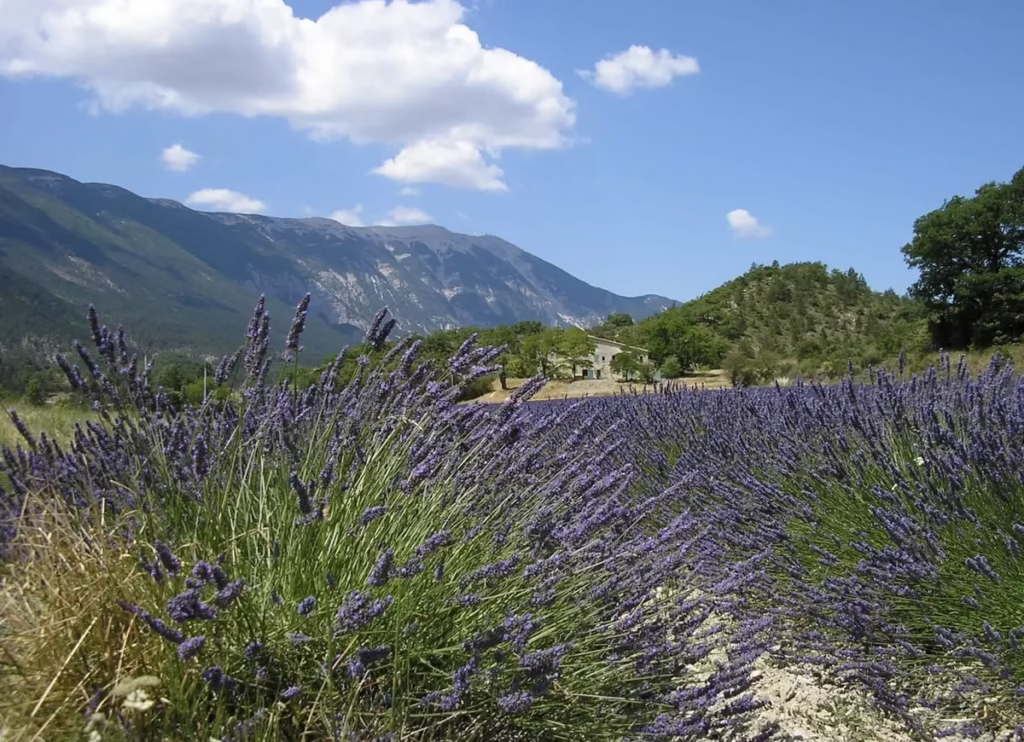
The Bédoin side is generally regarded as the hardest and most prestigious ascent of Mont Ventoux. The road begins rising gradually from the village, but the most severe section starts near Saint-Estève, where the official 15.7km climb begins.
From there, the gradient becomes consistently demanding. Much of the forest section sits close to nine or ten per cent, with few hairpins or flatter stretches to break the rhythm. Riders must sustain a high level of power while resisting the temptation to react too aggressively to every acceleration.
The climb gains approximately 1,350 metres from the start of the categorised section to the summit. For the leading riders, the effort could last close to 50 minutes depending on the speed of the race and the weather.
A small difference in sustainable climbing power can become a substantial time gap over that duration. Riders who are only slightly above their limit inside the forest may still lose minutes before reaching the summit.
Why the forest section is so severe
The road between Saint-Estève and Chalet Reynard is the most consistently difficult part of the ascent. Its gradients are steep enough to separate elite climbers, but the visual surroundings offer few obvious markers of progress.
The trees provide shelter from the wind, although they can also make the road feel hotter during an August afternoon. Riders will need to manage body temperature while producing a prolonged threshold effort, often after several hours of racing and more than 2,000 metres of earlier climbing.
This is also the section where teams may still influence the race. A strong domestique can maintain a hard pace, discourage repeated attacks and help a leader avoid sudden changes of rhythm. Once the group becomes small, however, the strongest contenders may decide that following a slower teammate is no longer useful.
The winning move could therefore happen well before the famous exposed summit section.
What changes at Chalet Reynard?
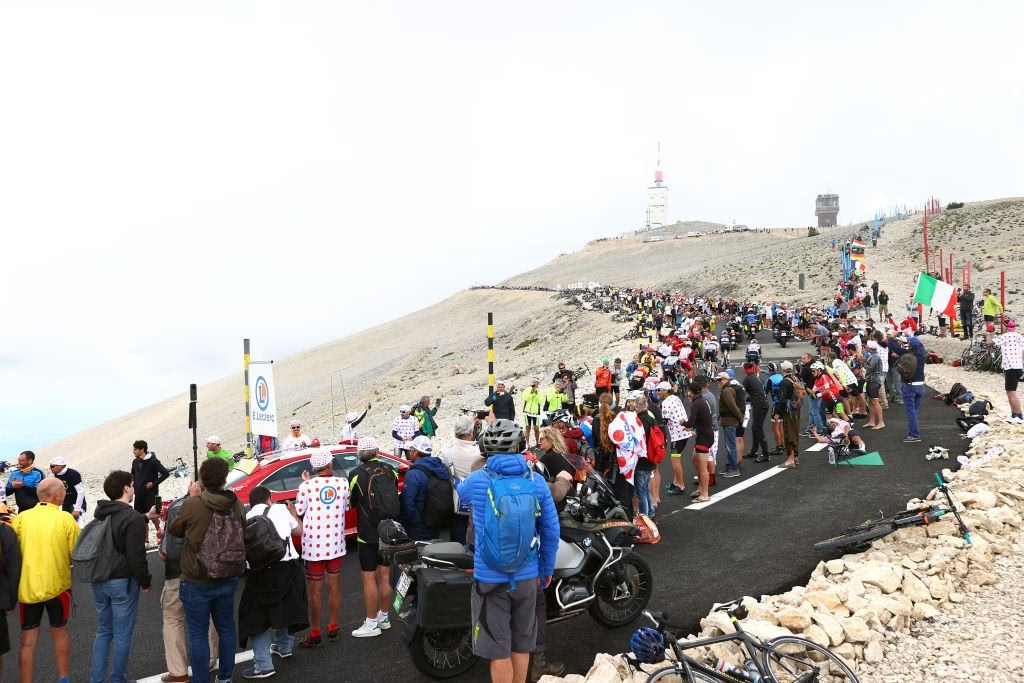
Chalet Reynard sits at approximately 1,423 metres, with 6.2km still remaining. The trees disappear almost immediately and the road enters the pale limestone landscape most closely associated with Mont Ventoux.
The gradient does not become significantly easier. The main change is exposure.
A headwind could encourage riders to remain together and delay their attacks, while a tailwind would make an earlier move more attractive. Crosswinds may also increase the value of positioning and drafting, even though the riders will be moving at climbing speeds.
The summit can be considerably colder than Bédoin, while cloud and strong wind can arrive quickly. Teams will need to prepare for the conditions expected at 1,910 metres rather than relying on the weather experienced in the valley.
Where could the decisive attack happen?
The first tactical pressure could arrive on the Col de Suzette, where a strong team may attempt to remove rival domestiques. That would not necessarily involve an attack from the leader. A sustained team pace could be enough to reduce the group and create a more isolated contest on Ventoux.
A rider needing to recover substantial time may attack soon after Saint-Estève. This would be a high-risk move, but it provides almost the entire climb over which to build an advantage.
The forest section is perhaps the most likely place for the race to split. Its gradients reward sustained climbing power, allowing a rider to create separation through a hard tempo rather than one dramatic acceleration.
Chalet Reynard provides the most obvious visual launch point, but waiting until the final 6.2km reduces the distance available to build a large advantage. A headwind could also allow riders to use one another’s slipstream and limit the gaps.
If the main contenders remain together into the final two kilometres, finishing speed and the available time bonuses become more important. The first three riders receive ten, six and four seconds, so even a closely fought stage could alter the general classification.
The role of those seconds is covered in our guide to Tour de France Femmes 2026 time bonuses.
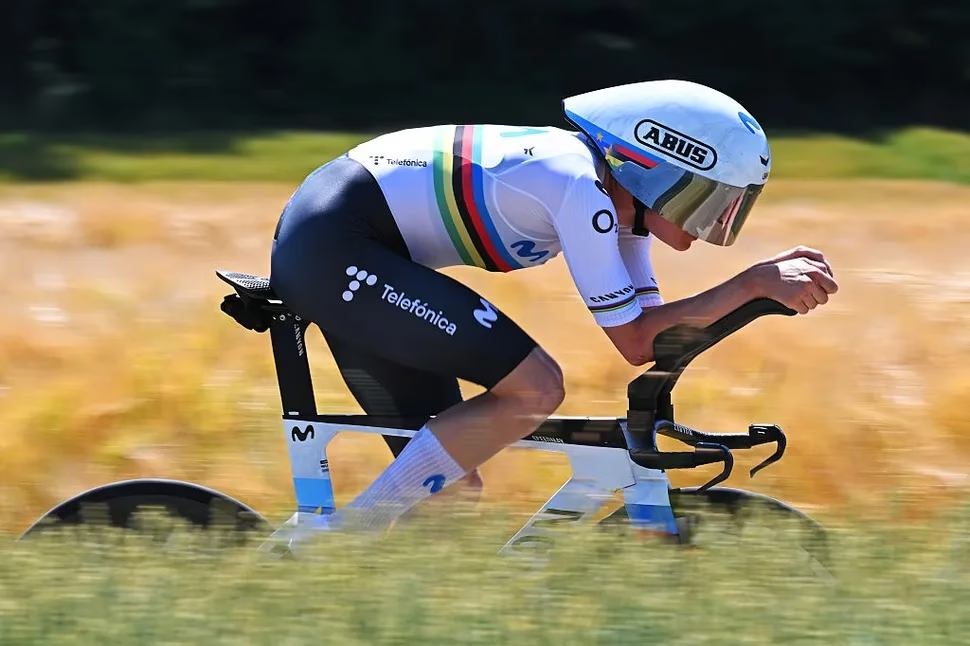 Photo Credit: Getty
How the Dijon time trial changes the stage
The 21km individual time trial on Stage 4 should create clearer differences between the main contenders before the race reaches Mont Ventoux.
A strong time triallist may begin Stage 7 with a useful advantage and approach the climb defensively. She would not necessarily need to match every acceleration, provided she can maintain a steady pace and limit her losses.
A lighter climber who has lost 30 or 40 seconds in Dijon faces a different problem. Waiting until the final kilometre may recover only a handful of seconds, making a longer-range attack necessary.
That contrast should prevent the stage from becoming a simple summit sprint. Some riders will be trying to protect an advantage, while others may need to make the race difficult from the Col de Suzette onwards.
The likely winners of the Dijon stage are assessed in our Tour de France Femmes 2026 time-trial contenders guide.
Which riders should Mont Ventoux favour?
Ventoux should favour complete stage racers and pure climbers capable of sustaining a high power-to-weight ratio for close to an hour. Explosive puncheurs may survive the early part of the ascent, but the long forest section offers few opportunities to recover after a hard effort.
The best contenders will need more than climbing ability. Heat management, fuelling, pacing and team support through the first 125km could all influence the result. The descent towards Bédoin and the battle for position before the climb may also cost energy if a rider is repeatedly forced to move through the peloton.
The exposed upper section particularly rewards riders who understand their own limits. Attacking too hard inside the forest can lead to a dramatic collapse after Chalet Reynard, when there is still more than six kilometres left to climb.
The leading yellow jersey contenders are covered in our Tour de France Femmes 2026 riders to watch.
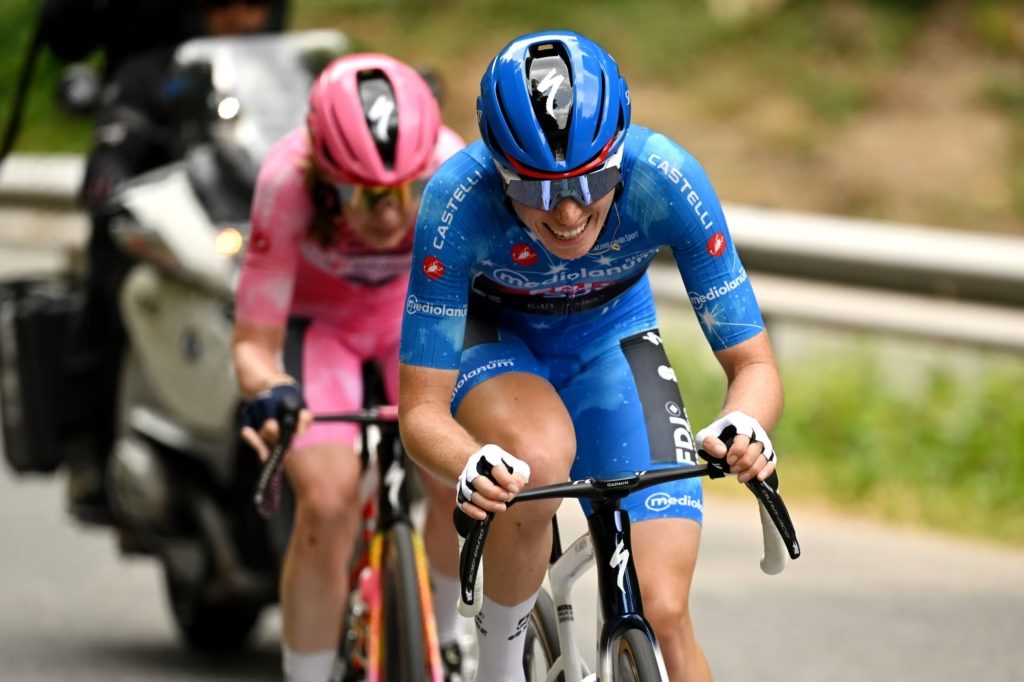 Photo Credit: Getty
Why Demi Vollering should suit Ventoux
Demi Vollering has the sustained climbing power and finishing acceleration required for a summit such as Mont Ventoux. She can win by riding a high tempo over a long period or by waiting to attack from a reduced group closer to the finish.
Her sprint also gives her an advantage if the main contenders remain together. Rivals may need to distance her before the final kilometre rather than allowing the stage to become a fight for bonuses at the summit.
The tactical question will be whether Vollering needs to recover time after the Dijon time trial or can afford to ride more conservatively. Her approach may look very different depending on the general classification at the start of Stage 7.
Pauline Ferrand-Prévot and the pressure of defending the Tour
Pauline Ferrand-Prévot enters the race as defending champion after her decisive climbing performance on the Col de la Madeleine in 2025.
Ventoux provides a different type of challenge. It is longer, more exposed and more consistent, reducing the value of short bursts and making pacing particularly important.
Ferrand-Prévot’s off-road background gives her extensive experience of prolonged individual efforts, but she will still need support through the earlier climbs and the approach to Bédoin. As the leading French contender, she will also face significant attention on one of the country’s most famous cycling mountains.
Her route towards the race is covered in our Pauline Ferrand-Prévot 2026 season guide.
Can a breakaway win at the summit?
A breakaway victory is possible, although the prestige of Mont Ventoux makes it difficult.
The three earlier categorised climbs provide natural launch points for a strong group, while the GC teams may be reluctant to chase hard throughout a stage containing 3,565 metres of ascent. A rider already several minutes down overall could be given enough freedom to build a meaningful advantage.
The problem is the speed difference on the final climb. Even a five-minute lead at Bédoin can disappear if the yellow jersey group rides Ventoux at full intensity.
A successful breakaway would probably need an accomplished climber capable of pacing the ascent without support. The escape must also contain riders whose GC positions do not force the main teams to chase earlier than planned.
The likely attacking riders are covered in our guide to the Tour de France Femmes 2026 breakaway specialists.
 Photo Credit: A.S.O/Thomas Maheux
How Mont Ventoux could decide the polka-dot jersey
Mont Ventoux is classified hors catégorie, with mountains points awarded to the first eight riders at the summit.
| Position | Points |
|---|---|
| 1st | 15 |
| 2nd | 12 |
| 3rd | 10 |
| 4th | 8 |
| 5th | 6 |
| 6th | 4 |
| 7th | 2 |
| 8th | 1 |
The Col de la Grande Limite, Col du Colombier and Col de Suzette also contribute points earlier in the stage. A rider in the breakaway could score on all three before the GC favourites take control of Ventoux.
The summit reward is large enough to change the classification, but it does not guarantee that the stage winner will take the polka-dot jersey. A rider who has accumulated points through earlier stages may still retain the lead after Ventoux.
The mountains competition and its tie-break rules are explained in our guide to the Tour de France Femmes 2026 jerseys.
Will Mont Ventoux decide the Tour?
It could create a decisive advantage, but two stages still remain.
A rider gaining more than a minute at the summit may leave Stage 7 with control of the race. The mountain is long enough to turn a small difference in form into a major general classification gap, particularly if one contender begins struggling before Chalet Reynard.
Stage 8 then covers 171.9km from Sisteron to Nice. Although officially classified as flat, its length and position immediately after Ventoux may make it harder to control than expected.
The final stage around Nice is only 99.2km but contains repeated climbing, including four ascents of the Col d’Èze. A rider who spends too much energy attacking on Ventoux could become vulnerable two days later.
The final weekend is covered in our Tour de France Femmes 2026 Nice guide.
Why the stage matters even if yellow does not change hands
Mont Ventoux can reshape the Tour without producing a new race leader. It may establish which riders remain capable of winning, separate the podium contenders and decide whether teams continue pursuing GC or switch towards stage victories.
The white jersey could also change through the same physical gaps, while the mountains classification may be transformed by the points available across the stage. Domestiques who survive deep into the final climb could become important again around Nice, while teams reduced to one isolated leader may face a much more difficult final weekend.
A rider beginning Stage 7 in fifth place could leave the summit on the podium. Another may lose several minutes and abandon her overall ambitions entirely.
Heat, wind and weather could change the race
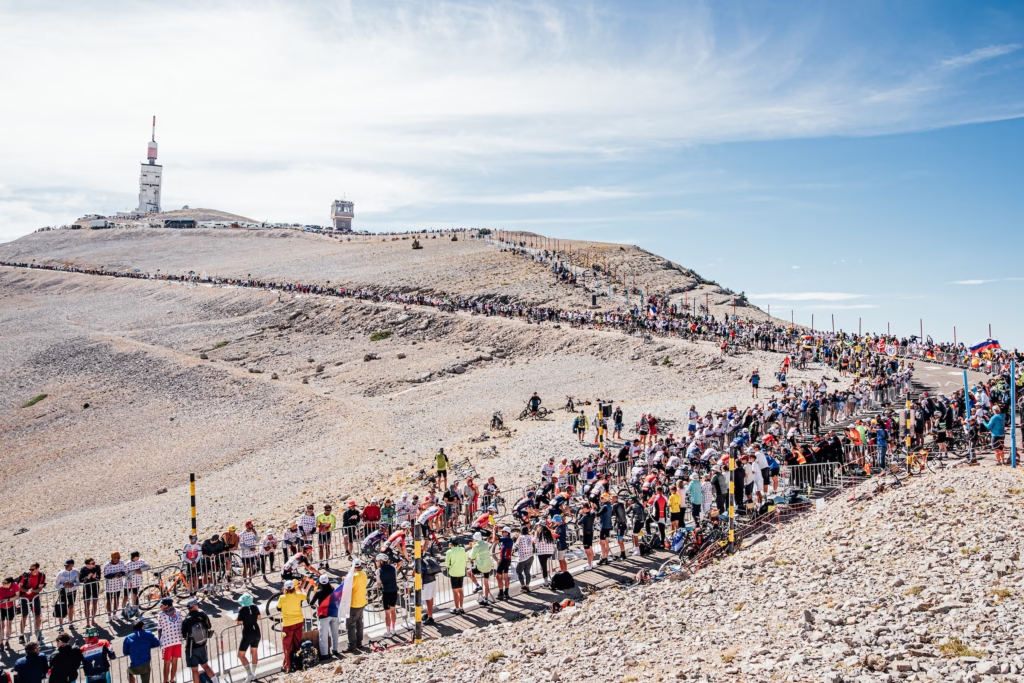
Ventoux is unusually exposed to changing conditions. The valley may be hot and still while the summit is cold, cloudy and affected by strong wind.
Heat would increase the difficulty of the forest section, where the trees offer shelter from wind but can trap warm air. A headwind above Chalet Reynard could reduce gaps and encourage tactical riding, while a tailwind would make longer attacks more effective.
Strong crosswinds on the upper slopes may increase the value of drafting and positioning. Extreme wind has previously forced organisers to shorten races finishing on Ventoux, so the planned summit finish always remains dependent on safe conditions.
What time will the Mont Ventoux stage be shown?
Stage 7 starts at 12:50 local time, which is 11:50 BST in the UK. The expected finish is 17:17 local time or 16:17 BST.
The riders are expected to reach Bédoin between approximately 16:18 and 16:39 local time, depending on the speed of the stage. UK viewers wanting to watch the complete final climb should therefore tune in by around 15:15 BST.
The race will be shown live through TNT Sports and HBO Max in the UK, with the full stage scheduled for broadcast. France Télévisions provides domestic free-to-air coverage, while Peacock carries the race in the United States and FloBikes holds the Canadian rights.
The complete daily schedule is available in our Tour de France Femmes 2026 TV guide.
Where to watch Mont Ventoux in person
Bédoin provides the easiest access to cafés, facilities and the atmosphere around the start of the climb. It is also a practical choice for spectators who want to see the race without travelling high onto the mountain.
Saint-Estève marks the beginning of the steep forest section and should provide an early view of the main selection. Higher up, the road between Saint-Estève and Chalet Reynard offers severe gradients but limited space and visibility in places.
Chalet Reynard is one of the most recognisable locations on the climb and marks the transition onto the exposed upper mountain. The final six kilometres provide the classic barren scenery, although spectators need to prepare for sun, cold, wind and a lack of shelter.
The summit is the most prestigious place to watch but is likely to face the strictest access controls. Space is limited, road closures will begin well before the riders arrive and vehicles may not be allowed near the final kilometres.
Cycling up the mountain may be the most practical option once the roads close, but spectators need suitable gearing, sufficient food and water, warm clothing and lights for the return journey. The descent after the stage will be crowded with riders and pedestrians, so it should not be treated as a normal open-road descent.
-
 Photo Credit: quentinphotographiebe
 -
 Photo Credit: Getty


Frequently asked questions about Mont Ventoux at the 2026 Tour de France Femmes
When is the Mont Ventoux stage?
Friday 7 August 2026.
Which stage finishes on Mont Ventoux?
Stage 7 from La Voulte-sur-Rhône.
How long is the stage?
146.8km.
How much climbing does it contain?
Approximately 3,565 metres.
How long is the final climb?
The officially categorised ascent is 15.7km.
What is the average gradient?
8.8%.
How high is the summit?
1,910 metres.
Which side will the riders climb?
The Bédoin side.
Is Mont Ventoux hors catégorie?
Yes.
Has a women’s race finished on Mont Ventoux before?
Yes. Anna Kiesenhofer won a Tour Féminin de l’Ardèche summit stage in 2016, while Marta Cavalli won the women’s Mont Ventoux Dénivelé Challenge in 2022.
Is this the first Tour de France Femmes visit?
Yes. The modern race has not previously used Mont Ventoux.
What time does the stage start in the UK?
11:50 BST.
What time is the finish expected?
Approximately 16:17 BST.
When should viewers tune in for the final climb?
By around 15:15 BST.
Are there time bonuses at the summit?
Yes. The first three riders receive ten, six and four seconds.
Will Mont Ventoux decide the Tour?
It may produce the largest time gaps, but two stages remain afterwards, including the mountainous finale around Nice.
Why Mont Ventoux matters in 2026
Mont Ventoux gives the 2026 Tour de France Femmes a climb capable of standing alongside the Tourmalet, Alpe d’Huez and Col de la Madeleine as one of the race’s defining mountain stages.
Its difficulty is not based on reputation alone. The official ascent lasts 15.7km at 8.8%, gains approximately 1,350 metres and finishes at the highest point of the Tour. By the time the peloton reaches Bédoin, the riders will already have covered more than 120km and crossed three categorised climbs.
Previous women’s races have shown how decisive the mountain can be. Anna Kiesenhofer won by almost four minutes in 2016, while Marta Cavalli created gaps of more than 40 seconds in the 2022 Mont Ventoux Dénivelé Challenge. The deeper Tour de France Femmes field should produce a closer contest, but Ventoux remains capable of exposing even a small weakness.
The strongest riders may take control through sustained climbing power alone. Others will need to manage their effort, use their teammates intelligently and avoid responding emotionally when the first attacks begin.
The stage should create one of the defining images of the 2026 race as the leading riders emerge from the forest at Chalet Reynard and move onto the white upper slopes towards the summit observatory.
Mont Ventoux may not provide the final word on the Tour.
It should provide the clearest answer yet to the most important question: who is genuinely strong enough to win it?

