

Alpe d’Huez is the climb almost every cyclist recognises before they have ever ridden in the Alps.
The traditional ascent begins in Bourg-d’Oisans and climbs through 21 numbered hairpins to the ski resort above. The official 2026 Tour de France route measures it at 13.7km with an average gradient of 8.1%, gaining approximately 1,100 metres in elevation.
Those numbers make it difficult without placing it among the longest Alpine climbs. What makes Alpe d’Huez so demanding is the way it begins. The steepest sustained section arrives almost immediately, before there has been any chance to settle into the effort.
Ride the opening kilometres too hard and the remaining bends become a long exercise in survival. Pace them properly and the numbered hairpins turn the climb into one of the most satisfying challenges in cycling.

Alpe d’Huez climb at a glance
| Detail | Figure |
|---|---|
| Distance | 13.7km on the 2026 Tour route |
| Average gradient | 8.1% |
| Elevation gain | Approximately 1,100 metres |
| Number of hairpins | 21 |
| Starting point | Bourg-d’Oisans |
| Summit altitude | Approximately 1,850 metres |
| Strong amateur target | Under one hour |
| Typical recreational time | Around 75 to 100 minutes |
Measurements differ slightly between the Tour, local tourism routes and online segments because they do not all use identical start and finish points.
The climb’s wider history and physical character are covered in Alpe d’Huez: why the Tour still fears the 21 bends.
Where does the Alpe d’Huez climb start?
The traditional ascent begins on the edge of Bourg-d’Oisans, where the D211 leaves the valley and immediately starts rising.
There is almost no introductory section. The road moves quickly onto gradients around 9% and 10%, so it is worth warming up properly before reaching the foot.
Bourg-d’Oisans is the natural base for an attempt. It has bike shops, cafés, accommodation and flat valley roads that can be used for 15 to 30 minutes of easy riding before the climb.
The wider area is covered in our guide to cycling Bourg-d’Oisans and Alpe d’Huez.
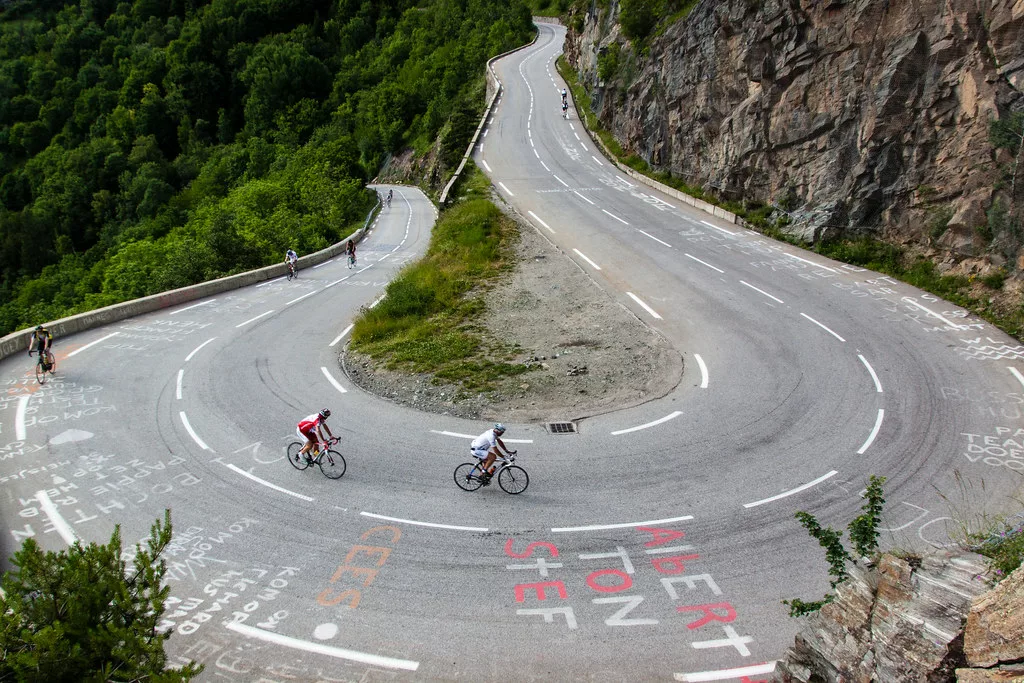
How difficult is Alpe d’Huez?
Alpe d’Huez is hard, but it is manageable for a reasonably fit cyclist with appropriate gearing and sensible pacing.
The main difficulty comes from the first four kilometres.
The road rises sharply towards La Garde, with very few genuinely easy sections. Riders inspired by the Tour often begin too aggressively because the climb feels exciting and the first numbered bends arrive quickly.
That effort usually catches up with them higher on the mountain.
After La Garde, the gradient becomes less relentlessly steep. It still climbs consistently, but the road offers more changes of rhythm and slightly more opportunity to recover.
The ascent can broadly be divided into three sections:
| Section | Character |
|---|---|
| Bourg-d’Oisans to La Garde | Steepest and easiest place to overpace |
| Middle hairpins | More consistent, with short changes of gradient |
| Final bends and resort | Fatigue becomes the main problem rather than gradient |
How should you pace Alpe d’Huez?
The simplest advice is to ride the first 20 minutes more slowly than feels necessary.
The lower ramps should feel controlled rather than competitive. Use a gear that allows a smooth cadence and resist accelerating every time the gradient eases around a hairpin.
A sensible pacing plan is:
- Ride the opening four kilometres at an effort you could maintain for at least 75 minutes
- Use the outside of the bends for a shallower gradient when it is safe
- Take advantage of the easing near La Garde to drink and reset
- Hold a steady rhythm through the middle section
- Increase the effort only once the hairpin numbers fall into single figures
- Save something for the road beyond bend one
Cyclists using power should avoid repeatedly riding above threshold on the lower mountain. Those short surges feel manageable at first but accumulate quickly.
Riders pacing by feel should aim for controlled breathing and the sense that another gear remains available.
What gears do you need for Alpe d’Huez?
A compact chainset with a wide-range cassette is suitable for most recreational riders.
Common options include:
- 34×30 for strong climbers
- 34×32 for a wider range of riders
- 34×34 or easier for anyone prioritising comfort
- A sub-compact chainset for riders carrying luggage or uncertain about Alpine gradients
There is no benefit in choosing unnecessarily hard gearing for prestige.
The lower slopes are steep enough that many riders will appreciate an easier gear, particularly in hot weather. Being able to keep pedalling smoothly matters more than forcing a low cadence.
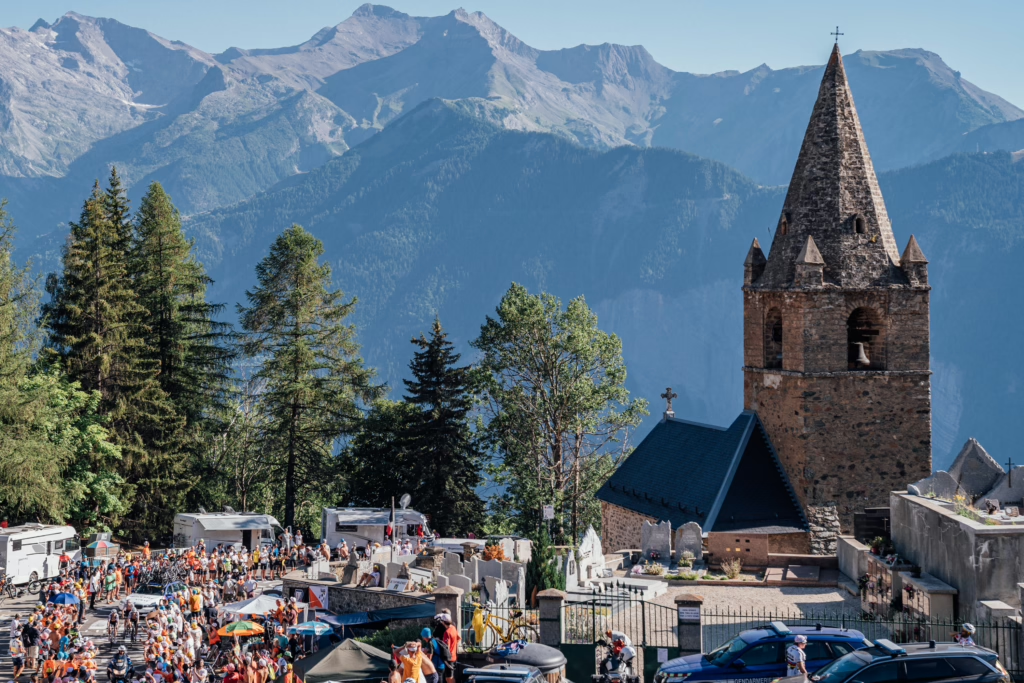
How long does it take to cycle Alpe d’Huez?
A sub-hour ascent is a major benchmark for strong club cyclists.
Professional riders can complete the climb in well under 40 minutes, although comparisons vary according to the precise timing points used. Marco Pantani remains the name most closely associated with the fastest Alpe d’Huez ascents.
For most visitors, these are more realistic ranges:
| Time | Approximate level |
|---|---|
| Under 50 minutes | Exceptional amateur |
| 50 to 60 minutes | Very strong club cyclist |
| 60 to 75 minutes | Strong and experienced rider |
| 75 to 100 minutes | Fit recreational cyclist |
| More than 100 minutes | A perfectly valid first Alpine ascent |
Weather, traffic, stops and the chosen finish point can all change the result.
Completing the climb comfortably is more useful than reaching the top exhausted simply to save a few minutes.
How do the 21 hairpins work?
The bends count backwards.
Hairpin 21 is the first numbered corner above Bourg-d’Oisans. The numbers then fall one by one until bend one near the resort.
Each sign is associated with one or more previous Tour de France stage winners. Fausto Coppi, the first winner at Alpe d’Huez in 1952, is honoured at bend 21. Tom Pidcock, the last men’s winner before the 2026 return, shares bend 12 with Luis Herrera.
The countdown provides useful psychological landmarks. It also tempts riders into assuming the finish arrives immediately after bend one.
It does not.
The road continues through the resort before reaching the traditional Tour finish.
The full story behind the numbered corners is part of the wider history of Alpe d’Huez at the Tour de France.
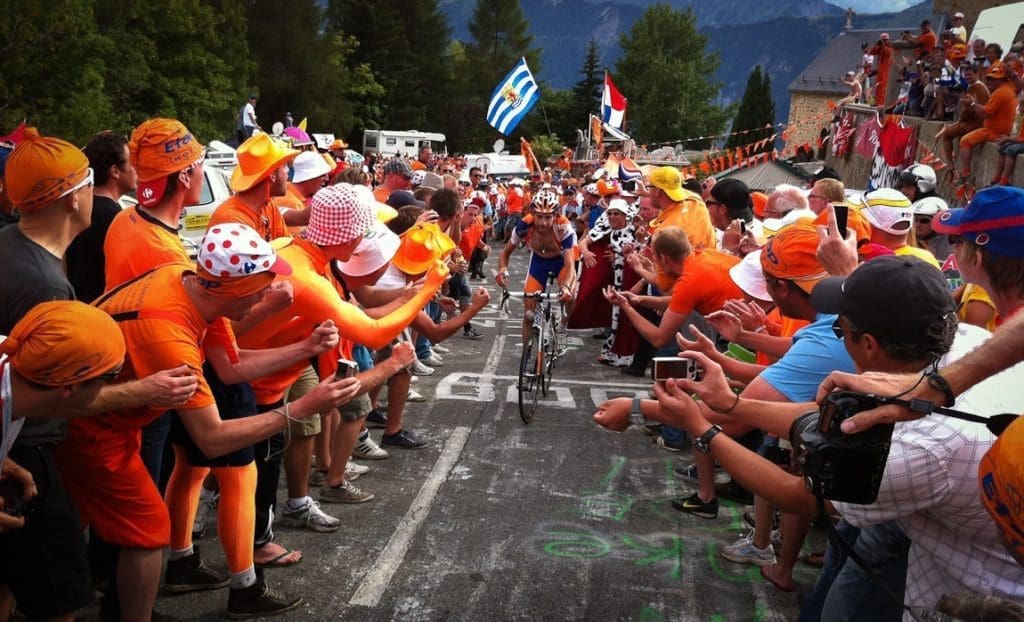
What is Dutch Corner?
Dutch Corner is hairpin seven.
It became the centre of Dutch support after riders from the Netherlands dominated the climb during the late 1970s and 1980s. Joop Zoetemelk, Hennie Kuiper, Peter Winnen, Steven Rooks and Gert-Jan Theunisse contributed eight Dutch victories between 1976 and 1989.
When the Tour visits, bend seven becomes a temporary orange festival filled with flags, music and supporters.
Outside the race, it is much quieter. The corner remains an obvious place to stop briefly for a photograph, although cyclists should remain clear of the road and watch for descending traffic.
The hairpin’s official winner sign carries the name of Gianni Bugno, who won on Alpe d’Huez in 1990.
Where should you stop on the climb?
Stopping is not necessary, but several points work well for riders treating the ascent as an experience rather than a timed effort.
La Garde
The village arrives after the hardest opening section. It offers the first natural point to pause, drink and assess how the effort feels.
The Joaquim Agostinho memorial
The memorial near bend 14 commemorates the Portuguese rider who won on Alpe d’Huez in 1979. It provides a historical stop without requiring a long detour.
Dutch Corner
Hairpin seven is the most recognisable place for a photograph.
The Pantani bends
Bends three and two carry Pantani’s name after his victories in 1995 and 1997.
The resort finish
Continue beyond bend one rather than ending the ride at the final numbered sign. Completing the road through the resort gives the attempt a clearer finish.
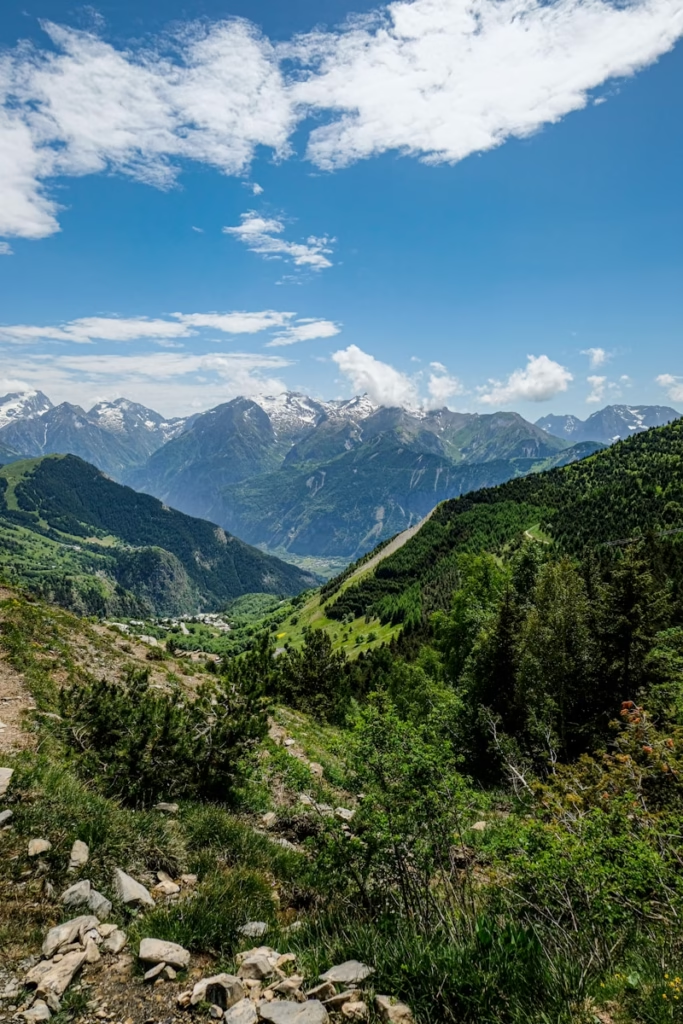
Is there water on the climb?
Cyclists should begin with enough water rather than relying on finding it during the ascent.
Bourg-d’Oisans has numerous places to fill bottles before starting. Services may be available in La Garde and higher on the mountain, but opening times vary and should not form the basis of a hydration plan.
On a hot summer day, two bottles are sensible for many riders, particularly if they expect the climb to take more than an hour.
The road is exposed in places and can become extremely warm during the afternoon. Starting earlier reduces both heat and traffic.
What should you eat before riding Alpe d’Huez?
A rider completing only Alpe d’Huez may not need substantial food during the ascent, but they should not begin under-fuelled.
Eat a normal carbohydrate-based meal two to three hours before riding, then carry at least one gel, bar or another easily digested option.
For a climb lasting longer than an hour, taking some carbohydrate before the lower slopes or around La Garde can prevent energy levels falling near the top.
Do not wait until the final bends to address hunger.
When is the best time to ride Alpe d’Huez?
Summer offers the most reliable conditions, but it also brings heat, traffic and large numbers of cyclists.
An early morning start normally provides:
- Lower temperatures
- Quieter roads
- Less vehicle traffic
- Better access to the hairpin signs
- More time to deal with changing mountain weather
Local events and Tour de France visits can lead to road restrictions. Anyone travelling specifically to ride the climb should check local access information before setting out.
Spring and autumn can be quieter, but cold weather, rain or snow at altitude may make the road unsuitable even when conditions in Bourg-d’Oisans appear reasonable.
Riders considering a larger organised challenge can also read our complete guide to L’Étape du Tour 2026.
-
 Photo Credit: A.S.O./Gaëtan Flamme

Is the descent of Alpe d’Huez difficult?
The descent requires more care than the climb.
The numbered hairpins create repeated braking zones, and vehicles may cross the centre of the road when turning. Cyclists climbing slowly can also move unpredictably around the bends.
Before descending:
- Check brakes and tyre condition
- Add a jacket if the summit is cool
- Keep speed controlled into every hairpin
- Expect traffic coming uphill
- Avoid overtaking where visibility is poor
- Stop if hands or brakes begin overheating
The wide bends can encourage excessive speed, but the safest line is not always the fastest one.
Can an ordinary cyclist ride Alpe d’Huez?
Yes.
The climb demands fitness, suitable gearing and patience, but it is not reserved for elite riders. Recreational cyclists of many ages and ability levels ride it throughout the summer.
A rider who can complete two steady hours on rolling roads should be capable of preparing for Alpe d’Huez.
The main mistake is treating it like a professional race effort from the bottom.
Start slowly, use the easiest available gear and let the hairpins divide the climb into manageable sections.
The final time matters less than reaching the resort with enough energy to appreciate where you are.

