
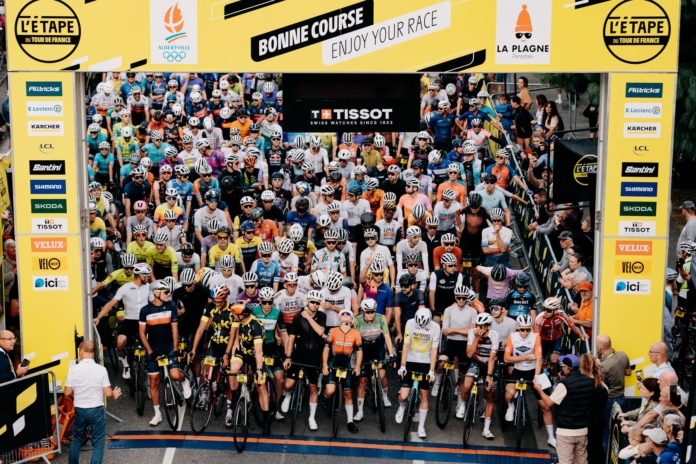
L’Étape du Tour is one of the closest experiences an amateur cyclist can get to riding the Tour de France. Closed roads, official Tour climbs, thousands of riders, start pens, feed stations, timing chips and the same mountain roads the professionals will race a few days later. For UK cyclists, it sits in a very different category from a normal sportive.
The 2026 edition is especially appealing. L’Étape du Tour de France takes place on Sunday, 19th July, starting in Le Bourg-d’Oisans and finishing at Alpe d’Huez. The route is based on stage 20 of the Tour de France 2026, with 170km and around 5,400 metres of climbing. It includes the Col de la Croix de Fer, Col du Télégraphe, Col du Galibier, Col de Sarenne and a final climb to Alpe d’Huez.
That makes it one of the hardest editions in recent years. This is not simply a chance to ride Alpe d’Huez with a number on your back. It is a full Alpine mountain stage, with repeated high-altitude climbing before the final ascent. UK riders need to treat it as a serious preparation project rather than a cycling holiday with an event attached.
This guide explains the 2026 L’Étape du Tour route, how to register, how to travel from the UK, where to stay, what the day is like, how to train for Alpine climbing, what kit to take, and what catches first-time riders out.
For more Tour context, see our Tour de France 2026 full route guide, Tour de France 2026 route analysis and our feature on why back-to-back Alpe d’Huez finishes could define the Tour de France 2026. If you are comparing events, our UK sportive guide and Fred Whitton Challenge complete guide also give useful context.
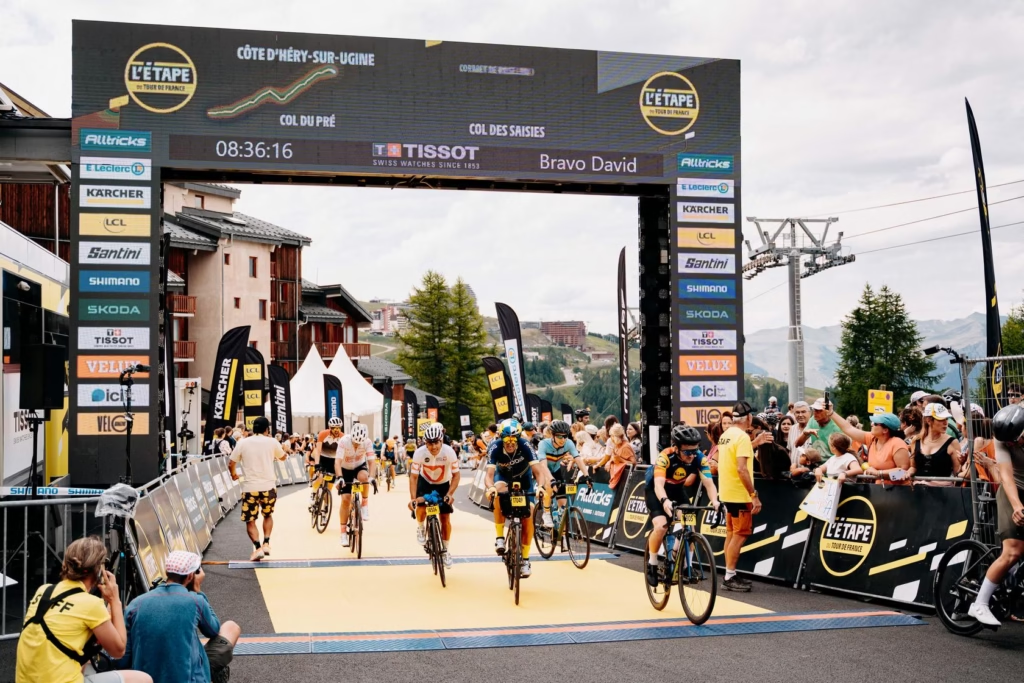 Photo Credit: A.S.O./Jennifer Lindini
What is L’Étape du Tour?
L’Étape du Tour is an official mass-participation sportive built around a stage of the Tour de France. Each year, amateur riders get the chance to ride a Tour stage route on closed roads, usually in the mountains, with the atmosphere and logistics of a major international event.
It is not a race for most participants, but it is timed and has cut-offs. Riders need to be fit enough to finish within the event limits, handle long climbs, descend safely, fuel properly and manage a full day in the mountains.
For UK riders, L’Étape sits somewhere between a sportive, a cycling holiday and a personal endurance test. It is much bigger than a normal local event and much more logistically demanding than a UK sportive. The reward is that you get to ride Tour de France roads in a setting that feels much closer to the professional race.
L’Étape du Tour 2026 key details
The 2026 edition is one of the most attractive and demanding versions of the event.
Key details:
- Event: L’Étape du Tour de France 2026
- Date: Sunday, 19th July
- Start: Le Bourg-d’Oisans
- Finish: Alpe d’Huez
- Distance: 170km
- Elevation gain: around 5,400 metres
- Main climbs: Col de la Croix de Fer, Col du Télégraphe, Col du Galibier, Col de Sarenne, Alpe d’Huez
- Route basis: Tour de France 2026 stage 20
- Best suited to: experienced sportive riders, strong climbers and well-prepared endurance cyclists
The headline is simple: this is a huge day. The distance is long, the elevation is severe, and the final climb is Alpe d’Huez after several major Alpine passes. Riders who have only completed flat UK centuries will need a specific training block before attempting this.
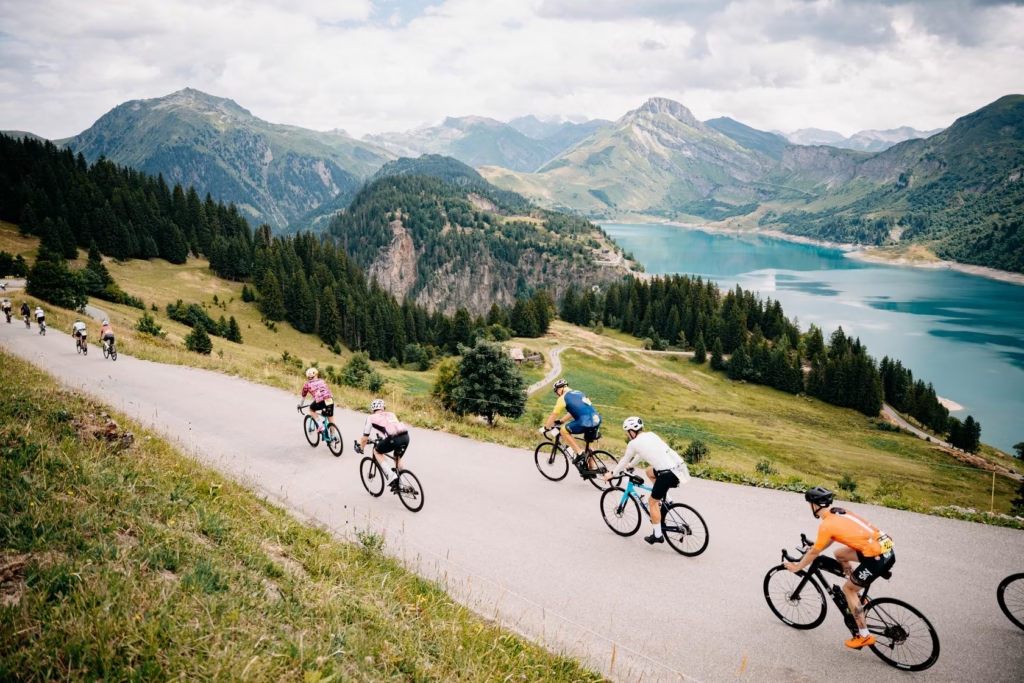 Photo Credit: A.S.O./Jennifer Lindini
L’Étape du Tour 2026 route overview
The 2026 route starts in Le Bourg-d’Oisans and finishes at Alpe d’Huez. That already gives the day a special feel because Le Bourg-d’Oisans is one of the great cycling bases in the Alps, sitting at the foot of the famous 21 bends.
But the event does not simply roll straight up Alpe d’Huez. Instead, riders face a huge Alpine loop before returning towards the final climb. The main features are the Col de la Croix de Fer, Col du Télégraphe, Col du Galibier, Col de Sarenne and the final arrival at Alpe d’Huez.
A broad route shape looks like this:
- Start in Le Bourg-d’Oisans
- Early climbing towards the Col de la Croix de Fer
- Descent and valley roads towards the Maurienne
- Col du Télégraphe
- Col du Galibier
- Long descent and transition back towards the Oisans
- Col de Sarenne
- Final approach to Alpe d’Huez
- Finish at Alpe d’Huez
This is not a route where you can wait until the final climb to start riding properly. The Croix de Fer, Télégraphe and Galibier will already have done major damage before Sarenne and Alpe d’Huez. The key to the day is not just being able to climb. It is being able to climb repeatedly without burning every match before the final hour.
Col de la Croix de Fer
The Col de la Croix de Fer is the first major climb and one of the biggest pacing traps of the day. It comes early enough that riders will still feel excited, fresh and surrounded by others pushing on. That is exactly why it needs discipline.
Croix de Fer is long and irregular. It is not one simple steady climb where you settle into a rhythm and stay there. The gradient changes, the road can feel exposed, and the effort builds gradually. If you ride it like the decisive climb of the day, you may pay heavily later.
For UK riders, this is often the first shock of Alpine climbing. Unlike most British climbs, Croix de Fer asks you to ride uphill for a very long time. Even if the gradient is not always extreme, the duration is what counts.
How to ride it:
- Start easier than feels natural
- Keep breathing controlled
- Use compact gearing early
- Eat and drink before the climb feels hard
- Avoid chasing groups that are climbing too fast
- Treat the summit as the end of the first chapter, not the day’s achievement
The main target on Croix de Fer is to lose nothing unnecessary. Not time, not energy, not concentration.
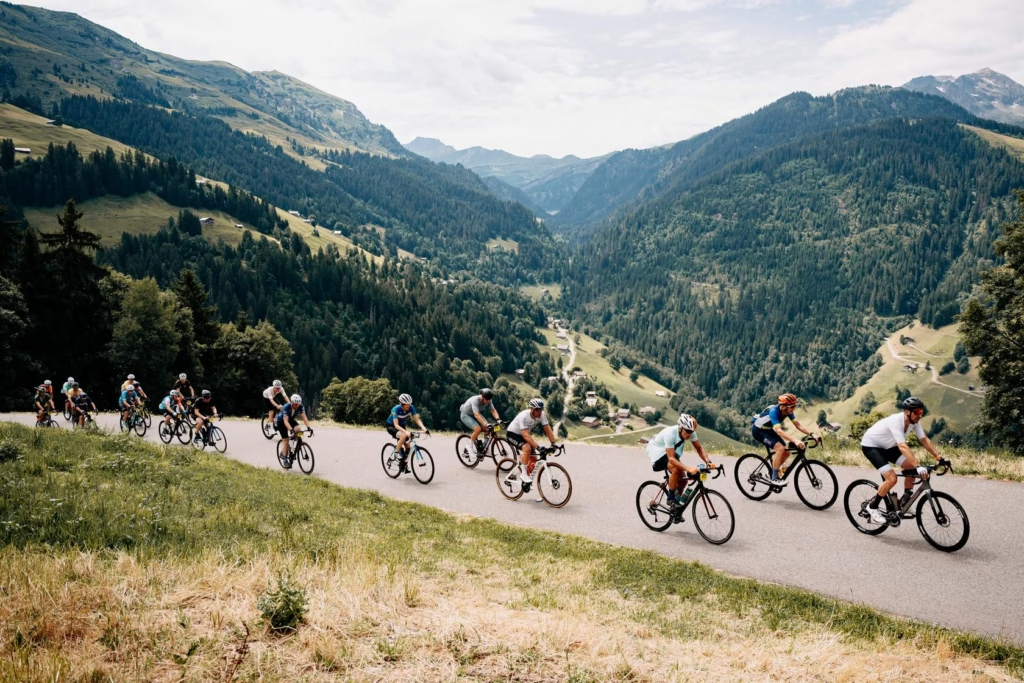 Photo Credit: A.S.O./Jennifer Lindini
Col du Télégraphe
The Télégraphe is shorter than the Galibier, but it should not be underestimated. It often acts as the gateway to the higher Alpine work that follows, and riders can be tempted to ride it too hard because it feels more manageable than what comes next.
The danger is that the Télégraphe is not really a standalone climb in the context of this route. It is part of the long sequence that leads into the Galibier. If you go too deep here, the next climb becomes much harder.
The Télégraphe rewards steady riding. Settle into a cadence, keep effort below the panic point, and remember that altitude and accumulated fatigue will start to matter more as the day goes on.
For UK riders, this is where the event starts to feel very different from a domestic sportive. You may already have a major climb behind you, yet the hardest and highest part of the route is still to come.
Col du Galibier
The Col du Galibier is one of the great Tour de France climbs and one of the defining tests of the 2026 L’Étape route. It is high, long, exposed and mentally demanding. It also comes after riders have already dealt with the Croix de Fer and Télégraphe.
This is where pacing, fuelling and weather preparation start to show. A rider who has eaten properly and stayed within themselves can still climb strongly. A rider who has chased too hard early may begin to unravel.
The Galibier also adds altitude into the equation. UK riders are not usually used to climbing above 2,000 metres, and even if the effects are subtle, the combination of altitude, heat, wind or cold can make the upper slopes feel harsher than the numbers suggest.
How to approach the Galibier:
- Ride by effort, not speed
- Eat before the steepest sections
- Keep a layer available for the descent
- Expect the summit to feel distant
- Do not panic if your pace drops
- Save energy for Sarenne and Alpe d’Huez
The descent after the Galibier is also part of the challenge. You may be cold, tired and mentally drained. Do not treat it as free recovery. It still requires focus.
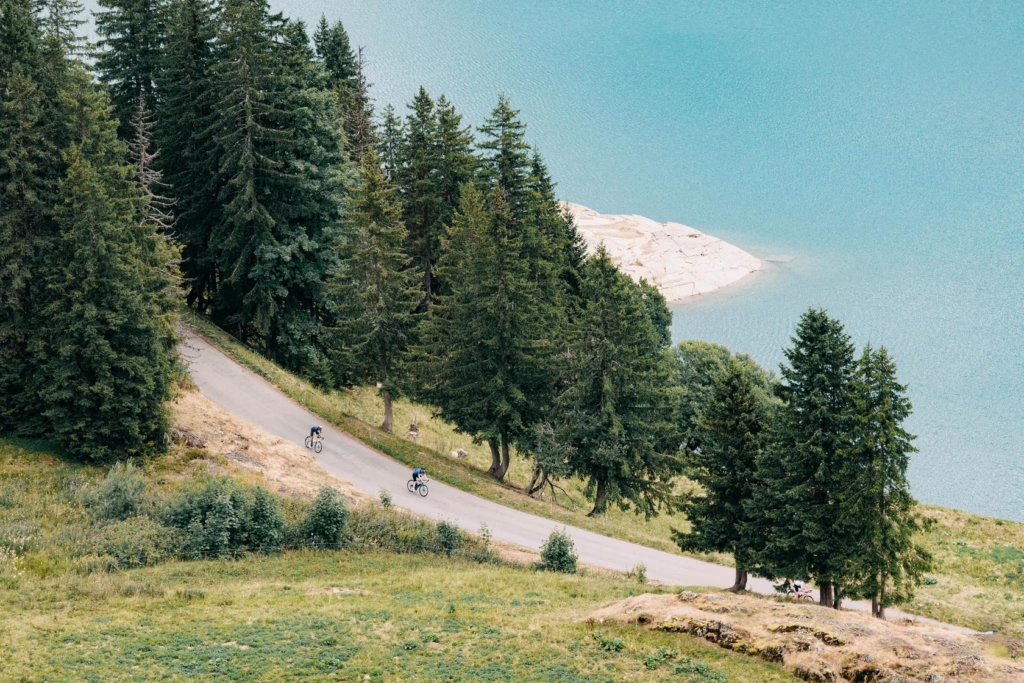 Photo Credit: A.S.O./Jennifer Lindini
Col de Sarenne
The Col de Sarenne is the climb that could catch riders out. Alpe d’Huez gets the headline attention, but Sarenne arrives late, after a huge amount of climbing, and it changes the way the final section feels.
Sarenne is narrower, rougher in places and less predictable than the classic Alpe d’Huez ascent. It has a more remote feel, which can be mentally difficult when you are deep into fatigue. If riders have spent the whole day thinking only about the 21 bends of Alpe d’Huez, Sarenne may feel like an unwelcome extra test.
This is where preparation needs to be specific. You should be ready to climb when tired, not just climb well when fresh. Long UK climbs are rare, but repeated steep efforts late in training rides can help simulate the feeling.
The smartest riders will reach Sarenne with something left. The riders who have treated the earlier climbs as targets in themselves may find this section very hard.
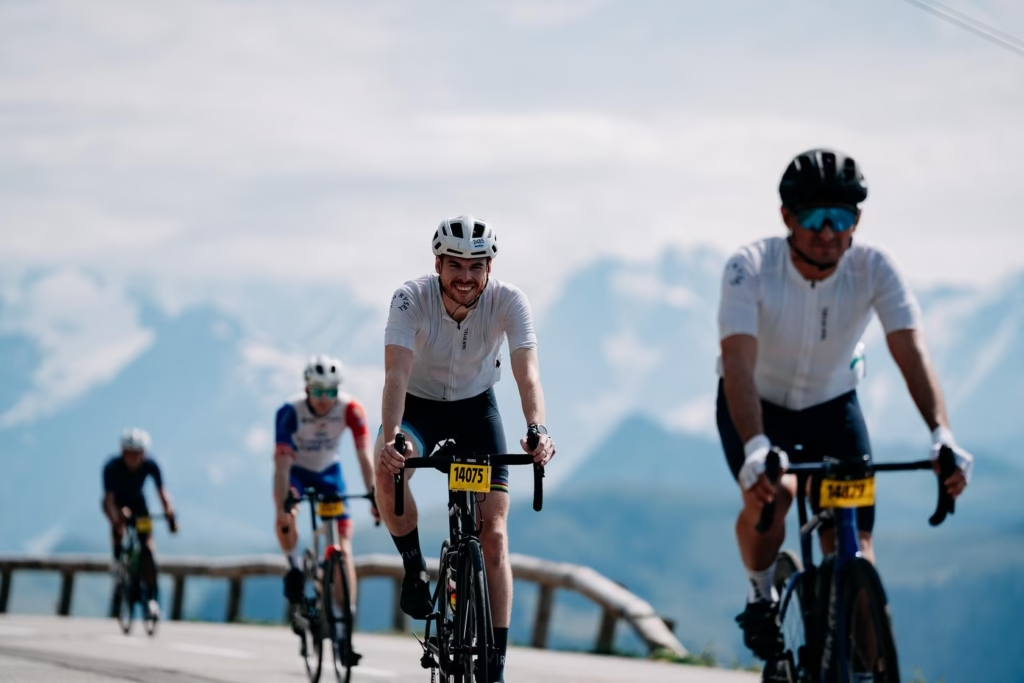 Photo Credit: A.S.O./Jennifer Lindini
Alpe d’Huez
Alpe d’Huez is the emotional finish. The 21 hairpins, the Tour history and the scale of the crowd make it one of the most famous climbs in cycling. For many UK riders, simply reaching the bottom of the final climb will feel like an achievement.
But Alpe d’Huez still has to be climbed. After 150km of Alpine riding and several major passes, even a climb you know from television becomes a serious test. The early ramps are steep enough to hurt immediately, and the length means you cannot rely on adrenaline alone.
The classic climb is around 13.8km at roughly 8 per cent, but those numbers do not fully explain what it feels like at the end of L’Étape. You will be hot, tired, possibly low on food, and surrounded by riders all fighting their own version of the same battle.
How to ride Alpe d’Huez at the end of L’Étape:
- Start the climb deliberately slowly
- Count the bends if it helps, but do not obsess over them
- Drink before you feel empty
- Stay seated where possible
- Use the flatter bends to reset
- Expect the first few kilometres to feel harsh
- Keep something back for the final section through the resort
The finish will be worth it, but the climb still needs respect.
How hard is L’Étape du Tour 2026?
L’Étape du Tour 2026 is very hard. It is tougher than most UK sportives and harder than many riders will expect, even if they have completed long events before.
The difficulty comes from:
- 170km of distance
- Around 5,400m of climbing
- Multiple long Alpine climbs
- High-altitude sections
- Technical descending
- Heat or cold depending on mountain weather
- Strict event cut-offs
- A final climb to Alpe d’Huez after a huge day
- Travel and logistics before the event
Compared with a UK sportive, the biggest difference is climb duration. Hardknott may be steeper than many Alpine roads, but it is short. The Alps require sustained effort for much longer periods. That means pacing and fuelling become even more important.
If the Fred Whitton is a test of steepness and late-route brutality, L’Étape du Tour 2026 is a test of Alpine endurance. Both are hard, but they hurt in different ways.
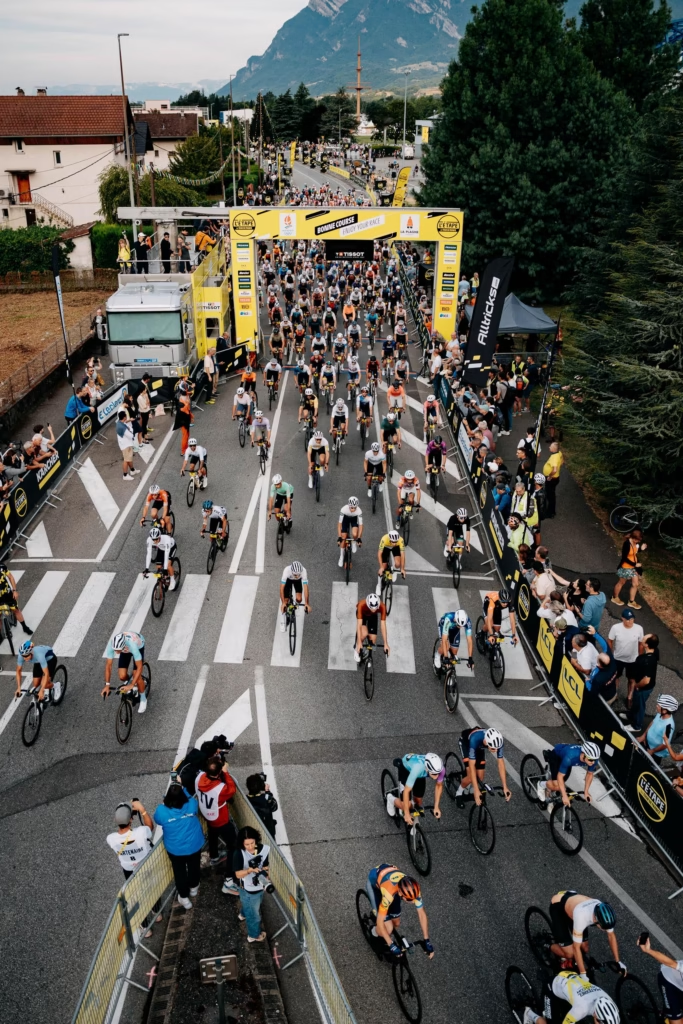 Photo Credit: A.S.O./Jennifer Lindini
How to register for L’Étape du Tour 2026
Registration for L’Étape du Tour usually opens months in advance and can sell out quickly. For 2026, standard entries have been in heavy demand, and riders still looking for a place may need to use charity entries, official travel packages or authorised tour operators if available.
The normal registration routes are:
- Standard individual entry through the official event site
- Charity bibs
- Official travel packages
- Authorised tour operator packages
- Occasional transfer or resale options if permitted by the organiser
Riders should always use the official L’Étape du Tour website or recognised partners. Avoid unofficial resale routes, especially for an event with high demand.
Before registering, check:
- Whether entries are still available
- What is included in the entry
- Whether a medical certificate or health document is required
- Start pen rules
- Bib collection times
- Cut-off times
- Travel and accommodation logistics
- Bike transport options
- Insurance requirements
Do not enter first and solve the logistics later unless you are confident you can travel, stay locally and collect your bib in time. L’Étape is not a simple turn-up-on-the-morning sportive for UK riders.
How much does L’Étape du Tour cost?
The event entry is only one part of the cost. UK riders need to budget for travel, accommodation, food, insurance, bike transport, transfers and possibly a tour operator package.
Typical cost areas include:
- Event entry
- Flights, ferry or train travel
- Bike box or bike transport
- Accommodation
- Airport or station transfers
- Food before and after the event
- Travel insurance with cycling cover
- Mechanical preparation
- Alpine-appropriate kit
- Extra luggage fees if flying
- Tour operator support if using a package
A self-organised trip can be cheaper, but it takes more planning. A tour operator package can be more expensive, but may reduce stress around transfers, bike transport, hotel location and event logistics.
For many UK riders, the best value is not simply the cheapest option. It is the option that gets you to the start line rested, organised and with your bike working properly.
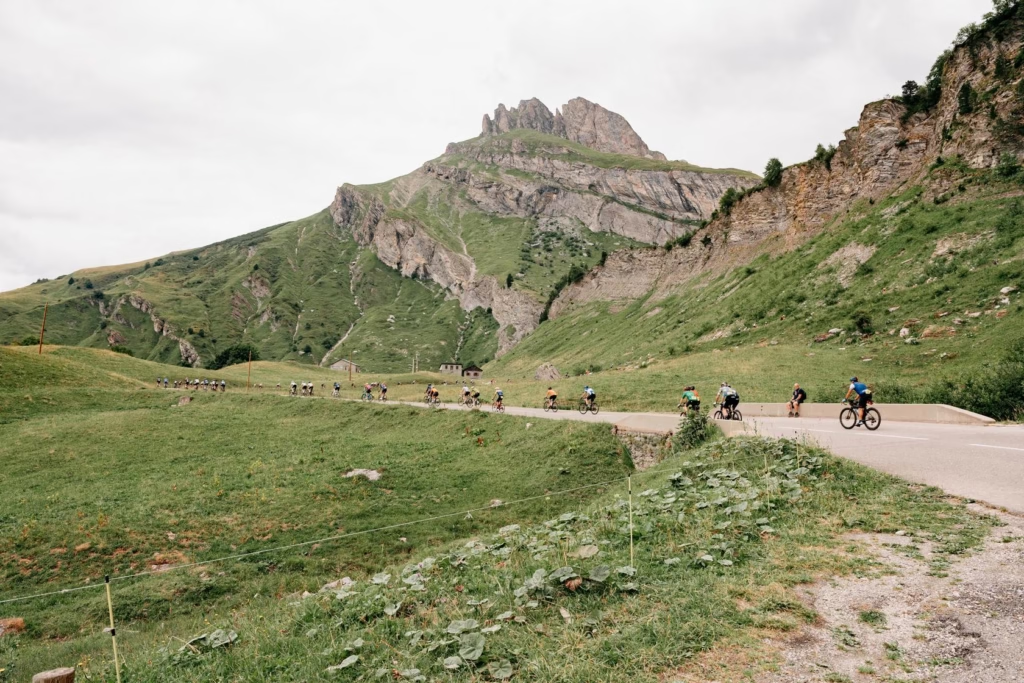 Photo Credit: A.S.O./Jennifer Lindini
How to travel from the UK to L’Étape du Tour 2026
The 2026 start and finish around Le Bourg-d’Oisans and Alpe d’Huez make travel relatively straightforward by Alpine standards, but still more complicated than a normal UK event.
The main options are flying, driving, or using a train and transfer combination.
Flying from the UK
The most obvious airports are Grenoble, Lyon and Geneva, depending on flights, transfers and accommodation. Grenoble is geographically convenient but may have more limited flight options depending on season. Lyon and Geneva usually offer more choice from the UK but require a longer transfer.
Flying can work well if you are comfortable packing your bike or using a bike transport service. The risks are baggage delays, bike damage and the stress of rebuilding the bike before a major event.
Flying is best for:
- Riders short on time
- Those using a tour operator
- Groups with organised transfers
- Riders comfortable travelling with a bike box
Driving from the UK
Driving gives the most control. You can take your own bike, tools, kit, nutrition and spare equipment without worrying about airline baggage limits. The downside is time. Driving from the UK to the Alps is a serious journey and may require an overnight stop.
A typical driving plan would involve:
- Channel crossing by ferry or Eurotunnel
- Long drive through France
- Overnight stop if needed
- Arrival at least two days before the event
- Parking plan near accommodation
- Enough time to check the bike and collect your bib
Driving is best for:
- Groups
- Riders carrying lots of kit
- Anyone extending the trip into a cycling holiday
- Cyclists nervous about flying with a bike
Train and transfer
Train travel can work, especially using Eurostar and French rail connections, but bike rules and luggage logistics need careful checking. Fully assembled bikes may be restricted on some services, while bike boxes or bags can be awkward with transfers.
This option is best for riders who are organised, travelling light, or using a package that handles some logistics.
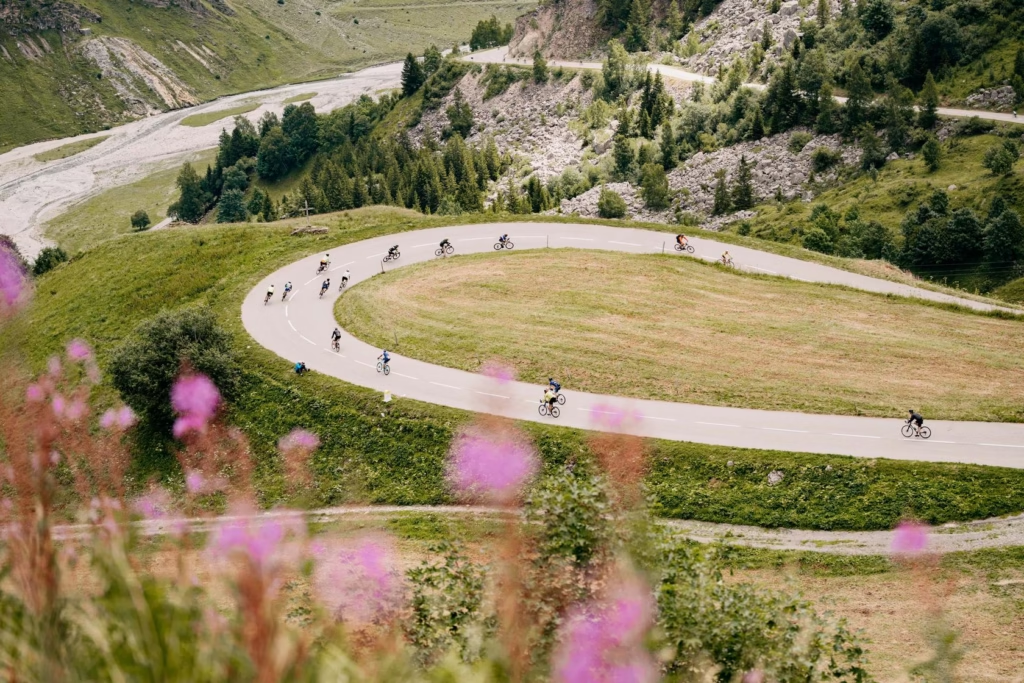 Photo Credit: A.S.O./Jennifer Lindini
Where should UK riders stay?
For the 2026 edition, the obvious bases are Le Bourg-d’Oisans, Alpe d’Huez and nearby Oisans towns or villages. The best choice depends on whether you prioritise start-line access, finish-line convenience or post-event recovery.
Le Bourg-d’Oisans
Le Bourg-d’Oisans is the most convenient base for the start. It is also one of the classic cycling towns of the Alps, with bike shops, cafés and a strong cycling atmosphere.
Best for:
- Easy access to the start
- Riders who want to avoid early transfers
- Cycling atmosphere
- Pre-event route familiarisation
The drawback is that accommodation will be in very high demand.
Alpe d’Huez
Staying at Alpe d’Huez makes the finish easier. Once you complete the event, you are already at or near your accommodation rather than needing to descend or transfer when exhausted.
Best for:
- Easy post-event recovery
- Riders with family or supporters at the finish
- Staying near the Tour atmosphere
- Avoiding a tired journey after the ride
The drawback is getting to the start in Le Bourg-d’Oisans before the event, though that is far easier than staying much further away.
Nearby towns and villages
Places around the Oisans can work if Le Bourg-d’Oisans and Alpe d’Huez are full or too expensive. The key is making sure you understand the transfer plan. A hotel that looks close on a map may be awkward on event morning if roads are closed.
Before booking, check:
- Distance to the start
- Road closure timings
- Whether you can ride to the start safely
- Transfer options after the finish
- Bike storage
- Breakfast availability
- Cancellation policy
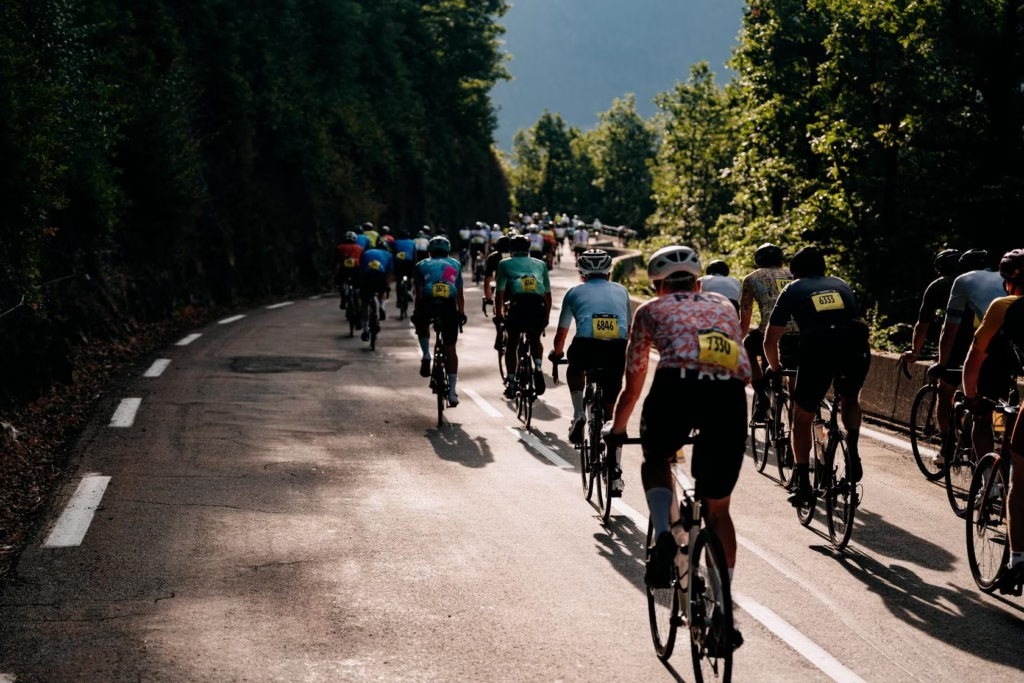 Photo Credit: A.S.O./Jennifer Lindini
When should you arrive?
UK riders should aim to arrive at least two days before L’Étape if possible. Arriving the day before is risky. Travel delays, bike rebuild issues, heat, fatigue and registration queues can all make the event harder before it begins.
A better schedule:
- Thursday: travel and arrive
- Friday: rebuild bike, easy spin, check route logistics
- Saturday: bib collection, short ride, early meal, prepare kit
- Sunday: event day
- Monday: recovery, travel or extra night
If you can stay longer, even better. A few days of gentle riding in the area can help you adjust to the climbs, heat and road feel.
What is the day like?
L’Étape du Tour feels much bigger than a normal sportive. The start village, road closures, international field and Tour branding all make the event feel special. It also means the day can be busy, structured and more stressful if you are not organised.
Expect:
- Early start times
- Large start pens
- Long queues for toilets
- Thousands of riders
- Fast groups early on
- Crowded climbs
- Busy feed stations
- Technical descents
- Cut-off pressure
- Huge atmosphere near the finish
The first hour can be especially nervous. Riders are excited, groups form quickly, and the temptation is to go too hard. The best thing you can do is stay calm. Let faster riders go. Find your rhythm. The route is long enough to punish early overconfidence.
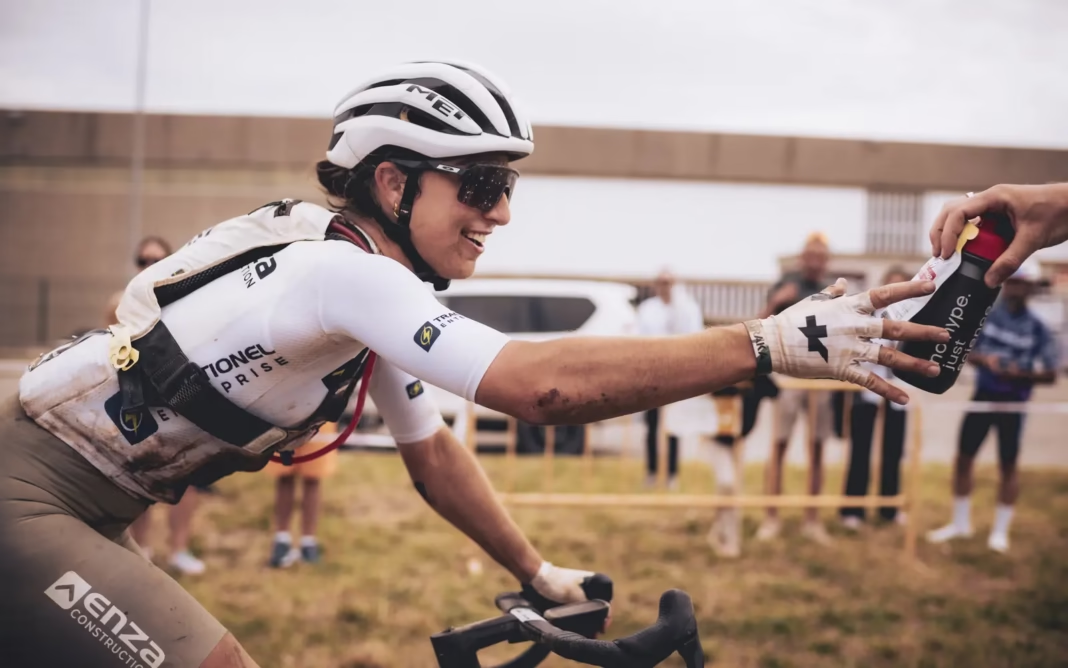
Feed stations can also be busy. Have enough food on you to avoid relying completely on every stop. Use feed stations efficiently, refill bottles, take what you need and move on. Spending too long stopped can make the cut-offs tighter and the legs heavier.
How fit do you need to be?
You need to be fit enough to ride all day in the mountains. That does not mean you need to be a racer, but you do need serious endurance and climbing preparation.
Before riding L’Étape du Tour 2026, you should ideally be able to:
- Ride 160km comfortably on rolling roads
- Complete long hilly rides of five to seven hours
- Climb steadily for at least an hour
- Ride back-to-back hard training days
- Fuel consistently at 60-90g carbohydrate per hour
- Descend safely when tired
- Handle heat, cold or rain
- Pace by effort rather than ego
- Finish hard rides without cramping or falling apart
A flat 100-mile ride is useful, but it is not enough on its own. You need climbing durability. If you live in a flatter part of the UK, use repeated hill loops, indoor training, low-cadence efforts and long tempo work to build the specific strength.
Our guides to training for your first 100km ride and getting better at short, steep climbs are useful foundations, but L’Étape needs a bigger Alpine-specific build.
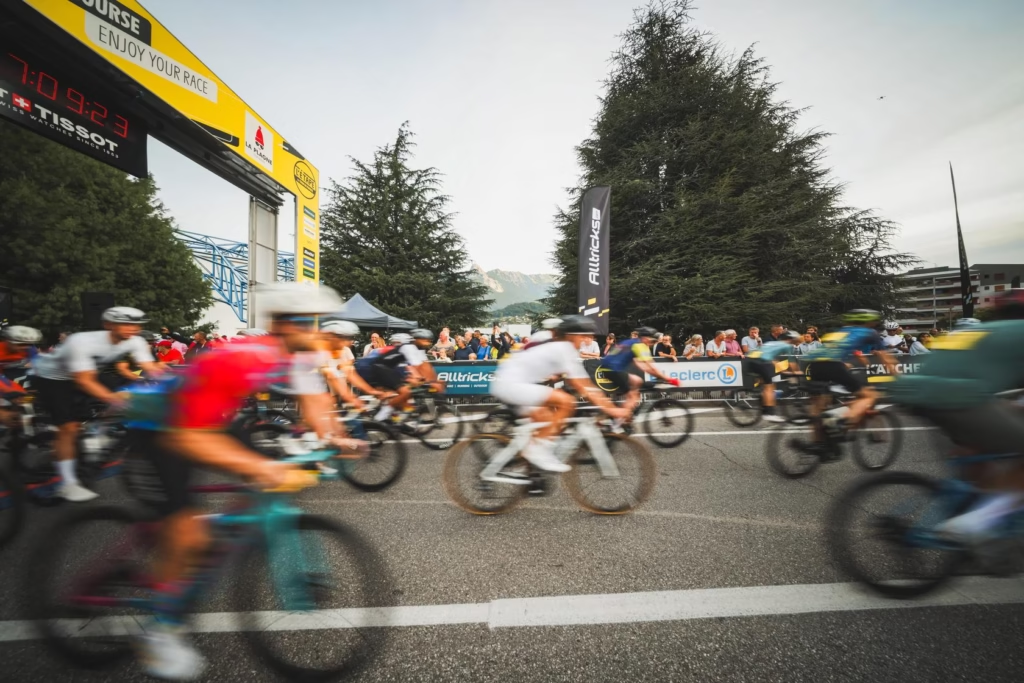 Photo Credit: A.S.O./Jennifer Lindini
How to train for L’Étape du Tour 2026
A sensible training plan should start at least 16 to 20 weeks before the event, longer if you are not already comfortable with long hilly rides.
The structure should build endurance first, then add climbing strength, sustained tempo work, long climbs and event-specific fuelling.
20-week L’Étape training structure
| Phase | Weeks | Focus | Key rides |
|---|---|---|---|
| Base endurance | 1-5 | Build consistency and long-ride habit | Steady endurance rides, easy hills, strength work |
| Climbing strength | 6-10 | Improve sustained climbing power | Tempo climbs, low-cadence efforts, hill repeats |
| Alpine simulation | 11-15 | Prepare for long climbs and fatigue | Long hilly rides, back-to-back days, indoor sustained climbs |
| Event-specific block | 16-18 | Practise fuelling, pacing and kit | Longest hilly ride, 6-8 hour endurance, heat practice |
| Taper | 19-20 | Freshen up without losing sharpness | Shorter rides, light intensity, travel recovery |
The most important training principle is specificity. If you cannot train on Alpine climbs, simulate the demands as closely as possible. That means sustained efforts, repeated climbs, long rides and learning to eat while working hard.
Key training sessions
Long endurance ride
Build towards rides of five, six and seven hours. These should be steady and controlled, not every week a race. The aim is to develop durability and practise eating on the bike.
Sustained climbing effort
If you have long climbs nearby, use them. If not, use indoor training or repeated hill loops. Aim for efforts of 20, 30, 40 and eventually 60 minutes at steady intensity.
Low-cadence strength work
Alpine climbing is not usually as steep as Hardknott, but fatigue and gradient changes can still force muscular effort. Low-cadence work helps, provided it is controlled and not overdone.
Back-to-back climbing days
A weekend with a long hilly ride on Saturday and a shorter climbing ride on Sunday is useful preparation. L’Étape is one day, but the fatigue it creates is similar to the second half of a hard training block.
Descending practice
Do not ignore descending. You will spend a lot of time going downhill, sometimes after long climbs and possibly in cold or wet conditions. Practise braking, cornering and staying relaxed.
Fuelling rehearsal
Every long ride should test your food and drink plan. By July, you should know what your stomach can handle after six hours of riding.
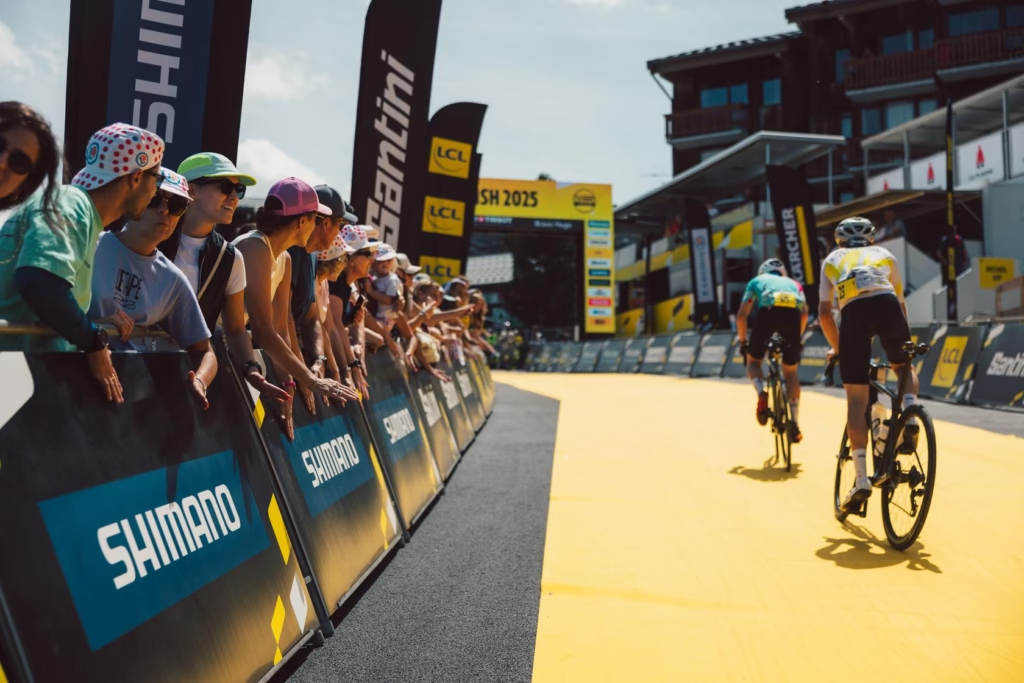 Photo Credit: A.S.O./Jennifer Lindini
How to prepare for Alpine climbing from the UK
UK riders face a specific problem: most British climbs are short compared with Alpine passes. That does not mean you cannot prepare properly, but you need to be deliberate.
Good UK preparation methods include:
- Repeating the same climb several times without full recovery
- Using long tempo intervals indoors
- Riding hilly routes in Wales, the Lake District, Peak District or Scotland
- Practising low-cadence climbing
- Doing long rides with sustained sweet-spot or tempo blocks
- Training in heat if possible
- Riding descents when tired
- Building weekly climbing volume gradually
The goal is not to replicate the Galibier exactly. You cannot. The goal is to develop the ability to hold steady effort for a long time, recover while riding, and avoid surging every time the road changes gradient.
Good UK training areas include:
- Lake District
- North Wales
- South Wales
- Peak District
- Yorkshire Dales
- Scottish Highlands
- Exmoor
- Dartmoor
If you can ride a hard UK sportive such as the Dragon Ride or Fred Whitton before L’Étape, it can be excellent preparation, though the timing needs to fit your recovery.
What gearing do you need?
Use easier gears than you think. Alpine climbs may not always be brutally steep, but they are long, and by the time you reach Sarenne or Alpe d’Huez, fatigue will make every gradient feel harder.
Most UK riders should consider:
- Compact or sub-compact chainset
- 34-tooth inner ring or smaller
- 32-tooth or 34-tooth largest sprocket
- Even lower gearing if you are heavier, newer to climbing or aiming simply to finish
- Fresh chain and cassette before travel
- Proper derailleur capacity check if changing cassette size
Do not copy professional gearing. You are not riding one climb at race speed with a team car behind you. You are riding 170km with 5,400m of climbing and trying to finish within the time limit.
A low gear is not a weakness. It is insurance.
What bike should you use?
A road bike is the obvious choice, but comfort, braking and gearing matter more than aerodynamics.
Prioritise:
- Reliable climbing gears
- Comfortable position
- Good braking
- Fresh tyres
- New or well-maintained brake pads
- Secure bottle cages
- No last-minute equipment changes
- A saddle and shoes you know you can tolerate all day
A lightweight climbing bike is useful, but only if it is comfortable and reliable. Aero wheels may look good, but deep rims can be awkward in crosswinds on exposed descents. Choose equipment you trust.
If your fit is uncertain, deal with it early. Our guide on how to set your saddle height on a road bike is a useful starting point, but any major position changes should happen weeks before travel, not the night before the event.
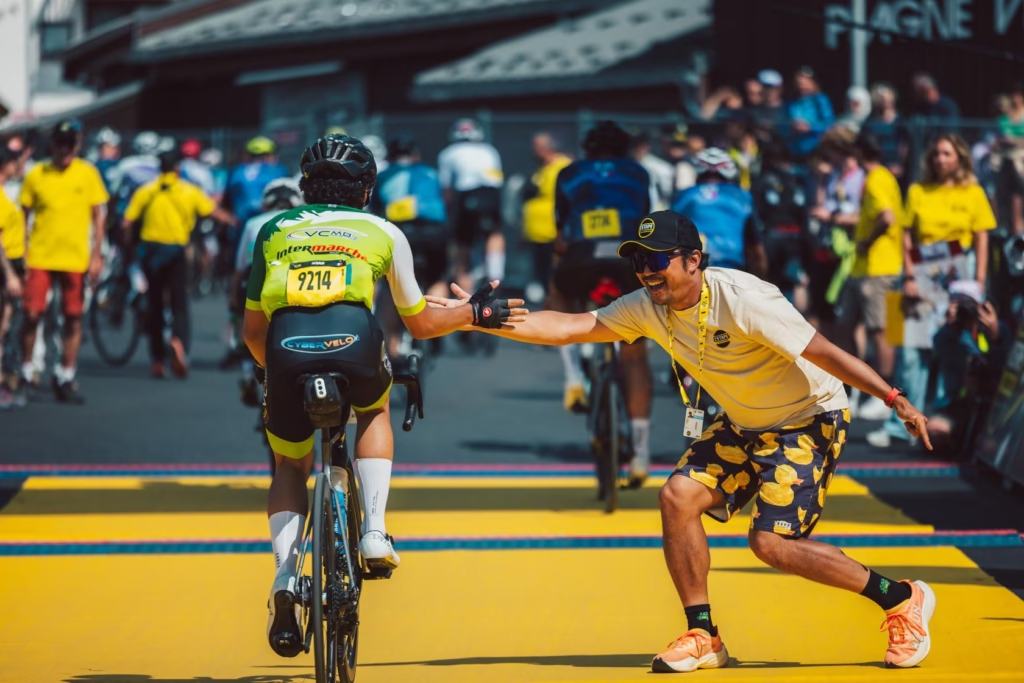 Photo Credit: A.S.O./Jennifer Lindini
What to pack for L’Étape du Tour
Packing for L’Étape is different from packing for a UK sportive because the weather range can be wider and the logistics are less forgiving.
On the bike:
- Two bottles
- Enough food for gaps between feed stations
- Gels or chews for late climbs
- Lightweight waterproof or wind jacket
- Gilet or arm warmers if forecast is cool
- Spare tube or tubeless plugs
- Mini pump or CO2
- Multi-tool
- Tyre levers
- Chain quick link
- Small amount of cash or card
- Phone in waterproof pouch
- Route loaded to GPS
- Timing chip and number attached correctly
For travel:
- Helmet
- Shoes
- Pedals if using a hire or transported bike
- Chargers
- Spare kit
- Recovery clothes
- Sun cream
- Chamois cream
- Travel insurance details
- Event confirmation
- Medical or health documents if required
- Bike tools if travelling independently
Do not rely on buying everything locally. Alpine cycling towns have bike shops, but they will be busy around L’Étape week and may not have your exact part or size.
What to eat and drink during L’Étape du Tour
Fuelling needs to be planned. The route is too long and too hard to improvise.
A good target for many riders is:
- 60-90g carbohydrate per hour
- 500-750ml fluid per hour, adjusted for heat
- Electrolytes in warm conditions
- Real food early if you tolerate it
- Gels, chews or drink mix later
- Caffeine only if tested in training
Start eating in the first hour. Do not wait until the Croix de Fer feels hard. By the time you feel empty, you are already behind.
Use feed stations, but do not depend entirely on them. They can be crowded, and you may not always want the food available. Carry enough familiar nutrition to get through the key sections.
Our beginner’s guide to fuelling rides covers the basics, but for L’Étape you should practise the exact plan several times before travelling.
What catches first-time L’Étape riders out?
L’Étape catches riders out because it looks simple in theory: ride a Tour stage, climb the famous mountains, finish at Alpe d’Huez. In reality, the event combines altitude, heat, crowds, long climbs, technical descents, early starts and cut-off pressure.
Common mistakes include:
- Riding Croix de Fer too hard
- Underestimating how long Alpine climbs last
- Eating too little early
- Spending too long at feed stations
- Ignoring the weather at altitude
- Using gears that are too hard
- Descending nervously and wasting energy
- Arriving too late before the event
- Trying new kit on the day
- Treating Alpe d’Huez as the only hard part
- Forgetting that Sarenne comes before the final climb
The smartest riders are not necessarily the fastest early on. They are the ones still eating, thinking and pacing properly after the Galibier.
Cut-off times and broom wagon
L’Étape du Tour uses cut-off times. These are there for safety and logistics, and riders who fall behind the required pace may be stopped or redirected.
The exact cut-offs should be checked in the final event guide, because they can depend on the route, start waves and organiser instructions.
To reduce risk:
- Start in the correct pen
- Do not spend too long at feed stations
- Ride the first half steadily but not lazily
- Keep moving unless you need to stop
- Know the key time checks before the event
- Do not assume you can make up lots of time late
The hardest balance is pacing. Ride too hard and you may explode before Alpe d’Huez. Ride too conservatively and the cut-offs become stressful. Training should help you learn the effort you can hold all day.
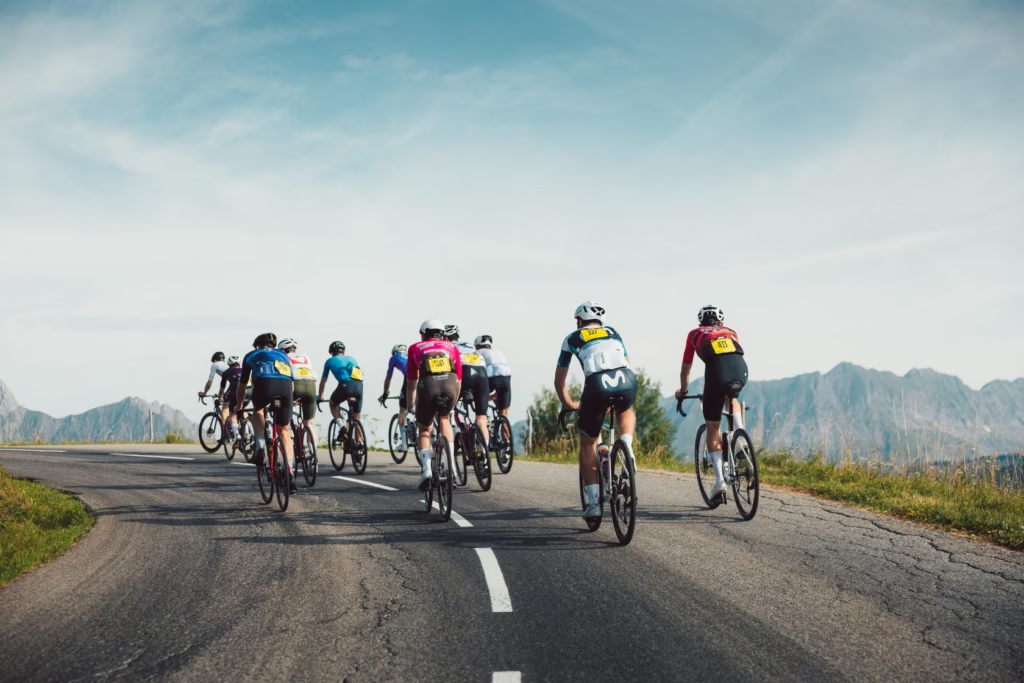 Photo Credit: A.S.O./Jennifer Lindini
Should UK riders use a tour operator?
A tour operator is not essential, but it can make L’Étape much easier. For many UK riders, the stress of bike transport, transfers, hotels, registration and event-day logistics is the hardest part of the trip.
A good package may include:
- Guaranteed or bundled entry
- Airport transfers
- Hotel near the start or finish
- Bike transport
- Mechanical support
- Guided warm-up rides
- Event briefing
- Feed or support points
- Return transfer after the finish
The downside is cost and reduced flexibility. Independent travel can be cheaper, especially for groups, but it requires more organisation.
Use a tour operator if you want to reduce stress. Travel independently if you are confident managing bike transport, accommodation, transfers and road closures yourself.
Can you ride L’Étape du Tour as your first sportive?
It is possible, but it is not sensible for most riders. L’Étape du Tour 2026 is too long, too mountainous and too logistically complex to be a good first event.
A better progression would be:
- First 100km sportive
- Hilly UK sportive
- Long UK sportive
- Mountainous event such as Dragon Ride or Fred Whitton
- L’Étape du Tour
You do not need to complete all of those, but you should have experience riding long distances in event conditions before going to the Alps. L’Étape is much more enjoyable if you arrive prepared enough to experience it rather than simply survive it.
How does L’Étape compare with UK sportives?
L’Étape du Tour is different from UK sportives because of the length of the climbs, the altitude, the scale of the event and the travel demands.
Compared with RideLondon, it is much harder and much more mountainous. Compared with Dragon Ride, it has longer Alpine climbs and a bigger international event feel. Compared with the Fred Whitton, it is less about extreme short gradients and more about sustained climbing, altitude and cumulative fatigue.
A rough comparison:
| Event | Main challenge |
|---|---|
| RideLondon | Distance, pacing, large event atmosphere |
| Dragon Ride | Long climbs, Welsh weather, route options |
| Fred Whitton Challenge | Steep gradients, technical roads, late Hardknott and Wrynose |
| L’Étape du Tour 2026 | Alpine climbing, altitude, 5,400m elevation, event logistics |
If you can finish the Fred Whitton or long Dragon Ride strongly, you have a good foundation. But you still need Alpine-specific preparation because climbing for an hour or more at a time is different from repeated short UK climbs.
Is L’Étape du Tour 2026 worth it?
Yes, if you are prepared. L’Étape du Tour 2026 has almost everything a cycling bucket-list event needs: famous climbs, closed roads, a Tour de France route, a finish at Alpe d’Huez and a huge sense of occasion.
It is expensive, logistically demanding and physically hard. It may involve travel stress, early mornings, crowded feed stations and weather that changes from valley heat to summit cold. But it also offers something very few events can match: the chance to ride a genuine Tour de France mountain stage on closed roads, with thousands of other riders chasing the same finish line.
For UK cyclists who love the Tour, this is one of the biggest amateur challenges of 2026.
-
 Photo Credit: quentinphotographiebe
 -
 Photo Credit: Getty

L’Étape du Tour 2026 FAQs
When is L’Étape du Tour 2026?
L’Étape du Tour de France 2026 takes place on Sunday, 19th July.
Where does L’Étape du Tour 2026 start and finish?
The 2026 route starts in Le Bourg-d’Oisans and finishes at Alpe d’Huez.
How long is L’Étape du Tour 2026?
The route is 170km long, with around 5,400 metres of climbing.
Which climbs are in L’Étape du Tour 2026?
The main climbs are the Col de la Croix de Fer, Col du Télégraphe, Col du Galibier, Col de Sarenne and the final climb to Alpe d’Huez.
Is L’Étape du Tour 2026 hard?
Yes. It is one of the hardest mass-participation events of the year, with long Alpine climbs, high elevation gain and a final climb to Alpe d’Huez after a huge day.
Can UK riders still enter L’Étape du Tour 2026?
Standard entries may be sold out or limited depending on when you check. Riders should look at the official event site, charity bibs and authorised travel operators for current availability.
What is the best airport for L’Étape du Tour 2026?
Grenoble, Lyon and Geneva are the most obvious options, depending on flights, transfers and accommodation. Lyon and Geneva usually offer more flight choice, while Grenoble may be geographically convenient.
Where should I stay for L’Étape du Tour 2026?
Le Bourg-d’Oisans is best for start access, while Alpe d’Huez is best for finish convenience. Nearby Oisans villages can also work if you have a clear transfer plan.
How should I train for L’Étape du Tour 2026?
Build long endurance first, then add sustained climbing work, low-cadence strength, long hilly rides, fuelling practice and descending practice. Start at least 16 to 20 weeks before the event if possible.
What gearing do I need for L’Étape du Tour?
Most riders should use compact or sub-compact gearing with a wide-range cassette. A 34-tooth inner ring with a 32 or 34-tooth largest sprocket is sensible for many UK riders.
Is L’Étape harder than the Fred Whitton Challenge?
It is different. The Fred Whitton has steeper, shorter climbs and brutal late gradients. L’Étape 2026 has longer Alpine climbs, altitude, more sustained climbing and bigger travel logistics. Both are very hard.
Is L’Étape du Tour worth travelling from the UK for?
Yes, if you are prepared and treat it as a major cycling trip rather than just a sportive. The 2026 route is a genuine Tour de France mountain stage finishing at Alpe d’Huez, which makes it one of the standout amateur cycling events of the year.

