
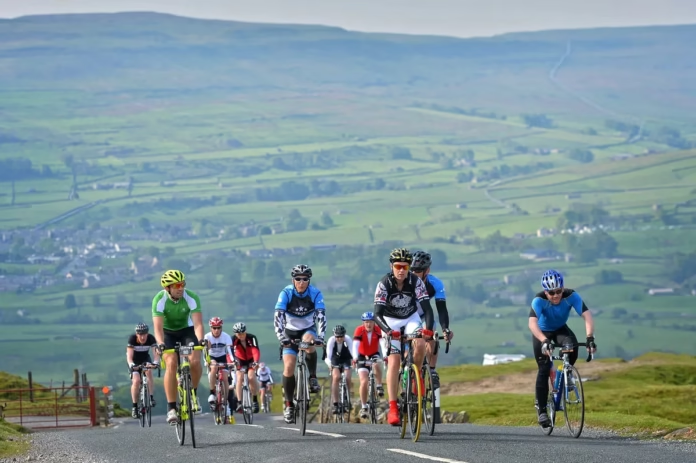
UK sportives are one of the best ways to turn cycling from a weekend habit into a proper challenge. They give riders a marked route, feed stations, mechanical support, timing, atmosphere and a reason to ride somewhere new. Whether you are aiming for your first 50-mile ride, a closed-road event, a mountainous century or one of Britain’s hardest one-day cycling challenges, there is a sportive to match.
Britain has a strong sportive scene because the riding is so varied. You can find rolling lanes in the Cotswolds, long climbs in the Lake District, coastal roads in Scotland, sharp ramps in Wales, fast closed-road events, charity rides, gravel-style adventure routes and brutal hill-heavy tests that feel much harder than their distance suggests.
This guide brings together the best UK sportives by type, difficulty and region. It is designed as a starting point for choosing your next event, then narrowing down the right challenge based on distance, climbing, location, road closure, atmosphere and how much training you want to commit.
What is a sportive?
A sportive is an organised mass-participation cycling event. It is not a race in the traditional sense, but most sportives are timed, and many riders use them as personal challenges. The aim is usually to complete a set route, often with a choice of distances, feed stops, event signage, emergency support and mechanical help.
Sportives can be very different from one another. Some are beginner-friendly rides of 30-60 miles on rolling terrain. Others are 100-mile endurance days. The hardest UK sportives can include several thousand metres of climbing, steep gradients, remote roads and weather that can change quickly. British Cycling’s sportive guidance is a useful general reference for riders who want to understand sportive grading, climbing demands and event preparation.
A typical sportive entry will usually include:
- Route signage
- GPX file
- Feed stations
- Timing chip or timing system
- Mechanical support
- Medical support
- Event village or start/finish area
- Finishers’ medal or certificate
- Optional charity fundraising
The biggest difference from a normal club ride is structure. You still have to ride the distance yourself, but the event gives you a target, a route and a support system. For many riders, that makes a sportive the ideal bridge between casual riding and more serious endurance cycling.
Best UK sportives at a glance
| Sportive | Best for | Typical feel |
|---|---|---|
| Fred Whitton Challenge | Hard climbing challenge | Lake District passes, steep gradients, long day out |
| Dragon Ride | Big Welsh endurance ride | Long distances, tough climbs, major event atmosphere |
| Etape Loch Ness | Closed-road scenic ride | Traffic-free roads, 66-mile loch circuit, Highland setting |
| RideLondon | Closed-road 100-mile legacy event | Major city sportive, currently paused |
| Tour of Cambridgeshire | Closed-road speed and gran fondo riding | Flat, fast roads and UCI Gran Fondo structure |
| Dartmoor Classic | South West climbing challenge | Dartmoor roads, sharp climbs, established event feel |
| Struggle Events | Yorkshire climbing | Hard northern routes, steep gradients, serious training target |
| UK Cycling Events Classics | Beginners and steady endurance | Regular regional sportives with multiple route lengths |
| UK Velo sportives | Welcoming supported events | Friendly road sportives across southern England |
Best UK sportives for beginners
The best sportive for a beginner is not always the shortest one. A 40-mile ride with constant steep climbs can be harder than a flatter 60-mile route. New riders should look for sportives with clear route options, good feed stations, strong support and a shorter distance that can be upgraded in future years.
For a first sportive, look for:
- A route between 40 and 70 miles
- Less than 1,000m of climbing if you are new to hills
- Good feed stations
- Clear signage
- A start location with easy parking or public transport
- A relaxed event atmosphere
- Multiple distance options
Cotswold sportives are often a good first choice because the terrain is rolling rather than extreme. The Cambridgeshire Classic is another useful example of a flatter, more accessible event, with long, middle and short routes and a low difficulty rating compared with many hillier UK sportives.
Etape Loch Ness can also work for confident beginners who already have the endurance for 66 miles, because the closed-road format removes traffic stress and the route has a clear, memorable loop. It is still a proper challenge, especially with the exposed Highland setting, but it is less technically intimidating than some open-road mountain sportives.
Beginner riders should avoid choosing an event purely because it is famous. Fred Whitton and the longest Dragon Ride distances are superb challenges, but they are not ideal first sportives unless you already have strong climbing fitness and experience riding long days in difficult weather.
Best UK sportives for climbing
Britain’s hardest climbing sportives are not easy because of altitude. They are hard because the gradients are irregular, the roads can be narrow, and the weather can change quickly. Climbs in the Lake District, Wales, Yorkshire and the South West often come with steep ramps that break rhythm and make pacing difficult.
The Fred Whitton Challenge is the benchmark UK climbing sportive. The route spans 112 miles through the Lake District and takes in climbs such as Kirkstone, Honister, Newlands, Whinlatter, Hardknott and Wrynose. It is long, steep, technical and physically draining. Hardknott and Wrynose arrive late, which is what makes the event so feared.
Dragon Ride is another major climbing challenge, especially on its longer routes. Based around South Wales and Bannau Brycheiniog, it combines distance with repeated climbs and exposed roads. The event offers several route distances, making it more flexible than Fred Whitton, but the longer options remain serious endurance tests.
Other strong climbing regions include:
- The Lake District
- Bannau Brycheiniog
- Eryri and North Wales
- Yorkshire Dales
- Dartmoor
- Exmoor
- Peak District
- Scottish Highlands
For climbing sportives, training needs to include more than just distance. You need low-cadence strength, descending confidence, fuelling practice and the ability to ride steep gradients after several hours. The hardest UK climbs often come when you are already tired.
Best closed-road UK sportives
Closed-road sportives are popular because they remove much of the stress of traffic. They are especially attractive for riders who are less confident in busy conditions, or for those who want the rare feeling of riding famous roads without cars.
Etape Loch Ness is one of the standout closed-road sportives in the UK. The route circles Loch Ness from Inverness, covering 66 miles or 106km on traffic-free roads with around 900m of climbing. The setting is a major part of the appeal: Highland scenery, lochside roads and the feeling of riding a complete loop rather than an out-and-back course.
Tour of Cambridgeshire is another important closed-road reference point. It is part of the UCI Gran Fondo World Series and has been promoted as a fully closed-road gran fondo and time-trial event, with a very different feel from mountain sportives such as Fred Whitton or Dragon Ride.
RideLondon was once the most famous closed-road sportive in the UK, offering the rare chance to ride 100 miles on traffic-free roads through London and Essex. It remains an important reference point in UK sportive history, but the event is currently on indefinite pause, so riders should not treat it as a guaranteed calendar option unless its future is confirmed.
Closed-road events are not automatically easy. They can still be long, fast and crowded, and group-riding awareness remains important. The main advantage is that riders can focus more on pacing, drafting, fuelling and route management without the usual traffic interruptions.
Best 100-mile UK sportives
A 100-mile sportive is a major milestone for many riders. The distance is long enough to require training, fuelling and pacing, but achievable for most committed cyclists with the right preparation.
The best 100-mile UK sportives usually fall into two types. Some are fast and rolling, where the challenge is endurance and group speed. Others are mountainous, where the distance is only part of the difficulty and climbing becomes the main limiter.
Fred Whitton is longer than a standard century and much harder than most 100-mile rides because of the Lake District climbs. The Dartmoor Classic Grande route is another established long-distance option, with the organiser offering multiple distances across Dartmoor, including a 107-mile Grande route. Dragon Ride also offers longer endurance options, with climbing-heavy routes that go well beyond a simple century effort.
A good first 100-mile sportive should ideally have:
- Several feed stations
- A route profile that matches your training
- Clear bail-out or shorter-distance options
- A realistic cut-off time
- Manageable travel logistics
- A start time that gives you plenty of daylight
Do not choose your first 100-mile sportive only by distance. Look at total ascent, steepest climbs, road surface, likely weather and how remote the route is. A flat 100 miles and a mountainous 100 miles are completely different challenges.
Major UK sportive guides
Some UK sportives deserve full individual guides because they have their own history, route character and preparation demands. These are the major events to build standalone content around.
Fred Whitton Challenge guide
The Fred Whitton Challenge is widely seen as one of Britain’s hardest and most respected sportives. Based in the Lake District, it combines long distance with some of the steepest and most famous climbs in the country.
Its difficulty comes from the whole route rather than one climb alone. Riders face repeated passes, technical descents, changing weather and the brutal late combination of Hardknott and Wrynose. It is a sportive for experienced riders who are comfortable climbing and descending on steep, narrow roads.
- Best for: experienced climbers, endurance riders, Lake District specialists
- Not ideal for: first-time sportive riders
Dragon Ride guide
Dragon Ride is one of the UK’s most iconic endurance sportives, based in South Wales and using the climbs of Bannau Brycheiniog and surrounding roads. It offers multiple route distances, making it accessible to a range of riders, but the longer options are serious tests.
The event is best known for its scale, climbing and atmosphere. Riders should prepare for long climbs, rolling roads, exposed sections and a day where fuelling is just as important as fitness.
- Best for: riders wanting a big Welsh challenge
- Not ideal for: riders who dislike long climbs or exposed weather
Etape Loch Ness guide
Etape Loch Ness is one of the most scenic closed-road sportives in Britain. The 66-mile route circles Loch Ness, starting and finishing in Inverness, with traffic-free roads and a memorable Highland backdrop.
It is shorter than the biggest mountain sportives, but still challenging enough to feel like a proper goal. The combination of closed roads, scenery and manageable distance makes it a strong option for riders stepping up from local events.
- Best for: closed-road experience, scenery, confident first-timers
- Not ideal for: riders looking for a 100-mile challenge
Dartmoor Classic guide
The Dartmoor Classic is one of the South West’s major sportives, organised by Mid-Devon Cycling Club and built around the roads of Dartmoor. It offers several route options, including a long Grande route for riders wanting a serious 100-mile-plus day.
Dartmoor’s challenge is different from the Lake District or Wales. The climbs are often exposed, rolling and rhythm-breaking, with weather that can change quickly across the moor. It is a strong option for riders who want a demanding event without heading north or into Wales.
- Best for: South West riders, rolling climbs, established sportive atmosphere
- Not ideal for: riders who want closed roads throughout
RideLondon guide
RideLondon has historically been one of the UK’s biggest and most recognisable sportives, offering closed-road riding through London and Essex. Its 100-mile distance made it a popular target for charity riders, first-time century riders and cyclists looking for a major event atmosphere.
The event is currently on indefinite pause, so riders should check its status carefully before planning around it. Even while paused, it remains important in any UK sportive hub because of its influence on mass-participation cycling in Britain.
- Best for: closed-road century riding if the event returns
- Not ideal for: riders looking for a confirmed current entry target
Sportives by region
Sportives in Scotland
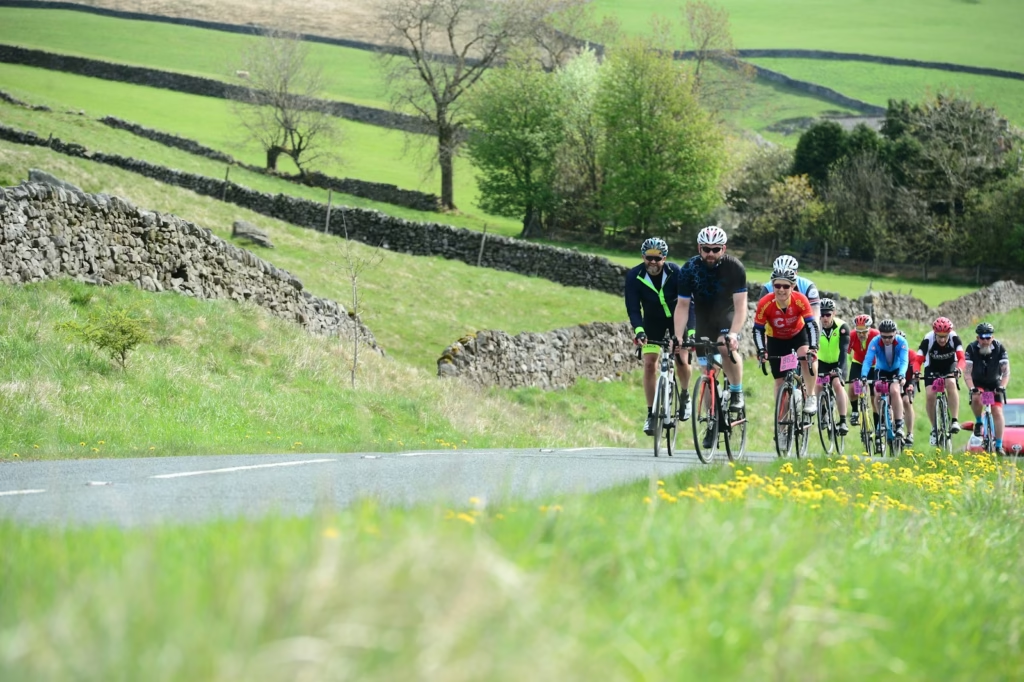
Scotland is one of the best places in Britain for scenic sportives. The roads can be exposed and the weather unpredictable, but the landscapes are hard to match. Events around Loch Ness, the Highlands, Perthshire and the Borders offer a mix of lochside riding, rolling climbs and remote roads.
Start with Etape Loch Ness if closed roads and Highland scenery are the priority.
- Best for: scenery, endurance, closed-road events, big landscapes
- Watch out for: wind, rain, travel logistics, remote sections
Sportives in Wales
Wales is one of Britain’s strongest sportive regions because it combines long climbs, steep lanes, quiet roads and dramatic scenery. South Wales is home to Dragon Ride, while North Wales and Eryri offer some of the hardest climbing terrain in the country.
- Best for: climbing, endurance, mountain routes
- Watch out for: steep gradients, rough weather, exposed roads
Sportives in Northern England
Northern England offers some of the hardest sportive riding in Britain. The Lake District, Yorkshire Dales, North Pennines and Peak District all provide steep climbs, technical descents and routes where the elevation adds up quickly.
The Fred Whitton Challenge is the obvious Lake District benchmark, while Struggle Events and the White Rose Classic are useful Yorkshire references for riders looking at northern climbing sportives.
- Best for: experienced climbers, hard training goals, classic British climbs
- Watch out for: steep ramps, narrow descents, tough weather
Sportives in the Midlands
The Midlands is a strong region for riders moving from local club rides into organised sportives. The Peak District gives a serious climbing option, while Warwickshire, Shropshire, Staffordshire and the Cotswolds offer rolling routes that can suit a wide range of abilities.
Events such as the Broughton Castle Sportive and Cotswold-based rides work well for riders who want accessible travel, attractive roads and a choice of distances without the severity of the Lake District or Wales.
- Best for: rolling sportives, first century rides, accessible travel
- Watch out for: short steep climbs, busy roads near larger towns
Sportives in Southern England
Southern England has a wide range of sportives, from flatter endurance rides to punchy events in the Cotswolds, Chilterns, South Downs, Surrey Hills, Exmoor and Dartmoor. It is one of the best regions for riders who want choice and regular events across the season.
The Dartmoor Classic, UK Velo events and the UK Cycling Events calendar are good starting points for finding supported sportives across the south and south west.
- Best for: beginners, rolling century rides, varied terrain
- Watch out for: short climbs, event traffic, early-season weather
Sportives in Eastern England
Eastern England is ideal for faster, flatter sportives. The roads can be exposed, and wind can be a bigger factor than gradients, but the terrain is often well suited to riders chasing a first 100 miles or a faster average speed.
The Cambridgeshire Classic is a useful beginner-friendly reference point, while the Tour of Cambridgeshire is the major closed-road gran fondo-style option in the region.
- Best for: first century rides, flatter endurance, group riding
- Watch out for: wind, exposed roads, long sections without shelter
How to train for a sportive
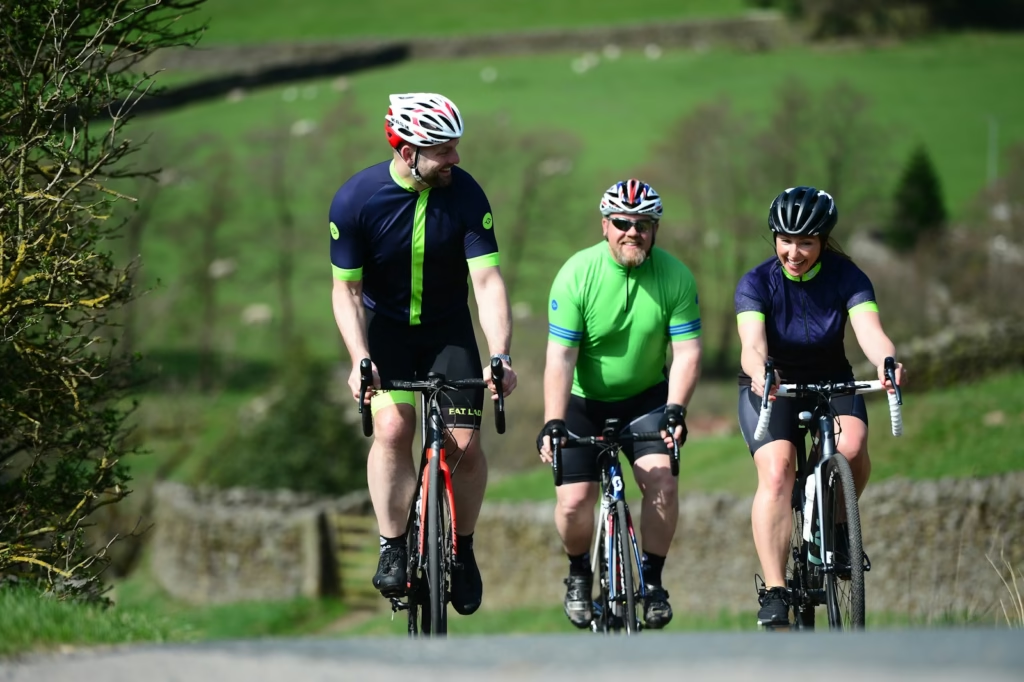
Training for a sportive depends on the distance and terrain, but the basics are the same: build endurance, practise fuelling, ride consistently and prepare for the specific demands of the route. A flat 60-mile sportive, a 100-mile century and a Lake District climbing event are not the same challenge, even if all three use the same basic event format.
For a beginner-friendly sportive, aim to ride three times a week if possible. One ride should be longer and steadier, one should include hills or tempo efforts, and one can be shorter and easier. Gradually increase your long ride until you can comfortably cover around 75-80% of the event distance.
For a 100-mile sportive, give yourself at least 10-12 weeks of structured preparation if you are already riding regularly. You do not need to ride 100 miles in training, but you should be comfortable with long rides of 70-85 miles and know how your body responds after several hours.
For climbing sportives, add hill repeats, low-cadence strength efforts and longer sustained climbs where available. If you live somewhere flat, use headwinds, turbo sessions, bigger gears and repeated efforts to simulate climbing fatigue.
Your training should include:
- Long steady rides
- Hill or strength sessions
- Easy recovery rides
- Fuelling practice
- Group-riding practice
- Descending confidence
- Riding in poor weather
- A taper in the final week
The biggest mistake is only training fitness and ignoring everything else. Sportives are also about pacing, eating, clothing, comfort, bike setup and mental management.
What to eat and take on a sportive
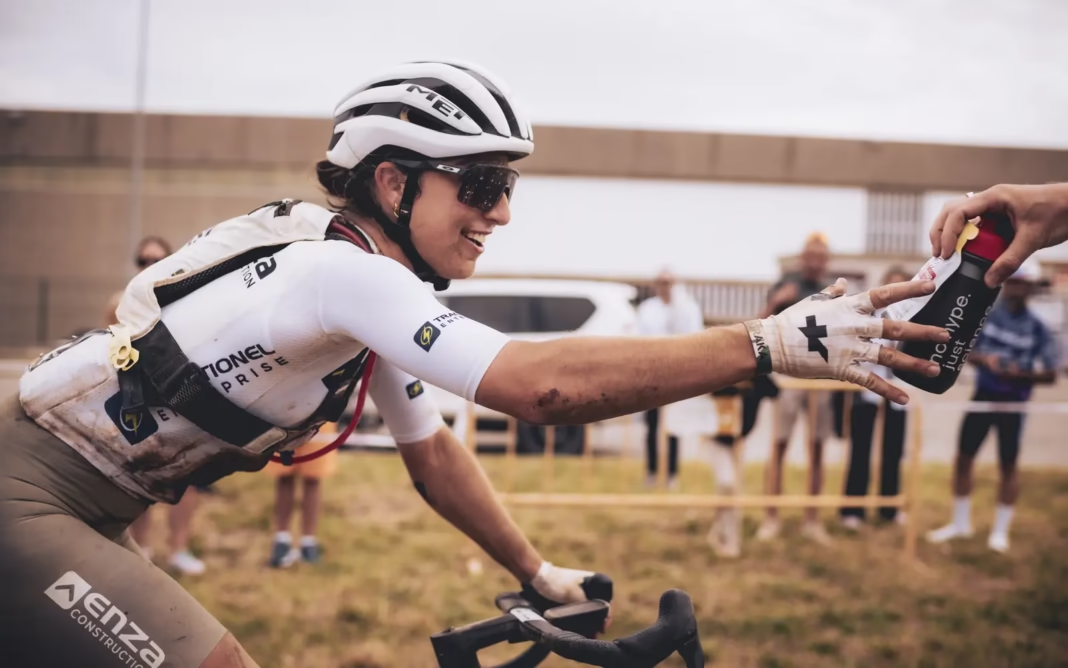
Fuelling can decide whether a sportive feels enjoyable or miserable. Most riders can survive the first couple of hours on stored energy, but longer events require regular carbohydrate intake from early in the ride.
A good starting point is to eat or drink carbohydrates every 20-30 minutes. That might mean energy bars, bananas, flapjacks, gels, rice cakes, sandwiches or carbohydrate drink. Use training rides to learn what works for your stomach.
Do not rely entirely on feed stations. They are useful, but they may not appear exactly when you want them, and the food may not match what you usually eat. Carry enough to get through the first half of the event even if a feed stop is busy or delayed.
A good sportive kit list includes:
- Two bottles
- Energy food you have tested in training
- Spare inner tubes or tubeless plugs
- Pump or CO2 inflator
- Tyre levers
- Multi-tool
- Chain quick link
- Lightweight waterproof jacket
- Gilet or arm warmers if conditions are changeable
- Phone
- Card or cash
- ID and emergency contact details
- Sunscreen for summer events
- Small first-aid basics
- GPX route loaded to your bike computer
For hilly sportives, check your gearing before the event. A compact chainset or wide-range cassette can make a huge difference on steep climbs, especially late in the ride. There is no prize for being overgeared and walking the final ramps.
-
 Photo Credit: quentinphotographiebe
 -
 Photo Credit: Getty

Sportive FAQs
What is the best UK sportive for beginners?
The best beginner sportive is usually a shorter or medium-distance event with clear signage, good feed stops and manageable climbing. Cotswold, Midlands and southern sportives can work well, while Etape Loch Ness is a good option for confident beginners who want a closed-road event and can handle 66 miles.
What is the hardest sportive in the UK?
The Fred Whitton Challenge is often treated as the benchmark for the hardest UK sportive because of its Lake District climbs, distance, steep gradients and late Hardknott/Wrynose combination. Dragon Ride’s longest routes are also among the toughest endurance challenges in Britain.
What is the best closed-road sportive in the UK?
Etape Loch Ness is one of the best closed-road sportives in the UK, offering a 66-mile traffic-free route around Loch Ness. Tour of Cambridgeshire is another major closed-road gran fondo-style option, while RideLondon was historically the major closed-road 100-mile sportive before being placed on indefinite pause.
Can beginners ride a sportive?
Yes. Beginners can ride a sportive if they choose the right distance and prepare properly. A first sportive should be challenging but realistic. It is better to finish strongly on a shorter route than to suffer through a long event that damages confidence.
How long should I train for a sportive?
For a first short sportive, 6-8 weeks of consistent riding may be enough if you already cycle casually. For a 100-mile sportive, 10-12 weeks is more realistic. For hard climbing events such as Fred Whitton or Dragon Ride, longer preparation is usually needed.
Do I need a road bike for a sportive?
A road bike is ideal for most sportives, but not always essential. Many riders use endurance road bikes, gravel bikes with road tyres, or lightweight hybrids for shorter events. For longer or hillier sportives, a road bike with suitable gearing will make the ride easier.
Are sportives races?
Sportives are not usually races, although many are timed and some riders treat them competitively. The main goal is to complete the route safely. Riders should follow the highway code, respect other participants and ride within their ability.
What distance should I choose for my first sportive?
Most first-time riders should choose a route between 40 and 70 miles, depending on fitness and climbing. If you are already comfortable riding 50 miles, a 60-mile sportive may be a good step. If you are new to longer rides, start shorter and build up.
What should I eat before a sportive?
Eat a normal carbohydrate-rich meal the night before, then a familiar breakfast 2-3 hours before the start. Porridge, toast, rice, cereal, bananas and simple carbohydrate-based foods are common choices. Avoid experimenting with new food on event morning.
How do I choose the right UK sportive?
Choose by terrain first, then distance. A flat 80 miles may be easier than a hilly 50 miles. Check the total ascent, steepest climbs, feed station spacing, road closure status, travel time and cut-off rules. The right sportive should feel exciting, but not unrealistic.

