
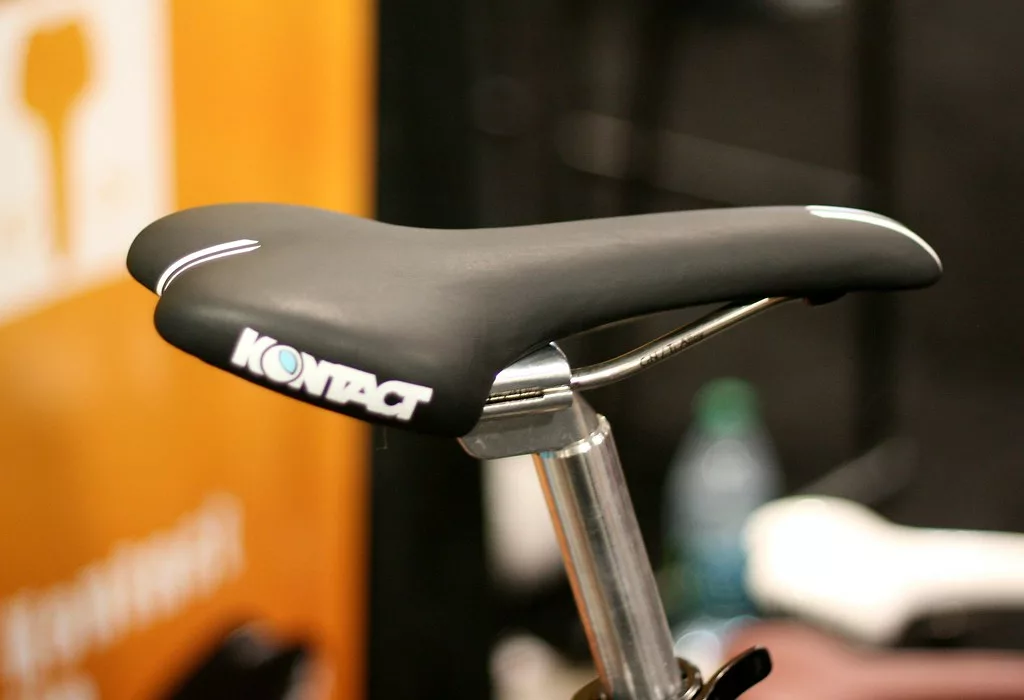
Changing your saddle height is one of the simplest adjustments you can make to a road bike, but it is also one of the easiest to get wrong. A few millimetres can change how your knees track, how much pressure you feel through your hands, how stable your hips are and how efficiently you turn the pedals.
For new riders, saddle height is usually the first fit adjustment worth checking. Before worrying about bar width, stem length, saddle setback or shoe choice, the question is simple: can you pedal smoothly without feeling cramped at the bottom of the stroke or overstretched at the top?
The answer does not need to come from guesswork. You can get close at home with simple methods, then fine-tune by feel over a few rides. A professional bike fit will still be more accurate, especially if you have pain, injury history or unusual proportions, but most riders can make meaningful improvements without specialist equipment.
This guide explains how to set your saddle height on a road bike, why it matters, which home methods are useful, and what other fit details can change the final number. For broader beginner setup advice, see ProCyclingUK’s guides to getting the right bike size without a full fit and starting cycling as a UK rider.

Why saddle height matters
Saddle height affects almost everything about how a bike feels. If the saddle is too low, you may feel cramped through the knees and hips, struggle to apply power smoothly and place extra load through the front of the knee. If it is too high, your hips may rock, your toes may point down excessively, your hamstrings or calves may feel tight, and you may lose stability through the pedal stroke.
The goal is not simply to make the saddle as high as possible. A high saddle can feel powerful for a few minutes, but that does not mean it is efficient or sustainable. The right saddle height should let you pedal smoothly, keep your hips quiet, maintain a slight bend in the knee at the bottom of the stroke and stay comfortable across longer rides.
A good saddle height can help with:
Improved comfort
More consistent pedalling
Reduced knee strain
Less hip rocking
Better stability on the saddle
More efficient power transfer
Greater confidence on longer rides
It is also one of the reasons bike fit matters for endurance riding. If you are building towards longer distances, sportives or your first 100km ride, a comfortable position will usually do more for consistency than a small equipment upgrade. ProCyclingUK’s training plan for your first 100km ride is a useful next step once the bike itself feels comfortable.
How saddle height is measured
Saddle height is usually measured from the centre of the bottom bracket to the top of the saddle, following the line of the seat tube. The bottom bracket is the axle area where the cranks rotate. The top of the saddle should be measured at the point where you actually sit, rather than from the very nose or the very rear.
Use a tape measure and record the number once you find a position that feels close. This makes future adjustments easier, especially if you travel with the bike, replace the seatpost, change saddle, switch pedals or move between bikes.
It is worth marking your seatpost once you are happy. A small piece of tape, a pencil mark or a discreet line can help you spot unwanted movement. On carbon seatposts or frames, use the correct torque setting and carbon assembly paste where needed. Seatpost clamps are not something to overtighten by feel, particularly on modern road bikes. ProCyclingUK’s Topeak D-Torq Wrench review explains why accurate torque is useful for home mechanics working on stems, seatposts, saddle clamps and other low-torque bike parts.
The heel-to-pedal method
The heel-to-pedal method is the easiest starting point for most beginners. It is not perfect, but it gets many riders close enough to begin fine-tuning.
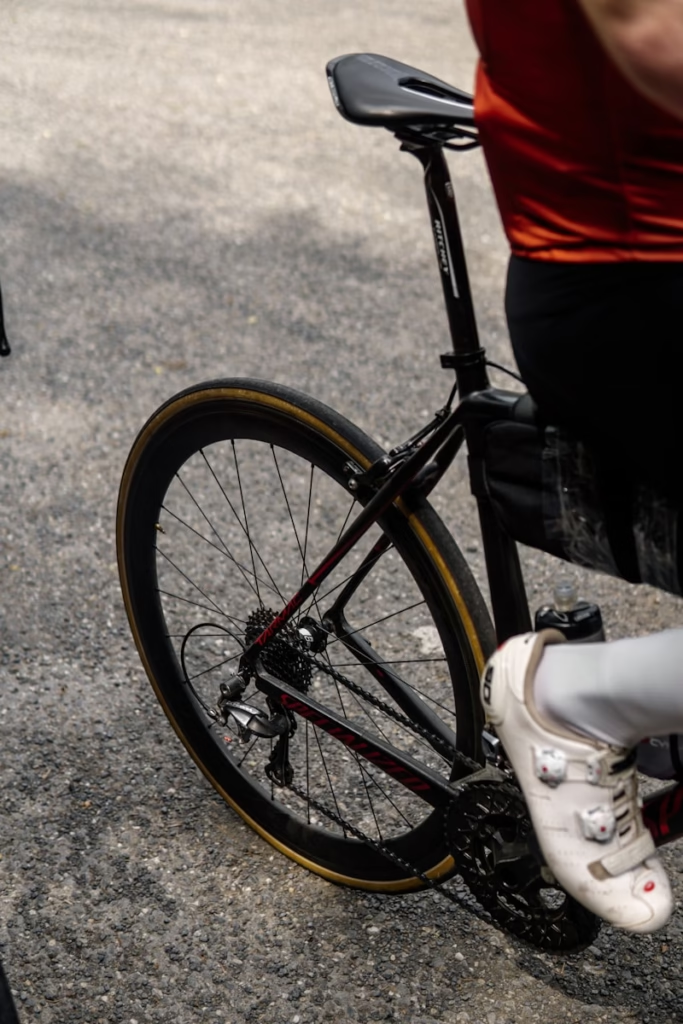
Set the bike up on a turbo trainer, lean against a wall, or hold a stable surface. Sit on the saddle with your cycling shoes on, then place your heel on the pedal. Rotate the crank until that pedal is at the six o’clock position, directly at the bottom of the stroke.
Your leg should be almost straight with your heel on the pedal. If your knee is still clearly bent, the saddle is probably too low. If your heel cannot stay in contact with the pedal without rocking your hips, the saddle is probably too high.
Once you move from your heel to your normal pedalling position, with the ball of the foot over the pedal axle, you should naturally have a slight bend in the knee at the bottom of the stroke.
Make changes gradually. Raise or lower the saddle in small steps of around 2-3mm, then test the bike again. Large changes can make it difficult to understand what actually improved or worsened.
The LeMond method
The LeMond method is another common way to find a starting saddle height. It uses your inseam measurement and turns it into a saddle-height estimate.
Stand barefoot with your feet around shoulder-width apart. Place a flat object such as a book, spirit level or ruler between your legs, applying gentle upward pressure to mimic saddle contact. Measure from the floor to the top edge of that object. That is your inseam measurement.
Multiply your inseam by 0.883. The result gives a starting saddle height from the centre of the bottom bracket to the top of the saddle.
For example:
Inseam: 80cm
80 × 0.883 = 70.6cm
That would give an initial saddle height of around 70.6cm.
This is only a starting point. It does not know how flexible you are, how you pedal, what shoes and pedals you use, how long your cranks are, how your saddle is shaped or where your cleats sit. But it is a useful check against the heel-to-pedal method. If both methods put you in roughly the same range, you probably have a sensible starting point.
Why formulas are only a guide
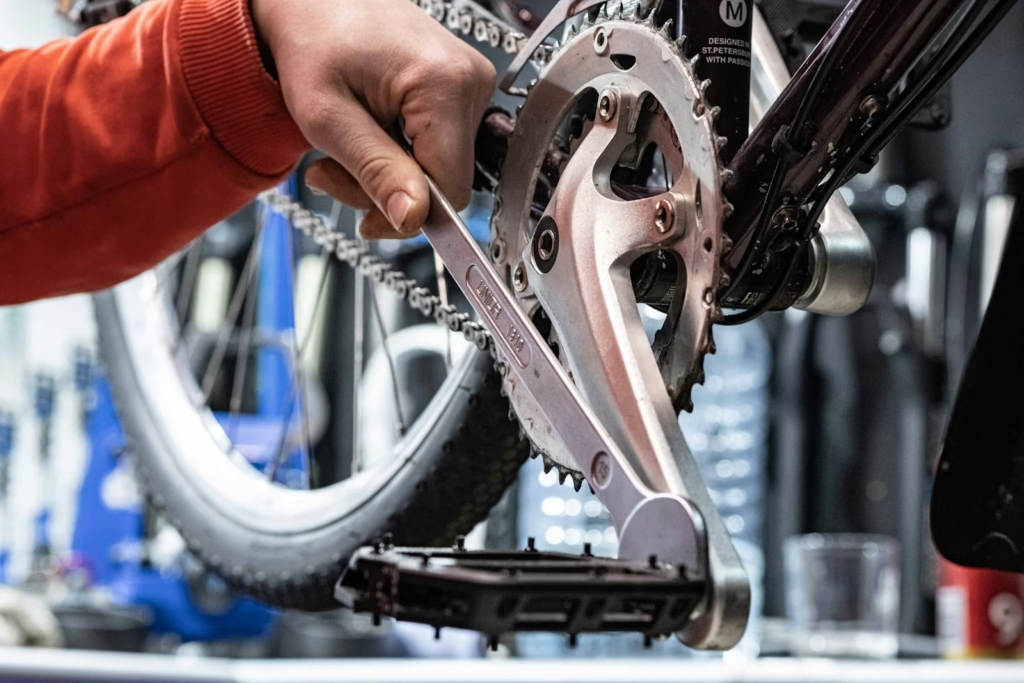
Saddle-height formulas are popular because they feel precise. The problem is that riders are not formulas. Two cyclists with the same inseam can need different saddle heights because of ankle movement, cleat position, crank length, saddle shape, flexibility and riding style.
A rider who pedals with the toe slightly down may tolerate a higher saddle than a rider who pedals more heel-down. A rider with long femurs may feel different knee pressure compared with someone whose leg proportions are different. A rider using pedals and shoes with a different stack height may also need a small adjustment.
That is why the best home approach is to combine methods. Use the heel-to-pedal method. Check it against an inseam formula. Then ride the bike and pay attention to how it feels.
A good position should feel quiet. Your hips should not rock. You should not be reaching for the bottom of the pedal stroke. You should not feel heavily compressed at the top. Your knees should track cleanly without feeling forced inwards or outwards.
How to fine-tune saddle height by feel
Once you have a starting point, ride for 20-40 minutes on familiar roads or on an indoor trainer. Do not judge the position after one minute in the hallway. Saddle height needs to be tested while pedalling normally.
Signs your saddle may be too low include:
A cramped feeling in the knees
Front-of-knee discomfort
Difficulty producing power smoothly
Feeling as if you are sitting too deep into the bike
Excessive pressure through the quads
Signs your saddle may be too high include:
Hips rocking from side to side
Pointing your toes down to reach the bottom of the stroke
Back-of-knee discomfort
Hamstring or calf tightness
Feeling unstable on the saddle
Saddle discomfort caused by sliding or reaching
Make one change at a time. If you change saddle height, saddle setback and cleat position on the same day, you will not know which adjustment created the improvement or the problem.
A sensible approach is to adjust by 2-3mm, ride again, then decide. If you need a larger correction because the saddle is obviously wrong, move in stages rather than jumping straight to a dramatic new position.
Do not ignore saddle setback
Saddle height is not isolated. Saddle setback, which is where the saddle sits on its rails, changes how your body sits over the pedals. Move the saddle forwards and you effectively change your knee position, hip angle and reach to the bars. Move it backwards and the whole pedalling relationship shifts again.
A traditional starting point is the knee-over-pedal-spindle check. Sit on the bike with the cranks level, so the forward crank is at three o’clock. With your foot in a normal pedalling position, the front of the knee should sit roughly above the pedal axle. This is not an absolute rule, but it is a useful reference.
If your saddle is too far forward, you may place extra load through the front of the knee and feel pushed onto the bars. If it is too far back, you may feel stretched, disconnected from the pedals or forced to reach too far at the bottom of the stroke.
Set saddle height first, then check setback. If you make a large setback change, revisit saddle height afterwards because the two interact.
Cleat position changes the equation
Your saddle height is affected by where your shoes meet the pedals. If you move your cleats forwards or backwards, the effective length and leverage of your pedalling position changes. The same applies if you switch between pedal systems with different stack heights.
A common beginner mistake is adjusting saddle height to solve a problem that actually starts at the shoe. Cleats that are too far forward can create calf strain or make the pedal stroke feel unstable. Cleats that are too far back can feel more stable for some riders but may slightly change how they apply force.
For most road riders, a neutral cleat position with the ball of the foot close to the pedal axle is a sensible starting point. From there, small changes can be made based on comfort, stability and any history of foot, knee or calf issues.
If you change shoes, pedals or cleats in 2026, recheck saddle height afterwards. Modern road shoes vary in sole thickness, cleat interface and foot support, so a setup that was perfect on one pair may not feel identical on another.
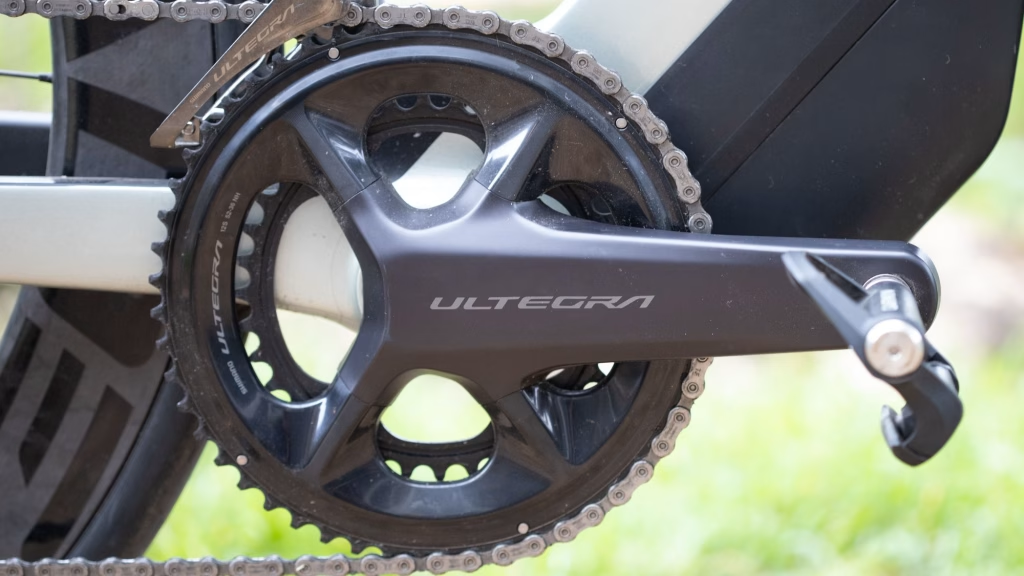
Crank length matters more than many riders realise
Crank length is the length of the crank arm between the bottom bracket and the pedal. Common road bike lengths include 165mm, 170mm, 172.5mm and 175mm, although shorter cranks have become more common as bike fitting has moved away from the old assumption that longer always means better.
Crank length changes the size of the circle your foot travels through. A longer crank closes the hip angle more at the top of the pedal stroke and can make the movement feel larger. A shorter crank can open the hip angle and may help some riders feel smoother or more comfortable, particularly on smaller bikes or more aggressive positions.
If you move from 172.5mm cranks to 170mm cranks, or from 175mm to 172.5mm, your saddle height may need checking. The change is small, but bike fit is often built from small numbers.
Shorter cranks do not automatically make you faster, and longer cranks do not automatically give you more useful power. The right choice depends on your body, bike position, riding style and comfort. ProCyclingUK’s guide to getting better at short, steep climbs also touches on how saddle position and crank choice can influence climbing efficiency.
Common saddle height mistakes
The most common mistake is copying someone else’s position. Even if another rider is the same height, their inseam, flexibility, shoes, pedals, crank length, saddle shape and riding style may be different.
Another common mistake is assuming discomfort is normal. Road cycling can involve fatigue, but sharp pain, persistent knee discomfort, numbness or clear instability are not things to ignore. A small saddle-height change can help, but persistent pain is a sign to seek a proper bike fit or medical advice.
Riders also often raise the saddle too high because a high position can feel powerful on a short test ride. The problem usually appears later: hips start rocking, the lower back tightens, saddle pressure increases and pedalling becomes less smooth.
Other mistakes include:
Making changes too large
Changing several fit points at once
Ignoring cleat position
Ignoring crank length
Forgetting to tighten the seatpost correctly
Not recording the original saddle height
Assuming a new saddle will work at exactly the same height
Failing to test changes on a proper ride
Small, measured changes are usually best.
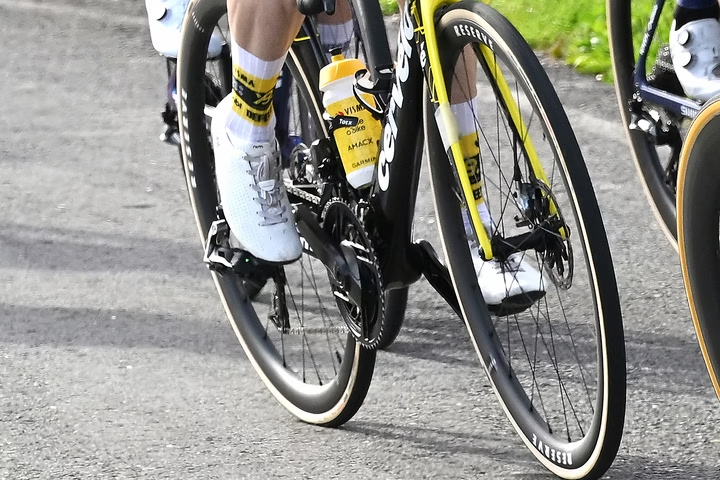
How to set saddle height on a second bike
If you own more than one bike, do not simply copy the visible seatpost height. Measure properly from the centre of the bottom bracket to the top of the saddle.
Even then, the number may not transfer perfectly. A winter bike, road bike, turbo bike and gravel bike can all feel different because of saddle model, pedal system, crank length, shoe choice and riding position.
Start by copying the measurement, then check the details. Are the cranks the same length? Are the pedals and shoes the same? Is the saddle the same shape? Is the bike used for the same type of riding? If not, expect to adjust.
This is especially useful for riders moving between a road bike and gravel bike. A gravel position may be slightly different because of rougher surfaces, wider tyres and a greater need for stability. ProCyclingUK’s guide to road bikes, gravel bikes and hybrids explains the basic differences between those bike types.
When to get a professional bike fit
A home setup can get many riders close, but a professional bike fit is worth considering if you ride regularly, have persistent discomfort, are buying an expensive new bike, are increasing your mileage, or have a specific injury history.
A good fitter will not just measure saddle height. They will look at how you move on the bike, how your knees track, how your feet sit, how your hips behave, how much reach you can tolerate and how your position changes under effort.
A professional fit is especially useful if you experience:
Repeated knee pain
Back pain on longer rides
Numb hands or feet
Saddle discomfort that does not improve
One-sided pain
Difficulty staying stable on the saddle
A major increase in training volume
A new bike that never feels quite right
Bike fit is not only for racers. It can make the biggest difference to ordinary riders who want to be comfortable enough to ride more consistently. ProCyclingUK’s cycling for beginners guide makes the same basic point: comfort is what keeps people riding after the early enthusiasm fades.
-
 Photo Credit: Tomasso Pelagalli/SCA/Cor Vos



Quick saddle height checklist
Measure your current saddle height before changing anything
Use the heel-to-pedal method as a first check
Compare it with an inseam-based method such as inseam × 0.883
Adjust in small steps of 2-3mm
Test changes on a real ride, not just in the hallway
Watch for hip rocking, knee discomfort or toe-pointing
Check saddle setback after height
Recheck after changing shoes, cleats, pedals, saddle or crank length
Use the correct torque setting when tightening the seatpost
Get a professional fit if pain persists
Final thoughts
Saddle height is not the whole bike fit, but it is the best place to start. Get it close and the bike usually feels smoother, calmer and easier to ride for longer. Get it badly wrong and other problems can start to appear, from knee pain to saddle discomfort, unstable pedalling and wasted effort.
The heel-to-pedal method and LeMond formula can both give you a useful starting point, but neither should be treated as final. Your body, equipment and riding style still matter. Use the numbers to get close, then use careful testing to refine the position.
The most important rule is to change things gradually. A few millimetres can be enough. Record where you started, adjust one thing at a time, ride the bike properly, and listen to how your body responds. For most riders, that steady approach will produce a better position than chasing a perfect number from a formula alone.

