
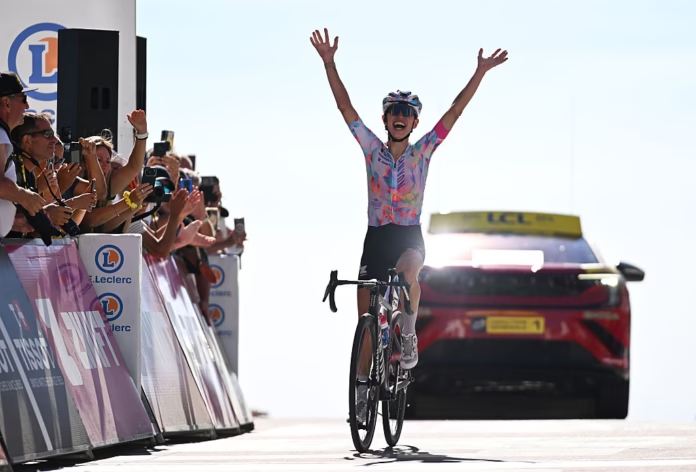
Kasia Niewiadoma-Phinney won stage 7 of the 2026 Tour de France Femmes with a huge solo attack on Mont Ventoux, riding away from Demi Vollering and Marlen Reusser before taking both the stage victory and the yellow jersey.
The Canyon SRAM rider attacked with 9.5 kilometres remaining on the final climb and was allowed to go as Vollering and Reusser marked each other behind. That hesitation became decisive. Niewiadoma-Phinney grew her advantage through the forested lower slopes, then carried it into the exposed, wind-hit final kilometres above Chalet Reynard.
Vollering finished second at 1:16 after distancing Reusser late, while Elisa Longo Borghini took third for UAE Team L’IMAD at 1:42. Reusser finished fourth at 1:46, losing the yellow jersey, with Paula Blasi and Antonia Niedermaier both at 1:48. Cédrine Kerbaol was seventh at 2:01.
A stage built around the Giant of Provence
Stage 7 was the first true summit-finish showdown of the race. The 153.4-kilometre route into Mont Ventoux carried around 3,500 metres of climbing, but the day was always going to be defined by the final ascent from Bédoin.
The climb itself measured 15.7 kilometres at 8.8 per cent, a brutal test even before the wind came into the equation. The lower slopes through the forest gave the riders no real respite, while the exposed upper section beyond Chalet Reynard turned the final 6 kilometres into a fight against gradient, fatigue and the Mistral.
Reusser started the stage in yellow, with Vollering only 12 seconds behind and Niewiadoma-Phinney third at 1:17. The broader GC picture was still tight enough for several riders to dream, but Ventoux was always likely to reduce that race to the strongest climbers.
It did more than that. It flipped the Tour.
Early attacks before the real race
The first part of the stage was fast, hot and tactical. Anna van der Breggen was confirmed as a DNS before the start, with SD Worx-Protime down to six riders, while Katrine Aalerud and Kiara Lylyk also did not start.
The race began with attacks over the Col de la Grande Limite, where Puck Pieterse again extended her mountains lead. The Fenix-Premier Tech rider was first across the summit and became the first rider in the history of the Tour de France Femmes to pass the 50-point mark in the mountains classification.
Several early moves came and went before a larger break formed. Marit Raaijmakers, Ruby Roseman-Gannon, Amalie Dideriksen, Idoia Eraso, Paula Patiño, Marte Berg Edseth, Sandrine Tas, Romina Hinojosa and Clémence Latimier were among those to get clear, with Fiona Magnan later joining to make it 11 riders at the front.
The peloton allowed the move space for a time, but not enough to create a serious stage-winning threat. Ventoux was waiting, and the GC teams were never going to let the day fully drift.
Pieterse keeps building the polka-dot campaign
Pieterse’s work early in the stage deserves its own weight. She had already dominated the mountains classification across stages 5 and 6, and stage 7 gave her another opportunity to build a buffer before the final mountain stages.
She took maximum points on the Col de la Grande Limite and then again on the Col du Colombier, moving to 55 points after being first to the top of 13 of the 29 categorised climbs ridden so far in the race.
That gave her a huge cushion over Nikola Nosková and Sara Casasola, though the biggest points still came later on Ventoux. Pieterse has made the polka-dot jersey into a genuine campaign. She is not relying on one breakaway day or incidental points. She has chased the classification across every available climb.
The summit finish still gave the GC riders a chance to score heavily, but Pieterse had done the work needed to make them chase her in the standings.
The break takes shape, but the peloton keeps control
The breakaway reached the intermediate sprint in Beaumes-de-Venise still intact, with Dideriksen crossing first ahead of Hinojosa, Berg Edseth and Raaijmakers. Lorena Wiebes took the final available points from the bunch, keeping her green jersey campaign moving even on a day far too hard for the sprinters.
The gap to the peloton briefly reached close to 3 minutes, but the approach to the Col de Suzette began to reduce the break. Hinojosa and Mia Griffin were distanced as the road tilted up, while Roseman-Gannon later took maximum points over the climb.
Behind, FDJ United-Suez and Movistar both had reasons to keep the break close. Vollering wanted the stage and the yellow jersey. Reusser needed to avoid being isolated before Ventoux. UAE Team L’IMAD also had three riders in the top 10 overall and could not afford to let the race become too unpredictable.
By the time the race descended towards Bédoin, the gap was shrinking quickly.
Roseman-Gannon resists longest
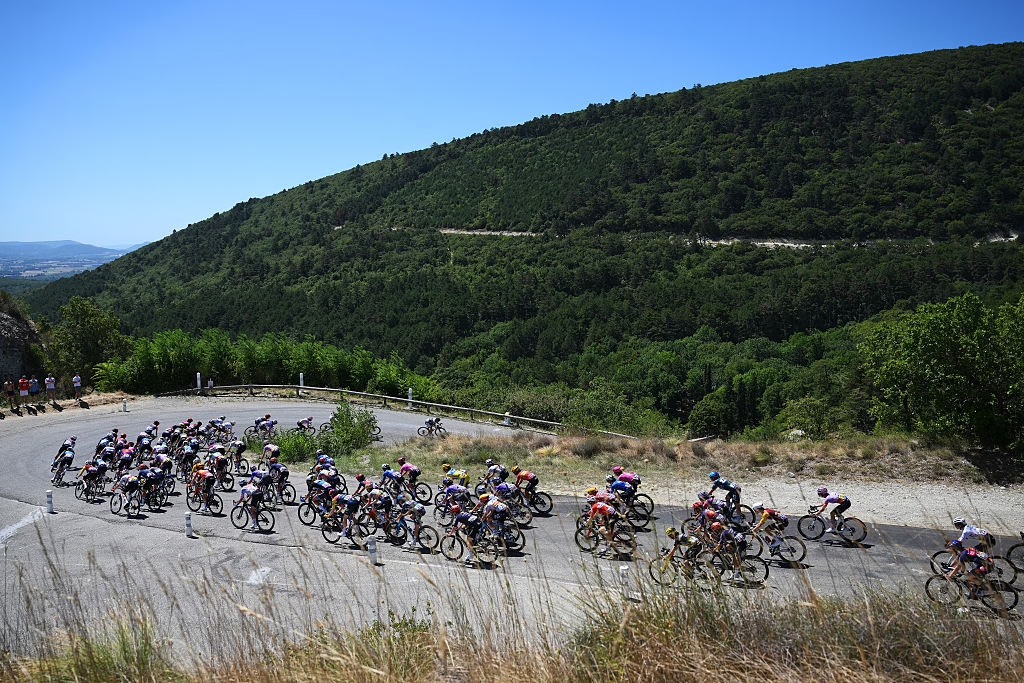
Roseman-Gannon was the last survivor from the break. The Australian attacked alone with around 20 kilometres remaining, as the road began to rise towards the base of Mont Ventoux.
It was a brave move, but it was never likely to survive against the GC chase. The peloton caught the final breakaway remnants with Ventoux in sight, just as Movistar and Team Visma | Lease a Bike began to organise at the front.
There was also late disruption before the climb. Lore de Schepper and Mavi García crashed on the approach to Bédoin, with García carrying bidons for her UAE teammates at the time. It was a costly and badly timed incident for a team that was about to need every rider it had.
Then the road reared upwards. The breakaway story ended, and the GC fight began.
The forest section starts the selection
The final climb began at Saint-Estève, 15.7 kilometres from the finish. Movistar had set the pace towards the base, but FDJ United-Suez quickly moved into position for Vollering.
Célia Gery was one of the first riders to take control on the climb, and the effect was immediate. Pauline Ferrand-Prévot and Nienke Vinke were dropped early, confirming again that the defending champion’s GC defence had already gone beyond repair.
Juliette Berthet then took over for FDJ, keeping the tempo high as the yellow jersey group shrank to fewer than 20 riders. Magdeleine Vallieres tried to attack, but her move was quickly neutralised and she was brought back.
By 14 kilometres to go, only a select group remained: Vollering, Reusser, Niewiadoma-Phinney, Kerbaol, Noemi Rüegg, Niedermaier, Isabella Holmgren, Fisher-Black, Longo Borghini, Dominika Włodarczyk, Blasi, Marion Bunel and a small handful of support riders.
The Tour was already being narrowed to its real contenders.
Rüegg lifts the pressure for EF
Rüegg then took over for EF Education-Oatly, working for Kerbaol and keeping the pressure on through the hardest shaded slopes. Her pace reduced the group further and put several riders into difficulty.
Fisher-Black was dropped, Gery began to struggle, and Bunel hung on at the back before losing contact. Femke de Vries had already been dropped earlier, another blow to Team Visma | Lease a Bike after Ferrand-Prévot’s losses on previous stages.
The whole top 10 overall was still represented for a time, with the major exception of Kim Le Court-Pienaar, who had won stage 6 but was no longer in the yellow jersey group. That underlined the difference between the hilly terrain of Tournon-sur-Rhône and the pure climbing demands of Ventoux.
The first major split came with 11 kilometres remaining.
Vollering makes the first move
Vollering attacked with around 11 kilometres to go, blowing the race apart. Reusser and Niewiadoma-Phinney were the only riders able to follow immediately.
Behind them, Longo Borghini, Blasi, Kerbaol and Niedermaier formed the next group, with Włodarczyk just behind. UAE Team L’IMAD had numbers, but the front of the race had already moved away.
At first, the stage looked as if it would settle into the expected duel between Vollering and Reusser, with Niewiadoma-Phinney as the third rider trying to survive. The reality was different.
Vollering had forced the selection, but she did not immediately press on alone. Reusser marked her closely. Niewiadoma-Phinney watched, waited, then chose the moment that changed the race.
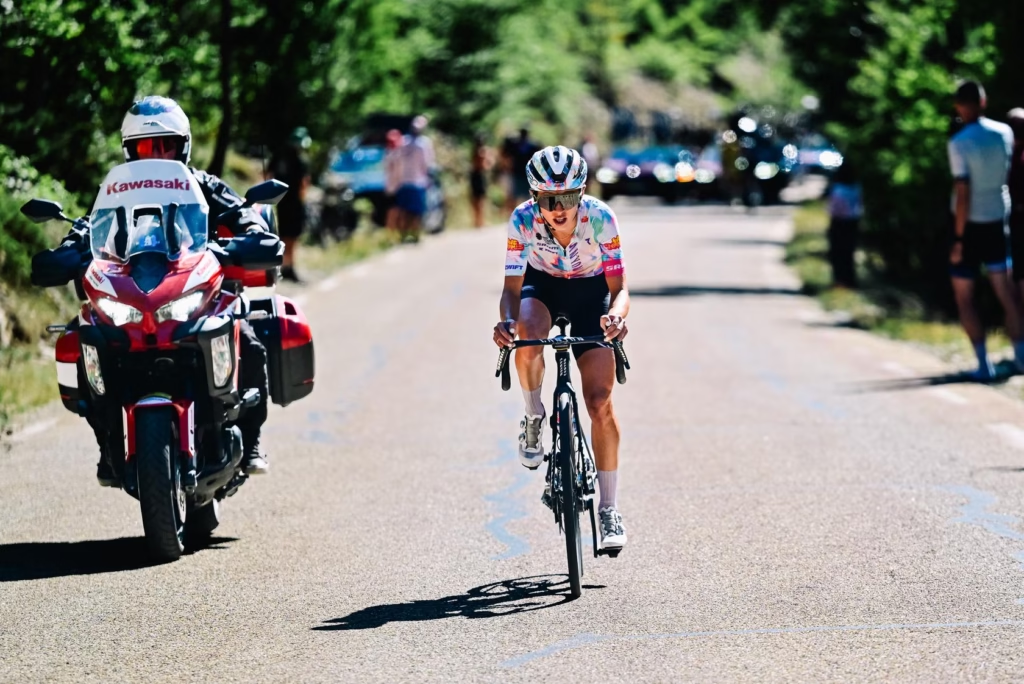 Photo Credit: A.S.O./Billy Ceusters
Niewiadoma-Phinney attacks into the hesitation
With 9.5 kilometres remaining, Niewiadoma-Phinney attacked. Vollering did not react. Reusser stayed on Vollering’s wheel. In that moment, the Polish rider was allowed to ride into the open road.
The initial gap was not huge. Ten seconds. Then 15. Then 20. But the dynamic behind was clear. Vollering and Reusser were having their own tactical battle, each wary of giving the other a free ride, and Niewiadoma-Phinney was the rider benefiting from the stand-off.
Reusser did a turn and asked Vollering to come through. Vollering then accelerated briefly, but Reusser responded, and the pattern settled again. Neither rider fully committed to closing Niewiadoma-Phinney before the gap became dangerous.
It was a bold attack, but also an intelligent one. Niewiadoma-Phinney understood the race situation better than anyone else. She was close enough on GC to take yellow if the gap grew, but far enough behind that Reusser and Vollering were tempted to focus on each other first.
That was the mistake.
The gap becomes the yellow jersey
Niewiadoma-Phinney’s lead rose quickly. With 7 kilometres remaining, she had 50 seconds. Past Chalet Reynard, as the climb entered the exposed, moon-like upper slopes, she had 55 seconds over Reusser and Vollering and 1:15 over the Longo Borghini group.
At 5 kilometres to go, the gap was 1:15 to Reusser and Vollering, with Longo Borghini, Blasi, Kerbaol and Niedermaier at 1:35. Niewiadoma-Phinney had started the stage 1:17 behind Reusser. The yellow jersey was now in reach.
Then the virtual lead became real. With 4 kilometres remaining, Niewiadoma-Phinney had 1:20, enough to move ahead of Reusser on the road. Behind, the chasing pair still could not produce a sustained response.
Reusser and Vollering were close enough to see the Tour slipping away, but not close enough to change it. The strongest rider in the race at that moment was alone at the front.
The wind only makes the ride bigger
Above Chalet Reynard, the landscape changed and so did the challenge. The riders left the trees and entered the exposed upper slopes of Ventoux, where the Mistral was blowing strongly.
The headwind and crosswind should have made it harder for a solo rider. Instead, Niewiadoma-Phinney kept going. She rode with a compact, low-gear cadence, occasionally rising from the saddle, visibly deep in the effort but still in control.
Behind, the chase was becoming more fragmented. Reusser and Vollering were still together, but the Longo Borghini group was closing. Blasi and Longo Borghini had taken steady turns all the way up the climb, with Niedermaier and Kerbaol still there.
By 2 kilometres to go, Niewiadoma-Phinney had 1:45 on Vollering and Reusser, and 1:55 on the Longo Borghini group. The stage was gone. The yellow jersey was almost gone too.
Niewiadoma-Phinney conquers Ventoux
Niewiadoma-Phinney passed under the red kite alone and still looked strong. After so many near misses in this race, after six previous Tour de France Femmes stage podiums, and after already winning the overall title in 2024, this was the stage victory that had repeatedly escaped her.
She crossed the line first at the summit of Mont Ventoux to claim her first stage win in her 40th Tour de France Femmes stage. It was a victory built on timing, courage and the willingness to take responsibility when the two riders ahead of her on GC became locked into each other.
The win also put her into the yellow jersey. If her 2024 overall victory was built on resilience and survival to the final metres of Alpe d’Huez, this was something different: a dominant mountain attack on one of cycling’s most famous climbs.
Niewiadoma-Phinney did not inherit the race lead. She took it.
Vollering distances Reusser late
Behind, Vollering finally produced daylight between herself and Reusser in the final kilometres. The FDJ United-Suez rider finished second at 1:16, rescuing time and bonus seconds after the earlier tactical hesitation had given Niewiadoma-Phinney the stage.
It was a mixed result. Vollering was strong enough to drop Reusser, but not early enough to stop Niewiadoma-Phinney from taking control of the Tour. She gained on the former yellow jersey, yet now finds herself chasing a different rival.
Reusser finished fourth at 1:46, behind Longo Borghini, and lost yellow after two days in the lead. The Movistar rider defended well in Dijon and Belleville-en-Beaujolais, but Ventoux finally exposed the limit of that defence.
Once the climb became a pure high-mountain fight, Reusser could not match Niewiadoma-Phinney’s sustained solo effort or Vollering’s final acceleration.
UAE Team L’IMAD show depth again
Longo Borghini finished third at 1:42, another strong ride after her aggressive stage 6. She could not follow the initial Vollering move, but she paced the chase group steadily and limited her loss better than most.
Blasi was fifth at 1:48, level with Niedermaier, while Włodarczyk also kept herself inside the wider GC fight after being distanced from the Longo Borghini group. The important point is clear: UAE Team L’IMAD still have multiple riders high in the race, but Ventoux confirmed that Longo Borghini is their clearest overall card for the final mountain battle.
Blasi’s ride was also impressive. She waited for Longo Borghini and Włodarczyk when the selection formed, then kept contributing in the chase group. Her own GC and young rider ambitions remain alive, but the team dynamic has become more defined.
Kerbaol and Niedermaier keep themselves in the race
Kerbaol finished seventh at 2:01, limiting the damage after another aggressive week. She had been briefly in the next chasing group behind the front three, then stayed with Longo Borghini, Blasi and Niedermaier through much of the upper climb.
For EF Education-Oatly, it was another solid outcome. Rüegg’s early work helped shape the selection, and Kerbaol avoided the kind of collapse that would have ended her podium hopes entirely.
Niedermaier also delivered a strong ride for Canyon SRAM, finishing sixth at 1:48 and helping reinforce the team’s position with Niewiadoma-Phinney now in yellow. With Van der Breggen out, Ferrand-Prévot fading and several other contenders losing ground, Niedermaier remains one of the most important young riders in the race.
Her presence gives Canyon SRAM more than a single leader to protect. That could matter on the final weekend.
-
 Photo Credit: Getty

Ferrand-Prévot fades further
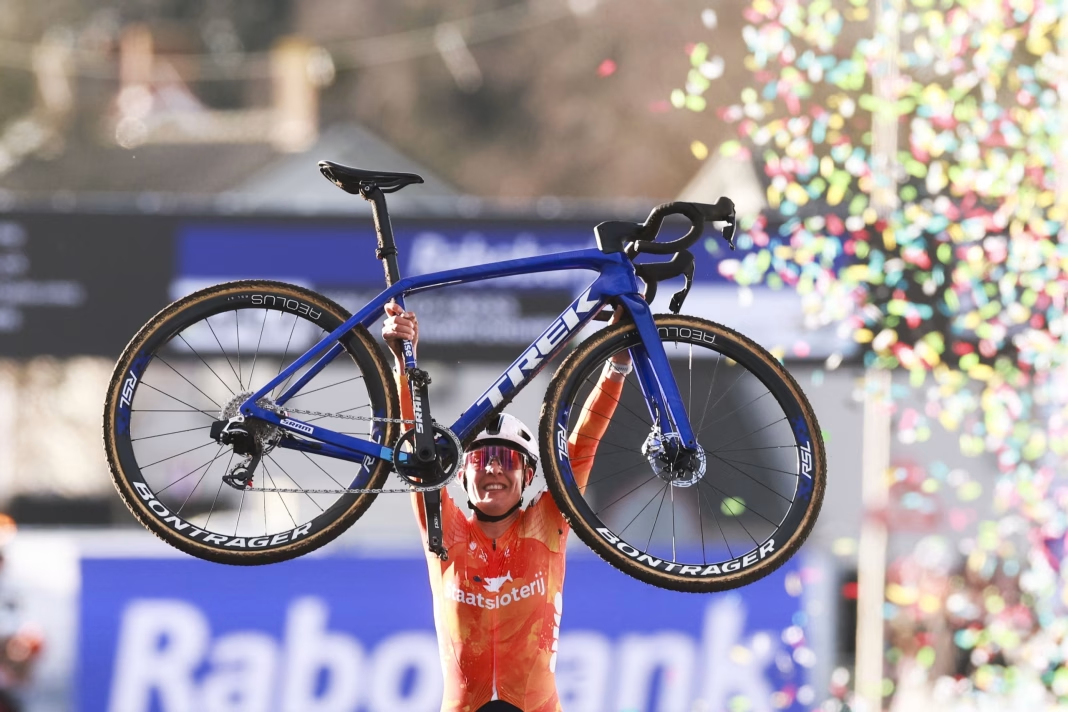
Ferrand-Prévot’s difficult Tour continued. The defending champion was dropped early on the Ventoux, soon after the climb began, and was reported climbing more than 1:30 behind the leaders while the front group was still being reduced.
It was another significant time loss after the Dijon time trial and the damage suffered on stage 5. The route had always offered her chances to recover in the mountains, but Ventoux was the stage where that had to begin. Instead, she lost contact before the decisive attacks.
That changes the framing of her race completely. She is no longer defending a title in any realistic sense. The final stages may offer stage-hunting chances or a chance to support teammates, but the overall battle has moved away from her.
Team Visma | Lease a Bike’s Tour has become about salvage, aggression and opportunities rather than controlling the GC with last year’s winner.
A different yellow jersey fight now
The Tour’s GC battle has been transformed. Reusser started the day in yellow, Vollering was the obvious challenger, and Niewiadoma-Phinney was close enough to matter but still outside the immediate duel.
By the summit of Ventoux, the race had turned around. Niewiadoma-Phinney now leads after the most important climbing performance of the race so far. Vollering is second after limiting the damage late, while Reusser has slipped from leader to chaser.
That shift matters tactically. Niewiadoma-Phinney is not a rider who will be easy to unsettle in a chaotic race. She has already won this race overall before, she understands how to manage pressure, and she now has a stage win on Ventoux to go with yellow.
Vollering remains dangerous. Reusser remains close enough to fight. Longo Borghini, Blasi, Niedermaier and Kerbaol are still relevant. But Ventoux has given the race a new centre.
A landmark win on a landmark climb
This was not just a stage win. It was the first Tour de France Femmes finish on Mont Ventoux, won by a former Tour champion with a solo attack that exposed the tactical weakness of her rivals.
Niewiadoma-Phinney has been one of the most consistent riders in the history of the modern race, but until now a stage victory had eluded her. She had podiums, she had an overall title, she had defining performances, but not the line-crossing moment.
Ventoux changed that.
She attacked into hesitation, rode into the wind, turned a gap into yellow and conquered one of cycling’s most symbolic mountains. The Tour de France Femmes is not over, but the race now belongs to her until someone proves otherwise.
Tour de France Femmes 2026 stage 7 result
| Position | Rider | Team | Time/gap |
|---|---|---|---|
| 1 | Kasia Niewiadoma-Phinney | Canyon SRAM | 4:22:53 |
| 2 | Demi Vollering | FDJ United-SUEZ | +1:16 |
| 3 | Elisa Longo Borghini | UAE Team L’IMAD | +1:42 |
| 4 | Marlen Reusser | Movistar Team | +1:46 |
| 5 | Paula Blasi | UAE Team L’IMAD | +1:48 |
| 6 | Antonia Niedermaier | Canyon SRAM | +1:48 |
| 7 | Cédrine Kerbaol | EF Education-Oatly | +2:01 |
| 8 | Dominika Włodarczyk | UAE Team L’IMAD | +3:26 |
| 9 | Kim Le Court-Pienaar | AG Insurance-Soudal | +3:58 |
| 10 | Isabella Holmgren | Lidl-Trek | +4:11 |
Main photo credit: Getty

