
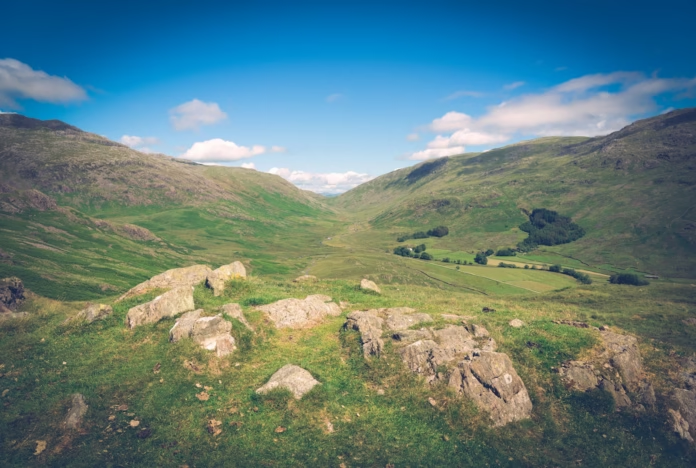
The Fred Whitton Challenge is one of the most famous sportives in the UK, and for good reason. It takes the hardest parts of riding in the Lake District, links them into one long day, and saves some of its most brutal climbing for when most riders are already deep into fatigue.
The standard event is known as a 112-mile loop from Grasmere, taking in a string of major Lakeland passes, including Kirkstone, Honister, Newlands, Whinlatter, Hardknott and Wrynose. In 2026, the route was adjusted because of the Kirkstone Pass landslip, with The Struggle replacing the usual early Kirkstone climb and the overall distance listed at around 108 miles. The total elevation remains in the same punishing range, which means the character of the event has not softened.
That is why the Fred Whitton Challenge has such a reputation. It is not just long. It is long, steep, exposed, technical and back-loaded. Riders who can cope with a normal century ride can still come unstuck here, especially when Hardknott Pass arrives late in the day with gradients that can touch 30 per cent.
This guide explains the Fred Whitton Challenge route, the major climbs, how the ballot works, what finish time to expect, how to train, what catches first-timers out, and how to prepare for one of Britain’s hardest one-day cycling events.
For more UK sportive context, see our UK sportive guide, as well as our guides on first sportive preparation, training for your first 100km ride, fuelling your rides and getting better at short, steep climbs.
What is the Fred Whitton Challenge?
The Fred Whitton Challenge is a long-distance cycling sportive in the Lake District. It starts and finishes in Grasmere and is designed around the area’s hardest roads, steepest passes and most famous climbs.
It is often described as one of the hardest one-day sportives in the UK. That reputation comes from the combination of distance, elevation, weather exposure and the timing of the hardest climbs. Hardknott and Wrynose arrive late, when riders have already spent hours climbing and descending through the Lake District.
The event is named after Fred Whitton, a former secretary of the Lakes Road Club who played a major role in Cumbrian cycling. It has become a bucket-list ride for sportive riders who want a challenge beyond the usual flat or rolling century.
The key facts:
- Location: Lake District, Cumbria
- Start and finish: Grasmere
- Standard distance: around 112 miles
- 2026 adjusted distance: around 108 miles
- Elevation: roughly 3,500 metres
- Main climbs: usually Kirkstone, Honister, Newlands, Whinlatter, Hardknott and Wrynose
- 2026 route change: The Struggle replaces the usual Kirkstone Pass climb
- Difficulty: very hard
- Best suited to: experienced sportive riders, strong club riders and well-prepared endurance cyclists
If you are still at the stage of choosing your first event, the Fred Whitton should be treated as a longer-term target rather than a gentle introduction. Start with our beginner’s guide to cycling or start cycling hub for UK riders before building towards harder sportives.
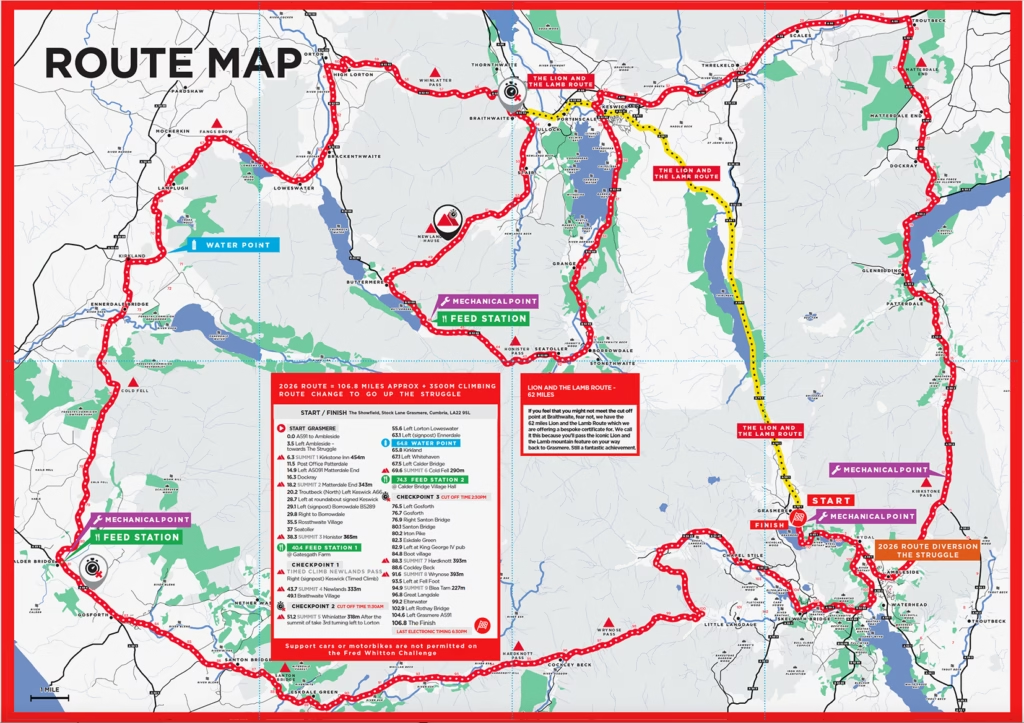
Fred Whitton Challenge route overview
The classic Fred Whitton Challenge route is a loop of the Lake District that starts in Grasmere and heads out across some of the region’s most famous passes before returning through Langdale.
The standard route is built around a long sequence of climbs rather than one single mountain. That is what makes it so difficult. Riders do not simply get over one hard section and settle in. The climbs keep coming, and the hardest section of the day arrives after most of the distance has already been covered.
A typical route shape looks like this:
- Start in Grasmere
- Early climbing towards Kirkstone or, in 2026, The Struggle
- Northern and western Lake District roads
- Honister Pass
- Newlands Pass
- Whinlatter Pass
- Long roads towards the western side of the route
- Cold Fell
- Eskdale
- Hardknott Pass
- Wrynose Pass
- Blea Tarn
- Final return through Langdale to Grasmere
The exact route can change, and 2026 is a good example of that. Because of the Kirkstone Pass issue, The Struggle has been added instead of the usual early Kirkstone climb. That makes it especially important to check the official route map and GPX before riding, rather than relying only on older versions of the course.
How hard is the Fred Whitton Challenge?
The Fred Whitton Challenge is genuinely hard. It is not just a long ride with a few steep climbs. It is a full-day effort where pacing, gearing, descending, fuelling and weather management all matter.
The difficulty comes from several things happening at once:
- The distance is beyond a standard century for many riders
- The elevation is close to Alpine sportive territory
- Several climbs are extremely steep
- Hardknott and Wrynose come very late
- Descents are technical and can be tiring
- Lake District weather can change quickly
- The roads are narrow and often rough in places
- Riders need to manage cut-off times as well as fatigue
The event’s reputation is justified because it asks for more than fitness. You need the strength to climb, the control to descend, the patience to pace, and the discipline to keep eating even when the road is constantly going up or down. If the climbing is your biggest concern, spend time with our guide on how to get better at short, steep climbs well before event day.
Many riders who finish ordinary 100-mile sportives comfortably still find the Fred Whitton a major step up.
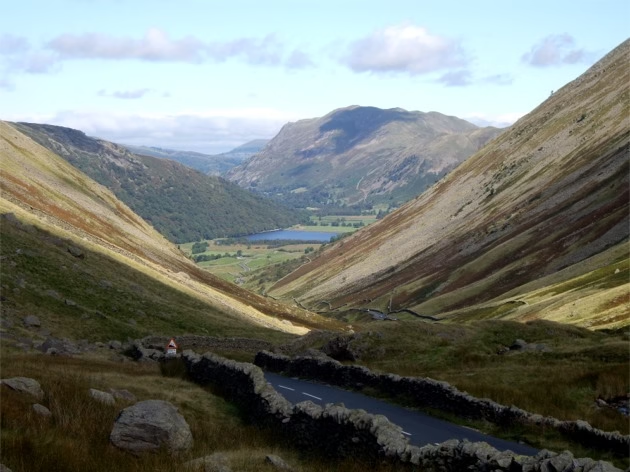
Fred Whitton Challenge route breakdown
The exact sequence depends on the year, but the Fred Whitton is best understood through its major climbs. These are the points that shape the day and decide whether a rider is managing the route or simply surviving it.
Kirkstone Pass
Kirkstone Pass is part of the classic Fred Whitton identity. On the standard route, it is one of the early major climbs and gives riders a first proper reminder that this is not a normal sportive.
Kirkstone is not as brutally steep as Hardknott, but it is long enough and hard enough to make an impact. The mistake many riders make is treating it as a place to test the legs. It comes early, when adrenaline is high and the group still feels fresh, but riding too hard here can cost you hours later.
In a normal year, Kirkstone is about restraint. Stay seated, keep your breathing under control, and avoid matching riders who are climbing too quickly for your own plan. The Fred Whitton is not won on Kirkstone, but it can be damaged there.
For 2026, the usual Kirkstone element has been changed because of a landslip, with The Struggle added into the route instead. That changes the opening character of the ride, but not the wider lesson: the first major climb must be ridden conservatively.
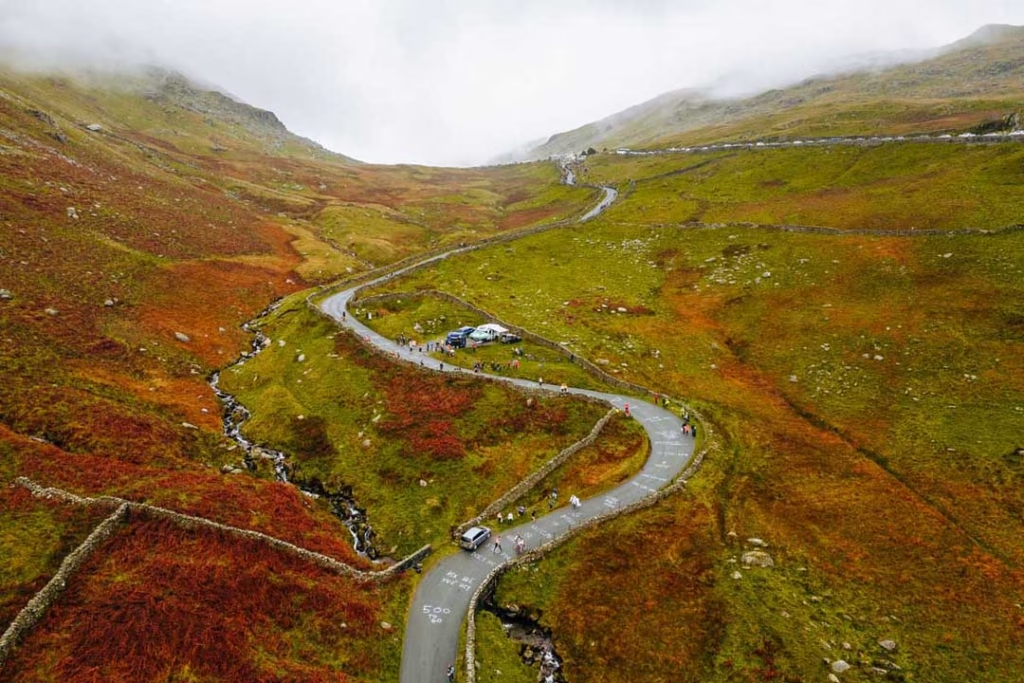
The Struggle
The Struggle is the key 2026 route change and, true to its name, it is not an easier substitute. It climbs out of Ambleside towards Kirkstone and has a different feel from the steadier traditional ascent.
The Struggle is irregular, steep in places and mentally awkward because it arrives early enough that riders can still be tempted into overreaching. It is shorter than the full day ahead, but it is steep enough to push heart rate and power well above where they should be in the first part of the event.
If you are riding the 2026 edition, this is one of the climbs to respect. Do not chase wheels. Do not turn it into a personal test. Use your lowest gear early, stay smooth, and remember that the real sting of the Fred Whitton still comes much later.
A good bike fit will not make The Struggle easy, but it can make long steep climbing more manageable. If your position still feels uncertain, check our guide to setting your saddle height on a road bike before your training becomes more specific.
Honister Pass
Honister Pass is one of the defining climbs of the Fred Whitton Challenge. It is steep, exposed and difficult to settle into, with sections that can quickly break rhythm.
Honister often comes after riders have already spent enough time on rolling and climbing roads to feel the day properly begin. It is not just the gradient that hurts. It is the way the climb forces you into repeated changes of effort, especially if riders around you slow suddenly or weave across the road.
The descent also deserves respect. It is technical, and riders who are tired or overexcited can lose focus. This is not the place to gain a handful of seconds by taking risks. A safe, controlled descent is worth far more than a fast one that leaves you tense or shaken.
How to ride Honister:
- Shift early before the steepest sections
- Leave space to riders ahead
- Avoid surging out of corners
- Stay relaxed over the top
- Descend carefully and within your limits
Newlands Pass
Newlands Pass comes soon after Honister on the classic route and continues the pattern of repeated hard climbing. It is not usually the most feared climb of the day, but that can make it dangerous. Riders may underestimate it because they are already thinking about Hardknott.
Newlands has enough steepness to add real fatigue. If you ride it at threshold because the legs still feel decent, you may pay for it later. The Fred Whitton is all about cumulative damage, and Newlands is one of the climbs that adds to the bill.
The best approach is to ride it as part of the whole event, not as an isolated hill. Keep cadence manageable, stay fuelled, and do not let your effort drift too high just because the climb feels less famous than the ones still to come.
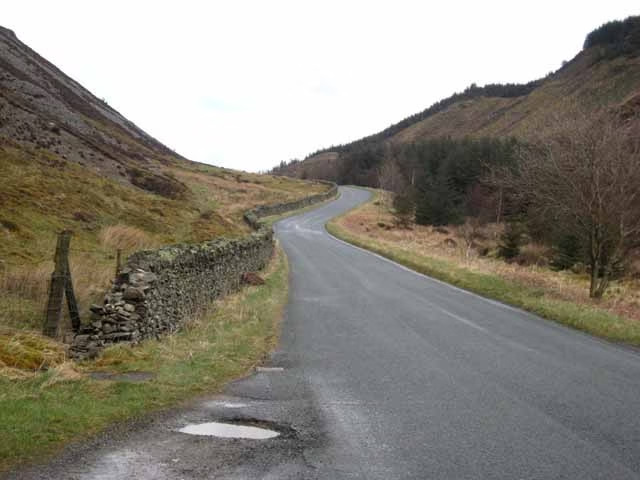
Whinlatter Pass
Whinlatter is not as savage as Hardknott or Honister, but it is still important because it comes during a phase where the ride can begin to feel long. Riders have already dealt with several climbs, and the temptation is to push on if the legs feel good.
The danger with Whinlatter is pacing drift. It can feel more manageable than the steeper passes, which encourages riders to ride above endurance pace without noticing. That burns energy you need later.
Use Whinlatter as a checkpoint. If you are still eating, still climbing smoothly and still keeping effort under control, you are riding the event properly. If you are already fighting the bike, skipping food or forcing the pedals, Hardknott is going to be much harder than it needs to be.
Cold Fell
Cold Fell is less famous than the named passes, but it is one of the most important parts of the ride. It comes on the western side of the route and can feel exposed, lonely and mentally draining.
This is where the Fred Whitton starts to become an endurance event rather than just a climbing challenge. The roads can be open, the wind can be noticeable, and riders often begin to realise how much is still to come. It is not the steepest section, but it can be one of the places where morale dips.
The key here is rhythm. Eat, drink, ride smoothly, and avoid turning every drag into a fight. If you have a group, work sensibly. If you are alone, focus on keeping effort steady rather than chasing every rider who comes past.
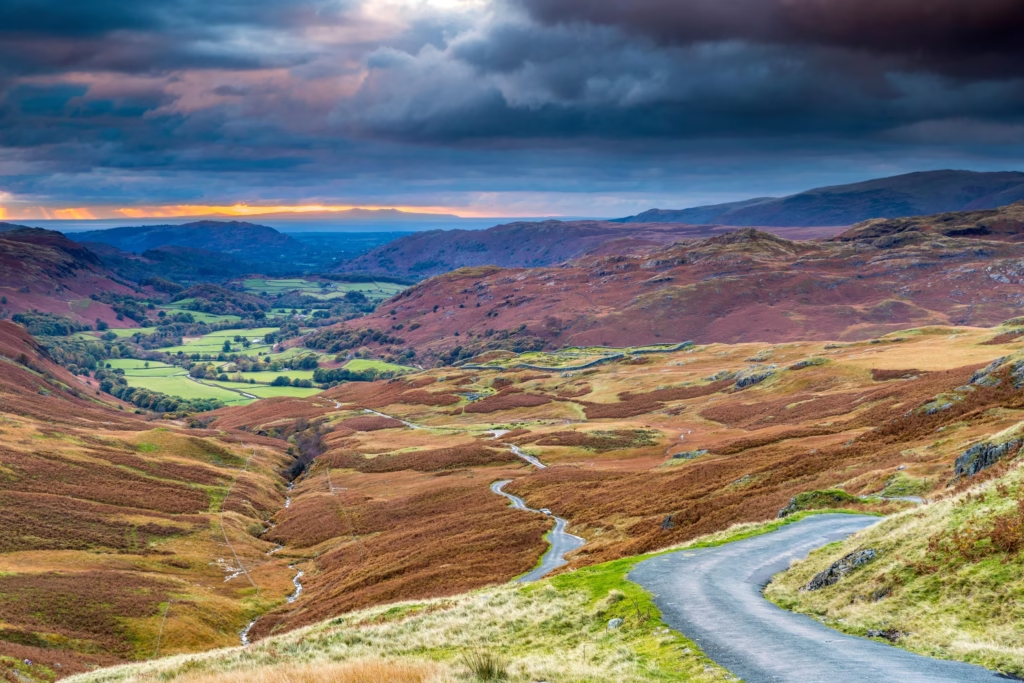
Hardknott Pass
Hardknott Pass is the climb most riders think about when they enter the Fred Whitton Challenge. It is famous because it is brutally steep, narrow, technical and late in the route. It can reach gradients of around 30 per cent, and it arrives when many riders already have close to 100 miles in their legs.
This is where first-timers often discover whether they paced the day properly. A rider who has saved energy, eaten well and used sensible gears may still struggle. A rider who has gone too hard earlier can find Hardknott almost unrideable.
The climb is not just physically hard. It is tactical. The road is narrow, riders may be walking, and it can be difficult to choose a line if the climb is crowded. Momentum matters, but so does control.
How to ride Hardknott:
- Use your easiest gear before you need it
- Stay seated where possible to keep traction
- Pick a clean line and commit to it
- Do not panic if riders around you dismount
- Keep your upper body relaxed
- Focus on short sections rather than the whole climb
- Accept that walking a section is not failure
Hardknott is not a normal climb. Even strong riders can be forced off if the road is crowded or if they lose momentum. The aim is to get over it safely and still have enough concentration for the descent and Wrynose.
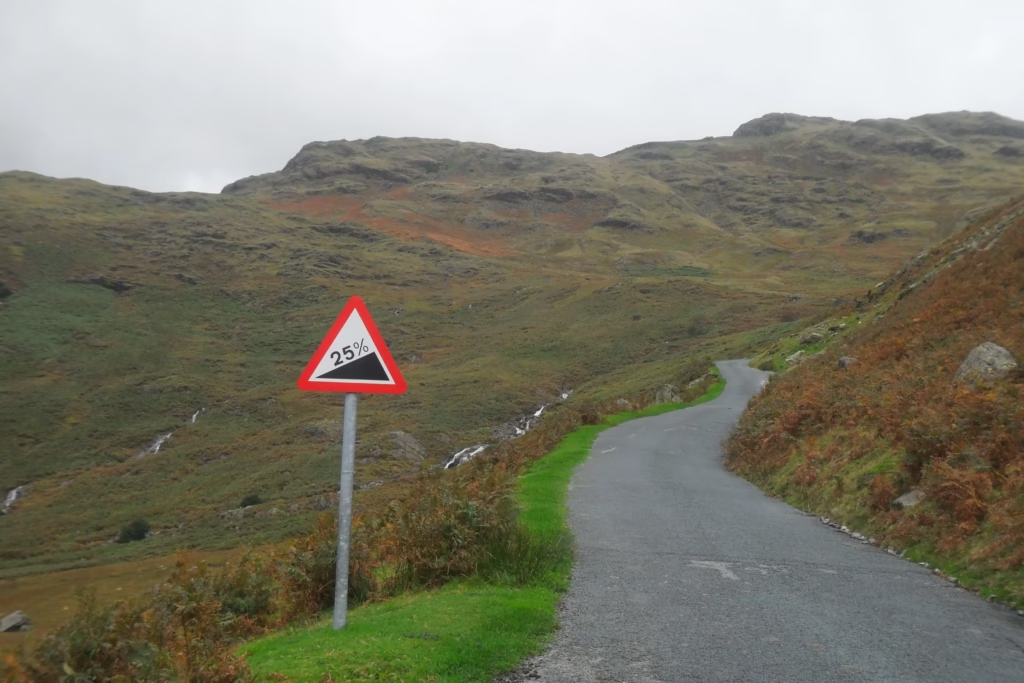
Wrynose Pass
Wrynose comes after Hardknott and is often underestimated because riders are relieved to have survived the hardest climb. That is a mistake. Wrynose is still steep, still demanding and still comes when fatigue is very high.
The climb itself is difficult, but the real issue is the sequence. Hardknott and Wrynose together form the decisive late section of the Fred Whitton. You cannot treat Wrynose as a formality.
After descending Hardknott, take a moment to reset if the road allows. Eat or drink if you can do so safely. Get your breathing under control. Then ride Wrynose with the same respect as the earlier climbs. It may not have the same reputation, but it can still break riders who think the hardest work is over.
Blea Tarn and the run back to Grasmere
After Wrynose, the route still is not finished. Blea Tarn and the run back through Langdale to Grasmere can feel longer than expected, especially if the legs are cramping or the weather has turned.
This final section is where mental discipline matters. Riders often relax too early after Wrynose, only to discover that the last miles still demand effort and concentration. The roads can be narrow, the descents require care, and tired riders may be less alert.
The best approach is to keep eating and drinking until close to the finish. Do not assume the ride is done because the famous climbs are behind you. The Fred Whitton finishes in Grasmere, not at the top of Wrynose.
How to enter the Fred Whitton Challenge ballot
The Fred Whitton Challenge is heavily oversubscribed, so most riders enter through the ballot. The general ballot usually opens in December and closes in mid-December, with places then announced before the following year’s event.
The basic process is:
- Check the official Fred Whitton Challenge website
- Wait for the general ballot to open
- Submit your ballot entry during the entry window
- Wait for ballot results
- Confirm and pay for your place if successful
- Follow any charity or event instructions after entry
There are also charity-linked places and invite places, but the general ballot is the main route for most riders. Because the event is so popular, it is worth setting a reminder before entries open. Missing the ballot window usually means waiting another year.
Before entering, the organisers recommend experience of a 100-mile sportive and/or a hilly sportive with more than 2,800 metres of climbing. That is sensible advice. The Fred Whitton is not a first sportive. It is something to build towards, and our first sportive checklist is a useful starting point if you are still building event-day confidence.
When is the Fred Whitton Challenge?
The Fred Whitton Challenge is usually held in May. The 2026 edition is scheduled for Sunday, 10th May.
May is part of the event’s character. Conditions can be pleasant, but the Lake District can still be cold, wet and windy. Riders should not assume spring means easy weather. You may need to prepare for rain, cold descents, exposed roads and fast-changing conditions.
That affects kit choice as much as training. A lightweight rain jacket, gloves, arm warmers or a gilet can make the difference between managing the descents and becoming chilled before the next climb. Our guide on what to wear for cycling in British weather is a good reference when planning layers for a long Lake District day.
What is a realistic Fred Whitton Challenge finish time?
Finish times vary enormously. The fastest riders can complete the route in under six hours, but for many sportive riders, the Fred Whitton is an all-day event. Times of 10, 11 or more hours are not unusual for riders who are finishing rather than racing.
A realistic guide:
| Rider type | Likely finish time |
|---|---|
| Elite-level amateur or very strong racer | Under 6 hours |
| Strong club rider | 7-8 hours |
| Well-trained sportive rider | 8-10 hours |
| Steady first-time finisher | 10-12 hours |
| Rider battling fatigue, weather or gearing issues | 12 hours or more |
The important point is that the Fred Whitton is not a normal average-speed ride. A rider who can average 28-30kph on rolling roads may be much slower here because of the steep climbs, technical descents, feed stops and late fatigue.
A better target is to finish strongly enough to ride Hardknott and Wrynose safely. Chasing an ambitious time early can backfire badly.
Fred Whitton Challenge cut-off times
The Fred Whitton Challenge uses cut-off points to keep the event safe and manageable. These can change, so riders should always check the latest official event instructions.
Recent official route information has listed key cut-offs at Braithwaite and Calder Bridge. These are important because they come before the hardest late section of the ride. Missing a cut-off may mean you are not allowed to continue on the full route.
This is why pacing matters. You cannot ride so conservatively that you fall behind the event schedule, but you also cannot ride so hard that you arrive at Hardknott already empty. The balance is part of the challenge.
First-time riders should work backwards from the cut-offs when planning their ride. Know what average pace you need to maintain, but allow for feed stops, weather, mechanicals and slow descents.
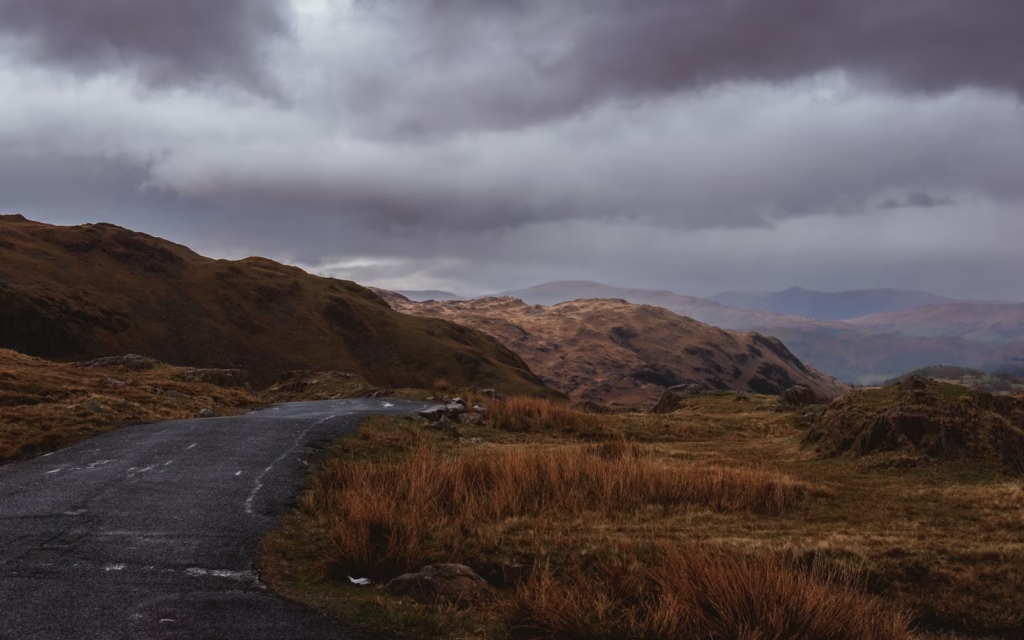
How fit do you need to be for the Fred Whitton Challenge?
You need to be fit enough to ride long, climb repeatedly and still make good decisions late in the day. The Fred Whitton is not just about one big power number. It rewards endurance, durability and patience.
A good target before entering would be the ability to:
- Ride 100 miles comfortably
- Complete a hilly sportive with at least 2,800 metres of climbing
- Climb steep gradients without overgearing
- Descend confidently on narrow roads
- Eat and drink consistently during long rides
- Ride in poor weather without panic
- Stay focused after six or more hours on the bike
You do not need to be a racer, but you do need to be prepared. The riders who suffer most are often not the slowest riders. They are the ones who underestimate the combination of distance, gradient and weather.
If you are stepping up from shorter rides, the principles in our training plan for your first 100km ride still apply: build endurance before speed, practise pacing, and learn how your body reacts when a ride goes beyond the comfortable part.
How to train for the Fred Whitton Challenge
Training for the Fred Whitton should start months before the event. The ideal plan builds endurance first, then adds climbing strength, steep-gradient practice and long rides that simulate fatigue.
A useful 16-week structure looks like this:
| Phase | Focus | Key sessions |
|---|---|---|
| Weeks 1-4 | Base endurance | Steady long rides, easy climbing, consistency |
| Weeks 5-8 | Climbing strength | Low-cadence hill reps, longer climbs, tempo work |
| Weeks 9-12 | Fred-specific endurance | Long hilly rides, back-to-back climbing, nutrition practice |
| Weeks 13-15 | Peak preparation | Longest hilly ride, steep climb practice, pacing rehearsals |
| Week 16 | Taper | Reduced volume, short sharp efforts, recovery |
The most important ride in training is not necessarily the longest. It is the one that teaches you how your body responds after several hours of climbing. A 90-mile hilly ride with repeated steep climbs may be more useful than a flatter 120-mile ride.
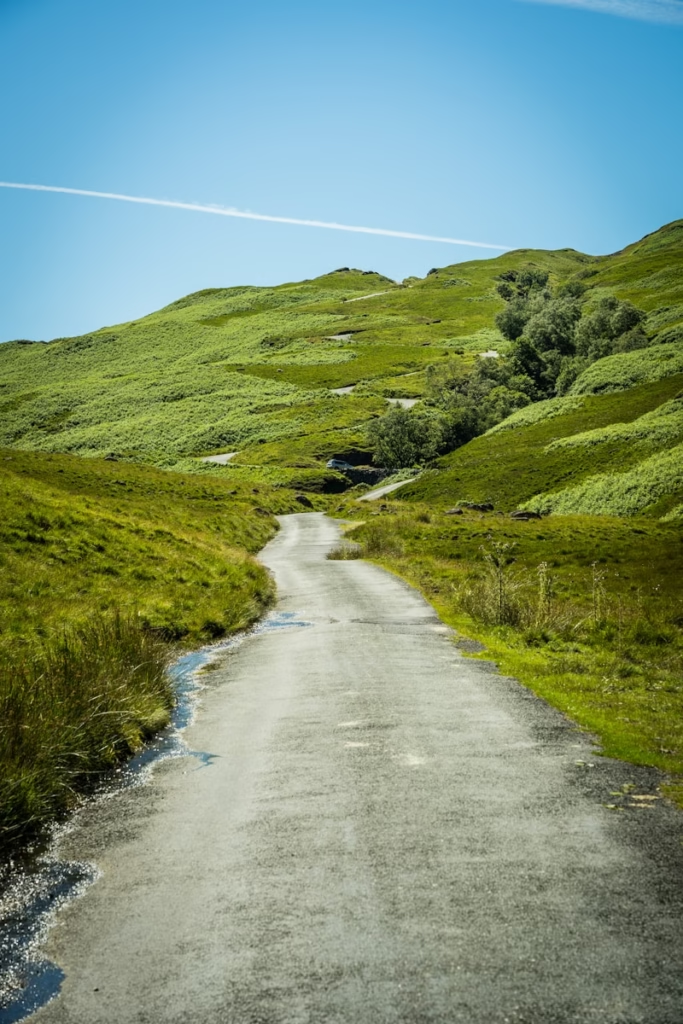
Key training sessions for the Fred Whitton Challenge
The Fred Whitton requires several different types of training. A good plan should include more than just long Sunday rides.
Long endurance rides
Build towards regular rides of four, five and six hours. These should be steady and controlled, not every week a race. The aim is to develop durability and practise eating on the bike.
Hilly endurance rides
Find routes with repeated climbs rather than one long climb. The Fred Whitton is about cumulative climbing, so training should reflect that.
Low-cadence strength efforts
Steep climbs often force a low cadence even with sensible gearing. Practise controlled low-cadence efforts on moderate climbs, but do not grind every session. The aim is strength, not knee pain.
Steep climb practice
If you can find short climbs above 15 per cent, use them. Practise staying seated, shifting early and keeping traction. This is especially useful for Hardknott and Wrynose. Our guide to riding short, steep climbs goes into more detail on gearing, cadence and effort control.
Descending practice
Descending is part of the event. Practise braking before corners, choosing safe lines, relaxing your upper body and riding in poor conditions.
Fuelling practice
You should know what you can eat after four, six and eight hours of riding. Do not leave this to event day. Our guide to fuelling your rides is a useful place to start if you have not yet built a clear food and drink plan.
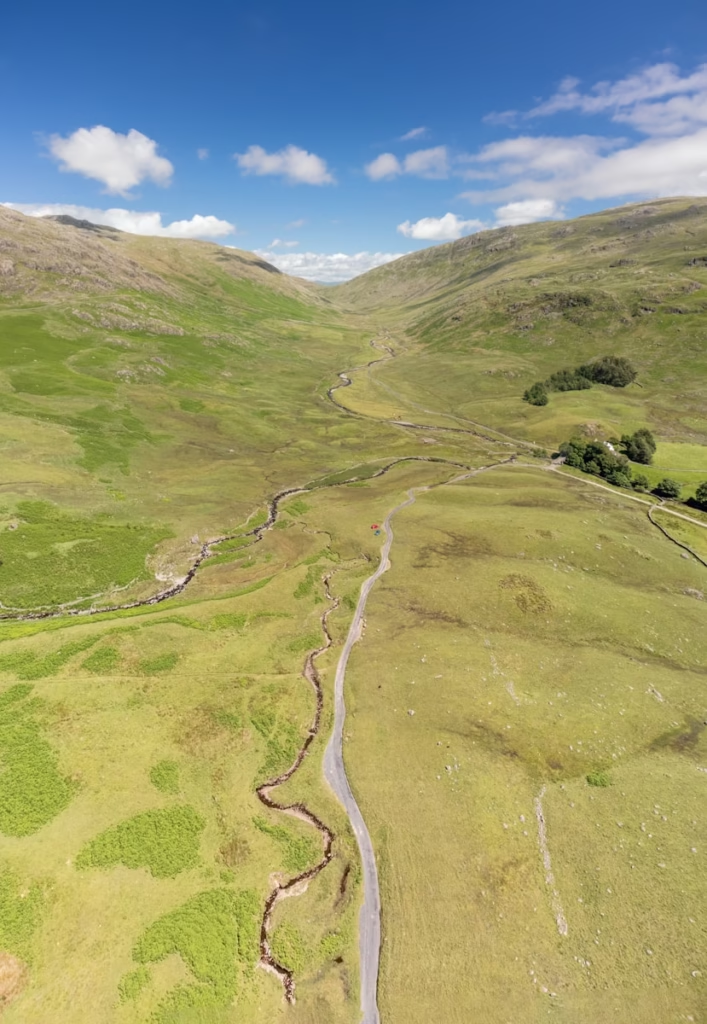
What gearing do you need for the Fred Whitton Challenge?
Use easier gears than you think you need. This is one of the simplest and most important pieces of Fred Whitton advice.
A compact or sub-compact chainset with a wide-range cassette is strongly recommended. Many riders will want something like a 34-tooth inner chainring with a 32, 34 or even larger sprocket at the back. If you have a modern 12-speed setup, use the largest cassette your derailleur can safely handle.
Do not choose gearing based on pride. Hardknott late in the ride is not the same as a short steep climb near home. You need a gear that lets you keep the pedals turning when tired, on rough gradients, possibly in traffic, and maybe in wet conditions.
A good Fred Whitton gear is one you hope not to need but are very grateful to have.
What bike is best for the Fred Whitton Challenge?
A normal road bike is the right choice for most riders, but comfort, braking and gearing matter more than aerodynamics.
Prioritise:
- Low climbing gears
- Reliable brakes
- Fresh brake pads
- Tyres in good condition
- Comfortable position
- Secure bottle cages
- Stable handling
- No untested equipment
A super-light climbing bike is useful, but only if it is practical and reliable. A slightly heavier bike with better gearing and braking is a better choice than an aggressive race setup that leaves you overgeared or uncomfortable.
Disc brakes are helpful on the long and technical descents, especially in wet weather, but rim brakes can be fine if they are well maintained and used sensibly. If your position still needs work, sort that well before event week rather than making last-minute changes.
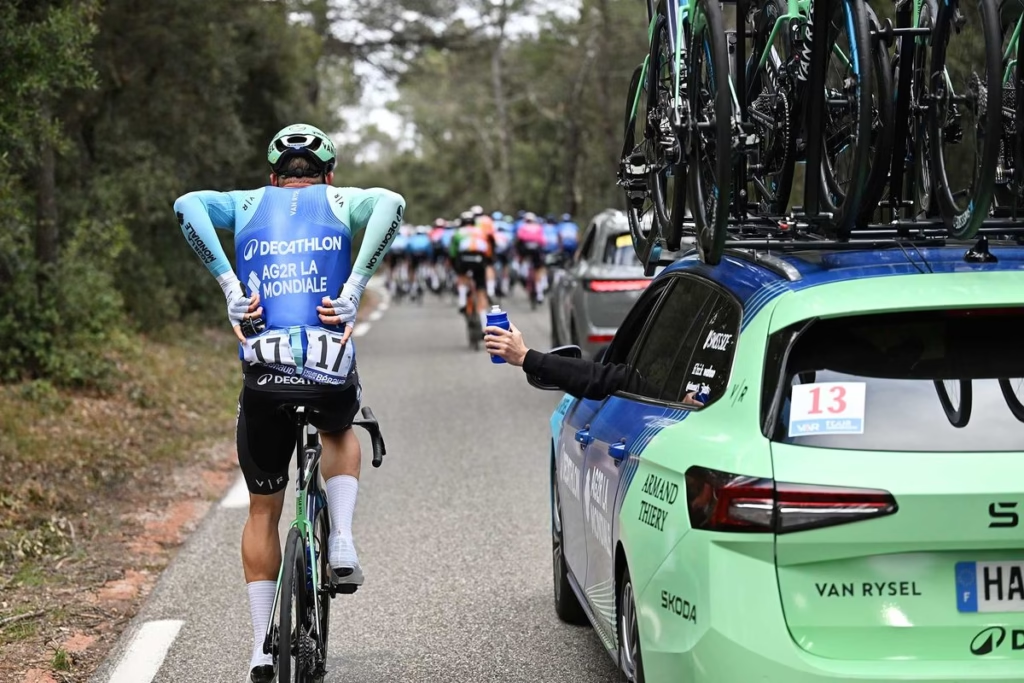
What to eat and drink during the Fred Whitton Challenge
Fuelling is one of the biggest reasons riders struggle in the Fred Whitton. The route is so varied that it can be hard to remember to eat. Climbs are steep, descents require concentration, and the day can feel too busy for regular fuelling. That is exactly why a plan matters.
Aim to eat from the first hour. Do not wait until you feel hungry.
A simple fuelling target:
- 60-90g carbohydrate per hour if your stomach is trained for it
- 500-750ml fluid per hour, adjusted for temperature
- Electrolytes if conditions are warm or you sweat heavily
- Real food early, easier-to-digest gels or chews later
- Caffeine only if you already know it works for you
Good options include bars, bananas, rice cakes, energy drink, gels, chews, small sandwiches and salty snacks. Practise your plan in training. The Fred Whitton is not the day to discover that a new gel upsets your stomach.
For more on building a simple nutrition plan, see our beginner’s guide to fuelling rides.
What catches first-timers out?
The Fred Whitton catches first-timers out because the hardest part of the route comes late. Many riders feel good early, ride too hard over the first climbs, then reach Hardknott with nothing left.
The most common first-timer mistakes are:
- Riding the early climbs too hard
- Using gears that are too big
- Underestimating the descents
- Not eating enough in the first half
- Spending too long at feed stops
- Getting cold after sweating on climbs
- Chasing faster riders
- Ignoring cut-off times
- Thinking Hardknott is the final challenge
- Forgetting that Wrynose and the run home still matter
The best Fred Whitton riders are not always the ones who feel strongest in the first hour. They are the ones still making good decisions after six, seven or eight hours.
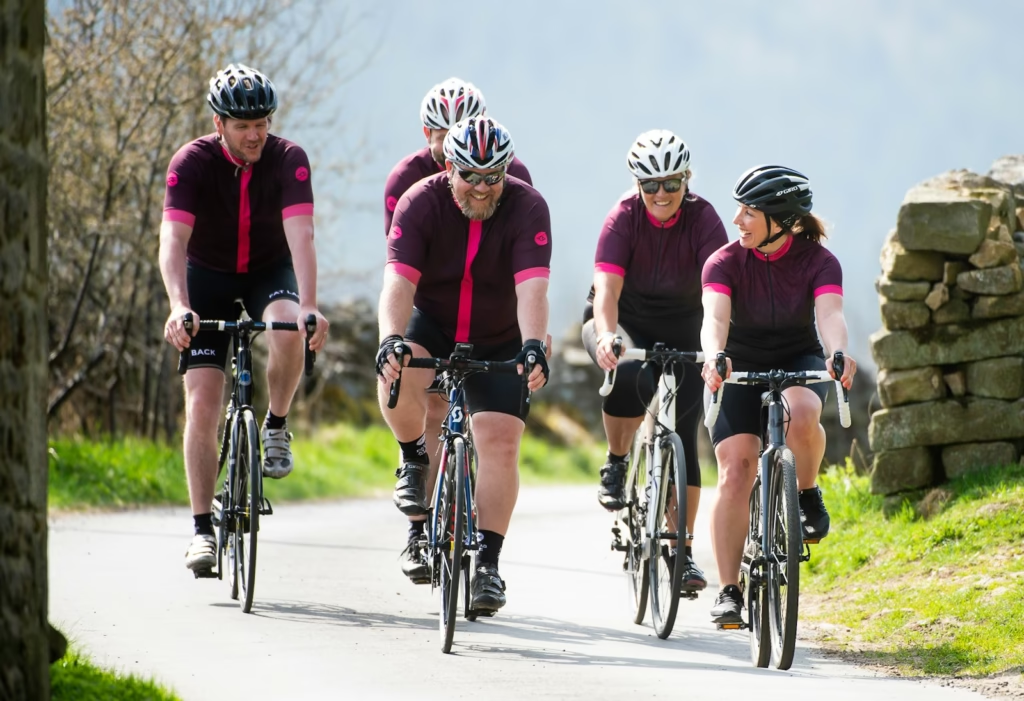
How to pace the Fred Whitton Challenge
Pacing is simple in theory: start easier than you want to and save your hardest efforts for the end. In practice, that is difficult because the event atmosphere, early groups and first climbs can pull riders into riding too hard.
A good pacing plan:
- First third: ride below ego pace
- Middle third: stay fuelled and steady
- Final third: protect the legs before Hardknott
- Hardknott and Wrynose: survive, then reset
- Final miles: keep eating and stay focused
Avoid going above threshold on early climbs unless absolutely necessary. If you are already breathing hard on the first major climb, you are probably riding too hard.
Use heart rate, power or perceived effort, but do not become too rigid. Steep climbs can force spikes. The goal is to avoid repeated unnecessary spikes.
How to ride Hardknott without blowing up
Hardknott is a special case. You cannot ride it like a normal climb. The gradients are too steep, the road is too narrow, and the climb arrives too late.
The best approach is to prepare before you reach it. Eat before Eskdale. Drink before the road turns up. Mentally reset before the steepest ramps. Once on the climb, ride the section in front of you rather than worrying about the whole pass.
Key tips:
- Shift into your easiest gear early
- Keep your front wheel light but controlled
- Stay seated where traction is poor
- Do not overlap wheels
- Expect riders ahead to slow or stop
- Use the full width only when safe
- If you walk, move to the side and restart safely
- Do not descend the other side aggressively if you are shaken
Riding every metre is satisfying, but finishing the Fred Whitton safely is more important. Plenty of strong riders have had to unclip on Hardknott because of traffic, gradient or fatigue.
How to descend safely on the Fred Whitton
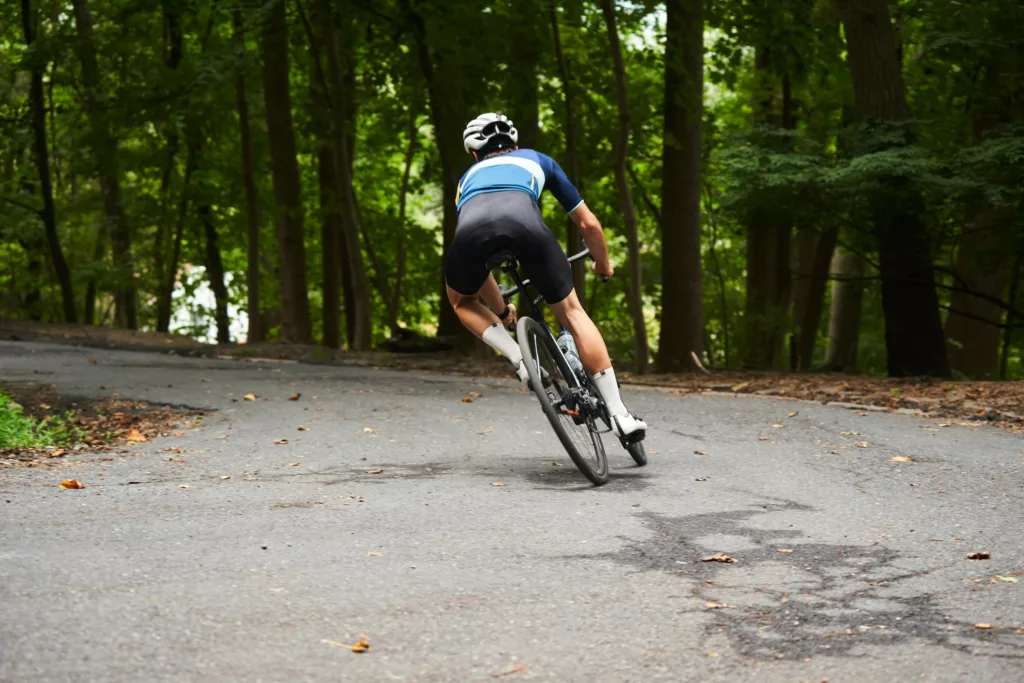
Descending is one of the most underrated parts of the Fred Whitton Challenge. The Lake District descents can be steep, narrow, uneven and busy with other riders.
Safe descending matters because fatigue affects judgement. By the time you reach the later descents, your hands, shoulders and concentration may already be tired.
Descending tips:
- Brake before corners, not halfway through them
- Keep your eyes looking ahead
- Leave more space than usual
- Avoid sudden line changes
- Relax your grip where possible
- Use both brakes smoothly
- Do not chase riders descending faster than you
- Take extra care if the roads are wet
A cautious descent may cost a minute. A crash can end the ride.
What kit should you take?
The Fred Whitton requires a little more preparation than a normal sportive because the weather and terrain can change quickly.
Useful kit includes:
- Lightweight waterproof jacket
- Gilet or windproof layer
- Arm warmers or gloves if conditions look cool
- Two bottles
- Enough food to cover gaps between feed stations
- Spare tubes or tubeless plugs
- Mini pump or CO2
- Multi-tool
- Chain quick link
- Tyre levers
- Emergency cash or card
- Fully charged phone
- Route loaded on a GPS device
- Front and rear lights if conditions are poor
Do not overload yourself, but do not rely completely on feed stations and mechanical support. The Lake District can feel remote when something goes wrong.
For a broader event-day packing structure, use our first sportive checklist and then adapt it for the Fred Whitton’s extra climbing and weather exposure.
Fred Whitton Challenge training checklist
Before riding the Fred Whitton, you should be able to answer yes to most of these:
- Have you ridden at least one 100-mile route?
- Have you completed a hilly ride with more than 2,800m of climbing?
- Have you practised fuelling for six or more hours?
- Have you ridden climbs above 15 per cent?
- Have you tested your lowest gear on steep gradients?
- Have you descended long, technical roads when tired?
- Have you checked your brake pads, tyres and drivetrain?
- Have you loaded the latest official route?
- Have you read the cut-off rules?
- Have you practised riding in wet or windy conditions?
If several of these are missing, the event is still possible, but your preparation needs to become more specific.
Is the Fred Whitton Challenge harder than other UK sportives?
For many riders, yes. The Fred Whitton is harder than most UK sportives because the steepest climbs are combined with long distance, technical descending and late-route fatigue.
Events such as the Dragon Ride, Etape Loch Ness, RideLondon and the Dartmoor Classic can all be challenging in different ways, but the Fred Whitton’s particular difficulty is its sequence of climbs. Hardknott and Wrynose would be difficult at any point. After nearly a full day of riding, they become something else entirely.
That is why the Fred Whitton is often treated as a bucket-list event. It is not just a ride to finish. It is a ride to respect. For more comparisons, see our guide to the best UK sportives.
-
 Photo Credit: quentinphotographiebe
 -
 Photo Credit: Getty

Fred Whitton Challenge FAQs
How long is the Fred Whitton Challenge?
The classic Fred Whitton Challenge is usually described as a 112-mile route around the Lake District. The 2026 version has been adjusted because of the Kirkstone Pass landslip and is listed at around 108 miles.
How much climbing is in the Fred Whitton Challenge?
The route includes roughly 3,500 metres of climbing, depending on the exact version used in a given year. The elevation is only part of the difficulty, because several climbs are very steep and arrive late in the ride.
What are the hardest climbs in the Fred Whitton Challenge?
Hardknott Pass is the most famous and usually the hardest climb because of its extreme gradients and late position in the route. Wrynose is also very difficult, especially because it comes straight after Hardknott. Honister, Newlands, Whinlatter, Cold Fell and the early Kirkstone or Struggle section all add to the overall difficulty.
Is Hardknott really that hard?
Yes. Hardknott is extremely steep, narrow and demanding. It can reach gradients of around 30 per cent, and on the Fred Whitton it arrives after many hours of riding. Even strong riders can be forced to walk if they lose momentum or get caught behind others.
Can beginners ride the Fred Whitton Challenge?
It is not a good first sportive. A beginner could eventually build towards it, but riders should ideally have experience of 100-mile rides and hilly sportives before entering. The event is best suited to cyclists who already have endurance, climbing experience and confidence descending.
What gearing do I need for the Fred Whitton?
Most riders should use very low gearing. A compact or sub-compact chainset with a wide-range cassette is recommended. A 34-tooth inner chainring with a 32 or 34-tooth sprocket is a sensible minimum for many riders, with even lower options useful if available.
How long does it take to finish the Fred Whitton?
Very strong riders can finish in under six hours, but many sportive riders take eight to 11 hours or more. First-timers should focus on pacing, cut-offs and finishing safely rather than chasing an aggressive time.
How do you enter the Fred Whitton Challenge?
Most riders enter through the official ballot, which usually opens in December and closes in mid-December. There may also be charity or invite places, but the ballot is the main route for most entrants.
What is the biggest mistake first-timers make?
The biggest mistake is riding too hard too early. The first climbs can feel manageable, but the Fred Whitton is decided late. If you reach Hardknott already empty, the final section becomes much harder.
Is the Fred Whitton Challenge worth it?
Yes, if you are prepared for it. The route is beautiful, the challenge is genuine, and the event has a unique place in UK sportive culture. But it is not a ride to underestimate. Train properly, use sensible gearing, respect the climbs and treat finishing as a major achievement.

