

The 2026 Tour de France Femmes finishes in Nice on Sunday 9 August with a final stage designed to keep the yellow jersey contest alive until the last descent towards the Mediterranean.
Stage 9 starts at Place Masséna and covers 99.2km around Nice, Èze and Villefranche-sur-Mer. The riders climb the Col d’Èze four times before finishing on the Promenade des Anglais.
The neutralised start is scheduled for 16:05 CEST, with the finish expected between 18:51 and 19:10. The relatively late start gives spectators time to reach Nice in the morning, explore the city and choose a viewing point before the roads close.
The complete shape of the race, from the Lausanne Grand Départ to the final weekend on the Côte d’Azur, is covered in our Tour de France Femmes 2026 route guide.
This is not a ceremonial final stage. The last ascent of the Col d’Èze uses a harder approach through the Chemin du Vinaigrier and Col des Quatre Chemins, creating one final opportunity to attack the yellow jersey before a rapid descent into Nice.

Tour de France Femmes stage 9 at a glance
| Detail | Information |
|---|---|
| Date | Sunday 9 August 2026 |
| Route | Nice to Nice |
| Distance | 99.2km |
| Stage type | Mountain |
| Start location | Place Masséna |
| Neutralised start | 16:05 CEST |
| Finish location | Promenade des Anglais |
| Expected finish | 18:51-19:10 CEST |
| Main climb | Col d’Èze, climbed four times |
| Best central viewing area | Place Masséna and Promenade des Anglais |
| Best climbing location | Col d’Èze |
| Best final attack location | Chemin du Vinaigrier and Col des Quatre Chemins |
Nice also hosts the finish of stage 8 from Sisteron on Saturday 8 August. That 171.9km stage arrives on the Promenade des Anglais, making this one of the best weekends of the race for spectators who want to see two stages without changing hotels.
The full dates and stage order are listed in our Tour de France Femmes 2026 calendar.
Why the final stage could still decide the Tour
The stage is short, but there is almost no opportunity for the riders to settle.
The first three laps each include a 7.7km ascent of the Col d’Èze averaging 5.9%. Those climbs are classified as category two and arrive after 7.7km, 33.6km and 59.6km.
The final circuit changes the approach. Instead of following the same road directly towards the Col d’Èze, the peloton turns onto the Chemin du Vinaigrier and passes the Col des Quatre Chemins.
The last classified ascent measures 6km at 7.6% and is category one. Its steeper approach includes sustained double-digit gradients, making it considerably harder than the three earlier passages.
The summit comes with 15.4km remaining. From there, the riders descend through Èze and Villefranche-sur-Mer before racing past Nice’s port and onto the Promenade des Anglais.
A rider can lose the Tour on the final climb, but descending ability and positioning will remain important. Anyone who reaches the summit with a small advantage must protect it through technical coastal roads before the flatter run to the line.
For newer viewers, our guide to what GC means in the Tour de France Femmes explains how every second gained or lost in Nice will affect the final yellow jersey standings.
Best places to watch the final stage in Nice
The circuit format gives spectators a choice between seeing the riders several times in the city or committing to one of the climbs.
| Viewing location | What you will see | Approximate passage times | Best for |
|---|---|---|---|
| Place Masséna | Neutralised start and three completed laps | 16:05, then 16:48-16:52, 17:30-17:39 and 18:12-18:26 | Start atmosphere and repeated sightings |
| Col d’Èze | Four climbing passages | 16:22-16:24, 17:04-17:11, 17:47-17:58 and 18:26-18:42 | Watching the race split on the climbs |
| Villefranche-sur-Mer | Four passages on the descent | 16:38-16:41, 17:20-17:29, 18:02-18:16 and 18:41-19:00 | Coastal scenery and descending action |
| Port Lympia | Four passages close to the finish | 16:44-16:48, 17:26-17:35, 18:08-18:23 and 18:48-19:07 | Easy access and multiple views |
| Promenade des Anglais | Three lap passages followed by the finish | 16:47-16:52, 17:29-17:39, 18:11-18:26 and finish at 18:51-19:10 | The stage winner, yellow jersey and podium |
The timings are based on the official schedules for average speeds of 33km/h, 35km/h and 37km/h. The race could move ahead of or behind those estimates, particularly if teams attack from the opening lap.
Place Masséna is the best all-round option
Place Masséna is the easiest choice for anyone who wants to experience the start and see the race several times without leaving central Nice.
The race caravan is scheduled to depart at 14:30, while the riders begin the neutralised section at 16:05. The peloton then returns towards Place Masséna at the end of each of the first three circuits.
The square is close to restaurants, cafés, tram stops and Vieux Nice. It is also only a short walk from the Promenade des Anglais, although barriers and restricted crossing points may make moving between the start and finish zones slower than it appears on a map.
The sensible plan is to arrive early, watch the pre-stage activity and then choose one side of the circuit before the crowds become dense. Trying to move repeatedly between Place Masséna, the finish line and the port risks missing a passage.
The Promenade des Anglais offers the complete finale
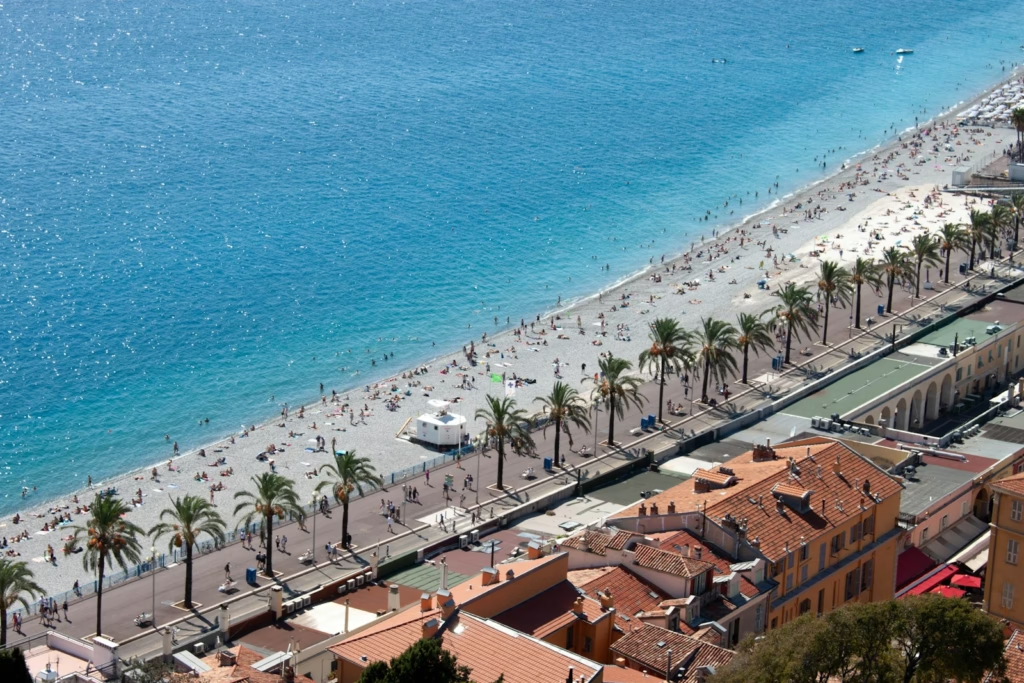
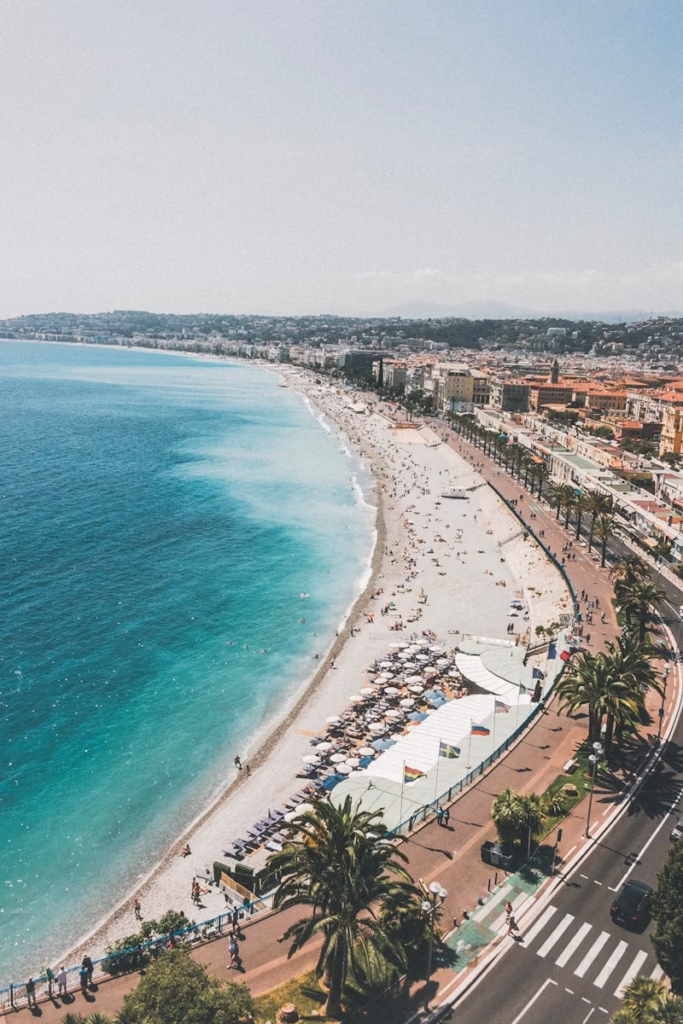
The Promenade des Anglais is the strongest option for casual spectators, families and anyone whose priority is seeing the final winner.
The riders reach the seafront on each circuit, giving spectators three earlier opportunities to see the race before the decisive finish. The first passage is expected shortly before 17:00, with the second around 17:30 and the third between 18:11 and 18:26.
The final arrival is expected between 18:51 and 19:10. The stage winner will be decided here, followed by confirmation of the final yellow, green, polka-dot and white jersey winners.
The Promenade is long, but the busiest section will be around the official finish zone near central Nice. Spectators wanting a place against the barriers should arrive well before the first passage and expect to remain there until the race has finished.
Standing farther west may provide more space, but spectators will be farther from the line, race commentary and presentation area.
This is the safest central option for anyone unfamiliar with the city. It offers several race passages, food and drink nearby, a flat walking route and the final podium without requiring travel into the hills.
Col d’Èze is the best place to watch the climbing
The Col d’Èze is the obvious choice for committed cycling fans because the riders climb it four times.
The first three ascents use the regular 7.7km route at 5.9%. The repeated climbing should gradually reduce the peloton, allowing spectators to see the race change on every lap.
The final passage is different. The approach through Vinaigrier and Quatre Chemins is steeper and more likely to produce the attack that decides the stage or overall classification.
Watching on the climb requires more planning than remaining in Nice. Access roads will close before the race arrives, public transport may be altered and there are fewer places to buy food or water.
Arrive several hours early, carry enough water and sun protection, and do not rely on moving back to the finish after the final passage. With only 15.4km between the summit and the line, the winner could reach Nice before spectators on the mountain can leave.
The lower and middle slopes may offer more space than the summit. They also allow spectators to see riders climbing at a slower speed rather than passing quickly through a crowded KOM area.
Chemin du Vinaigrier is where the Tour could be won
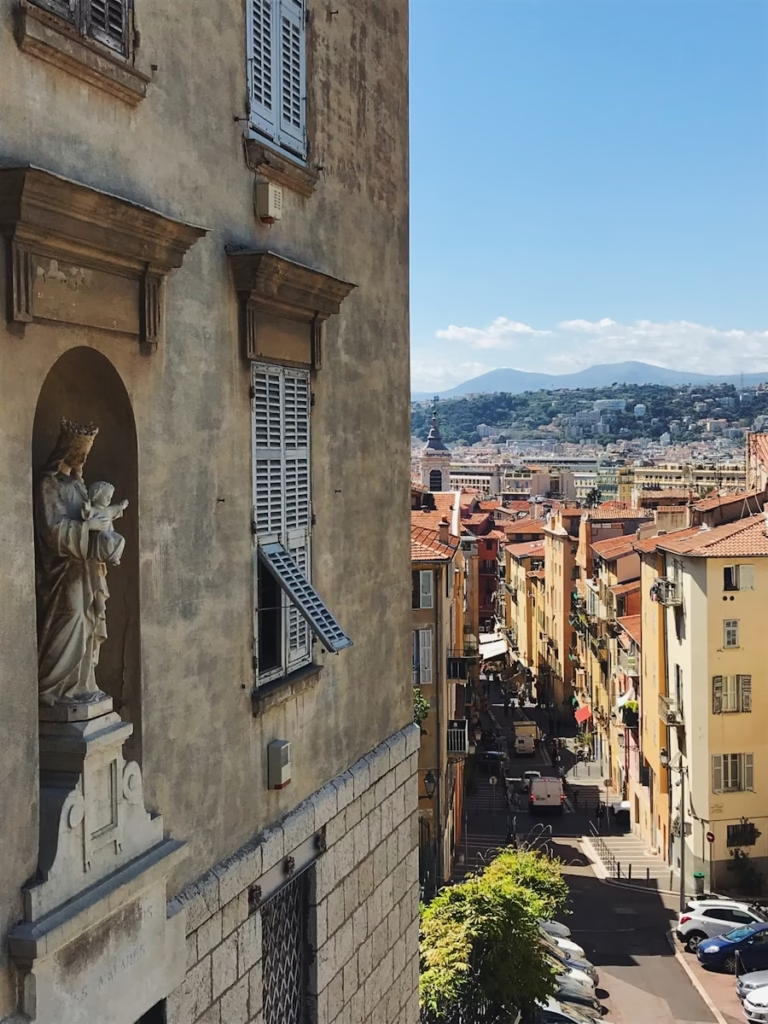
Spectators who only want to see the decisive attack should consider the Chemin du Vinaigrier or the approach to the Col des Quatre Chemins.
The race passes this section only once, during the final circuit. The riders are expected on the Chemin du Vinaigrier between approximately 18:19 and 18:35, before reaching Quatre Chemins a few minutes later.
The gradients are steeper than on the earlier Col d’Èze ascents. After three laps of accumulated fatigue, this is where the strongest climbers can create meaningful separation.
The disadvantage is limited access. Roads are narrower, the terrain is steep and there are fewer services than in central Nice. Spectators must arrive early and remain behind the barriers, particularly on sections where team cars and race vehicles need space to pass.
This is a sporting rather than convenient viewing choice. It offers one passage, but it may provide the most important two minutes of the entire Tour.
The short distance and aggressive route should also interest riders chasing a stage rather than the overall classification. Our Tour de France Femmes 2026 breakaway specialists guide looks at the attackers who could try to turn the final stage into more than a GC contest.
Port Lympia combines access with four sightings
The area around Place de l’Île de Beauté and Port Lympia is one of the most practical alternatives to the finish line.
The riders pass the port four times, with the final passage coming only around two kilometres from the finish. That gives spectators repeated views without needing to climb into the hills.
Tram line 2 terminates at Port Lympia and connects the area with central Nice and the airport. The port also has a wide selection of cafés and restaurants, while Vieux Nice and Place Garibaldi are within walking distance.
The final passage could be particularly fast. Riders will be descending from Villefranche and beginning the last run towards the Promenade, so this is better for atmosphere and repeated sightings than for watching a long tactical battle.
Check which side of the road provides the clearest view before the barriers fill. Crossing the race route may become impossible once the circuit is secured.
Villefranche-sur-Mer offers the best scenery
Villefranche-sur-Mer provides one of the most attractive viewing locations on the route.
The riders pass through on every lap after descending from Èze, with views across the harbour and towards Saint-Jean-Cap-Ferrat. The Corne d’Or section should offer an impressive combination of speed, coastal scenery and repeated race passages.
TER trains connect Nice with Villefranche-sur-Mer and other main towns along the Côte d’Azur coast. The station is close to the waterfront, but parts of the race route sit above the town, so spectators should allow time for an uphill walk.
Do not stand on the inside of blind corners or lean into the road for photographs. Descending riders will be travelling quickly, and sight lines on the corniche roads can be short.
Returning to Nice immediately after the final passage may be difficult because trains and platforms are likely to be busy. Spectators should either remain in Villefranche for the evening or allow extra time before travelling.

How to reach Nice for the Tour de France Femmes
Nice is one of the easier Tour finish cities to visit without a car.
Nice Côte d’Azur Airport sits at the western end of the city. Tram line 2 connects both airport terminals with Jean Médecin in the centre and Port Lympia in less than 30 minutes under normal conditions.
Nice-Ville railway station is within walking distance of Avenue Jean Médecin and Place Masséna. Regional TER services provide connections along the coast between Cannes and Ventimiglia, including Antibes, Monaco, Èze and Villefranche-sur-Mer.
Long-distance trains also connect Nice with Marseille, Lyon and Paris. Anyone travelling on race weekend should reserve longer-distance services early because Sunday evening departures may be particularly busy.
Driving into central Nice is the least practical option. Road closures will affect the circuit, Promenade des Anglais, port area and routes towards Èze.
Nice has park-and-ride facilities connected to its tram network, but spectators should check the final event transport plan before choosing one. Parking outside the centre and completing the journey by tram is more realistic than attempting to drive close to the start or finish.
Getting around Nice on race day
Nice has three main tram corridors useful for race spectators.
Tram line 1 serves Avenue Jean Médecin and Place Masséna, making it the most useful service for the start.
Tram line 2 runs between the airport, Jean Médecin and Port Lympia. It is the strongest option for spectators staying west of the centre or watching near the port.
Tram line 3 serves the western and northern parts of the city, although event-day operation may be affected by traffic management.
Detailed closures and service changes should be released closer to the race. Check Lignes d’Azur and City of Nice information on the morning of the stage rather than relying entirely on normal timetables.
Walking will often be faster in the central area. Place Masséna, Vieux Nice, the Promenade and Port Lympia are relatively close together, although race barriers can turn a short direct route into a longer diversion.
Where to stay for the Nice finish
The best area depends on the type of race experience you want.
Place Masséna and Jean Médecin
This is the most convenient area for the stage start, finish and main transport connections.
Hotels around Avenue Jean Médecin place visitors close to tram lines 1 and 2, Nice-Ville station and the city centre. It is the strongest choice for a short weekend visit without a car.
Vieux Nice and the port
Staying in Vieux Nice or around Port Lympia provides easier access to the eastern side of the circuit.
The riders pass the port four times, while the finish remains within walking distance. This area also works well for restaurants and an evening after the race, although some streets can be noisy and difficult for vehicles to access.
Promenade des Anglais
Accommodation near the Promenade puts spectators close to both stage 8 and stage 9 finishes.
Properties at the western end are also convenient for the airport tram, but may be a long walk from the exact finish area. Check the location carefully rather than assuming every Promenade hotel is close to Place Masséna.
Booking Saturday and Sunday nights allows spectators to watch stage 8 arrive from Sisteron and then spend the whole of Sunday around the final circuit.
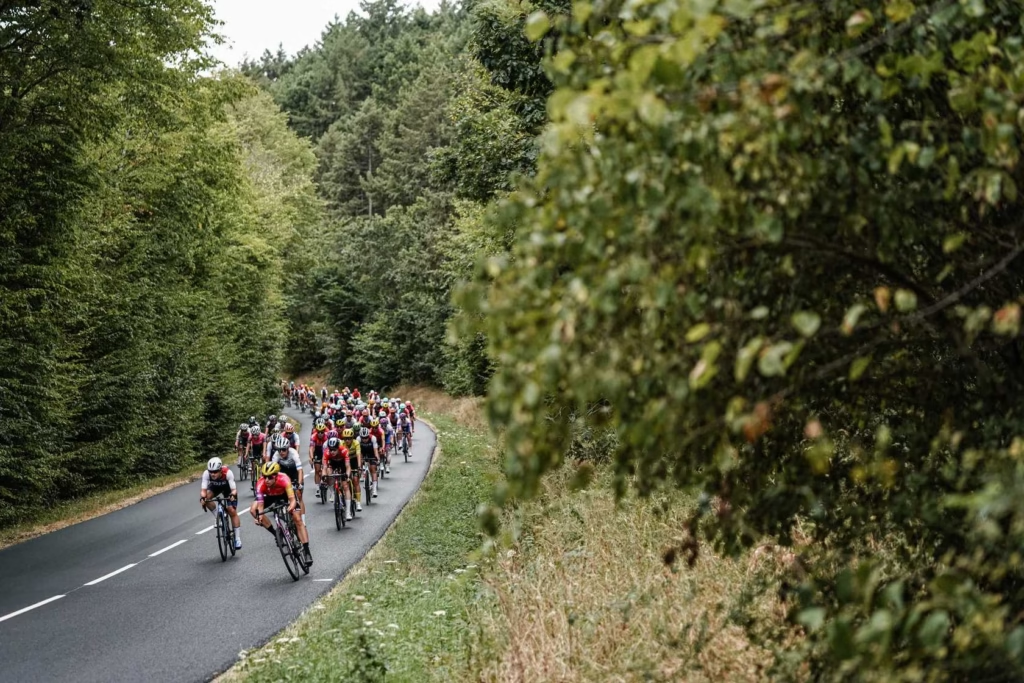
A simple race-day plan for central Nice
The easiest spectator plan does not require leaving the city centre.
Arrive in Nice during the morning and use the early part of the day to walk around the Promenade, identify the finish area and check crossing points.
Have lunch in central Nice or Vieux Nice before moving towards Place Masséna. The race caravan is scheduled to depart at 14:30, with the riders following at 16:05.
After watching the start, walk towards the Promenade and remain there for the repeated circuit passages. The peloton should first return shortly before 17:00.
The race then passes twice more before the final arrival between 18:51 and 19:10.
This plan provides the start, three intermediate sightings and the finish without depending on buses, trains or reopening roads.
Can you watch on the climb and at the finish?
Realistically, spectators should choose one or the other.
The final Col d’Èze summit is expected between 18:26 and 18:42. The winner could reach the Promenade only 15 to 25 minutes later.
Road closures, crowds and limited transport make returning to central Nice in time for the finish extremely unlikely.
A better approach is to commit to the mountain and watch the finish on a phone afterwards, or remain in the city and follow the climbing through race commentary before seeing the riders return.
Trying to do both could mean missing the decisive attack and the finish.
UK spectators unable to travel can follow the race through TNT Sports or HBO Max. The wider broadcast options are covered in our guide to how to watch the Tour de France Femmes 2026 in the UK.
What to take to the final stage
August conditions in Nice can be hot, particularly on exposed roads above the coast.
Bring water, sun cream, a hat and enough food if watching on the climb. Shade is limited on several sections of the Col d’Èze and Vinaigrier approaches.
A portable battery is useful for following live race information between passages. Mobile networks can become slow when large crowds gather in one area.
Spectators cycling to the course should bring a lock, puncture equipment and lights. Roads may remain closed after the riders pass while vehicles, barriers and crowds are cleared.
Comfortable shoes are more important than they appear. Even spectators staying in central Nice may walk several kilometres because of diversions and blocked crossing points.
-
 Photo Credit: A.S.O./Billy Ceusters


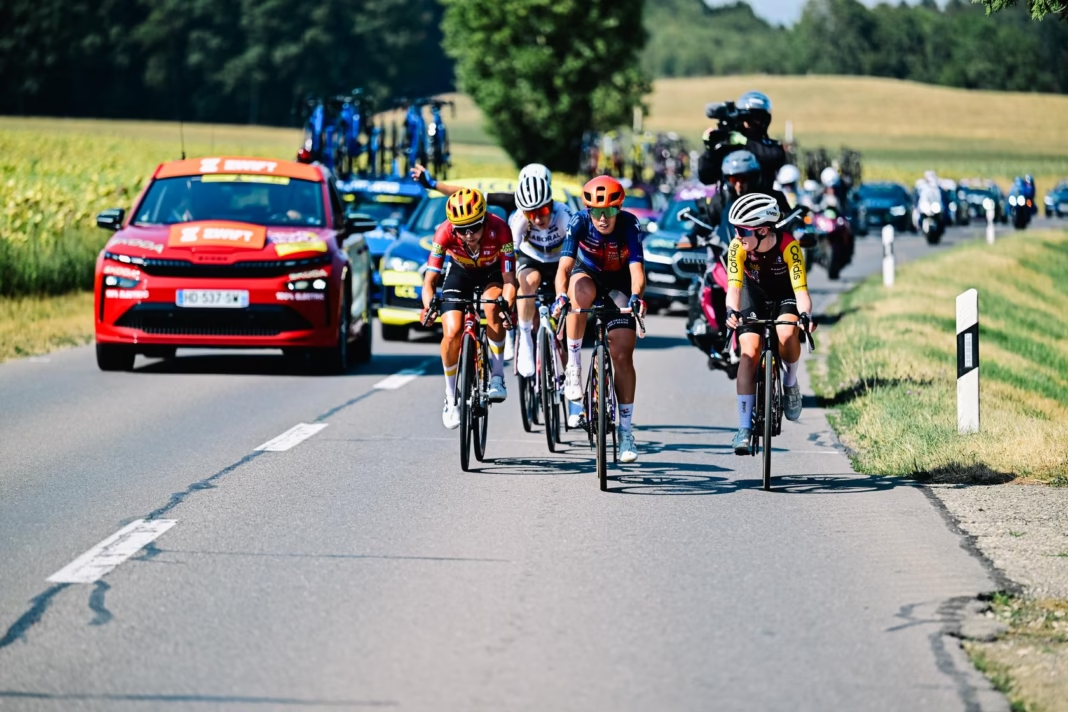
Best Nice viewing point by spectator type
For the complete final-stage experience: Place Masséna followed by the Promenade des Anglais.
For the stage winner and final yellow jersey: Promenade des Anglais.
For serious cycling fans: Col d’Èze.
For the likely decisive attack: Chemin du Vinaigrier or Col des Quatre Chemins.
For families and easier access: Place Masséna or Port Lympia.
For repeated sightings without the biggest finish crowd: Port Lympia.
For scenery and descending action: Villefranche-sur-Mer.
For spectators with limited mobility: The flat central areas around Place Masséna and the Promenade, subject to the final accessibility arrangements.
The Nice finale is worth planning as a full weekend
Nice is not simply hosting the final podium. It receives two consecutive stages, with the long stage from Sisteron finishing on the Promenade on Saturday before the decisive circuit on Sunday.
That creates a rare opportunity to watch one conventional stage finish and then see the race start, pass repeatedly and finish in the same city the following day.
The final stage is short enough to be accessible but difficult enough to remain meaningful. Three regular ascents of the Col d’Èze will weaken the field before the steeper final approach provides one last chance to change the Tour.
That final-day format is one of the reasons the nine-stage race feels more complete than its duration might suggest. Our explainer on why the Tour de France Femmes is only nine stages looks at how the race fits time trials, mountains and a decisive finale into nine consecutive days.
For most visitors, the best plan is simple: stay centrally, avoid driving, arrive at the barriers early and choose between the climbing action above Nice or the final celebrations beside the Mediterranean.
The yellow jersey may be decided on the hills.
The Tour de France Femmes will end on the Promenade des Anglais.

